Ouachita Challenge

Friends, I’ve had a hard time getting around to writing this race report. It didn’t go all that outstandingly well for me, and I’m a bit embarrassed and humbled. And I’ve been struggling with how to describe my experience without doing too much whining or making too many excuses. I’m not a fan of excuses. I think they come naturally to all of us, myself included, but I TRY to refrain from singing them too loudly or constantly, because such behavior, in others, strikes me as an annoying failure to take responsibility for one’s own performances. I find that the best, the fastest, the strongest bike racers out there (and the best people in general) are those who quietly allow their performances to speak for them rather than trying to explain themselves into a better light. I’m not the best, the fastest or the strongest, but hopefully I’ll get better.

Okay so. Let me start with a brief explanation of events leading up to the Ouachita Challenge, and I’ll try to go as light on the excuses as possible.

The story starts last fall, when I burned out (after a very busy, fairly successful spring season that I tried to carry through summer and fall) on bike racing and gave myself permission to take a big, fat break. This big fat break quickly became the longest I’d ever been off the bike, and I trained for and ran a 5k with my Pops which was great, and it was generally good to have a break. But these breaks are hard to come back from! which may be why I don’t take them much. I had some issues with motivation and some issues with the major infected saddle sore of my career. January and February saw me fitfully riding amidst difficulties. The spring in general was a bit busy because I took a grad course on top of my usual work, etc.

The Husband and I signed up together to race the Ouachita Challenge, back in December or thereabouts. This is a big-deal marathon mountain bike race in the Ouachita National Forest in northeast Arkansas. Registration opens at 1am on a Tuesday or something and sells out in about 10 minutes, so you have to plan ahead. We got our spots secured months ahead of time and from there largely counted down woefully while observing what good shape we weren’t in. In the final month before the race I got sick twice. Imagine a sinking feeling in your stomach. Yep.

We drove to Arkansas in two days, taking time to stop off in Tyler to ride the trails at the Tyler State Park. I’d never ridden these trails before (being thwarted by rain the last time we tried). They’re great fun! Swoopy, fast, flowy, and really beautiful. I had a good time there. We headed into Arkansas on Saturday to ride part of the course.

By this time I had worked myself up into a state of panic over this race. I was heading into what might be the biggest, hardest event of my career, in what I felt was the worst shape of my career. I think the worst part, though, is the fear of the unknown: I knew nothing about the trails we’d be riding, so I really didn’t know how bad it would be. I was pretty terrified.

So to pre-ride, we tackled what we were told was the hardest, most technical part of the race. It was fairly demoralizing; Blowout Mountain is, well, it’s a mountain, and we don’t have those where I come from. It was also pretty technical, periodically covered in rock gardens that I did not find to be rideable. Chris and our buddy Rob might have been more upset at the unrideable rock gardens than I was, though – I am fairly familiar with race courses that require me to get off my bike occasionally, but these tough guys aren’t, so much. What I was most worried about was the climbing! I was gasping for air and continuing to feel terrified.

Race morning I felt resigned to do what I had to do. I didn’t have any feeling of excitement or anticipated enjoyment or even competitive spirit; I just felt that I needed to steel myself to a grand slog of pain. Chris and I had pre-ordered commemorative 10th anniversary event jerseys (not cheap) and I was determined to NOT wear my jersey unless I finished the event. Maybe it’s silly, but this was actually a pretty big piece of motivation for me.

So. After that long intro, I wonder if you’re still with me. I think my race report will be the shortest part of this race report! It went: paved road, followed by dirt road, gently climbing, maybe 8-10 miles. First singletrack, more climbing, less gentle. First checkpoint: I see Rob’s girlfriend Lisa; she cheers for me; I’m doing less badly at this point than I’d feared. I give her thumbs up. Then we hit Blowout Mountain, and yes, it’s at least as bad as it was yesterday. Argh! Come down Blowout: fun! I like to descend, and this is some fun, flowy descending, just enough rock to be interesting without having to slow down too much. More climbing. (I don’t know the names of all these mountains.) More suck. Then we hit the road again (paved, then dirt) – this is the transition between the Ouachita Trail (famously technical, climby, and hard) and the Womble Trail (famously fun and flowy). We have epic headwind; people are suffering; but I actually pass a few people here, feeling okay. Apparently I’m not entirely reformed from my roadie past, because at this point I feel like: please give me another 50 miles of headwind-road and NO MORE CLIMBING. (Later I hear Chris felt the same way at this point. Houstonians have much more experience with headwind than we do hills, let alone mountains!) Hit the Womble Trail, which I’m told is the fun part; ride some Womble feeling like okay, this is fun trail, but I am TIRED. Hear we’re only halfway done. Feel unhappy about this news. More climbing! I know climbing is relative: if somebody from Austin tells you something is “flat” and you live in Houston, you should not trust this data. Maybe the mountain-dwellers feel that the Womble is not so climby but I was hurting. I cramped starting on Blowout Mountain (early in the day) and by the last 15 miles of the race, I was cramping in my fingers, toes, back, abs, arms and of course every muscle in my legs. I think my kidneys cramped. I drank about 2 1/2 gallons of water over the course of the day, most of it electrolyte-enhanced, and ate a fair amount too; but it was the hottest day I’d seen all year (it hit 95 degrees) and it just wasn’t enough. Also, I was nauseous at the start line (I was getting sick again, but it was probably mostly nerves) and all the way to the finish – all day, nauseous, and therefore not eating or drinking as much as I would have liked. I hit a checkpoint at which I was told I had 14 miles to go, and I really thought I was closer to the finish than that, which is demoralizing. Those last 14 miles were really a mental battle. I had to get off the bike and walk out a cramp once or twice; I was talking to myself (I’m pretty sure it wasn’t out loud). I was thinking about that stupid jersey, of all things! The last, oh, 2 miles or so are small town roads (mostly dirt), and I felt that I was close, but still just had to tell myself to grind along…

There were time cut-offs at several check-points on this race – not unusual for marathon racing. But this was the first time I’d been concerned about them. I failed to put a watch on my handlebars when we left Houston, so we stopped on the drive up and bought me a little digital bracelet-style watch for $5 at a gas station. I wanted to watch out for the time cut-offs (if you’re going too slow, they don’t let you finish), and I also wanted to finish in 8 hours. Well, I made every time cut-off, but by less and less at each one. In those final miles, I knew I would be allowed to finish, so I just had to make myself do it. As I approached the school where the race started and finished, I looked at my watch and saw 3:58pm (since we’d started at 8, 4pm was my 8-hour time). I crossed the road to the school… and the volunteers said, “just up that hill!” What!! A HILL! Argh! I got off to walk up the hill. I couldn’t ride. What can I say, I’m a weakling; I’m fat and out of shape. I had done so much walking all day (up the sides of mountains, through rock gardens) that my cycling shoes (old and worn, but also just not intended for walking this much) had chewed the skin off my heels in silver-dollar-sized spots. Walking hurt, but I couldn’t ride it. So I’m hobbling up the hill to the finish… with an audience (great)… 3:59… and they’re yelling, “30 seconds to make it under 8 hrs! 20 seconds!”

walking up TINY hill to finish. photo courtesy of Lisa. thanks Lisa


Well, I made it. I think my official time was 7:59:49. Not only Chris, my loving and caring Husband, but also our friends Rob, Holt, and Lisa had waited to see me finish. This meant a lot; Rob and Holt had finished their race just minutes under 6 hours, so they had really spent some time there to show their support. I wasn’t able to say it at the finish, of course, but it was very touching; I really felt the love. I hobbled around the finish area til I thought I could sit without cramping, and I got out of those shoes immediately.

It was the hardest thing I’ve ever done, and I really feel like it nearly killed me. But I wanted to be able to wear my jersey! And now, I can! (I wore it the very next time I got on my bike.) This race was harder than I thought it would be. Worst shape of my racing life, yes. But I think even in decent race shape, the climbing of mountains is extranormal for a power-based, anti-climber from Houston, TX like myself. I’m not sure I’d do this race again unless I was prepared to travel to train on actual mountains ahead of time. But I’m so very glad I did it. Even at an embarrassingly slow finish time, this is an experience no one will take away from me. Next up: I want to run a half marathon this year! Glutton for pain, that’s me. Thanks for bearing with this unreasonably long write-up. See you on the road or trail.

The Mapping of Love and Death by Jacqueline Winspear

It’s that time again! Time for the Maisie Dobbs Read-Along!

This week’s book is The Mapping of Love and Death, and of course the title is significant. Our mystery is the questionable wartime death of a young American man who enlisted with the Brits (in WWI) as a cartographer; he was allowed to do this because of his extraordinary skill and training in the field, and because of his father’s British origins. Maisie is struck by the young man’s very likable family, who are attacked in their hotel immediately after meeting with her, and land in the hospital in critical condition.

Maisie tracks the mystery of what turns out to be a murder in the trenches (characteristically, delving into the war-related past to solve a mystery of the present), as well as the question of what happened to the cartographer’s sweetheart. As a bonus, of course, she solves the attack on the parents, too. In what is almost becoming a predictable format, the past – in this case, the father’s familial past in Britain before his emigration – plays an important role. We see some tragedy in this book, but things are ultimately resolved to general satisfaction in terms of the mystery.

Two important things happen in Maisie’s world: Maurice Blanche, her lifetime mentor, friend, and father figure, dies. And she takes on a new beau, far more promising than anyone we’ve met so far, because she has a truly emotional reaction to him rather than being detachedly “fond” as she was of Dr. Dene. The new beau is James Compton, son of her patroness the Lady Rowan, and I suppose I’m (naturally) naive to the difference in their social classes being such a big deal, but I couldn’t help but be a bit impatient with this question. I thought it couldn’t help but be resolved – as it was – by Lady Rowan’s demure acceptance of the inter-class question. She’s always been a nonjudgmental friend to Maisie. I was a bit surprised at her protest, which was unrelated to social class, and now I’m especially impatient to see Maisie declare her intentions and continue to “walk out” with James. The book left us hanging on this point. I suppose I’ll look forward more anxiously than usual to A Lesson in Secrets, the new Maisie book, released just a week or two ago. (It’s en route to the library now and I shall read it first thing.)

So let’s review. Another mystery was solved, satisfactorily but also according to a pattern I’m becoming very comfortable with – if not perhaps a touch bored. Maurice died, which is a very real personal tragedy for Maisie, as well as being one of those silver-lining opportunities for greater personal growth and independence, much as Simon’s death was. Ah yes, I didn’t say that she is now a quite wealthy young woman! Thanks to being the overwhelming heir to Maurice’s fortune. She has a new man, one I find very promising, if she can quit being wishy-washy and say YES Lady Rowan, I adore your son! I suppose it’s hard to think about remaining an independent businesswoman and get married, especially in her time. But James seems so wonderful, surely he’d be supportive?

I have left out any consideration of Billy Beale, generally one of my favorite characters. His family life & drama didn’t play quite such a strong role in this book; but that’s good for them, the reason being, that they had less drama. Billy’s still dreaming of emigrating to Canada, and I have a feeling Maisie’s new-found personal wealth will trickle towards the Beales; but there may also be a new mouth to feed around that household soon! So who knows. I continue to hold Billy and his family close to my heart and look forward to meeting with them again soon.

I believe that sums it up. I enjoyed this Maisie book, as all the others. But there is very much a pattern to the structure that can be comfortably rhythmic and predictable but has thoroughly ceased to make me gasp. For truly suspenseful, edge-of-my-seat mystery novels, I have learned, I must look elsewhere. That’s okay. There are lots of good suspense writers out there. I can’t wait for the new Michael Connelly to arrive! And I recently really enjoyed my first experience with Lisa Gardner; and there’s Elizabeth George… she hasn’t settled into any kind of predictable pattern, yet, to me. Although, come to think of it, her Barbara Havers character frustrates me in the same way Maisie does: I want to shove them or shake them into realizing the teeny tiny steps they could make that would get them so far… it’s taking awfully many books for these women to realize their own worth in certain areas. But don’t get me ranting. 🙂

Still loving Maisie and still loving the read-along! Check out our fearless leader Book Club Girl for discussion of The Mapping of Love and Death.

book beginnings on Friday: The Apothecary’s Demise by Anne Sloan

Thanks to Katy at A Few More Pages for hosting this meme. To participate: Share the first line (or two) of the book you are currently reading on your blog or in the comments. Include the title and the author so we know what you’re reading. Then, if you feel so moved, let us know what your first impressions were based on that first line, and let us know if you liked or did not like the sentence. (You might also consider visiting the original post where you can link to your own book beginning.)

I’m at home sick for the second day in a row now; which makes FIVE days in the last two weeks, on top of the two days I took to travel to Arkansas. It’s been a rough month at work! I really don’t like missing this much. But what can you do? So I’m working on my paper, and taking the occasional break to read.

The Apothecary’s Demise followsMurder on the Boulevard that I read a few months back. Anne Sloan is a local Houston historian and author of these two Houston-history-framed murder mysteries. This one begins:

“Have a happy Valentine’s, Flora Logan.” Max Andrews spoke softly as he tossed the bouquet of yellow daisies he had clutched for the past hour onto the railroad tracks.

The first book closed with Flora and Max becoming a couple; but apparently things aren’t going so smoothly. Stick around and I’ll let you know what happens. 🙂

Fingers crossed for my general health, and my final paper, this weekend. Hopefully next week I’ll be back on track!

Challenge Updates

Wow! Is it April already? Let’s do some challenge updates. I am doing better on some than on others, ho hum. I’m only involved in three challenges! I wanted to start my first full calendar year as a blogger a bit conservatively. And, I only wanted to undertake challenges I was both a) confident I could succeed in, and b) actually excited about.

Where Are You Reading? is hosted by Sheila at One Person’s Journey Through a World of Books. The idea is to read one book from each of the 50 states within the 2011 year. (Bonus points are awarded for foreign locations.) This doesn’t strike me as terrifyingly ambitious, although we shall see how far along I am in November and December! You may see me scrambling for some specifically-set books. 🙂 The good news is, fiction, nonfiction, audio, etc. – any book works. Take a look at my map to see where I’ve been. So far, I’ve read in 12 states: New York, Illinois, South Dakota, Texas, Maine, Nebraska, Michigan, California, Missouri, Minnesota, Massachusetts, and Washington; and 6 foreign locations: London, Stockholm, Dublin, Paris, Toronto, and the fictional Caribbean island-country of St. Mark’s. This has been so fun! And as I’m 12 into 50 states in 3 months, I’m feeling perfectly fine about this challenge. Thanks so much to Sheila for a really fun adventure.

The Classics Challenge is hosted by Courtney at Stiletto Storytime (a blog name I love, in case I haven’t said that. how cute). I signed up for the bachelor’s degree level, meaning 10 classics in 2011. I haven’t made near the progress I would have thought by this time. Apparently my reading of classics is not as automatic as I thought it might be, and I wish it were – which just makes this challenge more valuable to me, if it’s going to push me into reading more! When I contemplate classics I find myself often thinking about rereading some of my favorites, which would be lovely but I don’t think that’s exactly the point. (I don’t have Courtney’s take on this, but I’m going to behave as though rereads don’t count.) So far I have very much enjoyed Main Street by Sinclair Lewis, and The Strange Case of Dr. Jekyll and Mr. Hyde by Robert Louis Stevenson. Although I’m behind, being 20% through the challenge and 25% through the calendar, I’m not concerned. I can find PILES of delectable challenges. You just wait.

What’s In a Name? is hosted by Beth Fish Reads. It’s a cute idea: we’re looking for titles with certain elements to them.

  • A book with a number in the title: 61 Hours by Lee Child
  • A book with jewelry or a gem in the title
  • A book with a size in the title
  • A book with travel or movement in the title: Running Blind by Lee Child
  • A book with evil in the title
  • A book with a life stage in the title

One third of my way through this challenge feels okay to me. Like the Where Are You Reading? one, I’m not making any special efforts to date. We’ll see if I have to play catch up later this year.

So! While I’m disappointed to see myself lagging behind in classics, I think I’m doing okay for the year. What fun to have goals in our reading. 🙂 Do you have any challenges going on, or any reading goals in particular for this month, or year, or ??

a promise of things to come

Hello friendly blog-readers. I hope you’ll forgive me for some place-holder posts this week. Briefly, I’ll tell you what’s going on…

Last weekend the Husband and I traveled to Arkansas to compete in the Ouachita Challenge, a 60-mile marathon mountain bike race on the Ouachita and Womble Trails in the Ouachita National Forest. I’ve raced, oh, 6 or 8 marathon mountain bike races, but I have to tell you, this one is in another league. It honestly nearly killed me, but I finished it, and I’m not recovered yet! I do intend to write up my experience, although I don’t know where my race report will end up just yet. Maybe here; maybe over at my personal/cycling website, maybe even in The Racing Post, who knows. I’ll announce it here when I get to it.

The next thing is that this coming Saturday marks the end of my semester-long class in Database Searching. It’s been a really great class – it’s kept me interested and engaged and actually looking forward to Saturday morning classes, which is saying a lot. I’m so glad I’m taking it. But, that said, the final paper and presentation due this week are stressing me out a bit. I feel the need to devote my time to schoolwork this week rather than to much blogging.

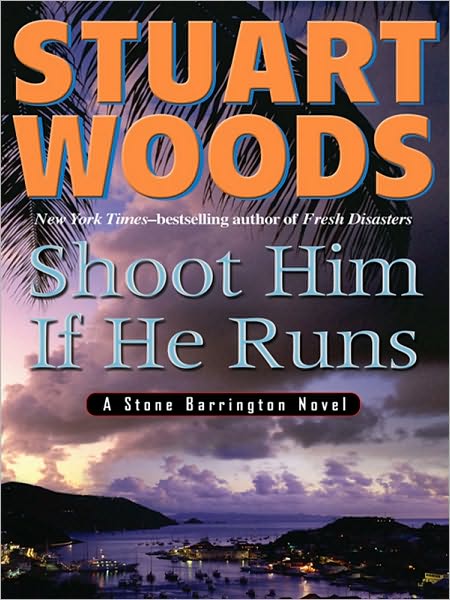
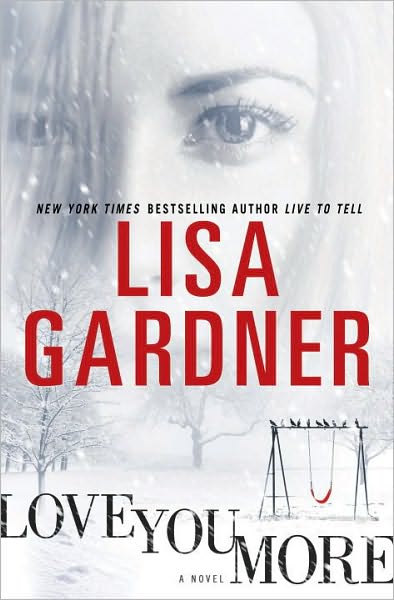
I did read Love You More by Lisa Gardner on the trip, and we listened to two audiobooks: The Pied Piper by Ridley Person, and Shoot Him If He Runs by Stuart Woods. So, I have a few musings to write up for you when I find the time. I’m also about halfway through The Mapping of Love and Death by Jacqueline Winspear now (I still get to read on my lunch hour, you know!) but that one is scheduled for next Monday the 11th, in sync with Book Club Girl‘s read-along.

So this is my plea: stick with me for a few days of hecticness, and next week, I’ll be back on track!

Cirque du Soleil: Ovo!

Last Tuesday night, March 29, the Husband and I went with my parents to see a Cirque du Soleil show called Ovo. Oh my! What to say to describe this? I had never seen Cirque before, and knew it was something very impressive and unique, but I don’t think I was prepared. And I’m not sure I can paint it for you if you’ve never seen one of their productions. But I shall try.

For starters, it was really like an old-fashioned circus in some ways. I think I was picturing something more like theatre, in a fancy hall, with the audience in their finery. And they do perform in concert halls and theatres sometimes; but this was a circus tent (“big top”) set up in a very large parking lot (at a horse-racing track). It sounded like a circus when we stepped inside (circus music!) and

one of my favorites

smelled like one (popcorn!) and, well, it looked like a circus – bright colors and vendors and beer and wine in plastic glasses. The crowd was very diverse and variously dressed in more and less formal attire.

As expected, the performers were in outrageous costume. They were a troupe of various insects: grasshoppers, spiders, a ladybug, and more. And their tricks… wow. There were acrobatics and truly athletic feats of flexibility, balance, and strength – like a combination of gymnastics and dance and yoga. There was juggling, dancing, people being thrown in the air and caught and flipped… tumblers… tightrope

unicycle! on a high wire!

walking… and a truly amazing trampoline act. There were trapeze artists swinging above our heads. (The Husband and I were both reminded of the Drive-by Truckers song The Flying Wallendas. Happily no tragedies this evening!) I had not expected to be thoroughly terrified by almost every act! But I was so thrilled and exhilarated, too. There is also a story involved, of the egg (ovo), and all the insects’ interest in it; and there is a love story. But really, this show is short on plot. And that’s okay; the acrobatics and skills and various performances are the whole point.

I’m so glad I got a chance to see this amazing show. It was a very special experience, and the performers are very, very special talented people (and some of them clearly have joints that bend in extra directions, but that’s another issue). What a treat! What a magical night! And how cool and interesting to see that circus performers are still around – I think I had sort of thought that this was a dying or dead industry, but I’m glad that it’s alive and well at least in the Cirque du Soleil company. I was also glad to not see any animal acts; I’m not sure I’m really up for the animal-cruelty questions in a traditional circus, and there was plenty of thrill with these human performers!

Main Street by Sinclair Lewis

This is a real star. I’ve been so pleased to take in this witty, bitingly satirical story of small-town life. The setting is the fictional town of Gopher Prairie, Minnesota, based on Lewis’s hometown of Sauk Centre; but as he says in the introduction, “the story would be the same in Ohio or Montana, in Kansas or Kentucky or Illinois, and not very differently would it be told Up York State or in the Carolina hills.”

This is my first experience with Sinclair Lewis, and I’m sorry I waited so long. Certainly his other work is now on my long list TBR.

It’s the story of Carol Kennington (née Milford), who as a college student has some vague and lofty ideas of improving small towns, before she marries and settles in Gopher Prairie. This small town (patently representative of small towns everywhere – Lewis all but beats us over the head with this statement) does not want to be improved, does not believe it needs improving, and disapproves of Carol on every level. It’s a painful story, and it drags along, not becoming boring, but definitely oppressive in Carol’s pain. She’s no pristine heroine, repeatedly distracted from her lofty goals of uplifting Gopher Prairie and the human race; she’s decidedly flawed. And yet I don’t think the reader can help but sympathize with her.

She tries to implement her idealized improvements but is rejected in her theater group, her improvement of the town library, her crossing of social, economic, and class lines. She tries to escape in a few cheap flirtations, but none is consummated – her choices of love are disillusioning. She finally makes her husband take her on a trip to leave behind the doldrums, but her relief is temporary. From page 393:

Yes. She was back home! Nothing had changed. She had never been away. California? Had she seen it? Had she for one minute left this scraping sound of the small shovel in the ash-pit of the furnace? But Kennicott preposterously supposed that she had. Never had she been quite so far from going away as now when he believed she had just come back. She felt oozing through the walls the spirit of small houses and righteous people. At that instant she knew that in running away she had merely hidden her doubts behind the officious stir of travel.

Finally, just when I thought we were going to wallow forever, Carol up and leaves town with her three-and-a-half-year-old son for Washington, D.C., where she starts a new and relatively satisfying life. But she is still not ultimately fulfilled… Relatively quickly, she ends up back in good ole GP with good ole Will Kennicott. The book ends with Carol resigned to GP, with an oddly comfortable but not entirely content feeling. I found this a ending a little strange. So much of the book had been writhing discomfort and dissatisfaction and dreaming and planning for something different. Then we finally – very late in the game (by which I mean the book) – saw Carol go to DC for a life that I do see was not entirely suited to her, but also seemed very much an improvement. And then she went back… home? Do we call it home? She makes a few final defiant statements at the end of the book; but her defiance is in spirit and not in action or even, I feel, in emotion. I’m not disappointed with the ending. I suppose I’m a bit surprised. I’m awfully removed from Carol’s world. I will see my 30th birthday a good 95 years after hers; and I’m if anything a bit independent in my own time. Her life in DC looked pretty interesting to me but I realize that I am not Carol. And who on earth could I have been in her day? But I digress.

Lewis’s criticism of Gopher Prairie and by extension, all of the U.S., is almost cruelly biting, but also wonderful, witty, and funny. I was entertained from the first page. Besides American hypocrisy, or maybe even before it, its largest social issue is definitely feminism and women’s place in the home. But there is also tangential treatment of war (World War I), communism, workers’ rights, religious hypocrisy, class structures… and Carol doesn’t escape criticism, either. Lewis reserves a sneer for the out-of-touch artsy do-gooder in her. But in the end I think he retains something of a loving touch for most of his characters at the same time.

The writing was delightful. I laughed out loud and I felt Carol’s pain, and I felt for the ridiculous Will Kennicott (who mostly, I did not like) when he stoically handled Carol’s infidelity-in-spirit. But I also gloried in the turns of phrase. I loved “that amiable contempt called poise” and that Carol “picked [the book] up carelessly, with a slight yawn which she patted down with her fingertips as delicately as a cat.” Does that not paint a portrait?

I was interested to find, in the Afterword (by Mark Schorer of the University of California, in my Signet Classic paperback edition of 1961), discussion of this book in relation to Madame Bovary. Apparently my repeated comparison of the two, while I was reading, has a strong precedent. Schorer writes,

Madame Bovary is more than a study of provincial manners in a certain time and place in France; that much is only the setting for a highly dramatic presentation of human catastrophe. But Main Street cannot be lifted out of its historic setting, which is, in effect, the whole of it.

Perhaps this is what I was saying above, about trying to put myself in Carol’s shoes. At any rate I found the Afterword to be a few thoughtful pages, worth the time I spent on it.

I picked this up as a casual read and it was very enjoyable and worth my time and interest. I’m going to apply it towards the Classics Challenge at which I am so miserably far behind, so there we go. More to come!

book beginnings on Friday: The Pied Piper by Ridley Pearson

Thanks to Katy at A Few More Pages for hosting this meme. To participate: Share the first line (or two) of the book you are currently reading on your blog or in the comments. Include the title and the author so we know what you’re reading. Then, if you feel so moved, let us know what your first impressions were based on that first line, and let us know if you liked or did not like the sentence. (You might also consider visiting the original post where you can link to your own book beginning.)

Today, we are on the road! Heading for the Ouachita National Forest in Arkansas. I’m equipped with audiobooks! For starters, let’s sample Ridley Pearson’s The Pied Piper:

The train left the station headed for nowhere, its destination also its point of embarkation, its purpose not to transport its passengers, but to feed them.

By early March, western Washington neared the end of the rinse cycle, a nearly perpetual curtain of ocean rain that blanketed the region for the winter months, unleashing in its wake a promise of summer. Dark, saturated clouds hung low on the eastern horizon. Well to the west, where the sun retreated in a violent display, a glimpse of blue cracked the marbled gray, as welcome to the residents of Seattle as any sight alive.

I like a well-evoked location, especially one I’m familiar with. I’ve spent some time in Seattle – have family there – and we can all recognize the reference to rain, can’t we! I really picked this book out just to expand my familiarity with popular authors in the mystery/thriller genre, but particularly this one, because I can remember someone recommending it at some point. Don’t remember who, or what was said, but it was enough to go on. 🙂 I’ll let you know!

The Postcard Killers, by James Patterson (audio)


Well, my feelings on this one are mixed.

First let me speak to the format: I listened to this book on audio cd, in the car while commuting, and also brought it in to the house two nights to listen some more. I don’t listen to audio books very often at all. The Husband and I enjoyed some together on our last long road trip, and I think that’s an excellent application. But mostly I find that I enjoy reading actual, physical books. One of my main concerns is that I like to go back and reread a sentence or a paragraph that strikes me or that I want to understand better, and rewinding a cd is just not the same. The voices of the characters or the inflections aren’t always what I would imagine in my reading experience. Sometimes this bothers me. On the other hand, I’ve just “read” another book in the last week that I wouldn’t have gotten to read otherwise; I have a good hour a day spent driving that I can spend listening to audiobooks. Despite my complaints and concerns, I think it’s likely that I’ll be picking up another audiobook next week. 🙂 I guess that’s a net win for the format. But I most definitely prefer reading.

Now, on to the book in question. As I said earlier this week, I picked up this James Patterson novel – my first (I know!) – just to expand my horizons as a reader and (more importantly) librarian and readers’ adviser. I came in with some bias: I have an understanding that Patterson writes “fluffy” novels, that he really cranks ’em out (or rather, puts his name alongside numerous co-authors to crank ’em out), that maybe his mysteries are less intellectual than some. All of this is very snobby of me and I’m not proud of it, but I’m trying to address this bias honestly here.

After finishing The Postcard Killers, I remain conflicted. I had a number of real problems with this book. The plot was somewhat simplistic; there weren’t layers of meaning or action; there were no real surprises. (Of course, there was no mystery for the reader to solve, just some loose ends left to curiosity til the end of the book. We met the killers in chapter 1 and knew them all along; it was just the detectives that didn’t.) The sex was foreshadowed from the first moment; some tension was allowed to build up, but once the dam burst, so to speak, a formerly strong woman just followed the man around like a puppy dog, which I found a bit silly. The police detectives in Stockholm were incompetent beyond comedy to the point of my great frustration. I thought it was totally unrealistic. These are police officers! The characters didn’t have hobbies, interests, or personality characteristics. They were flat. It was rather a flat book in general, in many ways. Michael Connelly may be “fluffy” too, in a way (light, entertaining, pleasurable reading for the beach), but his Harry Bosch is a many-layered complex character, and he meets interesting, complex people and solves complicated cases. I’m afraid I was unimpressed by the Patterson & Marklund team in many ways.

However! I was engrossed! I knew from the start who the killers were, but couldn’t figure out how they had accomplished things. The question of motive was left open, too, although I found the solution unsatisfactory. I was anxious to get back in the car to hear what was going to happen next. And however tired and predictable the sexual tension and eventual release was for Jacob & Desi, I waited anxiously for them to get around to it. So I guess what this says is, for all my criticisms, Patterson’s predictable, flat suspense still got me interested and page-turning (so to speak). I’m not impressed, but I was entertained in the short term. I would probably even grab another one of his novels again – that is, if there were nothing better lying around, at the beach; or if the Husband and I needed an audiobook for a road trip. At any rate, I’m very glad to have exposed myself to this author and know his style. (At least in combination with one of his co-authors. There’s probably a lot I still don’t know, thus the need to pick up some more.)

As it happens, we’re hitting the road this weekend, for a drive to Arkansas and back. I’ve picked out four audiobooks, but no Patterson this time. I have:

Extreme Measures, by Vince Flynn

Gone Tomorrow, by Lee Child

Shoot Him If He Runs, by Stuart Woods

The Pied Piper, by Ridley Pearson

The Husband and I are both fans of Lee Child and his bad-ass character Jack Reacher. The other three are in further pursuit of my well-roundedness in the mystery/suspense genre, and in the hopes of discovering more authors the Husband can appreciate. (He likes Connelly but I’ve read all of his novels and didn’t want to do repeats on this trip.)

So, I give the audio format a “meh” with strong likelihood of repeat use. I give The Postcard Killers a “meh” with medium likelihood of repeat use. I’m open to compromise. 🙂

Dethroning the King: the hostile takeover of Anheuser-Busch, an American icon, by Julie Macintosh


Wow. Where to begin? I found this book riveting, cover to cover. I took my time, and I took breaks, and I read other books – all this is true. But my interest in this one never waned. I have been raving a bit manically to anyone who will listen ever since I finished it last Friday night. I’ve taken my time writing about it here because I was trying to be less hysterical in my praise.

I’ll give you a quick synopsis if the subject area is unfamiliar to you:

Anheuser-Busch was the last U.S.-owned big beer company in 2008, and was also still family-controlled, by the Busches. (Coors was already part of Canadian-owned Molson-Coors, and Miller was part of South-African-owned SAB-Miller.) A few Brazilian bankers had started, years earlier, by buying out Brazilian Brahma beer, but they quickly grew into a large brewing concern known as AmBev who then joined with Belgian brewers Interbrew to become InBev, which ended up Belgian-based, but mostly Brazilian-controlled. In 2008, AB was suffering, and InBev made their play by offering an impressive bid. AB made a rather half-hearted effort to defend itself by merging with Mexican brewing powerhouse Modelo, but ended up selling to InBev to create Anheuser-Busch InBev (ABI).

Macintosh is the journalist who covered the takeover of Anheuser-Busch by InBev, for the Financial Times. She had me right from the start, when she described (in the Author’s Note) her experience as a woman – and a visibly pregnant one, at that – in the doubly male-dominated worlds of finance and beer. This resonated with me, as I’ve worked in beer and in bicycles in the past and am also familiar with the concept of male-dominated industries. This personal relationship to her work foreshadowed to me that she was going to handle her subject from a human perspective, and she did. I like my nonfiction full of narrative and personalities – human characters. This was a fascinating treatment of a story I was already prepared to be interested in. My ties to beer, and the beer industry, originally drew me to this book. But I stayed for the human element.

This story is full of characters. (Forgive me for broadly generalizing, but people in Big Beer and finance are wealthy, and wealthy people tend to be eccentric, yes?) Macintosh kindly includes a “Cast of Characters” (and I also referred to the index to flip back to the earliest mention of a character here and there) to help us keep them straight; but really I had minimal trouble. They’re all so quirky and real (notice I didn’t necessarily say likeable! but interesting, yes). Like I said, the beer got me in the door; but the people and the plot twists kept me in my seat.

The world of finance is thoroughly new and mysterious to me. (I have been harassing my finance-friends to help me understand certain concepts. They have been mostly helpful; or, unavailable. Probably on purpose. That’s you Will.) But it speaks to my engagement in this book, that I am now hyper-motivated to learn all about mergers & acquisitions (independent v. dependent board members… fiduciary duty… private equity firms…) JUST so I can better follow the action in this plot. For me to have found a book of finance this unputdownable seems rather a feat. I can’t recommend it enough.

The more I try and explain my appreciation, the more I think this story wears several hats. It’s actually suspenseful and full of intrigue, like a lot of the novels I enjoy – like a murder/mystery/international intrigue. It also has certain elements of classic tragedy – ambition and hubris being (among) the tragic flaws of the Busch players. And the fate of Anheuser, in mid- and late-2008, is also an allegory for what the United States went through simultaneously. Our national hubris and feeling of this-can’t-happen-to-us led to a shocking (to varying degrees I suppose) downfall. Of course I’m just paraphrasing Macintosh in this; she says on page 22,

Anheuser’s hubris and naivete had led to its fall from grace, and it provided an apt comparison to the broader state of American at the time.

Or again, page 341, in the words of an (unnamed) advisor to AB,

The way this played out was Shakespearean in nature. I haven’t decided which play. The dynamic between father and son was just Shakespearean and tragic.

(The father and son referred to here are August Busch III and IV.)

My notes at the end of reading this book say, “I ❤ gray areas." It's always easy to love and hate characters in books when they're all good or all bad; but isn't it more satisfying to feel conflict? Aren’t they more human and thereby more evocative of complex emotions, when they have redeeming characteristics, or confuse us a little bit? These are, of course, real humans; but it’s Macintosh’s journalistic thoroughness that rounds them out. I didn’t find it easy, in the end, to see any of these characters in black and white. Instead, the complexities and gray areas make it echo for me.

If you’re interested in big business, or finance, or the beer industry, or the consolidation of the world market into very few giant conglomerates, or U.S. businesses’ place in an international world, or if you enjoy readable nonfiction… I really can’t overestimate my recommendation of this book.