Pardonable Lies by Jacqueline Winspear

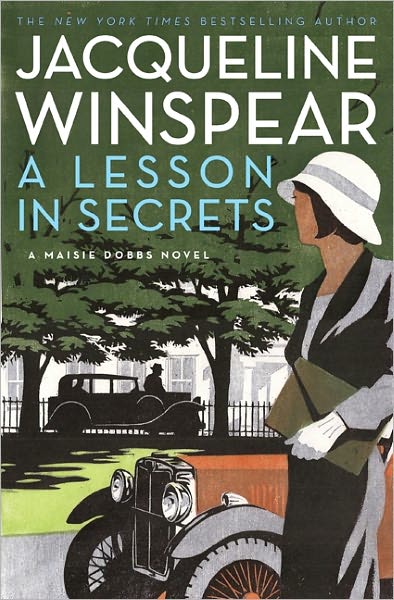
Book 3 of the Maisie Dobbs mystery series by Jacqueline Winspear is called Pardonable Lies. From the author’s website (because I’m lazy, and because this is a fine one) I give you a synopsis:

In the third novel of this unique and masterly crime series, a deathbed plea from his wife leads Sir Cecil Lawton, KC, to seek the aid of Maisie Dobbs, psychologist and investigator. As Maisie soon learns, Agnes Lawton never accepted that her aviator son was killed in the Great War, a torment that led her not only to the edge of madness but also to the doors of those who practice the dark arts and commune with the spirit world. Determined to prove Ralph Lawton either dead or alive, Maisie is plunged into a case that tests her spiritual strength, as well as her regard for her mentor, Maurice Blanche. The mission will bring her to France and reunite her with her old friend Priscilla Evernden, who lost three brothers in the war, one of whom has an intriguing connection to the case.

Set against a finely drawn portrait of life between the World Wars, Pardonable Lies is “a thrilling mystery that will enthrall fans of Jacqueline Winspear’s heroine and likely win her new ones” (Detroit Free Press).

This episode involves the rift between Maisie and her mentor, Maurice. I’m not terribly impressed with Maisie’s decision-making in this book. I think it’s a time of growth and learning for her, though. Out of her rift with Maurice comes a greater independence in her own work (which is rather patronizingly and, I thought, unnecessarily explained to us by Winspear), which she did need. But she also showed a stubbornness in this book that endangers her own health and therefore those things she cares so much about: her business, her cases, Billy’s employment. She needs to confess that she’s human, and be willing to accept help when it’s both offered and needed. I was also frustrated with her treatment of Dr. Dene. I know she has precious little experience “walking out with” a man, and her one love affair ended tragically and she’s hurt. Still, I felt that she treated Dene rather cruelly. Surely someone as intuitive as Maisie could come up with more humane behavior towards a man who rather loves her, who she cares for (if less) in return. But I guess that’s the great irony: psychologists with screwy relationships, mechanics whose cars don’t run. Right?

But, I had a good time with Maisie, again; enjoyed the several cases she solved and the puzzles she unriddled. I thought the case of Avril was interesting, but I especially enjoyed the cases of the two missing soldiers. I think Winspear’s best subject matter may be the war and it’s painful aftermath; perhaps that’s why these were such powerful, moving stories. That, and I love Priscilla and enjoy getting to know her family.

Although I am very, very late, I am heading over to Book Club Girl‘s website to join the discussion about this book, so come on over there with me if you like. On Monday, March 14, I’ll be posting, and we’ll be discussing, An Incomplete Revenge. Next up (in order, and on time!) I’ll be reading-along book 6 of the Maisie series, Among the Mad. Stay tuned!

further response on Marginalia

Well! Wouldn’t you know. Coincidentally… do you believe in coincidence? Maurice Blanche, mentor to Maisie Dobbs, says that coincidence is the messenger of truth… but coincidentally, my Shelf Awareness email of the day opens with the following quotation from NPR’s Andrei Codrescu:

I’m reading a new book I downloaded on my Kindle and I noticed an underlined passage. It is surely a mistake, I think. This is a new book. I don’t know about you, but I always hated underlined passages in used books…. And then I discovered that the horror doesn’t stop with the unwelcomed presence of another reader who’s defaced my new book. But it deepens with something called view popular highlights, which will tell you how many morons have underlined before so that not only you do not own the new book you paid for, the entire experience of reading is shattered by the presence of a mob that agitates inside your text like strangers in a train station.

“So now you can add to the ease of downloading an e-book the end of the illusion that it is your book. The end of the privileged relation between yourself and your book. And a certainty that you’ve been had. Not only is the e-book not yours to be with alone, it is shared at Amazon which shares with you what it knows about you reading and the readings of others. And lets you know that you are what you underline, which is only a number in a mass of popular views…. Conformism does come of age in the most private of peaceful activities–reading a book, one of the last solitary pleasures in a world full of prompts to behave. My Kindle, sugar-coated cyanide.

–Andrei Codrescu on NPR’s All Things Considered

How’s about that, hm? Rather a different take on Sam Anderson’s concept that I discussed in yesterday’s post. Just thought you might be interested. I fully sympathize with Codrescu’s feelings about having other readers’ impressions imbedded in what I’m reading: it clouds my experience. Even if I do care what another reader thinks, I want to hear about it after I’ve read the work myself, unsullied, the first time. What do YOU think about writing in books? Sometimes, never, always? Of course only in books that belong to you. Right?!

Broadway presents Billy Elliot

Sorry, friends, I have just realized that I failed to write up my experience last Friday night seeing the Broadway show, Billy Elliot. Here we are now.

I went into this one without a clue of what the story was about. Sometimes I like to do that. But, I think it is almost always better to have an idea of what it’s about. Maybe I just got lazy.

what DO you call it?

My synopsis: Billy Elliot is the young son of a north English miner. The backdrop for Billy’s story is the miners’ strike of the 1840’s, and this sets the emotional scene for Billy’s struggle. He lives in a working-class world of economic hardship and strife, and his home life is male-dominated; his mother is dead and his grandmother is a bit batty, but his brother and father provide macho male energy to go around. In this environment, Billy is taking boxing lessons, but at heart he is a dancer. He stumbles into a ballet class full of little girls (in his boxing helmet or what do you call it? and all) and takes off.

Predictably, his love for the ballet, when discovered, does not make his family proud. But, as the story goes, the town’s miners are crushed and learn to put their pride in this gifted son of the community, and Billy ends up with his father’s support.

It was a touching story, and quite humorous at times, and a touch political – I liked the Margaret Thatcher gags, although I confess I’m not up to speed on the contemporary politics. There’s something absolutely irresistible about a little boy singing and dancing his heart out; and the young actor did some extraordinary dancing. I loved it.


But, I have to say, this play had weaknesses. Unlike RENT, and West Side Story, this was less than perfect. There were definitely moments, for me, when the action lagged; I got impatient on several occasions for them to go ahead and get on with it. I get it, Billy’s brother is mad. He’s going to run offstage and do something. Do it already. The story was good, the music was good (ahem, by Elton John), and the dancing and emotion was great. But the pace could stand an adjustment, in my opinion.

Oh and also – I enjoyed the relationship between Billy and his friend, was it Mark? This little boy likes to dress up in his mother’s dresses, and while doing so, is the one to suggest ironically that Billy might be a little “poof” for enjoying the ballet. Mark (or whatever his name is) turns out to be the “poofy” one, in fact, but they have a touching friendship and when they dance around in little-kid-drag, there are some fun comedic moments.

All in all, I had a fabulous time, as usual, and feel so lucky to get to see shows like this one. Next up, Urinetown! followed by Cats!

Marginalia

Thank you to my mother for sending me this interesting article from the New York Times Magazine. Sam Anderson riffs, “What I Really Want Is Someone Rolling Around in the Text.”

The idea is this: for Anderson, the best and defining part of reading is writing in the margins. He jots notes and underlines and otherwise marks up his texts, which enriches his reading as he goes, as well as his future readings. And he’s concerned that in an age of e-readers, his “‘marginalia’ – a self-consciously pompous Latinism intended to mock the triviality of the form” – will perish. Because you can’t write on an e-reader. Yet.

And then Anderson changes key and explores all the wonderful possibilities the e-reader offers. Surely a stylus that allows one to “write” – handwrite – in the margins of an e-reader isn’t far off (I’m not up on these things, maybe it’s already on). But Anderson theorizes about the shareability of these margin notes, and this is where he catches my imagination.

I’m not a big fan of marginalia, myself. I had an English teacher in high school – a wonderful teacher, who I loved and who taught me so much of the love of literature and the small understanding of it that I enjoy today. She taught margin notes. She took up our personal copies of books we read for class (my first experience with Hemingway, The Sun Also Rises, for example) and actually graded us on the highlighting and margin-note-taking we did. But it didn’t catch on for me. I probably did annotate a few books after being in her class; but then I stopped, and thank goodness. These days it irritates me to no end to find margin notes in a book I’m reading – even if the notes are my own! (They tend to be from high school, which may be part of my irritation.) They distract me from what I’m trying to read – the book itself. I want to hear from the author, who I assume wrote everything she or he wanted to in the text of the dern thing. Footnotes are welcome. But I’m not generally interested in some third party’s footnote, thank you very much.

But. Anderson offers me tantalizing concepts like… “reading, say, Adventures of Huckleberry Finn and touching a virtual button so that — ping! — Ernest Hemingway’s marginalia instantly appears, or Ralph Ellison’s, or Mary McCarthy’s.” Wow! (Okay, maybe he did grab my interest with Hemingway; but the others are almost as tempting :).)

“Old-school marginalia was – to put it into contemporary cultural terms – a kind of slow-motion, long-form Twitter, or a statusless, meaning-soaked Facebook, or an analog, object-based G-chat. (Nevermind: it was social, is my point.)” Well put, sir. I get it now. I get the sharing of margin notes – on purpose, that is. I don’t appreciate the random margin notes of strangers left in public library books I check out, mistakenly correcting a published author’s already-correct grammar, and then being corrected again by the next library patron. I do NOT want that. But Anderson’s way is better: with an e-reader with marginalia-sharing capabilities, I could get only the notes I wanted. And when I wanted – so that I could read a text first unsullied, and then consult my friends or admired (even dead!) authors for their thoughts.

I also appreciate the larger theme that I take away from Anderson’s article, one that librarians (and booksellers, and publishers, and authors…) are discussing a lot these days. Reading and writing are changing; the e-reader format offers a great many reasons for concern – are we going to go out of business? But it also offers opportunities. I can’t begin to think of them all; luckily there’s a lot of thinking going on out there. Our challenge, as librarians, booksellers, publishers, writers, readers, consumers, is to be creative about the ways in which e-readers (and a host of technological changes) can offer us new and positive change, rather than just bemoaning what it’s costing us. So, good job Mr. Anderson, and thanks Mom. 🙂

Teaser Tuesdays: Pardonable Lies


Teaser Tuesdays is a weekly bookish meme, hosted by MizB of Should Be Reading. Anyone can play along! Just do the following:

* Grab your current read
* Open to a random page
* Share two (2) “teaser” sentences from somewhere on that page
* BE CAREFUL NOT TO INCLUDE SPOILERS! (make sure that what you share doesn’t give too much away! You don’t want to ruin the book for others!)
* Share the title & author, too, so that other TT participants can add the book to their TBR Lists if they like your teasers!

I finished An Incomplete Revenge last night, and enjoyed it so much! (My post will be up on Monday, in timing with the Maisie Dobbs Read-Along.) So I started right in on book #3 which I had skipped over: Pardonable Lies. I DO like my Maisie.

So today, from page 149:

Maisie left London before seven in the morning, her clothes, books, and papers packed in a small case of dark brown leather with straps across to ensure her belongings were secure. She carried her black document case and wore a gray-and-blue tweed jacket with a pale gray silk blouse, light gray woolen trousers, black shoes, and, to top off her ensemble, a dark gray hat with a broader brim than usual, a black band and a dark blue feather on the side, which was attached to the band with a deep blue stone in a sapphire cut.

You know, I said earlier in our read-along that the fashion details weren’t my cuppa because I’m pretty fashion-unconscious and all, but I’m changing my mind. I really enjoy being able to picture these details, and I really appreciate Maisie’s style; she’s simple but classy, even elegant, even if Priscilla does think she’s too plain. That’s how I see her.

I think this passage sees Maisie off on her journey back to France for the first time since the war, and I happen to have a fairly strong, foreshadowed feeling that things don’t go well for her there. But doesn’t she look smart heading off? I like the items like the black document case, and her nurse’s watch, that follow her through the series and whose histories we know. It gives a neat sense of continuity; it’s rewarding us for reading the whole series. (And here I am out of order, sigh, what else is new. I like it fine this way though.)

I am enjoying Maisie yet again! Stay tuned!

Crossings.

I have a few things to share with you today. They aren’t books, but you might be interested anyway.

First, last week I discovered a new-to-me concept called postcrossing. (I was alerted to this concept by write meg!. Thank you Meg.) The idea is an international exchange of postcards – yes the really actually hardcopy kind. It’s not pen-pals; you don’t get from the person you give to. But you send postcards to people around the world (and you get a short bio from them so you have something to write about, if you’re having trouble with that part), and then you get them, too! I really like the idea. It means you get snail mail that is pretty, personal, and not bills or catalogs. So, I signed up immediately upon reading Meg’s post and clicking the link; I’m in! And then I sent my first 5 postcards, to Germany, Austria, Ukraine, Taiwan, and Russia. BUT. I didn’t use enough postage, and I didn’t put my return address, either. So guess what? At lunchtime today I’m going to go buy some international postcard stamps and start again :-/ Ah well. I’m still in! And I’m going to get postcards!

So how funny and coincidental that right after discovering postcrossings, I came across a similar project. (Now that I am trying to retrace my steps, I have NO IDEA how I got there. Sorry.) BookCrossing works a lot like postcrossing does: you register and get a unique identifier code for your postcard or book. This allows the postcard or book to be tracked – so if it’s a postcard, you get credit for having sent it, and you get more postcards coming to you. If it’s a book, you can see where its travels take it – if its recipients are logging it on the website, that is. This is much less likely with BookCrossing, it seems to me, because you can just leave books around, wherever, or hand them to random people, who may or may not care to get online and log their receipt of them. I would guess they wouldn’t, very often. Whereas, in postcrossing, the recipient of your card actively requested it, and is actively participating in the same system, whereby one only receives a card if one gets credit for sending cards; therefore I would guess everyone is fairly interested in logging them into the system. (Also, postcrossing recipients, by definition, have internet access and are comfortable with the system. This is not something we can assume when handing out books or leaving them on park benches.)

I think BookCrossing sounds like great fun, but I won’t be joining that one. Why? Several reasons. I think there are a number of similar programs online (PaperBack Swap, for instance), where people can trade and send books around. Another reason that comes to mind was discussed today over at Tales From the Reading Room: people who are not actively seeking out free things (as the postcrossing participants are) don’t necessarily place a high value on them. I think litlove (the above blogger) is right on target when she points out that “free often means without value,” or at least is perceived that way.

But mostly, I guess, I won’t be BookCrossing because it’s sort of what I do for a living, which is a beautiful reason not to play, really. In the hospital where I work, I run a small library that distributes reading materials. We have a nice collection of hardback books that we purchase new, catalog, and circulate just like your local public library; and just like a PL, we want them back and will ask you to pay for them if lost. But we also have a large collection of paperback books, donated by the boxful every day, that freely roam the hospital and beyond. These books are very much playing the BookCrossing game (minus the tracking), and they make a huge difference to our patients, caregivers, visitors, and staff and faculty. It means that there’s always an abundance of free and various reading materials randomly distributed in our little world, and that’s a beautiful thing.

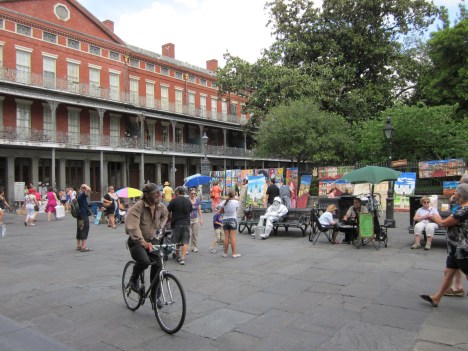
Wordless Saturday

(guess. I dare you.)

book beginnings on Friday: An Incomplete Revenge

Thanks to Katy at A Few More Pages for hosting this meme. To participate: Share the first line (or two) of the book you are currently reading on your blog or in the comments. Include the title and the author so we know what you’re reading. Then, if you feel so moved, let us know what your first impressions were based on that first line, and let us know if you liked or did not like the sentence. (You might also consider visiting the original post where you can link to your own book beginning.)

Today I’ll introduce you and me both to the next book in Jacqueline Winspear’s Maisie Dobbs series: An Incomplete Revenge. I am, in fact, reasonably certain that this is the very next book to follow the one I have just read, so hopefully no more snafus of that sort. I never did get around to reading Pardonable Lies; maybe I’ll get around to it one of these days. I always was a fan of reading out of order. 🙂

Without further ado, your book beginning, from the prologue:

The old woman rested on the steps of her home, a caravan set apart from those of the rest of her family, her tribe. She pulled a clay pipe from her pocket, inspected the dregs of tobacco in the small barrel, shrugged, and struck a match against the rim of a water butt tied to the side of her traveling home.

What’s this? Gypsies? Maisie is stepping out of her standard circles here, although I suppose she was always ready to do that. I would like to see something other than the same moneyed Brits hire her; perhaps we could go back to France or do some other sort of travel. Or, gypsies. Okay. This is a source of variety; I’ll take it.

Will you be enjoying Maisie with me? I think the Read-Along has us writing this one up on Monday the 14th, so I shall start reading this weekend!

Sorry, I know it’s been a bit sparse around here this week. Hopefully I’m about caught up and ready to be a good (daily) blogger again. 🙂 Enjoy your weekend!

Midweek Miscellany & hemingWay of the Day: on Spanish whisky

I have a sprinkling of things to share with you today.

One. I have updated my blogroll (look right–> and down some) to include all the blogs that I (try to) visit every day. And you will see ABOVE the blogroll, a short list of My Very Favorites. Check ’em out.

Two. I have a very favorite blog post of the day to share with you, too: it’s a review of a book called To Bed With Grand Music by Marghanita Laski and you can find this delightful post here. I am super intrigued by the idea of this book, and it’s completely due to the discussion of it by the Book Snob, so thank you Book Snob! This one goes on the list. Check that out, too.

Three. I am still reading By-Line: Ernest Hemingway, and still loving every minute of it. I may have to put it down at some point to pick up An Incomplete Revenge, the next Maisie book. But fortunately, as a collection of short pieces, By-Line is a pretty good book to put down and pick back up. I should also confess to now being in the middle of no fewer than five books. Hm. (The others are Whatever You Say I Am by Anthony Bozza; The Things They Carried by Tim O’Brien; Dust by Martha Grimes; and The Club Dumas by Arturo Perez-Reverte. Eclectic, a bit.)

Four. Now for my daily quotation out of By-Line.

Beer is scarce and whisky is almost unobtainable. Store windows are full of Spanish imitations of all cordials, whiskies and vermouths. These are not recommended for internal use, although I am employing something called Milords Ecosses Whisky on my face after shaving. It smarts a little, but I feel very hygenic. I believe it would be possible to cure athlete’s foot with it, but one must by very careful not to spill it on one’s clothes because it eats wool.

(from Hemingway’s dispatch on Sept. 30, 1937 from Madrid, in covering the Spanish Civil War. incidentally the subject of perhaps my most favorite novel ever, For Whom the Bell Tolls, for which Hem pretty obviously collected his material during the very time when this dispatch was written.)

Does this make you laugh? It does me. I’m having a good day of laughing while I read; I usually laugh at the posts of Useless Beauty, books i done read, TERRIBLEMINDS, and Hyperbole and a Half, too. It’s a good day when you laugh out loud while reading.

Hemingway’s recommended reading

In reading By-Line: Ernest Hemingway, I have been struck several times over, now, by his graciously recommending books that I should be reading. I have compiled them here for you in case you are as interested as I am:

Anna Karenina, Tolstoy
Far Away and Long Ago, W.H. Hudson
Buddenbrooks, Thomas Mann
Wuthering Heights, Bronte
Madame Bovary, Flaubert
War and Peace, Tolstoy
A Sportsman’s Sketches, Turgenev
The Brothers Karamazov, Dostoevsky
Hail and Farewell, George Moore
Huckleberry Finn, Mark Twain
Winesburg, Ohio, Sherwood Anderson
La Reine Margot, Dumas
La Maison Tellier, De Maupassant
Le Rouge et le Noir, Stendhal
La Chartreuse de Parme, Stendhal
Dubliners, James Joyce
Yeats’s Autobiographies
Midshipman Easy, Marryat
Frank Mildmay, Marryat
Peter Simple, Marryat
L’Education Sentimentale, Flaubert
Portrait of the Artist, James Joyce
Ulysses, James Joyce
Tom Jones, Henry Fielding
Joseph Andrews, Henry Fielding
The Open Boat, Stephen Crane
The Blue Hotel, Stephen Crane

…as well as “all the good De Maupassant, all the good Kipling, all of Turgenev… Henry James’s short stories, especially Madame de Mauves, and The Turn of the Screw, The Portrait of a Lady, The American -” here he is interrupted by the young writer to whom he has been dictating. (The young man says he can’t possibly write all these down, and Hemingway promises to give him more the next day; “there are about three times that many.”)

The list I’ve compiled here for you comes from two different articles. In the first, he’s basically discussing boredom, not having the opportunity to hunt or fish, and having already read for the first time all “the best of the books”; he says he “would rather read again for the first time [these books] and a few others than have an assured income of a million dollars a year.” In the second story, Hemingway portrays himself as pestered by a young struggling writer who has traveled to Key West to beg for his advice and help. Hemingway employs the young man and is tortured (it would seem) by having these advice-giving sessions, in one of which he gives a slightly different list of books that it is “necessary” a writer have read. I have bolded for you the ones that appear in both of his lists.

So how do we feel about this? Well, first of all I feel shamed, because I have read exactly THREE of these books. Dear, dear! I’m not exquisitely well-read but I generally feel I’m above-average. (Don’t ask me what the average is, that’s a whole new subject. I am especially above it if the “average” is those kids on Jersey Shore. They write books too, you know.) I have read Wuthering Heights, Madame Bovary, and of course The Adventures of Huckleberry Finn, all three of which I absolutely agree are outstanding and timeless books. So do I need to follow Hemingway’s advice? Well, as I’ve said before, I consider myself awfully a fan of his. I am inclined to want to read the books he considered “best” and “necessary.” These generally sound like solid pillars of a person’s education who wants to call herself well-read. I shall put them on The List but you know how that goes. The List is pages and pages long.

What about you? What do you think? Are you inclined to take advice from Papa? (Perhaps you despise Papa. Some people do. It’s allowed.) Or what about your favorite author – would you feel strongly about reading the books he or she described as “best” and “necessary”? How about the fact that there is only one book on his list by a woman? How bothered are you by this? I’d love to hear your feelings! Thanks and have a happy Tuesday!