another day in the life of a librarian

Remember my earlier post, about bringing home too many books? (sigh) I’m tempted every day, but today especially so. I got in a part of my early-May book order. In no particular order, I bought:


And of this order, I’m tempted by soooo many. I’d like to take home…

(…even though the cover looks awfully much like Clara and Mr. Tiffany, another book I want to read). The story of a developmentally disabled white woman and a deaf black man, their love story inside a state school, their subsequent escape, the delivery of their baby in the outside world, and their eventual reunion.

The story of Arthur and his difficulty relating to his con man father, and the lost Shakespeare manuscript that may or may not be legitimate.

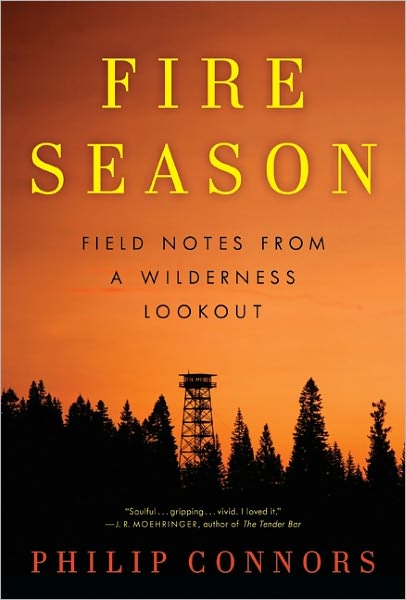
Connors tells of the time he spent alone in a tiny tower as a wildfire lookout in New Mexico. Sounds Edward-Abbey-esque.

Ozma and her father made a promise to read together every night for 100 days; but the tradition continued long beyond that commitment. She tells their story through books.

A service dog helps a veteran live a normal life; but more important is the relationship they come to share.


Which newly-released books are YOU especially interested in?

The Red House Mystery by A.A. Milne

What a little treat! This slim volume informs me, on the back, that it’s the only detective novel ever written by Milne, best known as the author of the Winnie the Pooh books. I love Pooh, and I love detective novels, so this seemed like an obvious choice. I noted a few weeks ago that it begins with a tone very like Pooh. I was encouraged.

I thought this was a delightful little book. For starters, I have the Vintage Books “Rediscovered Classic” (as pictured), which opens with a new-for-the-edition introduction by the author. These 3 1/2 pages are worth reading in themselves. Milne is clever and funny, and bothered by the trends of literary taste. He discusses the merits of what he believes to be the perfect murder-mystery. I thought his brief critique of the genre and his own book were very funny and ironic.

This is a mystery in the amateur-sleuth-plus-sidekick tradition. (Holmes and Watson are constantly referenced.) Our protagonist, Antony Gillingham, is a gentleman of leisure who happens upon the Red House just as a murder has apparently taken place in a locked room. Assisted by his friend, Bill, a guest at the Red House (his Watson), Tony sets upon the mystery. Who killed Robert, evil brother to the man of the house, Mark? Where has Mark disappeared to? And what is Cayley, Mark’s right-hand man, up to? There are secret passageways and croquet sets involved. It’s very classic. Tony and Bill make a cute team, and Milne’s tone remains remarkably faithful to what I love about Pooh: tongue-in-cheek, self-deprecating, and picturesque. It’s great fun.

When it was over, I felt sad. I do have other reading to do, but this was such an enjoyable experience. I liked that it was short; it was just right for my weekend and just right for the moment in the way that books sometimes are. But I’m also sorry it’s over. I may have to go hunt up some Wodehouse next, what ho!

Slaughterhouse-Five by Kurt Vonnegut (audio)

Full title:

Slaughterhouse-Five, or the Children’s Crusade: A Duty Dance with Death

It seems a little odd to me that I’ve never read this book, and in fact I wondered if maybe I had, and had just forgotten. But as soon as we started listening to this audiobook (my parents and I, on the way home from New Orleans) I knew I’d never heard or read this book before. Vonnegut is always thrilling and fascinating! I know I really enjoyed his Cat’s Cradle and Breakfast of Champions, and Slaughterhouse-Five shares with them a very surreal, time-warped, rambling, fantastical tone. It feels like Fear and Loathing in Las Vegas, particularly the scene in the movie where they take the ether and things turn on their sides.

For those who don’t know, this is Vonnegut’s autobiographical story of the bombing of Dresden, which he experienced, like his protagonist Billy Pilgrim, as a POW in a slaughterhouse. Vonnegut, and Billy, survived only because they were holed up in the meat locker there, while the vast majority of the city burned.

Billy’s story involves war, bullying, sex, time travel, optometry, drinking, and misunderstanding. Overarching themes of death and timelessness tie the winding threads together. The world does not believe that Billy travels in time or that he was kidnapped by little green aliens from the planet of Tralfamadore. We hear of Billy’s whole life, as a small child, as a student, as a soldier in the war, as a young husband, as a professional optometrist, as a feature in a zoo on Tralfamadore, and as an old man. Like Billy, we don’t keep these experiences in sequence, but drop in here and there.

Billy’s story is preceded by a long intro in which Vonnegut narrates, not his experience as a soldier or a POW, but as a writer, many years later, struggling to write about Dresden. He visits an old war buddy and learns of this buddy’s wife’s fear of war. She’s concerned that he’ll write a book glorifying the experience and thereby encouraging future generations to make war. He reassures her that “there won’t be a part for Frank Sinatra or John Wayne” in his book, if he even ever finishes it. He also promises her he’ll call it “The Children’s Crusade”, agreeing with her that they were just babies over there.

This is a very powerful story. Descriptions of the horrors of war are evocative, perhaps even more so the depiction of the POW’s in the railroad cars passing steel helmets filled with their excrement to the men standing near the ventilation slots. War is bad. But there’s much more to this book than the point that war is bad; it’s also a fascinating story about family and relationships. (I’m reminded of Breakfast of Champions with its bizarre family structures and roles and dysfunction.) And the world of Tralfamadore is fantastical, incredibly imaginative, and so fully-developed in its details, I just wonder at Vonnegut. Where does he get this stuff? The turns of phrase are memorable. A drinking man’s breath smells of mustard gas and roses. That’s poetry.

This story is beautiful, strange, and strangely feels endless. It finishes with a question-mark; loose ends are not entirely tied up. How could they be, when events are presented out of sequence, and Tralfamadorian concepts teach that no one moment ever ends? Vonnegut was a genius, and I want to keep reading him all my life. (There are still a number of titles I haven’t touched, and were you aware? just this January, a new volume of his previously unpublished short fiction came out. It’s called While Mortals Sleep.) Oh, and I want to mention the reader of this audio version. He speaks in a strange whisper, and his style is very, very effective for this book. Guess who? None other than Ethan Hawke. I was surprised, and tried throughout to place this handsome actor behind the voice I was hearing; but I couldn’t put the guy I know from Reality Bites and Training Day into Vonnegut’s world. Very strange. I guess that’s the mark of a great actor, that he can fill different roles believably. I’m impressed.

Teaser Tuesdays: One Day I Will Write About This Place by Binyavanga Wainaina


Teaser Tuesdays is a weekly bookish meme, hosted by MizB of Should Be Reading. Anyone can play along! Just do the following:

* Grab your current read
* Open to a random page
* Share two (2) “teaser” sentences from somewhere on that page
* BE CAREFUL NOT TO INCLUDE SPOILERS! (make sure that what you share doesn’t give too much away! You don’t want to ruin the book for others!)
* Share the title & author, too, so that other TT participants can add the book to their TBR Lists if they like your teasers!

Would you look at this beautiful, complex cover? Very interesting – perhaps overwhelming, or perhaps thought-provoking, depending on your day! I found it a bit intimidating at first but after just a few pages, I feel that it fits the story. This book is a memoir of the author’s life in Africa, and his growth as a writer. My teaser is a good example of what I’ve found, and like, so far. From page 10 (of my pre-publication proof, so pending change before final publication):

…just when your marble is wheeling along, groovily swinging up the walls of your trough and back down again, challenging the edge, whistling and gum chewing and downhill biking and yo-yo bouncy and American – gravel pounded by rain outside your bedroom window becomes sausages frying, and sausages frying can shift and become squirming bloody intestines or an army of bristling mustachioed accordions chasing you, laughing like Idi Amin.

I am finding this a most interesting read.

Rebecca by Daphne du Maurier

Here’s yet another book I can’t believe I waited so long to read! I struggle to categorize this book. I think I thought it was genre romance, and I still tend to shelve it that way, but I also feel that sells it short. (Sorry, romance readers. Bear with me. I’m not trying to be ugly.) Of course, categorization is often problematic, and often doesn’t do a book justice. But we persist in trying to do it, for several good reasons. Labels are helpful in describing a book to your friends, and grouping like items together on a shelf assists browsing. So, I thought Rebecca was romance, or romantic suspense, as it says right on the cover of my paperback copy. And to me, this sounds like genre fiction: readable, easy, even “light”, entertaining, and in accordance with a known structure or format. Not a bad thing – I love a lot of genre fiction (although mostly mystery, and not romance). But I’ve also heard this book referred to as a classic. I’ve seen it written about and referred to repeatedly as a standard of sorts. My curiosity grew, and I had to pick it up.

And what a delicious little treasure it is! From the first page, I was transfixed. The mood is outstanding. I had only the vaguest of notions that something bad happened in this book, and I could feel the ghostly mist creeping unseen around my shoulders from literally the first few sentences. There is an air of foreboding that is absolutely unexplainable, as the plot proceeds in an outwardly staid and steady fashion. How does she do it?

Our narrator, who I believe remains unnamed throughout, is living a painfully awkward underprivileged youth when she meets a striking and tragic widower who abruptly proposes to her after a brief quasi-courtship. (This is not a spoiler, I don’t think, or not a very bad one. It is fairly well known from the first pages.) Anticipating this proposal was great fun for me. She accompanies him back to his famous (or infamous?) estate, and the legacy of the dead first wife looms.

Now I shall stop telling you the story. I might have known this much going in (at a maximum) and it was a real pleasure to breathlessly turn pages in ignorance of what was to come. It is suspense, people, as the cover says! If you haven’t read this, avoid spoilers with great care! And go get yourself a copy immediately! Here, you can borrow mine. (The library has several.)

The suspense is outstanding. The narrator’s awkwardness occasionally gets a little frustrating but it’s so REAL – my frustration is entirely realistic because she is realistic. The bad-guy characters are infuriatingly, in a juicy-delicious fictional way. The striking husband remains tragically striking, sort of admirable and obnoxious by turns, but I suppose the romance part drew me in, because I was right there with the nameless wife, wanting him to love us. And the background moodiness, the ghost-story feel, the gothic mists about my shoulders were entirely pleasurable.

I wish I could read this book again for the first time! I know du Maurier has written much else. I hope it is up to this standard because I thought it was outstanding. Genre fiction? I don’t know, I’m stumped, but whatever it is, it’s worth reading.

Gone Tomorrow by Lee Child (audio)

YAY for Lee Child as usual! Especially after a couple of unimpressive audiobooks in a row, it’s been such sweet relief to hear Dick Hill’s deadpan narrative. I feel like he suits Jack Reacher very well.

Backstory: Jack Reacher is a serial character. He’s a former MP (military policeman), fairly decorated, who’s retired young to travel the country at random. He has enough money to get by just wandering, and seems to want to be left alone (although it’s not clear what would occupy him if it weren’t for the circumstances that keep drawing him in). He is repeatedly pulled, against his will, into events of dangerous or criminal intrigue, and he uses his general bad-ass-ness to beat up the bad guys and uplift the righteous little people.

I really appreciate Reacher. He’s a character that works for me very well. He’s almost a superhero – big, strong, smart, quick-thinking, and with a general inclination to do the right thing. He has integrity. He’s just about perfect; but just when he starts to really look like a caricature, we find he’s not so perfect after all. In Worth Dying For, the bad guys got him tied up and hurt for a little while; I was surprised to see him thwarted. But you can’t keep Reacher down. In Gone Tomorrow, too, he gets captured and held, but not forever! I’m not saying he’s an entirely realistic character or anything, but for my tastes, Child pulls back just in time, right before I say “oh, come on…”

And he’s not just a physical hero – although he is enormous, very strong, has no body fat, is a highly skilled gunman, a formidable hand-to-hand fighter, etc. He’s also smart, and an expert in all things military as well as in many other obscure areas of knowledge. It’s a bit uncanny, how much he knows and how much he can figure out. But in this area, too, he’s pulled back from the brink of cartoonish superiority: for example, Lila Hoth convinces him of the American military’s role in a time and place he didn’t think it was possible. I like that in this conversation he listens, asks discerning questions, and isn’t afraid to learn, even to be wrong. In short, Reacher is, to me, a real hero: almost perfect but with a few human deficiencies and – best of all – aware of them (rare though they be).

I also get these little nuggets of information. Like, he muses that there are experts out there who could look at the dimensions of the bricks, and the arrangement of them, in his unknown little dungeon-cell, and know pretty precisely where the building is and when it was built. But Reacher’s not one of those experts. (I’m paraphrasing the audiobook from memory.) See what I mean? It might have been just a little too much if Reacher had been the brick expert, too, on top of everything else. And what a cool little historical nugget. Of course there are brick experts; it makes perfect sense. It had never occurred to me, though.

At any rate, aside from my ramblings about the wonder that is Reacher, this is a good book. I love the little details. When Reacher wakes up after being drugged, he wonders how long he’s been out; with all four limbs bound, he ducks his head to rub his chin against his shirt, thereby feeling how much stubble he has. Now he can make an educated guess. This is a neat detail – evocative, realistic, and also impressive. Reiterates how proficient this guy is. I just hope we really do have guys this effective in our military and/or law enforcement systems.

I came across just one or two points of contention. I think the 9/11 aftermath and international politics was rather clever but also rather pat; 9/11 politics is a fairly common thread in mystery-intrigue genre fiction, and I was a little disappointed and a little bored there for a minute, although Child handled it fairly uniquely. And I was a little bothered by a certain person, for whom English is not a native language, uttering sentences like “…you employed a deductive process. Do you think you are uniquely talented? Do you think that deductive processes are unavailable to others?” This didn’t sound very realistic for this character to me.

But overall this was another great Reacher story. Fast-paced, gritty, suspenseful, funny and witty, and, for me, just the right balance of realism and hero-worshipping-fantasy. Go get you some Jack Reacher right now if you have any interest in action-adventure, mysteries, intrigue, or loveable heroes.

birthday weekend.

Not my blogoversary, silly! That’s still a ways away. But today, May 7, is *my* birthday, and tomorrow, May 8, is the Husband’s! Together we are 70 years old this weekend. (Whew.)

Today I hope for a beautiful bike ride before the Texas Beer Festival with my parents. Tomorrow I hope for a beautiful bike ride before lunch with an old friend. And I hope for some pleasant reading time, too (although I don’t know where that fits in, actually.) So I invite you to raise a glass, ride a bike, and/or read a book with me! Here’s to another fabulous year.

One Book, Two Book, Three Book, Four… and Five… (a borrowed post)

Well this is a little fun, extra post for you today. I felt flattered by the comment in Simon’s post, over at Stuck in a Book, that he hopes his readers will copy his post format, and I have decided to take him up on it. 🙂 I like reading about what other people are getting their paws on.

1.) The book I’m currently reading:

There are two.


I’m listening to The Big Sleep by Raymond Chandler on audio when I drive in the car.

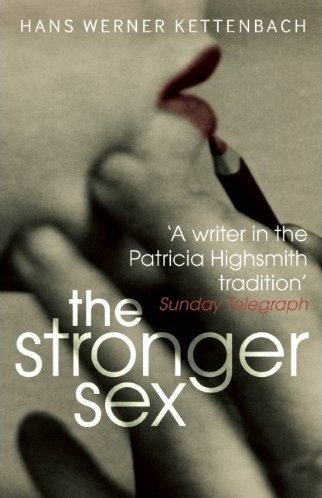
And I’m reading The Stronger Sex by Hans Werner Kettenbach.

2.) The last book I finished:


The Red House Mystery by A.A. Milne, and it was delightful! (My post will be up in a few days.)

3.) The next book I want to read:


I cheated today when I quoted this book beginning; I haven’t started it yet, but expect to get to it this weekend. There are so many in my stack…

4.) The last book I bought:


I don’t really buy a lot of books, what with working in the library and everything. This purchase is a couple months old already now, sorry, I’m boring on this question.

5.) The last book I was given:

This is a good fun one! The Husband and I went out a few weeks ago with an old friend, Fil, who brought us presents!

and

Fil and I are friends on and off our bicycles. He’s done quite a bit of cycle-touring, and I haven’t done much but do aspire to. We’ve also spent a lot of time talking about Mexico, and he used to help me practice my Spanish back when I had some. 😦 The Yucatan is a beautiful place of which the Husband and I have fond memories, including the day he proposed, and our first anniversary. So these books are a highly appropriate comment on my friendship with Fil. Thanks Fil!

Three Lives and Tender Buttons by Gertrude Stein

I have this Digireads edition, see

I’m cheating a touch, because I read Three Lives some time ago. But it is bound with Tender Buttons in my edition and I’m going to write about them together. It is my hope that my writing about two Stein conundrums will distract you from the fact that I’m confused.

I found some unexpected free time one evening, and knew that I had reading commitments to fulfill, so I didn’t want to start anything of any significant length. I’ll try Tender Buttons, I thought. It’s all of 30 pages, I thought, how hard could it be? HA! Maybe I should have turned back to one of the stories out of The Things They Carried or a chapter of This Book Is Overdue! Either one of those would have been easier options.

So my interest in Gertrude Stein is entirely born of my intense interest in Ernest Hemingway. As we know, Stein was an early friend and mentor, with whom his relationship later soured; he greatly admired, then denigrated, her work, which is famously… er, unique.

When I read Three Lives I was a bit dismayed at my failure to appreciate it. I didn’t find it as difficult as Faulkner, thank goodness, but she certainly doesn’t follow anyone’s model structure for story-telling. Three Lives is made up of three novella-style life stories, of three women in a fictional small town. Their stories don’t go anywhere particular, nor do they join for any greater purpose, although they are evocative and poignant in their moments. I suppose they are vignettes, and well-done at times in their own way; but unorthodox and a little unsettling.

Tender Buttons is a wholly different proposition. It’s a long free-verse poem of sorts, presented sort of as a series of descriptions or discussions of random nouns. For example.

A MOUNTED UMBRELLA.
What was the use of not leaving it there where it would hang what was the use if there was no chance of ever seeing it come there and show that it was handsome and right in the way it showed it. The lesson is to learn that it does show it, that it shows it and that nothing, that there is nothing, that there is no more to do about it and just so much more is there plenty of reason for making an exchange.

or

A NEW CUP AND SAUCER.
Enthusiastically hurting a clouded yellow bud and saucer, enthusiastically so is the bite in the ribbon.

At first this bothered me very much, because I was trying to make sense of it. Her sentences are not sentences; they do not seem to have meaning, or if they do, I am too dense to find it. Unlike the poetry I am familiar with (and I’m no scholar of poetry, but I have read some, and even free-verse generally has some structure – some clues as to how to read it, like line breaks or, hello, punctuation!), there is no guide for where the natural breaks are in language – where a person would draw breath when reading aloud, for instance. (I tried reading this out loud to the Husband while he worked on our deck and he was NOT tolerant.)

But then I decided that Gertrude Stein’s poetry is like Cirque du Soleil or Cats, in that there is no plot or point to speak of, but there is poetry. Read Tender Buttons aloud; it makes music. This is the best way that I can find to appreciate Stein. She is a challenge, make no mistake. And perhaps there is great depth of meaning and I’m missing it because I’m simple. If so, please do comment here, being gentle and kind about it, and explain what I’ve missed. I’m willing to make an effort to appreciate Stein, for Papa’s sake (unlike Faulkner, who I’ve given up on, I think) but she does require an effort. On the other hand, with effort, I find Tender Buttons an intriguing puzzle and it does stimulate and entertain me; just not in the way I usually expect books to do!

I am claiming this one for credit in the Classics Challenge. I think I’ve earned it. Please don’t make me write a book report as I remain a little baffled. But, I’m also excited at the prospect of reading Janet Malcolm’s Two Lives (a biography of Stein and her lifelong partner Alice B. Toklas. notice the play on Stein’s Three Lives), which has patiently resided on my shelf for years now. Look for that one to come. Perhaps Ms. Malcolm will help me understand Ms. Stein!

book beginnings on Friday: Nothing to Lose by Lee Child

Thanks to Katy at A Few More Pages for hosting this meme. To participate: Share the first line (or two) of the book you are currently reading on your blog or in the comments. Include the title and the author so we know what you’re reading. Then, if you feel so moved, let us know what your first impressions were based on that first line, and let us know if you liked or did not like the sentence. You might also consider stopping by the original post.
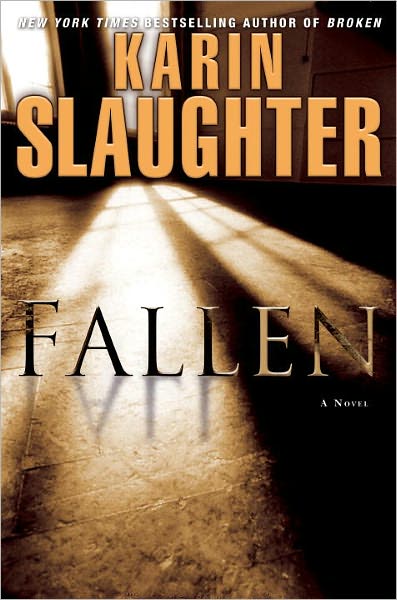
I am listening to this one in the car on audio. (You will note, if you’ve been following, that I am listening to more and more audio. More on that later, but suffice it to say the format is more or less working for me.) I love my Lee Child… Here’s your book beginning:

The sun was only half as hot as he had known sun to be, but it was hot enough to keep him confused and dizzy. He was very weak. He had not eaten for seventy-two hours, or taken water for forty-eight.

I have faith, Reacher! Especially as there’s so much more yet to come. 🙂