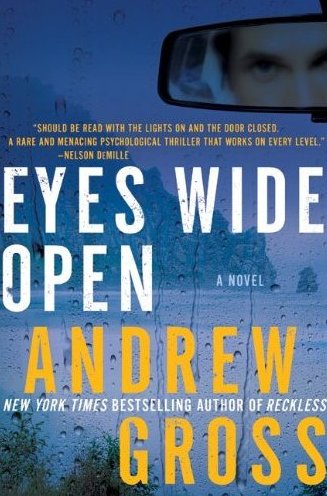
One Book, Two Book, Three Book, Four… and Five… (a borrowed post)

Well this is a little fun, extra post for you today. I felt flattered by the comment in Simon’s post, over at Stuck in a Book, that he hopes his readers will copy his post format, and I have decided to take him up on it. 🙂 I like reading about what other people are getting their paws on.

1.) The book I’m currently reading:

There are two.


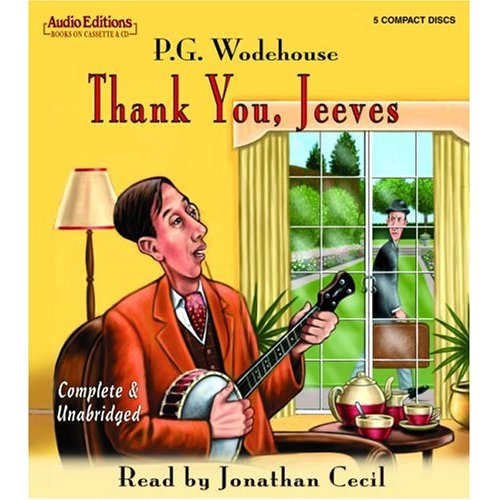
I’m listening to The Big Sleep by Raymond Chandler on audio when I drive in the car.

And I’m reading The Stronger Sex by Hans Werner Kettenbach.

2.) The last book I finished:


The Red House Mystery by A.A. Milne, and it was delightful! (My post will be up in a few days.)

3.) The next book I want to read:


I cheated today when I quoted this book beginning; I haven’t started it yet, but expect to get to it this weekend. There are so many in my stack…

4.) The last book I bought:


I don’t really buy a lot of books, what with working in the library and everything. This purchase is a couple months old already now, sorry, I’m boring on this question.

5.) The last book I was given:

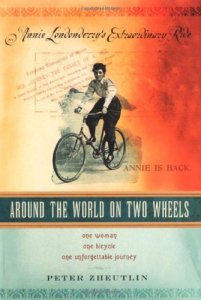
This is a good fun one! The Husband and I went out a few weeks ago with an old friend, Fil, who brought us presents!

and

Fil and I are friends on and off our bicycles. He’s done quite a bit of cycle-touring, and I haven’t done much but do aspire to. We’ve also spent a lot of time talking about Mexico, and he used to help me practice my Spanish back when I had some. 😦 The Yucatan is a beautiful place of which the Husband and I have fond memories, including the day he proposed, and our first anniversary. So these books are a highly appropriate comment on my friendship with Fil. Thanks Fil!

Three Lives and Tender Buttons by Gertrude Stein

I have this Digireads edition, see

I’m cheating a touch, because I read Three Lives some time ago. But it is bound with Tender Buttons in my edition and I’m going to write about them together. It is my hope that my writing about two Stein conundrums will distract you from the fact that I’m confused.

I found some unexpected free time one evening, and knew that I had reading commitments to fulfill, so I didn’t want to start anything of any significant length. I’ll try Tender Buttons, I thought. It’s all of 30 pages, I thought, how hard could it be? HA! Maybe I should have turned back to one of the stories out of The Things They Carried or a chapter of This Book Is Overdue! Either one of those would have been easier options.

So my interest in Gertrude Stein is entirely born of my intense interest in Ernest Hemingway. As we know, Stein was an early friend and mentor, with whom his relationship later soured; he greatly admired, then denigrated, her work, which is famously… er, unique.

When I read Three Lives I was a bit dismayed at my failure to appreciate it. I didn’t find it as difficult as Faulkner, thank goodness, but she certainly doesn’t follow anyone’s model structure for story-telling. Three Lives is made up of three novella-style life stories, of three women in a fictional small town. Their stories don’t go anywhere particular, nor do they join for any greater purpose, although they are evocative and poignant in their moments. I suppose they are vignettes, and well-done at times in their own way; but unorthodox and a little unsettling.

Tender Buttons is a wholly different proposition. It’s a long free-verse poem of sorts, presented sort of as a series of descriptions or discussions of random nouns. For example.

A MOUNTED UMBRELLA.
What was the use of not leaving it there where it would hang what was the use if there was no chance of ever seeing it come there and show that it was handsome and right in the way it showed it. The lesson is to learn that it does show it, that it shows it and that nothing, that there is nothing, that there is no more to do about it and just so much more is there plenty of reason for making an exchange.

or

A NEW CUP AND SAUCER.
Enthusiastically hurting a clouded yellow bud and saucer, enthusiastically so is the bite in the ribbon.

At first this bothered me very much, because I was trying to make sense of it. Her sentences are not sentences; they do not seem to have meaning, or if they do, I am too dense to find it. Unlike the poetry I am familiar with (and I’m no scholar of poetry, but I have read some, and even free-verse generally has some structure – some clues as to how to read it, like line breaks or, hello, punctuation!), there is no guide for where the natural breaks are in language – where a person would draw breath when reading aloud, for instance. (I tried reading this out loud to the Husband while he worked on our deck and he was NOT tolerant.)

But then I decided that Gertrude Stein’s poetry is like Cirque du Soleil or Cats, in that there is no plot or point to speak of, but there is poetry. Read Tender Buttons aloud; it makes music. This is the best way that I can find to appreciate Stein. She is a challenge, make no mistake. And perhaps there is great depth of meaning and I’m missing it because I’m simple. If so, please do comment here, being gentle and kind about it, and explain what I’ve missed. I’m willing to make an effort to appreciate Stein, for Papa’s sake (unlike Faulkner, who I’ve given up on, I think) but she does require an effort. On the other hand, with effort, I find Tender Buttons an intriguing puzzle and it does stimulate and entertain me; just not in the way I usually expect books to do!

I am claiming this one for credit in the Classics Challenge. I think I’ve earned it. Please don’t make me write a book report as I remain a little baffled. But, I’m also excited at the prospect of reading Janet Malcolm’s Two Lives (a biography of Stein and her lifelong partner Alice B. Toklas. notice the play on Stein’s Three Lives), which has patiently resided on my shelf for years now. Look for that one to come. Perhaps Ms. Malcolm will help me understand Ms. Stein!

book beginnings on Friday: Nothing to Lose by Lee Child

Thanks to Katy at A Few More Pages for hosting this meme. To participate: Share the first line (or two) of the book you are currently reading on your blog or in the comments. Include the title and the author so we know what you’re reading. Then, if you feel so moved, let us know what your first impressions were based on that first line, and let us know if you liked or did not like the sentence. You might also consider stopping by the original post.

I am listening to this one in the car on audio. (You will note, if you’ve been following, that I am listening to more and more audio. More on that later, but suffice it to say the format is more or less working for me.) I love my Lee Child… Here’s your book beginning:

The sun was only half as hot as he had known sun to be, but it was hot enough to keep him confused and dizzy. He was very weak. He had not eaten for seventy-two hours, or taken water for forty-eight.

I have faith, Reacher! Especially as there’s so much more yet to come. 🙂

the theme of maternity: trendy?

I finally decided that I’ve mentioned this, in passing, so many times that I felt it deserved a post of its own.

The gist is, I’ve formed a growing observation over the last 6-8 months or so (ahem, that would be about how long I’ve had this blog) that I’ve read a lot of books that deal with women’s feelings about their children, feelings about maternity, motherhood, family, and mother-child bonds. I have not sought these books out; I don’t read much in the way of “women & relationships” or romance, and I read very lightly in the realm of pop fiction. Where have all these books come from? My favorite genre is murder mysteries, and the bulk of the books I’m referring to come from this genre; including some quite gory, graphic thrillers. I’m pretty sure this thematic trend is new; mysteries have not always been mommy-oriented! What’s up with that? Let’s take a look. I have written about…

Still Missing by Chevy Stevens
Her Fearful Symmetry by Audrey Niffenegger
Look Again by Lisa Scottoline
Love You More by Lisa Gardner
These Things Hidden by Heather Gudenkauf
I’d Know You Anywhere by Laura Lippman
My Sister’s Keeper by Jodi Picoult

And I’ve also so far avoided Emma Donoghue’s Room, despite being tempted, because I fear more of the same.

There are mothers in mysteries in general. I know a certain woman in my life has had a growing frustration with Elizabeth George’s series of Inspector Lynley mysteries, due to Deborah St. James’s ongoing guilt, one might even say obsession, with an abortion she had that seems to have effected her ability to have children. This is a thread and a theme within the series – not a major one, but one that helps develop the characters who we get to know so well over the many books, which I feel is one of their strengths. Lynley, Helen, Deborah, St. James, Havers, and a whole cast of characters have extraordinary depth over the course of the series. But, my friend is bothered by the politics; she fears that George is making a political statement about abortion. This led me to this website on which George states her politics on the issue, if rather obliquely. Sorry, I have digressed. My point was, there are mothers in mysteries. Always have been. There are mothers in life, otherwise how would we all get here?

But my observation here is of mysteries that are themed heavily around maternal feelings and mother-child bonds. All of the books I listed above treat this theme as central to the plot. I think it’s a current trend in popular fiction, which probably reflects a current trend in our public consciousness. Babies and how to make them are on a lot of minds these days; the related medical industry is doing fairly well I do believe. I think trends in fiction & literature reflect cultural trends. For example, We Need to Talk About Kevin (by Lionel Shriver) and Nineteen Minutes (by Jodi Picoult), both fictionalized stories about school shootings, seemed to come from headlines in the years 2005-2008 or thereabouts. Several novels about autistic children have come out in the last 5 years or so too, as autism awareness has become a growing cause. No coincidence, right?

It makes sense to me that fiction reflects our culture; art follows life, yes? But I get a little bit frustrated with this theme. This theme in particular, or just the repetition of a theme? Well, I can get a little impatient with this particular theme in life (the real world); I’m not anxious to be a parent and fail to empathize with that (seemingly, majority) portion of the world that is. So I’m impatient with it in my reading life, too. But repetition is annoying as well. It’s getting to the point where I feel I need to avoid it when picking out reading material, just to get out of a rut.

What do you think? Am I nuts? Is there no trend? (Insert Freudian remark about my biological clock here?) Or is there a trend, and if so how do you feel about it?

Politico-disclaimer: I’ve tried not to make this a rant of my own opinions on “the issues.” If you’re interested in my rant 🙂 I’ve provided it for you, as briefly as possible, below. If you’d rather avoid (most of) the political angle on this post… stop here.


Briefly (if possible), and in the interest of satisfying your curiosity or confusion on my stances:

I am vehemently pro-choice. The folks who call themselves “pro-life” are not, in my opinion, pro-life at all; they are anti-choice. Lots of people have written very intelligent defenses of this position, so I don’t feel the need to spend a lot of time on this. It’s self-evident to me that women should have control over their bodies and reproductive futures, and to deny them that right is unjust.

I don’t want to have children. I think there are far too many people on this earth; if we don’t cause it to implode and kill every living thing on it, including ourselves, it will be miraculous. There are lots of unwanted babies on the planet; if you want to raise one, please do, but please don’t make more. I think reproduction in today’s world is a politically and socially irresponsible act, and it affects all of us, not just the two parents or extended family.

That said, I have lots of friends who are having babies (some of them at great effort and expense), and I’m not personally angry with any of them. I can’t really get my head around their desire to reproduce, but they’re my friends. I’m happy when they’re happy; when they’re happy to reproduce, I’m happy for them, but from a few steps away.

hemingWay of the Day: on bicycles

It is by riding a bicycle that you learn the contours of a country best, since you have to sweat up the hills and can coast down them. Thus you remember them as they actually are, while in a motorcar only a high hill impresses you, and you have no such accurate remembrance of country you have driven through as you gain by riding a bicycle.

from Battle for Paris, printed in Collier’s on September 30, 1944

Teaser Tuesdays: The Stronger Sex by Hans Werner Kettenbach, trans. by Anthea Bell


Teaser Tuesdays is a weekly bookish meme, hosted by MizB of Should Be Reading. Anyone can play along! Just do the following:

* Grab your current read
* Open to a random page
* Share two (2) “teaser” sentences from somewhere on that page
* BE CAREFUL NOT TO INCLUDE SPOILERS! (make sure that what you share doesn’t give too much away! You don’t want to ruin the book for others!)
* Share the title & author, too, so that other TT participants can add the book to their TBR Lists if they like your teasers!

This is a fascinating book that I’m happy to be reading in order to write a review for Shelf Awareness. Quite at random, on page 97, I found a teaser snippet that pretty appropriately handles the themes of this book, including age, mortality, and sexuality.

I longed for smooth, flawless skin. For a dense mop of strong hair, no thin places in it. I longed for the fresh, clean smell of skin and hair like that, a smell owing nothing to any perfume and at the same time not arousing the slightest suspicion that there could be a touch of sprayed urine or the bad odour of wind in it.

It’s quite an interesting, unique read, skillfully translated from the German. I like it.

Iphigenia in Forest Hills: Anatomy of a Murder Trial by Janet Malcolm

So, Janet Malcolm is a journalist and writes for the New Yorker as well as having published a number of acclaimed works of nonfiction and biography. I have been interested for some time in reading The Silent Woman (biography of Sylvia Plath), and actually own Two Lives (of Gertrude Stein and Alice B. Toklas), although I have not yet read it. Her latest release is Iphigenia in Forest Hills, and I was interested enough to buy it at once, for the library, and to take it to lunch with my on the day of its arrival to start reading it.

First impressions: I guess the cover is boring to you here in image form, but I find it striking and respectable in its simplicity. I wish more books would try this style of straightforwardness; not that I don’t appreciate beautiful, elegant, well-designed covers that involve color and images, but this slim, simple, black book is very eye-catching in a world of graphics.

It starts off very strong. I’ve said before, my kind of nonfiction is narrative style; this is just right for me. Malcolm has a voice in her own story, including occasionally referring to herself: how she would have reacted to a certain question in the jury selection process, for example. Or, later in the book, how she interacted with the families in question during interviews; or her discussion of the different journalists and their interactions during the trial. I like that Malcolm plays a part in the book. It seems more realistic that way. Who can help being a part of the story she writes, especially in a case such as this? Malcolm followed the case for many months. She couldn’t have helped but be involved on some level.

The story is this. NYC is home to a community of Bukharan Jews in a neighborhood called Forest Hills, in Queens. Boy meets girl; they marry, and have a baby girl. Four years later, husband Daniel is murdered while handing off daughter to ex-wife. She stands trial for his murder, along with the man who allegedly fired the gun, as her hired hit man.

There are accusations that Daniel physically abused his wife and sexually abused their young daughter. There is a heated custody battle and suspicions of emotional neglect and attempts to turn her against one parent or another. The event that allegedly pushes the wife to have the husband killed, is that a custody judge chooses to remove the child from her mother’s care and place her with her father. This looks like a crazy decision, since the child barely knows her father and he was not asking for custody, merely visitation rights. There is questionable evidence; both the prosecuting and defense attorneys come in confident of victory. There are issues of culture. I learned a lot about the Bukharan sect of Jews, which I knew nothing about before reading this book.

Iphigenia in Forest Hills reads a little bit like a courtroom-procedural novel of criminal intrigue. Our questions, however, are not finally answered, as they almost certainly would be in a novel. Malcolm is not sure whether Mazeltuv Borukhova did, in fact, hire Mikhail Mallayev to kill her ex-husband Daniel Malakov. (Her title, by the way, is part of what initially attracted me to this book, along with Malcolm’s excellent reputation as an author of biographical nonfiction. It references the story of Agamemnon and his family, which I know best, and love, as told by Aeschylus. Of which, more below.*) I love that Malcolm interviews and interacts with both families and both sides involved in the legal battle, while noting her personal reactions including any bias she sees herself develop. She recognizes and gives weight to emotional reactions and personalities. It’s not a sterile treatment – because our legal justice system is far from sterile. In the end, she doesn’t tell us what really happened, because she doesn’t know. The blurb inside the front cover begins with the defining quotation of the book:

She couldn’t have done it and she must have done it.

So there you have it. A story of ambiguities and questions, beautifully and insightfully told, from myriad angles. My first Malcolm read has come far too late, and I’m more eager than ever to get into more of hers.


*The Oresteia by Aeschylus is a trilogy of ancient Greek tragedies: The Agamemnon, The Libation Bearers, and The Eumenides. I could go on all day; I love ancient Greek drama. But I’ll try to be brief. Iphigenia’s story:

As the Greeks prepare to sail to Troy (to lay seige, in the Trojan War, to recover Helen, wife of Agamemnon’s brother, stolen by Paris), the winds are against them; to appease an angry goddess, they choose to sacrifice Agamemnon’s daughter, Iphigenia. She is brought to the harbor in a wedding dress, believing she will marry Achilles, but instead is killed by her father, who then sails for Troy. Upon Agamemnon’s triumphant return ten years later, his wife (Iphigenia’s mother), Clytemnestra, along with her new lover, entrap and kill Agamemnon.

Thus, Malcolm’s title suggests that the mother in this story, Borukhova, is so angered by the “theft” of her daughter (through custody court, not sacrificial slaughter) by the girl’s father that she has him killed (by a man implied to be her new lover). As I said, I was drawn in by this allusive title. I find the allegory a bit weak in the end: the daughter in Malcolm’s story is not murdered (although there is some question that she might have been raped!); and the title’s implication suggests a bias that Malcolm generally does not profess in the body of the book. But still, it is a dramatic title, one that got my attention; and it makes a larger point, that this tale is one of epic tragedy and does no one good in the end. There is no victor; no one’s lot is improved by these sordid events (as the victim’s father points out repeatedly), regardless of whether Daniel Malakov was a good man and doctor or a deplorable and sick abuser.

I recommend Janet Malcolm’s Iphigenia in Forest Hills; and I also recommend Aeschylus!!

tips for bloggers

How presumptuous am I, to be offering tips unsolicited? I know. And none of us is perfect. But I mean these in the most constructive way possible. As a reader of blogs, I see things that make me cringe or turn away. We all want our blogs to be read, right? So in a collegial spirit, these are tips on what perhaps we should avoid, in the hopes of happily reading one another’s blogs. And thanks for reading mine. 🙂

Things that annoy me about other people’s blogs sometimes

  1. Wordless Wednesday pictures that have captions made out of words (“this is a such-and-such tree at such-and-such time of day in such-and-such locale”) – I think this defeats the wordless-ness.
  2. too much paranormal/fantasy/romance (any combination of the three) – this is purely a personal preference, what can I say. nothing personal, but I might not be back if this is a very strong theme. perhaps it would be more fair and general to say that I personally prefer reading blogs that cover a variety of genres rather than just one or two kinds of books.
  3. book “review” or write-up that is half or more (or any lengthy amount) someone else’s blurb, or quotations from the book – if that’s all you have to say, just advise that I go find the book. I can read numerous blurbs on the interwebs, Amazon, etc. – I’m on your blog because I want YOUR thoughts.
  4. light text on dark background! grey text! pale text on a vibrant background picture! etc. if I cannot read your text you are driving me nuts!
  5. poor grammar, lack of punctuation, lots of typos, run-on sentences – surely I am a hypocrite somewhere on this page. but I do try to proofread before I publish. I think it shows respect for what I’m doing, and some pride in my work. no one else is going to respect your work if you don’t show some respect for it. I recommend a few minutes to proofread!
  6. blogs about blogging… sometimes get a bit too meta for me. ahahahaha, NOW I am being hypocritical! really though, think twice. and, chastened, I shall try to take my own advice.

Not annoying:

  1. the “I make a tiny amount of money if you buy this book” disclaimer – now that I’m informed, I’m fine with you making tiny amounts of money.
  2. a conversational style, including slang and whimsical, purposeful misspellings. as long as this is your personal voice (and not some cutesy trendy conformism) I’m pleased at your individuality. case in point: books i done read is really charming, funny, and one of my favorite blogs.

How about you? Anything that bothers you (or doesn’t) about the blogs you read? All tips appreciated. 🙂

Houston Grand Opera presents Ariadne auf Naxos

On Tuesday, April 26, I took my mother to see Ariadne auf Naxos, produced by the Houston Grand Opera at the Wortham Theatre downtown. I did just a little bit of reading beforehand about the plot, and loved the concept. It’s an opera-within-an-opera, so a riff on the play-within-a-play form that I’m familiar with. And the opera that is within the opera has some ties to Greek mythology which drew my interest, too.

It’s a comedy in which a young and passionate composer expects to present his opera, Ariadne auf Naxos, to a rich Venetian’s dinner party; this is a very serious opera, he feels, an artistic masterpiece, deserving of serious contemplation. He finds out immediately before that his opera is to be followed by a comedic song-and-dance piece, which he finds offensive; and the comic star, Zerbinetta, is equally offended at having to follow a “dreary” opera. Everyone is still more upset when they hear of the Venetian’s last-minute whim to have the two pieces performed, not back to back, but simultaneously!

Zerbinetta, standing, with Ariadne

I thought this sounded like great fun and rather classic comic theatre. The first act contains the above behind-the-scenes angst; the second act is the opera-cum-comedy itself. The back story is not really present in the opera but I’ll give it to you anyway: Ariadne is sister to the dreaded Minotaur, and she helps Theseus to kill him and escape from the labyrinth, thinking that they will live happily ever after together. But Theseus tires of her and leaves her on a desert island, where we meet her first, languishing in despair over her unrequited love. Zerbinetta’s comedy involves four lovers and her eventual selection of her favorite. Meanwhile, she coaches Ariadne, who desires death, that she can love and be happy again in another man’s arms. Zerbinetta chooses her man; Bacchus presents himself to Ariadne, who mistakes him for Hermes and thinks he has come to take her away in death. He finally manages to convince her he does not hold her demise, but rather, that he loves her and wants her for himself. Happily ever after.

The plot comes out a little thin in production, but this show is not about plot, as I’ve observed before of Cats and Cirque du Soleil. The plot is not the point. In this case, the point is the outrageous tricks these performers can do with their voices. This is, as usual, something I have to accustom myself to. In the case of Cats or Cirque, I give myself up to the acrobatics, the music, the dance. In this case, it’s the operatic singing and the orchestral music. It takes a little effort or at least a little awareness for me to slow down and appreciate these things. As an amateur to the opera, I begin by watching the subtitles screen in order to follow the story; but each sentence takes 60 seconds (or more) to sing onstage, and I quickly get impatient. Move on already! This is the wrong way to watch an opera. The right way, I think, is to stay loosely or vaguely aware of the plot or the words being sung, and to lose myself in the incredible vocal acrobatics.

My experience with this full-length opera was not entirely a success, but I’ll take the blame for not being practiced at appreciating opera. It seemed well-done, but perhaps is somewhat an acquired taste, and definitely requires a leisurely pace in its enjoyment. I don’t think of myself as a terribly impatient person but it felt slow to me. I think if this almost three-hour production was presented as three one-hour serial episodes I would enjoy it very much. And also, to be fair, if it didn’t go past my bedtime.

So, I don’t give it an outstanding review, but I take most of the responsibility myself. It was certainly an interesting experiment.

Hotel du Lac by Anita Brookner


Announcing International Anita Brookner Day! Coming up on July 16, which this year will be her 83rd birthday, and co-hosted by Thomas at My Porch and Simon at Savidge Reads. The idea is to read at least one novel by Brookner before IAB Day, and then go check out Thomas’s blog to link to your blog post or comment there on his page.

I am grateful to these gents for suggesting that I check her out. I was not familiar before, and am now absolutely a big, big fan, after reading Hotel du Lac. Thomas called her books each “brilliant in its own quiet, often depressing way” and also says that they are all “so similar in theme and tone that it is a little hard for me to keep them straight” but also “each of her novels, regardless of plot, is a perfectly wrought gem of introspective genius.” These comments seem somewhat mixed; depressing and all running together? not quite so complimentary; but then again, he’s organizing a whole Day around Brookner, and uses words like “brilliant,” “perfect(ly),” and “genius.” I was intrigued. And, they’re short books. 🙂 So I found this one and gave it a go.

I will use Thomas’s word and say brilliant, indeed. This is a book about a woman named Edith Hope, who at the start of the novel, arrives at the titular hotel for a medium-length stay on the coast of Lake Geneva in Switzerland. She seems to have been sent away from her home in some disgrace by friends and cohorts, but it’s not altogether clear why. She also seems to have a very passive role in her own indefinite exile. It’s odd.

Edith’s new life at the hotel is quiet and slow, which is not unlike her home life; she works on writing a romance novel (her umpteenth) and socializes by listening to women with larger and not entirely attractive personalities who are also ensconced. She writes letters home to a married man who was or is her lover – it seems to be past-tense – but it’s not clear that she mails them. She’s generally a passive and quiet person. I felt it was so descriptive of her that

…the action startled her, as if her plans had been made final without her having reached any conscious decision.

It’s a generally quiet book. There’s very little action, just musing. And it is depressed, if not depressing. But it is insightful and very funny, too. Brookner’s choice of words is extremely cutting, articulate, and rare. I point you towards a recent post in which I marvel at the line, “not drowning, but waving.” Indulge me with one or two more:

[The schoolchildren] were not given to excess or noise, and once the ship had left the shore they were summoned into the glassed-off observation lounge by their teacher for some sort of lesson. Obediently, they turned like swallows and left Edith and Mr Neville alone on deck.

Only one of many instances in which silence is discussed. It’s a theme. Or, how curious is it that such a coldly civilized man as Mr Neville would say,

Please don’t cry. I cannot bear to see a woman cry; it makes me want to hit her. Please, Edith.

It’s a strange, calm, quiet, leisurely, literary novel in which not much happens, but it’s such a luxurious joy to read it slowly, and go back and re-read. I failed to note where Brookner wrote that

The company of their own sex, Edith reflected, was what drove many women into marriage

and had to go back looking for it; and re-reading 50 pages was pleasurable, not at all a chore. The book might be read as a statement on love or marriage, but I feel like this subject matter is incidental; to me, it’s more of a book of tone, of language, and of character sketches. (How fascinating is Mrs. Pusey as a creature?) It could be about anything.

This book is beautiful. I want to read more Brookner. Will I do so before IAB Day? Who knows; there’s lots to read in my world. But I will definitely read more, eventually. She’s a real treasure. Thanks for the into, Thomas.