Eyes Wide Open by Andrew Gross

Eyes Wide Open promises to be something of a psychological thriller, and there are definitely aspects of mental-illness-as-character (which I think of as one possible iteration of the psychological thriller, although not the only one). The story is narrated by Jay, a successful surgeon and family man, called from New York out to California to help his big brother out of trouble, again. Intermittently, we hear the voice of Charlie’s son, Evan, whose death by apparent suicide opens the book.

Charlie’s past as a troubled youth includes a brief stint living on a commune with a cult of sorts. Apparently the murders committed by this cult group several decades ago aren’t done haunting Charlie’s life, and now Jay’s, too.

I tried to be open-minded about this book. The plot was fairly mediocre; the cult group and the murders of housefuls of Hollywood beautifuls were so clearly rip-offs of the Charles Manson story that I kept waiting for the name-drop, but it never came. This left me confused; is Gross trying to pretend that this isn’t a rip-off of Manson? The suspense was there, at least. I kept turning pages; I did finish the book. Not having abandoned it is some small mark of favor, I guess. But the plot fell a little short for me. We open with a tender moment between Jay and his wife, intended (I think) to show us what a strong marriage he has and what a fine family man he is; but this isn’t really upheld by the rest of the story. Charlie and his wife, Gabby, are on the one hand mentally ill and down-trodden to the point of helplessness; but on the other hand, they’re awfully coherent and articulate on the subject of their helplessness, which rings a little false. Worst of all, the story peters out late, and the intended terrifying cliffhanger of an ending fell well short for me.

But my worst beef with this book was the writing. I’m trying not to be cruel, but I’m really not sure when I last saw writing this painfully bad. Now, I need to say, I read a galley copy, which comes with all the disclaimers about not quoting from it and it still being edited further before publication – and good thing, because this is the most poorly-edited galley I’ve ever come across. BUT! Unless they’re going to rewrite as well as edit, I’m afraid the published version will still draw criticisms.

Gross has trouble painting pictures with his words. He just states things, failing to follow the “show, don’t tell” maxim. Now, I understand there’s a place for brevity, for dismissing floweriness or long passages of description. I’m a fan of Hemingway and Connelly, neither of whom, I think, get accused of long-winded explication. But I still want an author to evoke settings and emotions with words, rather than take my emotional participation in the story for granted. For example… I have to paraphrase from memory, plus this is a galley, so take it with a grain of salt, but there was something like “…he cried. She cried too.” Are you kidding me? You couldn’t think of any more evocative verb, and you had two opportunities? Just “cried, and cried”? You’re trying to wrench my heart with this?

I realize I’m coming down a bit harshly against this book and I feel a little badly (especially having just written another negative review of Gone with a Handsomer Men). But this was my honest reaction. Sigh. Here’s hoping I pull something enjoyable on the next roll of the dice.

Suspense? Fine. Plot? Meh. Writing? Distractingly bad. Go ahead, pick it up to pass your time if you don’t expect much and just want a gritty story for a beach read. But don’t say I didn’t warn you.

Gone with a Handsomer Man by Michael Lee West

Gone with a Handsomer Man was definitely outside of my normal range of reading tastes, but I was intrigued. The product description sounded cute:

Teeny Templeton believes that her life is finally on track. She’s getting married, she’s baking her own wedding cake, and she’s leaving her troubled past behind. And then? She finds her fiance playing naked badminton with a couple of gorgeous, skanky chicks.

Needless to say, the wedding is off. Adding insult to injury, her fiance slaps a restraining order on her. When he’s found dead a few days later, all fingers point to Teeny.

Her only hope is through an old boyfriend-turned-lawyer, the guy who broke her heart a decade ago. But dredging up the past brings more than skeletons out of the closet, and Teeny doesn’t know who she can trust. With evidence mounting and the heat turning up, Teeny must also figure out where to live, how to support herself, how to clear her name, and how to protect her heart.

So. Troubled young woman falsely accused of murder, plus hunky lawyer man, along with (you don’t really get this from the product description, but it’s full-on, I promise) a heavy Southern angle. Cozy mystery with romance, a Southern accent, and an emphasis on cooking and baking, too. Like I said, not my usual style of mystery – I go for the dark and gritty ones more than the cozies – but I was a bit tickled by the Southern thing and I thought, what the heck. Put a little diversity in my reading.

For most of the book I was entertained, if not engrossed. Teeny is, indeed, a cute character with a good dose of Southern charm to her. She’s native to Georgia (grew up on a peach farm), but relocated to Charleston, South Carolina to be with Bing, the murdered fiance. She loves to cook, and bake; dreaming up fanciful recipes, as well as actually cooking, is how she and her female family members have always dealt with stress or for that matter, emotion of any kind. She’s a guilt-wracked Baptist, too, which I guess adds flavor, although it felt a bit remote from my Southern experience. Coop, the lawyer/ex-boyfriend, is indeed hunky.

But for me, the attractions ended there. Teeny is a bit too wishy-washy, timid, and hand-wringing for my tastes; I was exasperated with a series of poor decisions she made, and she thus fell a bit short of being a sympathetic character, or even a complex or multi-faceted or very human one. Coop was worse: hunky does NOT compensate for one-dimensional and bumbling. But the worst part was a series of completely unexplained turn-arounds. Red hates Teeny! Now Red is giving Teeny brotherly pecks and good advice! Teeny hates the house! Teeny loves the house! And what’s up with her sudden and unprecedented sympathy and nostalgia for the odious Bing, late in the book? Any attempts at “plot” are thwarted by loose ends flopping about, and characters and events flip-flopping with no semblance of explanation or reason. I guess if you can’t find a plausible way to explain a change of heart you just… don’t? The heart just changes?

I wanted to like this book, and certain aspects of the Southern frame were sweet and gratifying. My frustrations didn’t really kick in til the final pages, I guess because I trusted West to tie up the aforementioned loose ends, and I didn’t realize until late in the game that she had no intention of doing so. (Yes, she. Michael Lee West is a woman. It took me a minute, too.) But when I finished the book, Husband can tell you I stalked off in a tiff that I’d wasted precious reading time on this unsatisfying cream puff of a book.

On the other hand, there are recipes included at the end, if you like that sort of thing.

Good job, product-description-writer. You got me. Perhaps you should have written the book, too.

BTT asks, own or borrow?

As usual, I’m late on this one, but the real point, seems to me, is the discussion, not the timing of the discussion. Sometimes I need to let these topics ruminate for a day or days before my own feelings become either articulated in my head, or strong enough to warrant a blog post.

Booking Through Thursday asked, on June 9:

All things being equal (money, space, etc), would you rather own copies of the books you read? Or borrow them?

My response in this case has been shaped and strengthened through reading lots of other responses, so thanks, fellow bloggers. Special thanks to A Guy’s Moleskine Notebook for the mention of supporting his local library!

So. What’s my answer? Like some of these other discerning bloggers, it’s not a simple either/or. Of course, as a librarian, an insatiable reader, and a book lover, I have a collecting problem. It’s too easy to pick up a book I know I want to read someday, but have no time to read now, and put it on a bookshelf or in a stack at home; then I turn around and find that the towering stacks are threatening to eat Husband, little dogs and I for lunch. (Part of the problem is that my job sends numerous homeless books my way.) This would seem to indicate a preference for owning.

But! When given the opportunity to think it through and give a reasoned answer, as here :), I would not always choose to own. For one thing, there are too many good books in the world to ever read, or own, or house, them all. (This is both a good thing and a bad thing.) I know the question presupposes endless storage space, but there has to be a limit. I don’t ever want to live in a space the size of the Library of Congress times 10,000 or whatever it would take. I think the “etc.” in the question (unlimited “money, space, etc.”) is ability to choose! Or maybe time to read! I feel that books are meant to be shared, and passed on. Now, don’t get me wrong; there are many books in my collection, and in my future or dream collection, that I wouldn’t part with. That copy of The Jungle (etc.) that belonged to my parents; the beautifully bound; the unique early editions. My favorite books, especially those with a high chance of being reread or quoted from, I would always want to own a copy of. But I also enjoy passing books on. Recommending a book to a friend is one thing; putting a physical copy in his/her hands is another. (That’s one reason why it’s fun to meet up with Amy or Fil for dinner or drinks: the prospect of physically handing over books.)

Also, as a librarian, part of my life’s work seems to be providing other people with reading material. I work in a library that runs a paperback collection off donations; I’m always happy to put books into this collection, and really, a “light read” of genre fiction may as well go back into circulation as languish on my shelf never to be reread. Also as a librarian, I’m hyper-aware and extremely appreciative of the prospect of a free and unlimited supply of books to read. Even with all the money in the world, I wouldn’t buy every book I’m interested in reading; if it turns out to be a dud (and some do!), I don’t want it living with me afterwards! But with all the money in the world, I would be likely to buy some of the best books I’ve read from the library that turn out to be excellent. (Most recently, that would be Fire Season and The Heroine’s Bookshelf.)

So I guess what I’m saying, to question of buying vs. borrowing is… both, of course! Moderation in all things (thank you Aristotle), and a place for everything and everything in its place (variously attributed). Some I want to own, but most I think I would borrow, even with all the money and storage space in the world. What I most need is not money or storage space, because we have these wonderful libraries everywhere! (Support your local libraries, friends!) What I most need (besides more storage space, certainly) is more time to read. And some really beautiful, well-crafted bookshelves.

book beginnings on Friday: Towards Zero by Agatha Christie

Thanks to Katy at A Few More Pages for hosting this meme. To participate, share the first line or two of the book you are currently reading and, if you feel so moved, let us know what your first impressions were based on that first line.

I am settling comfortably into an audiobook that I am fully confident in. I love Agatha Christie, and it’s been years since I’ve read any of her. I especially like Hercule Poirot, and have very fond memories of listening to Ten Little Indians (aka And Then There Were None) on audiobook with my mother (both parents?) on a road trip somewhere when I was small. That’s about the only audiobook I can ever remember listening to until recently, in fact. Too much lead-in, sorry, let’s hear from the master. This book begins:

The group round the fireplace was nearly all composed of lawyers or those who had an interest in the law. There was Martindale the solicitor, Rufus Lord, KC, young Daniels who had made a name for himself in the Carstairs case, a sprinkling of other barristers, Mr. Justice Cleaver, Lewis of Lewis and Trench and old Mr. Treves. Mr. Treves was close on eighty, a very ripe and experienced eighty.

A relatively sedate opening, yes, but I can already feel Christie’s pull and I know a good mystery awaits! As a side note, I’m enjoying these British accents accompanying me to and from work (recall, the last audiobook I listened to was Thank You, Jeeves). Happy Friday!

Theme Thursday: Numbers


Theme Thursday is hosted by Reading between Pages. My job is to find and post a quotation from my current read, to express each Thursday’s theme. Today, our theme is numbers, and my snippet comes from page 10 of the book I started today, called Clara and Mr. Tiffany, by Susan Vreeland. So far, this is a lovely read…

Now I told Mary to number the individual sections, left to right.

“If a body can count that high,” she said.

“This one only has several hundred pieces because they’re large, but some windows have thousands of smaller ones. When she’s finished, Cornelia, you will cut up the first copy into its sections using these special scissors with three blades.”

Lots of numbers, yes? This book is the fictionalized story of Clara Driscoll, the woman behind much of the artistry of Tiffany’s famed lamps and other glass confections.

And here’s a bonus from pages 33-34:

“…more than that,” Mr. Nash said. “We can now control clarity, color, and surface to create nuances in an infinite variety of glass. We’re approaching five thousand types now.”

“That’s staggering,” I said, knowing I had to keep all of them in my mind when I placed my glass orders for each window and mosaic that my department would create.

The story is told in the voice of Clara herself, in case you were wondering.

Thank You, Jeeves by P.G. Wodehouse (audio)

What a charming little venture into the British peerage. This may be a first for me, but I think the audio format actually improved this experience! (I actually have Right Ho, Jeeves at home in paperback, so I can compare then. Although the voice may already be established in my head… we may never know.)

Sir Pelham Grenville Wodehouse was an extremely prolific British humorist; he wrote plays, poems, short stories, novels, and more (I’m getting this mostly from Wikipedia, FYI, along with a general sense I’ve had of him). The stories in his Jeeves series are among his best-known, and I, not knowing much about him, decided to start there.

Thank You, Jeeves is just silliness, but of the most enjoyable sort.

Bertram Wooster (Bertie), our narrator, retires to the country when London society ostracizes his playing of the banjolele, and for the same reason he loses his valet, Jeeves, who can’t stand the playing of the banjolele any more than London can. Jeeves enters the employment of Bertie’s old friend Chuffy, who also houses Bertie in a cottage on his country estate. American millionaire Stoker shows up to discuss business dealings, along with his daughter Pauline, formerly engaged to Bertie, soon engaged to Chuffy. A rather Shakespearean case of mistaken identities, love triangles, and well-meaning bumblings ensues. (Like so often in Shakespeare, a good dose of Telling Everyone The Truth In A Forthright Manner would have solved everything early on, but then there wouldn’t have been a funny book.) Also in Shakespearean fashion, the servant Jeeves is a sharper tack than his employers. Eventually the talented, intelligent, well-read, scheming, and discreet Jeeves solves everyone’s problems up neatly, reuniting several estranged couples, keeping everyone out of jail, and even returning Bertie to London where he belongs, and himself to Bertie’s employ. But not before I get to enjoy all sorts of hilarity and irony, in the events of the book but most especially in the dialog. I think this Wodehouse is a master of goofy dialog, and this narrator Jonathan Cecil performed it admirably. Husband did not follow the action at all but greatly enjoyed hearing the characters exclaim over Lord Whatwhatly (I don’t know how this is spelled as I was listening, not reading, but it is funny-sounding).

I will definitely search out more Wodehouse; he is deserving of his fine reputation as a humorist. This was funny and lighthearted and easy to “read.” I recommend.

vocabulary lessons: South Texas Tales

I thought I’d share a few more words I was inspired to look up by my recent read: a Mexican-American collection of short stories.

Cuatro Milpas is both the name of a cantina (bar) and the bartender/owner’s favorite song. Apparently a milpa is “a small field in Mexico or Central America that is cleared from the forest, cropped for a few seasons, and abandoned for a fresh clearing.”

anaphora: “a rhetorical term for the repetition of a word or phrase at the beginning of successive clauses.” From the story Dona Porfiria Comes Calling, “Their father was a prolific reader and whenever he spoke to them using anaphora, they knew from past experience that they were doomed.”

Shibboleth: “any distinguishing practice that is indicative of one’s social or regional origin.” In its usage in the story by the same name, the Shibboleth (capitalized in the story, but this does not appear to always be the case) is basically a secret handshake.

menso: “someone who is stupid and/or annoying.” Used in dialog: “Hey! Jou’re not so ‘Mr. high and mighty’ now, eh rich boy? Jou’re daddy’s not aroun’ here, menso!” I like this phonetic expression of accents, a la Twain in Huck Finn and so many more (although I believe Twain was the first).

dècimas: defined in the story itself. Let me just share with you a short passage:

Sebastian remembered the dècimas and their complicated forty lines. A man would challenge another to a verbal duel by nailing a quatrain to the front door or a fence post. The challenged had to answer within a week by producing a complicated forty line poem with four ten line stanzas. Not only that, but the poem had to have a strict octosyllabic beat with an ‘abbaaccdde’ rhyme scheme. Many a man had tried and failed to meet the verbal challenge, but the CÃŒsneros men were fine ‘dècimeros’ and always relished the competition.

Isn’t that an awfully cool tradition? And so literary! I would be very impressed to observe one of these challenges being met.

merienda: context clues tell me that this is something like a late-afternoon meal of dessert. In my interwebs-searching for a definition, I found a source of information that I especially appreciated. (You may observe that I vary my sources: Wikipedia, About.com, online dictionaries including the urbandictionary.com, or whatever seems most appropriate to my need.) I found a blog that nailed this one, in a surprisingly close-to-home post about eating in the Med Center, where I work. Dr. Ricky defines the term for me:

Although loosely translated to mean snack, merienda cuisine is markedly different from what Americans consider snacks (which appear to me as extended desserts). They aren’t simply sweet items meant to provide a quick spike of blood sugar – merienda foods are proper filling small versions of regular meals, more often savory than sweet.

…and so on, discussing the food he (I think it’s a he? I could be wrong) is accustomed to seeing at meriendas in different countries.

These little cultural learning moments were great fun for me. Have you learned any new words lately?

Teaser Tuesdays: Gone with a Handsomer Man by Michael Lee West


Teaser Tuesdays is a weekly bookish meme, hosted by MizB of Should Be Reading. Anyone can play along! Just open your current read to a random page and share a few sentences. Be careful not to include spoilers!

This is a diversion from my usual reading choices, because while it is a mystery, it is a decidedly cozy one, with a Southern accent and an emphasis on food (Georgia peaches and fluffy pastry! etc.). It’s cute and charming. Here, let’s set the stage. From page 5:

“Why are you naked?” I called down.

Sir ran to the tree and barked. I pulled off my engagement ring and threw it at Bing. He jumped back, like I’d hurled a watermelon. That gave me an idea. I grabbed a peach.

Again, this is not my usual choice, but I’m enjoying it. I’ll let you know the final verdict in a bit. Thanks for stopping by!

South Texas Tales by Patricia Cisneros Young

South Texas Tales: Stories My Father Told Me by Patricia Cisneros Young is a slim volume of short stories, taken in part from the stories the author grew up with. It’s a quick and easy read, and an enjoyable one.

These simple and simply told stories read almost like fables; they reminded me of the Coyote Native American stories I read as a child. These stories aren’t just for children, though. The writing style is sparse and straightforward, but these vignettes evoke a time and a place.

Issues addressed include race and racism, marriage and spousal abuse, religion and faith, and even suicide; many stories are about family, love, or the value of hard work. But all of these themes are understated. The stories are quietly powerful but always unpretentious. I enjoyed the minimalist, unfussy style very much; it’s rather palate-cleansing. There’s nothing fancy here, but the stories have value despite being… spare.

Just to give you a quick sampling:

Shibboleth is a story about the Masons acting ruthlessly for their own benefit, and feeling the wrath of the community in turn. The characters are drawn quickly and in broad strokes but it’s enough to feel the pride of the Hinojosas, and to respect Don Manuel’s speaking out, even if it’s too late.

Blood Moon Lullaby is heartbreaking but, I fear, all too true and common a tale.

The Courtship of Red Collins is a bit clumsy but also an awfully realistic-feeling portrayal of small town society and racism, with a surprising turn at the end. Unrealistic? Perhaps. But in that these tales read like fables, I can appreciate the moral.

A Good Day for Dying is a wise choice to finish the collection, because I found it to be the most powerful story of them all. I appreciated Don Sebastian and would like to sit under the mesquite tree with him, myself. It begins:

The old man was tired. Life had given him his fair share of trials and woes and now Sebastian, after surveying his vast estate, decided that the time had come for him to die. The bed that he crept out of had been imported from Paris and brought out to his ranch by mule train. It had been a surprise gift for Sara, the woman who had shared it with him for forty-eight years. He missed her warmth.

These unadorned, down-to-earth stories were remarkably powerful, and I think them a fine accomplishment for such a modest little book. I’m glad I stumbled across them.

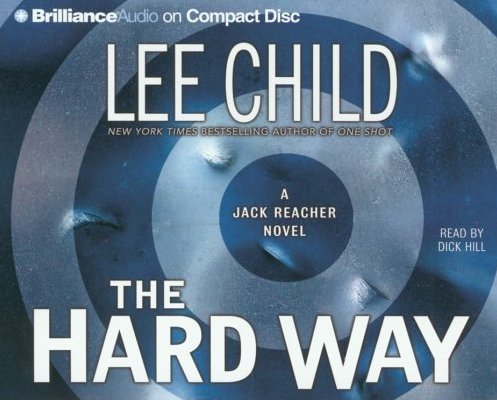
Nothing to Lose by Lee Child (audio)

Lee Child is one of my favorites, as you will know if you’ve been following my blog. His serial character, Jack Reacher, is a tough guy with a good heart who travels the country with nothing but his ATM card, an expired passport, and a folding toothbrush to slow him down. He’s a retired military policeman, just trying to enjoy the scenery, but he keeps getting pulled into hairy situations in which he decides to right the wrongs of the world and protect the little people.

In Nothing to Lose, we observe yet another of those episodes. Reacher is trying to travel diagonally across the country, from Maine down to San Diego. While moving west across Colorado, he stalls in a town called Hope, unable to hitch a ride into the neighboring town of Despair. (Yes, these names have meaning. You’re so sharp!) So he walks instead, but only to discover that the inhabitants of Despair don’t want him around.

Reacher eventually teams up with the sometimes-reluctant Officer Vaughan of the Hope PD. The town of Despair seems to have a lot to hide. At first glance, it’s an unpleasant little company town, owned entirely by the self-satisfied owner of the metal recycling plant, Mr. Thurman, who is also the mayor and the lay preacher. But there’s oh so much beneath the surface, including ties to international military concerns; and Mr. Thurman and his thugs are willing to go to great lengths to get Reacher, and any other stranger, far away.

This, along with the last Reacher I read (or rather, listened to), Gone Tomorrow, tackles issues of politics, the military and US foreign relations. Reacher is surprisingly anti-war, for being military – that is, not anti-war exactly, but against stupid wars of racism and oil-sucking that get American kids killed. He’s a very rational, thinking man. I like this about him. Don’t worry, the politics are way, way background.

Like all the Jack Reacher novels, this one is fast-paced, suspenseful, exciting, and has sympathetic, likeable, complex characters. You’ll be on the edge of your seat; you’ll care very much about what happens. You’ll be outraged along with Reacher, you’ll cheer him on, and you’ll be first impressed and then feel vindicated by his prowess.

I definitely enjoy the Reacher series on audio. Dick Hill is great at Reacher; he’s started to be Reacher inside my head. These get me to and from work very happily every day. 🙂 Thanks Lee Child and thanks Dick Hill, and keep ’em coming! (Unabridged, please.)