a pair of Quixotes

I have a slightly 🙂 ambitious summer plan, y’all. Tell me what you think. I’ve always wanted to read Don Quixote (yes, for the first time), and I hope that this is the year. I have also heard from more than one source about a book called The Female Quixote, or The Adventures of Arabella, by Charlotte Lennox. I think these would make a good pair of companion reads. The latter claims to be “part imitation of and part commentary on” the original Quixote (so says the “product description” on Amazon, usually meaning the back cover or inside flap). Obviously I need the original before reading the imitation & commentary.

This will work towards the Classics Challenge, of course, and will also be a significant reading commitment: Don Quixote runs some 1,000 pages depending on the edition, and the Female is just under 300. I shall take my time! I have a copy of Quixote at home waiting for me, and I’ve just ordered a copy of the Female.
What do you think, am I crazy? Have you read the either? Any thoughts? Any joiners? 🙂 We could call it a readalong if any of you were crazy enough to join me.

a surprise

I had been in a bad wreck, and had spent weeks at my parents’ house, being waited on and recovering slowly, and then quickly. I had discovered that my plans of pursuing a graduate degree were not, after all, shot by brain injury. I had been researching and even applying to graduate schools out of state. I was, as we say in Texas, fixin’ to make a change.

I was at work at the bike shop late one night. Several of my fellow members of our sponsored race team had stopped by for a visit/meeting/beer drinking session. One of them was The Man I’d had a crush on for quite some time. I told him of my plans to leave town, and he seemed a bit shocked.

Just a few of us decided to go out for a beer when the shop closed. The Man was right behind us, we thought.

We met up at a local dive bar. We’ll call it Linda’s. Linda’s is a dingy, dark place; it’s best they keep it dark to hide the bugs and filth. You have to specify that you want your tequila cold or you’ll get it warm. They do keep their Lone Star beer cold, at least.

I’d had a few by the time The Man showed up; I was beginning to lose hope. But happily, he sat right next to me! After sundry conversation… he put his Lone Star down and sort of squared his body, and he said, “Okay. I need to tell you something.”

This is where it all comes out. In the paraphrased words of The Man, he had this new puppy, oh, five years ago. He took his puppy to the dog park to play around. He saw the most amazing girl there! She had this urban punk look about her (or some such) and tattoos. He thought she was amazing. She had a little dog, too. But he knew what a singles scene the dog park was, and he let it pass.

A few years later, he was going to buy beer at the liquor warehouse downtown. He found Sierra Nevada Pale Ale on sale, yay! (Yes, there is product placement in this story.) He rounded the corner in the beer aisle, and oh heck! There was Dog Park Girl! She asked if he needed help with anything, and he mumbled and fled with his case of beer.

At the register, the cashier rang his Sierra up, but the price was wrong: it was full retail. He protested, no, this beer is $31 a case on sale (or whatever it was). She pulled her PA mic over… “Beer assistance… I need beer assistance on aisle 14.” The Man looked up to see Dog Park Girl striding towards him; he hurriedly paid full price for his beer and flew out of the store.

A few years later, he entered the bike shop where he’d been shopping for some 15 years – the bike shop that had sponsored his mountain bike racing for over 10 years – and spotted none other than Dog Park Girl behind the register. He thought to himself, well, time to find a new bike shop.

Back to me. I remember this day. I was new at work, and I was behind the register with my buddy who was training me. I noticed The Man as he pulled into the parking lot in his Honda Element, a car I’d been admiring for its (bike) cargo capacity and supposed gas mileage. (The Man was later to tell me, not so much on the gas mileage.) He was a handsome man. When he walked in the door, I asked him about his Element, mentioning that one of our fellow bike monkeys drove one, too. My buddy-bike-monkey snidely informed me that this was aforementioned bike monkey’s best friend, duh. I grinned embarrassedly at The Man; but he just grinned back. He didn’t speak. He passed us by and went to find the best friend.

For the first year I worked at that bike shop, I don’t think The Man spoke to me, certainly not in polysyllables. He avoided me and went looking for the best friend; he asked to speak to the best friend on the phone. I began to despair that he was one of those sexist bike shop customers who avoids me on principle, sure that a woman couldn’t possibly decipher which size inner tube with which valve type will fit his flat tire, let alone anything more complex.

But we did gradually learn to communicate. For example, he put his foot in it when he asked about my Valentine’s Day plans on the day that I moved out of my ex-boyfriend’s house. He was clearly flustered when I explained what my plans were.

By the time I was ready to join the newly re-forming shop-sponsored race team, we were friendly, and he was able to accept my application and then we were teammates. We even had a few beers together. Fastforward to the night in question: we had had a few beers together, met at Linda’s, and sat together at the bar. We were drinking Lone Star, and he was spilling his guts.

He said that by the time he had encountered me at the dog park, the beer store, and the bike shop, and then we had become race teammates and learned to speak in complete sentences, he had decided he loved me.

My chin was on my chest. I couldn’t believe The Man I’d admired and crushed on and tried to invite to events only to be rebuffed, The Man who wouldn’t speak to me at the bike shop for a whole year because he was a sexist, was not a sexist at all. He was just tongue-tied! And in LOVE?

Two months later, we were engaged, on a beach in Mexico; and another two months after that, we were married under a big tree in a park in hometown Houston. Then we opened our cans of Modelo Especial. I did not leave town for graduate school. That night at Linda’s was the last time I was really, truly, outrageously floored.


I wrote this in response to The Daily Post, which gives daily prompts for bloggers who might be writers-blocked. I rarely respond to the prompts, but I find them interesting. After sitting on this for a while and getting Husband’s permission, I thought I would go ahead and share it here.

book beginnings on Friday: Fallen by Karin Slaughter

Thanks to Katy at A Few More Pages for hosting this meme. To participate: Share the first line (or two) of the book you are currently reading on your blog or in the comments. Include the title and the author so we know what you’re reading. Then, if you feel so moved, let us know what your first impressions were based on that first line, and let us know if you liked or did not like the sentence.

Karin Slaughter’s newest thriller, Fallen, begins slowly – like for six sentences.

Faith Mitchell dumped the contents of her purse onto the passenger seat of her Mini, trying to find something to eat. Except for a furry piece of gum and a peanut of dubious origin, there was nothing remotely edible.

By page two, you will be reluctant to EVER put this book down again. In other words, I’m enjoying it. That’s all I’ll say for now.

This quotation comes from an Advance Reader’s Edition and is subject to change.

The Stronger Sex by Hans Werner Kettenbach, Anthea Bell

A quietly provocative novel that examines the psychology of sex and aging through the eyes of a nervous young lawyer in over his head.

The Stronger Sex is narrated by the young Dr. Alex Zabel, a lawyer saddled by his boss with the difficult task of defending an incorrigible elderly womanizer. He is immediately in over his head. The legal situation is thorny enough: Herr Klofft has fired his former mistress, an accomplished engineer, for taking sick time, and she has protested before the employment tribunal. Zabel’s real challenge, however, is in human relations: he has to deal with his client, Herr Klofft, with his ornery moods, ever-looming mortality and off-color humor; the surprisingly sexy and seductive Frau Klofft; and Zabel’s own prickly girlfriend. The plot is quiet and unhurried, proceeding sedately toward a resolution that is less important than the journey Kettenbach takes us on to get there. Anthea Bell translates from the German with great skill, with fewer awkward moments than many native-English writers.

This novel contemplates old age, sensuality and the relationship between the two. The advances (and retreats) between Zabel and Frau Klofft feel deathly serious in their implications. The young attorney is deeply embarrassed by Herr Klofft’s vulgarity as well as by his own attraction to the elderly Frau. He reacts almost as an adolescent to her worldly charms, struggling to fit the Kloffts’ eccentricities into his conservative world.

While the events that move the action in this book are muted, the layered, potentially uncomfortable questions resonate in the back of the reader’s head. Kettenbach has succeeded in writing a novel that demands reflection. It’s not a psychological thriller, but a psychological study with a legal background, filled with black humor to accompany Zabel’s slightly bizarre relationships. This meditative novel is mildly disturbing but massively thought-provoking.


This review originally ran in the May 19, 2011 issue of Shelf Awareness. To subscribe, click here, and you’ll receive two issues per week of book reviews and other bookish fun!

Fire Season by Philip Connors


EDIT: You might also want to check out my father’s review, and friend Tassava’s, of same.


This is an amazing book. The first sentences immediately grabbed me. Connors works summers in a teeny, tiny tower room way up in the sky in the Gila National Forest in New Mexico, as a fire lookout. His job is to spot smoke and call it in for control or “management” of the fires. But his “field notes” tell so much more than the story of his career as a lookout. This is the story of his time alone in the Gila, and of the visitors he receives and the visits he pays back to town; it’s the story of his and his dog Alice’s interactions with nature. It’s the story of fire and smoke and the Forest Service’s management of fire. It’s a history of fire, of the Forest Service, of the Gila, of so very many aspects of our nation’s history, and the natural history of the southwest. Connors discusses the varied reactions the government has had to fire: the policy of fire suppression, consistently and in every case, versus the concept of “controlled” or “prescribed” burns, and the ongoing debates. He contemplates society, its benefits and our occasional desire to escape it. He discusses his unique model of marriage, in which he spends some five months a year living alone and mostly out of touch. He also relates ecological issues like fire as a natural control mechanism, erosion, and the preferences of flora and fauna. And more.

I found Fire Season astounding and important. There’s a zen-like balance in it. Connors is a rather balanced man, in that he still craves human contact; he’s not an entirely back-to-the-wild isolationist, nor does he fail to appreciate cold beer and a variety of media. But he achieves a special and rare state of commune with nature, too. His writing, for me, parallels this balance. He can wax philosophical, crafting lyrical, beautiful odes and hymns of reverence to nature, fire, and life; but he never gets overly wordy, tempering the poetry with (still beautifully written) narrative history.

Connors tells so many little stories I would love to pull out of this book and share as vignettes. For example, the story of Apache Chief Victorio’s last stand (that lasted over a year) in the vicinity of the lookout tower where Connors is stationed:

That September day in 1879, on the headwaters of Ghost Creek, marks a peculiar moment in America’s westward march: black soldiers, most of them former slaves or the sons of slaves, commanded by white officers, guided by Navajo scouts, hunting down Apaches to make the region safe for Anglo and Hispanic miners and ranchers. The melting pot set to boil.

Or the history of the smokejumpers, which I didn’t know before – the parachuting firefighters who pre-date paratroopers and taught them their trade. Or the tale of the Electric Cowboy. Or the story of the little fawn. I cried, mostly because I empathized. Really, it could be read as a series of anecdotes; but the whole is greater than the sum of its parts. The larger story is important, too. I even glimpsed traces of the training I’ve received in trail-building and (more broadly) land management.

The history, the lore, the anecdotes, the author’s relationship with nature, his relationship with his wife, the landscape of the Gila, the details about local species of bird, fish, and game… there are so many gems in this thoughtful, loving, lovely book. I am not doing it justice. It’s a very special book and I strongly recommend this to everyone, no matter who you are. But I especially recommend it if you are… a nature lover, a hiker, a dog lover, a government bureaucrat, a pyromaniac, an environmentalist, a city dweller, a romantic, a firefighter, a skydiver, a cribbage player, a whiskey drinker, a writer, a loner, a philosopher, a historian, a student, or a teacher. This book goes on The List.

the audio format

I think this post has been somewhat overdue. I mentioned here a while ago that I found the audio format difficult; but in the last several months, I’ve gradually found audiobooks to be a useful addition to my life. I spend about an hour a day in the car just getting to and from work – which I believe is well below average for here in Houston, but is still a good amount of time. I started listening to audiobooks in the car, and never looked back.

I’ve been meaning to dedicate a post here to the question of format, and I got a special prompt yesterday from Sheila over at Book Journey.

So first, the audiobook format. I guess my greatest difficulty at first was just with getting used to somebody else filling in some of the holes that I’m used to filling in for myself: inflections, pace at which characters talk, what their voices sound like. I still find myself taking issue, occasionally, with a reader’s interpretation of a line of dialogue. My other real problem is with the inability to pause and reread. I mean, yes, I can pause and rewind my cd player – but I’m trying to drive, and anyway it breaks up the momentum and flow of a story in a much different way than it does when I’m reading. I like to pause and contemplate while reading, and the audio format is just plain old less tolerant of this habit.

These quibbles aside, however, I’ve come to really enjoy the time I spend listening to books in my car. What used to feel like lost time now is time spent… reading! The reading time I gain is worth my little complaints.

But that said, there are books that are appropriate for audio, and those that aren’t. I like to listen to genre fiction – like murder mysteries – good, fast-paced, entertaining books. For example, I have fully embraced Lee Child’s Jack Reacher series on audio. The reader, Dick Hill, is great; his Reacher voice feels right to me (and what a deal-breaker it would be if it didn’t!), and even if I differ with his timing or inflection occasionally (am I an outrageously picker listener? do you do this too?), I consistently enjoy his work.

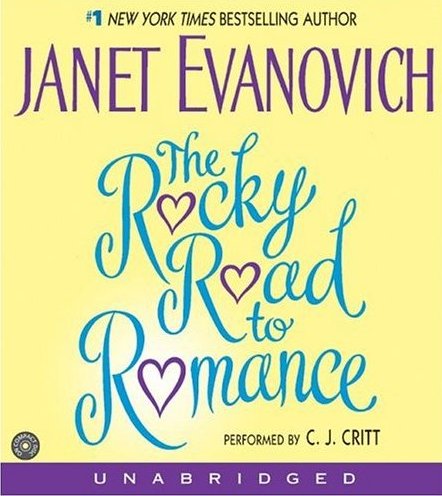
I use the audio format to try out new genre authors, too. For my job as a librarian, I like to broaden my horizons when possible; I won’t like every author I encounter, but at least I can better understand what my patrons want when they request something like Stuart Woods (ugh). I intend to pick up some romance on audio soon; I have many dedicated romance readers as my patrons, and although it’s not my genre of choice, I should stay abreast. For that matter, I haven’t really hated any of the few romance novels I have read. I’ll pick a short one. 🙂

On the other hand, there are books I wouldn’t so much want to listen to on audio. For example, the book I’m reading right now, Fire Season, is a beautiful, lyrical meditation on the outdoors, the natural history of the American Southwest, and much more. I’m relishing each line slowly, and I need the option of flipping back a few pages here and there. It just wouldn’t be enjoyable for me to try to follow it at a reader’s relentless pace, with the necessity of rewinding to try and find that sentence I wanted to hear again. Audiobooks have their place – in my life at least, and there’s a limit to that place.

Now to answer Sheila’s questions! Her post is about the problem of becoming engrossed in an audiobook and having to take it inside. I have SO done that! (See above re: my preference for fast-paced, suspenseful mystery/action audiobooks.) And then I discover a new problem: audiobooks really do belong in the car, for me. Even the most exciting one puts me to sleep eventually if I take it inside to listen to from the couch, lol. No, I have found some utility for them in the house, for doing chores like washing dishes. But mostly, they need to stay in the car. I definitely can NOT do like Sheila and listen to several at one time. I read one book and listen to one audiobook at a time, in general; of course I do pick up and put down books from time to time, so that I sometimes have more than one going at once. I think most of us do that. But as a general rule, I like to stay more or less faithful. It helps keep my thoughts in order so I can write a cogent review for you here! Plus, if I were to have 5 or 6 books going at a time, it would take so long to finish one!

I guess I’ve rambled on. Thanks Sheila for the inspiration for this post. My conclusion is, I do have an appreciation for the audio format. I think I’d prefer to read print books exclusively if I had my way, but at certain times (which for me means driving and little else, but to each her own) the audio version is a great solution.

You can see ALL the audiobooks I’ve read recently here.

Teaser Tuesdays: Fire Season by Philip Connors


Teaser Tuesdays is a weekly bookish meme, hosted by MizB of Should Be Reading. Anyone can play along! Just do the following:

* Grab your current read
* Open to a random page
* Share two (2) “teaser” sentences from somewhere on that page
* BE CAREFUL NOT TO INCLUDE SPOILERS! (make sure that what you share doesn’t give too much away! You don’t want to ruin the book for others!)
* Share the title & author, too, so that other TT participants can add the book to their TBR Lists if they like your teasers!


In a tiny room in a tower 10,000 feet above sea level, Connors keeps watch for fire over New Mexico’s Gila National Forest. This contemplation of solitude and the power of nature sounds like Edward Abbey’s Desert Solitaire which I enjoyed so much. I’m looking forward to it. From page 75:

No matter the length or sweetness of a reprieve, the wind always returns, gales to test the endurance of anyone exposed in a high place. Trees that elsewhere grow a hundred feet tall here hug the ground like shrubs, shrunken, gnarled, and twisted, as if cowering from an invisible foe.

Lovely. I anticipate beautiful writing and a study of nature and natural places. I’ll let you know!

guest review: Suite Française by Irène NĂ©mirovsky (audio), trans. by Sandra Smith – from Pops

I have an exciting guest reviewer today: my father. He’s off for the season now – he leaves Houston for the hot months (must be nice to be retired!) and does all his favorite things: running, riding his bike, camping and hiking and visiting beautiful outdoor settings all over. Not to mention, visiting all the great craft beer and brewpubs he can find. He’ll settle for a few months at a time in some hip small town with the right combination of culture, outdoors, and beer; and he’ll move on for the next attraction. This summer I sent him off with a small collection of audiobooks for all that driving, and he has hesitatingly agreed to see about writing up his reactions to them for me to post here. Today he’s sharing with us his thoughts on Suite Française by Irène NĂ©mirovsky. Pops, you’re on.

This is not a major work, but is indeed unique, intriguing and noteworthy in a number of respects.

Synopsis: this is a work of fiction written contemporaneously with the author’s own experience during the 1940 German onslaught in France and the subsequent occupation and collaboration. Unlike many journal-type works from the period, this is stylishly written with a now-familiar formula using a cast of fictional, intertwining characters to personalize incidents and experiences amidst real-life events. (Among a number of intriguing questions raised by this work – was this formula at all established at the time?)

For me, this reading was reminiscent of Winds of War (Herman Wouk, 1971); while not nearly as ambitious in scope (actually, a strength), Suite Francaise was as engaging both for the characters as well as for revealing historical nuance. I thoroughly enjoyed it, spent time reflecting over it, and was left wishing for the narrative to continue.

So – what’s exceptional about it?

First, much of the impact derives from knowing the author’s own story and how the book came to life. Born 1903, she was a Russian Jewish immigrant to France (1918), converted to the Catholic Church (1939), published numerous works of renown before the war (including one brought to film), was denied French citizenship in 1938 due to Jewish heritage, and has since been criticized for being a self-hating Jew. She was in the course of writing this work as events unfolded, expecting to create a novel in 5 parts. She finished two parts, was denounced by French collaborators and deported to Auschwitz where she died within a month. Many more of her writings were published since the war. But her daughters retained this notebook manuscript, keeping it unread until 1990 due to anxiety over the expected pain of reading her wartime “journal” – only then, before donating the pages to an archive, did they realize what powerful words those pages held. Written 1940-42, it was published in 2004, acclaimed, translated and read internationally.

Reading with this background, there are numerous elements that may gain impact or raise questions either in the context of her own experience or a clear sightline to contemporary thinking of the time.

  • There are a number of musings by characters and narrator about the future during and after the war that raised chills for me knowing they were written so early in the war.
  • The story contrasts individuals’ different experiences of war, from common civilians feeling powerless and distant from the passions of aggression versus the anonymous, indistinct elites and politicians driving the conflict.
  • She sharply depicts still-thriving class contradictions that threaten to surmount the national conflict: aristocrats of mixed national heritage, communists, resistance fighters, the Church, city vs provinces, villagers vs farmers.
  • There is one passage that strongly evokes scenes from Lord of the Flies. This includes one of several “arbitrary” non war-related deaths in the story. I was left wondering about the origin and meaning of these.
  • Aristocrats and other characters tending to be collaborators make reference to their sympathies opposing the advance of Jews, communists and Freemasons (a triad central to Nazi propaganda). Freemasons?
  • How the French characters respond to the war depends greatly on whether they experienced the “first war” only 25 years (and one young generation) earlier, or the 1870 war (with Prussia, resulting in a victorious German Empire); for the entire society the immediacy of both was stunning.
  • As often occurs with translated works (and in this case the separation of 60+ years), numerous passages had me wondering about the author’s full meaning.

Well you’ve sold me on needing to read this book; and I certainly didn’t know any of that backstory, which does indeed enrich the experience. Thanks for the guest post! Please do give us more as you keep listening!

The Big Sleep by Raymond Chandler (audio)

I know Chandler as the mystery author who inspired, among others, Michael Connelly. Connelly is one of my favorite genre authors and cites Chandler as an influence on his work. In fact, Shelf Awareness quotes him (as their Book Brahmin on April 22, 2011), in answer to a question of the book that changed his life: “The Long Goodbye by Raymond Chandler. I was a casual reader of genre fiction. This book made me want to write it.” Thank goodness for that!

I read The Long Goodbye first (and before the above quotation!), and found it to be delightful. I recognized Connelly in his writing style and Harry Bosch in the style of his lead detective. (Of course obviously the influence went the other way around.) So when I saw The Big Sleep on audio – unabridged, necessarily – I snapped it up. I believe the latter was actually his most-renowned work.

You can’t help but like a guy who doesn’t write that “time passed slowly”, but rather writes

Another army of sluggish minutes dragged by.

That’s pretty great. And this:

‘It’s goddamn funny in this police racket how an old woman can look out of a window and see a guy running and pick him out of a lineup six months later, but we can show hotel help a clear photo and they just can’t be sure.’

‘That’s one of the qualifications for good hotel help,’ I said.

You see my point, right? There are some awfully clever, funny, classic moments in this story; Chandler is a fine writer with a distinct style.

The actual story qualifies, too, as clever, funny, and classic. It’s easy to see that this man is one of the fathers of the genre I love. I’m a bit ashamed to note that I’ve read mostly recent authors, and neglected their heritage.

In this novel, Philip Marlowe, PI, is asked to look into a little matter of blackmail for General Sternwood, who has two young, beautiful, highly deviant and troublesome daughters. Marlowe is a man of relatively few, but quite witty words. He fends off both sisters at various point or another while looking into the missing husband of one, unasked. He’s a classic PI; he drinks alone in the morning; I’m pretty sure he wears one of those pulp detective hats – a fedora? At any rate, he releases the Sternwoods from the blackmail and pulls all the pieces together at the end to explain the missing husband too. It’s a tidy little ending, crowned by some grumbled musings on The Human Situation and The Big Sleep.

I liked this book very much and recommend it to readers of detective fiction who want to go back to the genre’s roots.

Do you read in the present or in the past? Do you miss the past, if you read in the present? I know I love my current genre authors (Lee Child, Michael Connelly, James Lee Burke, Elizabeth George) but it’s important and definitely enjoyable also to appreciate the pioneers. I’ve enjoyed Agatha Christie, Raymond Chandler, and one little gem from A.A. Milne; I’ve got a P.G. Wodehouse waiting in the wings. What are YOU up to?

How to Write About Africa

I just wanted to share a little nugget with you here. I’m currently reading a book called One Day I Will Write About This Place by Binyavanga Wainaina. It’s a memoir of the author’s life as a young person in Africa and his experience in becoming a writer. It’s most interesting. I’m reading an advanced proof copy to review this book for Shelf Awareness, and I’ll be sure to post that review if-and-when it gets published.

Included with my advanced proof came a print-out of an article Wainaina had published in Granta magazine in 2005. I found it hilarious, and I want to share it with you. Here is How to Write About Africa.

I confess I’m looking for the same voice in the memoir now. It’s sort of adding a level to my reading. This can be good and bad; but I think in this case it’s just adding to my appreciation of Wainaina’s sense of humor.