Houston Shakespeare Festival presents Othello

I saw this production on July 31st with my old BFF, Gerber. We were sad that my mother couldn’t join us at the last minute. But it was a good time, nevertheless.

I was very glad that I had reread this play before going to see it. I strongly believe that there’s no substitute for this strategy, at least with something like Shakespeare where the language of the play may be a bit foreign. To me, the beauty of a theatre company that really does its Shakespeare properly is that they speak the old English very naturally; but the companion quality, necessary to enjoy it, is the ability to hear it naturally. Having recently read the play, I was able to let the language flow through my head and get all the jokes. (To familiarize yourself, go back and read my review – or, better, go read the whole play!)

I thought the Houston Shakespeare Festival folks did a fine job. Othello was powerful. Iago was odious. Emilia was heroic, more so than in the written play, I felt. Desdemona was more powerful than in print, too: when I read the play she felt like a cowering, simpering, weakly woman, but onstage she came across as a woman with conviction. Granted, her conviction was of love and obedience to her husband, which is not so empowering as one might wish, but still, she spoke with commitment to her values.

I thought the production was wonderful. I was moved. I was also tired, which is a shame, and which I don’t mean as a criticism of the performance at all. But it was past my bedtime, and I drank some wine, and it was dark… Barrett, I guess you’re adding points to my senior card again. Sigh. I wish they could give these plays earlier in the day for us sleepy people, but then it would be too HOT.

The pace of the play was probably a bit slow for me. Maybe that’s my modern-day attention span, although I don’t consider myself to be entirely 21st-century-media-bytes-ADHD. (Can’t stand the Twitter.) Actually, the pacing bothered me a bit in print, too. Maybe it’s knowing what’s going to happen. “C’mon! Strangle her! Tell him how Cassio got the handkerchief! TELL HIM!” At any rate, I had a nice time, although I was out later than usual. And it’s a lovely, deeply tragic play, both on the page and on the stage.

The Fifth Witness by Michael Connelly (audio)

Finally got around to Michael Connelly’s latest via audiobook. This was a good way to fit it into my somewhat busy print-reading schedule (I’m working on two clunksters, Newspaper Titan and Don Quixote), but there was a drawback: I had a real problem with this narrator, and I fear that it effected my reception of the whole book, sadly. Peter Giles’ narration was so heavy and serious it weighed down the story and its potential humor.

Quick synopsis: Attorney Mickey Haller has picked up home foreclosure cases (civil) to fill out his business. But he returns to his roots as a criminal defense attorney when one of his home foreclosure clients, Lisa Trammel, is accused of the murder of a big-time banker involved in foreclosing on her home. There may even be mob involvement: is Lisa being set up?

I’m afraid my disappointment extended to Connelly as well as narrator Giles. I didn’t like how this one felt very didactic. Early on I was offended by lots of Mickey explaining things to his 14-year-old daughter, where the very awkward dialog was obviously just a mechanism to explain things to me, the reader (listener). And that daughter, by the way, seemed awfully juvenile for 14. Almost shades of Sophie’s World, shudder, which I despised. There was a didactic feel to most of the novel, in fact; Haller went out of his way in dialog to explain courtroom procedures, to his client, yes, but also to his staff, who should well know this stuff by now. His client, Lisa, is an unsympathetic character. She was meant to be unlikeable, so I guess I should give Connelly credit for the fact that she drove me nuts. But I’m not sure it was necessary that she be quite so bleating. It’s one thing to successfully pull off an unlikeable character, and another to make me cringe every time she appears.

I did like the little joke whereby Mickey is asked if perhaps Matt McConaughey wouldn’t do well playing him in a movie; but that brings me to another beef with this narrator. McConaughey’s smooth, suave, slightly fast-talking portrayal in The Lincoln Lawyer was very true to Mickey Haller’s persona on the page; whereas this audio narrator has him EM. PHA. SIZING. EVERY. WORD. in an aggressive and abrasive way that I find offputting and inaccurate. Isn’t Mickey Haller’s charm, and effectiveness as a lawyer, wrapped up in his ability to be, well, charming? Likeable? This grunting character in the audiobook doesn’t sound like the Mickey I know from his last three book appearances. It makes me wonder how much control Connelly has over these creative productions of his work – ideally, lots, and maybe that’s why Giles is the third narrator I’ve encountered in, count ’em, three Connelly audiobooks. Mr. Connelly, if you’re reading this (ha), I vote against Giles. It was all I could do to finish this book on audio. I wanted to switch over to print but oh, woe, little reading time and prior commitments.

Things did pick up considerably when we finally got into the courtroom. Haller, and Connelly, both shine in this setting, and my enjoyment of the story and the drama and the action and the dialog all increased when the trial began. I felt that the pace really ramped up; instead of feeling exasperated, I really looked forward to the next installment. But even here, Connelly’s not up to his own standards. Some of the dialog was still contrived, and there were at least two instances were Haller expressed (in his first-person narration to me, the reader) that he didn’t know how to handle a new and surprising incident. These struck me as relatively commonplace courtroom events, though, and his confusion didn’t ring true for me. I mean, I almost knew how to handle things (at least in fiction-land) from my reading in this genre. Haller’s sudden ineptitude – when his character is supposedly so slick and expert – didn’t work for me. These were minor moments, but they drew my attention because they didn’t fit.

I’m mulling over this reading (listening) experience now, wondering how things took such a poor turn for me. I have always been really excited about Connelly’s Bosch novels, and not much less so, all the rest of his work: the standalone The Scarecrow, the first Haller book The Lincoln Lawyer, etc. From his first novel on (and I have now read them ALL), I’ve enjoyed everything I’ve read. How sad and concerning, then, that this latest, The Fifth Witness, is my least favorite so far!

The courtroom drama did work. Some new characters were introduced who might hold some promise, namely Haller’s new assistant counsel, Jennifer “Bullocks” Aronson. And the big revelation at the end? Well, the jury is out (ha) on this so far. I like the future and the new directions it opens up for Haller, and for Maggie McFierce. I think I’m on board with the overarching change of heart it indicates. I am relatively sure I’m on board with the idea that this is a natural progression for Haller. But I’m not completely sold on any of these arguments; and I think the reason I’m not completely sold is that Connelly didn’t sell it. This was not his strongest work.

I hope very much for more to come, soon, and better, and maybe with Bosch, rather than or in addition to Haller? Bosch is my favorite. I realize Haller’s the new star, what with The Lincoln Lawyer movie making such a big splash. It was a good movie – entertaining and well-done and perhaps most important to me, fairly faithful to the book. But I hope Connelly isn’t letting this success dictate his work.

I’m sorry to have to write anything less than glowing about my guy Connelly, but I call ’em like I see ’em. I give The Fifth Witness a “meh” and hope for more, better, soon.

presents in the mail!

What great fun! I got presents in the mail this week! There is some irony here: I came across a post many months ago in which Thomas of My Porch observed, as a thing that puzzles him:

Mailbox Mondays. Who is sending all of these books? Is there an international directory of mailing addresses that I don’t have access to? I don’t necessarily want to get books, but I sometimes want to send books. But I feel like sending books unsolicited would seem a little creepy. How does one ask for an address without seeming to be a stalker?

This resonated with me because I, too, had always wondered where all these books come from. Since then, I’ve begun reviewing books for Shelf Awareness, which means they send me books in the mail frequently. But! Here’s the irony. My first personally-sent, gifted books from a fellow blogger have come from Thomas himself! You may recall that my wonderful two little dogs won Thomas’s Best Picture of a Pet Reading Brookner contest (yay). Well, I got books!

Thank you so much, Thomas, for not only sending me these two books that I am very interested in getting into, but also hand-selecting them for me! I asked nicely to have my reading horizons broadened, with a hint regarding Barbara Pym, and Thomas has chosen for me: Pym’s Some Tame Gazelle (what an interesting title, what on earth??) and The Home-Maker by Dorothy Canfield. I believe the latter is the one he mentioned as “a Persephone title, but unfortunately not in the Persephone edition” – although it is a Cassandra edition, which makes it a women’s-name-edition, for whatever that’s worth. Of the former, Thomas wrote me that “not many (if any) write about it, but I really liked it.” Thomas, I will be pleased to be one of not many to write about it. 🙂 I don’t know if I’ll be able to do it terribly soon because I’m rather reading-busy right now, but I do have a vacation coming up! (We’re headed to the Florida Keys because I hurt my knee so we can’t do the intended mountain biking trip in Colorado. Thus, more reading time.) So, reviews of both of these books are to come on this blog, if not absolutelyrightnow. And I feel like such a lucky girl to have these books personally selected for me. Again, Thomas, many thanks.

book beginnings on Friday: Dancing with the Queen, Marching with King by Sam Aldrich

Thanks to Katy at A Few More Pages for hosting this meme. To participate, share the first line or two of the book you are currently reading and, if you feel so moved, let us know what your first impressions were based on that first line.
Here’s an interesting memoir that has just crossed my desk.

The two most exciting public events of my life occurred before I turned forty.

In the spring of 1953, when I was only twenty-five, I was invited to attend the opening of the new American Embassy residence in London.

This is your standard, matter-of-fact (auto)biography/memoir beginning. Not much flare, and that does seem to be Aldrich’s style. But! I think he has an interesting enough story to make up for it. We shall see.

This quotation comes from an uncorrected advance proof and is subject to change.

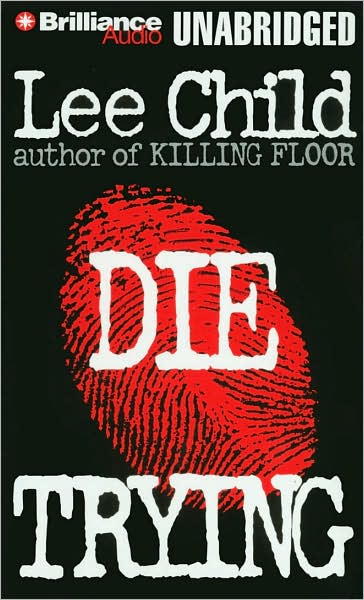
Killing Floor by Lee Child (audio)

My love affair with Jack Reacher is going strong; or perhaps it should be just starting here? This is the very first Reacher novel published. (While Child did later publish prequels, he recommends they be read in publication order rather than chronological order. Read all about it.) So, in this book, the Reacher I’ve come to know is just six months out of the army. He’s a former MP – military policeman – just roaming, trying to figure out what he’s doing with himself. He was raised in the army, living just a few months at a time at barracks around the world. When it was time, he went to West Point, and found spending four years in one place bizarre. Then he graduated, entered the army himself, and has lived the rest of his life a few months at a time at barracks around the world, too. So roaming comes naturally. (This is the first time I can remember finding Reacher to be a music fan. The song “Rambling on My Mind” recurs.)

Reacher roams into small-town Margraves, Georgia, and is arrested immediately on a murder charge. He’s calm; he knows he’ll be cleared, since he didn’t do it. But when he finds out who the murder victim was… he’s involved, and has to stick around. The victims start stacking up, and he meets a pretty girl who’s also a local cop, and Reacher is pulled into a big mess. The team of killers is stalking him, and he’s not afraid to do battle, especially considering who they started with.

I’ve written about Reacher quite a bit. He continues to be big and burly and frankly, sexy, and tough and uber-capable and clever. The plot line is actually pretty predictable: Reacher will kill people. He’ll get away with it. He’ll probably get laid, although the sex is not graphic. (The violence is.) He’ll amaze you and make you gasp. Like a sighing reader of romance novels (who reads not to find out if they’ll hook up, but just to be there when they do), I’m not here to find out how he’ll win – I know he will. The suspense is in who the bad guy is and how it all comes out. I feel a little bit wrenched every time he walks away from the town, the situation, the girl, and the new quasi-friends he’s made. But he’ll keep on walking away.

But this is the FIRST time he’s done it! I was thrilled to meet him near the beginning of his lack of career, his aimless wandering, and see his plans formed. This is the first time I’ve seen him consider hanging around – because it’s his first retired adventure. Later in the series he’ll learn not to consider it. We also get to meet his brother (well, sort of) which gives me a differently-angled view into his background. I look forward to reading the prequels, too, for the same reason.

Come meet Reacher at the beginning, y’all. This is a classic of Reacherdom and I love it.

Pops’s visit to Powell’s Books in Portland

Just wanted to share a few photos from my father’s trip to the famous Powell’s Books in Portland, Oregon.

A quotation he thought we’d like, on one of their blackboards (I especially appreciate that the book’s location is noted!)

LOVE these bike racks with related book titles. (click to enlarge and read ’em all)

“our room at the trendy Ace Hotel – old encyclopedia pages wallpapered to plaster walls!” (is this especially for Powell’s customers?)


And, well, this one is not so directly connected, but: you may recall that Pops and I both read and both raved about Fire Season, by Philip Connors. (My review… and his) So he snapped this fire lookout station for me “at the top of a volcanic butte south of Bend, with a view of the Cascade snow-caps as far north as Mt. Hood, and east into the Oregon desert.” Very nice, Pops.

On a related note: Pops has also been getting into Edward Abbey this summer. I’m not sure if I had a role in that or not; I did strongly (forcibly?) recommend Fire Season to him and cite Edward Abbey as a related recommendation. He may have gotten there on his own, but at any rate the two authors (Connors & Abbey) have a clear link. He actually approached Powell’s with an Edward Abbey need, and reported that, while he’s aware that Abbey is a somewhat obscure choice, they had a full shelf of it and were very happy to talk and help. He points out that this is unsurprising, for Portland and for Powell’s – should be a specialty of theirs – but no less gratifying. He bought three books, including one of Abbey’s novels. I’m not sure I even knew he wrote fiction!


So, I have only read his Desert Solitaire, which I believe is his best-known. It is the nonfiction account of his solitary experience as a park ranger at Arches National Park near Moab, Utah. I read it many years ago, and I retain more of an impression than a distinct memory; what I do recall is that I found it very moving. I recently picked up another of his, The Journey Home, although I haven’t cracked it open yet.

And now Pops has three new books, including a novel. He mentioned that the novel is about a fire lookout, so I think that makes it Black Sun. I’m hoping that he’ll report back to us here on his continued reading, and maybe even loan me a book or two! Hm, Pops?

Teaser Tuesdays: County: Life, Death and Politics at Chicago’s Public Hospital by David A. Ansell

Teaser Tuesdays is a weekly bookish meme, hosted by MizB of Should Be Reading. Anyone can play along! Just open your current read to a random page and share a few sentences. Be careful not to include spoilers!

From page 127,

The high-pitched beeping of my pager pierced the still of the early morning air. My heart-rate increased in a Pavlovian response that harkened back to my days as a resident when the beeping often presaged a patient in trouble.

I am not quite through and thus not writing my review yet, but I can say for now: OMG. This book is powerful and outstanding, and rivaling Fire Season for my Best of 2011 honors. This is not just the story of our nation’s health care system and all its woes, nor a story of racism, poverty, politics and injustice – although it is these things, it is first Dr. Ansell’s personal story, and I find it powerful. Stay tuned.

Gone with the Wind part 2 (ch. 8-16)

Follow the Great Gone with the Wind Readalong at The Heroine’s Bookshelf. Today we discuss part 2.

I continue to be very impressed. Mitchell is positively painterly in her descriptions of people and places. I love the people, and the clothing, the best. I’m not usually all that interested in clothes but the finery of Atlanta’s Civil War era society scene is awfully colorful, elaborate, and foreign to me. This second part of the book has closed in a little bit, I feel, to relatively few characters: Scarlett, Melanie, Miss Pittypat, and Rhett Butler being the features. Scarlett continues to be a character who is not likeable, exactly (I wouldn’t want to be her friend; not that she’d want to be mine!), but is fascinating and I have to say sympathetic – in the sense that I sympathize with her frustrations, even her desire for simplicity, joy, pleasure, attention. She’s human; I understand her. Melanie is less human because she’s so innocent and trusting; it almost stretches one’s credulity, although I guess Southern ladies were trained to be just that, so maybe it’s historically accurate. Miss Pittypat is definitely a caricature, but a well-formed one.

Captain Rhett Butler I find intriguing. I never did understand Scarlett’s passion for Ashley; he seems to be a pretty face and a romantic ideal, and little else. Pardon me for parroting Gerald, but they’re certainly not suited for one another. Rhett, though, should be just up Scarlett’s alley. He’s got spunk and attitude, not to mention he’s also handsome (several mentions of how BIG he is, too) and has plenty of money. Maybe they’re too much alike, with too much irreverence. Certainly he’s not ready to pay her the kind of attention, flattery, compliments, and silliness that she wants. But I find the prospect of Rhett for Scarlett to be much more exciting than the prospect of Ashley.

We’ve moved a little bit away from the slave characters, too, although we did get a brief sketch of “Uncle” Peter and his control over the household. My memory of Mammy dims, but I’m still bothered by a feeling that she (and many of the slaves depicted as loyal and content in their lot) are painted with a political perspective we no longer find appropriate.

Gone with the Wind continues to be a feat: of beautiful, evocative, fine writing and literary descriptions; of character sketches; of historical fiction with all the details; and of suspenseful drama that keeps me turning the pages. I have lots of other reading to do, so I’m putting this one down til the next readalong date (we discuss part 3 on Sept. 5), but with great difficulty! I am grateful that this readalong finally got me reading this classic. Its fine reputation is deserving.

As usual, don’t forget to stop by The Heroine’s Bookshelf for discussion of part 2, and please do join us if you can!

two-wheeled thoughts: Ariel

two-wheeled thoughts

when springtime’s buds are flowering through the land;
while summer’s bloom is strewn on every hand;
and through autumn blows
or the chilly wintry snows,
she drives her airy wheel so free and grand.
–Ariel, The Bicycling World, February 16, 1894, as quoted in Around the World on Two Wheels

where I give myself away as something other than a reader

Don’t panic. I’m a reader, too.

I found a blog post recently that has inspired me to share.

Some of you may have noticed that I have a great passion for bicycles. I have other passions, too, including high-quality, independent, craft beer, and little dogs. (Check out my personal website here.) I have a friend (Hi, Will!) who once said the man who convinced me to settle down was going to have three things in common with me: beer, bikes, and dogs. He didn’t say books.

Husband in support role. literally


I’ve always been a reader. For as long as I can remember, I read more books than the average bear; read at the table; read in bed at night; read all summer; read between classes waiting for the bell to ring. Read in the car on road trips. I like to discuss books. This is why I very nearly headed off for a post-grad degree in English before switching tracks to study library science; this is why I took some post-baccalaureate English just for fun. This is why I joined a book club; this is also why I quit the book club very shortly after joining, because it wasn’t enough like grad school for my tastes. (My bad.) This is why I have this blog. But perhaps my choice of a reading blog, rather than a book club, is revealing. I feel that reading is a very personal activity or passion. I can talk about the books I read with other people – I like to – but the reading of it is an individual pursuit.

Husband was never going to make it without a love for beer, bikes, and dogs, all of which of course he has in spades. The cycling, especially: during race season (at least 7 months a year) we travel 2-3 weekends out of the month, and I get up before 6am, 7 days a week, for 4 months straight every spring. We drive thousands of miles; we take cycling vacations; we spend our weeknights and weekends on the bike year-round. It is a physical fact that if we did not share this hobby, we would not be together. He shares it. It’s all good.

Husband & I in Terlingua


But reading? He doesn’t share this interest. He barely reads at all. Maybe magazine articles. (We scour Bike magazine’s annual Trails Issue for vacation ideas. Like, that’s how we decided to go to Vermont.) That’s okay; he doesn’t bother me when I read. He watches more television than I do – and is responsible for my recently acquired ability to tune out the television (um, mostly) while I read. But generally he’s a doer, not a sitter. And how great is that? This is a man who, given the day off or to “work from home,” will bake a batch of bread, build a deck in the backyard, change his oil, and sew on a button before he makes dinner. I am not complaining.

We don’t share reading as a passion, but he’s tolerant when I want to tell him about a book I’m reading. And he has actually come around to books, when they’re audio: when he flies on an airplane, he gets me to bring him a few audiobooks for the flight. He’s discovered he likes Michael Connelly and Lee Child (see, we’re like bookends). And we made this discovery in the best possible way: on a long road trip, together, to some of the best mountain bike trails in the driveable world. We listened to audiobooks, together, and shared the suspense, the surprises, and the enjoyment. Together. I guess this is the most important part, to me: that when it does come time for “reading” (eh, listening) to be a shared activity, we share the same tastes. That’s kind of the common factor here: having tastes in common. We like to eat the same foods, drink the same drinks, listen to the same music, go to the same places on vacation, ride the same trails. That’s how we get to spend time together, see?

So while I need for the Husband to share several of the passions that are most important to me, I don’t need him to share the books. Only one of us can read the same book at the same time, anyway! (I mean, physically, the same copy of…) But the little dogs are not negotiable.

Husband's caption for this is, "I'll be right here..."


I love you, darlin.