Musing Mondays: the last book

I don’t often participate in Musing Mondays (hosted by MizB at Should Be Reading, and thank you ma’am) but today’s topic was too tempting to pass up. So here, briefly, are some recent books in my life.

What was the last book you…
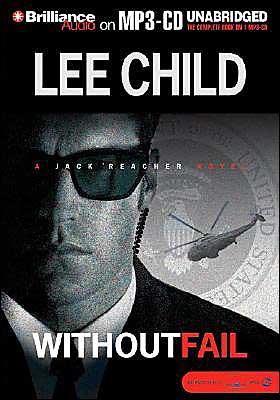
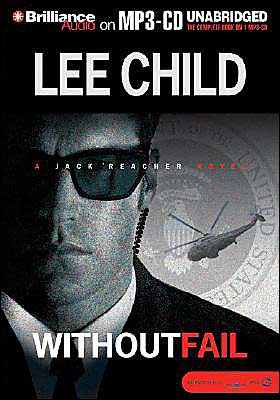
• borrowed from the library? The library where I work? Lee Child’s Tripwire on audio. (I’m almost through with Die Trying so it’s up next.) The library where I do not work? Hm, that’s hard… it’s been a while… would have been The Mapping of Love and Death by Jacqueline Winspear, according to my library account online. (I turned on the history-recording feature. It doesn’t do that automatically, of course. USA PATRIOT Act and rights to privacy and all.)
• bought? Gone With the Wind. For the readalong.
• cried over? Hemingway’s Boat by Paul Hendrickson. I’m waiting for Shelf Awareness to publish my review so I can post it here, but to say it briefly, I loved.
• disliked and couldn’t finish? Dancing with the Queen, Marching with King.
• read & loved? The Barbarian Nurseries by Hector Tobar (review to come at Shelf Awareness). recommend.
• got for review? (or: got in the mail?) I guess the last one to arrive was Masscult and Midcult, a collection of essays by Dwight Macdonald which I did not make it very far into at all before giving up. (failed to be the last book I disliked and couldn’t finish because I was more BLAH or MEH than EW about it.)
• gave to someone else? The Barbarian Nurseries, again, along with On Bicycles, both handed off to buddy Fil. (I want Barbarian back though, because my mother is next in line for it.)
• stayed up too late reading? Hm, you know, I’ve been pretty good lately! So good in fact that I can’t even name one for you! Or maybe I’ve just been that tired? I was certainly out too late last night, coming home with Lee Child’s Die Trying audiobook in the car, does that count? (We went to a Katrina Memorial event headlined by the New Orleans Hustlers Jazz Band. Most of the acts were questionable but the Hustlers were great fun.)

And what are YOU up to these days, bookishly?

two-wheeled thoughts: M.S.

two-wheeled thoughts

On silent steed of steel she rides
Past nature’s beauteous bower;
Life’s moments spent while thus she glides,
To her seem sweetest hours.
–M.S., The American Jewess, June 1896, as quoted in Around the World on Two Wheels

did not finish: Dancing with the Queen, Marching with King by Sam Aldrich

I was sent a galley copy of this book for review, but was not able to stomach it.

Alexander “Sam” Aldrich was born a blue-blood in New York state, silver spoon and all. He received a good classy upbringing, but pursued more philanthropic goals than just earning money as I believe was expected of him. He worked as a lawyer, then in city and state government. His book begins with an explanation of the title: first, a brief account of having danced with the Queen of England at age 25, and then a several-chapters-long narrative of his experience marching with Martin Luther King, Jr. from Selma to Montgomery, in his thirties. In telling of the march on Montgomery, Aldrich is at his strongest; his passion and indignation at injustice comes through. And although I looked carefully, he never claimed to have fully grasped what it was like to be a poor black man in Alabama in the 1960’s.

Throughout, Aldrich’s writing is very poor. He’s clearly writing as he talks; it’s conversational; but it’s also full of grammar mistakes, run-on sentences and the like. A conversational style can be endearing and casual, but this came across as amateurish; surely the State University of New York Press wants to keep its name clearer than this. Yes this is a galley copy, but I’m not talking about a few typographical errors that will be corrected in copy editing; I’m talking about a writing style that made my skin crawl.

Aldrich’s story fell short for me quickly. I made it about halfway through the 270ish pages and felt bored. I fear that the Selma to Montgomery march may have been his greatest moment, and if so, he may have done better to not let it go in the first few chapters. I think his claim to fame is his refusal to be a standard rich guy, but what he did instead did not strike me as so remarkable as to keep this book afloat.

The final straw was reference to the outing, blacklisting, and harassment of communists in the 1950’s, which I thought we were done being proud of; but this 2011 publication toes the McCarthyist party line perfectly. I had been peering suspiciously sideways at Aldrich’s semi-concealed conservative agenda, and coming across this ugliness was the end for me.

Final verdict? I can’t entirely judge, of course, having been unable to even finish the dern thing; but my impression is: a poorly written memoir of a semi-remarkable life, with a partially-concealed political agenda that I personally find abhorrent. Not for me.

County: Life, Death and Politics at Chicago’s Public Hospital by David A. Ansell

I read ~150 of County‘s ~200 pages in one night, and forced myself off to bed. Finished the next day. Ansell is no professional writer; I itched to get out my red pen here and there. But his story is powerful and evocative, and his passion for the injustices he describes absolutely screams off the page.

I found myself swept away in the story of “County,” as Ansell refers to the Cook County Hospital in Chicago where he spent the bulk of his career. As a med student, he and his friends suspected they wanted to go to County, famous for its overcrowding, underfunding, racial disparity, and incredible challenge. His group was concerned about social injustice. Fresh off antiwar protests and sensitive to racism, these idealistic young med students drove down from New York to Chicago to visit the hospital and interview with Quentin Young, then Chairman of the Department of Internal Medicine, famous pioneer of desegregation and human rights in health care. They were shocked at the squalor and disorganization, even having come in with some impressions. Ansell & friends, eventually known as the “Syracuse Group,” conspired to become residents at County, precisely because of the challenges it presented.

Ansell is strongest when telling his personal story. Residents at County in his day (he started in 1978) had little to no supervision or assistance from their attending physicians; he describes an environment in which the residents all muddle through together, cooperatively, learning as they went. This was a great education but often resulted in less-than-optimal care for the poverty-stricken patients. From resident, he goes on to a position as an attending physician at County, although his original plan had been to head back east after completing his residency. He was immediately hooked, though, by the neediness of County, the organization, and his patients. He was also involved in politics and activism from his first moment on campus – literally. He attended a meeting on the day of his scheduled interview for residency.

Over the years, Dr. Ansell would serve in various positions in the ER and in the outpatient clinic, and be part of the birth of the Breast Cancer Screening Program and County’s AIDS Clinic. His patients, and their problems, made deep impressions on him. He was active in trying to right the wrongs of the health care system and of County’s management and underfunding in particular. When the politics really get going, Ansell can get a little bit soap-boxy. I have mixed feelings about this aspect of the book. While unquestionably passionate, righteous, and well-informed, he can tend to come on a little strong. Preachy, even. My concern here is the one my old buddy Gerber expressed about Barbara Ehrenreich’s Nickled and Dimed: On Not Getting By in America, years ago: the author’s personal political starting point is so overtly obvious that the (actually very strong) point of the book may be dismissed because of the author’s prejudice. Speaking as someone who DOES share Ansell’s politics, and who still feels that he can get a little preachy, I have concerns about the book achieving its goal of education and perhaps even changing minds.

But the stories about Ansell’s experience learning and working as a professional doctor, the stories about his patients and their troubles, and the stories about the challenges of County… its politics, the underfunding, the horrific and inhumane conditions… these are where Ansell shines. It’s a powerful, emotional, evocative book. It makes good points: it argues that access to health care is a human right, and should not be dependent upon health insurance or employment status. It is definitely a political book. I recommend it, just with a few reservations. Because it is short and engrossing, you can almost read this book in one sitting or two. And I think it is absolutely worth your time.

book beginnings on Friday: The Coldest Fear by Rick Reed

Thanks to Katy at A Few More Pages for hosting this meme. To participate, share the first line or two of the book you are currently reading and, if you feel so moved, let us know what your first impressions were based on that first line.

The Coldest Fear is the latest crime thriller from the author of The Cruelest Cut.


It begins:

Snow hung heavy in the branches of Scotch pine and cedar trees, and where it hadn’t turned to slush, the land was covered in a foot of snow. The storm had surprised everyone, and as the tall, dark-haired young man stepped off the bus in the town’s center he could hear generators humming in every direction.

Almost a classic “it was a dark and stormy night” start, but more original; it makes me already want to know more about this young man of the hair so dark. All right, I’m in, Reed.

What are you reading this weekend?

This quotation comes from an uncorrected advance proof and is subject to change.

The Picture of Dorian Gray by Oscar Wilde (audio)

I am having some trouble writing up my experience with this book. Please bear with me if I ramble.

I struggled with this book, which frankly surprised me a bit. I tend to enjoy The Classics; I expect to enjoy them. I’ve had relatively few failures (ahem, Faulkner and Henry Miller, I’m looking at you). But I fear that Oscar Wilde may not be for me. I listened to this book on audio. Is that the wrong way to do it? It may be my first attempt at a classic in this format. You’d think it would be more accessible this way.

We open with a scene in which Lord Henry is visiting his friend Basil, a painter. They admire Basil’s masterpiece to date, a portrait of a beautiful young man. Basil expresses a deep infatuation with the young man, whom he does not want to share with Lord Henry in any way, not even to tell him his name; but shortly, Dorian Gray appears. His new friend Lord Henry makes him a speech about the glorious and fleeting nature of his (Dorian’s) youth and beauty, which leads Dorian to make a speech (there’s a lot of speech-making, more so than dialog, if you ask me) in which he wishes that he could always be young and beautiful, and his portrait grow old and ugly in his place.

Well. In case you haven’t heard of this famous story, he gets his wish.

Dorian follows other advice of Lord Henry’s, which is not advised. A large part of his new life philosophy involves taking every pleasure one can without considering consequences, seeking beauty. Dorian courts a young woman from the lower classes and then dumps her, resulting in her suicide; this is when he first notices that the portrait has begun to change. It shows marks of sin; there was a “touch of cruelty round the warped lips.” After some agonizing, he decides to go on living an evil and dissolute life, and letting the portrait shoulder the results.

I found my interest fading in and out. Wilde has these moments of brilliant, shining beauty: his descriptions of people can be remarkably fancifully, finely painted. For example, the people Lord Henry finds when he comes in to dinner at his aunt’s:

Dorian bowed to him shyly from the end of the table, a flush of pleasure stealing into his cheek. Opposite was the Duchess of Harley, a lady of admirable good-nature and good temper, much liked by everyone who knew her, and of those ample architectural proportions that in women who are not duchesses are described by contemporary historians as stoutness. Next to her sat, on her right, Sir Thomas Burdon, a Radical member of Parliament, who followed his leader in public life and in private life followed the best cooks, dining with the Tories and thinking with the Liberals, in accordance with a wise and well-known rule. The post on her left was occupied by Mr. Erskine of Treadley, an old gentleman of considerable charm and culture, who had fallen, however, into bad habits of silence, having, as he explained once to Lady Agatha, said everything that he had to say before he was thirty. His own neighbor was Mrs. Vandeleur, one of his aunt’s oldest friends, a perfect saint amongst women, but so dreadfully dowdy that she reminded one of a badly bound hymn-book.

But I found Lord Henry to be entirely intolerable, and Dorian and Basil only slightly less so. When any combination of these three self-centered gentlemen of leisure shares dialog, I want to throw things.

“Harry, you are dreadful! I don’t know why I like you so much.”

“You will always like me, Dorian,” he replied.

I can’t stomach the tone of self-satisfaction. (I wonder if if the voice of the narrator is part of my aversion.) Lord Henry, especially, philosophizes endlessly and meaninglessly. I can’t pay attention to him, no matter how hard I try. He is forever telling his young, impressionable friend Dorian that things will “always” be one way or the other. It irritates me. Perhaps this is Wilde’s point? Maybe I am responding just as he intended me to. I don’t care; I don’t enjoy it.

So to carry on. Dorian hides his portrait and lives a life of sin and pleasure. The storytelling speeds up; we see many years go by while the (anti)hero pursues one indulgence, then another. There are more gems of beautiful, poetic writing in the description of the items Dorian collects, like jewels, tapestries, and music. Here, discussing the lore of the gemstones he collects:

In Alphonso’s Clericalis Disciplina a serpent was mentioned with eyes of real jacinth, and in the romantic history of Alexander, the Conqueror of Emathia was said to have found in the vale of Jordan snakes “with collars of real emeralds growing on their backs.” There was a gem in the brain of the dragon, Philostratus told us, and “by the exhibition of golden letters and a scarlet robe” the monster could be thrown into a magical sleep and slain. According to the great alchemist, Pierre de Boniface, the diamond rendered a man invisible, and the agate of India made him eloquent. The cornelian appeased anger, and the hyacinth provoked sleep, and the amethyst drove away the fumes of wine. The garnet cast out demons, and the hydropicus deprived the moon of her colour. The selenite waxed and waned with the moon, and the meloceus, that discovers thieves, could be affected only by the blood of kids. Leonardus Camillus had seen a white stone taken from the brain of a newly killed toad, that was a certain antidote against poison. The bezoar, that was found in the heart of the Arabian deer, was a charm that could cure the plague. In the nests of Arabian birds was the aspilates, that, according to Democritus, kept the wearer from any danger by fire.

There’s a lilt, a rhythm to that passage, that makes it almost musical, itself.

And through it all, the portrait bears the ugliness of his actions. I guess this is where I say, I had some trouble with all the discussion of the physical manifestation of sin and of goodness; Dorian’s society takes for granted that beautiful people are good and evil people become ugly, so no argument against Dorian’s virtue can be entertained, since he’s so youthful and beautiful even 18 years after the story begins in Basil’s painting studio. This may be one of those fancies one should just accept in fiction, and maybe I was just too grumpy at my other complaints to accept it, but it didn’t work for me. Or, more to the point: perhaps Wilde is actually attacking this very concept, and I’m missing his point. The whole thing grated on me, though, instead of making me think, if that was indeed his intention.

My gripes are numerous, aren’t they? Am I being unfair? There were definitely a few moments of glistening gorgeous writing; but the philosophizing was intolerable, and the dialog was more like a series of monologues, and I just couldn’t buy into the gravity of the ideological arguments. It was all fluffy talk, and I fear Wilde meant for it to be taken seriously.

I spent the bulk of this book waiting for it to be over so I could go on to Truman Capote’s In Cold Blood, which by the way is so far really wonderful. (Timely bonus link: 10 Writers Who Moonlighted as Dandies lists both Wilde and Capote, naturally.) I feel sorry I couldn’t appreciate more of this classic work, but I couldn’t. On the other hand, because of those beautiful bits, and Wilde’s reputation, I sort of wish I could take on this book as a subject of study with an expert – maybe in a college course – and have its quality explained to me. I’m really baffled.

Do you love this book? Can you please explain its redeeming qualities?

Ruby Red by Kerstin Gier, trans. by Anthea Bell

Not being a big reader of YA, or time travel, or fantasy/alternate realty/insert-concept-here, it surprised me how much I was drawn to this book. But I was.

Before I tell you about this story, here’s a funny detail I noted right off: the translator, Anthea Bell, also translated the last book I read from-the-German, The Stronger Sex. This title is YA where that one was decidedly adult material, but I guess a strong German-to-English translator is the same across the board. I hadn’t really thought about it before. Just as I said about The Stronger Sex, Bell gets full credit for making the translation invisible. If anything, the language here is a little more awkward; but having read that other example of Bell’s translation, I think this awkwardness comes from the original. If I hadn’t known, I wouldn’t have suspected translation issues – I would have assumed just what I have come to feel is a common YA writing issue. It feels a little bit effortfully simplified, if that makes sense. It’s something I’ve encountered in YA before. I guess it’s a reading-level thing. Like in Miss Peregrine’s Home for Peculiar Children, it bothered me slightly when I focused on it, but the story ended up engrossing me enough that it faded into the background. I don’t read a lot of YA. If you don’t, either, this little issue may irk you as it does me; if you read a fair amount of YA, chances are good it won’t faze you.

Gwen is trying to live a normal teen existence in present-day London, but her obnoxious cousin Charlotte’s destiny is difficult to ignore. Charlotte has inherited the family’s time-travel gene, and any day now, she’s expected to take her first trip. She’s been trained all her life in languages, history, the mannerisms of different periods, fencing, dancing, and music. But when the first uncontrolled time travel occurs, it’s not Charlotte, but Gwen – of all people! – who finds herself in an unfamiliar era. She’s thrust unprepared into a complicated world, and finds herself partnered in adventure with Gideon de Villiers, the time-travel-gene-carrying teen of his own family. He is snotty and bossy… and sooooo handsome…

I enjoyed the intrigue, the plots and codes and ancient documents and secrets and mysteries. I enjoyed the world Gier builds. I even enjoyed, mildly, the juvenile romance. But I didn’t get enough of any of it. I felt like the set-up for the story took 3/4 of the book, and then the story began and –whoosh– please buy the sequel that comes out in 2012. Is this a YA thing? I was frustrated and unsatisfied; but I’m also intrigued enough to seek out Sapphire Blue, the aforementioned sequel. Sigh. I guess she got me.

Teaser Tuesdays: Hemingway’s Boat: Everything He Loved in Life, and Lost, 1934-1961 by Paul Hendrickson

Teaser Tuesdays is a weekly bookish meme, hosted by MizB of Should Be Reading. Anyone can play along! Just open your current read to a random page and share a few sentences. Be careful not to include spoilers!

Ohhh you guys, I almost tear up just thinking about this guy. I’m a big fan of Hemingway’s work, and an amateur scholar of his life; he was such a fascinating, complex, difficult, sad man. I adore him and I love to read what he wrote, and what others have written about him. And Hendrickson is doing it for me! This is a great book, aside from my personal obsession with the subject. More to come (I’ve gushed too much already). Now for your teaser, from page 287 of my galley copy.

To me, the mentions suggest that even or especially up in Michigan, even for an exuberant boy who’s not yet seventeen, getting your sleep is crucial, and not only for physical reasons. Without it, darkness is already visible, if just barely.

I like how he evokes the darkness here. As Hendrickson notes (and every Hem scholar knows!), not only Ernest himself would die by suicide, but also his father, two (or maybe three) of his siblings, and his granddaughter.

This quotation comes from an uncorrected advance proof and is subject to change.

The Ransom of Red Chief by O. Henry

The Story of the Week this week is The Ransom of Red Chief, by O. Henry, and I strongly encourage you to go spend 10 minutes on it if you have never read it. I had never read any O. Henry, and I was very pleased. He’s a funny man! Go read this quickie about “two desperate men” and their scheme to make a few bucks.

Houston Shakespeare Festival presents The Taming of the Shrew

Petruchio and Kate

I saw this production on 8/7 with Husband and another couple. (And I reviewed the written play recently, here.) It was a good time! For one thing, I remembered my spectacles this time, so I could see the stage. Also, we all stayed awake through the whole thing. As I said about Othello, the pacing might have been a bit slow, especially for a performance that was past my bedtime… in the dark… viewed from a blanket on a hill with a glass (or two) of wine (or beer).

I thought this performance was outstanding. The bawdy humor came through loud and clear; even Husband followed the whole thing (with some quick briefing beforehand). Some of the modern costume choices were cute and clever, too, and Husband got a kick out of the scene in which Hortensio, in disguise as an appropriate music instructor, tutors Bianca. He’s sort of wild metal guy, and that was fun.

So we had a lovely evening outside, even in Houston – the key being to wait until after dark to be out there. The Houston Shakespeare Festival, in its 37th year, has done it again. This performance was professional, clearly presented, understandable to regular folk, and funny! The humor of The Taming of the Shrew came through. I really think that, when performing Shakespeare, your job is to just let the bard speak, and they did.

As to the misogyny question, I don’t think they took a stance, but just presented the text, with its underlying bawdiness, and let us draw our own conclusions. I will continue to optimistically believe that Shakespeare didn’t mean for us to take him too literally. Really, Kate’s submission at the end is too ludicrous to be intended seriously – right? What do you think?