book beginnings on Friday: Edward Abbey: A Life by James M. Cahalan

Thanks to Katy at A Few More Pages for hosting this meme. To participate, share the first line or two of the book you are currently reading and, if you feel so moved, let us know what your first impressions were based on that first line.

Today we’re taking a look at a biography of Edward Abbey.


The more Abbey I read, and love, the more I want to know about the man. Do you do this? My interest in an author of nonfiction invariably turns to the author himself (or herself). I’ve been looking for a few Abbey books, in this case. This was the biography I chose. I also have a copy on the way of Doug Peacock’s Walking It Off. Peacock was the inspiration for Abbey’s fictional character Hayduke, of The Monkey Wrench Gang, and his book is a reminiscence of their relationship. But that’s another post.

Cahalan’s biography of Abbey begins, in the introduction:

This is a book in which I seek to separate fact from fiction and reality from myth. At the outset, I have to tell readers that Edward Abbey was not born in Home, Pennsylvania; he resided in several other places before his family moved close to Home. And he never lived in Oracle, Arizona.

Already I’m learning things. I had already observed, as Cahalan continues, that Abbey claims a birth in Home and a late life and death in or near Oracle. These place-names are nicely symbolic, which has to have appealed to him, and his PO Box in Oracle helped to deflect some of the fans who pursued Abbey in his later years and who he (understandably, I think) wished to avoid. But who knew he fudged the truth so hard, and so early on, and in such relatively unimportant details? (There will be another post here soon about the friction between fact and nonfiction writings.)

I’m really excited about this biography, as I’m excited about Abbey in general and also debunking biographies in general. And I love that in the short introduction, Cahalan mentions Hemingway, riding bicycles, and the ill-fated trip through Big Bend with his then-fiance that Abbey writes about in The Journey Home – three things I love. 🙂

What are you reading this week? And are you excited?

“Grandpa’s Lesson”

Ray March, author of River in Ruin (which will be published April 1, and which I read and enjoyed; my review will be published in Shelf Awareness) has graciously given his permission for me to share this poem with you here, from his blog. Thanks, Ray.

Grandpa’s Lesson

By Ray A. March

My grandfather on my mother’s side was a quiet man.
That’s what I say from what I can remember.
He was a house painter, but mostly he was a fisherman.
My uncle said grandpa was a mediocre talker.
He was and he wasn’t. It all depended on who he
was around. Maybe that went with being a fisherman.
Not talking too much. And my uncle took from an old
wooden box a paper-thin leather wallet.
“This was your grandpa’s,” he said handing it to me.
Inside the wallet’s cloudy plastic window I could see
my grandpa’s last fishing license. There it was, January 7, 1945,
number 29554. Three dollars.
I don’t know why it took my grandpa so long
to get his fishing license that year because 1945 began on a Monday,
but grandpa waited until the following Sunday to pay his three dollars.
He probably figured there wouldn’t be anybody on the river on a Sunday,
as if that was the only day he had to fish, which it wasn’t.
“My dad,” my uncle would say, “he’d quit in the middle of
the day to go fishing.”
The last time I remember fishing with my grandpa I was eleven
and I couldn’t catch a fish no matter what I did.
So, I watched my grandpa as he played out his fly line.
I knew when he had a bite. I knew when he lost one.
All the while not saying a word.
I could see him silently playing the line out when he had a big one on.
And I would watch the tip of my pole with great concentration,
sometimes imagining it was nodding up and down ever so slightly.
I concentrated so hard, I tried not to think. Of anything.
So, as my grandpa wordlessly reeled in fish after fish
I finally gave up and took off my shoes, rolled up my pants and
prepared to go wading.
“I’m quitting, grandpa, I can’t catch anything.”
He looked over at me and smiled.
“But tell me, grandpa, how do you catch a fish?”
He smiled again and said,
“You got to talk to them.”

“Grandpa’s Lesson” first appeared in Gray’s Sporting Journal, May – June, 2007

I share this for Husband, and all the others who are best able to appreciate literature where it intersects with fishing. (Natalie, I think you have one of them, too?) Although I think the lessons learned here go well beyond fishing. What do you think?

two-wheeled thoughts: Edward Abbey on bicycles, or anything non-motorized

two-wheeled thoughts

A man on foot, on horseback or on a bicycle will see more, feel more, enjoy more in one mile than the motorized tourist can in a hundred miles.

–Edward Abbey, Desert Solitaire

I will give him the benefit of the doubt and assume he means a woman, too. I’m just relieved to see that Abbey acknowledges us two-wheeled, human-powered vehicles as part of the solution. 🙂

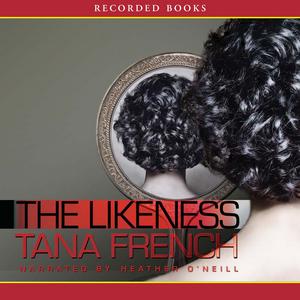
early review: The Likeness by Tana French (audio)

I’m doing something a little bit different here today. I’m so bursting with enthusiasm for this book that I’m going to post my review-ish thoughts now, even though I’m only about 1/3 of the way through. Then I’ll write my normal review when I’ve finished, and we’ll see if I still love it. Ready?


Ohhh I am reeling over this wonderful book! This is my third Tana French, and three is all she’s written so far; hurry, Tana! I need more!

First of all, I find the plot to be very imaginative and engaging. I think about this book all day and at night, and itch to get back into my car or somewhere I can listen to more of it. I think it’s a unique premise; at least I’ve never encountered anything quite like it.

Cassie Maddox is a Dublin detective. She worked undercover, then murder, but these days is cooling her heels in domestic violence, recovering from the trauma of an old case and cautiously enjoying a relationship with a fellow detective, Sam, from the murder squad. Sam calls her up early one morning in a panic: he needs her at a murder scene right away, which doesn’t make any sense. When she gets there, she’s reunited with her old boss from undercover, Frank Mackey, which also doesn’t make sense. Then she sees the body. Not only is this girl her virtual twin (Sam’s panic explained: he thought it was her), she’s using the name Alexandra “Lexie” Madison. She’s using Cassie’s old undercover identity. She was pretending to be who Cassie used to pretend to be.

Frank talks Cassie into returning to undercover, becoming Lexie Madison again, and infiltrating this second pretend Lexie’s life, living with her housemates and teaching her classes and working on her thesis, pretending Lexie was just injured and not killed at all. Ostensibly the goal is to solve the murder, but everyone has their own motivations. Cassie needs to understand why this mystery girl took on her old cover, and what threat may still remain to her. She suspects that Frank is excited at the challenge of this unprecedented investigatory technique. And Sam just wants her safe, doesn’t want her undercover living a pretend dead girl’s life; but he recognizes yet another reason she needs to do this: she desperately misses the electric buzz of working undercover.

So Cassie enters Whitethorn House, to share her life with four fellow English students. The five are unnaturally close; they share a chemistry, and clearly, they share secrets. But is one of their secrets the identity of Lexie’s murderer?

This is a remarkable work of suspense and atmosphere. There is an undercurrent, too, of psychological terror; Cassie is frequently stunned, pinned, by what she and the dead version of Lexie share, finds herself frighteningly at home in this other person’s clothing, relationships, home, routine. I never leave Cassie’s dramatic, pins-and-needles double life. She absolutely has me wrapped up in her world, her tendency to relax in Lexie’s life even though that’s the last thing an undercover should do, her total focus on who this girl was. Add clever turns of phrase; moments of laugh-out-loud hilarity; the brusquely loving relationships between Cassie and Sam and (even better) Cassie the hardnosed detective and her old boss Frank; a fully-developed Irish setting; and an enormously complex, real, and likeable heroine… and you have far and away the best work of fiction I’ve encountered this year.

Oh, and the audio production: more raves. Heather O’Neill does Cassie’s Dublin accent delightfully. I love the singsong, lilting quality and the emotion she puts into every scene. The voices of Cassie, Frank, Sam, and Lexie’s housemates – not to mention Lexie herself, whose voice is different from Cassie’s – are distinguishable from one another. And she perfectly imparts that suspenseful, atmospheric tone, which reminded me from the first lines of du Maurier’s Rebecca. Whitethorn House, like Manderley, is almost a character in itself; it seems to have moods, personality, and secrets.

I can’t say enough good things about this book, or about the audio production. Rush out and find yourself some Tana French. Tana: write more books!

library visit: the Julia Ideson building; and Some Recollections of a Western Ranchman by William French

My journey began thusly: having decided to visit the Gila National Forest with Husband this summer, I was doing some research on the website (above) relating to our trip: camping, weather, trails, maps, sights to see, what to expect. I was very pleased to find a suggested reading list (scroll to the bottom). Like many avid readers, I often like to do some reading relating to a place I plan to visit.

This reading list consists of some travel books, the Leopold which I was already interested in, and others that I either began searching for or decided I didn’t need. And then there was this one: Some Recollections of a Western Ranchman, by William French. I took a look at my local library’s catalog, without much luck; and then I looked on Amazon and figured out why: this book is long out of print, with used copies running well upwards of $100. Well, I don’t think I want the book that badly; I don’t really know if I want it at all. But I’m interested, because the Houston Public Library does house a copy in the Texas Room at the Houston Metropolitan Resource Center at the Julia Ideson Building.

This had me intrigued enough to pay a visit. I hadn’t been to the Ideson Building in a few years, since I was a library student and toured with my mother. It’s a lovely space. For 50 years, from 1926 to 1976, this building served as Houston’s central library; its namesake was Houston’s head librarian from 1904-1945. In 1976, the Jones Building was opened on the same block, and today that’s our main library, and the one I grew up with; it’s some 5-6 stories tall, and I grew up with the children’s library in the basement, although now it gets a sunnier treatment (following a recent renovation). The Jones Building is, in my opinion, a fine library in its own right, but the Ideson Building is really lovely. Please do go check out some beautiful photographs (and renderings) provided by The Julia Ideson Library Preservation Partners. You can read more about the building and very recently completed and so well-deserved renovation here.


So what of the book? Well, I entered the Texas Room, which bibliophiles would recognize as a classic reading room in the days before Kindle. I was asked to lock my purse in a locker – no pens, water bottles, or theft opportunities allowed! – and then I waited in this lovely space while a librarian fetched the book I wanted from the closed stacks. There were accountant-style lamps on the tables, but I sat near a window and didn’t need one. I was given William French’s Recollections, in two volumes, bound in what I assume was a custom book box, and I gave it a look.

lovely reading room


As it turns out, the book itself was not the most impressive part of this visit. I spent a little time with it, and encountered a few funny or poignant anecdotes. But each volume being some 300 pages long, I knew I wasn’t interested in making the commitment with a book I couldn’t carry around myself. It is a memoir by a Dublin-born man who traveled to the American Southwest in the late 1800’s and had adventures there, and I read about ranching, local politics, tracking and hunting bears, frontier weddings, and more; apparently French was a friend to the Wild Bunch including Butch Cassidy, which is part of what has made his memoir of some enduring interest. (Not so much enduring interest, however, that this book is still in print.) I think it has some entertainment value, but is not so well-written or sensational to make for popular reading; clearly it has historical value to the time and place it represents, which is why it’s on the Gila’s list of suggested reading. How it ended up in the Texas Room is a little mysterious, as the librarian I asked said that the collection mostly covers not Texas, but more specifically Houston-related resources; I asked how this book (which mostly covers New Mexico) ended up there, and she guessed that perhaps its donor was somehow related to Houston. No worries, of course; I’m glad this hard-to-find book was available to me to touch and read in such a lovely setting.

reasons why we read what we read

Do you ever think about how you make your choices? I know my fellow book bloggers do: they list the books they’ve picked up and note that this one was mentioned by their favorite author or that one biographies a figure they find relevant for a certain reason. Many times we make reading choices conscious of our reasons, even consciously pursuing new directions: feeling the need to read more diverse authors, read more women, more nonfiction, learn about a subject, or follow an interest inspired by… any number of things, really. Oftentimes my future reading is guided by my past reading. Hemingway has inspired my reading of so many of his contemporaries, for example. The Hellman biography I’m reading now is taking me in so many nonfiction directions; I want to read more about the several waves of the labor movement, for example, and the several waves of communism (and Communism) in the U.S. after reading about Hellman.

But I don’t think we always make our reading choices for conscious reasons. We absolutely do judge a book by its cover sometimes, or cover blurb: a Lee Child blurb will always catch my eye, rightfully or wrongfully (is he being paid for it?). In the library where I work, I see people make reading choices based on their covers regularly. Covers are especially good indicators in romance and so-called chick lit (don’t blame me, I didn’t name it). And while I’m on the subject of the library, this question – how we choose our reading, and whether we’re aware of it – is especially pertinent to readers’ advisory services, where we recommend reading based on what the patron has enjoyed in the past. Joyce Saricks (who doesn’t seem to have a website! but is the author of several books on the subject – go look her up, she’s wonderful) articulates the need for understanding why certain books appeal to us, for reasons outside of subject. For example, a reader is not necessarily interested especially in reading books about murder cases in Los Angeles; she might be more interested in the mood, the atmosphere, the psychological background, even the writing style exemplified by Michael Connelly. All of this means thinking about why we like certain books.

How about for purposes of travel? My parents do a lot of this when they travel. There is the reading of guidebooks, of course, but to me that’s a chore, part of trip planning. The real fun is in reading the history of the place, or fiction set there, and that’s very much at the forefront of some of the reading I’m doing these days, too. Our upcoming trip to the Gila came more or less out of a book – Fire Season – and in planning for that trip I’ve been looking at some reading in turn. Aldo Leopold’s A Sand Country Almanac is on the list, as well as a book I recently made a trip to go view (more on that in a day or two), Some Recollections of a Western Ranchman by William French. And for an upcoming trip to Ireland, I am accepting two books from my mom and my buddy Barrett (who’s going to Ireland with Husband and I, what fun!): one fiction, one nonfiction, I told them. Because of course I’m very busy reading all the Edward Abbey I can find (which interest also came from Fire Season), and I have a stack of books for review from Shelf Awareness, too. That’s another motivator to read specific books: because I have book reviews due!

So I’m looking at the stack of books on my desk right now, and it’s composed like so: two books recommended by a friend (one a gift from same); one sent by an author; eleven from Shelf Awareness, awaiting consideration for review; one biography of an author I admire, checked out from local library; one memoir of a friend of same author; two Ireland travel books; one book by an old favorite author; two books just arrived in my library (where I work) that I’m interested in. I think these represent a variety of reasons why I read what I read.

Why do YOU read what you read?

And for another post – feel free to write this one! – having discussed why we read what we read, the larger question: why do we read? That might be a longer post. 🙂

movie: To Have and Have Not (1944)

The Howard Hawks movie To Have and Have Not is based loosely on Hemingway’s novel by the same name, which received a lukewarm-at-best reaction from critics. Faulkner was involved in working on the script, making this a pretty literary movie; add to this mix Humphrey Bogart, fresh off the success of Casablanca, and throw in Lauren Bacall’s first movie appearance, and you have a hell of a recipe. Bacall & Bogart met on the set, developing the on-screen chemistry they would be known for, and the off-screen romance that would end Bogart’s marriage to Mayo Methot so that he could marry Bacall.

And Bacall at 19 is a formidable screen presence. It was hard for me to believe her age – although, as Husband pointed out, 19 was a little older then than it is now.

she lights a cigarette for him...

The plot resembles that of the novel, but with a number of changes. The two agree: Harry Morgan (Bogart) is a charter fishing boat captain, accompanied by his drunken mate Eddie. A customer named Johnson has just walked out on his bill after fishing with Harry for several weeks, which financial hardship leads Harry to reluctantly take on the smuggling of illegal passengers onto his island. From here, they differ. The novel’s Cuba becomes the movie’s Martinique, under Vichy rule, just after the fall of France. The Chinese passengers in the novel become a French resistance couple in the movie; and most importantly, Bacall’s character is wholly a creation of the film. Harry’s family life in the book is quite different.

he lights a cigarette for her...

Bacall’s character is Marie but we know her as “Slim” (and she calls Harry “Steve,” for reasons I never grasped). She has shown up in Martinique alone and broke, and immediately she and Harry feel an attraction to one another. She sort of hangs around as Harry’s drama with the French develops. He goes ahead and transports the resistance fighters, out of financial necessity but also out of friendship with hotel owner “Frenchy.” The local Vichy government harasses him for his apparent sympathies. When one of his illicit passengers is shot, he is reluctantly convinced to play doctor, involving him momentarily with the French wife, which makes Slim jealous. Slim briefly takes a gig singing in the hotel lounge, giving us one great scene. Harry has a sweet, not entirely explained loyalty to the drunken Eddie; things wrap up with the three – Harry, Slim and Eddie – about to sail into the sunset together.

Not surprisingly, I was a little disappointed to not find a little more Hemingway in the movie, but that didn’t last long. To Have and Have Not is a snapshot into a moment in film history with iconic stars, smoldering romance, and likeable piano-playing sidekicks. It was very enjoyable.

book beginnings on Friday: The Likeness by Tana French

Thanks to Katy at A Few More Pages for hosting this meme. To participate, share the first line or two of the book you are currently reading and, if you feel so moved, let us know what your first impressions were based on that first line.

I loved Tana French’s In the Woods and Faithful Place, and as I plan an upcoming trip to Ireland (my first), it seemed natural to pick up another Irish-set mystery. Bonus: this one is an audiobook, so I’m hoping to adjust a little bit to the accents I’ll be encountering soon! (I’m not always so good with accents. At least it’s not Scotland; that’s an accent I really can’t decipher.) We begin:

Some nights, if I’m sleeping on my own, I still dream about Whitethorn House. In the dream it’s always spring, cool fine light with a late-afternoon haze.

That’s lovely, in my opinion. It’s atmospheric. One of the things I love about French is the sense of place she creates in her books, which of course is of special interest now since I’m planning a trip there. And this beginning is almost reminiscent of Rebecca, isn’t it? Last night I dreamt I went to Manderley again…

Juliet by Anne Fortier (audio)

Juliet is a fanciful play on Shakespeare’s Romeo and Juliet, with a modern-day romance and a historical mystery. Julie Jacobs of today’s Virginia is a little bit aimless and drifting at 25, when her beloved great-aunt Rose dies and leaves her a mysterious set of instructions: Julie is to go to Italy, where she was born, even though Rose had always refused to discuss her childhood there. She has a key to what appears to be a safe-deposit box at a bank, and not much more. There is some connection to Romeo and Juliet, a play Julie has always been a little bit obsessed with. Her twin sister Janice is cut out of the Italian connection – a relief to Julie, since Janice has always been the evil twin.

Upon arriving in Italy, the sheltered and naive Julie is accosted by whirling, complicated forces. Apparently she is descended from the ancient Tolomei family, in fact from Giulietta Tolomei, who seems to have been the real-life inspiration for Shakespeare’s play, whose romantic drama played out in 1340 Sienna. The Tolomeis have had a centuries-old rivalry with the Salimbeni family, and today’s Salimbeni matriarch befriends Julie – who we now know as Giulietta – with suspicious eagerness. There is an antagonistic Siennese man lurking around right from the start – and pardon my spoiler (because I don’t really think it is one), but you know how these mysterious antagonists are apt to turn into romantic interests…

Soon Julie/Giulietta is being stalked by faceless motorcycle riders, befriended or harassed by ancient cults, discovering centuries-old artifacts, and searching for a nameless treasure she thinks her mother – who she can’t really remember – has left for her in Sienna. She gradually learns that she is the modern-day Juliet, and only finding her Romeo will save the day, ending an ancient “curse on both your houses.” And, of course, the bitchy-to-the-point-of-caricature Janice shows up to muck up her adventures.

I was conflicted for most of this book. Often I was fascinated, or at least invested in the characters and wanting to know what happened. I was curious about the question of whether Julie was a little nuts – imagining things – and living out the ancestor-worship of beautiful, historic Sienna, or if there was an actual metaphysical/ghost story element to the book. In other words, would the mystery turn out to have supernatural causes, or were there merely real-life villains behind the smoke and mirrors? This question I will not answer for you, as it was one of the only sources of real suspense for me.

The biggest problem for me was some of the overwrought language Fortier employs. See my recent Teaser Tuesday for an especially ridiculous turn of phrase; and see also “…a wave of warm oblivion rolled onto the shore of my consciousness” or “…I wished more than ever that I could conk out just like her and fly away in a hazelnut shell, leaving behind my heavy heart” or “…the clues I needed were somehow bobbing around aloft, like newborn balloons trapped by a ceiling high, high over my head.” Newborn balloons? Really?? There was something else about her slipping through a doorway like a dryad between the cracks of time or something (I can’t find the passage right now). This style got in the way of my ability to focus on the story.

And the story was mostly good, but not always. For one thing, as alluded to above, certain elements of the romance were predictable. As I understand it, readers of typical romance novels do not care to be surprised; it’s okay if we know all along that Jack and Jill will end up together. But this, trying to be a little more of a suspense, was a touch predictable for my tastes (considering, too, that I’m not a reader of typical romance novels). There were definitely some moments when the characters left something to be desired, too. For example, the heroine realizes, when her inheritance turns out to be a dud at her beloved great aunt’s funeral, that maybe she was unwise to run up $20,000 in credit card debt while relying upon the expected inheritance. Her reaction does not seem to be that running up that kind of debt was unwise, but that it has turned out to be unwise in light of the absent inheritance. I have to say that this is not the most sympathetic quality to give your heroine if you want me to like her. She’s a little flimsy for my tastes. In addition, the pathetic nature of her self-loathing, and the supreme bitchiness of her infinitely more glamorous twin sister Janice, were too superlative to feel real. These are archetypes, not people.

But the characters grow and develop some, to be fair. Janice and Julie are both bigger, better people by the end, the romance is fairly satisfying, and the mystery is fairly well-resolved. This is not the most literary book you’ll find, nor the most deeply-felt or fully-wrought mystery or romance. But there is some suspense, and some enjoyable history and appreciation of Sienna – a lovely place I now want to see for myself. The characters are quirky and grew on me despite my protests. And even in my occasional frustration, I couldn’t put it down, so that’s a vote in favor.

Cassandra Campbell’s narration also gets a mixed review. Julie’s voice, with Southern twang, got on my nerves a little but also felt very realistic; the Italian accents I cannot judge for authenticity, but they felt right to my ignorant ear, and Alessandro the handsome Siennese antagonist came off as appropriately smoldering. Janice was almost intolerable – just as she was supposed to be. Both the twins’ voices were immature and verging on the Valley girl (in Southern translation) when they bickered: again, this was faithful to the story, but sometimes grating. In the end I give Campbell good marks; I was often bothered by the voices she played, but I think that was just her faithful portrayal of those in the book.

My final judgment seems to be that this was a fairly satisfactory book in the end, but I had my reservations throughout. It might work better for a lover of “pure” romance than it did for me, and I know it has its fans out there. Have you read this book? Please share your thoughts. I’m always interested in how these things grasp us differently.


Rating: 3 conifers.

hemingWay of the Day: as reported by his son Gregory


I’m stretching the definition of my hemingWay of the Day feature just a little bit. This is a quotation, not from Papa himself, but from Gregory H. Hemingway’s book Papa: A Personal Memoir. Here’s Gregory writing, and quoting his father.

He said he loved to read the Bible when he was seven or eight because it was so full of battles. “But I wasn’t much good reading at first, Gig, just like you. It was years before I realized that ‘Gladly, the cross I’d bear’ didn’t refer to a kindly animal. I could easily imagine a cross-eyed bear and Gladly seemed like such a lovely name for one.”

Isn’t that sort of darling? Aside from being funny, I think it’s a good example of what charmed me so much about Papa as seen through Gigi’s eyes: that he was often a tender and loving father. Here we see him reassuring his son the late reader. Gigi’s book is still resonating with me weeks afterward; isn’t it nice when a book does that for us?