a few more photos: Drive-by Truckers in Nashville

Following up on my earlier Walk About Town post, Husband has graciously shared with us a few pictures he took with his magicphone. Thanks, Husband!

John Neff on the guitar

John Neff on the guitar


left to right: Brad Morgan on drums; Patterson Hood on vocals/guitar; Mike Cooley "the stroker ace" on vocals/guitar; and David Barbe on bass, recently replacing Shonna Tucker who we miss very much.

left to right: Brad Morgan on drums; Patterson Hood on vocals/guitar; Mike Cooley “the stroker ace” on vocals/guitar; and David Barbe on bass, recently replacing Shonna Tucker who we miss very much.


Neff on steel guitar

Neff on steel guitar


silhouette.


Lovely pictures, Husband. Thanks for sharing!

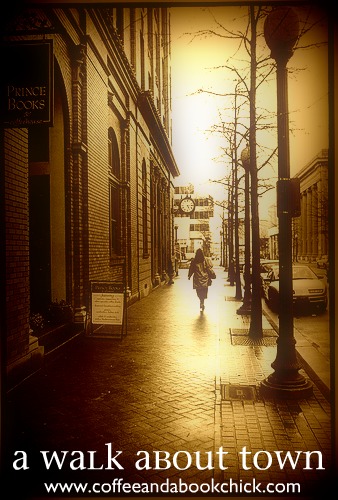
A Walk About Town: Nashville

A Walk About Town is hosted by Natalie over at Coffee and a Book Chick.

Y’all, I had the *BEST* time last weekend! Husband and I flew to Nashville on Friday afternoon to catch not one, but two back-to-back concerts by our favorite band, the Drive-by Truckers. And not only were the shows great, but we found the city to be very pleasant and attractive (although cold), and with some neat things to see, too.

For example: did you know that Nashville is “the Athens of the South”? I didn’t. We visited Centennial Park, the setting for the Tennessee Centennial Exposition of 1897 (the state’s 100th anniversary was actually in 1896, but it took them a little while to get the fairgrounds together!) – think Chicago World Fair (of the same time period) but on a statewide scale. They had a great many exhibits, including an Indian Village and a Chinese Village, etc. which would not pass PC-muster in modern times; and the park is still lovely today. But the real draw for me was the Parthenon. That’s right, Nashville boasts the world’s only full-size replica of the Parthenon of Athens.

Nashville's Parthenon in Centennial Park


After the Exposition, it was allowed to crumble and decay, ivy crawling up its walls, but they later restored it and just in the last 15 years built their full-size replica of the 43-foot-tall statue of Athena that resides within, making it a still more faithful copy. Also within are replicas (also full-size) of the fragments of the pediments of Athens’ Parthenon; the originals now reside at the British Museum. I am a fan of Ancient Greece, and this was an absolute treat for me. Husband was patient with me and even found it a little bit interesting himself I think!

the western pediment depicts Athena battling Poseidon for the right to patronage of this new city. (guess who won)


the eastern pediment depicts Athena's birth - you recall, she sprang fully-clothed and arms from the head of her father, Zeus.


the statue of Athena. they are careful to explain that the gaudy face paint and gold leaf is believed to be historically accurate.

the statue of Athena. they are careful to explain that the gaudy face paint and gold leaf is believed to be historically accurate.


And finally, the rest of the park was a nice outdoor space but not so pleasant while we were there at just-below-freezing temperatures and a biting wind. The Canadian geese (accompanied by mallards in the scenic waterway) did not mind so much.

Canadian geese - they let us get very close. quite tame, of course. I'm sure they're fed by a lot of tourists


can I show you one more picture of the Parthenon?


From Centennial Park we moved on to Antique Archeology. If the Parthenon was my choice, this one was Husband’s; he’s a fan of the show American Pickers, and this is one of several (I think) of their stores where they sell the goods they “pick.” It was funny to see the scene; what presumably used to be an antique shops or good-junk shop is now kind of a theme park for fans of the show. One whole wall is t-shirts. It was packed (on a Saturday – of course) and we didn’t stay long but Husband got a souvenir koozie and we had a nice chat with an employee. Here is Husband’s arty shot of the window sign:
just don't look if it hurts your face

just don’t look if it hurts your face


The building it was in was really cool.
Marathon Automobiles houses Antique Archeology

Marathon Automobiles houses Antique Archeology


From there we needed a break, so hit up Blackstone Brewery, where we had several good beers and a great lunch. Our bartender, Chris, was very friendly, and I do appreciate a chatty bartender as Husband can attest. It was a perfect way to warm up and while away our afternoon before napping and heading out for live music. Look, they even have a little library nook!

lovely! no actually we sat at the bar.


I did get around to reviewing the pub on Beer Advocate, where I’ve gotten lazy and done less reviewing in recent years. I don’t know if you can still view reviews there without logging in, though. It’s free to set up an account, but not everyone will want to. Try here and let me know. If you’re looking around, I’m texashammer and mine will presumably be the most recent Blackstone review at least for a little while.

But what of the live music, you say? That was our whole original reason for being there! I don’t really have too many pictures to share from that part of the weekend, for one thing, but I’ll tell you the story (and save the best picture for last).

We saw both shows at the Cannery Ballroom, which despite getting mixed reviews we found a great place all around. Beers are waaay cheaper than at the House of Blues in Houston where the Truckers have been playing every time they’ve been to town in recent years. (Boo hiss HOB.) The sound was good. (I finally remembered my ear-plugs on the second night!) Friday night’s opening act, Nikki Lane, was great – a country singer-songwriter with a gender-equal band and kind of a loungey feel to her twang. Saturday night’s opener was The Bobby Keys Band, and they were rad, too. The Truckers absolutely killed it; these were two of the better shows I’ve seen despite Cooley being (ahem) a little buzzed on Friday night. Both nights they played us an encore that must have been 30 minutes long – a real treat. My only complaint is the 9 or 10 songs I counted that we heard both nights. This is a band with too much material – even having lost bassist and songwriter Shonna Tucker recently (sob!) – to give us repeat material. But they’re all good songs. (If you want to hear about the night from someone with better rock-show vocabulary than I have, there’s a pretty good article here.)

And here is the highlight: both nights I hung around after and got to talk to steel guitarist Johnny Neff, and he was so nice! People, I tell you I’ve been milling about after these shows for years, and this was my first reward. On Saturday night he even let me take a picture with him!

me with steel guitarist John Neff!


Johnny! Thanks for taking the time to talk to me. Keep up the good work!

Sorry for the long post but what a super great weekend I had. Thanks for the Valentine’s Day present, darlin! We love Nashville and I can’t wait to go back. Anybody else get up to anything cool this week?

two-wheeled thoughts: Willie Weir on dining

two-wheeled thoughts

As a cyclist I try to avoid places with cute French names. These inevitably are dining establishments. Touring cyclists seldom dine, they feed.

–Willie Weir, “Beauties and the Beast,” South Africa section, Spokesongs

Remember, a cycle-tourist travels by bicycle; in this case, Willie is a self-supported tourist, meaning he carries all his gear and fuel and supplies on his bike. In other words, he needs calories. This two-wheeled thought comes from a funny little story involving a “dining establishment” in which he doesn’t feel he belongs.

Teaser Tuesdays: When Women Were Birds: Fifty-four Variations on Voice by Terry Tempest Williams

Teaser Tuesdays is a weekly bookish meme, hosted by MizB of Should Be Reading. Anyone can play along! Just open your current read to a random page and share a few sentences. Be careful not to include spoilers!


When I was sent this book by Shelf Awareness for review, I knew the name Terry Tempest Williams, but couldn’t place it. I had a good feeling, though. I looked up her previous works and found the one I’d read: Pieces of White Shell, which I read at least several times as a kid (middle school, ish?) and enjoyed. Now I have a good feeling, even more. My review won’t post for a while (closer to the publication date of April 10), but for now, enjoy this teaser.

I will never know her story. I will never know what she was trying to tell me by telling me nothing.

But I can imagine. This act of creativity is my joy and protection.

And isn’t this the beautiful truth of love and power?

In a word, this book is a series of musings on voice, inspired by the shelves of copious journals left to to Williams by her mother – all empty.

This quotation comes from an uncorrected advance proof and is subject to change.

did not finish: Alice I Have Been by Melanie Benjamin

I got not quite halfway through Alice I Have Been. I was looking forward to this book; I liked the sound of it. As it turned out, though, I couldn’t get motivated to continue. I wasn’t hating it, I just wasn’t particularly enjoying it, wasn’t particularly engaged, and I have so many books waiting for my attention that I’m trying to be very open to DNF’s. And I didn’t want to keep reading this one; so I’ve moved on to something that might please me better.

I really had two main complaints.

One, I spoke too soon in last Friday’s book beginning. The child-narrator I said sounded believable quickly took a turn in the other direction. Young Alice seems especially quick to empathize with others in ways that I don’t think are realistic for a child her age. For example: receiving a compliment – realizing the giver of said compliment had made her feel special when she so needed to – wondering if he has anyone in his life to provide the same service to him – giving him an awkward and dishonest compliment – musing that “every person, no matter how old, how matter how odd, needed someone like that [to make them feel special] in their lives.” Does that sound like an 8-year-old to you? It does not, to me. Or again, marveling “at how one man could appear to be so different to so many people.” Or being concerned at whether the musicians at a festival had gotten a break for dinner. While these moments make Alice seem very sweet and thoughtful, they don’t ring true for such a young person. Children, I think, are naturally selfish; empathy is something we learn with age. Especially a privileged child like Alice (who unthinkingly accepts her mother’s convention of calling all maids Mary Anne) would be unlikely, I think, to be concerned about meal breaks for musicians of a lower social class.

Second, the subject matter was starting to wear on me. The thesis of Alice I Have Been up to the place where I quit (page 155, if you’re concerned, of 345 in my edition) seems to be that the child Alice was not only the muse but the beloved of the adult Charles Dodgson aka Lewis Carroll. As young as age 8 she adores him, and feels but cannot name a tingling sensation in his presence that later morphs into physical attraction. At 13 she initiates physical touching (totally tame, of course, but definitely inappropriate) and demands that he wait for her until they can be together – this will be when she is 15 and he 35, she thinks (and it appears that this would indeed have been socially acceptable). The short version of which I think is: Dodgson was a pedophile. He went all trembly and ecstatic in the proximity of this 8-year-old child. This was distasteful to me.

A few caveats to this second protest. First, because I didn’t finish this book, I don’t know how things turned out. It may be that Benjamin turns things around and I have a misconception which will never be corrected (because I won’t finish the book). I don’t know. But for my purposes here, I don’t care; I see what I see and I don’t like it. Second, I’m not afraid of reading about pedophiles. I’ve certainly read far worse (graphic, violent, sick) in thrillers, etc. and will do so again. But I didn’t like it here, it wasn’t what I was looking for, and I didn’t feel like reading any further, so I shan’t. That’s all.

A lot of people love this book and perhaps you do (or will) and I wish you all the enjoyment in the world; but in a few days’ investment I was not interested in finishing this book. I’m moving on to something I hope to enjoy more. Come back tomorrow and find out what in the next edition of Teaser Tuesdays. 🙂

Boca Daze by Steven M. Forman

A witty sexagenarian PI who’s unafraid to take on a wacky variety of villains all at once.

Steven M. Forman’s third novel (following Boca Knights and Boca Mournings) checks back in with retired Boston cop Eddie Perlmutter, better known as the Boca Knight. Now firmly established as a private investigator in South Florida, Eddie is hit by several cases simultaneously. First, a homeless man claiming to be the Depression-era sad clown Weary Willie is attacked, and a local reporter asks Eddie to look into the circumstances. Then a new friend, World War II vet Herb Brown, suggests an investigation into a too-good-to-be-true investment scheme. For good measure, an old mobster acquaintance (and former foe from his days with the Boston PD) asks Eddie to take on the Florida “pill mills.” Eventually the Boca Knight finds himself staking out a Catholic church, traveling to Tallahassee to lobby the state legislature and palling around with a homeless woman with a tragic past. All this, while experimenting with Viagra to try to keep up with his much-younger girlfriend.

Eddie is wry and self-deprecating; the overall tone is humorous, his battles with “Mr. Johnson” especially so. Don’t sell Eddie short, though: despite the laughs, he can still take on gangsters a fraction of his age. Forman briefly but seriously addresses the Florida health crisis caused by a barely regulated prescription drug market, and then Boca Daze wraps up all its tragedies neatly and hopefully, with a wedding and a boxing match. Fans of lighthearted mysteries, South Florida or elderly heroes will be more than pleased with the Boca Knight’s latest quests.


This review originally ran as a *starred review* in the February 7, 2012 issue of Shelf Awareness for Readers. To subscribe, click here, and you’ll receive two issues per week of book reviews and other bookish fun!

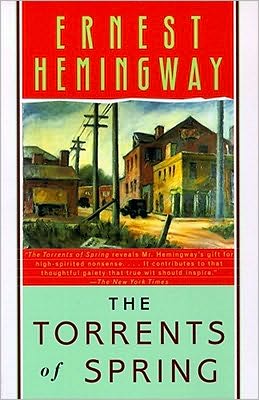
On Paris by Ernest Hemingway

On Paris is a collection of Hemingway’s dispatches for The Toronto Star from Paris when he was a young man, living with his first wife Hadley and hoping to become a successful novelist one day. It is brief, almost just a pamphlet at 70 pages; a person could easily sit down and read it in one setting (as I did, with a nap in the middle, with a puppy in my lap and rain on the roof, ah). The articles, intended for newspaper readers, are very short. Sometimes they are fairly well anchored in “news” but more often they are humorous musings on culture – the French versus the American or Canadian – including food & drink, legal niceties, Parisian manners, the nightlife scenes in various cities around the globe compared, even ladies’ hats. Unlike what I think of as “serious” newspaper reporting today, there is a tongue-in-cheek tone in almost every article. Rarely does he play it straight, which makes this book so fun.

I began to list the funniest highlights, but that is clearly a waste of my time. These are all funny short pieces and perhaps most importantly, I was pleased to note that Hemingway’s “voice” is present even in these early examples of his writing. He is droll. He pens deceptively simple one-liners with deadpan delivery; there is a one-count pause for his audience to get the joke. He makes observations that are incisive and sometimes frivolous. While not his mature work, and not fiction for which he is best known, I found this a very enjoyable little nibble of Hemingway, and I recommend it.

My parents brought me this book as a gift from Paris, as a contribution to the shrine that I was then completing. I can’t remember, but I think they got it at Shakespeare & Co.; I know they went there; Mom, can you confirm or deny? And of course there are other Hemingway “On” books: Hemingway On Writing, On War, On Fishing, On Hunting… but I still have By-Line: Ernest Hemingway too, to serve my need for excerpts of his journalism.

Have you read any Hemingway and what do you think of him?

book beginnings on Friday: Alice I Have Been by Melanie Benjamin

Thanks to Katy at A Few More Pages for hosting this meme. To participate, share the first line or two of the book you are currently reading and, if you feel so moved, let us know what your first impressions were based on that first line.

Charles Dodgson, who you know better as Lewis Carroll, based his Alice in Wonderland character on a real-life little girl he knew, named Alice Liddell. Alice I Have Been is the fictionalized life story of Alice Liddell. (That is, as I understand it, squarely fiction, although I can’t speak to where the line is drawn – especially not having read much of the book yet!) I have heard about this book for some time and am glad to finally be picking it up. It begins:

But oh my dear, I am tired of being Alice in Wonderland. Does it sound ungrateful? It is. Only I do get tired.

Makes sense to me; fame is tiresome, I’m told.

I am enjoying the tone of this book so far very much; the child-narrator we begin the book with feels very believable to me. My only concern at this point is the extent to which Dodgson feels like an icky child-groper! Tell me I’m wrong?

What are you reading this weekend?

The Journey Home by Edward Abbey

This is why we read Ed Abbey. He has the power to make me laugh and cry within a few pages.

I cannot describe The Journey Home better than Abbey does himself: this book is a collection of “adversary essays and assays, polemics, visions and hallucinations… published piece by piece in various odd places from Audubon to the Vulgarian Digest” and “fragments of autobiography, journalistic battle debris, nightmares and daydreams, bits and butts of outdoors philosophizing” (from Abbey’s introduction). The subtitle is “Some Words in Defense of the American West.” It works very well in the ways he describes: it is indeed a defense of the American West (although as he puts it another way: “the idea of wilderness needs no defense. It only needs more defenders”). It is a lovely collection of some journalism, some hallucinations and dreamings, and some eloquent essays.

The introduction to The Journey Home is devoted to arguing why he is not a nature writer; he’s just a guy with a lot of experience in and love for nature, writing a memoir that naturally includes a lot of nature. I hope he would forgive me, were he still here, for saying: Abbey, you are a nature writer. Memoirs they may be (and watch out for his novels, too: I loved Fire on the Mountain; was disappointed by Black Sun which apparently he really loved; and am excited to crack open his best-known and arguably movement-starting The Monkey-Wrench Gang) but they are also some of the finest nature writing we’ve seen. His own arguments notwithstanding, Abbey absolutely belongs in the company of Thoreau and Muir. I recognize so much of what I, and modern authors and political thinkers and philosophers I admire, have thought and felt and written, in Abbey’s earlier work. He is important.

He is also so angry! He can be so funny, so flippant and casual (Husband and I both laughed til we cried over “Disorder and Early Sorrow”), but so angry, too. Rightfully so, of course, in detailing strip-mining operations and the destruction of the woods he played in as a kid. He is a contradiction; he reminds me very much of a much-loved friend who will recognize himself in this review. He throws beer cans out the window as he drives:

Rumbling along in my 1962 Dodge D-100, the last good truck Dodge ever made, I tossed my empty out the window and popped the top from another can of Schlitz. Littering the public highway? Of course I litter the public highway. Every chance I get. After all, it’s not the beer cans that are ugly; it’s the highway that is ugly. Beer cans are beautiful, and someday, when recycling becomes a serious enterprise, the government can put one million kids to work each summer picking up the cans I and others have thoughtfully stored along the roadways.

(from “The Second Rape of the West,” which deals not with beer cans on highways but strip-mining for coal, among other large-scale littering operations.)

…but is at the same time an ardent defender of wildness and nature, left alone. He advises a leave-no-trace approach to wilderness, packing out trash, dismantling fire rings, because after all, “the search and rescue team may be looking for you.” (That’s the wilderness, as opposed to the public highway.) He’s so incredibly (sadly) relevant today, only dated in some of the little details. He is poignantly hopeful; I regret the ways in which we’ve not lived up to his hopes in the few decades since he wrote. For example, our US Census in 2000 unfortunately showed our national population at 281,421,906 rather than the 250 million at which Abbey predicted we would “level off,” and we are now estimated at not quite 313 million.

Funny, angry, righteous, well-researched, poignant. A priceless glimpse into a fascinating, contradictory personality, and a moment in American time that will never be replicated. I want nothing more, after reading this book, than to go on one of his ill-conceived and poorly-planned backcountry trips with him. He makes me think – he makes me think in ways that we all desperately need to think, even more so today than when he wrote (original pub date 1977). I challenge you to read of his attempt to shake hands with a mountain lion (in “Freedom and Wilderness, Wilderness and Freedom”) and not get goosebumps.

In the end, this is a collection of essays and ramblings by a gifted author who loved our natural world, about small things as well as the big issues, like why we shouldn’t destroy what little of it we have left. I found it incredibly moving (again: I laughed and cried) and beautiful and can’t wait to read more Abbey. I only hope he’s right that

If man in his newfound power and vanity persists in the attempt to remake the planet in his own image, he will succeed only in destroying himself – not the planet. The earth will survive our most ingenious folly.

I’m afraid we’re going to push the point.

hemingWay of the Day: on Clemenceau

There is nothing deader than a dead tiger and Georges Clemenceau was a very great tiger. Therefore Georges Clemenceau is very dead.

from “Clemenceau Politically Dead,” The Toronto Daily Star, 18th February 1922

I found this one in On Paris, a brief collection of Hemingway’s early journalism from the time when he lived in the City of Light. I’m struck by his simple, yet funny, wording, which makes a point about Clemenceau’s special brand of deadness in an interesting way, that may take a moment to sink it. I find it very typical of Hemingway, and I love (about this, and about all of On Paris) that his distinctive voice was present, if unpolished, very early on.