movie: The Hateful Eight (2015)

hateful eight

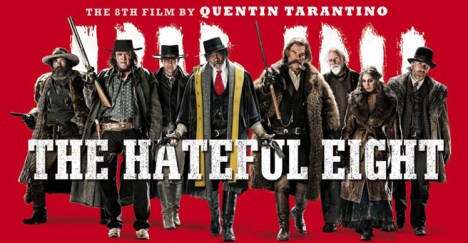
In a word: not Tarantino’s best. I felt pretty quickly bombarded with heavy-handed racial slurs (Tarantino loves the n-word) and racial conflict – not that this stuff is not rich source material for drama and social critique, but that’s not really what’s going on here. No, this felt gratuitous. As in, tapping straight in to such grotesque subjects is an easy and direct route to the kind of shock value that Tarantino is known for. I prefer when he writes it into the script, though, rather than access it via well-established societal pain pathways.

Husband’s less convoluted criticism was that this movie never got exciting in the way that Tarantino’s best work does. There were few-to-none of those gasp-and-jump moments. The gore was slightly less well done, more cartoonish, and less prodigious than his best (I’m remembering a few key scenes from Pulp Fiction). Almost all the action takes place in closed-room settings, which as we know can be highly effective, but here contributed to a feeling Husband and I shared, that not much happened. And finally, the classic Tarantino dialog – wordy and long-winded, sarcastic and highly explicative – felt a little timeworn here. I can’t account for this feeling: am I just getting sick of hearing this kind of hot air? (I think not, as the Tarantino classics still appeal, even after many viewings.) I suspect this script is simply less well-written.

Graphic violence, rampant obscenity, and discomfiting racism are among Tarantino’s best-known themes. And I’m no Puritan when it comes to that stuff (for example, I loved Django Unchained). But here – and with the added misogyny, which he is not so well-known for – it felt like he was merely wielding those tools (violence, racism, etc.) for their own inherent powers to harm, rather than contributing the wisdom and humor in interpretation that I come for.


Rating: 5 blood spatters.

movie: Breakfast at Tiffany’s (1961)

breakfastFinally got around to the movie! This 1961 adaptation of the Truman Capote novel was an enjoyable visual and emotional experience – not quite the same feat the novel achieved, but what else is new? Perhaps the main point – not that you didn’t know it – is that Audrey Hepburn is a doll. Movies this old generally feel slow-paced to today’s audiences, and while this was true here, the appealing visuals – Audrey, as well as historic New York – and intrigue of the story were plenty engaging for me. Husband went to bed before it was over, though. I wonder if it would have been more interesting if he had also read the book first.

audrey

It should not be surprising that the gender roles of the time were hard to watch sometimes, but again, what’s new. There were a few twists from the story Capote wrote (that’s why they call it an ‘adaptation’), but I felt that the feeling was faithful. Holly Golightly is an airhead, a dingbat, obnoxiously needy; but on another level, surprisingly self-aware and conniving, even wise. This is what I interpret O.J. Berman means when he calls her a “real phony.” The emotional effect of this character – dingy, ditzy, defiant, vulnerable, both an object and the vehicle of her own existence, both stupid and clever – is the strongest element of the film, despite certain weaknesses. For example, Mickey Rooney’s portrayal of Mr. Yunioshi is obviously, cringingly racist to today’s eyes. It can be hard to reconcile these things. But there it is; I watched the movie anyway.

This is a historic and iconic adaptation of a fine novella, and well worth viewing.


Rating: 7 cigarettes.

National Theatre Live presents As You Like It (2016)

Back to the Pickford for a very fine production of As You Like It, a romantic comedy by Shakespeare which showcases his playfulness with gender reversals. This play introduces the line, “all the world’s a stage.”

photo credit: Mads Perch

photo credit: Mads Perch


I did not remember this one until we met Celia and Rosalind, and then I knew it. The plot, very briefly: Orlando is a frustrated younger son. Celia is the daughter of the new duke; her cousin Rosalind is the daughter of the banished duke. Thus they are both friends, and the respective daughters of rival brothers. Orlando makes a brave and foolhardy challenge, which he wins, but which puts him out of favor with several powers that be; he exchanges meaningful eye contact with Rosalind; the duke sends Rosalind away, and loyal Celia decides to go with her. Orlando and companion escape into the forest. Celia, Rosalind and their companion the court fool Touchstone likewise escape into the forest, in search of Rosalind’s father, the banished duke. Rosalind dresses up as a boy to help protect their little group. When she next encounters Orlando, then, he meets her as a boy named Ganymede. Ganymede convinces Orlando to court Rosalind with “him”self – Ganymede – as stand-in. In Shakespeare’s time these parts would all have been played by boys. So this is a boy actor playing a girl disguised as a boy pretending to be a girl. The play ends in the forest with a quadruple-wedding and a fascinating epilogue.

Shakespeare is a treasure, and this production was great fun. It begins modernized by an office setting, which I didn’t love but which was amusing in its own ways; but once we get into the forest it feels purely Shakespeare again, which is not to say dated so much as timeless. (National Theatre Live as usual gave us some expository narrative, which can get tiresome. But in this case I have to say: everyone who repeated over and over that Shakespeare is timeless and ever-relevant was perhaps not original, but absolutely correct.) The acting was great. Celia was played by Patsy Ferran, who starred so beautifully as Jim in NT Live’s Treasure Island. Celia is an interesting character, and Ferran is a joy to watch: she has a wonderfully expressive face. Rosalie Craig was outstanding as Rosalind/Ganymede, perhaps equally attractive in both roles.

But Orlando was my favorite, played by Joe Bannister who was too adorable as well as passionate, expressive, silly and dreamy. It’s a deep cast, both of great characters (Touchstone, Jacques, the Duke, Phoebe and Silvius – wonderful! – Audrey, on and on) and of fine acting. The singing Amiens was handsome and talented.

I like to study the plots of these plays before I see them. I think of that as being the right preparation for fully appreciating all the nuance. This time, I just fell down, and went in nearly blind: I had read this play before but it had been many years. But it cost me nothing. Shakespeare’s themes, emotions, passions and politics always feel fresh, and his work with language – well, he helped make English as we know it.* He coined or popularized many figures of speech we all take for granted today; and the dialog in his works, which sounds awkward to the modern ear for the first ten minutes, lapses into a very easily absorbed dialect in the next ten. He is still so funny – laugh out loud funny, which we don’t see all that often. (Mark Benton as Touchstone contributes significantly to that, too.)

A National Theatre Live review wouldn’t be complete without me mentioning, again, the cinematography. The more of these productions I see, the more I feel glad that I am sitting in a movie theatre, getting all the benefits of close-up shots and artistic angles, rather than the (considerably more expensive) single-angle view of the live audience. I’m not saying I wouldn’t attend live: I would love to. But I really appreciate the affordability as well as the high quality of this hybrid form. Oh, and set design: the transition from modern office to spooky forest is surprising, arty and intriguing, and surprisingly effective. I won’t ruin it for you.

Shakespeare and NT Live continue to make a winning combination. Don’t hesitate.


Rating: 8 necklaces.

*If you haven’t already, check out Bernard Levin’s “You Are Quoting Shakespeare” (text here; performed by Christopher Gaze here). There is also the perspective of this grumpy guy, who points out that Shakespeare was not the originator of every one of these phrases. I still think it matters to us that Shakespeare gave them to the world. For example: The Telegraph acknowledges the concept.

movie: Les Misérables (2012)

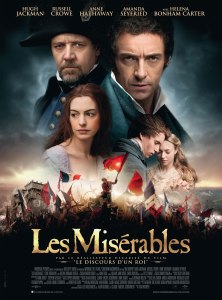
You know the title, of course. It began as a novel by Victor Hugo in 1862, with the original (French) version coming in somewhere near 2,000 pages long: fewer in English, but no, I have not read this one. (I listened to the audiobook of The Hunchback of Notre Dame. Also long.) It became a sung-through Broadway musical to great success (Wikipedia says it was the second-longest-running musical in the world), and I am now reviewing the 2012 movie, which I saw at home with Husband and Pops, courtesy of our local library.

I was pretty unfamiliar with the story: I read a quick synopsis online just before viewing. It wasn’t hard to follow, though. I’ll make it extra quick for you, since there are plenty of plot summaries out there and you may already know it, anyway. In 1815 France, Jean Valjean is finally released from a 19-year forced-labor sentence for stealing a loaf of bread to feed his sister, nephew and self. He is, unsurprisingly, resentful. He violates parole and disappears, reappearing to us some years later as a good man, mayor and factory owner who cares about the people he holds power over. Inspector Javert, who knew Valjean as a prisoner, continues to seek him out, hoping to hold him responsible for the crime of skipping parole. Valjean’s continued attempts to do good do him no good. He adopts the orphaned daughter of a local citizen, and goes on the run with his newly formed family. The evil innkeeper & wife who had been fostering the girl repeatedly offer comic relief from an otherwise tragic and horrifying plot. The story’s central conflict crescendos with the Paris Uprising of 1832.

This movie is packed with stars: Hugh Jackman, Russell Crowe, Anne Hathaway, Amanda Seyfriend (one of the ditzes from Mean Girls), Sacha Baron Cohen (Borat), Helena Bonham Carter, and Eddie Redmayne (The Danish Girl). Samantha Barks plays a beautiful Éponine. The imagery is gorgeous; all the costuming, scenery, etc., and of course all those beautiful people. I found the story evocative. And the singing! Who knew Crowe, Jackman, Hathaway, et al had such voices on them? The music was rousing and emotive: it’s not hard to see why the Broadway show did so well.

Am I inspired to read ~1500 pages of English-translated Hugo? No, not just yet. But I will gladly see a stage production of this musical story. It was a great and involving time.


Rating: 8 loaves of bread.

postscript to yesterday’s guest review

Pops wanted to add the following reader’s afterword to yesterday’s review of Ta-Nehisi Coates’s Between the World and Me.

Coates can be seen & heard in numerous YouTube videos. The first 5-10 minutes of this sweeping discussion in Chicago describe significant elements of his writing process and inspiration; later, around 27:00, he speaks directly about the formative legacy of his father, from Philly, whose own father & his two brothers died violently, in a culture where the price of children not following the rules of both Jim Crow and the Streets “is quite literally death.” He also addresses the “Race” frame, mass incarceration, reparations, Obama, and other topics.

Just recently Coates has moved with his family to Paris, for several reasons he discusses on Democracy Now!. Notably, he describes how he is just beginning this journey of seeking to understand Race in western Europe (in the midst of immigrant persecution) and the perspective this adds in the US.

In general, an author’s device of writing to one’s children is a powerful one. For Black authors, see also James Baldwin’s short book The Fire Next Time (1962) – also cited by Coates as inspiration; and Michelle Alexander, who in The New Jim Crow evokes the misery of parents explaining unwritten racial taboos, speaks to her own son in a NYT Op-Ed, “Telling My Son about Ferguson.” Not far afield from Coates’ book’s finish is David Suzuki’s latest book where he describes painful truths about human damage to the Earth, in Letters to My Grandchildren.

Personal trivia: when Coates prepared for his Paris writing fellowship in 2014, he took a French course at Middlebury College in Vermont – a place with many personal family connections. One must imagine that was yet another expansive cultural experience for this voyager. He recently said he would be voting for Bernie Sanders for President in spite of earlier critique of his policies.

movie: The Revenant (2015)

This review is spoiler-free.


I’m going to be the outlier here, kids: The Revenant is getting good reviews generally, with reviewers already talking Academy Awards and such. I found it a frustrating waste of my time, and it was only out of respect for my neighbors in the theatre that I stayed through the whole thing.

revenantHugh Glass (Leonardo DiCaprio) is part of a fur-trading expedition in some very snowy part of the Midwestern U.S. in the early 1800’s. They are attacked by Indians; Glass is mauled by a bear; most of the crew leaves him with just a few men to care for him, one of whom murders Glass’s son and tries to kill Glass; he is left for dead, but doesn’t die, instead spending the rest of the more than 2 and a half hours seeking revenge. Along the way, every bad thing imaginable happens – mostly to him, but also to a few other unluckies along the way.

A few highlights: the opening battle scene was horrific and graphic but beautifully shot, bumpy and jarring and very real (which will disturb those who are so inclined, but it was well done). The acting was all around superb. Leo did his usual fine job. The scenery was lovely and stark. There was a clever moment to the final scene that I appreciated.

The unreality throughout had me rolling my eyes; it was all I could do to not talk sarcastically back to the screen. (I’m not going to be that guy; but it was hard.) It was truly ludicrous. Yes, I understand this is based on a true story – but only loosely based on a true story on which we have very few specifics. The violence and evil was enormous, ongoing, unrelenting; and it wasn’t leavened or redeemed by humor, uplift, morals, etc. It reminded me dimly of another movie that got decent reviews but that I found gratuitously ugly and rape-filled: Braveheart.

I’ll do the usual spoiler-cover: the following paragraph is in white text; you can highlight to read.

An angry mama grizzly bear makes TWO runs at this Glass guy. Do you know how many people survive that?? Then he goes over a waterfall and later, over a cliff. He, and everybody else, walks in puddles, streams and rivers constantly for weeks and weeks, as the snow piles up and these rivers run with floating ice chunks; but everybody’s feet are fine. Oh, except for Glass’s right ankle, which is so badly broken that it flops at the end of his leg; but a few days or weeks on a makeshift crutch and he walks and runs around like a hale young athlete. Back to those rivers: Glass spends at least many minutes, maybe hours, floating in a river filled with those ice chunks (after going over the waterfall), then climbs out and carries on. I could go on and on, but I needn’t.

Put simply, this guy makes Jack Reacher’s antics look like a Sunday stroll. Fans of that level of badassery with no concern for reality – and a tolerance for gore – will likely be well pleased. It’s not like there’s nothing here to love – excellent acting, striking scenery – but I couldn’t stomach the fantasy. Get me outta here.


Rating: I’ll go as high as 3 toes happily frostbite-free, but only for Leo.

Update: Before I even got this posted, the Umabomber wrote an excellent review proving I am not alone. Hers is here, but it’s entirely spoiler-y, so beware, if you were still going to see this stinker.

Mount Baker Theatre presents Flashdance the Musical

I went with my parents to a local theatre to see this musical version of Flashdance. First I shall confess: I have never seen the movie. But now it’s on the list.

flashdanceThe musical started on Broadway, but I’m a little vague on its route to us. This local performance employed a New York-based company, but not the same folks who performed on Broadway, and the Broadway-associated website states the last show took place almost a year ago. It was impassioned and fun, but not perfect: the sound was surprisingly poor for a theatre that specializes in musical performances, tinny and muffled. The voice casting was probably imperfect as well; several actors were much better in some parts of their range than others. Overall, the sound quality was poor enough to effect our understanding of the songs & story, which is really unfortunate.

But when the singers hit their areas of confidence and belted it out, they were generally stellar. The dancing was great fun. (Pops reports that he remembers more street-style dancing from the movie, where he found more burlesque here, for what that’s worth.) It’s a cute story. Musical theatre necessarily involves some cheesiness, so the audience is required to make some allowances there, but I’m on board. And I really like the premise, that our protagonist is a welder by day and exotic dancer by night: I love the juxtaposition and the acknowledgment that shit, we’re all complicated beings. This one is based on a true story, you know.

Not perfect, but good enough for me. Movie next, please.


Rating: 7 high kicks.

Branagh Theatre Live at Garrick Theatre presents The Winter’s Tale (2015)

winter's theatreBased on my love of the productions I’ve seen from National Theatre Live, I was interested to check out what the new Branagh Theatre Live is doing – especially since I read The Winter’s Tale within the last year, preparatory to reading The Gap of Time, an excellent retelling. Recall that these “theatre live” performances happen elsewhere – this one in London – and are live-taped for broadcast all over. I went with my parents to a local movie theatre for this showing.

I’m afraid the worst thing about this production came right up front: Kenneth Branagh gave a criminally long-winded lecture about the upcoming season of Branagh Theatre Live; about the plays they’ll be producing; and about this play. Bless his heart, he’s an actor, and it’s unsurprising that he loves the sound of his own voice. But his co-director Rob Ashford should have helped out by directing this speech: too much talking, Kenneth. It wasn’t just my annoyed mother and me: the audience was audibly frustrated with the intro. Those of you headed out to see later showings, feel free to go a little late.

And you should still go, because it’s a wonderful play, I think. It’s growing on me with familiarity: I’m glad I had some experience with the text, and recommend that. I found the opening dialog a little hard to follow, even with previous knowledge. Also, it starts out very dour; you have to stick around to see the mood lift a little, and it might help to have that assurance. But it settles out. I think the casting was solid, the acting quite good – Pops felt that Branagh overplayed the part of Leontes, but I thought he was fine here; Leontes is just crazy. Judi Dench was phenomenal, and challenged Branagh for the spotlight overall. The two that played the young couple, Jessie Buckley as Perdita and Tom Bateman as Florizel, were attractive, fun and powerful. I think Autolycus was a stronger character on the page than on the stage, somehow. And the Shepherd and Clown were as loveable as ever.

In conclusion, I think this was a perfectly good production of an underappreciated play. For those who love theatre, absolutely a good time. Maybe not the best introductory experience for newbies, though.


Rating: 7 ballads (looking charitably past Branagh’s opening lecture).

movie: The Danish Girl (2015)

This review is spoiler-free. The movie does contain a surprise, so be careful what you read elsewhere.


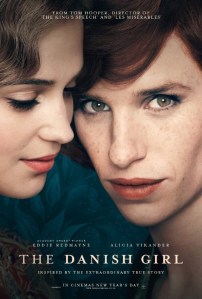
danish girlThe Danish Girl is a film based on a novel of the same name by David Ebershoff, which is based on a true historical figure. That figure was born Einar Magnus Andreas Wegener, married a woman named Gerda and made a living as a successful painter. But when Gerda asks Einar to pose for one of her paintings in place of a female model who’s running late, the moment is eye-opening. Einar in fact has always held a secret identification as a woman, now named Lili. From this time on, she has come to stay. Lili Elba was one of the first people to undergo sex reassignment surgery (or gender confirmation surgery, a phrase I like).

Gerda and Lili live in Copenhagen at the beginning of their story, and move to Paris when Gerda’s own career as a painter takes off. I found it not insignificant that Gerda’s time to shine coincides with Lili’s time of upheaval; Gerda too struggles with the timing. This is of course not the only problem Gerda has in adjusting to her new circumstances: she loved her husband, and as represented onscreen, their marriage was happy, healthy and loving. Not without some complaint and tears, then, but Gerda does in the end support Lili’s needs and her journey. This in itself is a lovely story: love conquers all.

The move indeed gives a rosy portrait overall, of this relationship and of Lili’s experience, her strength and bravery. It was beautifully done: the acting is exquisite, by both Alicia Vikander as Gerda and Eddie Redmayne as Lili. And I enjoyed the setting in time (1920’s-30’s) and place, although I’m not overly qualified to judge its realism. But I suspect things were not quite so picturesque in the real version. And of course there’s a lot of history that we don’t have access to, I’m sure. (The story [I suppose this means in turn Ebershoff’s novel] is based on Lili’s memoir, Man Into Woman, which is a great start.) In other words, it’s a movie.

But a very good movie, with a fascinating and culturally significant story, outstanding visuals – the paintings, the galleries, and Redmayne’s transformation into a lovely woman. The acting is tops. I found it dreamy and am glad I saw it. If you go see it, too – and you should – do avoid reading about this film or Lili Elbe’s life; I think it was worthwhile to discover it this way, spoiler-free, if you will.


Rating: 8 poses.

how long the lines would be

I’ve said it before. I think I started saying it when I worked as a librarian in the leisure-reading library of a hospital, and people would ask me for reading recommendations: when they insisted on hearing what I would read, I would carefully point out that that’s not necessarily relevant to their needs. We can’t all like the same things in life, and it’s a good thing: imagine how long the lines would be.

I think it’s okay, and even beautiful, that we don’t all like the same things or have the same strengths & weaknesses. As my marriage of almost 8 years now continues to grow and flow, I learn more and more how different Husband and I are, in how our minds work, although we share many tastes & values. It makes us a stronger team, which is something I didn’t consciously recognize when we married. That’s a digression, though. I’m talking about what we all enjoy in life. We like different music, different food, different hobbies and different people – and again, good thing, because it wouldn’t work out well if we all wanted to marry the same person or thought Johnny Cash was the *only* artist worth listening to: how boring.

In books, though, there seems to always be a pressure to recognize one novel by a certain author as her classic work, or to agree that Faulkner is high art and Stephen King is pulp. I confess that some part of me still feels this pressure from time to time (although I think I’ve given up on Faulkner). But I’ve been trying for years to learn for myself, and to assert to any audience I may have, that it’s okay that we have different tastes. It really is.

The other day, I reviewed The Tender Bar, a book I loved. Not everyone will love it, though. For one thing, the author is extremely nostalgic and loving of one bar. This should go without saying, but if you are impatient with nostalgia in general, or opposed to bars in particular, this book will not work for you. I read a review online by a reader who doesn’t drink and doesn’t “get” the love of an individual bar: he didn’t like this book. Surprise, surprise. It’s okay! This just wasn’t a good match.

Further, Moehringer indulges in sentiment. If this is a major turn-off for you, no problem; but you should read elsewhere. We don’t all like that tone. And probably many of us like that tone only when it’s a nostalgia we can share – like, if you’ve loved a bar the way Moehringer loves the Publican, you’ll be better able to tolerate and appreciate his sentimental remembrances than if you have not. This doesn’t mean that I’m wrong, or that that other reader is. There’s room for both of us.

A writer I greatly respect recently expressed surprise that I love Rick Bragg as much as I do. He wrote to me:

I’ve always thought Rick Bragg was a bit of a blowhard. Maybe I’m too northern, or too judgmental when it comes to style. Maybe I just like a cleaner line.

When I read those lines, I immediately felt that I knew exactly what he meant; and I understand his criticisms. I think we are observing more or less the same things, although of course I didn’t describe my observations the way my friend did: I had a different personal reaction to the same writer. Because my friend and I are two different people. And isn’t that as it should be?

When I write book reviews solely for this blog, I am speaking with my personal voice, as Julia, about my personal reactions. When I write for ForeWord, or Shelf Awareness, or other employers, I am supposed to remove the personal: I’m supposed to behave like I did when I was a librarian performing readers’ advisory services. I try to show what the book is about and what strengths it has to offer and, in other words (sometimes explicitly, sometimes not), what kind of reader might enjoy it or be turned off. This is why I (rarely) add an addendum to the published review when I repost it here on my blog. This is also why you might see me rate a book lower than the review seemed to imply. That is to say, this is a good book – for a different reader than I.

As the number of books I read and review continues to grow, I continue to feel lucky to get to do this work. I love learning, I love meeting new people and concepts between the pages, and I love the intellectual as well as the emotional play between the book and myself. And I guess I just wanted at this point to stop and say: we won’t all love the same things, and that’s a beautiful fact. Take my ratings with a grain of salt. Ideally even, learn my tastes so you can recognize where we will and won’t agree. Don’t be afraid to like different things than the next person. I know a lot of people can’t stomach Hemingway, and that doesn’t mean we can’t be friends! Anyway, the lines are shorter this way.