residency readings, part I


Note: I am away for my residency period at school for two weeks or so. This is a previously scheduled post. I will respond to comments, but not as quickly as usual. Thanks for your patience, and thanks as always for stopping by.


As I’ve done before, I’m going to run through some of the reading I did to prepare for this summer’s residency. For more information, check out the schedule I’ll be keeping and the seminars I’ll be attending, including some information about assigned readings.

Going in order:

I tackled first Jon Corcoran‘s assigned packet of three stories by Alice Elliot Dark, Ursula K. Le Guin, and Flannery O’Connor. This was an easy, quick, and very enjoyable packet; all three stories were riveting. The O’Connor, “A Good Man Is Hard to Find,” was the only one I was familiar with, and my least favorite of the three, with its unpleasant characters and dark themes; I’m looking forward to having some guidance with this one. The stories by Dark and Le Guin were pure pleasure, even though they too involve some darkness. I loved the realism of “In the Gloaming” contrasted with the fancy of “The Ones Who Walk Away From Omelas,” with its twist at the end. The topic of Corcoran’s seminar is endings, and I struggle with this, myself, so I’m very much looking forward to it. (Although what I write are more essays than stories, less contained narrative – does this make my job harder? will his seminar offer me as much as it does the fiction writer?) Also, Jon Corcoran has been a visiting faculty member at our program before, and I liked him very much when we met last.

Next came Mesha Maren‘s packet for her seminar on language. I’m a fan of Mesha’s, too, and find her reading, speaking, and teaching very poised and impressive; I love language for its own sake, and I love a good neologism like ‘hishing’ (in her seminar’s title), so I came to this with anticipation. The packet opens with a 100-page book excerpt that nearly killed me, though. I think I took a week to read these 100 pages, which began so dry and (as far as I could tell) far from the content of this program that I thought maybe I was being pranked. It got better, but remained a challenge til the end. I am still trying to synthesize what I found in these pages from David Abram’s The Spell of the Sensuous.

This book strikes me as a sort of ecologic philosophy of language and especially of written language: what it means for humans to communicate as we do, in pre-historic/oral times and later, in what Abram calls alphabetic cultures. There are also different kinds of writing, from pictographic to rebuslike to the alphabet we know now, and the significant distinctions here are about how far away from sensorial the letters get: that is, from a pictograph that directly references a paw print or a cloud, to a letter like Q, referencing nothing (until you get into the history of the letter Q, that is). Abram is concerned with how far we get from nature and from a participatory, cooperative relationship with the more-than-human world. It gets to be interesting stuff, for sure, as arguments are presented for how oral versus written languages change how we think, as well as how we relate. In preparing for this seminar, I’ve made notes about the philosophies of Husserl, Merleau-Ponty, Saussure, and Socrates, as Abram presents them. This excerpt was hard to get through because it’s rather academic in tone, and lacked context, starting in the middle as it did–except actually, it starts with chapter 2, on page 31. Maybe I needed whatever introduction Abram originally included. At any rate, I trust in Mesha to lead us through.

The rest of her packet looked up quite a bit. A lovely lyric piece by Susan Brind Morrow; a somewhat academic, impassioned piece on “The Language of African Literature” by Ngũgĩ wa Thiong’o; some extraordinary stories by Ann Pancake, a West Virginia writer who I (shamefully) have still not read outside of assigned excerpts like this one. (From her astonishing “Wappatomaka” comes the title of Mesha’s seminar, “hishing in the riffle.”) Anne Carson’s essays and poetry weirded out on me a little. I think I can remember having trouble with her before. And finally, Raymond Queneau’s exercises in style, which were interesting and, mercifully at the end of this long packet, easy to take in. Wait no, one final piece by Georges Perec, but my brain was too tired for this absurdism. Again, I trust in Mesha, and look forward to her illumination of this wild collection.

Matt Randal O’Wain‘s radio essay assignments were a change. I listen to podcasts when I can (having put audiobooks on hold pretty much for the duration of this MFA program, as my brain can only hold so much), so this was friendly. I appreciated being able to “read” for school while I cleaned the house and cooked and stuff. And six of the seven assigned radio essays I found very enjoyable. In fact, I often forgot to look for craft, finding myself so involved in the stories presented by (for example) This American Life‘s “Unconditional Love,” or Howard Dully’s “My Lobotomy.” I’m really excited about what this seminar has to offer.

Next Jessie van Eerden‘s assigned readings in the epistolary form, which began gently with one I’ve read before, Jane McCafferty’s “Thank You for the Music,” which is lovely. Actually, every item in this packet was lovely, although naturally my comprehension broke down with the poetry midway through (sigh). I didn’t even break stride with the optional reading by Alice Munro, and I recommend that piece (“Carried Away”) as much as any in the packet. Thank you, Jessie, for such a transcendent, and easy to read, experience.

She also assigned some questions to consider while reading and a writing assignment too, though, and I found myself out of practice. But that was probably the point: good to stretch those muscles again, as I head off to school.

I’m going to break this terribly long post here, and continue next week with the rest of the assigned readings. By then I’ll be home from residency, but not yet recovered! so it’ll have to hold you over. Stay tuned for another wide-ranging collection of fiction, nonfiction, poetry, visual art, and sundry. Happy weekend, friends.

The Shades by Evgenia Citkowitz


Note: I am away for my residency period at school for two weeks or so. This is a previously scheduled post. I will respond to comments, but not as quickly as usual. Thanks for your patience, and thanks as always for stopping by.


In this atmospheric story, a grieving family splits, each suffering more or less alone, until a stranger comes to visit their mysterious old house and throws them off-balance even more.

Evgenia Citkowitz’s first novel (following a short story debut, Ether) is a captivating, mysterious story of family, love and grief. The Shades centers on Catherine and Michael, a year after their teenaged daughter, Rachel, died in a car wreck. Their son, Rowan, insisted on going away to boarding school immediately after losing his sister.

Catherine has withdrawn to the country, to the apartment in a subdivided manor where she and Michael had hoped to retire. She lets the mail pile up, doesn’t answer the phone and neglects her previously successful London art gallery. Meanwhile, Michael continues to work and live in the city, where he fails to find comfort in architecture–his passion–and tries to reconcile himself to his troubled marriage: “their lives ran parallel but never together or intersecting.”

The estate where Catherine has retreated is a focal point–this historic house whose design elements enchant her husband, but whose empty rooms, with both children gone, haunt her. When a young woman shows up at the door saying she used to live there, Catherine grasps at her like a drowning woman. In this potential for new friendship, she clearly sees a lifeline. But this visitor, whom Catherine calls simply “the girl,” may not be what she seems.

Catherine’s career as a tastemaker in the fine arts, and Michael’s in architecture and real estate, provide just a few of the many threads that combine for this story’s rich tapestry. The history of Catherine’s family (her father’s art, her mother’s instability); Rachel’s burgeoning romance, revealed only after her death; Michael’s courtship of the ever-aloof Catherine; Rowan’s attempts to carve out an identity for himself apart from his family: these are significant supports to Citkowitz’s plot. Strangely, that plot, involving the mystery girl and a flash-forward opening to the book that is not resolved until the final pages, is less sharply executed, less beguiling than the details that render this family so realistically. The meticulous portrayal of characters, the flaws and struggles in their relationships and a gloomy, atmospheric tone are the greatest accomplishments of The Shades.

A subtle plot element involves the myth of Orpheus and Eurydice, in which Orpheus tries to bring his beloved wife back across the River Styx following her death, but fails because he does not follow Hades’ instructions. Foreshadowed briefly by an opera at which Michael and Catherine’s romance began to bloom, this myth offers a lens for interpreting their grief, and the damage it will wreak on their family. Readers with a careful eye or a familiarity with mythology will recognize this thread; the rest will be none the poorer for having missed it in a novel rich with pathos and agony, but also simple humanity: love, loss, grief, hope and deceit.


This review originally ran in the June 8, 2018 issue of Shelf Awareness for the Book Trade. To subscribe, click here.


Rating: 7 lilting rhomboids.

guest review: The 53rd Parallel by Carl Nordgren, from Pops

Pops is back with a review of a book from a series that, I confess, I’d largely forgotten about. Thanks for the reminder!

Once again I must thank you belatedly for a book recommendation.

You gave me Worlds Between from your advanced reader stash some years ago. Ah, the circuitous route we take to the books we actually read, out of the millions out there. When I had researched the series (why not start at the beginning?) I found there was just the one, earlier; so I waited. But oops, it’s not in the library. I finally got around to requesting an ILL copy, which arrived a couple weeks ago from a suburban Denver library.

As much as your review describes the benefits found in that first book, The 53rd Parallel is far better in all respects. It is longer (300 pages) but still dense with character and story, like the first. With it, his first novel, Nordgren applied a more leisurely pace that much more fully develops the wide cast of characters (some dropped in the second). Even Hemingway is introduced, as an icon, an aspiration, the ultimate guest for the fish camp if they could make a go of it. (John Wayne is their first, failed attempt at celebrity marketing, in book one.)

Also more fully developed are the ‘parallels’ between Irish and Ojibway history and culture (which share the 53rd parallel of latitude). Shared history: mainly in continued persecution by the English; culture: mainly in their appreciation of dreams and the ambiguous power of myths. The latter, with the challenge of honoring equally both ‘reality’ and myth, is capably and gracefully done. I was absolutely enraptured by book one, constantly amazed at the power of simple telling of a magical story. Sadly, I was a bit disappointed by the rush to conclusion in book two. (I say ‘conclusion’ – but he claims to be working on book three, still yet to be announced.)

The brief first chapter introduces the Ojibway icon This Man, in the 1700s; his ghost is an important presence throughout, but is neglected in the second book. Early narrative is set amidst 1930’s Ireland, with poverty and social dysfunction born of English oppression, generations-old. Brian’s dark past is a torture to read; he is a frustrated hothead and severe child abuser, and is never as fully redeemed for me as the author’s attempt suggests. We observe as each of his three children cope and mature (or not), each in their own way. Maureen is a hugely powerful character (meant both literally and figuratively); for me she, not Brian, carries the narrative thread connecting all pieces. [Spoiler follows; highlight white text to read] I was betrayed and stunned when she is killed in book two; how could Nordgren do that to her?!! The dark world of the IRA, with its own conflicted and tortured history, is introduced early on and lends appropriate complexity, useful context for events in book two.

We also come to know three generations of Ojibway people and history, and understand how significant it is when Brian is adopted as son of Joe Loon, immediately blessing the fish camp with seven generations of family (all of whom are ‘present’). One of Brian’s Ojibway nephews is abused at Indian School, and later sacrifices his life to ensure the camp’s success. Simon, another nephew, is tasked by Joe Loon to learn the white man’s ways to provide intelligence for the tribe; seeing ‘our’ world through his eyes is poignant. I was so impressed with Nordgren’s thoughtful treatment of the Ojibway people and story, reflecting the author’s own immersive experience in their culture. Those passages alone made these books a worthwhile indulgence; Maureen’s story added to the bounty.

So good cross-cultural work–although I always wonder, how well can we judge, if we’re not from the culture being featured?

I am glad for this reminder. Thanks for bringing it back full-circle. I’ll expect you back again for book three, if and when!

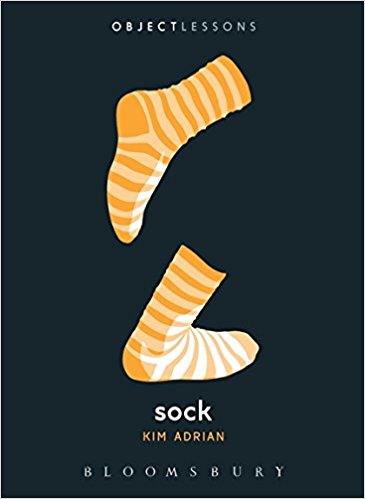
Sock by Kim Adrian


Note: I am away for my residency period at school for two weeks or so. This is a previously scheduled post. I will respond to comments, but not as quickly as usual. Thanks for your patience, and thanks as always for stopping by.


Sock! What a treat! I know I just posted some predictions for best books of the year, but we have a new contender. This was a wildly fun, engrossing little volume.

Sock is part of Bloomsbury’s Object Lessons series, which appeals to me for reasons I assume are obvious now, after this increasingly object-obsessive semester. When I found out about the series, I exercised restraint and purchased only three books: Sock, Hood, and Souvenir.

Kim Adrian’s task here was to write about the sock. What is a sock, what is its job in the world, where did it come from, what is its significance? You know, just the basics. It’s a remarkable ambition in the first place, for any object (others in the series include Burger, Shopping Mall, Eye Chart, Tree, Cigarette Lighter… as well as the less object-like Silence and Doctor). To quote one of the book’s blurbs:

The Object Lessons series achieves something very close to magic: the books take ordinary–even banal–objects and animate them with a rich history of invention, political struggle, science, and popular mythology. Filled with fascinating details and conveyed in sharp, accessible prose, the books make the everyday world come to life. Be warned: once you’ve read a few of these, you’ll start walking around your house, picking up random objects, and musing aloud: ‘I wonder what the story is behind this thing?’ (Steven Johnson, author of Where Good Ideas Come From and How We Got to Now.)

I couldn’t have said it better myself, so I didn’t.

So, the sock. Adrian’s table of contents offers an introduction and three sections: “Socks and evolution,” “Socks and desire,” “Socks and industry,” followed by a postscript: “Instructions for darning a sock.” (The back-of-book blurb begins, “Kim Adrian’s Sock is the darndest thing,” and that gave me FITS.) Adrian acknowledges the weirdness of her project. She can’t really account for her interest in socks, except that they are “intimate and essentially domestic,” and the domestic has always appealed to her. She usually writes about personal subjects, she tells us (“personal essays, memoir, that sort of thing”), and figured socks would fit in, because they are personal, in the sense that we wear them against our skin and they smell of us; but in fact this was a wildly wide-ranging research project. To paraphrase Johnson’s blurb, above, this book wanders through human anatomy and evolution, world history, politics, sex, and industry. If Adrian is fixated on domesticity, I am fascinated by trivia, such as (on page 9) the fact that we get our understanding of when humans first began wearing clothing from the study of lice. Textiles are perishable; but the evolution of specialized lice species, and their development into head lice, pubic lice, and body lice respectively, allows archaeologists to track textile development. This fact made me exclaim joyfully aloud, and I got to read the passage to a roomful of brewery employees. We were in a sensory class about the history of yeast species, so it’s all related, after all.

Adrian moves on to human anatomy and our unique position as vertically aligned bipedal creatures, its effect on our sexual practices and the way we walk, balance, the importance of the big toe, and much more. Skeletal structure has much to do with socks. Then there is the history, of course, of socks: from hay stuffed in a shoe-like cage, to woven foot wrappings, to fitted and knitted socks. She touches on the Industrial Revolution, delayed by Queen Elizabeth’s denial of a certain patent, which if granted, Adrian speculates, might have moved that Revolution up by some two centuries, and “what strange wormhole of alternate reality we might have tumbled down” in that case! Next we have sock and foot fetishes (the latter properly not a fetishism but a partialism), and sex; Jung and Freud, and the art of Egon Schiele, an Austrian Expressionist who left the feet off many human subjects but put socks on his trees. Finally, the sock industry takes us into concepts of fast fashion and slow fashion (a sort of throwback movement that depends on surpluses of both time and money). Here Adrian returns to an earlier concern with knitting socks, something she’s tried and not much succeeded at; she has great respect for those who do knit socks. Then the promised primer on darning.

All this in under 120 pages, and every moment of it was a delight to read, in Adrian’s mildly self-deprecating, often humorous, but absolutely serious-about-socks prose.

Some of my personal highlights on this wild ride included learning that Ned Ludd–he of the Luddite Rebellion–was a stocking maker, and started his movement by smashing two stocking frames in Nottingham. Did y’all know that? Also Adrian’s attention to words: ‘mundane’ (as in socks) comes from the French mondaine, or ‘of this world,’ and links us back to ‘pedestrian,’ as in Latin ped, as in foot. And ‘prosaic’ from ‘prose’ comes from Latin provorsus, which is pro– (forward) and vorsus (turned), as in oriented in forward-facing fashion, as in walking. Can’t make this stuff up, folks. Or, did you know that our feet possess even more nerve endings than our genitals?

I feel like I’ve written half as many words now as Adrian put into her whole book, this slim little marvel of trivia and attention to the overlooked. I am reminded of Mark Doty’s devout study of small details, his appreciation that “in still life the familiar is limned with an almost hallucinatory clarity, nothing glanced over or elided, nothing subordinate to the impression of the whole.” In other words, this book was a near-religious experience for me. I can’t wait to read more Object Lessons.

I can’t believe I’m doing it for the third time this year already, but here we are…


Rating: 10 stitches.

Lost Restaurants of Houston by Paul and Christiane Galvani

Another in the vein of Wednesday’s post. In a word: I loved the content, learning about the culinary history of my hometown. (Food and Houston: these are a few of my favorite things.) The book? I’ll be brief and just rehash some of what I wrote the other day about the Guy Clark bio. This was more pamphlet than finished monograph. The early material, on the history of Houston restaurants in general–history of the city, its ethnic makeup, and a few of the early businesses along Main Street, for example–seemed promising. The writing is lackluster, more emphasis on listing of facts than any care to the construction of sentences for their charm. This feature became much more pronounced when we moved into the restaurants themselves. Each entry read like a exhaustive catalog of every fact dug up in source materials, not so much constructed into sentences and paragraphs, let alone an artful narrative, but rather a list in paragraph form. By the end it was painful to read.

Again, as with the Clark bio, it was nice to see my familiar and loved hometown show up on these pages. But it was downright hard to read in many spots. I am frustrated.

This would make good source material for the neatly put-together history of Houston food which is still waiting to be written.


Rating: 5 oysters, generously, again with credit given for subject matter.

Without Getting Killed or Caught: The Life and Music of Guy Clark by Tamara Saviano

Extra brief today, and then you can get back to your Wednesday and I’ll get back to some better reading.

This book got away from me a little bit, in that I waited too long after finishing it to write this review. But that’s okay, because of my reaction to the book itself: I think it will be an easier-than-usual review to write. In a word, I love Guy Clark, and enjoyed learning more about his life and music. But as a book, I’m not blown away.

Tamara Saviano is a co-producer of the two-disc album This One’s For Him: A Tribute to Guy Clark, for which I’m very grateful, and she’s made other contribution to Clark’s and other musical legacies. But I feel that this authorized biography fell into the trap that they tend to fall into. It’s overly praising of its subject, and not critical enough, in the sense not that I want Guy criticized but that I want him critiqued. I want to know the finer points, the rough edges, the ambiguities and the anecdotes that don’t fit into the picture that we fans have developed of him. I wanted to find a Guy Clark who was more Hemingway or Hefner–more complicated, contradictory, and intermittently less-than-likeable–and less a saint.

I’m a big Guy Clark fan, and I loved seeing views of him at different ages, through his life: helping to repair boats in Rockport, meeting guests at his grandmother’s hotel in Monahans, playing music in my old neighborhood in Houston, meeting Susanna under the worst of circumstances. It was good to learn more about his life (and the lives of Townes and Susanna, each of them inextricable from the other two). It felt nice to sort of roll around in Guy Clark while I read this book. I loved the pictures. And I especially reveled in the details that tie Guy’s life to my own: the Montrose neighborhood in Houston where his music career got started and where I lived in high school and for some years after; the cancer hospital where I worked, and where he spent a summer working on a National Science Foundation award; the southeast-side neighborhood where he recorded “Cotton Mill Girls” just down the road from my childhood home. I used to ride my bicycle down that street, where the recording studio was. I’ve said it before: there is nothing like a strong sense of place, especially when the place in question is real and matters to the reader, to make a story feel authentic and important. These ties to Guy Clark mean the world to me.

There was value here, clearly, but it felt more like reading a lengthy pamphlet produced by the late artist’s estate, than a book with artistic value for its own sake. Maybe I’ve been in creative nonfiction for too long and forgotten how to appreciate “straight” biography. I wonder what I’d find if I reread Mr. Playboy or one of the Hemingway biographies I’ve enjoyed in years past. But I really think the problem here for me was the stance taken on the subject: that this is a fan’s authorized biography, and not a close and clear look at a multifaceted human being. In the end, while I enjoyed some aspects of what I found, I’m disappointed.

I marked this line, attributed to Guy by Roseanne Cash: “You have to throw out the best line of your song if it doesn’t serve the rest of the song.” Fine advice for a writer. This book feels like it tried to serve Guy Clark’s memory more than its own song.


Rating: generously, 6 fifths of Palomino Whiskey, if I give credit for the subject matter.

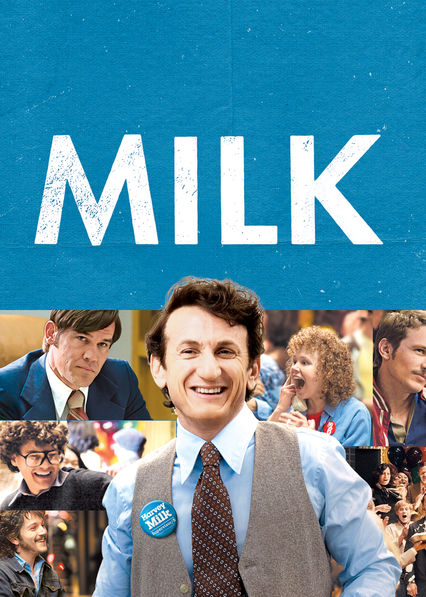
movie: Milk (2008)

While I recognize it’s risky to learn history from a biopic, I really appreciated all I learned about Harvey Milk and his fine work in this movie, which was visually pleasing and well-done–through heart-wrenching–as well as educational. I do recommend it.

Milk begins with Harvey Milk’s fortieth birthday in New York, then quickly follows him to San Francisco, where he gets involved with politics, and through to his end by assassination. Sean Penn plays a beautiful Milk, and his partners played by James Franco and Diego Luna make striking, attractive characters as well. I found the acting all-around admirable. I loved the characters of Cleve Jones and Anne Kronenberg; and I appreciated the way Dan White was handled. He comes off not as a straight villain, but as a flawed, a troubled human being. His actions are hard to stomach. But I appreciate the nuance with which he was handled in this film.

San Francisco and the Castro feel real to me (and what do I know about how authentic they are here; but I bought it). The styles felt right for the time (same caveat). In other words, I was convinced and in fact spellbound by the whole thing; and that’s before saying that obviously I find Harvey Milk’s life and work inspirational, and his demise saddening. I would watch this movie again. You should watch it, too.


Rating: 8 votes.

PSA: pre-ordering books

Because I recently posted my review of Phil Connors’s forthcoming book, A Song for the River, I wanted to make sure you knew about pre-orders. Of course, you already knew that you could pre-order books before their publication date on Amazon and Barnes & Noble and the like (no sign of pre-order capabilities, sadly, on Alibris or Biblio or Powell’s). But you may or may not have thought about the benefits of your pre-order. For your own sake as the consumer, a pre-order is a good way to make sure you get the best price. Even better, for the author, pre-orders often help determine print runs (how many copies of a book the publisher chooses to initially print), and can cue large retailers to up their orders of a book before it’s even published. In other words, your pre-order can make a huge difference, particularly for a lesser-known or new author.

All of this is to say that if you’re interested in Philip Connors’s A Song for the River, or, say, Mesha Maren’s forthcoming Sugar Run–another one I’m excited about–you should really consider placing your order for one of these books before the publication date comes up. Final bonus: getting that book in your mailbox months after ordering it can really feel like a happy surprise!

best of 2018, first half

As I mentioned Wednesday, it’s been an outstanding year in my reading life. I feel so fortunate. I think like I’ve given almost every book Jeremy assigned me this semester a rating of 8 or better: what a guy! Such success motivated me to share a list of my favorite books I’ve read this year, to date. Of course, the full list is still due to you at year’s end.

These are among the best of the year, so far, with ratings of 9 or higher.

And I have two favorites, above and beyond.

Rising: Dispatches from the New American Shore, by Elizabeth Rush is just published this week. It is a somber book about climate change and injustice; but despite the bad news, I eventually found Rush’s search for empathy and peace uplifting, and her prose positively glitters.

Philip Connors has a new book coming out in August, and I was lucky enough receive an advanced reader’s copy, based on my admiration of his first, Fire Season, a book that changed my life. The forthcoming A Song for the River may be even better. I am reeling. Like Rising, A Song is a sad book. Both made me cry, more than once. But this book, something of a sequel to Fire Season, is as beautiful and vital and true and alive as anything I’ve ever read.

I don’t know how I got so lucky as to read two books in the first half of this year that could each be the best book I’ve read in years. Happy reading this weekend and onward, friends.

wrapping up semester three

I am now on a break* of sorts between semesters three and four of my MFA program, meaning that I will graduate in January**, if all goes well with my thesis this fall. I thought I’d let you all in on how the last six months have gone, school-wise.

Third semester in WVWC’s program is critical essay (CE) semester. This means that on top of the usual creative output (which can be somewhat reduced, but ideally will not be), the students writes a 20-25 page essay on the topic of her choosing, studying a few central works. Instead of the usual output of fifteen craft annotations or craft essays in semesters one and two, only four annotations are due, followed by the critical essay itself; ideally those four annotations serve the essay, as they did for me. Anybody nerdy enough to want to learn more about these products (annotations, CE) are invited to peruse the MFA student’s handbook.

I had two ideas for my CE topic heading into last winter’s residency, and was quickly convinced in discussions there to write about objects, stuff, or things in the works I admire. Two of my early annotations covered two of my CE’s central texts: Terry Tempest Williams’s Pieces of White Shell and Mark Doty’s Still Life With Oysters and Lemon. (Are you sick of hearing about those two books yet? I’m not.) The other two, still on-topic, covered a couple of Guy Clark songs (“Stuff That Works” and “The Randall Knife”), and Cutter Wood’s Love and Death in the Sunshine State, respectively. The latter did not make the CE, but Guy Clark made a few cameos, and my final central text was Scott Russell Sanders’s work in two essays, “The Inheritance of Tools” and “Buckeye,” from his collection Earth Works. My critical essay is titled “Yucca, Lemon, Buckeye: The Strangeness and Singularity of Things.”

I am moderately proud of it, and glad it’s over. I do feel the benefits of studying so closely one craft aspect I admire; but it was also a rather awkward adjustment for me. This work felt more like “school” than anything I’ve done in this MFA program. Getting back to a slightly more academic style was like slipping back into a comfortable groove, in that it’s something I’ve done before and feel competent with; doing creative work, for the first time in my life, just recently, had been a real challenge, and not always a happy one, but I missed it when I slipped back into that groove. I hope that makes some kind of sense.

I did keep up the creative work, more or less; I think I had one writing packet that was light on page count, which was also true in my second semester (I believe I buried Katie Fallon, in semester one, with the maximum allowable page count throughout). And now I’m very excited about heading into semester four, when I’ll write my thesis–or rather (I hope) edit and revise heavily and also do some connective-tissue writing to build a thesis out of the last few semesters’ work.

I had my best semester of reading yet, and had a wonderful rapport with my advisor, Jeremy B. Jones (author of Bearwallow). His comments on both my critical and my creative writing this semester always felt incisive, productive, and specifically geared at my own needs as a writer: personalized, and with a fine understanding of what I am and what I’m up to. I felt very lucky. He also recommended just the right books for me to read. (Look for a post on Friday about my favorite books of the first half of 2018.)

Looking back, then, it was a good semester for me as a writing student. It didn’t always feel that way in the moment! If nothing else, I have the angst of a creative writer down, I think.

I’ll probably be writing soon about the readings I’m doing for residency. It goes by so fast, and now that I’m more or less three-quarters of the way through this program, I’m a bit panicked at the idea of it ending, even as it looks like a relief, too. I’m glad to have written this post so I can remember the satisfaction of semester three, and the critical essay, feeling like accomplishments along the way.

Program director Jessie van Eerden continues to impress me with her promptness, combined professionalism and warmth, and enormous wisdom and talent. Jeremy Jones was a special gift to me this semester. My classmate Delaney McLemore, who will be graduating** this summer, has been a friend throughout, but this semester provided substantial support along the way. (I’m happy for her to be graduating, but I will miss her terribly!) It’s been grand, y’all.

Onward to West Virginia in July!


*Breaks are nearly a fallacy: as soon as my semester portfolio is due, it’s time to start working on my workshop sample for next residency; and almost as soon as my workshop sample is in, I get back other people’s workshop samples to read and comment on, as well as my reading assignments for residency, which number in the hundreds of pages. But technically, break.

**While there is a graduation ceremony at residency, the degree is not officially conferred until the college’s next graduation date, which in my case is May 2019. For that matter, following the January residency where I “graduate” and teach a seminar to my peers, I have something like six weeks to keep working on my thesis before its final-final due date in mid-February or so. January will be a major milestone, but there will be later milestones before the MFA is truly done. And I’ll be learning as a writer forever (hopefully). The process is ongoing, and then goes on.