The Darwin Affair by Tim Mason

Playwright Tim Mason’s first adult novel, a rousing mystery set in Victorian England, has it all: thrills, engrossing characters, taut pacing and historical interest.


Playwright Tim Mason’s first adult novel, The Darwin Affair, is a rousing mystery set in Victorian England. In 1859, the publication of Charles Darwin’s On the Origin of Species poses a menace to the powers that be, and some of society’s upper echelon want him squelched. Amid the conspiracy lurks a tall, shadowy man with deep-set eyes; death seems to follow wherever he goes. The dogged Chief Detective Inspector Charles Field is on the case, although his findings are not necessarily welcomed by all. Field tracks his suspect from meat market to tavern to the royal court, from England to Germany, and even to the high-profile Wilberforce-Huxley debate on evolution at Oxford. Scenes of crashing action and adventure include a racing carriage on a collision course with a speeding train. With cameos by Charles Darwin, Charles Dickens, Karl Marx and a variation on Typhoid Mary rounding out the peripheral cast, this is a wild tale that engulfs the reader from start to finish.

Satisfyingly plot-driven, then, The Darwin Affair also offers very engaging characters: approachable Albert, Prince Consort; Queen Victoria, haughty but not humorless; a comic Marx; and a gracious, gentle Darwin.

But Mason’s less famous hero definitely steals the show. Field has difficulties with authority that will be familiar to fans of contemporary fictional detectives like Harry Bosch and Dave Robicheaux. Mason’s playwriting skills are evident in realistic dialogue and well-constructed, easily envisioned scenes. Readers of historical fiction, murder mysteries, action/adventure and thrillers will be equally entertained and perhaps edified: beneath the excitement lie thought-provoking questions about class and order, the interplay of science and religion and intellectual curiosity. The Darwin Affair has it all: thrills, engrossing characters, taut pacing and historical interest.


This review originally ran in the June 21, 2019 issue of Shelf Awareness for Readers. To subscribe, click here, and you’ll receive two issues per week of book reviews and other bookish news.


Rating: 7 monkeys.

movie: Coal Miner’s Daughter (1980)

This biopic centers on country legend Loretta Lynn, the daughter of (yes) a coal miner in Butcher Holler, Kentucky. I was recently motivated to track it down in part by that Kentucky music issue of Oxford American.

First, the superficial bits: I am impressed with how well this cast resembles the characters they play. Sissy Spacek as Loretta, Tommy Lee Jones as her husband, Doolittle “Mooney” Lynn, and Beverly D’Angelo as Patsy Cline offer remarkable likenesses. There is less to go on with Ted Webb, Loretta’s father, but Leon Helm did a fine job with that role. (IMDB’s trivia section claims, “Loretta Lynn is said to have fainted when she saw Levon Helm in full make-up and wardrobe, because of his amazing resemblance to her real father.”) Phyllis Boyens-Liptak as Clary, Loretta’s mother, reminded me most of Dorothea Lange’s “Migrant Mother.” All the acting struck me as more than adequate. Spacek’s Loretta is somehow both quaking and fiery: she alternates between terror and resolute defiance. Jones is charismatic and frightening. I felt drawn in and engaged by this movie – forgot I was watching actors at all.

The relationship between Mooney and Loretta made me plenty uncomfortable. In the movie, she is 13 years old when they marry; Rolling Stone says she was 15, but this is still disturbing, just to a slightly different degree. On their wedding night, in the movie, he rapes her. The next morning, he hits her for the first time. I did not enjoy watching this. But if this is the true story (and the movie is based on Loretta’s autobiography, so we are to take it as such – at least as close to fact as autobiography ever is), I can agree not to look away. This aspect reminded me of Urban Cowboy, but that fellow-1980 movie of abusive honky tonk relationships does not have the stamp of “truth” on its side, so I consider its offense a little worse, at least from the one angle.

Anyway. Nobody said this movie would be about everybody doing the right thing. It’s a movie about real people, at least ostensibly. Let me say a little more about the “truthiness”: this is a biopic, based on life, via an autobiography, with a co-author, of a celebrity, who has some interest in promoting an image her fans will appreciate. (In that Rolling Stone piece, she and her publicity team are quoted as basically falling back on that stereotyped Southern lady’s coyness about age.) So, based on a real life as represented by the woman who lived it. I’m not trying to be hard on Loretta. These are generalizations, not specific to her. None of us has infallible memory, and celebrity has been known to distort, too. While Loretta and Mooney come off in this movie as messy and imperfect, they are certainly also relatable and sympathetic; this is a classic rags-to-riches story where we root for the underdog. It’s arguably easy on its stars. I figure this movie is fact-adjacent.

I did get involved with it. I cared about the characters. I felt Patsy’s death, and Loretta’s several crises; I was both very angry with Mooney and understood Loretta’s attraction. It was visually pleasing. The music was (of course) excellent, and Spacek and D’Angelo sang their parts throughout, which is impressive. Long story short, this was well worth my time; I can only imagine the nostalgia it holds for viewers who are either from an Appalachia recognizable here, or big Loretta Lynn fans (or both). I’m not the former, and only a moderate fan, but it was a good enough time.


Rating: 7 pots of food.

did not finish: Silver, Sword & Stone: Three Crucibles of the Latin American Story by Marie Arana

Disclosure: I read an advanced reader’s edition.


This was to be a Shelf Awareness review, but I didn’t find enough to appreciate. Silver, Sword & Stone attempts a hugely ambitious project: a history of Latin America (South and Central) across much of human settlement, from pre-European contact through the present. Marie Arana wisely acknowledges that such a comprehensive history is too big a goal (certainly, to achieve in these 366 pages, plus notes), but still she takes on a lot. In her interpretation, three elements make up the chief themes and through-lines for this history. Silver stands in for mineral exploitation of the land and its indigenous peoples: silver, gold, tin, copper, and other metals. Sword represents violence, or rule by the powerful. And Stone is religion. I read parts one and two, so I can’t tell you much about Stone.

There were a few reasons that I quit. For one thing, the writing: Arana has a great fondness for adjectives, sticking one to just about every noun; she is not quite so thorough with adverbs, but it was enough to irk. Many of these modifiers are superlatives: benighted, saintly, and (one of her favorites) brutal. Not only manifest, but ‘very manifest.’ Feeble, irrepressibly genial, hellish, cataclysmic, dire. When everything is absolutely the most ever, the effect of all of it dims. Also, the section on Sword, or the violence that has plagued so much of Latin American history, feels like a judgment on the people of this massive region – both pre- and post-European contact: they are just inclined to violence, to brutal acts, to power and subjugation by force. It made me a little uncomfortable because it’s a negative stereotype that’s too often used against people of Latin American descent (native and white/European, and the inevitable mix of the two). I am also a little uncomfortable arguing against the conclusions here, especially because Arana is herself of Latin American descent, and I am not, and I usually try not to correct people about their own in-group conclusions. This is part of why I didn’t write a review for the Shelf. But here on my blog, I can only say, some of these broad-stroke statements made me uncomfortable.

On the plus side, I appreciate Arana’s strategy for bringing immediacy to this historical work. Each section stars a modern-day Latin American whose experiences represent and make specific some of the broader story she tells. Silver: Leonor Gonzáles picks through rocks on a high Andean peak in Peru, searching for gold, scrabbling a hard living as have generations before her. Sword: Carlos Buergos had a rough childhood in Cuba, was sent by Castro to fight in Angola for the Communists, then imprisoned for butchering horse meat and trying to escape, then sent to Florida as an undesirable. Stone: a priest, although of course I did not read that far. It’s a good plan, and fairly well executed here. Arana’s use of these contemporary characters indeed gives context and immediacy. The history bits can get a little general. She has something of a tendency to repeat herself, restating and rephrasing certain points, sometimes offering different (contradictory) numbers in the second go-round; but these are hopefully errors that will be caught in a final round of edits. Recall, this is a pre-pub reader’s edition. This one had more errors (grammar, usage, punctuation as well as factual contradictions) than I’m accustomed to seeing, but one is supposed to trust that all gets corrected in the final copy.

I think there’s a lot of good research to appreciate here – my copy has nearly 100 pages of notes. Arana has done some good work of interpretation, and she makes some strong arguments about recurring threads in Latin American history. Her use of representative contemporary stories to illuminate larger themes is a wise strategy. But there were some stylistic issues that I couldn’t get past. If anyone gets through the final published version, I would love to hear about it. But this one’s not for me at this time.


(I read two-thirds, so I’ll go for it)
Rating: 4 brutalities.

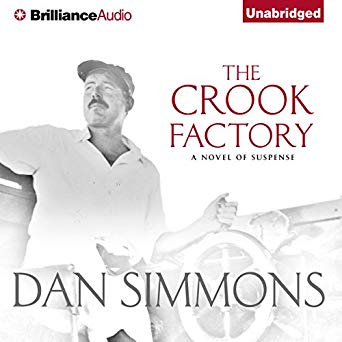
The Crook Factory by Dan Simmons (audio)

Directly after Mrs. Hemingway, I began this one, only subconsciously recalling that its subject matter was similar: a novel about Hemingway’s life. Such is the level of my Hemingway obsession that I keep these things lying around and forget I have them at all…

The Crook Factory gave me rather more trouble than the last one, though. This is a spy thriller about Hemingway’s life during the early years of American involvement in WWII, when he lived in Cuba and took his boat, the Pilar, out hunting for German submarines in the Gulf. He was basically playing at spy, and my impression from various biographies is that his activities were a little silly. In his afterword, though, Dan Simmons informs his reader that much of the story he tells here is based in historical fact. He says that the documentation of Hemingway’s activities in the early 40s are still classified to this day, which I confess is suspicious: to my mind, why classified, if there were nothing serious going on? So that’s interesting. Maybe we are all guilty of not taking Hemingway seriously enough.

FBI Agent Joe Lucas narrates this novel, looking back after decades – after Hemingway’s 1961 suicide – to recall his brief acquaintance with “the writer” (often referred to as such) in 1942-43. This flashback is told in present tense. Lucas has been sent down to Havana by Director J. Edgar Hoover to keep an eye on Hemingway as he plays spy on his thirty-eight-foot fishing boat, hunting German subs and trying to intercept radio transmissions. Hem has put together a ragtag group he calls the “Crook Factory,” of amateurs including little boys, local bartenders and Spanish exiles – and Lucas, who figures he’s been put out to pasture on this ridiculous mission. Lucas is derisive in his dismissal of Hemingway’s silly games; but serious things keep happening, and he keeps wondering why these seem like important events when of course they could not be… and this incredulity lasts long enough to strain my own faith in Lucas’s character, as he’s supposed to be this great agent and simultaneously awfully slow to figure out that the Gulf action is real deal, man.

This book has a few things going for it: an incredibly unlikely, wild, action-filled story; Hemingway’s undeniable charisma; name-dropping Ingrid Bergman, Gary Cooper, Ian Fleming, John F. Kennedy, Marlene Dietrich, and more. Putting Hemingway in one’s own fiction is tricky, though. The man was so nearly a caricature of himself that it’s too easy to write him as one; but the man in real life forced people to take him seriously, too, so he walked a fine line between ridiculous and deadly serious, that many writers find difficult to properly evoke. I’ve read maybe a dozen fictionalizations of him, and I’d say half or so get it right. Simmons’s Hemingway does not ring true for me. The reader drives me a little crazy; he strikes the right note for the hard-boiled spy-thriller, I suppose, but I don’t think he does Hemingway well. The man comes out sounding kind of high and nasal-y, which doesn’t feel right at all. (There aren’t many recordings of Hem’s voice, but they do exist.) Part of this is the reader, but part of it too is Simmons’s writing of the man. It feels like he couldn’t decide whether he was satirizing Hem or taking him seriously. And Gellhorn here is a nagging shrew – this, more the author’s fault, although again I’m not crazy about the way she’s performed – which I don’t think is remotely fair. She was a strong woman – the most independent of his wives – and they certainly fought, but this screeching nag felt wrong.

I was frequently frustrated as well by the silliness of the plot, but again, with Simmons’s afterword I feel a little chastened – I don’t feel qualified to quibble with the line between fact and fiction here. I’ve read several Hemingway biographies, but it’s been years, and none of them focused especially on these years. Simmons certainly offers a wilder version of this episode than I’d read before. It felt like fiction, but fact is stranger than.

While on that topic, though, I want to note the dialog between the Hemingway character and that of the narrator Joe Lucas, an FBI man with no patience for fiction. Hem defends his novels and the truer-than-true nature of fiction, saying “that’s why I write fiction rather than fact.” Wait, what?? Is Simmons unaware of the nine full-length works of nonfiction published by Hemingway, including the canonical A Moveable Feast and Death in the Afternoon?! The man decidedly wrote both fact and fiction. For goodness sake, he got his start in journalism. Simmons lost a lot of credibility in that line.

The plot is strong, if a bit incredible. Characters are shaky; Lucas himself felt a bit overdrawn, as well as my concerns about Hem. And Simmons may be a bit too invested in detail: FBI dossiers, the finer points of codes and code-breaking… I think the story could have been exciting, and more engaging, at two-thirds this length, or less. I found myself involved enough to stick it out, which is no small thing with this audiobook of twenty-one hours. I repeatedly thought about quitting, but I stuck around, because I wanted to see what happened. So I guess that’s an endorsement of sorts. Certainly, my interest is piqued about the events in question.

Pretty mixed review on this one. For a Hemingway completist like myself, it’s worth a try. Simmons has many fans; maybe you’ll love him, too.


Rating: 6 five-letter sequences.

in memoriam: Toni Morrison

If you surrendered to the air, you could ride it.

You wanna fly, you got to give up the shit that weighs you down.

If there is a book that you want to read, but it hasn’t been written yet, you must be the the one to write it.

Something that is loved is never lost.

(I am still working on this one.)

We die. That may be the meaning of life. But we do language. That may be the measure of our lives.

Late Migrations: A Natural History of Love and Loss by Margaret Renkl

This subtle, searing essay collection examines the griefs of family and of the natural world as one.

Margaret Renkl’s Late Migrations: A Natural History of Love and Loss is a quiet but stunning collection of essays merging the natural landscapes of Alabama and Tennessee with generations of family history, grief and renewal. Renkl’s voice sounds very close to the reader’s ear: intimate, confiding, candid and alert.

Renkl grew up in “lower Alabama,” the adored child of parents, grandparents and great-grandparents: in an old picture, “my people are looking at me as if I were the sun.” Her childhood was lived close to the red dirt, pine needles and blue jays of that space. As an adult, she lives in Nashville with a husband and three sons, and carefully cultivates a backyard garden with bird nests, baths and feeders. These are the backdrops to her observations of nature. “The cycle of life might as well be called the cycle of death: everything that lives will die, and everything that dies will be eaten.”

Sections are headed with simple, natural-world titles (Tomato, River, Thunderstorm) and adorned with illustrations by the author’s brother, Billy Renkl. Within these sections, the essays are brief–often just two or three pages–and can stand alone, but accrue to form a truly lovely larger picture. “Safe, Trapped” handles the duality of protective spaces: that shelter is also captivity. An echo, several chapters later: the realization that her childhood was never the sanctuary she thought it was at the time. Alongside the concern of how to keep loved ones safe, she writes about the natural cruelty of rat snakes, crows and snow.

Late Migrations studies family and loss: the deaths of great-grandparents, grandparents and parents; Renkl becoming a parent herself and worrying over her children. Spending a night in a prewar infirmary on the grounds of an orphanage, dreaming of babies in cages, Renkl goes to the window to view cardinals at a feeder and “watched until I knew I could keep them with me, until I believed I would dream that night of wings.” At about the midpoint of her book, this feels like a point of synthesis. Dreaming of babies in cages and trading them for wings, to “keep them with me,” represents a neat joining of her themes, which are of course not nearly so separate as they initially appear.

This is a book about the labors of bluebirds, red-tailed hawks and cottontails, and about grief: the loss of loved ones, the risks to her own children and the everyday struggles of backyard nests. A book of subtlety and sadness, yes, but also a tough, persistent joy in the present and the future. “Human beings are creatures made for joy,” Renkl writes. “Against all evidence, we tell ourselves that grief and loneliness and despair are tragedies…. In the fairy tale we tell ourselves, darkness holds nothing resembling a gift.” Part of her work in this book is to find and recognize the gift in the darkness, “to reveal it in its deepest hiding place.” Late Migrations is itself that gorgeous, thought-provoking gift.


This review originally ran in the June 11, 2019 issue of Shelf Awareness for the Book Trade. To subscribe, click here.


Rating: 8 bluebirds.

I sat reading, in Renkl’s chapter “Bluebird” at a state park in North Carolina, about bluebirds nesting in bluebird boxes. And I looked up to see a male bluebird, brightly feathered, ducking into a bluebird box, his anxious, drabber mate sitting on top and watching me and my little dog with concern. I couldn’t believe it: I looked down at the page, up at the bluebirds. We were a dozen feet apart. I kept reading and watching as the couple kept up their cycling through the box – she got a little more comfortable with me over time, but stayed watchful. A rare experience.

movies: When They See Us (2019) and The Central Park Five (2012)

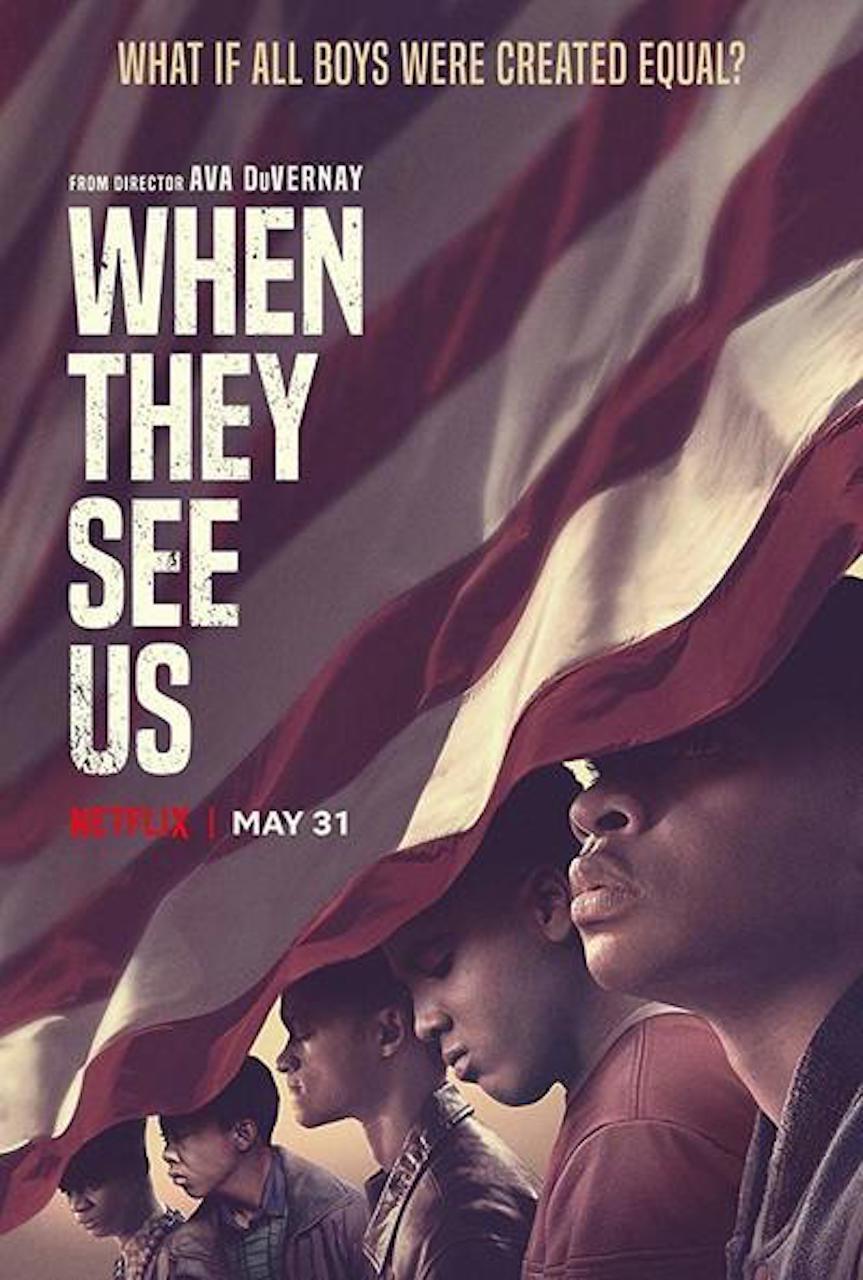
I was keyed up for the release of When They See Us as a Netflix original miniseries at the beginning of June. (I’m treating it here as a movie, especially because “limited series” seems like such a downplay for a serious work of art and social commentary.) I viewed the four episodes in three evenings, rushing through, feeling both addicted and horrified, unable to look away. I thought I was prepared for the subject matter, but I was shocked beyond expectations.

The show handles events from 1989, when five boys (four Black, one Puerto Rican and Black) were arrested for the brutal rape and beating of a white woman jogging in Central Park. Their names are Raymond Santana, Yusef Salaam, Kevin Richardson, Antron McCray, and Korey Wise. Although there was no evidence linking them to the crime, and although their confessions were full of holes and inconsistencies and signs of police coercion, they were found guilty. The four younger boys, ages fourteen to fifteen, were sentenced to between five and ten years. Korey Wise was sixteen, and received ten to fifteen, entering adult prison directly. In 2002, another man in prison for a series of rapes, Matias Reyes, confessed to the crime, and Korey (still incarcerated) was released, and all five men’s convictions were vacated.

It’s a terribly painful story to see unfold. On the April night in 1989, we see a large group of boys running through Central Park and acting out. They push at and harass bicyclists. They beat up a man. It’s easy to see how things escalate: boys roughhousing, and then some of them take it a step too far; imagine yourself one of those boys. You’re not responsible for the actions of those you’re with; you don’t even know all of them. It turns out that the jogger was raped in the same park on the same night, beaten within an inch of her life. Three of the boys who would become known as the Central Park Five were arrested that night. The next day, police came looking for Yusef Salaam. His friend Korey was with him when they take him in, and agreed to come along, just for moral support. In an ugly-ironic twist, Korey would serve the longest sentence for this crime in which none of the Five had any involvement.

It’s unsurprising that When They See Us knocks it out of the park with Ava DuVernay as creator, co-writer and director. Under her guidance, we see the boys running through Central Park. We see them picked up by police, and interrogated without parents present for hours and hours, without bathroom breaks or food; we see them pushed around, threatened, and coached through their false confessions. We see them in court and then in prison; we see them get out and hug their families and try to put their lives back together. We see Reyes confess to the rape. I am deeply impressed by the acting performances given by both the young actors (portraying the teenaged boys) and adults. I am horrified, over and over again.

I’m glad (well, that’s a weird word) to see the story of Korey Wise’s sister given air time, too: Marci was a trans woman murdered while he was incarcerated, who we meet only through flashbacks, as he weathers solitary confinement by living in a dream world largely starring this much-loved older sister. The story of a murdered Black trans woman is unfortunately common still today, and Marci deserved this coverage. She is beautifully played by Isis King.

I was also intrigued to meet the very sympathetic (in both senses) character of Roberts, a white prison guard who goes out of his way to be kind and generous to Korey, even holding him in an embrace when he finds out about Marci’s death. Roberts does not appear to come from real life (go figure). He was a sweet departure, but his totally fiction existence feels like a final driving-home of the horror of this true story.

I find the title interesting, too. I can think of several ways to follow this phrase, from ‘when they see us, they only see one thing/they think they know us,’ to ‘when they see us, then, finally, we’ll get justice,’ in the sense that we mean when we say it feels good to be seen. The story is so clearly about racism, about the way in which these boys, these children, were handled as proxy for everything that the world feared about Black men in 1980s New York. A white woman was raped, and they came for the Central Park Five just like they came for Emmett Till. And they were just babies: that’s one of the advantages of seeing and not just reading about this story, seeing the faces of these boys and realizing how very young they were.

I think this was everything it needed to be. As a crime drama, it’s gripping and moving. As social commentary, it’s thorough in its criticisms: the cops and prosecutors demonize themselves through their actions. I wept more than once. It’s also a visually impressive piece of art – this is where I’d normally call it visually pleasing, but of course that’s the wrong adjective – it’s full of expressive images, from the wide-angle view of boys in the park to the interrogation rooms and prison cells, and expansiveness of the outdoors to a man freed. I am still recovering emotionally from this story. Well done, DuVernay and full cast.

After feeling so affected by this show, I went looking for more, which led me to the documentary covering the same events from seven years earlier. The Central Park Five did much of the same job as the Netflix series, but with original footage and the perspectives of the men looking back from years later. Necessarily, it offered a less complete view of past events, because it stuck to the footage available; we don’t see police hit or threaten or coach the boys’ confessions, obviously, but we see the taped confessions, and we see the faces of the five boys and, later, men themselves. (Antron McCray allowed the use of his voice and not his image, as an adult.)

There was not much more of the story to be gained here, then, but an advantage in seeing it come from the people actually involved. I appreciated seeing what each character looked like, in comparison to the actor(s) who played them. I enjoyed seeing period footage of New York in general, too. I think it’s probably a good documentary, but it suffers some by comparison to When They See Us, which has the obvious advantage of being able to show more – whatever DuVernay wants to depict – and more dramatically. Having the two together feels like the right final call, of course, for the viewer wanting to explore this subject matter. I’m very impressed with both.

As a final remark, I want to say that I have a friend who has come into personal contact with Linda Fairstein, the evil, racist prosecutor in this story. This friend had her own horrible experience, which upholds what we learn about Fairstein here. Friend, I am sorry again for what happened to you. We’re decades late, but I’m glad everybody’s now talking about her and holding her responsible for some of her actions. Fairstein has enjoyed a career as a crime novelist until just recently: following a social media campaign, her publisher, Dutton, a Penguin Random House imprint, has ended the relationship. Small progress.


Rating: an average 8.5 years for these two fine films.

The Ghost Clause by Howard Norman

This smart, literary novel of human relationships–and a ghost–in a small town in Vermont is heart-wrenching, heart-warming and life-sustaining.

Muriel and Zachary are newlyweds living in their newly purchased old farmhouse in small-town Vermont. She has just defended her dissertation on translations of Mukei Korin’s erotic Japanese poems; that she brings this work home is a boon for their marriage. He is a private detective investigating the disappearance of a local girl who’s been missing for months now. They bought the farmhouse from semi-famous painter Lorca, a recent widow whose husband, Simon, had a heart attack and tipped overboard on a ferry en route to Nova Scotia.

The first surprise of Howard Norman’s (The Northern Lights, What Is Left the Daughter) riveting novel The Ghost Clause is that their stories are told in the voice of Simon’s ghost. The title refers to a section in Vermont real estate contracts that allows a buyer to return a house to its seller if there turns out to be a ghost in residence.

Simon still occupies the farmhouse, and feels very involved in the lives taking place there now. He appreciates that Lorca still visits, too. He observes Muriel and Zachary in their daily activities (often including their prodigious lovemaking), reads Muriel’s academic work and Zachary’s case notes, and sits in on their conversations around the clock; this gives him a near-omniscient perspective. He causes few problems, except that he keeps setting off the MOTION IN LIBRARY alarm on the home security system, which might drive his cohabitants nuts. He spends a lot of time reading Thomas Hardy; Muriel owns plenty.

Supremely enjoyable, The Ghost Clause is about the intersections of lives. At its center are two marriages–one new, one a bit older and recently rent by death–but it features many other town residents as well, and is ultimately about human relationships and families, and how we try to make it all work. Beyond this rich daily-life material lie extra layers: Korin, the poet Muriel studies, is fictional, so the erotic poems in the novel (and the difficulties of their translations, and the modernist issue of their parentheticals) are Norman’s invention. The missing-child investigation that threatens to consume Zachary for more than half the book is a thorough, often disturbing diversion. Finely detailed in its particulars and simultaneously revealing of grand-scale humanity, The Ghost Clause is both poignant and frequently gut-laugh-funny.

Norman’s prose is inspired; Simon’s narration is adorned with lyric moments (remember, he was a novelist in life): “A hammock of moon was traveling pale in hazy light,” Norman (or Simon) writes of an evening at home with Lorca when they were still alive together; there is more poetry here than Korin’s. Simon observes, “Scholarship as a form of courtship, it seemed to me.” The charm of local culture is part of the appeal, too. Muriel notes after a party that “People stayed kind of late, for Vermont.”

The Ghost Clause is one of the best kind of novels, excelling in every way: it’s delightful at line level, humorous, absorbing in individual stories and wise on a higher plane. A book for any reader who cares about people.


This review originally ran in the June 7, 2019 issue of Shelf Awareness for the Book Trade. To subscribe, click here.


Rating: 9 crabapple trees.

Mrs. Hemingway by Naomi Wood (audio)

A randomly selected audio treat recently returned me to the world of Ernest Hemingway, whom I have not read for years now, but who I feel as strongly about as ever.

This is a novel about the Missuses Hemingway: Hadley, Pauline, Martha, and Mary. Therefore it begins in Antibes, France (with flashbacks to Paris and Chicago, where Hadley and Hemingway met), and follows the strangely morphing family to Key West, Cuba, Spain, London, and Idaho. Chapters are told from the point of view of each Mrs. Hemingway in turn. These are third-person perspectives, but very close.

How to sum up this story I feel I know so well? Hadley Richardson is the first wife. Older than Hemingway, she had resigned herself to spinsterhood and is called ‘homely.’ Their marriage was most innocent, since another hadn’t ended to allow for it. They had a baby, Bumby; they lived together in Paris, dirt poor and very happy – these years are later mythologized by Hemingway in such terms. Next comes Pauline Pfeiffer, or Fife, a wealthy socialite who inserted herself into the Hemingway marriage, as a close friend to Hadley as well as to Hem; she made a concerted effort to win him, which she did. This breaking point opens the novel: Hadley gives Hem a tearful ultimatum, and then issues her conditions for divorce. She wants him and Fife to spend 100 days apart to decide if they’re really serious. Then she lifts the requirement, out of sympathy for the lovers’ plight.

Fife was Hem’s longest-lasting wife. They had two sons, Patrick and Gregory, and settled in Key West. Fife’s section also opens near its end: Hemingway returns from Spain, where he’s been covering the Spanish Civil War, and alternates between treating Fife better than ever, and sort of teasing her with his new mistress, Marty. Fife is the only one of his divorces to really fight to keep him, beg him to stay. She loses, and the two are never on excellent terms again. Cue Marty, or Martha Gellhorn, herself an accomplished war correspondent: Hemingway’s problem with her is her independence, her own writerly accomplishments, her refusal to wait at home for him. They have been apart for some time when she shows up in Madrid to find him and break it off, only to learn he’s taken a lover, Mary. This upsets Marty briefly, but then the two women meet and team up in taking care of him. His drinking and self-sabotage are worsening, and Marty is relieved to pass him on to the next wife.

Mary Welsh was there at the end, when he shot himself with both barrels of a shotgun in their home in Ketchum, Idaho, and much of her section of the book takes place after his death, as she tries to sort through papers and her own grief. Here Mary receives a final visit from a most interesting secondary character, one whom Naomi Wood invented: Harry Cuzzemano, a collector/dealer of books and literary ephemera, who has harassed all four wives for papers and especially, the famous briefcase Hadley lost at the Gare de Lyon. (If you don’t know, go look up this most fascinating mystery in the Hemingway legend.) The final meeting with Harry is part of the final wrapping-up, which is a little odd (he has been peripheral throughout) and a little appropriate (he has been a through-line, and in making his own final peace, he helps Mary find hers). The last moments involve Mary’s coming to terms with the fact that Hemingway was not the fatal victim of a gun accident, as she’s been claiming. I can only imagine how difficult this must be. There was plenty of evidence in support of a suicide – his mental health in the last years of his life, several suicide attempts, forensic evidence – but how hard it still must be.

Mrs. Hemingway was an enjoyable read (listen) for me. Each of these four women is evoked in her own fashion. I loved feeling steeped in Hemingway again, after too long. These stories were familiar, although the particulars were often new. Kate Reading (great name), who narrates the audiobook, did a good job: I did not think of her a bit, which is the ideal, meaning that her role as reader kind of disappeared for me and I felt I was receiving the book unadulterated. I see that Naomi Wood spent time with letters and papers written by each of these women, and I feel good about her fictionalized but faithful representations.

As a gentle criticism, I guess I would say that this still felt like a book about the man, more than about the women. Maybe that’s the only way to go, with such a massively larger-than-life male lead; at least three of the wives were most famous for being just that, and it seems Hemingway had this effect on women (and men, too), that everything becomes about him. They all four loved him in their own ways. They all kept in touch in their own ways, or didn’t: Hadley and Hem remained chums; Pauline was an antagonist, but a co-parent, so some contact was necessary; Marty and he never spoke after their divorce. I appreciated how they kept in touch with each other, too (or didn’t), including the friendship between Mary and Hadley, the first and last wives, whose relationship was largely a collaboration on how to best care for the man they’d all shared. There’s something deeply creepy about this polygamous-feeling string of women. But it’s true to life, as far as I can tell. (As an aside, I’ve always wondered what my relationship with Hem would have been, if we’d been alive at the same time. Would I have been able to resist his prodigious charms, and see what a cad he was?)

This is a book of high emotions, love and devotion and anger and betrayal and rejection. Looking over that last paragraph, I don’t think I mean to criticize, after all. I think the Hemingway focus is accurate. He’s what these women have in common. If it’s a little less than feminist and empowering to be so mad for this flawed man, so be it: it’s what happened. I am glad that Wood gave each woman her own time and her own personality. I’m glad to be with the flawed man again, myself. I’m very glad I read this book. It was sweet and harrowing, and engulfing. Recommended.


Rating: 7 shallow white bowls.

The Wild Boy by Paolo Cognetti

Best book of the year to date.


A city dweller returns to the mountains of his youth, and his gorgeous, reflective memoir is full of nature and humanity.

Having just turned 30, Paolo Cognetti (The Eight Mountains) felt restless and unfulfilled in the city of Milan. He missed his childhood summers–the first 20 years of his life–spent in the Italian Alps. Inspired by Thoreau’s Walden and the principled quest of Chris McCandless (subject of Jon Krakauer’s Into the Wild), he rented a renovated but rustic cabin alone in a village of ruins in a high alpine valley and undertook to learn what the mountains had to teach, to “live deep and suck out all the marrow of life.” After years of frustration, he hoped to write again.

The Wild Boy is a memoir of three seasons spent in that cabin, or, more accurately, spent hiking and exploring the mountains he remembered from when he was a boy–that wild boy he hopes to find again. The account opens briefly in winter, for background, as Cognetti makes his decision and locates his mountain home. Spring, summer and fall form the bulk of the story, which ends when he heads back down the mountain again: “I already knew all the dreams that I would have that winter.”

In the interim, Cognetti gets to know the local flora and fauna; briefly attempts a vegetable garden; studies other writers’ words; travels far and wide on foot; and makes new friends, human and otherwise. Thoreau writes of the pleasures of solitude, but this narrator finds he desires companionship–if they are the right companions. Two men in particular make strong impressions. His landlord, Remigio, is a creature of the mountains, with whom Cognetti literally makes hay. They share few life experiences, but quickly become fast friends, and Remigio turns out to suffer from writer’s block as well: “This was the story I had strayed into, hoping to find how to write again.” The other is an alpine shepherd named Gabriele, with whom Cognetti shares meals and wine. Gabriele will give him a gift at the end of their season together that Cognetti didn’t know he needed.

The Wild Boy has a lovely and profound story to tell about connections to land and history and one another. In seeking simplicity and a new start in his life, Cognetti rediscovers timeless truths about the human condition. In addition to the strength of its contents, this is a stunningly beautiful book. It is a slim volume whose simply titled chapters (Snow, Hay, Vegetable Garden, Neighbors) carry significant wisdom and weight. Cognetti’s prose is incandescent when writing about nature, about human history, about friendship and, perhaps most of all, about words: “That was why he had become such a voracious reader. He was looking for the words that would allow him to speak about himself.” For any reader who has wondered about the next step, loved a mountain or a book, struggled with writer’s block or stared in wonder into a forest, this astonishing memoir is necessary.


This review originally ran in the June 6, 2019 issue of Shelf Awareness for the Book Trade. To subscribe, click here.


Rating: 10 words.