Yale lectures on Hemingway, Fitzgerald and Faulkner by Wai Chee Dimock: lectures 17-25; conclusions

(See my first two reviews: lectures 1-7 and lectures 8-16.)

First I’d like to share another example of something that I wished to debate with this professor. The discussion below contains spoilers regarding For Whom the Bell Tolls, which is probably my very favorite book ever ever (possibly competing with The Odyssey and The Jungle), so if you haven’t read it, you might skip this part of my review.


Spoiler begins

At about 32 minutes into lecture 19 (“For Whom the Bell Tolls,” Part IV), regarding the scene late in the novel when Robert Jordan’s leg is broken and Pablo is going to lead his small band onward without him:

The symmetry here is between Robert having a broken leg and Pablo having much head. He is the brainy one. This is the ultimate rewriting of the power dynamics in For Whom the Bell Tolls. We’ve been going along with the assumption that it’s the person with the knowledge and the technology, the person with the knowledge of the world, the person that speaks several languages, we’ve been going under the assumption that that person is going to be on top, that the future belongs to him. The ultimate irony of this novel is that in fact this is the person who’s going to lose out, who’s going to have no future at all.

While I see her point about the disruption of power between the educated, foreign-empowered Robert and the rather much maligned and dissipated Pablo, I couldn’t disagree more about the disruption of the reader’s expectations. I realize I can only speak for myself, but I think I can find some Hemingway to back up my impressions.

When I read this book for the first time (in a beach camp in the little town of Sayulita, Nayarit, Mexico), I had a strong sense of foreboding about Robert’s fate, and indeed, the fate of Pablo, Pilar, and the rest. Robert’s daydreaming of his life together with Maria in other times and places – in Paris, in the United States, as the wife of a professor entertaining undergraduate students – has a tone of wistfulness, as if Robert suspects this will not come to pass. He likewise daydreams about suicide – his father’s, and the avoidance of his own – and is increasingly pessimistic about the fate of this band of guerrillas. The end of El Sordo has an air of doom about it, which reflects further than those who die on the hilltop; the odds are admittedly against a little guerrilla group in these mountains. When I read this book without knowledge of the ending, I felt sure that Robert and Maria wouldn’t make it out of these hills together and alive; I suspected Robert’s demise specifically, and worried for the rest of them as well. And while I know this is just one person’s reading, I think there’s evidence that Hemingway directed me toward these suspicions. So I’m not sure Dimock has grasped it when she says she’s turned all our expectations on their head. Hemingway has disrupted the power dynamic, yes, but intentionally and with foreshadowing; I’d argue that one of the messages of this novel lies in his statement on war and the value of military technologies, in the way that Dimock shows, but he didn’t surprise us with it so much as build us steadily towards this ending.


Spoiler ends

I am arguing with Dimock here not because I think she’s unintelligent or anything, but because I enjoy debating literature I love. I just wish I could be there and ask my questions and make my points, engage the prof and my classmates. In other words, I would like to be back in school again. What else is new.

I both enjoyed very much, and was very frustrated (see above) by Dimock’s study of For Whom the Bell Tolls. I think this is natural. Next we studied Tender is the Night, which I reacted to similarly but less strongly; that’s a book I’ve read, though not recently, and I feel less strongly about it than I do FWTBT; it might be my least favorite Fitzgerald (I thought The Last Tycoon, for example, was better), but ho hum. And then there was Light in August, the only Faulkner I’ve read, and if you read my two reviews of that, you know I’m settling in as not a Faulkner fan. So, the final question of this semester of Hemingway, Fitzgerald and Faulkner: for me personally, did this class help me understand and enjoy Faulkner, or make me want to read more of him? And to that, a resounding “no.” I am discouraged by Dimock’s repeated confession that he is difficult, makes little or no sense, that she often does not understand what he’s up to. I was turned off by the other two works discussed in this course, and the final four lectures on Light in August shed precious little (wait for it…) light.

I now want to go back to school and study more literature; and I want to avoid William Faulkner from here on out. Those of you who enjoy him are welcome to your enjoyment and I’m happy for you. I’ll be over here.

As for Wai Chee Dimock’s course: I think she fails to articulate her thoughts sometimes; also, I disagree with some of them, but respectfully. I would certainly be happy to take courses from her if I were going back to school. As for this course via iTunes U, however, I give the combination of Dimock’s speaking style and the poor audio recording quality a C-, at best. However, I listened to all 25 lectures at ~50 minutes apiece. If you’re interested, they’re out there, and for that I’m grateful. We’ll see if I have any success with iTunes U in the future.

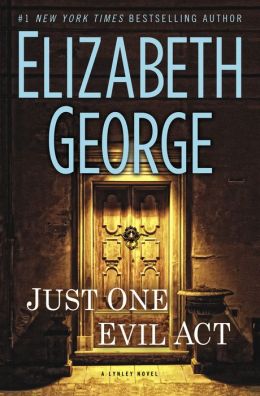
Just One Evil Act by Elizabeth George

evilElizabeth George’s 18th novel starring Detective Inspector Thomas Lynley and Detective Sergeant Barbara Havers of Scotland Yard will be published in mid-October of this year. This series dates back to 1988, and I was introduced to it by my mother; we have both been great fans.

Series readers will of course recognize the two familiar main characters, joined by the likeable Detective Constable Winston Nkata, sundry less sympathetic Scotland Yard superiors, and Barbara’s neighbors, Taymullah Azhar and his daughter Haddiyah. Simon St. James and his wife Deborah, sadly, barely cross the stage in this novel; and of course those readers who have been keeping up with the last 3-4 books in the series will know about the death of Lynley’s wife Helen, whom he is still grieving. As with most series, I think, an integral part of the reader’s enjoyment is in recognizing characters as old friends, and in that sense, it felt good to be back in the company of Lynley – upper class but down-to-earth, flawed and suffering, but trying to make a go of it with a new woman; and Havers – lower class and struggling all around, socially awkward, but devoted to Azhar and Haddiyah.

A brief plot introduction, and then I’ll avoid spoilers as this book is not yet published. Haddiyah’s mother Angelina is back on the scene just long enough to lull Azhar into complacency, and then she takes Haddiyah and runs. Azhar and Barbara together hire a private investigator to try to track the missing daughter, but his rights are limited: he was never listed on her birth certificate, never married her mother, and his paternity is unproven. Then Angelina turns up in Italy with a new beau, distraught that Haddiyah has been kidnapped from her. Naturally, Azhar is a subject; just as naturally, Barbara is committed to proving his innocence and bringing Haddiyah home.

From a thoroughly charming opening scene in which Lynley tries to charm his new girl by showing up at her roller derby match (!), we mostly stick with Barbara, who is at the zenith of her anti-authoritarianism. Consistently poorly-dressed and disrespectful, and usually described by her superiors as unprofessional, she outdoes herself here. While these are central tenets of Barbara’s character, her total flouting of law and order and disregard for keeping her own job in pursuit of Azhar and Haddiyah’s best interests gets a little outrageous. In prior books I felt that her devotion to the job was also an important part of her character; here, not so much. Her single-minded and, yes, stupid behaviors are at best an abrupt turn in her character’s development, and at worst, inconsistent with the Barbara we’ve come to love.

My criticisms continue. There is an utterly unbelievable beating; an unlikely mix-up of victims; and an indictment of prejudice which is nevertheless upheld, thus seeming to discredit the indictment in the first place. What had been a promising long-term relationship between well-loved characters, building in this series through many books, is thrown out the window in a flash – much like the sudden murder of Helen Lynley a few books ago, leading me to suspect that Elizabeth George enjoys wrenching some of her readers’ favorite characters away from them. Perhaps most infuriatingly, a promising beginning to a romance is left unresolved. This may be intended to keep us hanging on edge for the next book. However, all it did was make me mad. I actually, literally threw this book upon finishing it. (You can ask Husband.) I don’t think I’ve done that before. I’m no reader of romance novels, but I do enjoy a good, realistic, even sappy romantic thread in my thrillers or what have you. I have been teased and disappointed here, and I resent it. I had been doubting and hoping against doubt that George would pull this one through when she dropped the budding love affair, and I am now done with her.

Furthermore, I am not the only one to note that George’s books have been getting longer, and this, I believe, is her longest yet. That’s my awesome editor at the above link, noting that Just One Evil Act weighs in a good bit over 2 pounds. Now, page count is not always a problem – I would like to point to Stephen King’s outstanding 11/22/63 at 850 – but here, George could have written this plot up in 400 pages rather than more than 700, and I think it would have been better done. Her sentences, too, are overlong. Again, you know I have no inherent problem with long sentences. Take my word then when I say that George lost track of her editor in this work.

I regret this loss of a long-term love, but I don’t think I’ll be able to follow Havers and Lynley where they next tread.


Rating: 3 rambling plot threads.

book beginnings on Friday: Pilgrim at Tinker Creek by Annie Dillard

Thanks to Rose City Reader for hosting this meme. To participate, share the first line or two of the book you are currently reading and, if you feel so moved, let us know what your first impressions were based on that first line.

pilgrimattinkercreek

I have come across Annie Dillard’s name in enough nature writings I’ve enjoyed – fiction and non – that it’s definitely time to find her myself. I’ve started with her Pulitzer Prize-winner, Pilgrim at Tinker Creek. I’m including the whole first paragraph here because I felt it necessary:

I used to have a cat, an old fighting tom, who would jump through the open window by my bed in the middle of the night and land on my chest. I’d half-awaken. He’d stick his skull under my nose and purr, stinking of urine and blood. Some nights he kneaded my bare chest with his front paws, powerfully, arching his back, as if sharpening his claws, or pummeling a mother for milk. And some mornings I’d wake in daylight to find my body covered with paw prints in blood; I looked as though I’d been painted with roses.

Evocative, isn’t it, the idea of this woman naked, painted in bloody cat prints like roses? Poetic, a little shocking. I like this as a beginning; it certainly gets one’s attention. This is, incidentally, the image referenced in my recent (new favorite) read, Dirt Work: Christine Byl called this a “lyric” defining “wild”. So that’s an auspicious start. Stay tuned.

Dirt Work: An Education in the Woods by Christine Byl

dirt workChristine Byl opens her memoir with the pleasant scene of herself and three fellow crew members, crusty and dirty, having a post-hitch beer at a small-town Montana bar. A young woman approaches and asks how she keeps up with the boys, one of whom volunteers that it’s all they can do to keep up with her.

She then backs up and tells the story of how she got there. Like many young women in our culture, Christine was expected and expecting to go to college, to do cerebral work and keep her hands (literally) clean; but a summer gig held her, and she reveled in physical challenges, in learning new things, in the mechanical world. Eventually she reveled in her hardening muscles and her expertise, in surprising men with her ax-work and in mentoring other young women coming up in the “matriarchy” of trail work (still predominately male) within Glacier National Park.

After six seasons in Glacier, alongside boyfriend and eventual husband Gabe (a delightful character: mostly off screen, but clearly a capable young man in his own right, and clearly happy to stay lovingly out of Christine’s way), she does return to graduate school, in Alaska. But during the summers she still works on building and maintaining trails, this time in Denali. Christine and Gabe come to love Alaska – yes, even the winters: there is a delightful passage arguing that the light summers are in some ways harder than the dark winters, and I made both my parents (recently moved from the Mexican to the Canadian border) read it. They settle a few miles outside the borders of Denali National Park, and Christine finds a balance between the cerebral – she gets an MFA in fiction, and writes this beautiful book; and the physical – she and Gabe now run their own independent trail-building company.

So many things to love in this book; where to begin? As a sometimes volunteer trailworker myself, I don’t pretend to know 2% of what Christine does; but I might know just enough to appreciate what she loves about it, and what a challenge it can be. I still haven’t mastered the efficient, all-day ax swing myself, but I’d like to. Also, I have a friend named Susan who I’ve written about before, who has a great deal in common with this author. (I briefly wondered if “Christine Byl” was a pseudonym.) Susan, like Christine and apparently like many trail workers, has an advanced degree but chooses to labor for a living; she’s a woman in what is clearly a man’s world, and is half of an independent trailbuilding company. I get the impression that while it’s hard work, Susan and her husband Ryan wouldn’t do anything different.

Christine writes beautifully about the phenomenon of choosing to do physical work when she could be keeping her hands soft. She writes about the well-intentioned questions her family asked, about when she was going to get a “real job”: she says that they have confused happiness with orthodoxy. (I can only imagine how many of us can sympathize with that concept!) She writes about the “sorority” of men in trailwork, and the way that pulls women together; she writes about the pride she feels when upending male expectations of her blonde head and small frame. As a writer, and clearly a gifted one, she structures this book as solidly as she would a bridge or retaining wall. Each of 6 chapters is represented by a tool (axe, rock bar, chainsaw, boat, skid steer, shovel), a location (North Fork, Sperry, Middle Fork, Cordova, Denali twice) and a locale (river, alpine, forest, coast, park, home). Within those chapters she roves and rambles, musing on natural phenomena, social relations, her own body and personality, strengths and shortcomings, and then returns to tool and place to ground herself. The structure of this book, then, is both well-anchored and floating, and I found that it worked very well.

I was charmed by Christine Byl’s honesty; her love of place; her range of experiences and understanding of two worlds, that of universities and that of woods; and of course her lovely writing. She’s hard as nails, with two hernia surgeries and a preference for outhouse over indoor plumbing. She’s brash and can tend towards a loud and dirty mouth (that makes two of us), but she’s got a soft core. I like her; I’d like to be her friend, and of course I’d really love to learn from her.


Rating: 10 pulaskis (my personal favorite trailwork tool).

I fear I’m getting out of control with the perfect-10 ratings, friends, but what can I say: it’s been a great year for reading. I will take a little of the credit, in that I think I’m getting better at picking what I’ll like, and not wasting time on what I won’t. But mostly, wow, there are some amazing books out there!

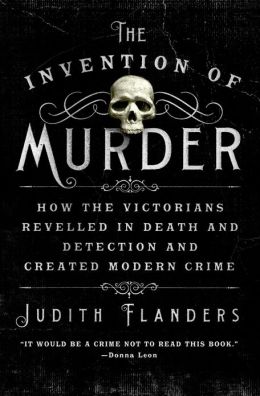
The Invention of Murder: How the Victorians Revelled in Death and Detection and Created Modern Crime by Judith Flanders

An exhaustive, engaging examination of how murder and the murder mystery novel infiltrated our modern world by way of 19th-century Britain.

murder

Judith Flanders (A Circle of Sisters) tackles an unwieldy subject in The Invention of Murder, telling the tale admirably well, even entertainingly.

The Victorian British, Flanders tells us, were the first to identify murder as an object of fascination–inspiring in turn a passionate interest in trials, executions, motives and, eventually, the developing profession of solving crimes. The action opens in 1811 with the murdered Marr family, and quickly moves to 1820s Edinburgh, where Burke and Hare infamously killed so they could to sell the corpses to doctors as medical specimens. Flanders introduces a lengthy list of famous (and obscure) murderers and serial killers, culminating, of course, with Jack the Ripper. Alongside the killers and their victims, she presents Thomas Hardy, George Eliot and many contributions by Charles Dickens to illustrate her thesis that murder in life inspired murder in art. Fictional murderers and detectives play a role equal to their real-life counterparts, as Sweeney Todd and Sherlock Holmes take the stage.

Flanders also tracks the evolution of the police force from a force of deterrence to an investigative organization, along with the parallel development of murder and detection in literature and on the stage. The penny-blood (or penny-dreadful), a cheap booklet telling a sordid and often illustrated tale of horror, morphs into the detective novel (and play), as the public shifts its interest from bloody murder to the newly invented and increasingly sympathetic crimesolvers we know and love today.


This review originally ran in the August 2, 2013 issue of Shelf Awareness for Readers. To subscribe, click here, and you’ll receive two issues per week of book reviews and other bookish fun!


Rating: 6 dismembered parts.

a compilation of lists

Whew! You all might know that I’m a sucker for book lists. It can get a little exhausting with everyone publishing their own “100 greatest books” etc. (you know I did!), and this is a highly subjective matter. But I’m still attracted.

But then I saw this list (through Shelf Awareness, naturally). It’s a chart compiled from all the books on 11 lists of 100 books. [One list says “American novels”, where the others seem to be international. Eight of the 11 say either “novels” or “literature,” and a glancing survey does seem to confirm that this is a fiction list. These rules are not entirely made clear.] There aren’t 1100 books, because there’s overlap: that’s the point of this chart. And what fun: statistical analysis! Three books make 10 of the 11 lists: Catch-22, Lolita, and The Great Gatsby. Four books make 9 lists; 4 make 8; and so on from there. I found it fascinating to see the semi-democratic selections between these lists. Of course, each of those 11 lists is just another subjective view; but it’s nice to the the intersections. The lists, if you’re curious, come from sources like bookriot.com; TIME magazine; Entertainment Weekly; Modern Library; Goodreads; and Reddit.

Naturally what I want to do now is show which ones I’ve read, plan to read, or don’t plan to read (hello, Faulkner and Ulysses). Let’s say bold are those I’ve read, italics are those I want to read, and underlined for those I’ve picked up and put back down or don’t intend to.

Please excuse my laziness in listing only titles and not authors. You will fairly easily figure it out yourself or find the author via The Google. A few of these titles, for the record, didn’t ring a bell to me at all. Some authors are available at the original link; others are not. I’m guessing this was a copy/paste in from the 11 lists themselves…

Made 10 lists:
Catch-22
*Lolita
*The Great Gatsby

Made 9 lists:
Invisible Man (Ralph Ellison, not H.G. Wells. I have read the one by Wells, actually.)
Slaughterhouse-5
The Catcher in the Rye
The Sound and the Fury

Made 8 lists:
*1984
Beloved
The Grapes of Wrath
To Kill a Mockingbird

Made 7 lists:
The Sun Also Rises

Made 6 lists:
An American Tragedy
Atlas Shrugged
Brave New World
Gone With the Wind
Midnight’s Children
My Antonia
*On the Road
* The Adventures of Huckleberry Finn
The Heart is a Lonely Hunter
The Hitchhiker’s Guide to the Galaxy
The Tropic of Cancer
Their Eyes Were Watching God
To the Lighthouse
Ulysses

Made 5 lists:
A Clockwork Orange
A Passage to India
All the King’s Men
Animal Farm
Brideshead Revisited
Crime & Punishment
Fahrenheit 451
Go Tell It On the Mountain
Heart of Darkness
Infinite Jest
Light in August
Lord of the Flies
Moby-Dick
Mrs. Dalloway
Native Son
One Hundred Years of Solitude
*Pride and Prejudice
The Age of Innocence
The Call of the Wild
* The Lord of the Rings
* The Old Man and the Sea
The Stand
The World According to Garp
Things Fall Apart
* Wuthering Heights

Made 4 lists:
*A Confederacy of Dunces
A House for Mr. Biswas
A Portrait of the Artist as a Young Man
Anna Karenina
Blood Meridian
Charlotte’s Web
Death Comes for the Archbishop
Don Quixote
Ender’s Game
Howards End
I, Claudius
Naked Lunch
Neuromancer
One Flew Over the Cuckoo’s Nest
Rabbit, Run
Ragtime
Sons and Lovers
Sophie’s Choice
The Adventures of Augie March
The Brothers Karamazov
The Color Purple
The Fountainhead
The Golden Bowl
The Handmaid’s Tale
*The Hobbit
The Maltese Falcon
The Moviegoer
The Sheltering Sky
Under the Volcano
War and Peace

And on.

I have added *asterisks* for the 11 that overlapped with MY list of 100: that was interesting to note. In such subjective measurements, I think that’s not a bad statistic. And some of the ones on this list that I’ve been looking forward to reading may well end up on my own list.

What are your reactions?

Yale lectures on Hemingway, Fitzgerald and Faulkner by Wai Chee Dimock: lectures 8-16

Well, compared to my earlier review of lectures 1-7, I confess I’m a little less enthused with this second set of lectures. (By the way, for clarity’s sake, I downloaded all 25 lectures at once with no indicated break. These breaks for review purposes are random and my own.) I continue to find some audio issues – volume variations, breathiness, background noise – distracting and a little frustrating; I can better understand other users’ complaints as I go on and as this annoyance builds. And I have decided I do not want to read any more Faulkner. It’s not encouraging to have this professor repeatedly confirm that he is difficult; and what I’m learning about the two studied works I haven’t read (The Sound and the Fury, As I Lay Dying) is not motivating. I am perplexed by Dimock’s characterization of As I Lay Dying as “Faulkner’s version of To Have and Have Not” (this is at 15:00 or 14:55 of lecture 16, if you want to hear more). I confess listening to Dimock acknowledge Faulkner’s esoteric nature, combined with being thrilled to hear Hemingway discussed, is only serving to cement me further in my feelings about these two men. And that’s not really the purpose of academia, is it! I wish I could attend this class with classmates and participate in the study sections she refers to; I’d love to write papers as assigned and get feedback on them; maybe one day I’ll still go back to school and do these things, but for now, listening to these lectures is… still worthwhile, but sometimes frustrating. I hear things I don’t agree with, or need further explained, and there’s no platform for that. I could criticize and pick apart Dimock’s thoughts here, but it doesn’t feel entirely fair. I’d feel much better about doing it in the format intended: class discussion. Besides that, it’s difficult to articulate my arguments for you here, in front of this keyboard, after having listened to the lectures while driving my car and thus not taking adequate notes! These are the limitations of “study” under these terms as a busy professional. I’m still listening. But part of what I’m getting out of these lectures is just more regret that I’m not a full-time grad student!

I will choose one concept to argue here. It struck me hard enough that I made a note and went back to listen to this quick bit at home so I could share with you.

This is in lecture 16, covering For Whom the Bell Tolls (for the record, my favorite Hemingway novel). Dimock reads briefly from a conversation between Robert Jordan and Anselmo (whose name, inexplicably, she pronounces more like Ensalmo; it drives me nuts) in which Anselmo says of the gypsies,

To them it is not a sin to kill outside the tribe. They deny this but it is true.

Dimock comments.

Usually, for most of us, the injunction is against killing, period, right? So there’s just no qualifying after that… [but for the gypsies] outside your tribe you’re free to kill anyone. That’s an incredible charge to level against the gypsies.

She continues on to argue that this accusation, that gypsies lack some moral rectitude that the rest of us possess, is a statement that Anselmo is making about the gypsies’ inferiority; she goes on to discuss Robert Jordan’s apparent ignorance of Spanish culture & history based on a comment that he makes about the Moors. Well, I’m not so sure that Robert Jordan is all that ignorant, but that’s another argument. I think Dimock missed a key piece of irony in that statement about gypsies killing outside their tribe. What struck me about Dimock’s response was her dismissively clear-cut understanding of “our” rules about killing: “the injunction is again killing, period.” First of all, the groups that Anselmo and Robert Jordan belong to (the Abraham Lincoln brigade; guerrillas; Spanish republicans) certainly don’t have a universal injunction against killing people: they kill fascists, don’t they? In other words, depending on how you define one’s tribe, they also feel that it’s permissible or justifiable to kill outside the tribe. Or let’s take this a step further: nowhere does Anselmo, or Dimock, note that it’s okay or not okay to kill humans outside one’s tribe. No, she states that “for most of us, the injunction is against killing, period.” This couldn’t be further from the truth. People kill sentient beings by the billion: to eat them, to take their habitats, as collateral damage during our search for fossil fuels, on and on. To take a more modern approach, we as a society not only kill all nonhuman things as a matter of course and without a second thought; we also seem to accept under certain circumstances that it’s justifiable, at the very least, to kill nonwhites, or non-Americans, or non-Christians; in the post-9/11 United States, there was (is) a certain acceptance of our right to kill Muslims or brown people who live in certain countries! Now, Hemingway didn’t live to see 9/11, but this brand of ethnocentrism is not unique to my generation’s experience. I believe that Hemingway, unlike Dimock – and likely Robert Jordan too – saw and intended the irony in Anselmo’s statement about gypsies killing outside the tribe. It’s all a matter of how you define one’s tribe. Dimock herself pointed out in an earlier lecture that Hemingway’s work is simply dripping, saturated, with irony. I think she missed a fine example here.

Light of the World by James Lee Burke

Dave Robicheaux and Clete Purcel are joined by their daughters as they battle evil in the hills and valleys of Montana.

lightoftheworld
Light of the World, James Lee Burke’s 20th novel starring Louisiana detective Dave Robicheaux, returns to the Montana hill setting of 2008’s Swan Peak. Fans will be thrilled to find Robicheaux and Clete Purcel joined by their respective adult daughters in a hard-hitting, intense battle between good and evil. Burke’s writing is poetic–reverential in praise of natural beauty, contemplative of human nature–and invokes a strong sense of place. Clete, the rough-and-ready, hard-drinking, softhearted private investigator, is lovable as ever; Robicheaux is the flawed hero who has charmed us from the first, fighting his demons and protecting his clan.

Years ago, Dave’s daughter, Alafair, visited serial killer Asa Surette in prison to interview him for a book she never wrote. Instead, she published a condemning series of articles advocating the death penalty. Later, Surette was killed in a collision with a gasoline tanker. So why is he now lurking around the cabins in Big Sky Country where Robicheaux, Clete and their families are trying to relax? The evil in this powerful story of suspense has supernatural undertones, as wolves skulk in the woods above the ranch and planes fall out of the sky. Alafair teams up with Clete’s daughter, the reforming New Orleans hitwoman Gretchen Horowitz, and they make as remarkable a pair as their fathers. As the story unfolds, a rodeo cowboy who speaks in tongues, a serial killer who should be dead, ex-cons, rapists, bear traps and evil that dwells in caves in the hills all come together in perhaps the greatest showdown of Burke’s career.


This review originally ran in the July 30, 2013 issue of Shelf Awareness for Readers. To subscribe, click here, and you’ll receive two issues per week of book reviews and other bookish fun!


Rating: 8 howls.

the hermit thrush

My parents have recently moved from Houston to northern Washington state, a scant 20 miles from Canada. Pops wrote me an email the other day which I will share in part, with some locations redacted…

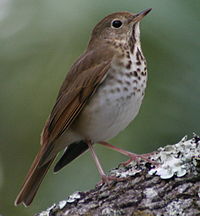
First, I’ll remind you the ringtone I assigned your number on my phone is the Hermit Thrush.

Today I rode a big loop out —- and back along the shore of —-; as I rode a quiet back road bordered by forest, I was climbing a moderate hill at a steady pace, but slow enough on a low-wind morning to enjoy near silence, hearing & seeing detail in the woods as I passed; it was then that the Hermit Thrush sang out as your text came in; and I swear I heard a thrush answer in the forest!

That’s happened before, back in Texas, with the Tufted Titmouse assigned to your mother – but there are no Thrushes in Texas; I haven’t yet determined if the thrush we hear around town here is the Hermit or one of the others. The book makes it hard to tell the difference; but somebody out there liked it today!

I commented that that must be a very high-quality ringtone!

from here

from here

The ringtone is an actual recording of a bird; the small speaker of a phone is naturally more effective with high pitched sounds, like bird songs, so it really is natural sounding and projects well from my jersey pocket.

One way researchers “search” for rare birds is to play recordings of their songs & calls and listening for a response, so we shouldn’t be surprised this works.

Indeed – and that makes sense; but still, who’d have thought? And by the way, according to this range map, the hermit thrush is in fact quite likely to be in my dad’s new neighborhood.

So why I am sharing this on my book blog? Well, I continue to be struck by the episodes of coincidence (if you like) or of synchronicity that inhabit my life, my world, and my reading (and cross over from my reading into my “real” world). The final page of the book I reviewed yesterday, Susan Vreeland’s The Forest Lover, made me think of my father, because it made reference to the song of the hermit thrush:

A hermit thrush spilled one long crystalline note, stilling all the earth to listen, and then poured out an ethereal flute song, over too soon. She closed her eyes, waited. Again, that purest of tones, long-held, chillingly beautiful, and then the cascade of melody like a tumbling stream. A spirit song. For her.

If she could sing like that thrush, what would she sing?

[You can listen to its song here, thanks to the Macaulay Library at the Cornell Lab of Ornithology.]

The next paragraph references, among other trees, the Douglas fir, another species belonging to my parents’ new habitat and appreciated by them. It just goes to show that life really does imitate art, and/or the reverse, and that that’s as it should be.

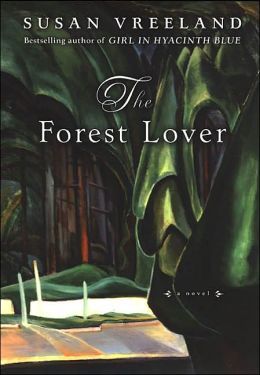
The Forest Lover by Susan Vreeland

forestloverWhat a lovely book. I recently read and enjoyed Scott Elliot’s Temple Grove enough that I attended to his “Note on Sources,” and requested several from my local library. This was one of those – aided by my enjoyment of Vreeland’s Girl in Hyacinth Blue and Clara and Mr. Tiffany.

Like those two of her books, this is historical fiction dealing with a female artist. [Also think of Tracy Chevalier’s Girl With a Pearl Earring.] The three historical periods, geographic locations, and women in question are quite diverse, but there is a very clear thread connecting them all as female, artists, and historical; I appreciate that showing of diversity in her subjects and also of a singleminded interest. I am safely a Vreeland fan now. Fairly naturally, considering that they deal with female artists of earlier times, her books also address women’s struggle for independence.

Emily Carr, like the subject of Clara and Mr. Tiffany, is a real-life historical figure about whom we don’t know everything; this is a fictionalization of her life. She was born in British Columbia in 1871 to British parents. She showed an inclination for sketching and painting early on, which hobby was encouraged by her father at first, but he expected her to grow out of it in favor of more womanly pursuits (like marriage), and she didn’t. We meet Emily or “Millie” when she’s struggling to make ends meet and trying not to depend too much on the trust fund she shares with 4 sisters, teaching art for a living and befriending local Native Canadian Indians. The sisters mostly do not approve this association. Her favorite subjects are natural scenery and native people and their lifestyles; she travels to islands and outposts for these subjects; again, this is not appreciated by her family. She does enjoy some good female companionship, though: Sophie is an Indian woman and fellow artist (a basketmaker) who befriends her in broken English; Jessica is a less adept painter but rather saucy lady friend; Alice is her “good” and friendly sister; and after Emily musters the courage to travel to Paris to study the “new” art (see below), she meets fellow painter Fanny, a New Zealander and kindred soul.

To give you an idea of the Paris of Emily’s experience, as a moment in time, I share these lines.

“Van Gogh’s been in his grave for twenty years, Cezanne for four, yet art collectors still don’t buy them, and despise what’s new now.”

“What is new now?”

“Their offspring. Léger, Picasso, Braque, Matisse, Modigliani, Derain, Rouault. Many directions.”

Momentous times, then!

Back in Canada, Emily ages as we watch her struggle with art and life. She wants desperately to represent the native people’s lives and art, and the powerful forest surrounding her. Or, as she comes to learn, she wants to more than represent or copy: she wants to communicate what these things make her feel. Her study in Paris under various teachers advances her practice, but still doesn’t get her there. We follow Emily through a series of lifestyles and decisions that form a crooked path but ultimately continue to move her toward a higher form of the art and communication she desires.

There is one man who begins to be a love interest for Emily; but as the title implies, she finds herself unable (for various reasons) to participate in physical, person-to-person, romantic or sexual love with this man. She is not the forest’s lover in a carnal sense – this book is not that weird. And Emily does continue to relate to people. Jessica and her sisters, and most importantly Sophie, retain a hold on her heart; and she forms a new (platonic) relationship with a damaged white man who understands Indians better than whites. But in a very real way, her relationship with the natural world is the most magnetic in her life.

I often observe that I like an author’s earlier (or lesser known) work better than the later. (I hope this is not just me being contrary. I don’t think I do it on purpose.) In this case, though, I think my favorite of her books is still her most recent, Clara and Mr. Tiffany. The earlier two I’ve read are both wonderful; but I sometimes felt this showed its earlier origins. It is occasionally less graceful. While she is mostly “on,” there are some awkward phrases, too. Observe these two single sentences, on two facing pages. I find one smoothly appealing, and the other a bit effortful.

Emily felt as if smelly white scum had eked out her pores.

versus

A breeze shifted the ends of foliage, like the tips of fingers moving.

Do you make the same observation I do? (Which one is which?)

Criticisms aside, though, this novel is far more graceful than not; and while I could pick apart lines like the one above, the sum of its parts is glorious. Vreeland’s greatest strengths are those I recognize from her other books. She understands art, and the artist’s struggle to get it just right. She addresses women’s issues compassionately as a natural part of the story of one woman in history. And unique to this work, the natural world and its beauty, value, power, importance, and scale play a deservingly large role.

Another success for Susan Vreeland.


Rating: 8 smears of viridian.