Teaser Tuesdays: A Little History of Literature by John Sutherland

Teaser Tuesdays is a weekly bookish meme, hosted by MizB of Should Be Reading.

literature

I am quite impressed so far with this truly small introduction to literature, from myth and the oral tradition through the now. It’s a feat.

I chose this teaser for you because I found it impactful – something I’d never thought about before, and yet made perfect sense in the instant I read it. Also a little chilling, but that’s just me.

Why did what we (but not they) call the ‘novel,’ the ‘new thing,’ emerge at this particular time and in this particular place (London)? The answer is that the rise of the novel took place at the same time and in the same place as the rise of capitalism. Different as these two things may seem, they are intimately connected.

Stay tuned for more!

This quotation comes from an uncorrected advance proof and is subject to change.

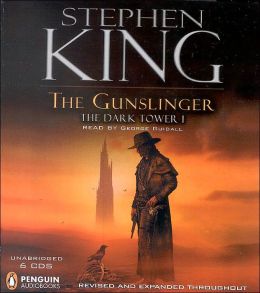
The Gunslinger by Stephen King (audio)


This is my 1000th post! Thanks for your support, friends!

gunslingerI so very much enjoyed The Wind Through the Keyhole from Stephen King’s Dark Tower series that I had to find The Gunslinger, book one in that series. I was captivated by King’s own narration of the former, and disappointed to find that he didn’t read this one himself; but narrator George Guidall did a fine job, and I shouldn’t punish him for not being Stephen King.

In a fantastical spin on the western genre, we open with Roland Deschain walking alone with his mule, his guns holstered at his hips. He is pursuing “the man in black”, with an eventual destination of “the dark tower.” These terms are archetypal and possibly metaphorical. He has to cross a desert. He talks with a lone farmer (accompanied by a talking crow), and tells the man a story. (The story-within-the-story is repeated in The Wind Through the Keyhole, very enjoyably.) In the gunslinger’s story we experience the town of Tull, where Roland had also stayed for a spell, in pursuit of the man in black, with some nasty consequences. This is the first of the gory-bloody bits in The Gunslinger, but not the most extreme. We are also learning something of the magical nature of this world that the gunslinger inhabits. The man in black casts spells to entrap Roland; time doesn’t flow normally. At a glance, however, this could be our own world – possibly following war or other disaster.

Next, Roland meets “the boy,” Jake, who has himself come from some other world. As he describes it, Roland thinks he must be making things up; but the reader recognizes modern-day New York City. Jake and Roland travel together for a spell, still across the desert, and then have to climb a mountain, and then go into the mountain. I’ve put off saying this for long enough: The Lord of the Rings is strongly present. The dark tower, the linguistic touches, the lone-ranger type which is borrowed both from western books & movies and from Tolkien, and now the trip into the evil mountain with the ghoulish parahumans threatening them along the way, are all clearly inspired by that exemplary world-building trilogy. Come to think of it, I’m pretty sure I referenced Tolkien in my review of The Wind Through the Keyhole, too.

Anyway. They’re traveling, and Roland tells Jake a story, too – another story-within – this time about his training as a gunslinger, and the climactic, life-determining moment when he fought his teacher. This is the truly gory bit: it made me cringe a little, and I don’t consider myself a squeamish reader, so take note. This is Stephen King, after all. Horror joins western and fantasy-epic in King’s genre mashup. Roland and Jake will have a final meeting with the man in black; and I shall leave you there.

I enjoyed this book very much. Stephen King is, without question, expert at world-building and believable, fully-wrought, finely detailed backgrounds. Roland is both an archetype and a real person I easily learned to care about. The tension, suspense, and dramatic action are engaging and had me sitting up straight waiting for the next blow. The boy Jake is sympathetic. There is a mystery surrounding the man in black, and the final confrontation – I said I wouldn’t go there. On the other hand, The Gunslinger felt to me grittier, grainier, less literarily refined than The Wind Through the Keyhole, which in my memory, at least, was a superior book; but not by much. And for that matter, a grainier, less refined beginning feels like it suits this series. I am enchanted by the pulling together of genres, as I stated: western, horror, fantasy, and epic adventure. I don’t think I’m doing it justice in this review, but this is fine work, friends. I’ll be seeking out book two.


Rating: 7 slow mutants.

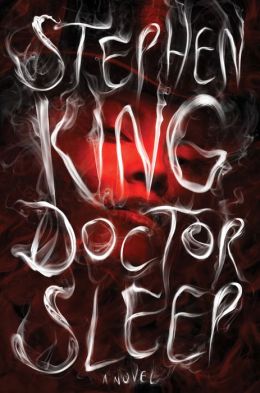
Doctor Sleep by Stephen King

It was over a year ago when I discovered a preview of this book, and I’ve been anxiously looking forward to it ever since. How lucky was I to get a review copy!!


The long-awaited sequel to The Shining lives up to its heritage.

king

As a sequel to 1977’s The Shining, Doctor Sleep has unspeakably large shoes to fill, but Stephen King is more than able to follow up on the thought-provoking and deliciously shivery thrills of that novel.

Several decades after the events of The Shining, Dan Torrance is haunted by the ghosts of his childhood and deep in the ugly throes of his father’s disease, alcoholism. He lands in the small town of Frazier, N.H., where he finds meaningful work, a few good friends and Alcoholics Anonymous. Finally his life seems to be on track–until a little girl named Abra is born, whose “shine” is astronomically brighter than his ever was. A community of not-quite-humans is zeroing in on Abra; to live, they need what she has, and they balk at nothing, including violence toward children, to get it. Thus, Dan is again embroiled with the monsters he couldn’t drink away, but thought he’d learned to store in a lockbox on a dusty shelf in his mind.

King continues to show a mastery that extends beyond genre. Doctor Sleep has The Shining‘s spooky intimate authenticity, 11/22/63‘s grasp of pop cultural references and sense of time and place, and Carrie‘s uncanny understanding of youth. Where The Shining took place in a single claustrophobic setting, Doctor Sleep roams wide both geographically and topically, through paranormal concepts and King’s prodigious imagination. Themes of family and personal struggle persist, but perhaps most enjoyable are the page-turning suspense and terror for which King is so deservedly famous.


This review originally ran in the October 4, 2013 issue of Shelf Awareness for Readers. To subscribe, click here, and you’ll receive two issues per week of book reviews and other bookish fun!


Rating: 8 screams.

Stretching by Bob Anderson, illustrated by Jean Anderson

I received my copy of Bob Anderson’s iconic Stretching on my 16th birthday, as you can see here:

stretch

That inscription reads, “Happy 16th Julie. May you always keep on stretching mind, body & soul – 7 years & beyond! Love, Dad.” You see I was Julie rather than Julia and he was Dad rather than Pops – it’s been a little while! (The 7-year part is a reference to my aunt (my father’s sister) Laura Kastner’s book, The Seven Year Stretch.) I was a young athlete and my father was a slightly older one, and he wanted to pass on the important lessons communicated here.

stretchingStretching was originally published in 1980, before I was born; my copy was printed in 1997, but this book has been through multiple editions since. I still see posters on the walls at gyms and the like with Jean Anderson’s recognizable illustrations, teaching Bob Anderson’s stretches. Paging through this book now, I am impressed at how well it stands up. We mostly still use the concepts outlined here. I showed it to my physical therapist’s intern (hi, Percy!) and he thought it still looked pretty solid.

The book opens with chapters on who should stretch (hint: he’s pretty inclusive), when to stretch, why to stretch, etc., and then begins on the stretches themselves, which are heavily illustrated. The illustrations, by the author’s wife, are perfect: simple line drawings that show the positions used, with cross-hatching to indicate where I should feel the stretch.

I hope the Anderson's won't mind my sharing of this one page (click to enlarge)

I hope the Anderson’s won’t mind my sharing of this one page

A good portion of the book is dedicated to these text-and-illustration teachings; and then come combinations of stretches, like stretching routines for times of day and while watching television, and for various sports. As a soccer player I wore out that two-page spread; as a cyclist I keep a photocopy of the corresponding two pages handy. Then there are exercises for developing strength; a note to teachers and coaches; and advice on nutrition, back care, and running and cycling techniques. The nutrition part is a little more apt to be dated – possibly outdated, depending on what you believe, but mostly dated in the sense that today a person could read copious volumes on any one of several dozen faddish, extreme dietary programs (yes, I’m looking at you, Paleo), and Anderson’s advice is old-fashionedly simple. Also charmingly dated is the bit on cycling technique; nothing I found in a quick skim is wrong, but as with nutrition, it’s a far cry from the laser-heavy methods of precision bike fitting we use today. Frankly, I miss Anderson’s matter-of-factness and simplicity, but there you are.

In a word, this is a great reference manual for anybody – literally – but possibly of special interest to athletes, because of the sport-specific advice offered. Although old, it’s still gold. Thanks, Pops! Still stretching!


Rating: 9 deep breaths.

did not finish: A Killing in the Hills by Julia Keller (audio)

killing in the hillsI made it less than 20% of the way through this audiobook (28 of 156 tracks, if you like to be precise), so on the one hand I should go easy on it, not having read it to completion (or even close). But on the other hand, the fact that I quit so early does indicate my feelings about it.

I read good things about this debut mystery novel – somewhere – but can’t add to those praises. The setting in the West Virginia hills (or mountains) was promising at the start, and I liked the idea of our small-town female prosecutor and her troubled past; likewise her friendly, almost filial relationship with the much older sheriff. But there the character development ended. Our prosecutor hero, Bell, turns rather flat, and her teenage daughter Carla is far worse: a cariacature of the worst kind of whiny teen girl, she speaks in overly-self-aware brattiness, as if she were her own psychoanalyst which – hello – obnoxious teenagers are not. Similarly, the early bad guy is so hideously ugly in every feature as to be a cartoon – how easy to identify bad guys if they all looked like this! And he somehow simultaneously is a stark idiot, and shares Carla’s preternatural self-awareness. The dialog felt like nails on a chalkboard. And so I gave it up. The mystery remains unsolved, for me, and that’s just fine.

Narrator Shannon McManus was sometimes amusing, but sometimes a little overly dramatic (although a certain amount of that falls to the author, for sure). Her rendition of Carla I found unbearable, but that’s squarely on Julia Keller; that’s how Carla was written, I fear.

I’m happy for those who enjoyed this novel, but I am not among them.


Is it fair to rate a book I read this little of? Probably not.

Teaser Tuesdays: The Gunslinger by Stephen King

Teaser Tuesdays is a weekly bookish meme, hosted by MizB of Should Be Reading. The idea is to open your current read to a random page and share a few sentences. And try not to include spoilers!

gunslinger

Today I am thrilled to finally be finding time for book one in the Dark Tower series by King, which I entered with a later installment, The Wind Through the Keyhole. I loved it. I’m just sorry this one isn’t read by Stephen King, too!

I picked out my favorite early lines for you:

He had laid his fuel in a pattern that was not artful but only workable. It spoke of blacks and whites. It spoke of a man who might straighten bad pictures in strange hotel rooms. The fire burned its steady, slow flame, and phantoms danced in its incandescent core. The gunslinger did not see. The two patterns, art and craft, were welded together as he slept.

I love this pictorial expression of the gunslinger’s melding of art and craft, and how it “speaks of blacks and whites.” I am a King fan. I feel confident this one will be good…

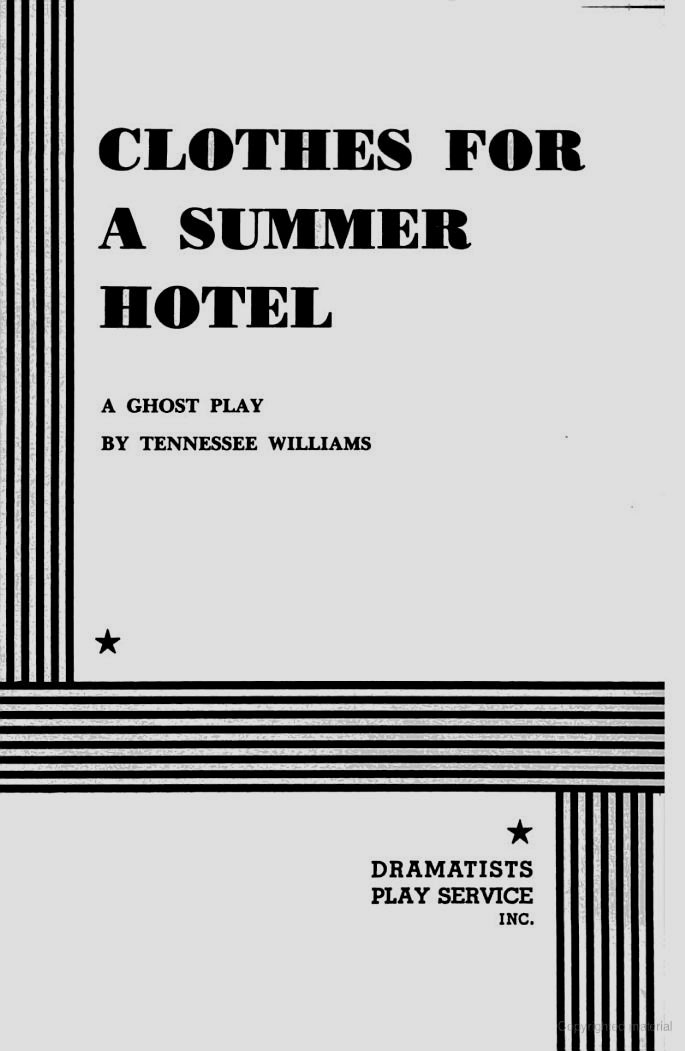
Clothes for a Summer Hotel by Tennessee Williams

clothessummerhotelHere’s how I got here. First, the disappointing Z: A Novel of Zelda Fitzgerald, as a consolation prize, renewed my interest in the Fitzgeralds. (I have purchased, used, two biographies of Zelda based on the interest piqued by Z – the ones by Cline and Milford, respectively.) And next, I read an excellent book called The Trip to Echo Springs by Olivia Laing (sorry, it’s not published til January; you’ll see my review closer to then), about the alcoholism shared by, among others, Fitzgerald and Tennessee Williams. From Laing I learned that Tennessee’s last play, entitled Clothes for a Summer Hotel, dealt with the Fitzgeralds, with Zelda at center stage. And here we are.

Apparently this is not one of Williams’s better-regarded plays, and I suppose it does lose out to the likes of The Glass Menagerie; but I found it a fine work. It is first and foremost dreamy – Williams calls it a “ghost play,” referring to the chronological liberties he takes with the Fitzgeralds’ lives. Scott visits Zelda in the North Carolina asylum, Highland Hospital, where she died; his visit takes place just before her death, at which point he would have been dead more than 7 years. But this is no great concern, because many of the characters who take the stage are dead at different times, and yet walking and talking. The extent to which they are aware of this fact varies, or is unclear. The timing is not chronological; they zoom backwards from the asylum, to Paris of the 1920’s, and then forwards again. Zelda’s death is outside the action of the play, but heavily foreshadowed throughout. She died in a fire, locked in her barred room on the top floor; Williams, and his Zelda, are here obsessed with fire, and wind, and refer to both throughout.

I found Scott and Zelda here to be true to what I know of them, and I found Williams’s portrayal to be nicely fair in accusing them both of madness or alcoholism, and yet sensitively making allowances at the same time; which seems to me to be the proper treatment. With Williams’s stage directions, even though I was merely reading a written play, I could picture the stage set, treated with wavering ribbons, wind, and smoke (from dry ice, Williams notes), and I could feel the effect these props would have of blurring the lines between past and present for the half (or more) crazy characters onstage. I found it all rather magnificent, and I would like to see it performed, although I suppose that’s unlikely, with Williams plays like Cat on a Hot Tin Roof and A Streetcar Named Desire to compete with. Ah well.

Tennessee Williams’s reputation as a fine playwright is confirmed here. And my interest in the Fitzgeralds continues.


Rating: 7 rubies.

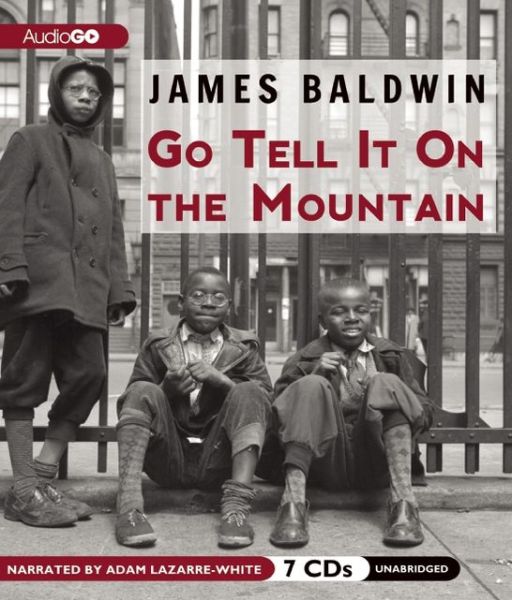
Go Tell It on the Mountain by James Baldwin (audio)

go tell itI come away with the impression that this book had a large, sweeping scope. It is on the surface the story of John Grimes, and takes place in the present over the course of just a day or three, on and around his 14th birthday. His father Gabriel is a deacon in a black church in New York City in the 1950’s, and appears very pious, but beats his wife and children; as his sins add up from there, he comes clear as a hypocrite. The story begins and ends with John and focuses on his relationship with the church or with God; the first and last lines of the book are concerned with his eternal salvation. But in between, we ramble in space and time, and get to know Gabriel in his youth in the South; John’s mother Elizabeth in her youth in the South and in New York City; Gabriel’s sister Florence, who introduced him to Elizabeth; and a surprise character I’ll leave unnamed here. As such, although John is the focus that bookends all the action, this turns out really to be the story of a family and even of a shared experience. I was glad to have the background I gained by reading The Warmth of Other Suns, because like that work of nonfiction, Go Tell It on the Mountain is the story of black Americans moving north in the mid-20th century. It’s concerned with black society’s relationship with the church, and family patterns, and race relations. And it’s for these focuses that I call it “sweeping.”

John is a likeable character in that he feels like a real boy of that age, and my heart goes out to him for the challenges he faces: an overbearing and violent father with the significant authority of the black church in Harlem behind him is no small thing, and the question of his immortal soul and eternal salvation is weighty as well. Clearly I bypassed some of the weight of the religious question, not being able to sympathize with those parts, but I did appreciate the atmospheric nature of the church and the power of that institution in John’s society and in his family life.

Baldwin’s writing is undeniably lovely. I feel a little inadequate because I’m afraid I missed some of the depth of this story, mainly in the religious vein. But what I got, I appreciated, and part of that in this case meant just letting the language flow over me. The narration by Adam Lazarre-White is powerful, dynamic, and dramatic to the right extent; the phrasing feels accurately portrayed, and the cadence of the prayers is well executed and adds a lot to the feel of the story. Full marks for audio performance, and having such a fine narrator read such beautiful words was a grand experience.


Rating: 7 calls to the alter.

from Mom

After we both enjoyed some Kingsolver (The Lacuna, Flight Behavior) so very much, my mother is clearly pushing for me to enjoy this one along with her. She shared this quotation:

“April is the cruelest month, T. S. Eliot wrote, by which I think he meant (among other things) that springtime makes people crazy. We expect too much, the world burgeons with promises it can’t keep, all passion is really a setup, and we’re doomed to get our hearts broken yet again. I agree, and would further add: Who cares? Every spring I go there anyway, around the bend, unconditionally. I’m a soul on ice flung out on a rock in the sun, where the needles that pierced me begin to melt all as one.”

–from Animal, Vegetable, Miracle by Barbara Kingsolver

This book is both a collection of stories about practical (more or less) matters and a reflection on life: human, plant, planet. Very sweet to dip into without rolling straight through.

My first reaction is that this brief quotation echoes Annie Dillard strongly – you recall that I recently shared some of her passages, too. Funny how that works out. I don’t know when I’ll be joining you, Mom, but thanks for the head’s up.

Edward Abbey: on writing books

Ah yes, the head is full of books. The hard part is to force them down through the bloodstream and out through the fingers.

–From a 1976 letter to Frederick W. hills, editor in chief at McGraw-Hill, as quoted in Postcards from Ed: Dispatches and Salvos from an American Iconoclast.

I can just imagine, Ed. Thanks for taking the effort.