Teaser Tuesdays: The Owl Who Liked Sitting on Caesar by Martin Windrow

Teaser Tuesdays is a weekly bookish meme, hosted by MizB of Should Be Reading.

owl

Sorry; I know I gave you the beginning just the other day. But I couldn’t help myself.

Talk about charming. If this isn’t British and eccentric and oddly, wryly funny enough for you… well, it is for me.

Mumble found herself frantically flapping and back-pedalling on top of (the paper towel roll), riding the ever-diminishing cylinder like a lumberjack on a rolling log until both of them fell off the end of the table. She seemed to find my helpless laughter irritating (one can take umbrage so much more convincingly when one has a lot of feathers).

That final parenthetical kills me.

Martin Windrow kept a Tawny Owl as a… companion, I think, more than pet, for something like 15 years. It is an interesting story and I think I’m going to recommend it. Stay tuned.

This quotation comes from an uncorrected advance proof and is subject to change.

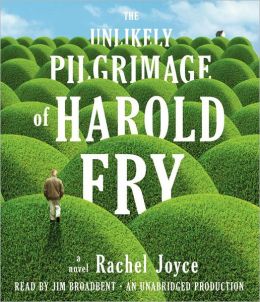
The Unlikely Pilgrimage of Harold Fry by Rachel Joyce (audio): finished

haroldDon’t forget to also see my earlier reviews of the first third and second third of this book.

Naturally, Harold Fry continued to be excellent. I love this book. The sad bit where we left him off in my last review, where he was dogged by misguided followers (yes, I believe I mean that literally, too), was sad; but it came to an end. Harold of course ends up on his own again, which is mostly his natural state in this story. But he won’t finish that way. I don’t want to report any more plot points. This book ends on a hopeful note, and everyone – not only the few characters you might think early on, but everyone – ends up growing and learning.

Rachel Joyce’s strengths definitely include her wry writing voice, which is really very funny. Harold is often self-conscious, but Joyce never is. Her characters are very real and well put together; even the most minor of walk-ons is defined precisely in just a few words. There are larger truths as well. For example, I was struck by the statement of relativity here:

How could he say all this? It amounted to a lifetime. He could try to find the words, but they would never hold the same meaning for her that they did for him. My house, he would say, and the image that would spring to her head would be of her own! There was no saying it.

None of us shall ever know exactly what the others have been through! Oh the humanity!

Incidentally, I was right in my big guess about the big secret. Work that one out for yourselves.

I fell in love with Harold, and with Maureen, and with Rex (Rachel Joyce, is there another book with Rex in it? please please??), and with all the smaller players. I felt so close to these people, these real people living quiet lives – or even lives of quiet desperation, you might say. I am very impressed with this story of ordinary people doing small, private things, that also managed to be a very large story about The Human Situation (that’s an Honors College course I took as a freshman, FYI). The wisdom that is communicated in humble packages is extraordinary. Harold is a star, and Rachel Joyce is my new hero. I can’t wait to see what she does next.

Highly recommended; and the audio read by Jim Broadbent is absolutely grand as well. One of the best of the year to date, without a doubt.


Rating: 10 yards of blue duct tape.

book beginnings on Friday: The Owl Who Liked Sitting on Caesar by Martin Windrow

Thanks to Rose City Reader for hosting this meme. To participate, share the first line or two of the book you are currently reading and, if you feel so moved, let us know what your first impressions were based on that first line.

owl

This book is as thoroughly delightful as the title implies. I’m only a few pages in, but I’m hooked. Check this out.

Shaving is tricky with an owl on your shoulder.

When I am working on the right side of my throat, Mumble tends to make darting, snake-like passes with her beak at the handle of the razor as it reaches the top of each stroke.

Windrow goes on to note that he has tried to shift Mumble to his left shoulder while he shaves his right side, but she is no more a morning person than he is; they are both reluctant to try new things at such an hour.

Subtitled “Living With a Tawny Owl,” The Owl Who Liked Sitting on Caesar (a bust of Caesar, that is) is absolutely charming so far. I think I’m going to recommend this one.

This quotation comes from an uncorrected advance proof and is subject to change.

Have You Seen Marie? by Sandra Cisneros (audio)

marieWhat a lovely, lovely book. Fans of Sandra Cisneros, don’t be put off by the sometimes-classification of this short fable as a children’s book. Cisneros says in an afterword that she certainly never thought of it that way; she intended it for adults, and I can confirm that it works that way, very well.

This is a short, dreamy, poetic tale of a woman, the narrator, who has just lost her mother; a visiting friend (“I was the only person Rosalind knew in all of Texas”) has lost her cat, Marie. Together, the two women go walking the streets of San Antonio, distributing fliers and asking folks the title question: Have you seen Marie?

The voice and rhythms and lyrical style that I remember from The House on Mango Street are vibrantly present here. The women ask dogs, cats and squirrels as well as people about the missing Marie, and their reactions are noted, and charmingly represented as being every bit as important as the people’s. On the surface, this is the story of searching for Marie; but it is also the story of Cisneros losing her beloved mother, feeling like an orphan in her own middle age, and gradually coming to understand that “love does not die.”

As I mentioned, Cisneros is careful to point out that this was not meant to be a story for children, but rather one for adults, with the idea of helping others like herself deal with experiences like hers: losing a parent, or a loved one. I am very (very) glad & relieved that I don’t seem to facing this experience now, or soon; but I imagine that this book would indeed help. I appreciate its soothing musical tone and gently loving, inspired advice and creative understanding of death, what it means, the grieving process. It is a tender tale. Cisneros is inventive and calming and this is a beautiful, moving story about family and friendship. I highly recommend it, for anyone.

This audio version is read by the author, and so beautifully; I love her lilt; it’s perfect. I want to very much recommend this version (in both English and Spanish in one edition – one cd of each). But then, the print copy is illustrated by Ester Hernandez, and Cisneros is clearly very pleased with that aspect. Hearing her speak about their collaborative efforts on the illustrations (Hernandez came to visit & tour Cisneros’s San Antonio; she calls it documentary-style) made me regret missing the print. So there you are. Both, perhaps?? I think I will go out and get myself a copy of the book, too.


Rating: 10 trees along the San Antonio River.

Maximum Shelf author interview: Lily King

Following yesterday’s review of Euphoria, here’s Lily King.

Lily King grew up in Manchester, Mass. She received her B.A. in English Literature from the University of North Carolina at Chapel Hill, and her M.A. in Creative Writing from Syracuse University. She has taught English and creative writing at several universities and high schools in the U.S. and abroad. Her three previous novels are The Pleasing Hour, The English Teacher and Father of The Rain. Her short fiction has appeared in literary magazines including Ploughshares and Glimmer Train, as well as in several anthologies. King is the recipient of a MacDowell Fellowship and the Whiting and PEN/Hemingway Awards, among others. She lives with her husband and children in Maine.

photo credit: Laura Lewis

photo credit: Laura Lewis


Presumably even this “loosely based” work required research into the field of anthropology and Mead’s life. Did you have any background to begin with? Did you enjoy this research?

It required a ton of research and no, I had zero background in anthropology or ethnology, not even one anthropology course in college! Like many writers, though, I have always felt like an extremely amateur and untrained anthropologist in the world, observing the huge, crazy mysteries of human behavior and writing it all down in novels.

On the one hand, you enjoy the research because it’s not writing, which is much harder, but on the other hand you miss writing miserably and feel like a part of you is dead. I had so much to learn before I could start, but because I always knew the book would be fiction, I didn’t want to get too attached to any one detail or fact. I read a lot of books at a squint, taking notes but always letting my imagination in on it, writing more notes on what could happen than what did happen, but at the same time trying to absorb all the information in some visceral way so that it felt like personal experience I could draw from when I started writing. And it was hard to know when to start writing. There was always, always more to read, more to learn. When I finally decided it was time, the research loomed over me. But once I wrote the first scene, I felt it become my story, and all that information became useful, not threatening.

What makes Margaret Mead such a good subject for this work? And when did you know you wanted to write about her?

I stumbled into the novel by reading a biography of Margaret Mead nine years ago and coming across this one short chapter about when she was way up this river in Papua New Guinea with her second husband and she met her third. She fell in love hard and fast in this completely isolated environment. She believed in an open marriage, what she called “polygamy,” and her husband did not, but she was very honest about her feelings and the whole thing, combined with the heat and mosquitoes and malarial fevers, was just a wild mess. So of course I thought, what a fantastic novel that would make. For a long time I didn’t believe that I would actually write it. But I kept going out and getting books about them and by them and taking notes and getting ideas while at the same time thinking: I cannot write this novel. I cannot write a novel about a love triangle between anthropologists in Papua New Guinea in 1933. It was preposterous. But I couldn’t seem to stop myself, either.

How did the writing of Euphoria differ from your three previous novels?

With the first three, I was able to just start writing. Each of them required a little detour to the library for something, but usually not until I was deep in, after the first draft had been written. But for this one I didn’t even write a sentence for a year after I got the idea. I was working on my novel Father of the Rain while reading everything I could get my hands on about Margaret Mead and Gregory Bateson and Reo Fortune. And when I got that first sentence–four sentences, actually–in a coffee shop, I didn’t write anything else for several more years. That little cluster of sentences, though, helped me feel I could write the rest someday. They are the words that open the book still and are not much changed from when I scribbled them down at the back of a notebook in that coffee shop. That was very different. With the other books, once I got the first sentences I kept going for fear the initial vision would cloud over and vanish.

Euphoria is told in first person by Bankson, who is the outsider in his own tale. This gives the reader a somewhat restrained perspective. How did you decide to tell it this way? Did you toy with giving Nell her own voice?

That’s an excellent question. The plan all along was for it to be told from Nell’s point of view. It was supposed to be her story entirely. And it did start that way. But after I wrote the first chapter, I realized I needed the reader to feel what was going on with Bankson, the man she is about to meet and fall in love with, so I wrote that next chapter from his perspective. It surprised me how much closer I was able to get to him, and so quickly, how I was able to get inside him in a way that I was not inside her. This is something that all the planning and plotting of a book can’t anticipate. I knew I was a bit in love with him even before I started writing, so I thought it would be so easy to write from Nell’s perspective about falling for him. I just never expected to identify with him so closely, sort of fuse with him. But once I did, I realized it was his story. I denied this for a while, actually, and tried to write the book from all three points of view, but apart from Nell’s journal entries, Bankson claimed the whole thing in the end.

How important is historical accuracy in fiction? How faithfully does your novel follow the historical record?

Fiction is called fiction for a reason. While I used what I read about a particular moment in the life of Margaret Mead as a springboard, I felt absolutely no allegiance to historical accuracy when it didn’t work within the story I was trying to tell. Some of Euphoria is historically accurate, but not because I forced it to be, just because those elements were useful to me. They inspired me. I love history and I love reading about history and I treasure what little I know about our past on this earth, but a novel is not where I go for facts. A novel is where I want to feel the truth. Sometimes you need facts to get at the truth; more often you need your own voice and vision.


This interview originally ran on April 23, 2014 as a Shelf Awareness special issue. To subscribe, click here, and you’ll receive two issues per week of book reviews and other bookish fun!

Maximum Shelf: Euphoria by Lily King

Maximum Shelf is the weekly Shelf Awareness feature focusing on an upcoming title we love and believe will be a great handselling opportunity for booksellers everywhere. The features are written by our editors and reviewers and the publisher has helped support the issue.

This review was published by Shelf Awareness on April 23, 2014.

euphoriaLily King (Father of the Rain) renders three young anthropologists in 1930s’ New Guinea with nuance, tenderness and charming ambiguity in Euphoria. King draws on the life of Margaret Mead and her relationships with her second and third husbands (Reo Fortune and Gregory Bateson, respectively), but the novel is only loosely based on their lives and work.

Nell Stone is an American, and has recently written a book that is receiving much attention for its controversial subject matter: the sex lives of children in the Solomon Islands. She is an up-and-coming young anthropologist being talked about around the world; when we meet her, she is just emerging from a year and a half in the field in New Guinea, alongside her husband, Fen. Fen is Australian, overbearing and decidedly threatened by Nell’s success, as fame and glory as an anthropologist have so far eluded him.

When Nell and Fen come out of the field, at a party they meet fellow anthropologist Andrew Bankson. He is fresh off a failed suicide attempt, haunted by the deaths of his two brothers and unable to find himself in either his native England or the tribal communities he studies. Bankson is lonely and attracted to the couple, and suggests that he establish them with unstudied “natives” nearby his own fieldwork; he wants to keep them as his friends and neighbors.

The three form an unlikely triangle of mixed alliances. Nell and Fen, for all their disharmony, share a history and an intimacy the loner Bankson can’t pierce. But Nell and Bankson achieve a singular connection of the minds: they inspire each other, each stimulating the other’s best work. With Fen’s sensitivity over and resentment of Nell’s talents, this is a dangerous but intoxicating symbiosis, a cerebral union that is sensual and nearly sexual. Bankson is, in fact, rather in love with both Nell and Fen. The two men establish their own bonds as well, when Fen nurses Bankson through a malarial fever. It is a love triangle, but also an intellectual one, and shadows the perceptions of each anthropologist about the tribes they live amongst. They already have very different approaches: Nell has loved, ever since she was a small child, exploring other worlds so that she can come back and tell her family, friends and now colleagues about her adventures; for her, the joy is in the description and the homecoming, but she also has a knack for integrating herself into a new culture. Fen, it seems, would rather become a tribesman than study or write about the tribes. Bankson struggles to participate, but is more inclined to observation–his background is in the natural sciences. As he writes, “I was raised on Science as other people are raised on God, or gods, or the crocodile.”

Lily King makes an interesting decision in choosing Bankson as her narrator, as he is the most isolated of the three, spending much of his energy in observing not only the tribal peoples he is meant to study, but also Nell and Fen. That the story of these three characters is told from the perspective of his outsider status means that the reader, too, is forever peeking in and around corners, hoping for more information. Nell’s voice is heard through journal entries eventually sent to Bankson by another old friend and possible love interest of Nell’s, but she remains tantalizingly difficult to access. The tension of this desire to know Nell better is central to Euphoria, for Bankson and for the reader.

King raises broader questions as well, as each anthropologist’s individual approach to his or her work is troubling in its own way. The tribal communities of the fictional Kiona, Mumbanyo, and Tam peoples invite consideration about the fields and methods of anthropology and ethnology. The Tam women, who do the trading and the artistry in their community, inspire Nell’s growing ideas about traditional gender roles, a stance that (predictably) does not sit well with the irritable Fen. Margaret Mead is known not only for her writings and work in anthropology, but also as a feminist thinker; in King’s hands, the Tam culture inspires the beginning of Nell’s own feminist development. As Bankson gravitates toward Nell’s empathetic and involved relationship with the Tam, Fen is planning a serious cultural crime, which will precipitate the final denouement. (The life stories of Nell, Fen and Bankson are quite different from their historical counterparts Mead, Fortune and Bateson, so there are no spoilers for readers familiar with that history.)

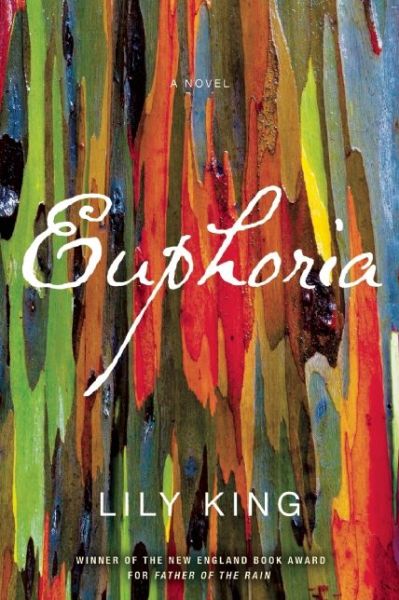
Euphoria is a masterpiece of dreamy, lyrical, sensuous writing and evocation of a sometimes frighteningly exotic New Guinea. Readers can expect to be enchanted by the setting, inspired by the free-spirited Nell, challenged by the question of respectful participant observation, angered by certain of the characters’ actions and teased by the sexual tension. As a bonus, the beautiful cover of Euphoria features the striking rainbow gum tree that figures in the plot of this remarkable novel.


Rating: 8 books.

Come back tomorrow for my interview with King!

The Unlikely Pilgrimage of Harold Fry by Rachel Joyce (audio): second bit

haroldYou’ll recall that I did already review the first third or so of this audiobook, because I just couldn’t hold in my enthusiasm. Well, my good impression continues through the next third of the book, along with my need to share as I go.

I will give away less from here on out. Harold’s journey continues, and while his physical, geographical journey is the obvious plot line, there is a parallel arc of personal growth. At the beginning, he is almost unable to be in the same room with strangers; by the end he easily greets them everywhere he goes, and has learned to share his story and take on what is often the burden of other people’s stories. This is essentially a very human tale, incorporating all the strange, wonderful, and wonderfully, strangely normal lives of the people Harold meets along the way.

He met a tax inspector who was a druid and had not worn a pair of shoes in ten years.

There is also a sense of growing tension regarding one of the secrets I referred to in my earlier post; the un-referred-to past looms larger as we go on, and I have a guess I’m fairly confident about, but I will wait and see.

Harold gains followers as he continues walking, until there is a large group of “pilgrims” accompanying him on his journey. I was reminded a little bit of Forrest Gump, when he’s running, and finds a crowd running behind him. Unlike Forrest, Harold has a purpose, and his followers know it; and also unlike Forrest, these followers become a real burden. By this time, he has learned to take care of himself quite well; now he has newcomers to take care of too, and this takes up a lot of time and effort. Also, they’re not as fast as he is at the actual walking; but he tries to be patient, remembering how long it took him to build up stamina and get into a rhythm. I was, of course, infuriated at their selfishness in holding Harold back from something so important to him; but I can see how Harold could have done nothing less than help them along.

As I enter the final third (give or take) of this book, I am only sorry that it has to end.

book beginnings on Friday: Have You Seen Marie? by Sandra Cisneros

Thanks to Rose City Reader for hosting this meme. To participate, share the first line or two of the book you are currently reading and, if you feel so moved, let us know what your first impressions were based on that first line.

marie

I cannot say enough nice things about this short piece of beauty by Sandra Cisneros. It begins:

The day Marie and Rosalind arrived on a visit from Tacoma was the day Marie ran off. It had taken three days of driving to get to San Antonio, and Marie had cried the whole way.

You will be captivated. Do check it out.

The Inheritor’s Powder: A Tale of Arsenic, Murder, and the New Forensic Science by Sandra Hempel

(Happy birthday today to my handsome Husband!)

inheritorsWhat a juicy title and cover; right up my alley. True crime, history, some light (accessible) science, and a little murder mystery. Yes, please.

Sandra Hempel’s book about the arsenic poisoning epidemic of the early 1800’s, and the advances in forensic medicine and pursued it, is very much in the tradition of The Invention of Murder and The Remedy, obviously. To a lesser extent it also relates to The Peculiar Case of the Electric Constable and The Devil in the White City. I don’t mean to say that Hempel’s work is unoriginal, you understand, but these are the books I’ve read that feed my interest in the subject, and can continue to satisfy yours.

Much of this story was familiar to me, mostly from The Invention of Murder. Britain in the 1800’s saw an increase in crime, particularly murder – or at least an increase in its recognition and efforts to curb it – and the birth of the police force and investigations. The early 1800’s also saw a wild increase in the use of arsenic both as a household solution to just about any ailment, and as a quick and easy way to dispatch one’s fellow human. It was called “the inheritor’s powder” because so many people apparently used it to gain an inheritance ahead of the natural schedule. The growing prevalence of cheap life insurance or “burial clubs” played a role here as well.

This background is conveyed easily and accessibly and, again, is also covered in The Invention of Murder; where The Inheritor’s Powder breaks new ground is in delving into arsenic more deeply, and specifically into one sensational case that illustrates the larger issues. In November of 1833 a well-to-do farm family fell ill after their morning coffee; the elderly patriarch would suffer several painful days before dying, while the others would recover. The local doctor suspected arsenic poisoning almost from the first, and conducted some investigations of his own, including saving samples of the coffee grounds in question and the old man’s vomit. (It was later noted that there was so much vomit around that there may be some question of whose vomit it really was…) “Investigations” and “evidence” were new concepts, and our modern understandings would be incredulous at the attempts, but for his time, this local doc was proactive and scientific in his methods. There was a police inquiry, an inquest, and eventually a trial in which a lazy grandson was acquitted (on questionable grounds); but various members of the family came under suspicion and we still don’t know exactly who or what killed George Bodle.

Hempel details the court case and the public interest that followed it. Charles Dickens gets some play here (again, as in The Invention of Murder), which adds to the macro-view of this issue in society and in history: the literary minds of the day were at least as interested in the arsenic epidemic as anybody else. Hempel also looks into the science of testing for poisoning, or specifically for arsenic. Medical science was at such a stage that it was very difficult to distinguish one malady (say, poisoning by arsenic) from another (say, food poisoning by rotten fish) – and of course this question is separate from the question of whether poisoning by arsenic was intentional and therefore criminal, or accidental. Again, I must stress as Hempel does, arsenic was pretty ubiquitous at the time; people mixed it up and applied or swallowed it in various forms for a wide range of complaints. Chemists (or as we see here, chymists) were hard at work on the issue of testing for the presence of arsenic and various substances; cases like the Bodle murder were influential in moving the science forward.

I found this topic rather fascinating, and it was a good way to get a look at what 1830’s English life looked like. For example, I was interested to read about the conflict over who would pay for the investigations and trial – the local parish? Bodle’s estate? his survivors, or the executors of his will? Nobody wanted to pay; but society couldn’t just let this murder go unpunished, either. This was an issue that wouldn’t have occurred to me.

Hempel’s writing and research are fine, but lack the quirky style, entertaining writing, or personality that make a work of popular history really stand out. For readers interested in the topic, by all means go forth. But this is not enough of a page-turner to convert the dubious.


Rating: 6 grains.

May 7 & 8 in book history

This post is part of a series.

Today we are celebrating my birthday, and tomorrow, Husband’s. I thought I would turn to Tom Nissley’s A Reader’s Book of Days to see what exciting things have happened on these two auspicious dates.

reader's book of daysFor myself on May 7 I am mostly disappointed (in my ignorance, I suppose). Born on this date were Gene Wolfe (The Book of the New Sun) and Peter Carey (Oscar and Lucinda). I vaguely remember a movie adaptation of the second, I think. Died on this date were Sir James George Frazer (The Golden Bough) and Clement Greenberg (“Avant-Garde and Kitsch”). These are all mysterious to me. In events there are mentions of Camus, Faulkner (bleh), Herman Wouk, and Ginsberg.

Tomorrow, May 8, Husband’s day, does slightly better. Thomas Pynchon (Gravity’s Rainbow, etc.) shares his birthday, and we lost both Flaubert (the book offers Sentimental Education for him, but I would say Madame Bovary!) and just recently & sadly, Maurice Sendak (Where the Wild Things Are, In the Night Kitchen). There is also a Hunger Games reference & others, but most importantly – and again sadly – May 8 was the day on which Ed Ricketts was hit by a train and received injuries that would end his life. Ricketts was John Steinbeck’s co-author for Sea of Cortez, which waits on my shelf for me to find time for it; and he inspired the character of Doc in Cannery Row, a book that moved me deeply in Mrs. Smith’s high school English class.

Hm, sad things for these birthdays. Sorry about the downers, friends. Have some birthday cake!