Teaser Tuesdays: Mr. Mercedes by Stephen King

Teaser Tuesdays is a weekly bookish meme, hosted by MizB of Should Be Reading.

mr. mercedes

A new Stephen King! HOORAY! I think it will be as excellent as I hope it will be.

Hodges eats this diet of full-color shit every weekday afternoon, sitting in the La-Z-Boy with his father’s gun – the one Dad carried as a beat cop – on the table beside him. He always picks it up a few times and looks into the barrel. Inspecting that round darkness.

He can really paint a scene in a few words, can’t he? I won’t say too much more; the book will be out in just a few weeks and I think I’ll be able to recommend it.

This quotation comes from an uncorrected advance proof and is subject to change.

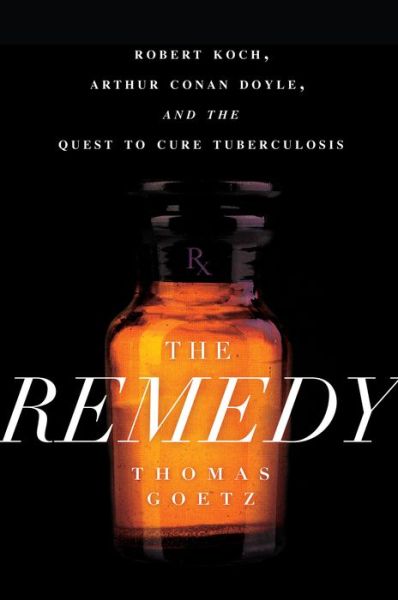
The Remedy: Robert Koch, Arthur Conan Doyle, and the Quest to Cure Tuberculosis by Thomas Goetz

The compelling connection between Sherlock Holmes and the search for a tuberculosis cure.

remedy

Thomas Goetz’s The Remedy achieves a rare feat: serious, accurate scientific writing that is also engaging and entertaining.

In the mid-1800s, the practice of medicine largely resembled groping in the dark. Patients came to doctors “with the hope of a cure but never the expectation of one.” The final decades of that century, however, were marked by extraordinary advances in science, technology and medicine: “germ theory” was developed, infectious diseases were better understood, and more-modern notions of hygiene and sanitation began to catch on. Robert Koch, a provincial German doctor, pioneered experiment design and research standards, and in 1882 he identified the bacterial cause of tuberculosis–the most deadly disease in human history.

Koch attempted to develop a cure for TB, which he presented in Berlin. Despite meticulous empirical methods he had established, Koch’s zeal for his remedy led to his downfall, as his treatment was unprovable. An obscure British doctor and sometime writer, also provincial, was the first to pen an appropriately skeptical response. Despite his criticism, Arthur Conan Doyle was a great admirer of Koch and appreciated his scrupulous observations; in fact, Goetz asserts that without Koch, “there may never have been a Sherlock Holmes as we know him.”

The intersection of Koch and Doyle brought the spirit of scientific discovery to crime detection, and the spirit of investigation to scientific research. Goetz’s exploration of their lives and their impact on the world as we know it is both historically significant and enthralling.


This review originally ran in the April 18, 2014 issue of Shelf Awareness for Readers. To subscribe, click here, and you’ll receive two issues per week of book reviews and other bookish fun!


Rating: 9 dead rabbits.

In addition to my shorter review, above, I’d like to add a few more details. A big part of what I loved about this book was the breadth of scope. For example, to provide his readers with an accurate view of what Koch, Lister, Pasteur, and other scientists of the day were up against, Goetz describes at some length the state of medicine in their time. He warns us against coming too easily to the idea of germs and microbes as self-evident; and funnily enough, I was talking with a friend about this book, and she said just that: isn’t it obvious that surgeons would wash their hands beforehand?? But as Goetz so carefully points out, no, not obvious at all; when first presented as a theory, germs were as ridiculous as the idea that the earth might be round. Etc.

Along with medical background, we learn about the common practices of farming and domestic life; we learn about the lingering national hatred that would have pitted Pasteur and Koch so strongly against one another in the aftermath of the Franco-Prussian War; and about the social constructs that led Arthur Conan Doyle to work so hard at being a doctor when he really wanted to be a celebrated author. (I was reminded of other authors I’ve read about, like Louisa May Alcott: Doyle was always frustrated by the great success of his detective stories in the face of the failure of his more literary novels, just as Alcott was annoyed by the success of Little Women–a book she didn’t like very much. And you know, Doyle killed off Holmes, only to be pressured into his resurrection.)

I suppose I’m a sucker for breadth of scope. Nonfiction that covers history, science, social issues, and literature – and does it in fine literary style, to boot – will always win my heart. Back to the theme of synchronicity that I’m written on before: the older I get and the more of this interdisciplinary study that I encounter, the more I am convinced that this is way we should study history. How many of us found history boring in high school? I did. But once you link music, literature, fashion, politics, science, military conflicts… on and on, once you link all these threads so that the world of the past comes alive – who could not be fascinated? I think we do our kids a real disservice by not embracing this kind of study in their regular schooling.

The Remedy is both a good read, and an examination of a piece of world history whose importance really can’t be overstated.

book beginnings on Friday: The Falling Sky by Pippa Goldschmidt

Thanks to Rose City Reader for hosting this meme. To participate, share the first line or two of the book you are currently reading and, if you feel so moved, let us know what your first impressions were based on that first line.

falling sky

You will recall that my father also reviewed this book, here. What fun that I get a shot at it now, too. I have two beginnings to share with you; the first is part of the novel but comes before the first chapter; a preview or dream, perhaps.

Nothing is as certain as death.

And from the more concrete world of “Now”:

Jeanette may as well be invisible. She’s standing on the stage in the auditorium in front of about two hundred other astronomers, presenting the results of her PhD work at the annual British conference. But she can tell no one’s listening.

More pedestrian; but it quickly becomes an involving story, nevertheless. Stay tuned.

“The Place, the Region, and the Commons” by Gary Snyder

This is the second essay in Gary Snyder’s collection, The Practice of the Wild. The first was “The Etiquette of Freedom.” I am proceeding, very, verrrry slowly.
wildI found this essay much more accessible than the first, which you may recall I found a little bit dryly academic and theoretical and less useful for reclaiming or repurposing our real world. This one jumps right in with a discussion of what a place means to us, and what it used to mean to us. In human history, there was a time when we were defined by our physical, geographical surroundings; culture was inextricable from the place in which it was set, with mythical explanations for a nearby mountain or a nearby stream, and close cultural understandings of native plants and their uses, etc. This really got me thinking about how disconnected we are now from our place – which of course is Snyder’s point. For instance, pardon my getting personal here, but I have wondered about my own cultural identity in terms of place…

I was born in Texas and have lived here all my life: just shy of 32 years at present. My mother is a native Texan, too, and lived here over 60 years before she left. My father’s parents moved around a lot when he was growing up, so in a way he’s from nowhere; but the family roots have always been in New England (Vermont, mostly), and he clearly identifies with that past, despite having lived in Texas for the majority of his years, too. I’m from the South (maybe not the “Deep South”; under many folks’ definitions, Texas doesn’t generally qualify, or only East Texas does), but I’m also from the fourth-largest city in the country, so I’m no country girl. And I’ve been brought up by radical leftists, so I am politically very much a minority in my home region. As a city girl, I’m also guilty of the removal from my local plants & trees that Snyder cites. I have sometimes had the odd feeling that my father is surprised to find that he’s raised a Southern girl – but he raised his daughter in Texas for all her life, so whence this surprise? I think he thinks of himself as somehow not a Southerner despite all his years here. He was born in the region; spend a few years of elementary, high school, and college years here; he raised his daughter here. Is he not “from” the South because he doesn’t think of himself that way?

Sorry to have gotten sidetracked. What I’m trying to point out is that we no longer have our fingers in the dirt where we were born or live, figuratively or literally; but we used to. And that’s what Snyder is getting at. No wonder we’re confused or distressed; we don’t know who we are any more.

He talks about bioregions, about the naturalness of conceiving borders based on ecosystems, or the area in which a certain plant grows or a certain animal roams. Why draw county lines so that one county stretches over a high mountain pass that allows no travel for part of the year? Better to use that high ridgeline as a boundary line. Etc.

I stood with my climbing partner (Allen Ginsberg) on the summit of Glacier Peak looking all ways round, ridge after ridge and peak after peak, as far as we could see. To the west across Puget Sound were the farther peaks of the Olympic Mountains. He said: “You mean there’s a senator for all this?”

And then he talks about the concept of the “commons,” which ruled for much of human history worldwide. The commons were that land that was usable by all for shared grazing, gathering firewood, building materials, and general foraging; it served as a buffer zone between the absolute wild and the village, therefore allowing the wild to exist in itself, and contributing to the health and well-being of both wild and village. I love the line, “the parts less visited are ‘where the bears are.'” It reminded me of that old-time phrase seen on maps where the known world ends: “here be dragons,” which is charmingly fantastical and filled with possibilities. (There is also a good book by that title.) The commons are about the wild; but they’re also about human society, culture, our relationships with each other – as much as they are about our relationships with the rest of the world, the parts that aren’t human. He writes, “The commons is a level of organization of human society that includes the nonhuman.”

This segues nicely into a discussion of a human compact or contract not only with one another (what we call “society” – the agreement that we won’t kill each other [except in times of war… don’t get me started]), but with the nonhuman world. The idea that we owe something to that nonhuman world, that flowers and trees and newts and grizzly bears and even dirt are entities that we should, must, respect is an idea that I find self-evident; but clearly that isn’t the majority opinion, or we wouldn’t be where we are today. Derrick Jensen knows what I mean.

Of course then Snyder is compelled to tell us about the death of the commons, the enclosing of those common spaces around the world and how and when it took place, and its economical and ecological toll. In search of ever-increasing profits and the famous “growth” we worship, we fenced in the commons, made them private land (or exploitable “public” land), stripped them of resources and exported those resources for money. Now we have less wild, fewer resources, and the rural homeless were sent to the cities to work for wages. Again, I find these arguments easy to agree with – I’m nodding throughout – but not everyone will react that way. Finally, he debunks the “so-called tragedy of the commons,” the idea that if it’s free to all, some will abuse it. He points out that commons are properly not ungoverned, but are governed by the community, and that this model worked for a great many years.

A survival of commons practice in Swedish law allows anyone to enter private farmland to pick berries or mushrooms, to cross on foot, and to camp out of sight of the house.

Can you just imagine!! I can’t, not living in Texas, where we shoot people for setting foot on our property.

I love the bioregional perspective, and I certainly agree that “we need to make a world-scale ‘Natural Contract’ with the oceans, the air, the birds in the sky.” I think he speaks to the beautiful idea of the commons – community-based, in a community that is larger than humankind – articulately and passionately and sensibly. I wish more people would read his work.

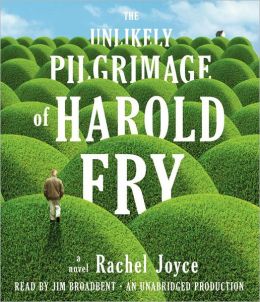
The Unlikely Pilgrimage of Harold Fry by Rachel Joyce (audio): first bit

haroldI can’t help but share with you my early reflections on this delightful tale – before I know everything. It will be interesting to see how my perspective or feelings change later on. Here, I’m about 1/3 of the way through.

What an oddly charming, quirky story. Harold Fry has retired from his 45-year career working quietly for a brewery (although he is a teetotaler) and now stays home with his wife Maureen. She cleans – constantly – and criticizes him, and he mows the lawn. He does not speak with their only son, David. One morning he gets a letter from an old friend, a former coworker named Queenie. She is writing from a hospice to say goodbye: she has cancer. Harold jots a quick note to say “sorry about that, old girl” or similar, and although he feels its insufficiency, sets off right then to post it from the box at the end of the road.

But when Harold gets to the end of the road, he can’t quite mail his letter, because it is of course a sadly inappropriate thing to do for Queenie; so he keeps walking. He tells himself he’ll mail it from the next postbox; and he does this at a great number of boxes, before he stops in at a garage for a snack. The girl there shows him how to heat up a hamburger in a microwave, which amazes him (“it even had gherkins!” he will later report to Maureen) and tells him the inspirational story of her aunt who had cancer: the girl willed her to get better, because if you believe (she tells Harold) you can do anything.

It is not too long after this conversation that Harold decides he will walk to visit Queenie at the hospice facility, and commands her to live until he gets there. It’s not clear how far this walk will be – someone he encounters guesses it might be 500 miles, but at any rate it’s very far, and he’s wearing his yacht shoes and as Maureen is quick to point out, he’s never walked further than to the car. He is, in fact, endeavoring to walk the length of England.

I hope you see what an endearingly strange story this is. Harold himself is poignantly, almost painfully shy and insecure; he’s not accustomed to being around people, and as he and Maureen each note separately in the opening pages, “it was not like Harold to make a snap decision.” There’s a lot we still don’t know. I suspect that there was an event in Harold and Maureen’s marriage where things soured suddenly, decisively; if I’m right, that information is clearly being withheld. Their son David won’t visit, and he and Harold don’t speak; if there is a reason other than general teenage impatience with his parents (and he is no longer a teen, so…) then likewise we haven’t learned it yet. And I can see plainly that Harold’s history with Queenie has a story to it – and presumably their parting of ways, and their failure to keep in touch? Oh – and I wonder if Harold has always been a non-drinker, or if there is some traumatic history that has led to his sobriety. There is a line in which Maureen worries about him being in a pub… I just wonder. These are the informational nuggets I am being teased with at present. Harold’s childhood is just beginning to unfold, so I think I can see Joyce’s strategy of allowing these things to be dragged out of her story sooo…. slooowly… and I like it.

Narrator Jim Broadbent has an excellent ear for Harold’s voice (sort of ponderous) and the pacing required for this humor to play properly; I approve heartily.

Stay tuned!

Teaser Tuesdays: The Practice of the Wild by Gary Snyder

Teaser Tuesdays is a weekly bookish meme, hosted by MizB of Should Be Reading.

wild

From essay #2, “The Place, the Region, and the Commons,” I wanted to share a Thoreau reference.

Thoreau says in “Walking” that an area twenty miles in diameter will be enough to occupy a lifetime of close exploration on foot – you will never exhaust its details.

And it rather makes sense. We travel far and wide, but if we only made our world smaller and noticed it more, we’d be satisfied with less space. This is an observation also made by Harold Fry in another book I’m reading; he’s a fictional character, but I think that’s okay.

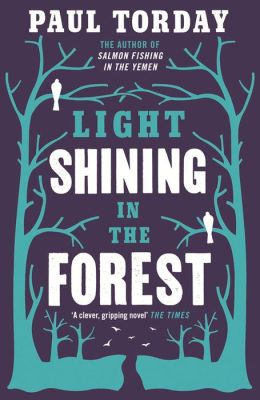
Light Shining in the Forest by Paul Torday

A disturbing thriller of missing children in a small English town, masquerading as a quiet tale about political red tape.

light shining in the forest

Light Shining in the Forest by Paul Torday (Salmon Fishing in the Yemen) begins as an eccentric, dreamy tale of an ineffectual pencil-pusher and a family distraught over a missing child whose trail has gone cold. A forester named Geordie works alone on a clear-cut at the English-Scottish border and remembers his missing stepson. A smarmy, self-satisfied career bureaucrat named Norman revels in his latest assignment: in a new pilot program of the British government he is given the title of “Children’s Czar” to the North East region, along with a hefty salary and a fine office and nothing to do. He sits at his fancy desk sipping lattes and waits to receive a mission that never comes.

Geordie’s stepson has been missing for months; but when more children go missing in a sleepy town nearby, an ambitious young journalist wonders if a children’s czar might be just the one to show some concern. Despite Norman’s repeated protest that his job is “strategic, not operational,” he is eventually goaded into action. When the unlikely team of journalist and bureaucrat initiates an investigation into the missing children, Light Shining in the Forest begins to accelerate into a thriller of great suspense and intensity. What started as a story of a surreal forest and quiet distress becomes a terrifying view into the mind of a monster, with religious overtones and paranormal possibilities and a panicked journey into the heart of the forest. Torday delights in creepy details as he turns his created world on its head; readers will be tempted to stay up late to finish reading but will need to keep all the lights on.


This review originally ran in the April 15, 2014 issue of Shelf Awareness for Readers. To subscribe, click here, and you’ll receive two issues per week of book reviews and other bookish fun!


Rating: 7 library books.

book beginnings on Friday: The Unlikely Pilgrimage of Harold Fry by Rachel Joyce

Thanks to Rose City Reader for hosting this meme. To participate, share the first line or two of the book you are currently reading and, if you feel so moved, let us know what your first impressions were based on that first line.

harold

The first few chapters of The Unlikely Pilgrimage of Harold Fry have charmed me. I heard just a little about this book a few years ago, but it was enough to put it on my list, and here we are; I’m going in almost entirely blind, which I often enjoy. Check out these first few lines:

The letter that would change everything arrived on a Tuesday. It was an ordinary morning in mid-April that smelled of clean washing and grass cuttings. Harold Fry sat at the breakfast table, freshly shaved, in a clean shirt and tie, with a slice of toast that he wasn’t eating.

I think this is a fine beginning, setting the scene as it does. Clean washing & grass cuttings are important, as are the fresh shave and the clean shirt and tie. A well-ordered life, clearly. Just wait & see what happens next…

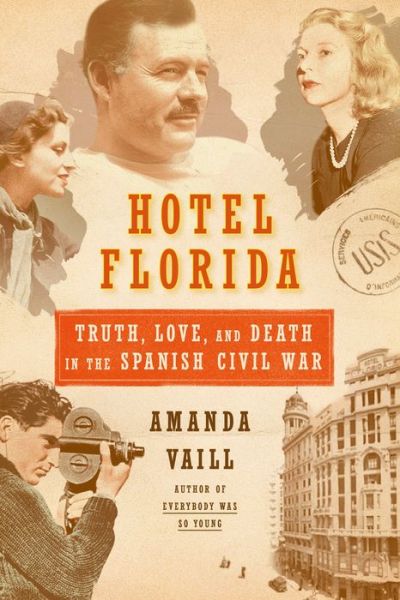
Hotel Florida: Truth, Love, and Death in the Spanish Civil War by Amanda Vaill

Vaill’s story of three love affairs, set against the Spanish Civil War, yields a nuanced perspective on war journalism and romance.

florida

During the Spanish Civil War, Madrid’s Hotel Florida was a meeting point for war correspondents, press officers and foreign intellectuals. Amanda Vaill (Everybody Was So Young) uses the hotel as a focal point to examine the war through the lives of three men and three women. These six individuals–all leftists of various stripes and pedigrees, converging on Spain from all over Europe and the U.S.–allow Vaill to range freely through the history of the war, which raged from 1936 to 1939.

Vaill follows her subjects chronologically, shifting locations through Francisco Franco’s rebellion against the Popular Front government and the events that led up to the Spanish Civil War. Arturo Barea of Madrid serves as a censor for the Propaganda Department, finding his leftist politics and commitment to truth well matched by his new assistant Ilsa Kulcsar, who comes from an Austrian resistance cell and speaks many languages. Meanwhile, Ernest Hemingway feels stifled in Key West; a new war to cover provides him with an excuse to get away from his wife and find fresh material to revive his stagnant writing. The attractive young journalist he’s just met, Martha Gellhorn, is also eager to get to Spain. Finally, a young man named Endre Friedmann is exuberantly pursuing his passion for photography in Paris when he meets the charming Gerta Pohorylle. They set off for Spain together with their ideals on their sleeves. Taking new names–Robert Capa and Gerda Taro–they will find fame and love and change the face of war photography forever. One of them will die on Spanish soil.

In addition to explaining the complexities of the Spanish Civil War, Hotel Florida lives up to its grand subtitle. Vaill examines the meaning of truth as conceived by each of her six players–writer, journalist, translator, censor, press officer, photographer. Their romances, all born of war, and the deaths to which they bear witness bring emotion and heartbreak. Buttressed by plentiful research, Vaill’s prose exhibits touches of Hemingway’s own writing style and a gift for narrative that keeps Hotel Florida accessible and engaging.


This review originally ran in the April 15, 2014 issue of Shelf Awareness for the Book Trade. To subscribe, click here.


Rating: 8 ideals.

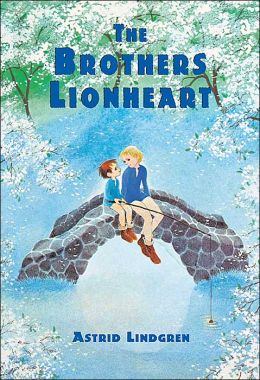
The Brothers Lionheart by Astrid Lindgren

lionheartI was asked some time ago what my favorite book was as a child, and I couldn’t say. I could have listed a dozen, at least, that I loved, but I don’t know how I could have chosen one. I asked my mother, and she said my favorite book as a child was the one I was reading right that minute. I read a lot.

But something about The Brothers Lionheart has stayed with me. I don’t know when I read it, or how many times – not many, I think, maybe only once; but it made a strong impression, and I’ve found myself thinking about it over the years. (Astrid Lindgren is better known as the author of Pippi Longstocking, but I think this one kicks Pippi’s butt.) So I finally went and got my hands on a copy recently, and I’m so glad I did!

The story is fantastical. When it opens, little Karl Lion is sick; he’s been in bed for six months. But his older brother Jonathan is a good big brother, one of those golden people, beautiful and strong and talented and kind, and modest because he seems to just really not notice or care how special he is. He’s sweet to his little brother, and stays up late telling him stories. Karl knows he’s going to die. Jonathan tells him it’s okay, because he’s going to a beautiful place beyond the stars called Nangiyala, a land still in the time of campfires and sagas, where the brothers can have adventures together. Jonathan is only sorry that Karl will get there before he does, since Jonathan seems destined to live a long and healthy life.

But there is a fire, and Jonathan saves his brother’s life but forfeits his own; and when Karl succumbs to his illness, Jonathan is waiting for him at Knights Farm in Cherry Valley in Nangiyala. They have horses, and rabbits, and a vegetable garden; Jonathan tends the rose gardens of a nice woman named Sofia, and they are friends with everyone in the town. Karl is happy. But too soon, he learns of Wild Rose Valley, the next neighborhood over, where things are not so simple and joyful: an evil tyrant named Tengil has enslaved the people of Wild Rose Valley and built a wall to keep them from their friends in Cherry Valley. Jonathan and Sofia are part of the resistance; and although Karl is very small and very frightened, he finds himself involved, as well.

There are forces of evil dressed in black uniforms and scary helmets; there is an occupation; there is a fire-breathing dragon; and there are brave citizens. It is a saga itself, and Jonathan is its shining golden hero, but Karl doesn’t do too badly either. I loved this story very much, this time as much as when I read it as a child. And the ending thrills me as much as ever.

This is definitely a book for kids; the language is simple and childlike, and the thing I found most striking upon this adult read was the pacing. It moves very quickly! It takes very few pages to establish how lovely & simple & calm Cherry Valley is; and then we’re on to the darkness next door immediately. An adult book would have been longer and allowed the action to develop a little more slowly. But this made for a very enjoyable, quick read. I’d recommend it for anyone who likes fantasy and dreams and adventure, and who might not be up for a longer, more involved novel.

There is another level on which this story can be read as allegory. Tengil’s occupying force presents several clear options for comparison (and I think also offer some tips on how not to do it). One valley looks so sweet, good, prosperous and happy, and yet if you open your eyes just a little – zoom out to the point where you can see as far as just the next valley over – things are not nearly so happy or easy as you thought. Without putting too fine a point on it, I think this offers an analogy for capitalistic western culture. Speaking of capitalism, I was charmed by the idea of everyone helping everyone & taking care of one another in this idealistic Nangiyala. One can dream.

Themes include the beauty of a deeply felt brotherly love, resistance against evil, loyalty, hope, and courage; but there are also themes related to death & what happens after, tyranny, war and betrayal. The book has been criticized for its approach to suicide (although I would argue it’s not quite that simple). For me, the good is bigger than the darkness, and the ending is happy. I feel that the interplay of dark and light is part of what makes this story the kind that has stuck with me for over 20 years, and keeps it from being saccharine. But not everyone will see it that way.

I am so pleased to report that Jonathan was still simply heroic, Karl still sweet and surprisingly brave, Sophia still good and the dragon still scary, even now that I’ve grown up. Do check out my childhood favorite with me.


Rating: 9 trips along a river.