Laidlaw by William McIlvanney

A literary Scottish noir mystery from the 1970s–heavy on character, setting and lyricism–lives up to its reputation in this reissue.
laidlaw

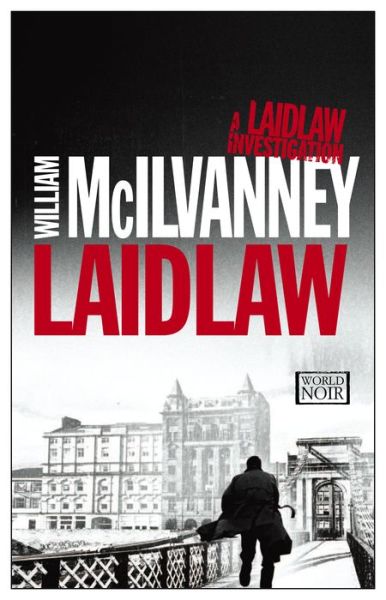
Originally published in 1977, William McIlvanney’s Laidlaw, the first book in a trilogy, set a standard for noir mystery. In this reissue, McIlvanney’s gruff, broad strokes read as freshly as ever.

Glaswegian detective inspector Laidlaw is the quintessential hardened, hard-drinking cop. Sarcasm, problems at home and a prickly exterior belie a sensitive man who believes that his society bears some responsibility for every crime he investigates.

Laidlaw is approached by a thug he’s dealt with before: Bud Lawson’s daughter hasn’t come home from the club, and Lawson wants Laidlaw’s help. Where other cops hold Bud’s criminal past against him, Laidlaw is willing to assist. For this case, he is partnered with the ambitious and impressionable young detective constable Harkness, who is meant to act as liaison between Laidlaw’s unconventional tactics and the police establishment. Harkness is an excellent foil for Laidlaw’s methods and worldview, and the growth and development of their relationship throughout is a satisfying side plot.

A murdered teenage girl does not, on the surface, look to be related to the network of thugs and gangsters that run Glasgow’s criminal industry. But her killer–exposed to the reader early on–quickly becomes a pawn. Bud Lawson’s gangster associates want him so they can exercise their revenge; other gangsters with other connections want him spirited safely out of town; and, of course, Laidlaw has his own goals–though, as he asks, “Who thinks the law has anything to do with justice?”

The phonetically spelled Scottish brogue adds color to dialogue, and McIlvanney’s remarkable lyricism is surprisingly refined in this dark, coarse world (“She waited patiently for his head to come back from a walk around his guilt”). His strengths are both character and setting: Laidlaw is a complex individual, harder on himself than on anyone else, with an iconoclastic nature and difficulty with authority figures. The Glasgow McIlvanney evokes, rife with poverty and an unglamorous criminal underbelly, is absolutely compelling, and is a precursor to strong mystery settings like Michael Connelly’s Los Angeles or James Lee Burke’s Louisiana.

Laidlaw is not so much action-packed–although there is plenty of head-busting–as it is considered, psychological and concerned with the existential. McIlvanney has earned his reputation as the father of the “tartan noir” crime-writing genre that includes Ian Rankin, Denise Mina and Val McDermid. Readers will be glad to know that the next two books in this trilogy are set for re-release in late 2014.


This review originally ran in the May 12, 2014 issue of Shelf Awareness for the Book Trade. To subscribe, click here.


Rating: 5 pubs.

Wolf by Mo Hayder

A truly petrifying home-invasion thriller filled with blood and unexpected twists.

wolf

Wolf, Mo Hayder’s (Birdman) seventh novel starring Detective Inspector Jack Caffery, may be her most terrifying yet. In the secluded hills of Somerset, England, Oliver Anchor-Ferrers recuperates from surgery with his wife, daughter and dog gathered around him. Their remote country home is mostly peaceful, but lies near the scene of a murder that rocked the family 14 years earlier and continues quietly to haunt them. Then a home invader imprisons the Anchor-Ferrers. The isolation of their estate works against them, and their family pet is their only hope of contact with the outside world.

Meanwhile, the gruff but likable detective continues to fight his own demons, chiefly the still-unsolved case of his brother, who disappeared when Jack was young. The trail has gone the worst kind of cold, with most of the principal players now dead. To find closure, he’ll have to work with the reticent and uncanny drifter known as the Walking Man, who seeks help of his own–he wants to find the owner of a lost dog that crossed his path. Accompanied by the runaway pup, hot on the trail of his own mystery, Jack closes in on the Anchor-Ferrers estate hidden in the woods.

A complexly plotted thriller, Wolf ranges widely over the arms industry, pedophilia rings, space technologies and more. Hayder repeatedly teases her readers with apparent answers to the puzzles she presents, but keeps them guessing. Intricate, intelligently constructed and featuring fully developed characters, Wolf is an absolutely chilling and disturbing read.


This review originally ran as a *starred review* in the May 9, 2014 issue of Shelf Awareness for Readers. To subscribe, click here, and you’ll receive two issues per week of book reviews and other bookish fun!


Rating: 8 little dogs.

book beginnings on Friday: Shirley by Susan Scarf Merrell

Thanks to Rose City Reader for hosting this meme. To participate, share the first line or two of the book you are currently reading and, if you feel so moved, let us know what your first impressions were based on that first line.

shirley

This is a new novel about Shirley Jackson, styled after that author’s own creepy-crawly work. It begins:

“You have green eyes,” she said. I handed her my end of the fitted sheet and she tucked the corners deftly together, folded again to make a smooth square, her knob-knuckled fingers making quick work of a task I’d never had to do. Bed-making I knew too well, but, oh, the luxury of a second set of sheets!

“No,” I said. “My eyes are blue.”

How’s that for a spooky beginning? Coupled with that cover – good stuff!

This quotation comes from an uncorrected advance proof and is subject to change.

The Untold by Courtney Collins

An astonishingly fresh and surprising novel of adventure, heartbreak, grit and love, set in the Australian bush.

untold
In the bush of 1920s New South Wales in Australia, readers observe a young woman digging by a river and then running for the hills. Her story unfolds slowly, in fractured time and brief views, in The Untold, a dreamy debut novel by Courtney Collins based on the life of legendary Australian wild woman Jessie Hickman.

Jessie’s past is varied and often tragic. She left home at 12 to join the circus, then moved on to an illustrious and mostly successful career rustling horses. At age 21, she was convicted for stealing two chickens. Upon her release from prison, she fell in with a rancher who put her back to work stealing horses and cattle, then forced her into a profoundly miserable and violent marriage. Her latest traumas have now sent her, and her beloved horse, Houdini, crashing uphill. They are headed for the top of the highest mountain she can see, through driving rain and flowing blood, in the scene that opens the novel.

Jessie will encounter gangs of men and boys, some friendly, some not: there is a bounty on her head and the residents of the town and the bush have turned out for the hunt. Among those pursuing her are a former lover–an Aboriginal tracker–and a police sergeant, purportedly working together but each unclear which side he’s really on; their quarry exerts a strange magnetic pull and counter-pull. As the reader is increasingly drawn into the story, The Untold rushes precipitously toward a heady convergence among Jessie, Houdini, the gangs and the two men with more personal business to conduct.

Collins has composed a truly startling and singular saga, set in a wild and brushy backdrop of mountains and elemental forces, peopled with hard-edged creatures of all sorts who each have a savage mood and a desperate will to live. Death is a consistent theme in Jessie’s life, beginning as early as we can know, but she has a surprising ally. In fact, while Collins keeps her reader guessing throughout, the biggest surprise of all is the narrator’s role in Jessie’s story.

The Untold is lyrical and untamed, with a firm emphasis on survival and redemption and a full array of improbably charming characters, none with an unstoried past but few as feral as Jessie herself. The reader will be as exhilarated as the protagonist by her struggles, and quite possibly come up gasping for air.


This review originally ran in the May 8, 2014 issue of Shelf Awareness for the Book Trade. To subscribe, click here.


Rating: 9 handfuls of mud.

The Reef: A Passionate History: The Great Barrier Reef from Captain Cook to Climate Change by Iain McCalman

The Great Barrier Reef is both easily understood and awe-inspiring in this history of its discovery, exploitation and beauty.

reef

With The Reef, Iain McCalman (Darwin’s Armada) has composed “a passionate history” of the Great Barrier Reef, opening with his own long-awaited voyage (part of a reenactment of Captain Cook’s original trip). Following the prologue, he withdraws to the role of historian rather than participant, and chronicles the Great Barrier Reef as known to Western society over the last few centuries.

The Reef is divided into three parts. Beginning in 1770 with Captain Cook and proceeding through later explorers who helped chart the reefs in the 1800s, “Terror” emphasizes the threat the reef posed to ships and their navigators, and the fear of cannibals and others thought to inhabit the area. In Part II, “Nurture,” the reef begins to offer refuge for those seeking to escape civilization or make a fresh start. Europeans are taken in by native islanders, or discover island paradise; naturalists arrive, captivated by the biodiversity and beauty of the area while beginning to realize that coral is a resource that can be exploited. “Wonder” sees the scientific community take an interest, disagreeing about the origins and biology of the reef. Ecology emerges as a new field of study, its proponents seeking to place the reef in the larger context of other natural environments, to study relationships and cause and effect. Individual activists work to defend the unusual and changing ecosystem from mining, oil spills, overfishing and the rough use of tourism.

At the end, we are introduced to nature-loving scientist J.E.N. Veron, nicknamed “Charlie” after Charles Darwin, an engaging character who communicates the final dire message of the Great Barrier Reef’s looming extinction. Returning to the personal nature of his prologue, McCalman’s epilogue speaks to the grim consequences of climate change but holds forth hope as well.

The few images in The Reef include portraits of the personalities involved but not the corals themselves (although McCalman refers his reader to books that offer the latter). This work’s strengths include a coherent structure, friendly narrative style and a reasoned culminating call to action that does not disrupt its primary role as a comprehensive history. Plentiful notes indicate strong research, but McCalman’s writing is accessible to any reader interested in the intersection of science, nature and history. From perceived threat to resource to paradise destination to climate-change indicator–Charlie Veron calls corals “the canaries of climate change”–the Great Barrier Reef is fully explored in this engaging study.


This review originally ran as a *starred review* in the May 6, 2014 issue of Shelf Awareness for the Book Trade. To subscribe, click here.


Rating: 7 dives.

Teaser Tuesdays: The Mad and the Bad by Jean-Patrick Manchette

Teaser Tuesdays is a weekly bookish meme, hosted by MizB of Should Be Reading.

mad and bad

The Mad and the Bad exemplifies “hard-boiled.” It is both spare and opulent, and very bloody and French.

Stiff-backed, glass in hand, he left through the side-door, and Julie hesitated for a moment before pouring herself a brandy which she downed, standing, in a single gulp, reminded of a time when, freezing cold at dawn, she would stand at a bar and wash down black coffee with four shots of calvados at the start of a day of wandering, tears, fatigue, and despair.

I am not always pleased by that many clauses (you know I prefer semicolons to commas!) but I like this lengthy sentence and its evocations. Freezing cold at dawn with black coffee and booze, tears and despair? It’s almost a cartoon of noir. Almost.

This quotation comes from an uncorrected advance proof and is subject to change.

The Purloined Letter by Edgar Allen Poe

This is one of Poe’s better-known short stories, “The Purloined Letter”:

I cannot remember now why I printed this story out (from here, and thank you) to read on my lunch break. I read a line about it in another book – Mr. Mercedes, perhaps? Heck. Sorry. Suffice it to say, a Poe recommendation is always worthwhile.

Now I will try to answer the question: What makes Poe so great?

His tales rely not on the solutions offered to the problems presented – which, while no pushovers, are not the mindbending puzzles of the century. Rather, his characters are so very clever, come around to things in such intellectual twists and turns that we are dazzled; and perhaps the best bits are the dialogue. I love his flair!

“That is another of your odd notions,” said the Prefect, who had a fashion of calling every thing “odd” that was beyond his comprehension, and thus lived amid an absolute legion of “oddities.”

When the story opens, our narrator has stopped in to smoke a pipe with a friend, when the Parisian Prefect (of police) drops by to ask for help with a case. He is stumped, and wants to pick the clearly superior brains, in particular of the narrator’s host, Dupin, who we have met before (see the Murders in the Rue Morgue). A lady has lost a letter that will get her in great trouble if her husband finds out about it; and she knows exactly who took it, because he took it from under her very eyes – and those of her husband, which is why she couldn’t cry out about it. She has engaged the Prefect to recover this document, which has become an object of blackmail. He has had his men very very thoroughly search the dwelling and person of the thief, repeatedly and using microscopes, needles, and probes. The letter is clearly not in the home; clearly not on the man; and yet he clearly would keep it near to hand to help in blackmailing the lady. What a puzzler!

Dupin sends him on his way, but he returns some time later, having given up; the considerable reward he’s been promised will clearly have to go unclaimed. It is an unsolvable mystery. This is when Dupin speaks up: for a portion of that reward, he will happily hand over the letter. The Prefect pays; the letter is produced from a drawer in Dupin’s desk. The Prefect goes away again, mystified but triumphant. And our narrator asks for the explanation, which of course is… I won’t spoil, but simplicity is always the answer.

This entire story is set in Dupin’s “little back library.” The action is all removed, told in narrative; if this were a play, it would be done with the single setting, that darkened book room filled with pipe smoke, and two or three men talking. That in itself is kind of an attractive feature to me. Poe’s mysteries are cerebral; it’s all in the dialogue and the internal machinations. The likes of Hercule Poirot or Claire DeWitt, those detectives who solve mysteries by thinking, clearly owe a debt to Poe. In fact, Poe’s detective stories are credited with (at least in part) birthing the genre; but some modern-day versions follow him more closely than others.

The plot is lovely because it offers room for plenty of debate, being intellectual in nature. It is clever. But my favorite part is definitely the dialogue and the intricacies of the very clever players.

Poe’s cleverness is on display as well; I had to look up several terms & lines.

First, pardon my ignorance, but I had to look up what was meant by “the twofold luxury of meditation and a meerschaum” – what the heck is that?? It’s a pipe, of course. The Sherlock Holmes type, one assumes.

Others:

Procrustean bed: “an arbitrary standard to which exact conformity is forced.”

recherche: “unusual and not understood by most people.”

And then the French! I copied out “Il y a parier que toute idee publique, toute convention recue, est une sottise, car elle a convenu au plus grand nombre” and Google Translate gave me the (very rough) “there a bet that any public idea, any agreement received is nonsense, because it agreed to the largest number.” Okay, I think I can follow that: what the masses easily buy is not necessarily the best solution, hm? But then in closing:

Un dessein si funeste, S’il n’est digne d’Atree, est digne de Thyeste.

Again, my rough Google translation gives me “if a fatal design is worthy of Atreus, is worthy of Thyestes.” I am totally charmed by anybody who invokes the Greek myths to close a mystery story. Although I could take a pass on the reference coming to me in French.


Rating: 9 ravens, how about.

Next up, I would like to read Shirley Jackson’s The Summer People, inspired by (what else?) my recent read of Shirley. Short stories referenced in novels, moving forward.

Maximum Shelf author interview: Chevy Stevens

Following yesterday’s review of That Night, here’s Chevy Stevens: Listening to Her Own Voice.


Chevy Stevens grew up on a ranch on Canada’s Vancouver Island and still lives on the island with her husband and daughter. When she’s not working on her next book, she’s camping and canoeing with her family in the local mountains. Her debut, Still Missing, won the International Thriller Writers Award for Best First Novel. That Night is her fourth novel.

unnamedThis is your fourth novel. Is it getting easier, or harder?

I really enjoyed writing That Night, and even though it still had some challenges–as each book does–it was the fastest I’ve ever written a novel. It was a different experience for me in many ways, however, because I was pregnant when I started writing the book. I had a wonderful amount of energy and focus (love those pregnancy hormones!), and also the burning desire to get as much completed as possible before the baby arrived. I was a few days short of finishing my first draft when she decided to make her appearance. The rest was finished after she was born.

I think with each book you learn more and you grow as a writer so you learn to recognize weaknesses early, and to question things sooner. I’ve also learned how to listen to my inner voice more when I have doubts about a plotline or a character. I think with each book I’m beginning to understand my own style more, what works for me, where my voice resonates the most, and what my fans also enjoy the best about my writing. Hopefully I can keep giving them that.

You got the idea for your debut, Still Missing, in which a realtor is abducted from an open house, while working as a real estate agent yourself. Where do your subsequent creepy-terrifying plot concepts come from? Do you scare yourself with these stories?

Never Knowing was the result of a conversation I had with my editor, a “what if” premise, which grew into a story. In Always Watching, I wanted to write about Nadine, the therapist in my first two novels, and I was intrigued by the debate about repressed memories and also the subject of cults. The cult in that book is inspired by a hippie commune that lived in Shawnigan Lake in the ’70s.

That Night grew from an idea I had while watching a true story on television about a man who served years for his girlfriend’s sister’s murder. I also “saw” Toni in my mind and wanted to write about her.

Sometimes certain scenes in the books do scare me quite a bit. Essentially, I am telling myself the story first, so if I don’t feel anything, then it’s not strong enough. There are some moments in the current book I’m working on that are truly terrifying and made my own heart pound when I wrote them.

Did you have to research the prison system?

I did quite a bit of research for That Night. There seemed to be more information available about the American prison system than the Canadian, so I had to work hard to uncover some sources willing to talk to me. Because of the sensitive nature of the information they shared, they asked to remain private. I read everything I could find–online articles, books, memoirs, and watched both documentaries and numerous episodes of Lockup.

Shauna and her gang are so mean, it’s just boggling. Do they come from life–yours or anyone’s–or are they a grotesque fantasy?

I think we all remember “mean girls” in high school, but they are also a product of what I learned during my research. I read books on teen bullies and how girls can be especially vicious, often cutting another girl out of their circle, or simply deciding they don’t like someone and then making their life hell. There have been many documented real-life cases where bullying has gotten completely out of hand, with deadly consequences. Sadly, a few young girls have even taken their own lives because they can’t cope with the constant harassment. The worst part to me is that parents are often unaware of what’s happening to their children at school.

Toni’s voice is convincingly teenaged in the passages set in her early life, and more grown-up in the post-prison passages. Did you make a conscious effort to vary her voice? Was it difficult to switch gears?

I don’t think it was conscious. Writing is a bit like acting sometimes, you go into the character. So when I was writing Toni’s teenage years, I felt like a teenager, with a teenager’s concerns and thoughts and hopes and dreams. Then, when Toni was older and released from prison, I wrote from a different mindset, imagining how it would feel to be in that situation, how it would shape you, harden you, how angry you would be at the system for failing you.

Are you already at work on your next book, and can you share anything about it with us? All your books so far are stand-alones; any interest in the idea of a sequel?

Yes, I am close to finishing my fifth novel. I’m not ready to share the title just yet. It’s a superstition of mine that the book has to be finished first. But I will share that it’s another standalone about three sisters who escape a terrible situation and go on the run, only to get caught in an even worse nightmare.

I haven’t wanted to write a sequel to any of my books at this point because I’ve usually put the characters through quite a bit, and it doesn’t feel fair to keep ruining their lives.


This interview originally ran on April 30, 2014 as a Shelf Awareness special issue. To subscribe, click here, and you’ll receive two issues per week of book reviews and other bookish fun!

Maximum Shelf: That Night by Chevy Stevens

Maximum Shelf is the weekly Shelf Awareness feature focusing on an upcoming title we love and believe will be a great handselling opportunity for booksellers everywhere. The features are written by our editors and reviewers and the publisher has helped support the issue.

This review was published by Shelf Awareness on April 30, 2014.


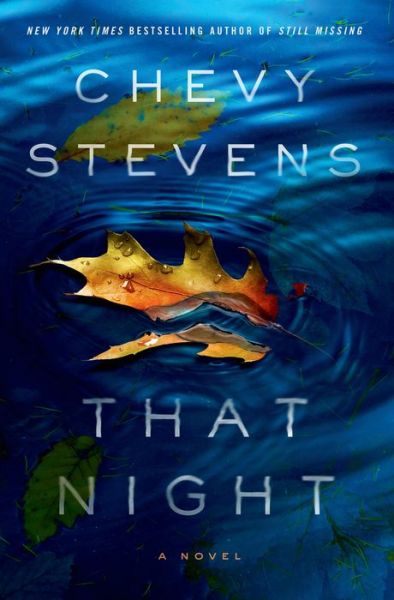
that nightIn the small town of Campbell River on Vancouver Island in the late 1990s, Toni Murphy can’t wait to graduate from high school. Her parents are totally hassling her: they disapprove of her boyfriend, Ryan; her mom is controlling and angry; her father has become distant. A group of popular girls at school is determined to make her life miserable, and her too-perfect little sister, Nicole, has recently started hanging out with those very girls. Toni and Ryan intend to save a little money, get an apartment together and, eventually, leave town for good. Things are a bit rough at home, but they have a plan, and they are so close….

Then, one night, Nicole is killed. Toni and Ryan are convicted of her murder and sent to prison.

Nicole’s killer–or killers–not only took the life of their victim, but effectively Toni and Ryan’s as well, and the young love they shared: once out on parole they will never be allowed contact again. Toni and Nicole’s parents’ lives are ruined as well. Their mother holds onto her rage against her elder daughter, and their father’s indecision about whom to support ends up supporting no one.

Seventeen years later, Toni is being processed out of prison and into a halfway house when we meet her in the opening lines of That Night, the fourth novel by Chevy Stevens (Still Missing). She is frightened and unsure of how she’ll readjust to the outside world. It was so painful on the inside–being separated from Ryan and everything she knew–that the only way she could cope was to shut down. She stopped writing to Ryan in the men’s prison, asked her father to stop visiting and got into a lot of fights. Now that she’s out, her fellow parolees at the halfway house want to continue with violence, and Ryan wants to renew contact. He’s intent upon solving the crime they’ve been convicted of, but violating the parole conditions that forbid contact could land both of them back in prison; anyway, Toni feels the best way to move on is to put Nicole’s murder behind her. In returning to her hometown, however, she finds that no one else is ready to do that. Her mother is still furious, believing Toni killed her little sister; her father is still unsure whose side he’s on; it’s nearly impossible for an ex-con to get work, and even harder for her to keep it. And Toni’s high school nemeses, Shauna and her henchwomen, are still around, and still have a bone to pick. She makes just one friend: a rescue pit bull named Captain.

Slowly, Toni begins to settle in. Back in Campbell River, she goes to work at the Fish Shack, where she waited tables in high school–now they keep her (and her prison tattoos) hidden away in the kitchen. She lives with Captain on a small boat and checks in with her parole officer daily. Toni has now experienced severe bullying, incarceration and an egregious failure of the criminal justice system; at 34 years old, she’d like to just be left alone to put together whatever life she can. She doesn’t visit her parents, but she does see Ryan hanging around the marina where she lives. He’s pushing ahead in investigating Nicole’s death, against Toni’s advice, and he has his eyes on the girls who picked on her in high school–Shauna and her clique testified against Ryan and Toni at the trial, and Ryan wants to know why. What really happened that night? As Ryan’s investigations approach the truth, the events of 17 years ago feel very recent indeed; Toni may be in danger–and she may not be the only one.

That Night shifts back and forth between the events of 1996, when Toni’s teenaged world fell apart, and the present, with Toni newly released from prison and struggling to rebuild her life. Both are told in first person by Toni herself, although in two subtly different voices: that of the rebellious teen with short-term concerns and long-term dreams, and that of the ex-con whose hard-won and carefully constructed defense system is still brittle. This nonlinear style highlights Toni’s sense of confused and harried apprehension, of disruption. Flashbacks allow the reader to visit Toni behind bars, and these scenes, too, are evocative and disturbing.

Stevens matches the success of her previous novels with character-driven drama and a clear commitment to the particular nuances of her Vancouver Island setting. A strong sense of foreboding and a thoroughly compelling plot keeps her reader guessing, while a hint of romance broadens the appeal. Toni’s gritty, emotional, traumatized persona is both gripping and sympathetic. Foreshadowing and terrifying suspense are riveting in Stevens’s sure hands; readers will want to keep all the lights on as That Night moves into its final acceleration.


Rating: 6 dog walks.

Come back tomorrow for my interview with Stevens!

It by Stephen King: first third (or so)

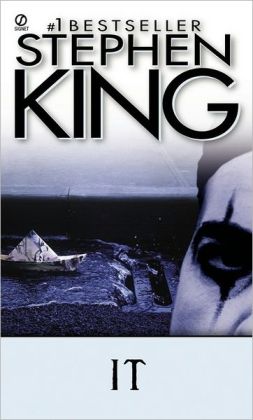
itI have inadvertently started a book club at the bar that I frequent. What can I say, it’s on the train line home from work, right at a station, and I love it.

I am trying to coordinate my reading of It with a certain bartender’s reading of It. We shall see how the pacing works out. But hey, it’s Stephen King! Who could resist? Happily, like my bartender/reading buddy Danielle, I have not seen the movie and had no cultural preconceptions about this book or story at all; I was vaguely aware that it was “the” scary story about the scary clown. And so we begin. I have paused at approximately 300 pages into approximately 1100 so that Danielle and I can talk about it.

My early impressions are that – naturally – this is a good, and scary, story. It opens with “Part 1: The Shadow Before.” In 1957, in the backwater town of Derry, Maine, a child is murdered during a flood, by a terrifying paranormal clown in a storm gutter. Then we flash forward to a hate crime in the same town at a festival in 1984, in which a gay man is killed. The clown finishes him off; but it was the local residents responsible in the first place. And in 1985, six individuals receive phone calls that frighten them badly and throw their established routines into upheaval: they are called back “home” to Derry.

Each of these vignettes is compelling. I was more disturbed by the hate crime than by the supernatural murder, probably because the hate crime is realistic, an example of something that really happens in our world. And I especially enjoyed meeting the six adults who take the six phone calls: each is a well developed, interesting character, living in a very real world, just briefly sketched. We see strong marriages – not without their troubles, but based upon real love; and we see damaged marriages and lives, whose problems also feel realistic. I think Stephen King has a gift for writing Real American Lives.

And then we begin “Part 2: June of 1958.” The child killed in the flood is still a recent memory; the town of Derry is concerned over the deaths of several more young people in that year, including one beaten to death by his step-father in a particularly gruesome scene involving a recoilless hammer (this tool was new to me, incidentally). We are working our way through the six adults who received the six phone calls, meeting them as Derry children, and friends. Also, we meet the man who makes the six phone calls, through a diary he keeps of the evils of Derry. He is, appropriately, a librarian and historian (King never fails to tip his hat to my fine profession. Thank you, sir). And it is here, almost through Part 2, that Danielle and I have stopped reading for now; so my synopsis will continue in a later post.

There have been memorable lines. I liked this one on the opening pages:

Water sprayed out from beneath his galoshes in muddy sheets. Their buckles made a jolly jingling as George Denbrough ran toward his strange death.

The juxtaposition of “jolly jingling” with the foreshadowing of a child’s “strange death” is very effective.

And Danielle pointed out the power of these lines, about a child making friends for the first time:

He liked the way his laughter sounded with theirs. It was a sound he had never heard before: not mingled laughter – he had heard that lots of times – but mingled laughter of which his own was a part.

Also very effective, a poignant way to indicate his profound loneliness.

There have been clever in-jokes for the Stephen King fan; he likes to reference his own work, and in one case, that of his son, novelist Joe Hill. I found references to the turtle (or the Turtle), which seems to be a King leitmotif, and the use of the phrase, being “on the beam” – both of which concepts figure in the Dark Tower series. And one kid is described as wearing a Judas Coyne t-shirt (see Heart-Shaped Box). I get a kick out of these self-referential grins.

There have been vocabulary lessons. I want to point out that although King has a reputation for being pulpy, a genre author, or less “serious,” he is well-written, even literary, and regularly sends me to the dictionary. For example, I had to look up “il mot juste,” “planchette,” “batrachian,” and “chitinous.”

And where are we headed with It? I remain in the dark about where the remaining 802 pages will take us; but it is clear that Derry, Maine is home to a great evil. Our librarian/historian friend has recorded that Bad Things were happening here from the beginning – about every 25-28 years all the way back in the town’s history, in fact, which suggests something generational going on, although I don’t have the answers yet. The clown is rather the embodiment of evil; Danielle points out that he is a shapeshifting clown, although I’m not sure yet that the Creature (big mean bird encountered by young Mike) is the same as the clown. I’m still very much in the dark so far, and that’s fine, because again, 802 pages to go!

This is a scary story, with evil lurking in unknown places and with unknown aims; but I’m not terrified of clowns just yet. Danielle and I also asked ourselves if this is the story that made clowns scary? But she thinks not: she thinks that King is tapping into a preexisting societal fear, although he can definitely be credited with confirming it! And I bet the movie was horrifying.

Stay tuned!