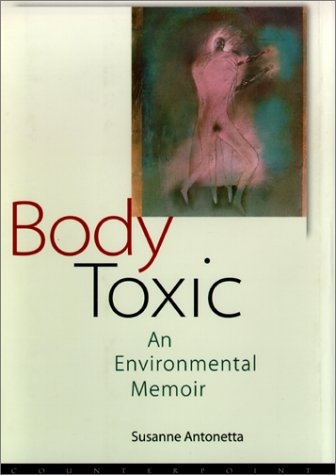
book beginnings on Friday: Body Toxic by Susanne Antonetta

Thanks to Rose City Reader for hosting this meme. To participate, share the first line or two of the book you are currently reading and, if you feel so moved, let us know what your first impressions were based on that first line.

This memoir by a local author and professor at my local university comes highly recommended, and at a glance the subject looks fascinating, too. (Sometimes – I might even say often – excellent writing carries a subject I’m not consumed with; but better to have both.)body toxic A brief blurb reads, “For readers of Refuge, A Civil Action and Silent Spring, comes a harrowing story of a family, a body, and a place: an immigrant family in the Pine Barrens of southern New Jersey, a hauntingly beautiful, hauntingly compromised landscape.” Who is not intrigued? And those titles cited for comparison: wow!

It begins:

In nineteen question-mark question-mark my silent grandfather came to the United States.

He left the hot chatty island of Barbados and because he existed in silence no one knows when he came.

Simple, but a lot has already been communicated; and I love the “hot chatty island.” I am optimistic.

The Old Globe presents In Your Arms

I was so lucky last week to get to accompany my Grammy to this outstanding theatre production, which is a little hard to describe, but of course I’ll try.

photo by Buck Lewis, courtesy of New York Stage and Film & Vassar's Powerhouse Theater

photo by Buck Lewis, courtesy of New York Stage and Film & Vassar’s Powerhouse Theater

In Your Arms is a dance-musical production with very little dialog. It is a series of shorts, mostly unconnected, but with a theme of romantic relationships. These vignettes range through time and geography, sometimes implied and sometimes explicit, as with “The Lover’s Jacket,” in which dates and locations (Spain in 1939 and Argentina in, I’m pretty sure, 1940) are projected against the wall. This is one of the finest and most communicative pieces of nonverbal storytelling throughout the whole, although all of them were impressively clear in their messages and emotions despite being mostly wordless. Details might be blurred, of course, but the feeling and action of each piece was perfectly plain.

The exception was Carrie Fisher’s contribution, “Lowdown Messy Shame,” which is voice-overed by Fisher as she is seated off to one side at a typewriter, composing the action we see played out across the stage. The players act out Fisher’s imaginings but also comment upon them, in a cute innovation. One review found this one overly wordy – and indeed it was almost the only spoken theatre of the evening – but I enjoyed it as much as any other, despite its differences. (“The Dance Contest” also uses some voiceover.)

As I said, these shorts had a shared theme, but remained distinct. I loved the survey over time, space and culture. And then they are tied together by opening and closing pieces featuring a singer expressing nostalgia for loves past. Here I agree with the Union-Tribune (link above) that less song would have been fine; but I think these scenes served well nonetheless to emphasize the loose links between all the pieces. Overall, this nearly-wordless hour-and-forty-five-minutes of music, dance and theatre was profoundly emotional and moving, over a wide range of topics but centered around affairs of the heart. I was deeply impressed; it’s the best thing I’ve seen in a long time.

I was further pleased by stage settings and costume. No set stands out in my memory as being particularly complex or elaborate, but each was distinct and evocative, and the transitions were smooth and easy; I love seeing a change of just one or two elements transform a stage and introduce a new setting with perfect clarity. I think that kind of subtle-but-clear set design is more impressive than elaborately complete stage dressings. A unique element here, too, was the use of shadow and projection throughout; the time-and-place cues in “The Lover’s Jacket” were projected on the screen, and shadows were a major feature in “A Wedding Dance,” while projected home movies were central to “Life Long Love.” The costumes were great fun, too, and well designed for showcasing the dance as well as helping to tell the story. I liked the protagonist’s costume in “Life Long Love” for what it emphasized and revealed, while also looking demure at the appropriate moments.

I do want to say briefly that I wasn’t sure about the racial tones in “A Wedding Dance”, which tells the story of an African couple’s immigration or… kidnapping? I don’t have enough information to be certain whether this was a well-told realistic story, or an ugly appropriation of stereotypes. Likewise “White Snake,” which tells the story of a white businessman who reads comic books and fantasizes about his Asian assistant. It was a great piece of theatre and movement, combining dance and martial arts and a lovely representation of the blurry line between fantasy and reality. But I wasn’t sure how much fun we should be having with certain stereotypes there, as well. I haven’t worked out what’s okay here, in part because of the lack of details in wordless theatre. Just something I wanted to note. On the other hand, the same-sex couple in “Artists and Models, 1929” was represented with sensitivity and realism and I found them delightful. I want to say that this was one of my favorite pieces, but gosh, I want to say that about nearly all of them.

Finally, I must note that this event took me back to San Diego’s Old Globe theatre, where I saw what I’m pretty sure was my first Shakespeare production, in 1992, when I was 10 years old. The theatre and surrounding park still felt familiar, and it was such a treat to be there again with my Grammy, thoroughly aside from the quality of the show.

If you have a chance, definitely make a point to see In Your Arms. It was a rare treat for me. There are rumors it might be Broadway-bound, so maybe a larger audience will get an opportunity at it.

Thanks, Grammy, this was so special.


Rating: 9 memories.

Atlas of Cursed Places by Olivier Le Carrer

Sailor Olivier Le Carrer guides readers on an enticing tour of frightening places around the world, with maps and pictures.

atlas cursed places

Olivier Le Carrer’s Atlas of Cursed Places: A Travel Guide to Dangerous and Frightful Destinations profiles 40 locations around the world, so that tourists may avoid risk and the adventurous may be satisfied that “many mysterious places remain to be explored and understood.” In his introduction, which recognizes Adam and Eve as the origination of curses, he describes these spots as falling into three categories: spiritual or paranormal curses; natural hazards; and human-caused threats. Le Carrer, a sailor, then sorts them by the oceans they lie nearest.

Historic religious conflicts qualify Gaza and Jerusalem: of the latter, Le Carrer writes that “mankind is capable of transforming even the most beautiful holy stories into a nightmare.” Other places are cursed by animal activity, as with Kasanka National Park in Zambia, where five million fruit bats descend annually, and Cape York in Queensland, Australia, where crocodiles reach 17 feet in length and live alongside eight of the 10 most dangerous snakes in the world. Le Carrer’s attitude toward his subjects varies, as he addresses the Bermuda Triangle rationally (“people navigate the area every day without incident, and there are often logical explanations for any incident”) but concludes mysteriously of Area 51 that “accursed nature strikes again.”

Le Carrer’s descriptions of place are designed to entertain and comfortably frighten his readers. His brief, playful evocations are accompanied by historical maps and period illustrations in this large-format book, which will please travelers and trivia fans alike.


This review originally ran in the – issue of Shelf Awareness for Readers. To subscribe, click here, and you’ll receive two issues per week of book reviews and other bookish fun!


Rating: 6 possible explanations.

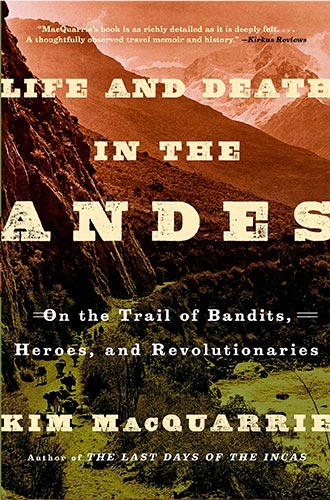
Teaser Tuesdays: Life and Death in the Andes by Kim MacQuarrie

Teaser Tuesdays is a weekly bookish meme, hosted by MizB of Should Be Reading.

I am loving Life and Death in the Andes. It’s a moderately fat book at nearly 400 pages, but never less than captivating in all its various stories. Stay tuned for my review to come in December.

andes

Today’s teaser is, of course, related to a sense of place.

“It is the fate of every voyager,” Darwin wrote later in his autobiography, “[that] when he has just discovered what object in any place is more particularly worthy of his attention, to be hurried from it.” Right now, however, Darwin was so upset he could hardly eat.

Why was Darwin so upset? It wasn’t seasickness, although his early days on the Beagle were beset by that complaint. No, he was dismayed to discover after the fact that he wasn’t such a professional naturalist, after all. Do pick up this engaging history to learn more!

This quotation comes from an uncorrected advance proof and is subject to change.

One Out of Two by Daniel Sada, trans. by Katherine Silver

This delightful novella translated from the Spanish, about identical twins and the tricks they play, asks questions about identity and loyalty and answers them with glee.

one out of two

Daniel Sada (Almost Never) died in 2011, but the prolific Mexican writer left behind many short stories, novels and poems. Katherine Silver has translated his humorous novella One Out of Two into English for the first time.

“Now, how to say it? One out of two, or two in one, or what?” Constitución and Gloria Gamal are identical twin sisters, and this is their shared identity and life’s work. At 13, they were orphaned by a car wreck, but they did not notice for weeks, not until they ran out of food, so consumed were they with one another. Now in their 40s, they dress alike, wear the same makeup and hairstyle; whoever gets up first in the morning gets to choose that day’s attire for both. They have practiced the same gestures and mannerisms until they are indistinguishable. They even switch names from day to day. (“Why shouldn’t they!”) Established as seamstresses in a small Mexican town where everyone knows them–but can’t tell them apart–they take pleasure in their indistinguishability, the singular quality in their mundane existence.

This strange, even surreal description of twinned lives begins Sada’s magnetic tale. Then a problem challenges the Gamal sisters’ contented tricks of identity: one of them meets a man. They brought this startling element of difference into their lives somewhat on purpose, when they decided to send only one twin to a wedding, expressly because they believed she would have a better chance of catching a male eye if she were not half of a whole. After all, “this business of having a double can be vexatious, almost almost leech-like.” So Constitución comes home to announce: “I danced all night with a slender man of interesting age.” The novel calls this “her best sentence ever,” and it may well be, but it is not Sada’s; his winding, lyrical, frequently abstract language is one of the great joys of this comical, silly and touching story.

Of course, the introduction of a suitor raises questions for the twins. Separate or share? He has no idea that there are two, and so they take turns in romance. But two women who have split everything up to this point find a man harder to enjoy as equals. The tension of One Out of Two is related to illusion, deceit and identity, as Constitución and Gloria discover envy and competition for the first time. In a mere 100 pages, Sada dances his reader through these conflicts and on to a joyfully droll and loving conclusion. His playfulness with language, plot and character make One Out of Two a true pleasure; his readers’ only regret is that it is over so soon.


This review originally ran in the October 22, 2015 issue of Shelf Awareness for the Book Trade. To subscribe, click here.


Rating: 7 grape sodas.

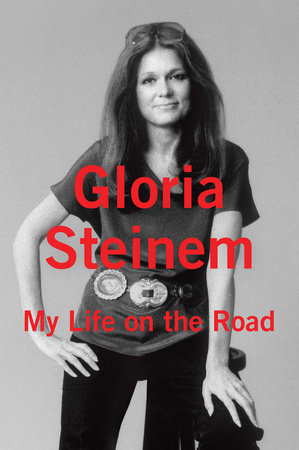
My Life on the Road by Gloria Steinem

Gloria Steinem’s straight-talking memoir is rich with personal anecdote, political history and a fervent love for living on the go.

steinem

Gloria Steinem, founder of New York and Ms. magazines and many women’s organizations and a noted leader of the women’s movement, shares her stories from along the way in My Life on the Road. This simply stated memoir recounts Steinem’s childhood, her organizing and activism from her youth into the present, with commentary on the social and political events of those decades. But it is also explicitly a story of life lived on the move. As she sees it in hindsight, Steinem inherited a love for constant motion from her father, who lived for most of her life out of his car, with little Gloria keeping him company for her first 10 years. As a young woman not ready to settle down to marriage and motherhood, and then as an organizer, she kept moving. One chapter is dedicated to her choice to travel communally rather than use an automobile of her own, because it offers increased opportunities for contact.

In stating her goals for this book, Steinem cites storytelling as a central drive. Much is told in short vignettes, stories from those she’s met in her travels or lessons learned on her way. There are more than a few instances of Steinem making assumptions about people (Harley riders, cab drivers), only to have them proven wrong–emphasizing the idea that every person is more than he or she appears.

Steinem hopes to encourage her readers to hit the road, too. She is clearly deeply passionate about the advantages of travel: for perspective, for personal development and for plain enjoyment. She recommends that politicians travel the country and the world: “I called big-city contributors from on-the-road places, so I could say, ‘You don’t know what it’s like out here.'”

My Life on the Road is not a history of the women’s movement, although of course it contains many references to that history, as well as to the U.S. political climate and events of the second half of the 20th century. Instead, Steinem’s memoir is a glimpse into one remarkable woman’s life and philosophies of the road. It includes profiles of Steinem’s immediate family and friends like Bella Abzug, Wilma Mankiller and Florynce Kennedy, and briefly addresses the conflict between Steinem and Betty Friedan. Steinem’s writing style is personal, warm, approachable and straightforward. Her fans will be satisfied by this personal view, one that combines a love for people and places and stories and change with a love for movements–in both senses.


This review originally ran in the October 15, 2015 issue of Shelf Awareness for the Book Trade. To subscribe, click here.


Rating: 7 stories.

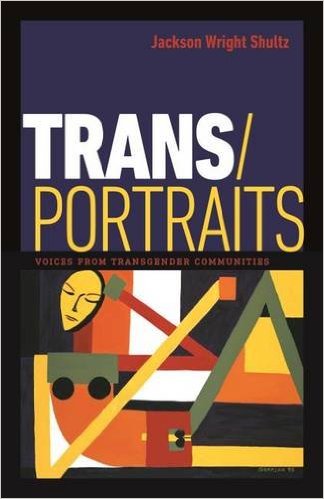
Trans/Portraits: Voices From Transgender Communities by Jackson Wright Shultz

Trans/Portraits collects diverse, first-person stories of transgender experience and their contexts.

trans portraits

In his introduction to Trans/Portraits: Voices from Transgender Communities, Jackson Wright Shultz argues that while transgender experiences are increasingly present in academic writings and pop culture, the voices of transgender individuals remain largely absent from those portrayals. He works to correct this absence in discussions with 34 people who identify along a spectrum of genders.

As Shultz observes, no two of them use the same terminology to refer to themselves. Kelly came out as a girl at age 12, and was able to take puberty-suppressing medications and, later, hormones. Olivia transitioned when she was 43, and is a minister with the United Church of Christ. Alexander is asexual. Natalie is a police officer, and gives sensitivity training to departments around the state. Russ performs Deaf poetry in hir spare time (and uses the gender-neutral pronouns “ze” and “hir”).

Trans/Portraits suggests that the transgender experience cannot be encapsulated in any one story. The individuals Shultz talks with have undergone various forms of transition, using hormones, surgery, both or neither. Shultz asks them about vocabulary and pronoun use; finding support in communities; intersectional identities, for example race, gender, socioeconomics and (dis)ability; seeking basic safety and medical care; and activism. The theme is diversity: of lifestyle, of desired outcomes, of identity and personality. Shultz’s collection of first-person voices offers a fascinating and eye-opening view of transgender individuals and communities that will aid healthcare and education professionals, anyone with questions about gender and the general public. The uplifting message is that these are simply people, as sympathetic, interesting and varied as any other.


This review originally ran in the October 13, 2015 issue of Shelf Awareness for Readers. To subscribe, click here, and you’ll receive two issues per week of book reviews and other bookish fun!


Rating: 7 different ways to look at it.

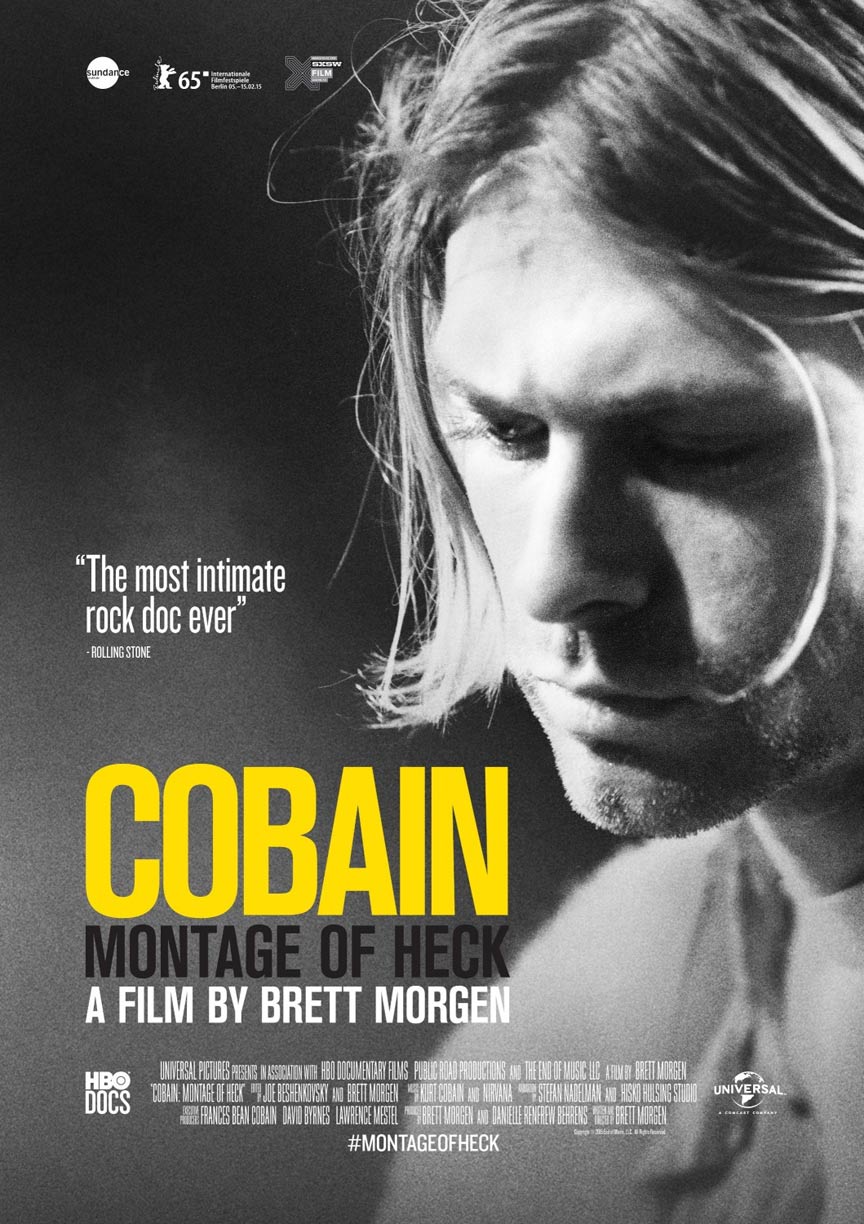
movie: Montage of Heck (2015)

Montage of Heck is the recently released documentary about Kurt Cobain’s life, and we got to see it in the theatre during Pickford’s Doctober. In a word, it was an unsurprisingly depressing, but compelling glimpse into an interior life that I did not know a whole lot about. It was well put together and enjoyable (in a depressing way) to watch. It was also fairly interpretive, on which more in a minute.

montage of heckAs a piece of art in its own right, I found this to be a fine film. I like the collage effect, of old home videos, recent video (of interviews with Kurt’s parents, Courtney Love, and Nirvana bassist Krist Novoselic, among others), concert footage, stills and animations from Kurt’s journals and sketchbooks, and animations of Kurt’s life. It was dynamic and expressive, like him. I learned a lot about him (I like Nirvana but am no super-fan, and no expert on his life), like that all-too-familiar combination of genius creativity, hyperactivity, and disturbance. I didn’t know about his stomach problems or the ex-girlfriend Tracy. It’s an enthralling story, and this movie made it immediate, and moving.

On the other hand, I am troubled by my lack of understanding of how real any of this is. I said earlier that the film is quite interpretive. The soundtrack includes synthesized and orchestral renditions of Nirvana songs: what would Kurt think about that? And the animations of his journals and sketches assume chronology and intention; who knows for sure? Contemporary footage of Kurt’s father and step-mother leaves the former looking nearly catatonic; I can’t believe there isn’t an editorial angle on that. Kurt’s daughter Frances is a co-executive producer. She’s family; she has as much business here as anyone. But she never knew him, as she was not yet two when he died. Even with the best of intentions, who knows how much she got right? Not to assume she had total control over the content…

Any time an artist dies, their work will be interpreted and presented to the public by someone else. And all artists die, although not all so young as Kurt Cobain. This is not a new concern. But this film did more interpretive work than it necessarily needed to do, and that just got me a little curious, and a little anxious. I like knowing where the line is drawn, and here I don’t know. If I knew more about his life beforehand I’d be better equipped to make judgments, but of course that would come with preconceptions and bias, too. And then there’s this guy who says it’s all a load of sh*t, and who do we believe?

As Husband pointed out, the footage of Kurt and Courtney in their apartment with baby Frances was hard to watch. Some of their home life goofing off was sweet, in a messy way – it really looked like they had fun together – but once there was a baby around it got more straightforwardly disturbing. What did we expect, though?

While I’m exploring expectations: the movie does not deal with his suicide at all, other than stating it in plain white text on a black screen. I’m sure some of us came for the sensationalism of learning more about his death, and those folks will be disappointed. But I can’t argue with the dignity – or maybe just the shying away from pain – involved in turning away. At what point should we expect his family or anyone who loved him to turn his death into movie theatre entertainment? What do we want, crime scene photos of splattered brain matter? I’m okay with this treatment.

This was a pretty great movie, unto itself. But it left me with more questions than answers, and feeling a little unsettled about the idea of Truth. Maybe that’s not the point. Beware Montage of Heck as an authoritative source on the life of Kurt Cobain; but for visual imagery and a moving experience, please enjoy.


Rating: a conflicted 7 unwashed locks.

Norman Maclean (American Author Series), edited by Ron McFarland and Hugh Nichols

norman macleanI believe Norman Maclean is the finest writer I know of. This book helped me to recall & develop that idea. It is one of the best books I’ve read this year, and highly recommended, but with one qualification: I advice any reader to start with Maclean’s masterpieces, A River Runs Through It and Other Stories and Young Men and Fire. This collection makes sense with those works as background, and most appeals to readers whose appreciation has been developed by enjoying them.

Norman Maclean includes 10 short pieces by Maclean himself (essays, and texts of talks given), two “interviews” (one really a profile piece), and 7 critical essays about his work. Maclean is as good as ever. As I said when I read The Norman Maclean Reader, “Retrievers Good and Bad” is still a delight. I liked his discussions of his own work, which a person might find slightly self-congratulatory if we weren’t talking about A River Runs Through It, a story entirely deserving of all praise. His comments about college students – how they seem to want to be coddled, but really need their professors to be tough with them – sound absolutely contemporary today. His favorite phrases begin to echo in refrain as I read (& sometimes reread) his collected works; but they do not lessen by repetition. As driven home in some of the writings about his writing, Maclean’s art was meticulous on every level, including (as he points out himself) in the rhythms of his language. “Teaching and Storytelling” is a real gem; I loved the extended metaphor coming from his youth, “playing games with garbage cans, although in the morning they have to be fished out of the creek.”

And then I got to the section of “essays in appreciation and criticism,” and confess I sighed a moment, because Maclean’s voice would now be silent and others would speak; but the first essay was by Wallace Stegner, and if someone has to follow Maclean it should be Stegner. Actually, that is to skip over Pete Dexter’s preceding essay, “The Old Man and the River,” which is the one I mentioned, listed under interviews but really more of a personal profile piece, and is lovely: it captures the feeling of admiration that I feel in a tone of some humor, and evokes Maclean perhaps more even than his own voice does. This is Maclean the man, which is often a little less visible when Maclean the writer is present, even though so much of his writing is autobiographical.

Some of the critical essays approach from the decidedly academic side, and these were sometimes a little dry and effortful reading, but they also enlightened me and expanded my appreciation. Both of these points are true, for example, of Harold P. Simonson’s essay “Norman Maclean’s Big Two-Hearted River”, which examines A River Runs Through It in theological terms – a very rational lens, and one invited by Maclean, but not one I was well-prepared for, so I had a lot to learn.

It occurred to me on this reading of Maclean that one thing that distinguishes him from other extraordinary writers like Hemingway is that he refuses to be cynical. He can be humorous, but not cynical; he retains a sense of wonder and awe that Hemingway, for example, did not always manage to retain. (Contrast the narrator of A River Runs Through It with Jake’s answer to Lady Brett Ashley, “Isn’t it pretty to think so.”) I have thought before, in other contexts, that we often confuse an absence of cynicism with a lack of sophistication, but that this is sometimes a mistake. There is much made throughout this lovely collection of the beautiful, the sublime, and of grace. Maclean writes of a “slowness of movement that turned out not to be slowness but the shortest distance between two points, which is one definition of grace.” For me, another definition will be his continuing sense of wonder.

Norman Maclean is a new favorite, and will certainly be one of the best of this year. Again, please take my recommendation with the understanding that you should read his two masterpieces first, before continuing to appreciate him here.


Rating: 10 timeless raindrops.

guest review: movie: Run Free, from Pops (2015)

Pops has been to see the documentary film Run Free, which handles the subject matter of Born to Run which he’s earlier reviewed for us. His review is below.

In follow-up to the Micah True, Caballo Blanco story introduced in McDougall’s book, I saw the just-released doc film by Seattle director Sterling Noren: Run Free. Noren began working on the general idea of a film after a chance meeting with True in Mexico in 2009. After Born to Run was published, True heard Hollywood was planning a film so he requested that Noren help tell the “real story” with his own film.

Noren’s film is wonderful; his work benefits from True’s cooperation and many interviews with central characters including McDougall, runner Scott Jurek and Luis Escobar, who also contributes great still photos taken over the years. It features the beautiful & magical Copper Canyon in Mexico, the special native towns there and of course the Tarahumara themselves – and True’s special relationship with the place & its people.

Filming includes the 2012 version of Caballo Blanco’s Copper Canyon ultra race; and then Noren’s crew was on hand for the immediate aftermath when True goes missing in the Gila Wilderness (as I related in my earlier book review.) McDougall’s fun & mythical tale as told in the book becomes starkly real in the film – both in the simplicity of Tarahumara subsistence culture, and the sad poetry of True’s final, fatal run.

The film’s narrative effectively invites us into the eccentric world of its main character & the close network of ultra runners, which makes their role in the wilderness search & subsequent memorial events all the more poignant. It’s a powerful story for those who can connect, from a number of perspectives. For this runner, four decades in, it was that and more.

Thanks, Pops. I’m glad – but not surprised – that you found it so powerful.