movie: Psycho (1960)

How about a horror movie for Friday the 13th, hmmmm?

I enjoyed this Hitchcock classic. I don’t care what Husband says.

He says he can’t believe people were frightened by this. But I think that 1960 was a different time. Susanne Antonetta writes in Body Toxic, “Nobody was supposed to talk about Psycho. My parents came home unable to sleep.” I can believe that this movie was scarier then; I thought it was scary now, although I certainly noted the ways in which it’s dated: slower paced, longer pauses, far less graphic (on which more in a moment). The psychological question is every bit as chilling as ever. The bones of this movie are still scary; the production is of another era, is all.

Some of the elements for which Hitchcock is known – creative camera angles (downright innovative at the time), stark, simple shots and sets, psychological drama, and in this case, low budget black-and-white – were plainly evident. For that matter, it was graphically violent for its time, I’m told. (We noted that there was strangely little blood in that one scene, but maybe it was a lot by comparison.) It’s a little hard to see these things in context, as I was neither alive nor a movie-goer in 1960 when this film was released. But even from the vantage point of 2015 – when new releases are frantically fast-paced and horror movies flow with blood – I can see the artistry here. It’s a different viewing experience now than it would have been then. Now, it looks vintage, dated, but still charming, and still chilling. Janet Leigh’s pin-up-style beauty is classic; all those shots of her dramatic mascara in black-and-white are arty in a way you don’t really see any more. The one really famous scene was striking, again, whatever Husband may think. I also noted the MacGuffin (a term I learned just the other day while looking up Hitchcock). Actually, the item that bothered me was not a shortage of frightfulness, but a hole in logic: it didn’t make sense to me that Lila and Sam would be so confident in the existence of Mother when they have just talked to two people who saw her buried. (Spoiler in white text – highlight or select to view.)

If you notice I’m being cagey about the plot, it’s because I hold out hope that there may still be someone out there like me, who has never seen this movie and really doesn’t know much going in; and for that person, should I reach her or him, I am avoiding all plot description. Go see it blind, Hypothetical Reader.

I’m on board for the classic thriller/suspense/horror genre, and I like a good psychological twist. More Hitchcock to come.


Rating: 7 sandwiches.

Final note: Husband was deeply frustrated by the consistent habit of drivers, traveling alone, to get in and out of their cars via the passenger-side door, sliding across the bench seat. I have offered that the hoods on these old cars are so long that maybe this really does provide a short cut?

iDiOM Theater presents Clown Bar

I had a romping and hilarious good time seeing the iDiOM Theater’s production of Clown Bar with my Husband and parents. This was my first time at the iDiOM Theater, a tiny, intimate place with just three rows of seats in my section, which allows or necessitates that the players use the audience as part of their stage: awesome.

photo from the Herald

photo from the Herald: click to enlarge

Clown Bar is a work of clown noir, in which a man named Happy – who retired from the funny business to go straight and become a cop – is forced to go back down into the seedy clown underworld to search for his brother’s killer. The play takes place in Clown Bar, a business run by the sinister BoBo. Other literally colorful characters include Petunia (who sidelines as a sex worker), Shotgun (whose name references two meanings of the word), helpful Twinkles, straight-faced Giggles, the terrifying Popo, and of course the unforgettable Blinky Fatale. Also the unfortunately unfunny character Timmy (actually very funny as played), the murdered brother, who we meet in flashback scenes. This is not a play for the whole family: drugs, violence, sexual content including a thoroughly effective burlesque scene (wow!) make for adult entertainment, thank you very much.

I thought this was wonderful stuff. The story is engaging, and I love how it was played: the characters mostly face the audience, making eye contact and interacting with us in lively fashion even as they address one another. They really used the intimate setting. The clown frame was explored not just in fun costumes – although absolutely those – but with mannerisms and theme music. (The music was central, and because this is a small town, we recognized our electrician’s assistant playing the bass.) I jumped off my seat a few times in alarm during this dark and murderous show; but more often I laughed out loud at the antics. Husband and I discussed our favorite characters: I listed pretty much all of them, though, so that is unhelpful.

I commented to Grammy just the other week, when we saw In Your Arms in San Diego, that living in a smaller town means seeing events that are often less polished, less professional Broadway-level work than you see in Houston (or San Diego). And I confess that it was impressive to see In Your Arms, one of those top-level professionally produced plays. But the fact is I really enjoy community-level theatre a great deal, too. Even without the tiny theatre that lets you actually touch the actors, it feels more intimate to see your talented neighbors engaged in a passion that is so entertaining to watch. And I want to be clear: this was not messy amateur work; this was absolutely talented acting, in every role in this play. The fact that it was born closer to home just made it all the more enjoyable to me.

iDiOM Theater has got the goods. I’ll be back. And Clown Bar is worth the time if you can track it down.


Rating: 8 mixed drinks.

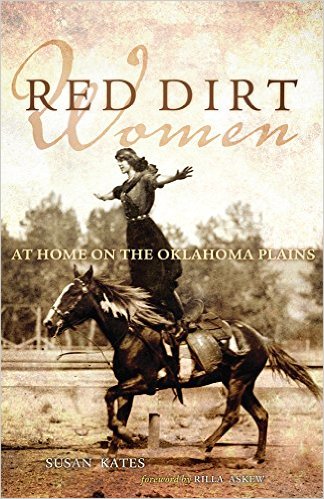
Red Dirt Women: At Home on the Oklahoma Plains by Susan Kates

The reasons so many pioneer women did not desert Oklahoma’s Dust Bowl days are the same reasons Kates was able to find an unlikely peace there, and cannot be succinctly rationalized or explained–except perhaps in this collection of sensitive, thoughtful, grounded musings.

red dirt women

Red Dirt Women is a collection of essays examining the Oklahoma plains and its people, particularly its women, by a transplant who has found home there. Susan Kates is an Ohio native, and professor at the University of Oklahoma. As she relates in these stories, her transition to a dusty otherworld was not always smooth, but over time the Oklahoma landscape and population opened up to her. One message of her collection as a whole is that this place and people are richer than the stereotypes of bonnets and cowboy hats suggest. Kates’s essays vary slightly in their form, but run toward profiles of people and culture. The women she describes include barrel racers, a Vietnamese jeweler, a hippie preschool teacher, gamblers, a birdwatcher, and roller derby players. A brief foreword by Rilla Askew recommends the journey Kates portrays within.

This is just a stub: my full review of Red Dirt Women was published in the fall issue of Concho River Review. You can subscribe or purchase a single issue by clicking that link. Or, don’t hesitate to run out to find a copy of the book itself: I recommend it.


Rating: 8 Queens.

“The Birds” by Daphne du Maurier

I came to “The Birds” by the following convoluted path: I encountered the movie Psycho in two books at once (Body Toxic and Memento Mori), and made a note that I wanted to see it. I realized I’d not seen any Hitchcock, in fact, and he so famous! (You know I’m underexposed to movies.) I looked up Hitchcock and his long list of films, and noted a few that I’d like to see (and realized I have seen one, Strangers on a Train). The Birds made my list; so I thought I’d read it, first. I got my full-text version here (with only a few typos).

"The Birds" was first published in the 1952 collection The Apple Tree. Wiki image

“The Birds” was first published in the 1952 collection The Apple Tree. Wiki image

It’s been a while since I read Rebecca, but I felt like du Maurier’s tone here was more simply and straightforwardly narrative, like there was less sense of foreboding. Nat works part-time at a farm on the English coast, and receives a pension for a wartime disability. (Which war? I’m going with the First World War.) He and his wife and two small children live just nearby. They live a simple life which is simply described; although, the very first sentence does offer a note of warning.

On December third, the wind changed overnight and it was winter.

It is on that night that the birds first attack and, well, the story grows from there.

Nat’s family is isolated and ill-prepared for an unexpected but extraordinarily powerful enemy (and in this way, actually, parallels the zombie apocalypse story concept that’s so popular just now). Their world immediately shrinks to a very small area that they hope to secure against foes so numerous as to be irresistible, and this I think is what makes it terrifying – that, and the possibility that they are alone in the larger world as well. It is stark, sudden, and total; the situation beyond Nat’s line of sight is unknown to him, and his final fate is unknown to us, which is quite unsettling. I found it effective as a short story, and so austere. Also short: and that is the challenge for the movie, which I can only guess expands generously upon this story. I look forward to it. And acknowledge du Maurier’s skill, as ever.


Rating: 7 wrens.

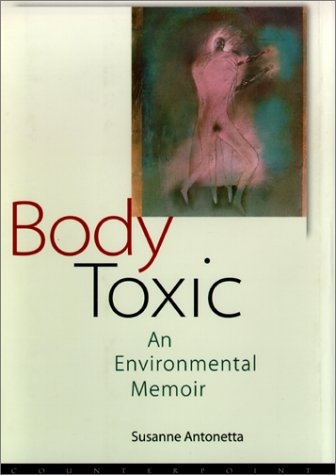
Body Toxic: An Environmental Memoir by Susanne Antonetta

Body Toxic is a striking book, both in the story it has to tell and in the manner in which it’s told. I am impressed, and challenged. It’s complicated.

body toxicSusanne Antonetta grew up in New Jersey, in the Pine Barrens region, a bogland unique in several senses: culturally isolated, and environmentally contaminated on a shocking, unimaginable scale. She and other members of her family have suffered from a list of medical complaints: asthma, endometriosis, a double uterus, growths on the liver, allergies, tumors and cysts, sterility, seizures, manic depression, various cancers; an extremely rare quadruple pregnancy that ended in miscarriage. The families she is descended from include Italian immigrants and those from Barbados, who nevertheless self-identify as English. Both sides of her family exhibit a predilection for silence, non-communication or the glossing over of undesirable details. The legacies Antonetta has inherited, then, are many and complex: cultural (in terms of countries of origin, and the culture of the New Jersey Pine Barrens, and immediate family cultures), environmental and medical (oh, the prodigious and horrifying list), and psychological (mental illness and perspective on the world). Oh, and Susanne Antonetta is not her real name, but an “alter ego”: “I’ve used five or six different pseudonyms in my life. The name I’m using now is not my name but the name of a recovered female relative, a lost woman, and as a recovered woman she’s just a skeleton that must be fleshed out by the same process of fantasizing and filling in that I resist.” Indeed, identity – multiple identities, our attempts to define ourselves and others’ attempts to define us – is another theme throughout.

And that is the complexity of this book, that so much is going on. The story is itself obviously gripping, and brimming with evocative and provocative anecdote. Indeed, Antonetta tells us, “I wrote a piece about the miscarriage and an editor sent it back, calling it ‘raw.’ He suggested I lose the death or the multiple pregnancy, or both… The poem of this body is a bad poem, trite.” The enormous irony, of course, being that she can’t “lose” the death or the multiple pregnancy, or countless other maladies, complaints. All this material aside, though, Body Toxic shines entirely for another reason too: the writing is bold and nuanced, presses and pulls back, reflecting a little the manic depression (or, these days, bipolar disorder) that also waxes and wanes throughout Antonetta’s story. It is, of course, poetic: the author is an acclaimed poet as well, under the name Suzanne Paola.

There are so many threads. Business and government disposed of chemical and radiation waste in Antonetta’s childhood beaches and bogs, through a combination of ignorant, unethical and criminal irresponsibility. (Thus Rachel Carson is named by comparison.) Antonetta’s extended family makes a series of decisions about how to live in this environment, in which they were underinformed but also trusting, stubborn, or willfully ignored the signs. (They mostly still won’t talk about the negative effects.) The family incubates a sexist tradition, favoring the eldest, male grandchild, repeatedly reminding Antonetta explicitly and implicitly of her “place.” She explores her identity as woman: “I spent a lot of my eleventh and twelfth years pining for my menstruation to begin. I can’t remember why”; and later in her inability to reproduce, and what this means for the family at large. (When her family visits relatives back in the Italian community of her father’s origin, his cousin tells him, “You have big children, but I have grandchildren.” There is an implied failure there, which Antonetta ascribes to environmental poisoning, but the family seems to ascribe to Antonetta herself.) There is the fallibility of memory, a theme so common to memoir but one I never tire of, because it – like memory – is different in each interpretation: each memoirist has something new to say. In this case, Antonetta did a lot of drugs, presumably compounding the muddiness of some of her early memories; luckily she was an avid journaler, which allows her to interrogate those documents, artifacts of a young woman she barely knows, itself an interesting and fruitful technique. And then there are all those identities. I love the idea of her father constantly referencing “my daughter” when speaking to her: she finally lets his declarations about that daughter stand, having realized that her father’s daughter is a different person from herself.

I could keep going. This was the challenge and the allure of this book, and the reason I will not quickly forget it: many threads, many layers, told in an ever-evolving voice, ebbing and flowing. The meandering structure made me work to pull it all together, but it was worth it.

I am taking a writing class from the author (under another name, that of the poet, Suzanne Paola) in the coming months, which is why I came to this book in the first place, and now I am both more excited than ever, and intimidated. I recommend Body Toxic for a reading experience to get lost in; for a richly fertile field of topics for discussion with family, book clubs, community groups; for the study of craft; and for the story it (quite disturbingly) tells about the New Jersey Pine Barrens, immigrant experiences, and one woman’s outlandish life.


Rating: 8 newspaper clippings.

Dispatches from Pluto: Lost and Found in the Mississippi Delta by Richard Grant

An occasionally bumbling Brit moves into the Mississippi Delta and delivers a romping survey of the surroundings.

dispatches from pluto

Richard Grant (Crazy River) is “a misfit Englishman with a U.S. passport and a taste for remote places,” a writer and professional peripatetic when he encounters an old plantation home in the Mississippi Delta. Later he will ask, “What sort of idiot goes on a picnic and ends up buying a house?” He then explains.

In Dispatches from Pluto: Lost and Found in the Mississippi Delta, Richard moves, with his girlfriend, from New York City to a spot even the locals find remote. They struggle with home improvements, an enormous vegetable garden and the moral problem they encounter in hunting for their meat. After some hilarious hiccups along the way, they take pleasure in living in large part off the land. Perhaps more challenging are questions of culture: the liberal newcomers are sensitive to their conservative religious neighbors, who are surely suspicious in turn. But from the beginning they manage to bond like family.

Grant narrates the next year with reflection and humor, from electoral politics and absurd local news to learning how to hunt and party like a Deltan. The myriad forms and intensities of racism and racial tension develop into a theme, as Grant pursues diverse friends and acquaintances. But he finds beauty as well as complexity, and concludes, “I had done the thing that modern life conspires against. I had fully inhabited the present without distraction.” Dispatches from Pluto offers a lovely, appreciative and entertaining tour of the strange and rich Mississippi Delta.


This review originally ran as a *starred review* in the October 27, 2015 issue of Shelf Awareness for Readers. To subscribe, click here, and you’ll receive two issues per week of book reviews and other bookish fun!


Rating: 7 armadillos.

guest review: “USFS 1919: The Ranger, the Cook, and a Hole in the Sky” by Norman Maclean, from Tassava

Tassava is back: earlier this week we heard from him about “A River Runs Through It.” Today, the final story in Maclean’s earth-shaking collection of three.

More Maclean…

Friday night – after stopping several times to put off the ending as long as possible – I finally finished Norman Maclean’s “USFS 1919: The Ranger, the Cook, and a Hole in the Sky,” the third story in the collection that my friend Julia bestowed on me a couple weeks ago.

Bill Bell Heads Back Out by R. Williams

Bill Bell Heads Back Out, by R. Williams

He says this story is “shorter than but at least as good as” the title piece, “A River Runs Through It,” which sort of blows my mind – tell us more, Tassava!! Maybe I should go back for a reread, because I remember liking the other two stories but feeling that the longer one was superior. Also, I’m curious to hear what didn’t work for you about “Logging and Pimping and ‘Your Pal, Jim,'” which I remember thinking well of – perhaps even over this one! – for its detailed descriptions of the logging lifestyle and the conflict with Jim. I’d like to better understand. And I can’t wait to hear about still more Maclean to come!

Creative Nonfiction, issue 57: Making a Living (fall 2015)

I had a dream that the next issue came and I had not yet reviewed this one. It was stressful. So, I’d better get to it…

CNF-57-Cover-WebcropThe “Making a Living”-themed issue of Creative Nonfiction is as good as ever. (You can read my review of the previous issue here.) And as ever, I have a few favorites. First of all, Ned Stuckey-French’s opening essay “Required Reading” tells of his reliance on Studs Terkel’s Working to inform his work as a union organizer: a communist college graduate, he’d faked a resume that made him look like an appropriate hire as a hospital janitor, leaving off his studies at Harvard and Brown. Terkel’s interviews with “real” working people helped the young activist place himself somewhat within a world of blue-collar workers, where he didn’t really belong. It’s an essay about disillusionment, the value of reading & writing, and yes, work.

Jennifer Niesslein explores why we write for free (some of us; many of us) in “The Price of Writing.” This is a complicated one, of course, and I think it’s important to note that the ability to write for free is a luxury afforded by some financial security. The writer she quotes as saying “I don’t need the exposure. What I need is to pay my fucking rent” (Nate Thayer, in New York magazine) has a fine point. Niesslein responds that “it can’t be about the money, at least not entirely.” I guess the implication is that if it’s going to be entirely about the money, then you need a day job.

But those are just the introductory pieces, responding to the theme in their own ways. Of the essays about making a living, I think my favorite has to be Kevin Haworth’s “Vivaldi,” which links the musicians who played in the orchestras at Auschwitz to the writer’s son, a passionate budding violinist for whom, happily, music will not be a matter of life and death. It is a powerful piece because of the high stakes of the historical thread, and the emotions in the current one, not to mention the larger issues that will continue to link the two. I also really appreciated Beth Tillman’s “Unleaving,” in which she discusses her career as an estate planning attorney, chosen because of her lifelong anxiety about death. I like the slightly different format she uses, and I empathize with her interest in end-of-life issues, and the day-to-day difficulties she relates.

I also continue to be distracted by both the story and the style of “No Exit,” by Karen Gentry. I will just share what Lee Gutkind wrote in his “What’s the Story?” editor’s column:

…Karen Gentry takes a temp job at a company that helps fired executives find new jobs. Part of her job involves giving Meyers-Briggs tests, and the story tells us a great deal about the corporate world and the way people in it can be reduced to types. But that’s also not at all what the story is about. (To tell you more would be to ruin it.)

I’ll leave it at that, as he did. It is a very fine essay.

Finally, “Tiny Truths” is always a treat: tweets using the tag #cnftweet will be considered for this ongoing contest, which features the best 140-character true stories on a revolving basis. I like that they choose not the flowery, poetic ones – that attempt too much language – but the ones that tell devastating or funny stories very, very simply.

Creative Nonfiction is always filled with greatness. You can read some of the content, or better yet, buy this issue here – or by all means consider a subscription. I don’t do much magazine reading because I’m so busy with BOOKS but this one is always worth my time, a gift in the mailbox.

Teaser Tuesdays: Memento Mori: The Dead Among Us by Paul Koudounaris

Teaser Tuesdays is a weekly bookish meme, hosted by MizB of Should Be Reading.

This year I am writing a gift review of Memento Mori, a big, beautiful coffee-table-style art book about reminders of death, or the dead, across cultures and years.

memento moriToday’s teaser sets up the concept that “our” (modern, Western) cultural approach to death is not the only one.

Leaving the village, I asked the guide if it was considered unusual to keep mummies in the home. His response was unforgettable. No, he did not find it unusual, because when he was a boy, he and his brothers slept in the same bed as the mummy of their grandfather.

The author is visiting Tana Toraja, a region in Sulawesi, Indonesia. As he’ll show, their practice of embracing the dead, preserving them and keeping them around as respected or beloved family members, is actually common in world history. Koudounaris’s informative writing is fascinating, but I admit the real feature here is his breathtaking photographs of memento mori. Stick around for my review to come around the holidays.

This quotation comes from an uncorrected advance proof and is subject to change.

musings on “A River Runs Through It” by Norman Maclean, from Tassava

In reading and rereading some pieces by and about Maclean recently, I was struck by the certainty that my buddy Tassava would love him. He told me he’d read none, so I set out to remedy that. Unsurprisingly, A River Runs Through It and Other Stories was a big hit.

Rivers Run through It

At my friend Julia’s recommendation, I read Norman Maclean’s “A River Runs through It” today – a gorgeously warm fall day that seemed perfectly suited to the action of that incredible, indelible, devastating story.

He follows with some photos that reflect his personal connection to Maclean’s writing.

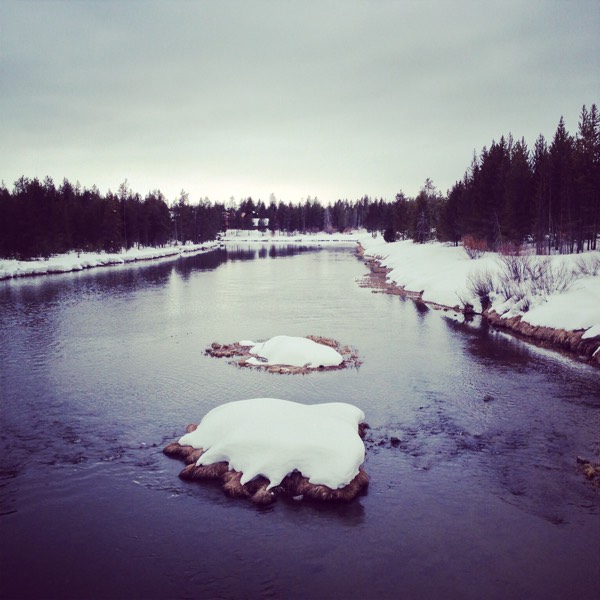
Henry's Fork in Island Park, ID (March 2014), photo by Tassava

Henry’s Fork in Island Park, ID (March 2014), photo by Tassava

Read the rest here.


Thanks, Tassava. I hope you love Young Men and Fire as much as I did, too!