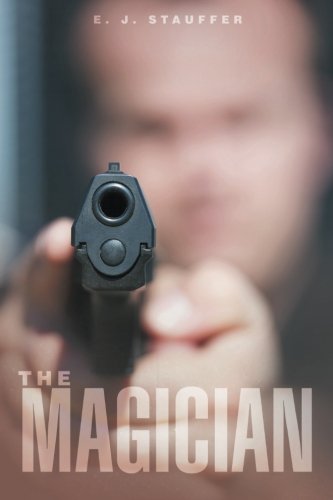
book beginnings on Friday: The Magician by E. J. Stauffer

Thanks to Rose City Reader for hosting this meme. To participate, share the first line or two of the book you are currently reading and, if you feel so moved, let us know what your first impressions were based on that first line.

magician

This weekend’s reading is a shortish thriller starring a retired assassin.

Ben Knight could have been any man in his early thirties, of average height and weight and with no outstanding features. If you were to meet him, you would most likely be unable to describe him an hour later. As he walked to the bar, he casually ran over a scenario in his mind that seemed promising at first but was not very practical.

There are a few recognizable patterns here: the nondescript and forgettable man, who then walks into a bar… but there is promise within those standards. Stay tuned.

We Were Brothers by Barry Moser

This reflective memoir of brotherhood, the evils of racism and sibling spats is as finely illustrated as it is well told, and will please diverse readers.

we were brothers

Book designer and illustrator Barry Moser and his brother, Tommy, grew up in the Tennessee country surrounding Chattanooga in the Jim Crow era. As boys, they were never close, and shared more physical conflict than anything else. As men, they grew further apart, disagreeing about everything from food to politics, as Barry renounced the racism they were raised with and Tommy did not. Only near the very end of Tommy’s life did they begin to communicate meaningfully and build the beginning of a relationship that would be cut short. We Were Brothers is Barry’s memoir of regret and remembrance.

The story of these two young men, and the times in which they lived, is plainly depicted. Moser’s narrative tone is straightforward in its observations from the perspective of small children, but the wisdom of the older man shines quietly through. For example, he wonders at his mother’s friendship with a black neighbor, who was accepted in many ways almost as family, but still expected to act differently in front of certain company; the family’s ingrained racism is inexplicable in this context, but never questioned. The young boys have a playmate who is black: he is mistreated in ways that do not resonate with the childhood Barry, but in adulthood he cannot remember that boy without tears.

After many disagreements and fistfights, the brothers go their separate ways, with Tommy joining the military while Barry went to college. Barry came to view the anti-Vietnam War movement with sympathy, reassessed his family’s racist views and left the South, while Tommy stayed. In his late 50s, Barry takes a phone call from his estranged brother that ends in racial epithets. Barry hangs up on Tommy, and their discord appears permanent. But then they begin writing letters, in which each man shares his hurts and disappointments. The first few letters, reproduced in the book, seem promising of a new era of openness, understanding and allowance for past mistakes. And then Tommy dies.

Moser’s deceptively simple story is accompanied by his own extraordinarily lovely drawings of the characters and places in question, so that the reader gains a visual glimpse into the people he evokes. We Were Brothers skillfully displays an introspective quality as the older man looks back with regret over a relationship he never had, and with appreciation for one briefly shared. Moser’s understated style only reinforces that musing tone. In the end, even as the painful brotherhood he recalls echoes the evils of a racist time and place, Moser’s calmly gentle, elegiac storytelling voice paints a picture that is loving as well as remorseful.


This review originally ran in the October 6, 2015 issue of Shelf Awareness for the Book Trade. To subscribe, click here.


Rating: 7 wished-for letters.

Two Wheels by Greg Moody

two wheelsAn unusual treat: I read this book all of my own choosing.

Two Wheels is the first in Greg Moody’s series of murder mysteries framed by the professional road bike racing world. Naturally, it is set in Europe, although the main characters are Americans. Jean-Pierre Colgan is the world’s best, and leader of the accomplished Haven team, sponsored by Haven Pharmaceuticals. He is a cocky and not entirely likeable character, which is a fine thing because he dies in the opening pages when his brand-new, high-tech American toaster explodes. In the first quirky turn, we then see Colgan enter heaven – or something like heaven – where he is greeted by Il Campionissimo, Fausto Coppi. Anquetil, on the other hand, won’t speak to him.

Next we meet the American Will Ross, a washed-up retired racer drinking himself stupid in Belgium, who inexplicably gets hired to replace Colgan on the Haven team. Will is as surprised as anyone, still more so when his ex-wife turns out to be part of the team’s management. With no love lost between them, her position only makes his hiring more confounding.

Cheryl is the team soigneur, also American and regretting the recent end of her own race career. She and Will get off to a rocky start, but she will turn out to be an ally. Tomas Delgado is team mechanic, and an old friend of Will’s: good news. The rest of the Haven squad is understandably unhappy to have Will join them, but he is just starting to get the hang of things again – find his legs, and his lost passion for the sport – when the body count begins to rise. Colgan’s death, of course, was no accident. Somebody seems to have it out for the Haven team, and Will finds himself attempting an awkward impromptu investigation, in the interest of saving his own skin. Oh yes, and there is French detective Godot, who reminds us of Columbo and seems to be imitating that American icon on purposes. There is a thread throughout the story of the tension between American and French culture: television, slang, American football versus professional cycling.

Two Wheels is not quite a cozy, as the murder weapon of choice is plastic explosives and the results are pretty bloody; but it fits into the sub-genre of mysteries defined by their framing elements. The plot of the mystery itself is enjoyable, if not especially remarkable unto itself. Will is a little slow on the uptake as investigator, and a big coincidence revealed late in the book falls a bit short of credible. As a mystery, then, Two Wheels is fine but not unique. The cycling motif is more distinctive, and adequately well done; the pain and love of the sport, the pavé of Paris-Roubaix and the climbs of La Ronde van Vlaanderen are convincing. Moody is at his best when he works with Will’s self-deprecating humor; for lyrical praise of the road I recommend Tim Krabbe’s The Rider instead; but the whole package is perfectly entertaining, often funny, and overall loveable. Obviously, Two Wheels will be most appreciated by those who share Moody’s and Will’s love for the sport. I think it could be the start of a promising series.


Rating: 6 kilometers.

Teaser Tuesdays: Norman Maclean, edited by Ron McFarland and Hugh Nichols

Teaser Tuesdays is a weekly bookish meme, hosted by MizB of Should Be Reading.

Returning to Norman Maclean has been an epiphany, all over again: his writing may well be perfect. I’m not sure I’ve read anyone better.

norman maclean

This edition in the “American Author Series” includes essays by Maclean (some developed from talks he gave), two interviews with him, and essays in appreciation and criticism of his work. There are no sizable excerpts from A River Runs Through It or its accompanying stories, because as the editors rightfully point out, we already have access to those; their goal here (among others) is to bring us Maclean works that are less accessible.

Nevertheless, I had read some of these pieces before – I could not say where – but nevertheless they are so good I am boggled every time I read them.

Today’s teaser comes from “Retrievers Good and Bad”, which is among other things a catalog of duck dogs in Maclean’s family.

The Missouri is one of the main flyways for ducks in America, and when the autumn storms begin in the north, the ducks come whistling out of Canada, hit the Missouri River, follow it to the Mississippi and coast the rest of the way to Louisiana. When they go around those big bends on the upper Missouri, the air is left hurt and shaking, and if you are a duck hunter, the place to be is behind a rock on the cliffside of the bends, because the ducks’ speed on the turns almost drives them into the cliffs and into your bun barrel. That is just where my father and I were.

Of course “the air left hurt and shaking” is an extraordinary phrase, but there is a rhythm to the whole, and an awareness of scope and scale; and then it finishes with family and immediacy. To me, this simple couple of sentences is a fine example of what Maclean can do with words.

Breakfast at Tiffany’s by Truman Capote

BreakfastatTiffanysWhere to begin? Breakfast at Tiffany’s is so classic as to seem larger-than-life. As is often the case, though, I’d never seen the movie either (that’s up next), so at least I didn’t have any of those preconceptions working against me.

I love this beginning, because it speaks to me:

I am always drawn back to places where I have lived, the houses and their neighborhoods.

The narrator is awfully like Truman Capote himself, and looks back upon a time when he was living in a brownstone apartment building in New York City. The bartender from around the corner, who was a friend or at least a regular acquaintance at that time, has asked him to visit. It’s about Holly Golightly, who was the narrator’s neighbor and another bar regular. Joe Bell, the bartender, reports that she has ostensibly been spotted in Africa, of all places. There she is reputed to have slept with a woodcarver:

“I don’t credit that part,” Joe Bell said squeamishly. “I know she had her ways, but I don’t think she’d be up to anything as much as that.”

Which is a rather excellent characterization of Joe Bell, I think.

We then flashback, as the narrator recalls his coming to know Holly, her outrageous comings and goings and relationships, and her departure – fleeing the city while out on bail, headed for Rio. He got a postcard:

Brazil was beastly but Buenos Aires the best. Not Tiffany’s, but almost.

The narrator concludes that he hopes Holly eventually found somewhere she belonged, “African hut or whatever.”

Of course that summary leaves out everything in between, which is the good stuff. I think I’ll leave that be, and if you’re like me and had never read the story, I hope you will.

Holly is a mysterious character. Her erstwhile Hollywood agent says, “She isn’t a phony because she’s a real phony. She believes all this crap she believes.” She is said to have given different versions of her past, although I think we never see her do so on-screen: she may give no version at all, but I’m not sure we ever hear her own voice offer contradictory stories. That may be one of the layers of artifice to this tale, which is obsessed with artifice. Damn; I already need to go back for a reread.

Holly is almost too fabulously odd and wild, somehow sweet and conniving at once, too fantastical, for my tastes. The narrator, now, he’s somebody I’d like to study. I love that he is off-screen (because we look through his eyes, we never see him) but also the center of everything: we see through his eyes, see what he sees. He is both undescribed and reveals himself everywhere, like Gatsby‘s Nick Carraway. Is he honest? Is he real? In what artifices is he engaged? And, of course I wonder, to what extent is he Truman Capote? (I read recently that Holly is based “by Truman’s admission” on a few women he knew – stay tuned for my review to come of Brooklyn: A Personal Memoir. It will be worth your wait.)

There’s a lot going on here; I think it’s a good candidate for a close reading. And I’m especially curious now about the movie, because the novella I just read doesn’t lend itself easily to the screen. For one thing there’s that narration question; and I think there’s actually less action, less ramping-conflict-to-denouement than movies like. I read this as a mystery story, in part: which is the real Holly? And I fear a movie would be apt to go ahead and answer that question, where Capote hasn’t. But this is all guesswork. I’ll be looking for the movie next.

Holly and our unnamed narrator are both compelling and memorable characters. I expect I’ll be wondering about them for some time now. Her story is sensational and salacious, and interesting in that regard; but I find the mystery of Holly’s inner truth (if you will) the central gem of this book. It is, of course, decorated by Capote’s language and eye for detail, as in characterization via dialog; for example, Holly goes on amusing and surreal several-page-long monologues which bring her into focus for me. But my favorite line of the book was this one:

Aprils have never meant much to me, autumns seem that season of beginning, spring; which is how I felt sitting with Holly on the railings of the boathouse porch.

And I think we’ll leave it at that.


Rating: 7 pieces of memorable speech.

book beginnings on Friday: Two Wheels by Greg Moody

Thanks to Rose City Reader for hosting this meme. To participate, share the first line or two of the book you are currently reading and, if you feel so moved, let us know what your first impressions were based on that first line.


two wheels

I am having a rare break between paid reviews, and undertaking a lighter read. Two Wheels is “a cycling murder mystery,” and a bit silly, but fun. It begins:

“It’s good to be king,” he thought. Jean-Pierre Colgan stood at the window, staring out over a dazzling Paris on a drizzling late January Sunday. Despite the rain and the gray overcast, it remained a dazzling Paris because it was a Paris that belonged to him.

I like the interplay of dazzling / drizzling.

It will not be a spoiler (because it happens in the first few pages, and is stated in the back-of-the-book blurb) to tell you that Colgan is killed in a bizarre explosion involving a high-tech American toaster. (The troubled relationship between French and American cultures – centrally in television and sports – is a theme.) So, not king for long.

Stay tuned.

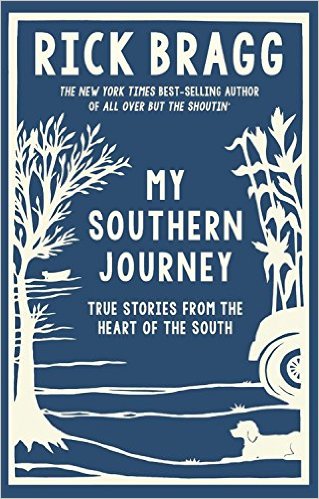
My Southern Journey: True Stories from the Heart of the South by Rick Bragg

Extraordinary, brief, true stories of the Deep South that are funny, haunting and redolent.

my southern journey

My Southern Journey: True Stories from the Heart of the South showcases the singular voice, humor and perspective of Pulitzer Prize-winner Rick Bragg (All Over but the Shoutin’), in short, entertaining stories. As he introduces it, “this book is a collection of Southern stories, but it is not a litany of pig pickins and frat parties and cutthroat beauty contests.” Rather, these are fervent, funny, heartfelt memories of places and cultures that need remembering.

Bragg shares his experience of the Deep South, from his family home in northern Alabama to Florida, Louisiana and the Alabama coast. Readers quickly become acquainted (or reacquainted) with his large and lively family, as Bragg brings immediacy and intimacy to his setting and cast of characters. His mouthwatering descriptions of the food of his homeland–centered on various forms of pork but with a heavy emphasis on Gulf Coast seafood as well–are flavorful and evocative. He occasionally claims that “I can’t write well enough to tell you how good it was,” a risky writerly trick that Bragg easily pulls off. He considers the red dirt of northeastern Alabama as both physical and symbolic. Bragg’s tone is self-effacing and often hilarious, which belies his ability to approach serious issues, like his treatment of overfishing and the Deepwater oil spill.

In exploring family, a sense of place or home, and the distinctive details of Southern food and culture, Bragg exhibits an exquisitely nuanced, clever voice, partly disguised by a down-home accent. Readers will laugh, and cry, and yearn to head South.


This review originally ran in the September 25, 2015 issue of Shelf Awareness for Readers. To subscribe, click here, and you’ll receive two issues per week of book reviews and other bookish fun!


Rating: 9 paper bags of cracklin’s.

Mot by Sarah Einstein

A brief, quietly powerful memoir of the author’s friendship with a homeless, mentally ill veteran.

mot

Sarah Einstein had worked with the homeless for all of her adult life when she met Mot. After being assaulted at work (at a drop-in center for adults with mental illness), Einstein left her job. Her marriage, just a year old, was faltering. In Mot, a gentle veteran who had lived outdoors for many years, she found a mildness that appealed to her. However, Mot also lived with a slough of harpies, dead ancestors, deities and villains in his head.

In her memoir, Mot, Einstein reflects on this relationship, the trips she took from her home in West Virginia to visit Mot in Amarillo and Oklahoma City, and the time she was able to bring him home with her. In a deceptively simple narrative, readers learn about the pantheon that lives in Mot’s head, a mythology Einstein is only sometimes able to follow. She relates the difficulties of her own marriage, and questions herself as she moves away from direct service. She doesn’t claim to have the answers, although in her epilogue she exhorts her readers to find ways to contribute. Mot is not, however, about helping the homeless at its center: it is about one man’s strengths, his kindness and skills (fixing up old cars, pruning apple trees, building things), and his difficulties in separating reality from those he calls the “Big Guys Upstairs.”

In her lovely, unadorned and unassuming storytelling, it becomes clear that Einstein is herself flawed and troubled. But the glimpse into Mot’s individuality and a rare friendship is illuminating and singular.


This review originally ran in the September 25, 2015 issue of Shelf Awareness for Readers. To subscribe, click here, and you’ll receive two issues per week of book reviews and other bookish fun!


Rating: 7 summer thermostats.

A is for Arsenic: The Poisons of Agatha Christie by Kathryn Harkup

A comprehensible survey of poisons and a celebration of the Queen of Crime.

a is for arsenic

Chemist Kathryn Harkup combines her scientific expertise and love of a good mystery in her first book, A Is for Arsenic: The Poisons of Agatha Christie. B is for belladonna, and C is for cyanide, as Harkup works her way through 14 mysteries and 14 discrete poisons, with meticulous and informed explanations of the science behind each toxin’s effects (an appendix contains chemical structures). Each chapter also details famous real-life cases involving these deadly substances, including those that might have inspired–or been inspired by–Christie’s work, and analyses of how accurately the Queen of Crime represented the science within her stories. Generally the renowned writer does very well: as Harkup explains, Christie worked as a volunteer nurse in World War I and showed such aptitude that she was encouraged to continue her education and training as a pharmacist. By the Second World War, her work as a dispenser left her ample time to pursue her other profession, writing bestselling stories and novels.

Harkup’s writing style is accessible to the lay reader, although she does become technical when discussing poisons’ actions on the body, with full detail at the cellular level. She keeps these explanations short, however, and general readers will be able to follow along. For Christie fans, the review of famous mysteries is great fun, and the few spoilers come with ample warning. A Is for Arsenic is both informative science and a spur to read or reread the most popular mysteries ever written.


This review originally ran in the September 25, 2015 issue of Shelf Awareness for Readers. To subscribe, click here, and you’ll receive two issues per week of book reviews and other bookish fun!


Rating: 6 grains.

Maximum Shelf author interview: Paul R. Ehrlich

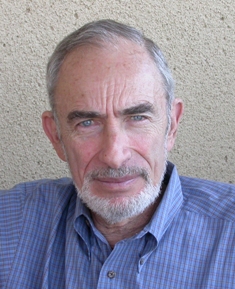
Following Thursday’s review of The Annihilation of Nature, here’s Paul Ehrlich: Stories of Extinction.


Paul R. Ehrlich is the Bing Professor of Population Studies and the president of the Center for Conservation Biology at Stanford University. Among his more than 40 books are The Population Bomb and Human Natures: Genes, Cultures, and the Human Prospect. He is one of three authors of The Annihilation of Nature, along with Gerardo Ceballos, one of the world’s leading ecologists and a professor at the Institute of Ecology at National Autonomous University of Mexico (UNAM), and Anne H. Ehrlich, a senior research scientist emeritus at Stanford University. Anne Ehrlich is the coauthor of Extinction: The Causes and Consequences of the Disappearance of Species and The Dominant Animal: Human Evolution and the Environment. Ceballos is the author of Mammals of Mexico and Diversity of Mexican Fauna.
ehrlich
What is meant in your subtitle by the phrase “human extinction”?

There’s not the slightest question in anybody’s mind of why we’re facing an extinction crisis, both of populations and of species, and that’s human activities. It’s not extinction of humans, it’s humans forcing birds and mammals to extinction.

How does the three-author cooperative process work?

First of all, Gerardo’s first language is Spanish, mine is bad English and Anne’s is excellent English. Usually Gerardo, or I, or Anne will sketch out a chapter, depending on where our expertise lies. I will edit it the first time around and ask Gerardo to explain some things–his English is excellent, by the way; no one has any trouble understanding him or understanding what he writes–but it’s not colloquial enough in places. Then Anne goes through and replaces all my split infinitives and stuff like that. It’s really an ongoing process. Gerardo is more in charge of the photographs in this particular book–he’s a wonderful photographer on his own, he’s published many books of photographs. We all have students and others who’ve helped us. None of us publishes anything in areas that are even slightly controversial without having a lot of colleagues go over it, and of course we had that done for this book, too.

Anne Ehrlich

Anne Ehrlich


The cooperative writing process is three equal parts. The effort is equal, but we all have somewhat different talents and do somewhat different things.

Who is your target audience for this book?

Our target audience is intelligent people who read books. It’s not highly technical, but it’s not dumbed down in any way. We hope to make it both an attractive book and one that’s good reading. The whole idea is to introduce people to what we’re losing. The average person on Wall Street has never seen a natural ecosystem or, say, the animals on the plains of Africa, and can’t really picture what’s going on. We hope to get people to picture what we’re losing and get them to do something about it.

What does “climate disruption” mean, and why use that phrase rather than the more familiar “climate change”?

Gerardo Ceballos

Gerardo Ceballos


We adopted that phrase from the one used by Obama’s science adviser John Holdren, who’s a close friend of ours. He pointed out that it isn’t just warming–that we are changing the entire climate. Things like the frequency of hideous storms are going to increase, and not every place may get warmer: some places may get cooler. “Disruption” is more accurate than “global warming,” and even “climate change” doesn’t carry the implication of speed. We know the climate has always changed, and most people, certainly the people who will read this book, would know that there were ice ages and things like that. So one of the big issues that’s highlighted by using “climate disruption” is that the change is rapid. Getting older does not disrupt your life, but if you get married or divorced, that’s disruptive. That’s the main reason for using “disruption.”

Presumably many endangered species of birds and mammals didn’t fit into this book. How did you choose which species to discuss?

We chose the ones, first of all, that we know best. One of the problems, covered by a paper I was just involved in that got a lot of publicity, is trying to figure out whether or not we can prove beyond a shadow of a doubt that we’re experiencing a mass extinction. One issue is that there are not enough biologists to track all the species we think may be endangered or, in fact, gone. For this book we wanted a good variety of birds and mammals–the organisms most people relate to and certainly the ones we know most about in these terms. For instance, I’ve spent a lot of my life working with butterflies, but there are very few butterfly populations where we know enough about what’s happening to say anything statistical about the rate of extinction. But birds and mammals we know. We know which ones we know interesting stories about, and there are a wide variety of them in a wide variety of circumstances. So this isn’t an attempt to analyze what’s happening to all birds and mammals, but rather to take a bunch of interesting examples and tie them into why it really counts.

What about animal species beyond birds and mammals, and extending into plants–what is the scope of mass extinction relative to the story told in your book?

The scope of the mass extinction is vast, but population extinctions are the absolutely critical thing. There are a whole series of reasons not to wipe out the only other living things we know about in the universe: one, of course, is just that they’re interesting, fascinating and beautiful, but many people would consider it more important that they’re working parts of our life-support systems. The importance of population extinctions is easily illustrated. If we could somehow miraculously preserve one population of every species on the planet, just one, permanently, we would lose no species diversity–but we’d all be dead in a few weeks, because we utterly depend on having lots of populations to provide us with what are called ecosystem or natural services. For example, honeybees are involved in producing something like $18 billion of agricultural produce in the United States–critical to giving us a much more varied and nutritious diet. If they all died out, we’d be in deep trouble, even though they could persist in, say, Italy and Africa and we would not have lost a species, but we would have lost a vast number of populations. And population extinctions necessarily go on at a much higher rate than species extinctions, because no species goes extinct until every one of its populations has been driven to extinction.

The stories that we tell in this book make up maybe 5% of the relatively well-known stories of species extinctions. But there are many more: for instance, we didn’t look at most of the so-called threatened species, the ones that the International Union of Conservation of Nature considers to be in great danger but they’re not sure exactly how much. In other words, we’ve taken the ones where we know a lot about the endangerment, we know a lot about the distribution, and where they have really interesting stories. If you look at mouse lemurs in Madagascar, we’ve discovered that there are many more different ones than people thought 25 years ago. I think it went from something like two species to 12. That also means that it added substantial endangerment. If there were only two species, the chances of losing either one were relatively small. When we discover there are really 12, all of a sudden there’s more endangerment. But the danger there is the same as the danger everywhere–destruction of habitat is the main thing–so it wouldn’t be interesting to tell the stories of 12 mouse lemurs. We felt it was better to find the most interesting stories to tell.


This interview originally ran on September 23, 2015 as a Shelf Awareness special issue. To subscribe, click here, and you’ll receive two issues per week of book reviews and other bookish fun!


Author photos: Gerardo Ceballos courtesy Instituto de Ecología, UNAM; Anne Ehrlich by Anne Hammersky; Paul Ehrlich courtesy of the author.