






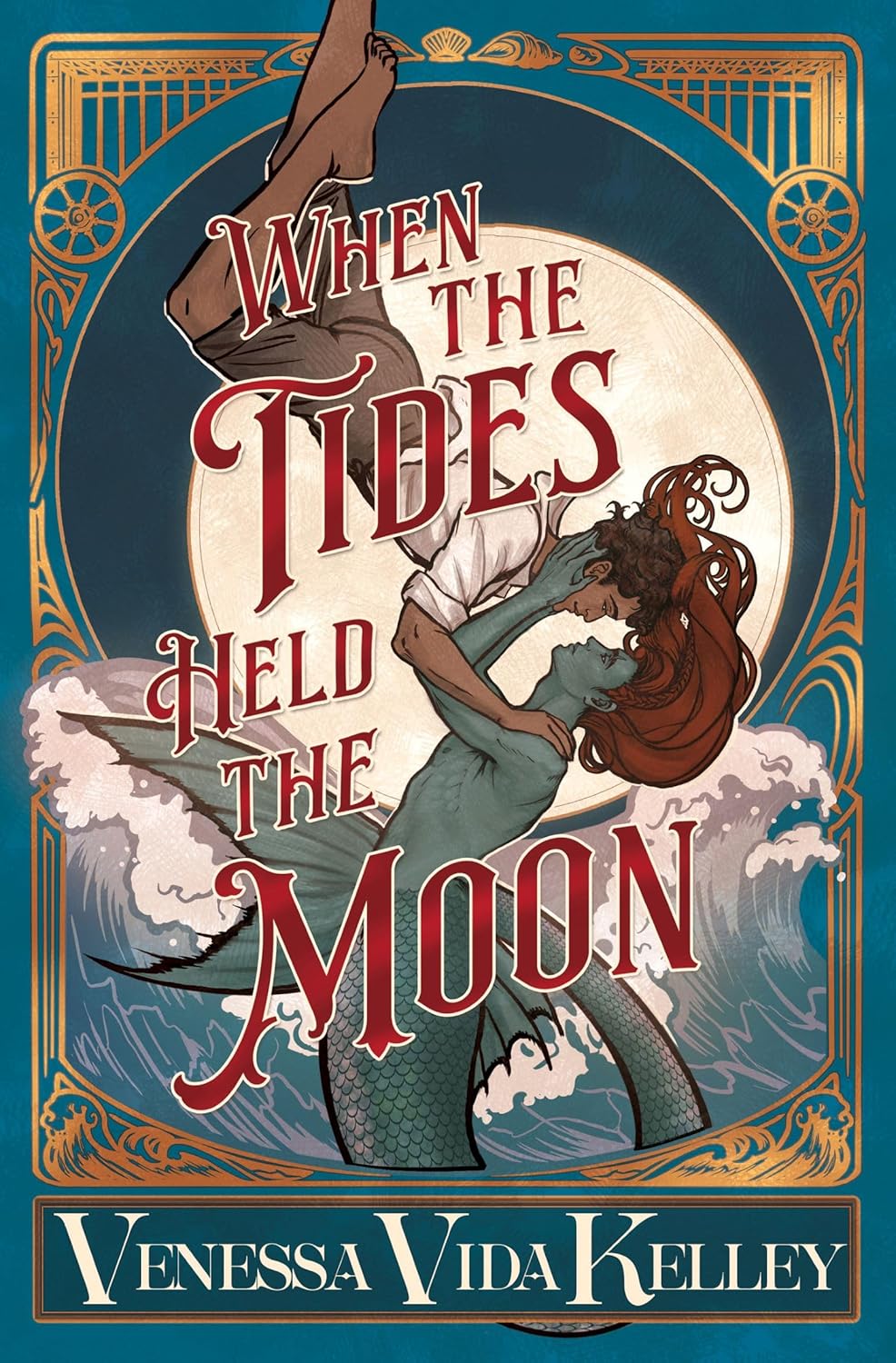
 A lovely historical speculative novel starring a young man between worlds: a Puerto Rican immigrant to early-20th century New York City who is also queer. When he encounters a merman, everything imaginable and unimaginable will change for Benny (or Benigno). In an author’s note, Kelley observes that mermaid tales tend to address hybridity, and Benny does indeed walk those liminal spaces.
We meet Benny in an ironworks in Brooklyn’s Red Hook, where he is gifted in his work, but bullied and harassed and undervalued. From here he is sort of rescued (by injury) into a literal sideshow act, via employment by one of Coney Island’s entrepreneurs. He joins a built family of other folks on the margins: immigrants and those deemed ‘freaks’ for physical appearance or the lives they’ve chosen or been compelled to pursue. And he is tasked with caring for a creature he helped, inadvertently, to imprison. When the merman refuses to give Benny his name (“humanity has taken enough from me”), Benny calls him Río. Benny lives and dines with the cast, who are as colorful a bunch as you’d imagine; he begins to feel a closeness he’s always yearned for, but still does not entirely trust. He even meets for the first time men who love men – and resists the recognition they offer him, at least at first. And at the same time, he secretly spends late nights with Río. Something is developing there that might give him everything, or cost him everything. Or both.
When the Tides Held the Moon is a story about many things. It definitely contains romance, tinted with the fantasy element of a merman: his scintillating skin, his textures, his beautiful voice, his tantalizing spiritual connection with the Currents. It contains a proper plot problem to overcome: for Benny to do the right thing by Río (something he wants for many reasons, including justice as well as his more personal feelings) he has to release him. If you love something, let it go – but Benny has never experienced love before, and the conundrum he faces is abject and existential. As well as logistical: the evil showmaster who has imprisoned Río and, in some sense, Benny and all the cast, will not let his prize exhibit go easily. And, as the author’s note outlines with clarity, this novel is also about marginalized people and that hybridity that Río represents. Kelley writes, “it is my deepest hope that readers will close this book with, if not an appreciation for the struggles of marginalized New Yorkers during the early 1900s, then empathy for those past and present who stride the line between identities and whose quest for freedom demands riding a different wave.” It’s a lovely book about people who offer a number of ways to live, who have built a place for themselves in an unwelcoming world, and about love. I had a wonderful time.
Filed under: book reviews | Tagged: fantasy, historical fiction, LGBTQ, romance, speculative fiction |


Leave a Reply