






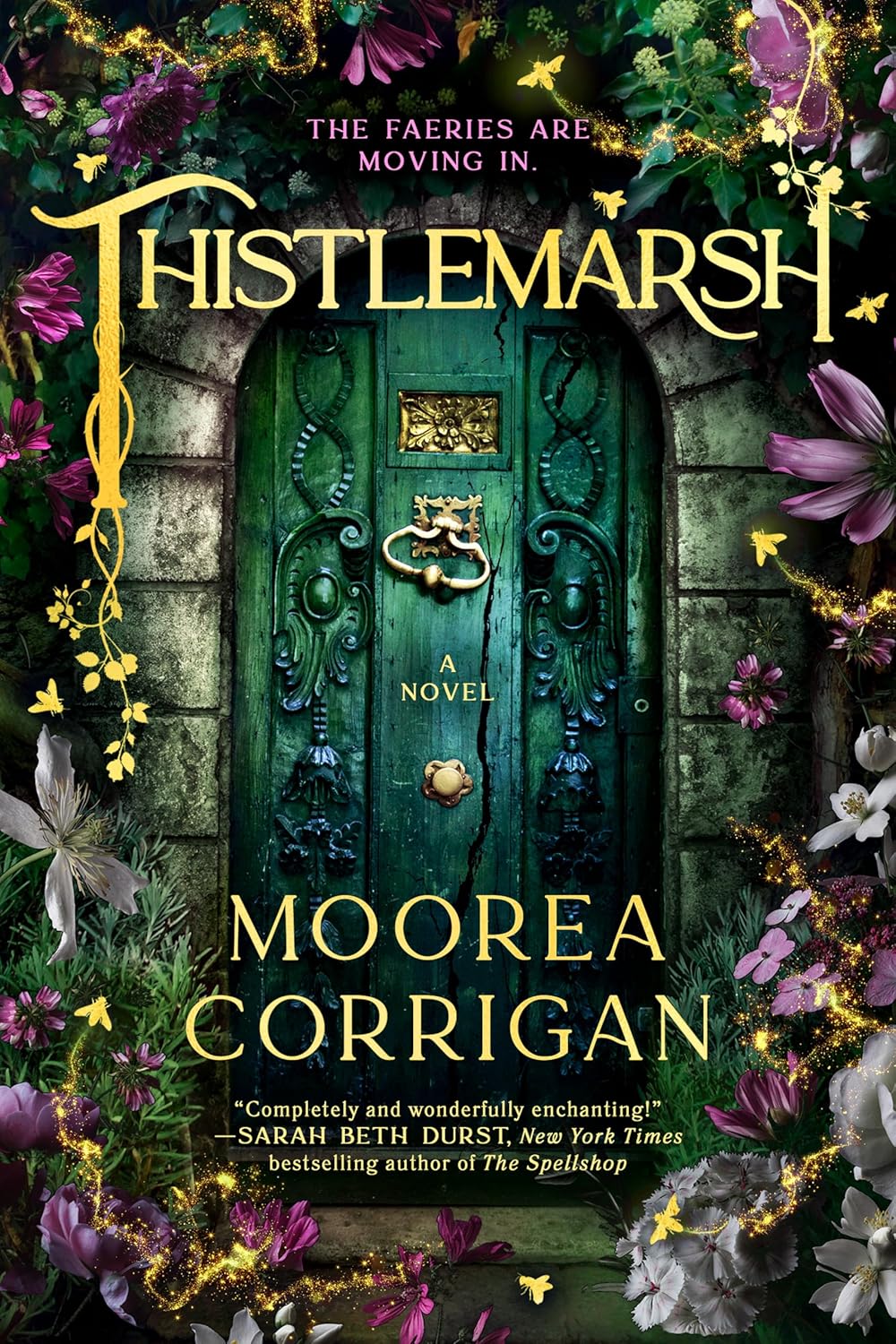
 This was a compelling, engrossing read – not always quite a pleasure, because despite the presence of faeries, there was a lot of darkness to this tale. But it was absolutely rewarding.
Thistlemarch is historical fiction, set just at the end of World War I in rural England. We meet Mouse on a train: after serving as a nurse in France, she is on her way home to the estate called Thistlemarch, outside the village of Tithe. Her dear cousin Bertie was killed at the Somme. Her dear brother Roger lies in a hospital bed, raving, shouting, rarely recognizing her. Her uncle, holder of the estate, has also died. Mouse was always looked down upon by the proper, lordly wing of the family: her mother had the temerity to marry an Irish gardener, and so the girl who would be called Mouse lived in a room that would be called the Matchbox, tucked away. By a twist of fate, it falls to Mouse, disregarded niece, to inherit – but only on a seemingly impossible condition.
Faeries disappeared more than one hundred years ago; much as Mouse has always loved the tales, she has put away her childish hope of ever meeting the magical beings who once blessed the now dilapidated Thistlemarch. So when a High Fae appears to her, she feels disbelief, and distrust. Like her mother, Mouse has studied the old stories, and she knows that a bargain with a faerie is not to be taken lightly. But she needs this inheritance to pay for Roger’s care – and so Mouse makes a deal.
As the story unfolds, the falling-down estate takes on a bit of a life of its own, rebuilt and falling down again. The faerie called Thornwood seems to be allying himself with Mouse, but she’s not sure she can trust him. A hateful, grasping cousin, a longtime friend in the village vicar, a nasty lawyer, a loyal gardener, and an enigmatic faerie servant surround our protagonist, who will encounter a dragon, a dog, and a stone mermaid along the way. Faeries and magic, yes, but also class differences, penury, and various prejudices, shellshock and a nation haunted by war. It’s a riveting combination, and for all its twists, finishes with something like a fairy tale ending. I was entranced, and would read more from debut author Corrigan.
Filed under: book reviews | Tagged: fairies, family, historical fiction, romance |


Leave a comment