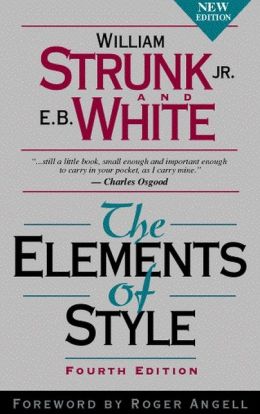
The Elements of Style (fourth edition) by William Strunk and E.B. White

Who can confidently say what ignites the mind? Who knows why certain notes in music are capable of stirring the listener deeply, though the same notes slightly rearranged are impotent? These are high mysteries, and this chapter is a mystery story, thinly disguised.
styleI am fairly confident I was asked to use this book in school at some point; but I am quite sure I never read it cover to cover before this. And I’m afraid I can’t recall where I saw it recommended. But I’m very glad I checked it out from my local library, and I think I will go ahead and buy a copy too.

I read the fourth edition, which has four authors. Roger Angell writes the foreword, describing his stepfather E.B. White’s working style. White wrote the introduction for the 1979 edition. The original text was by William Strunk, unaccompanied; Strunk’s student White reworked his professor’s text after the latter’s death, adding a few paragraphs and updating some of the references. An afterword by Charles Osgood wraps things up in the style of the whole book and his three colleagues: brief, succinct, and sparkling.

This is a shockingly enjoyable little book considering that it is “just” a style guide that offers advice about… the overuse of adjectives (especially in dialog), passive voice, brevity, clarity, and the joining of dependent and independent clauses. The Strunk-and-White text is what it exhorts us to be: brief, clear, humble but stylish. I was absolutely charmed throughout.

This is a very small book. Even with its four authors in this edition, it requires the glossary and index to clear 100 pages, and is pocket-sized. However, even being so tiny, it was the first book I’ve read in a long time that required two separate quarter-page bookmarks that I filled with my notes. Thus this long review. Strunk would almost certainly wish for greater brevity, but I’ve included lots of quotations for you to enjoy.

The Elements of Style got me reflecting. I think it’s beautiful that there is such a thing as style in writing; I think it’s lovely that a place like Shelf Awareness needs and has a “house style,” a set of decisions made in advance and for consistency about how we will all write (or, more so, be edited). I love that writing allows for variation within the realm of strict correctness, and that even though this complicates things it also allows for added artistry in what is truly the art of communication.

I thought of my high school English teacher more than once as Strunk discussed style, vs. the clear-cut rules of grammar. Mrs. Smith agreed that we should all learn the (rather more boring) proper, correct, and formal way to write before we began experimenting; the breaking of rules is for the gifted who have earned that right by putting in their time with less exciting work. I will never forget her fine example (and think of her every time I encounter it): Hemingway writes in The Sun Also Rises that Robert Cohn “was married by” the first woman who came along, and this use of the passive voice is both purposeful and effective. Until her students become the next Hemingway, however, Mrs. Smith instructed that we should strive for active over passive verbs. This is the same principle with which Strunk writes,

“But,” you may ask, “what if it comes natural to me to experiment rather than conform? What if I am a pioneer, or even a genius?” Answer: then be one. But do not forget that what may seem like pioneering may be merely evasion, or laziness – the disinclination to submit to discipline. Writing good standard English is no cinch, and before you have managed it you will have encountered enough rough country to satisfy even the most adventurous spirit.

Let me continue: I marked no end of droll phrasings and thought I’d share a few.

White shares a memory of his Professor Strunk:

He felt it was worse to be irresolute than to be wrong. I remember a day in class when he leaned far forward, in his characteristic pose – the pose of a man about to impart a secret – and croaked, “If you don’t know how to pronounce a word, say it loud! If you don’t know how to pronounce a word, say it loud!”

(Strunk was so economical with his words, White tells us, that he had to re-lengthen his speech by repetitions.)

Flammable. An oddity, chiefly useful in saving lives. The common word meaning “combustible” is inflammable. But some people are thrown off by the in- and think inflammable means “not combustible.” For this reason, trucks carrying gasoline or explosives are now marked FLAMMABLE. Unless you are operating such a truck and hence are concerned with the safety of children and illiterates, use inflammable.

Or, on the question of shall vs. will:

A swimmer in distress cries, “I shall drown; no one will save me!” A suicide puts it the other way: “I will drown; no one shall save me!” In relaxed speech, however, the words shall and will are seldom used precisely; our ear guides us or fails to guide us, as the case may be, and we are quite likely to drown when we want to survive and survive when we want to drown.

This is not the only time he considers grammar a matter of life and death.

Muddiness is not merely a disturber of prose, it is also a destroyer of life, of hope: death on the highway caused by a badly worded road sign, heartbreak among lovers caused by a misplaced phrase in a well-intentioned letter, anguish of a traveler expected to be met at a railroad station and not being met because of a slipshod telegram. Think of the tragedies that are rooted in ambiguity and be clear!

The tragedies, indeed! I love the tone. And how lovely are these thoughts about the art of writing in general:

Writing is, for most, laborious and slow. The mind travels faster than the pen; consequently, writing becomes a question of learning to make occasional wing shots, bringing down the bird of thought as it flashes by.

Or,

Writing is one way to go about thinking, and the practice and habit of writing not only drain the mind but supply it, too.

I think I will need to put that up on the bulletin board over my desk.

Some of Strunk’s usage preferences are either not ones I share, or are dated in their particulars and thus less helpful. But the bulk of the advice he gives is both correct and delightfully expressed. Also, it bears noting that his tips are meant to apply to more formal or academic writing; he repeatedly allows that certain forms (a love letter is one example he uses more than once, which is again charming) will take different usage.

As entertaining as The Elements of Style is to read, its utility is alive and well: I found a revelation in rule #11 on page 75, regarding verbs and adverbs in dialog. Something that has always bothered me in my reading, but that I couldn’t have articulated, has been made plain to me and now I will be able to criticize more clearly when I encounter it (and, I hope, avoid it in my own writing). Thank you, Professor Strunk.


Rating: 8 split infinitives.

“How to Write Like a Mother#^@%*&” by Elissa Bassist & Cheryl Strayed

I have not read Cheryl Strayed’s Wild. But I did take seriously the recommendation of this piece that I found at creativenonfiction.org, and yes, I own this mug.

9

It would take me almost as many words to summarize and praise this article as are included in the article, so I shall exercise restraint and say: go read this now; it is excellent. Thank you, Cheryl & E-Bass.

coffee helps me read and write

Realizing the obvious: as a creative person, I have good days and bad ones. When I get discouraged, I get very discouraged, and feel unable to do the writing & editing I know I need to do; I want to give it all up. As my friend Liz says, though, some days we just need to lie fallow (and give ourselves permission to do so).

I don’t want to dwell on that negative side today, though: I want to talk about the other days, the hyperproductive ones, when I can write 3 book reviews, do an author interview, schedule 4 blog posts and finish an essay I’d been working on. That happens sometimes, too! And you know what those productive days have in common? Coffee.

Shelf Awareness shared with me the other day an article called 12 Literary Coffee Mugs All Book Nerds Need in Their Lives. I am tickled by the concept, naturally. Go ahead, click the link, and see the bookish, readerly coffee mugs on offer there. I have made my own collection, though, and naturally think mine are a better set of choices: readerly and writerly as well.

a nod to the librarian stereotype

a nod to the librarian stereotype

a little humor - and truth

a little humor – and truth

a Sugar reference

a Sugar reference

often, but falsely, attributed to Hemingway: never mind, it sounds like him

a gift from my parents, from the Library of Congress

a gift from my parents, from the Library of Congress

What about you, dear readers? Coffee or tea? In what mug? Does it matter?

class: Foundations of Creative Nonfiction – B

I took a class from Creative Nonfiction this spring, for 10 weeks from January through March. Foundations of Creative Nonfiction is taught in two sections, A and B, and the difference is in the readings assigned, so that neither is a prereq; rather, it’s basically an opportunity to expand into 20 weeks by taking both, and get more reading-and-discussing out of it. Also, presumably, different instructors. My instructor for this section was Meghan O’Gieblyn.

Let’s see, how to begin? Like many online classes, this one involved reading 3-5 short pieces per week and commenting on them in discussion forums. Meghan posted her written lectures (3-5 pages) for each week, as well as two examples of the writing form in question, and often a few more optional readings. My classmates and I were to post a comment on the week’s readings, and reply to one another’s comments as well. Then there were writing assignments: short, optional ones, and three longer (3,500 word) pieces. These, too, the instructor as well as my classmates responded to.

Now, I got my master’s degree almost entirely through this very format. The difference here is that my classmates and I are here even more by choice: we paid for this class, and it gets us nowhere in terms of a degree or class credit; it’s purely for personal enrichment. (If any of my classmates got a pay raise or a new job out of this, I didn’t hear of it.) If anything, one might expect the discussion to be slightly elevated over my (rather disappointing) graduate school experience. And… I guess it was, a little, but the drawbacks were the same. For one thing, I think online discussions are unavoidably more stilted than live, in-person ones. There’s little chance to speak off the cuff in an online forum; there’s a chance for editing and deleting. Some classmates cited technical difficulties interrupting their comments, too. It’s always rewarding to hear from other human beings about anything you’re reading, writing, or otherwise interesting, so that benefit was present. But I remain unsold on the digital format: if real people are available, in person, in real life, I think they will always be preferable.

I did get a lot out of this class, of course. I got a lot of readings and lectures (all of which I’ve saved for future reference). I got feedback on several short and the three long writing pieces I did. I gained only a little help with the concept of getting my work properly published; but that still feels awfully remote anyway. And to be fair, if it felt closer, the opportunity was present to ask those questions.

Instructor Meghan was excellent: responsive, kind, and full of specific, detailed criticism and advice. Overall, the class may not have been utterly world-changing, but it was worth the time, although I think an in-person class would be better. And if you consider CNF for an online class like this, I’d highly recommend Meghan.

Bird by Bird by Anne Lamott

bird by birdI have known of this book for some time – I first remember hearing of it in Natalie Goldberg’s Writing Down the Bones – and recently yet another reference made me finally go looking for a copy of my own. I’m so glad I did. While Writing Down the Bones had some good writing tips, and Keep It Real provided good nuts and bolts, this was a great combination of writing tips, and nuts and bolts, and also heartfelt and encouraging advice about (as the subtitle says) writing and life.

Lamott’s conversational and even confessional tone makes me feel like we are friends – me and her, personally. She tells me confidentially some of the same things she tells her students in the writing classes she teaches; but it feels like I get a more intimate version. Her description of life as a writer is honest; she pulls no punches about publishing and the woes of full-time writing – well, what would I know about it, but at least I believe she has pulled no punches; that’s the impression her tone gives.

We get some a glimpse of Lamott’s life: her upbringing in a joyfully readerly household; her beloved father, the writer; her long and painful journey towards publication, and her discovery that it doesn’t solve the problems of the world or even of her world; her experiences as a single mother. We get to know her good friends. Lamott is hilarious and imaginative as well as kind. I love her; I want to go have a glass of wine with her right now.

As often when I love something, I find myself reduced to listing my favorite lines.

All you can give us is what life is about from your point of view. You are not going to be able to give us the plans to the submarine. Life is not a submarine. There are no plans.

Wonderful. Not a submarine. She is full of these excellent, inventive lines. This is why she is a writer.

Writing is about hypnotizing yourself into believing in yourself, getting some work done, then unhypnotizing yourself and going over the material coldly.

…And, I would add, repeatedly. When I am doing my best work, this is exactly what happens. I don’t know if I’m hypnotized, precisely, but for me the analogy is vomiting: when it’s going well, I just sit down and braaaaaaap it all just… comes out. And later I can go over it and clean it up. But what I needed to get out, I got out all in one go.

Writers tend to be so paranoid about talking about their work because no one, including us, really understands how it works. But it can help a great deal if you have someone you can call when you need a pep talk, someone you have learned to trust, someone who is honest and generous and who won’t jinx you. When you’re feeling low, you don’t want anyone even to joke that you may be in some kind of astrological strike zone where you’ll be for the next seven years. On a bad day you also don’t need a lot of advice. You just need a little empathy and affirmation. You need to feel once again that other people have confidence in you.

Again, this is advice not only for writing but for life. I think I am going to send this on to everyone I might ever ask for a pep talk, so they can be sure to get it right.

Her writing advice is decidedly geared toward fiction, and I am an aspiring writer of nonfiction. But I think there is still a great deal to be gained here. This is my favorite book of writing-and-life advice to date.


Rating: 9 birds, if that’s not too obvious.

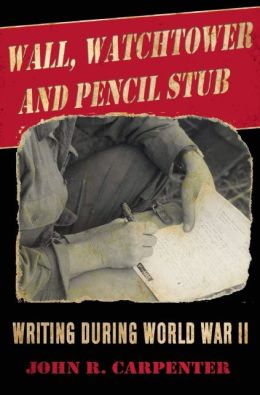
did not finish: Wall, Watchtower and Pencil Stub: Writing During World War II by John R. Carpenter

When is it fair to criticize a galley for its mistakes?

Full disclosure: I was sent a pre-publication galley copy of this book. The errors I am about to complain about may be corrected in the final published product. However, I am doubtful. This is a well-finished, glossy-covered galley, and my observation is that such copies rarely undergo massive revamps, which is what this one would need to satisfy my complaints. [Even when I have received unfinished copies, including typed manuscripts on loose pages, I’ve found far fewer errors than this.] I have found the odd typo in ARCs and galleys I’ve been sent, or the odd note clearly intended for someone in the editorial process (“need caption here” or “photo credit?”). What I see here looks to me like more of a consistent stylistic choice. Still, it’s only fair to point out that the final publication will be different from this one in some ways. I definitely like the concept, so I hope corrections are made… many of them.


pencil stubI read through the preamble, the preface, and chapter 1, which concludes on page 15, and I couldn’t take any more. I found distracting multiple uses of a comma to connect two independent clauses, as in:

The outcome is no longer in doubt, the names of the victors and defeated are well-known.

Correct grammar would demand either a semicolon or a conjunction to connect these two clauses, or alternatively, they could be two sentences entirely.

The outcome is no longer in doubt; the names of the victors and defeated are well-known.

The outcome is no longer in doubt, because the names of the victors and defeated are well-known.

The outcome is no longer in doubt. The names of the victors and defeated are well-known.

A few more:

Hillary was a pilot, in the first chapters of the book he presents himself as arrogant and immature.

Hillary did not survive the war – he died in January 1943 – but he was unequivocal, his whole act of writing and his book were an act of communication with his readers: a call to end delusions.

Again, I read 15 pages, and these are just a few examples I chose out of many.

Other usage oddities:

It could have ended entirely different.

(Differently, I’m sure he means…)

The realization by a civilian he could be treated as an insentient thing often came suddenly.

This is the only one that strikes me as possibly a simple mistake, the omission of a word that would have made the sentence flow easily and understandably, so the reader could pay attention to content and put away her red pen.

I feel like I read this concept somewhere, or maybe I made it up, but it seems a good rule of thumb to me that a galley should not be judged negatively on the basis of a few errors throughout, that one assumes will be corrected in final publication. However, at the point where those errors are prolific enough to be distracting, they must be addressed. After all, publishers send out galleys to promote the upcoming book, don’t they? It would seem to be very counter to that cause to send out a copy so full of errors that I can no longer pay attention to the purpose of the book. That was the case here, and I couldn’t continue.

For those interested in the quite attractive topic of “writing during WWII,” you might still want to check out the final version of this book. But maybe browse its pages first to see if this consistent misuse of commas is corrected. Or maybe you’re less sensitive than I am…

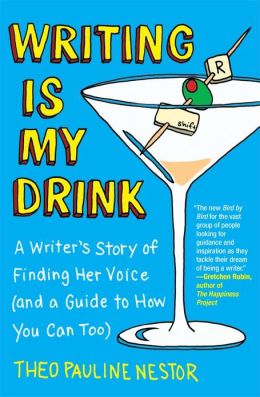
Writing Is My Drink: A Writer’s Story of Finding Her Voice (and a Guide to How You Can Too) by Theo Pauline Nestor

A writer’s journey, written as a guide for aspiring and developing writers.

writingdrink

Theo Pauline Nestor always wanted to be a writer. But she struggled to find confidence and her writing voice for many years, through two kids and several career changes, before publishing How to Sleep Alone in a King-Size Bed, a memoir about her divorce and its aftermath. In Writing Is My Drink, Nestor returns to memoir with tales from her childhood, formative years and journey toward publication, and confessional forays into her parents’ alcoholism and her more embarrassing moments as an aspiring writer. Readers and writers will appreciate nods to Terry Tempest Williams, Natalie Goldberg and Frank McCourt, whom Nestor temporarily confused with her father.

Writing Is My Drink is also part instruction guide. Each chapter finishes with a short “Try This” piece that offers writing exercises, lists to make and concepts to keep in mind. She coaches when to push oneself and when to be forgiving, and shares the sad news that rejection and bad writing are integral parts of publication and good writing. Now an instructor in memoir writing, Nestor is well placed to offer such advice, and despite her convoluted journey–or perhaps because of it–she has a great deal of wisdom to share with her students.

Writing Is My Drink is by turns instructive, funny, poignant and deeply personal. Nestor’s voice is informal and occasionally self-deprecating, but one of the central lessons she has learned and wants to share is that of trusting oneself. Her story will be an inspiration to readers who seek self-expression.


This review originally ran in the December 27, 2013 issue of Shelf Awareness for Readers. To subscribe, click here, and you’ll receive two issues per week of book reviews and other bookish fun!


Rating: 7 stories told sitting on a barstool.

art and dirt

[I recently read Theo Pauline Nestor’s Writing Is My Drink, but my review won’t be published at Shelf Awareness for another week or two.]

I remember from Natalie Goldberg this thing that I also recognize in Theo Pauline Nestor: an aversion to the outdoors, a lack of appreciation for nature. It is apparently something to be avoided, cleaned off your shoes if you accidentally step in it, and this is every bit as disturbing to me as the people who react to the idea of exercise by saying that they “don’t like to sweat.” What!! What a bizarre concept, to not like to sweat. Sweat is not the first or primary goal of exercise, I want to tell them, any more than getting dirty is the primary goal of going outside; but both results (and they cross over quite a bit) feel good because they are of the nature of their parent: exercise, and the outdoors.

Nestor writes, of camping: “life’s hard enough; why turn it into a three-ring circus by trying to rub sticks together just so you can boil water for morning coffee?” And then later, in praise of her medium: “writing comes from the wild place, from the home of the undomesticated, the untamed, the feral.” As if that is a good thing. How can the undomesticated, the untamed, the feral, the wild place, be a good thing if camping is a bad thing? And oh how simplistic (and ill-informed) her picture of camping: that it involves rubbing sticks together, for chrissakes, to make coffee!

Why the disconnect? Why does art have to take place in clean and civilized environs? Don’t get me wrong, I like a good coffeeshop too; but I worry that there’s something missing from a person who appreciates art and beauty and yet thinks camping is an unnecessary complication. Some of us feel that camping is a necessary reduction in complications, in fact: think on that for a moment. You can even forgo the coffee and use trees and sky as your stimulant! I want to be clear that I very much enjoyed Goldberg’s Writing Down the Bones and Nestor’s Writing Is My Drink, and I found both useful. But I think I’m bound to identify better with Philip Connors and Christine Byl, artists unafraid to get dirty.

Edward Abbey: on writing books

Ah yes, the head is full of books. The hard part is to force them down through the bloodstream and out through the fingers.

–From a 1976 letter to Frederick W. hills, editor in chief at McGraw-Hill, as quoted in Postcards from Ed: Dispatches and Salvos from an American Iconoclast.

I can just imagine, Ed. Thanks for taking the effort.

Writing Down the Bones by Natalie Goldberg

bonesI bought this pocket-sized book on the recommendation of one of Haven Kimmel’s fictional characters, if you believe it. That’s the most common cover at left; mine is pleasingly worn and small (see below), and I appreciated that about it. I carried it around off and on for about six weeks before I finished it, including on an overnight backpack in Colorado. It is an instructive work on writing, with chapters just a few pages long, so one doesn’t feel that she has to read it cover to cover or as one piece. I will be referring back to it. photo

Natalie Goldberg is foremost a poet, it seems to me, although she has written one novel and other how-to-write books as well; she teaches writing in various formats. She is also a Buddhist, and her meditation practice and study with a Zen master (I hope I’m saying that right) are quite central to her message here; she is big on letting go of the self, of self-criticisms, and letting the writing flow out of oneself; writing is, for her, a form of meditation. She is very serious about a writing “practice,” which I interpret in several ways: it is a practice like meditation or yoga is a practice; also one has to practice it in the way one practices anything to improve at it. She counsels a regular writing schedule, even just ten minutes a day – keep the hand moving for ten minutes, don’t cross anything out, don’t edit.

Her advice seems to be most aimed at creative writers, perhaps most of all at poets, but I think (and I think she thinks) it is also useful for any kind of writer. Partway through my reading, I recommended this book to a friend’s nephew who wants to be a sports journalist. On the face of it, sports journalism is pretty far from poetry, but I think Goldberg’s advice (immersion in the form; daily practice; exercises on set topics) would still serve.

One of the greatest gifts I feel that I’ve taken away from reading this little book is the message that I am a writer, already, and should own that and move forward in it. I’m not waiting to be a writer when I can do it full-time, or when I’m published, or anything silly like that. (Although those milestones will/would be nice!) I’m a writer, now; I just need to do more of it.

The message I take with greatest caution, on the other hand, is her exhortation to write by hand. She talks about the usefulness of a computer (or typewriter), but feels strongly about handwriting. She writes about what kind of pen, paper, notebook a person might should use. I wonder if her advice would be any different today – this book was originally published in 1986 – but I suspect not much. My problem is that I have done the bulk of my writing on a keyboard and am much, much faster at that than at handwriting! I’m of the generation that had a computer fairly young. For me, handwriting means slowing down, and it means cramps. On the other hand, I could write a book on a keyboard without much stress. If she’s preaching a fast, obstacle-free flow of words out of my head and onto the page (screen), shouldn’t I type? But then, perhaps the more mechanical relationship to those words is something that should be cultivated. (What about the cramps??)

Either way, I found this book inspirational and full of thought-provoking little tips, not to mention a few writing prompts I will need to follow. I am pleased. Not dated in the least (with the possible exception of the handwriting issue!), I find Writing Down the Bones to be a fine assistant to the aspiring writer.


Rating: 8 minutes.