Teaser Tuesdays: Houston Beer by Ronnie Crocker

Teaser Tuesdays is a weekly bookish meme, hosted by MizB of Should Be Reading. Anyone can play along! Just open your current read to a random page and share a few sentences. Be careful not to include spoilers!

What? A book about beer in Houston? I’m sold. Here’s a teaser for you that provides a quick sketch of my hometown:

By 1838, a deputy constable could count forty-seven establishments selling alcoholic drinks in a city of probably fewer than two thousand residents; the first church wasn’t built until two years later. Despite the city’s first Abstinence Society meetings in February 1839 and what has been described as a “wave of temperance” activity three years later, Houstonians never lost their thirst for strong drink.

Yep, that’s us. I’m excited about the subject of this one.

Houston: It’s Worth It

I came across a book the other day that I found charming. The whole concept of “Houston: It’s Worth It” began as a discussion amongst friends and then become a website, here, that gained in popularity; then there was an exhibition of photography; and eventually, this book. It is mostly photographs, interspersed with brief quotations in extra-large text – perfect for coffee table browsing – communicating that tagline theme. Houston: it really is worth it.

The concept is to say that this city has a lot going for it despite what they call “the twenty afflictions” (they list, for example, the heat, the humidity, the hurricanes, the flying cockroaches, the mosquitos, the traffic, the construction, the sprawl…). You can get a pretty good idea of what they’re trying to do with the website, the book, the whole HIWI franchise, at their about page. As alluded to in my review of The Great Psychedelic Armadillo Picnic, I am rather a Houstonlover myself; and this is just my brand of cheerleading: a little self-deprecating (hey, it IS humid here), a little tongue-in-cheek, but at heart, appreciative of the awesome facets to my hometown.

The photographs are outstanding, and all citizen-contributed. They show nature, architecture, landmarks, food, drink, weather, and people. I think they show a great deal of diversity – of people (ethnic, religious, cultural) as well as lifestyle and cuisine – and diversity is always at the top of my list of what’s great about Houston.

In short, this is a great little coffee table book that shows why Houston is SO worth it in pictorial as well as text form; it’s attractive, well put together, and not too serious for its own good. I’m glad it happened across my desk.


Rating: 6 taco stands.

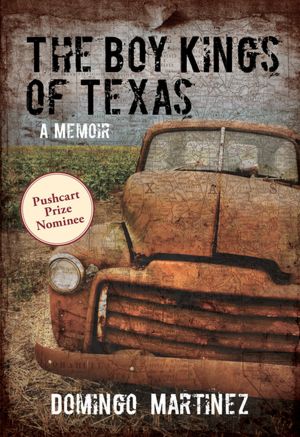
book beginnings on Friday: The Boy Kings of Texas by Domingo Martinez

Thanks to Rose City Reader for hosting this meme. To participate, share the first line or two of the book you are currently reading and, if you feel so moved, let us know what your first impressions were based on that first line.


The Boy Kings of Texas is a memoir by a man who grew up in the barrios of the Texas-Mexico border. It begins:

They were children themselves, my mother and father, when they started having children in 1967 on the border of South Texas. Dad had just graduated from high school and in a panic asked my mother to marry him because he wanted to avoid the Vietnam War draft. Mom had eagerly agreed, in order to escape something even worse.

And so we get right into it. While not necessarily a comfortable book, it feels authentic to me, and I’m enjoying it.

This quotation comes from an uncorrected advance proof and is subject to change.

The Great Psychedelic Armadillo Picnic by Kinky Friedman (audio)

This is an odd book, that somewhat defies definition. If you don’t know Kinky Friedman, I should definitely start there. He’s a country music singer/songwriter, mystery author, politician (he ran for Governor of Texas a few years ago, didn’t win), Jewish cowboy, and general personality. Last I heard, my mother was a fan of his. He has a reputation for being politically incorrect. This was my introduction to his work. The Great Psychedelic Armadillo Picnic is a whimsical musing on Austin, Texas, Friedman’s adopted hometown. It is part travel guide, part history lesson, and large part tongue-in-cheek, self-aggrandizing, stereotyped Texas-style humor.

My reaction was mixed. I should share that we down here in Texas have something of a Houston-Austin… not rivalry, necessarily… maybe it is a rivalry. The cities are quite different and trade blows, each claiming superiority. I live in Houston; it’s my hometown; and while I think Austin has many charms, I have a somewhat typical Houstonian response to Austin’s shameless self-promotion: I get a little defensive. Austin’s pretty cool, but Houston has its advantages, too – in fact I prefer my hometown to the so-hip Central Texas college town – and I get quickly tired of the typical Austinian eye-rolling and patronization, so. I have a dog in this fight, is what I’m saying. Full disclosure.

So, when Kinky brags on Austin, I have to suppress an knee-jerk impulse to say “but!” – which is a good thing to suppress, because there is some funny stuff in this book, and some history lessons that I truly appreciated, not being as familiar with my iconic state’s history as I should be. Snippets of history and Texas trivia I can appreciate. There is a fair amount of Kinky’s own personal musings on the state of our culture today, which are a mixed bag, in my opinion, varying in value. I think maybe he thinks of this book as more strictly travel guidebook than I found it. I double-checked and yes, my edition is unabridged, so. There are travel-guide-like sections on restaurants, famous residents (and their grave sites), and places of interest. Perhaps it was just the audio format; who listens to travel guides on audio?? (No one, I’m fairly sure.) But this is not strictly a travel guide. It’s a glimpse into Kinky’s personality and oddities – and let me tell you, eccentricity is part of the Kinky brand, and a part he’s playing up. So, will you like this book? Answer: as much as you like Kinky Friedman himself. Me, I’m on the fence. I think Austin does all right without his “everything is bigger here,” chauvinistic (he thinks it’s funny), bombastic help.


Rating: 3 bars on 6th St.

book beginnings on Friday: The Great Psychedelic Armadillo Picnic by Kinky Friedman

Thanks to Rose City Reader for hosting this meme. To participate, share the first line or two of the book you are currently reading and, if you feel so moved, let us know what your first impressions were based on that first line.

Here’s an odd little nonfiction mashup, if I can say that, by an odd Texas personality. It is subtitled, “a ‘walk’ in Austin,” and it begins:

Time, they say, changes the river. Time changes the city, too. Over the years, many people have helped Austin to shine in the spotlight, bask in the limelight, and skinny-dip in the moonlight.

Welcome to Austin, Texas, which has birthed the Republic of Texas, Janis Joplin (okay, she was born in Orange, but Austin helped bring her up), Willie Nelson, and (shudder) George W. Bush. Kinky Friedman is an appropriately eccentric guide. What are you reading this weekend?

what I love about living in Houston

Just because I love lists and bragging on my underrated hometown, I’m riffing off Katie again. Thanks for the prompt Katie! (Go read what she loves about Boston too.)

what I love about living in Houston:

1. It’s such an international city. I love that there is such a diversity of languages spoken and cultures represented in my melting pot port city.

2. …and spinning off #1… ethnic food! Restaurants specialize in Mexican, Indian, Vietnamese, Chinese, Japanese, Jamaican, Cuban, Greek, Moroccan, French, Spanish, German, Belgian, Brazilian, Turkish, Malaysian, Caribbean, Mediterranean, Thai, Korean, Mongolian, Peruvian… And if you want to cook, local grocery stores sell all the exotic ingredients necessary to cook ethnic foods, too. (Although you should make your own paneer fresh; it’s quite easy and delicious!)

3. This one’s qualified: when it’s not (ahem) summer, the weather’s pretty friendly. You can play outside (whatever that may mean to you!) year-round here. The summers will challenge your tolerance for heat & humidity, but during the winter you’ll be happy to wear shorts.

4. What we call “culture” is well represented: we have world-class symphony, ballet, and theatre companies; Broadway comes through regularly; and your band of choice is likely to play here if they’re on tour. (And if not here, definitely Austin, which is just 2 1/2 hrs away.)

5. Memorial Park! Almost double the size of New York’s Central Park at 1500 acres, Memorial Park offers tennis, golf, road cycling, running, swimming pool, fitness center, mountain bike trails, an arboretum with nature and birdwatching tours, sports fields and playgrounds – and it’s central. I feel incredibly lucky to have a park of this caliber right smack in the middle of my hometown – which is why I give money to the Conservancy and volunteer there doing trail maintenance.

6. Strangely, the cycling scene. Despite (or perhaps in part because of?) our notorious reputation for unfriendliness to bicycles, we have a great local community. In 2007, I was in the unique position of at least peripherally knowing many different cycling circles: I worked in a bike shop and so knew customers who were roadies, mountain bikers, charity riders, even spin-class-takers; I raced road, track, and cyclocross; I was a commuter and a former bike messenger. When I had my bad wreck that year, an amazing variety of cyclists contacted me to show support in various ways. I’ve been a member of several really awesome teams. It’s an inspiring local scene.

7. Proximity to Mexico and Central America! This gives us great access to vacation spots – and means we have plenty of Mexican food here at home, yum.

8. Low cost of living (and cheap gas), especially when compared with other big international cities. Win-win. Unemployment stays relatively low here, too. I certainly count myself very lucky (although hopefully it wasn’t all luck) and grateful to have gotten a great job right out of grad school in the fabulous economy of 2008.

9. There’s a beach nearby! I can’t imagine being one of those millions of people who live hours upon hours away from the nearest ocean – and they make up most of our country’s population. I like to be near the sea.

10. It’s in Texas. 🙂

What about you? What do you love about YOUR hometown?

Two for Texas by James Lee Burke

Another good one from James Lee Burke; and such a quick read, too.

Son Holland and Hugh Allison escape together from a prison in Louisiana in an opportunistic and unplanned series of events that includes killing a prison guard. With Son struggling to recover from a gunshot wound, they flee into Texas, where the Mexican army is skirmishing with General Sam Houston’s troops, and various Indian tribes make up a plurality of fighting factions. It’s a lawless land, whose chaos does help Son and Hugh stay lost, but the brother of the murdered prison guard is on their trail. The older, more experienced Hugh (a friend of James Bowie) acts as a big-brother figure to the younger Son, who’s had his share of violence and hard times but retains some innocence and some righteous virtue, both for better and for worse. The two pick up an Indian woman, Sana, along the way, who will turn out to be an ally.

Son and Hugh decide to join Houston’s army as a defense against being recaptured and thrown in prison. Even if the tortures of their earlier incarceration weren’t unbearable enough, a return would mean certain slow, painful death. They catch up with Houston and spend several fateful months in the General’s camp, and are there during the battle at the Alamo, as well as Houston’s final defeat of Santa Ana’s Mexican army at San Jacinto.

My little paperback copy of this novel does not include any notes from Burke to tell me how much of this story is fiction. I surmise that Son and Hugh are entirely fictional characters. Certainly, the battles at the Alamo and San Jacinto are a part of history, as are the many big names Burke drops: Houston, Austin, Fannin, Milam, Bowie, Crockett, and more. But I think the story of these two men is Burke’s creation.

I enjoyed this quick read. At only 148 pages, it took me about a day in my free moments. It offers Burke’s usual fine descriptive writing, and I thought both of the main characters were well drawn: they had personality; they felt real; I was invested in their personal outcomes. The battle scenes and the rough edges on the soldiers, Houston’s ragtag troops, and the outlaw character of Texas at the time were all visceral and (in my embarrassingly limited knowledge) true to history.

An easy read with poignant characters and a good, readable (if cursory) history of the Texas Revolution, in Burke’s usual fine writing style.

[If you’re concerned: there is some blood-and-guts in the battle scenes, to be sure (how could there not be?) but it’s fairly conservative.]

Texas

Katie’s post last week really grabbed me. She wrote about her relationship with her home state of Texas: the love, the shame, the pride, what she does and doesn’t miss. I identified so strongly with her feelings that I wanted to share, too. I won’t try to top her very poetic tribute, but I will give a different perspective on my home environment than I did a few months ago.


I’ve lived in Houston, Texas all my life. I take pride and interest in being a somewhat unique creature: both a Southern, and a big-city girl. I have tried to leave a few times but never made the leap, and part of me still really wants to. (For one thing, I feel like we should probably all leave our hometowns at some point, in the interest of personal growth.) But Houston would be hard to top: I’d want another very big, very international city, along the lines of New York City, London, Athens, San Francisco, or Amsterdam, but each of these comes with a cost of living several times that of my hometown. Plus, the miserable, unbearable, humid Houston heat is what I’m acclimated to; colder winters than ours (which would be most of them) terrify me. And all of this times-two, because Husband is also a native Houstonian, who’s never left, and he’s even older and has deeper roots.

I didn’t come to this comfort with my home naturally or without some struggle, though. In high school all I could think of was getting out. (This is a typical symptom of being in high school, I think.) I was so sure that I wanted to leave Houston, and Texas. I shopped colleges all over the country. During this time I had an interesting experience: I was in Mexico with a group of kids from all over, and had asked to borrow something from a girl not from Texas that she didn’t have on hand. I said “thanks anyway,” to which she snapped, “you don’t have to be nasty about it. I just don’t have one.” I was shocked because I really meant… thanks anyway; thanks for checking; no worries. This tiny little moment opened my eyes to the idea that maybe there was something to this “Southern manners” concept. It was just a little thing, but in my 17-year-old mind it made an impression. For various reasons I ended up going to the University of Houston, and by the time I graduated I had no thoughts of leaving.

Several years later, when I got ready to go to grad school, I shopped schools, and places to live, again. This was, if anything, an even more enlightening process, probably because I was a few years older with a fuller sense of myself and what I wanted from the world. I had done some traveling all over the country, and had decided I definitely like a Southern pace and sensibility. The Pacific Northwest and New England are lovely places to visit, but I couldn’t imagine them ever feeling like home. Plus, the cold! I was all settled on North Carolina when, oops, I got engaged (not to mention changing my degree plan) and stayed in Houston, again.

I still get frustrated. It’s literally 100 degrees outside as often as not right now, and the humidity is often over 80%. You will absolutely sweat between the house and the car. On work days, I get up to ride my bicycle before the sun comes up, so I don’t have to do it in the evenings. As a cyclist, this city can be frustrating; urban sprawl, car culture, climate, and drivers’ inexperience with cyclists conspire to make it a deathtrap. And as a mountain biker, I’m thankful for the awesome trails all over this state, but also well aware of the superior options in many, many other locations. (We have a subscription to Bike magazine, which is a constant tease. On the other hand, we can plan vacations around their annual Trails issue…) And Katie was right-on when she referenced the religion-politics axis. For those who don’t know, Houston is a blue (Dem) city in a red (Rep) state, and my politics float left of blue. There are probably friendlier places for me, idealogically.

But being aware of shortcomings doesn’t mean you can’t still feel love. If I’ve had a complicated relationship with Houston, and Texas, over the years, is it possible that makes my love more complex and deeply felt? Because I love that we can ride bikes here year-round, and wear t-shirts on Christmas morning pretty regularly. I prefer to keep snow a novelty, thanks very much (hi Katie, definitely true here too!). I love it when the Husband’s mild southern accent sneaks out, and I guess the Drive-by Truckers are one of my favorite bands because they sing about “the duality of the Southern thang.” In other words, yes, we birthed the Bushes. Sorry, world. Some wrongs have been done in the South, but I’m not sure we have the world monopoly on racism, segregation, hate, or violence – or even ignorance. Let me borrow some more Truckers lyrics: “You know racism is a worldwide problem and has been since the beginning of recorded history, and it ain’t just white and black, either. But thanks to George Wallace, it’s always a little more convenient to play it with a Southern accent.”

Unlike Katie, I haven’t left yet, although I’d still like to. If and when I do, though, I may very well end up coming back. I can’t imagine anywhere else becoming truly home. If it does, it might have to be the Carolinas or Tennessee. Like Katie, I do say y’all, and I expect I always will. I don’t wear cowboy boots but I can appreciate them on my buddy Jimmy. I adore Mexican food, and I just don’t believe I could get it in Oregon the way I can here. It may not be perfect, but this is my home, and I’m proud of it.

South Texas Tales by Patricia Cisneros Young

South Texas Tales: Stories My Father Told Me by Patricia Cisneros Young is a slim volume of short stories, taken in part from the stories the author grew up with. It’s a quick and easy read, and an enjoyable one.

These simple and simply told stories read almost like fables; they reminded me of the Coyote Native American stories I read as a child. These stories aren’t just for children, though. The writing style is sparse and straightforward, but these vignettes evoke a time and a place.

Issues addressed include race and racism, marriage and spousal abuse, religion and faith, and even suicide; many stories are about family, love, or the value of hard work. But all of these themes are understated. The stories are quietly powerful but always unpretentious. I enjoyed the minimalist, unfussy style very much; it’s rather palate-cleansing. There’s nothing fancy here, but the stories have value despite being… spare.

Just to give you a quick sampling:

Shibboleth is a story about the Masons acting ruthlessly for their own benefit, and feeling the wrath of the community in turn. The characters are drawn quickly and in broad strokes but it’s enough to feel the pride of the Hinojosas, and to respect Don Manuel’s speaking out, even if it’s too late.

Blood Moon Lullaby is heartbreaking but, I fear, all too true and common a tale.

The Courtship of Red Collins is a bit clumsy but also an awfully realistic-feeling portrayal of small town society and racism, with a surprising turn at the end. Unrealistic? Perhaps. But in that these tales read like fables, I can appreciate the moral.

A Good Day for Dying is a wise choice to finish the collection, because I found it to be the most powerful story of them all. I appreciated Don Sebastian and would like to sit under the mesquite tree with him, myself. It begins:

The old man was tired. Life had given him his fair share of trials and woes and now Sebastian, after surveying his vast estate, decided that the time had come for him to die. The bed that he crept out of had been imported from Paris and brought out to his ranch by mule train. It had been a surprise gift for Sara, the woman who had shared it with him for forty-eight years. He missed her warmth.

These unadorned, down-to-earth stories were remarkably powerful, and I think them a fine accomplishment for such a modest little book. I’m glad I stumbled across them.

my hometown.

I found the most delightful blog post earlier this week (last Sunday it was), by Susie over at useless beauty (which, by the way, is one of my most favorite laugh-out-loud blogs. I wish she blogged daily! three times a day! more, Susie, more!). She describes her hometown for us: the mundane details, that is, not the touristy ones. I love the concept, and since she’s a loooong way away from me, I found it fascinating because hers is a different world from mine. Here’s hoping you will also enjoy reading about my home. Thanks Susie for the inspiration.

Houston is a big city: the fourth largest in the US (after New York City, Los Angeles, and Chicago, in that order), at some 2-3 million people in “Houston proper” and an estimated 4-6 million in the “greater Houston area.” We make an excellent picture of urban sprawl; we are “car culture” incarnate. (I think this is true of the US in general, and Texas even more so, and Houston more so still). The climate and the sprawl, and the resulting car culture, conspire against bicycle riding as a way of life. And yet, we have a surprisingly large and vibrant cycling scene (in Houston, and in Texas). Maybe this is due to our large and diverse population; maybe if you put this many people in one place you’re bound to come up with some avid cyclists? Maybe Texans are accustomed to going against the grain? I don’t know, but I’m glad.

We also have a lot of non-native Texans here. Houston is a major port city, and a center of oil & gas and energy industries, and a center for health care, too. We are very international; this big city incorporates little pockets of not only Mexican and Latino populations, but also Indian, Chinese, Vietnamese, Nigerian, and more. We are a big, international city. I love that about my hometown. Our diverse population definitely does have a tendency to congregate itself into patches of black, white, and Hispanic neighborhoods. I don’t know, maybe that’s true everywhere.

But I’m getting off track. This is about what neighborhoods look like, right?

Well, so again, as a city not terribly conducive to walking or riding bicycles. There are not necessarily sidewalks in every neighborhood, and when there are sidewalks, they’re liable to be broken, have cars parked on them or trees growing them or be littered with… litter. Susie mentions cats in her neighborhood. Well, in mine, it’s dogs – lots of strays, unfortunately, including some who will chase you on your bicycle and too many who get hit by cars. 😦 But also lots of pet dogs. We don’t see cats much – probably something to do with all the free-range canines.

The city itself is, understandably, diverse; there are “nice” neighborhoods with nice sidewalks, nice pothole-less streets, large homes, and big trees (like River Oaks, which wikipedia claims is “one of the wealthiest zip codes” in the country). There are neighborhoods that absolutely feel like Mexico: street vendors, car mechanics setting up impromptu shops streetside, Tejano music blasting, the whole nine. We are diverse economically, too.

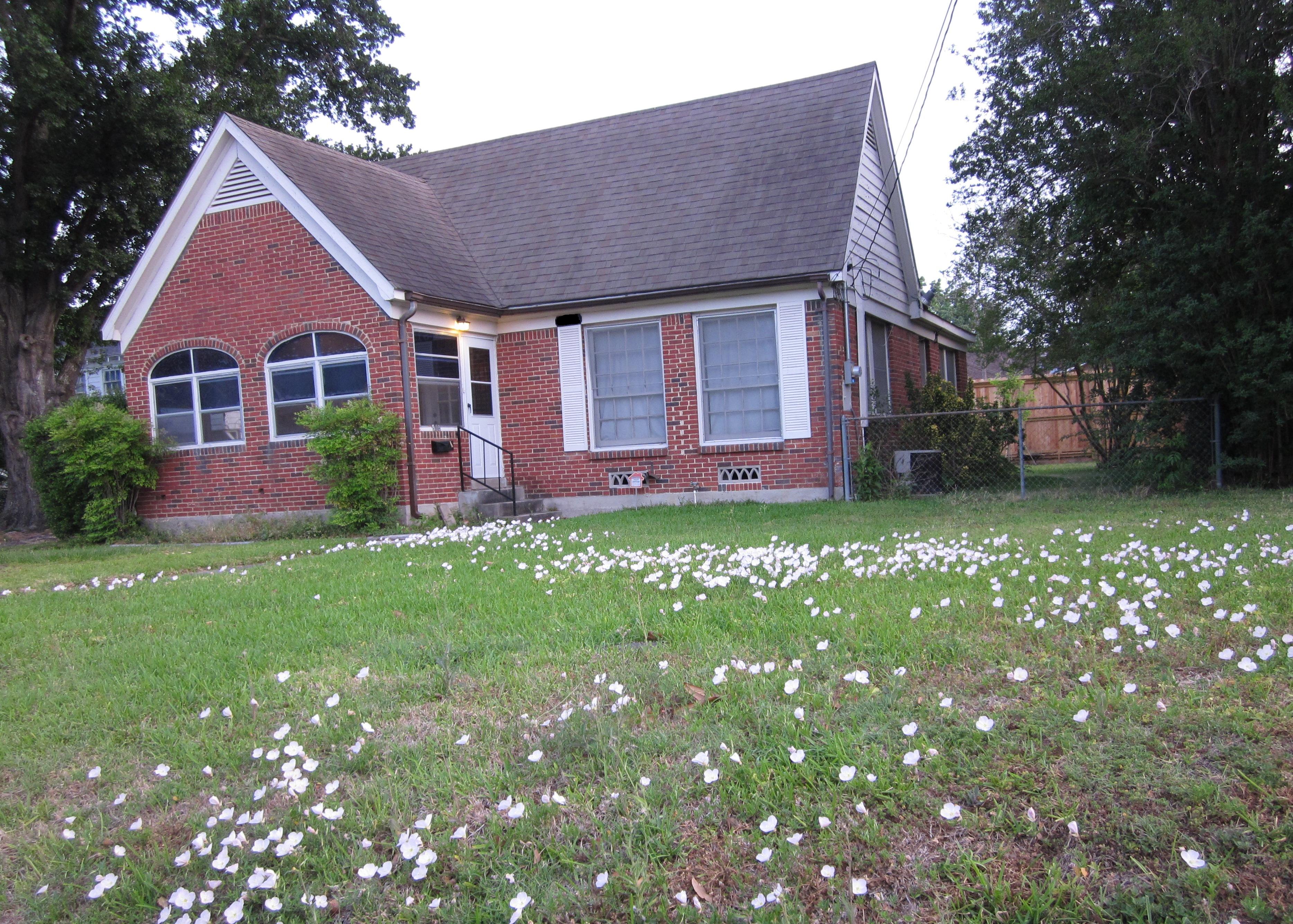
The Husband and I have recently purchased a home in a neighborhood in north inner-city Houston, meaning we’re just inside “the loop”, about 10 minutes by car from downtown. We are in a little pocket: surrounded by neighborhoods that are predominately Mexican and less affluent, our small niche has wide streets, old homes set well back from the street on large yards, and huge old trees. Many of our neighbors are original homeowners, or the family of the original homeowners. It’s a very quiet neighborhood. Having lived for years in artsy, hard-partying Montrose or the hipster, young-professional Heights, our current street feels very calm and quiet by comparison. It feels safer. (It was nice being just blocks from numerous stores and restaurants and bars in the Montrose, but I’m willing to trade a few minutes’ drive for some peace and quiet. Down there, the party’s in your backyard! and on the other hand, the party is in your backyard.)

Montrose and the Heights, along with Garden Oaks/Oak Forest and a number of other inner-loop neighborhoods, are very desirable to live in. Houston as a whole is having a little bit of a return to the city center, as gas prices have gone up and folks are less pleased with their 3-hour round-trip commute in from the suburbs. Thus, we see more and more townhouse complexes, next door to storage warehouses, so that folks can move in from their large (much more affordable) homes in the suburbs and put all their large-home possessions in storage while they live in a smaller home in the city (since that’s what they can afford, by comparison). Certain neighborhoods have done better than others at keeping their original “feel”: the Heights has worked hard (and is still working hard) to limit development to buildings that retain the historic-Heights look, while the Montrose is gradually becoming overcome by cardboard-and-aluminum monstrosities. Some creative and artistic construction, yes, but for every imaginative new home design there are ten Hardie-plank homes, built for the short-term. I’m happy to live in a neighborhood that is largely retaining its look and its feel. Here is our house:


(okay, not an ideal picture, it’s all I have at the moment.)

I don’t know that I’ve done as good a job as Susie did in describing her world, but I love where I live and it’s been fun writing about it. Houston’s not perfect; the summers are miserably hot and humid, it’s not the greatest place to be a bicycle enthusiast, and there are aspects of our culture I would take issue with. But it’s so unique: urban, international, and big-city-feeling, but also Southern and calm in a way that you can’t replicate in New York or LA. I like it here.


EDIT! I should have shared this picture of the beautiful deck that Husband built us recently! Yay Husband!