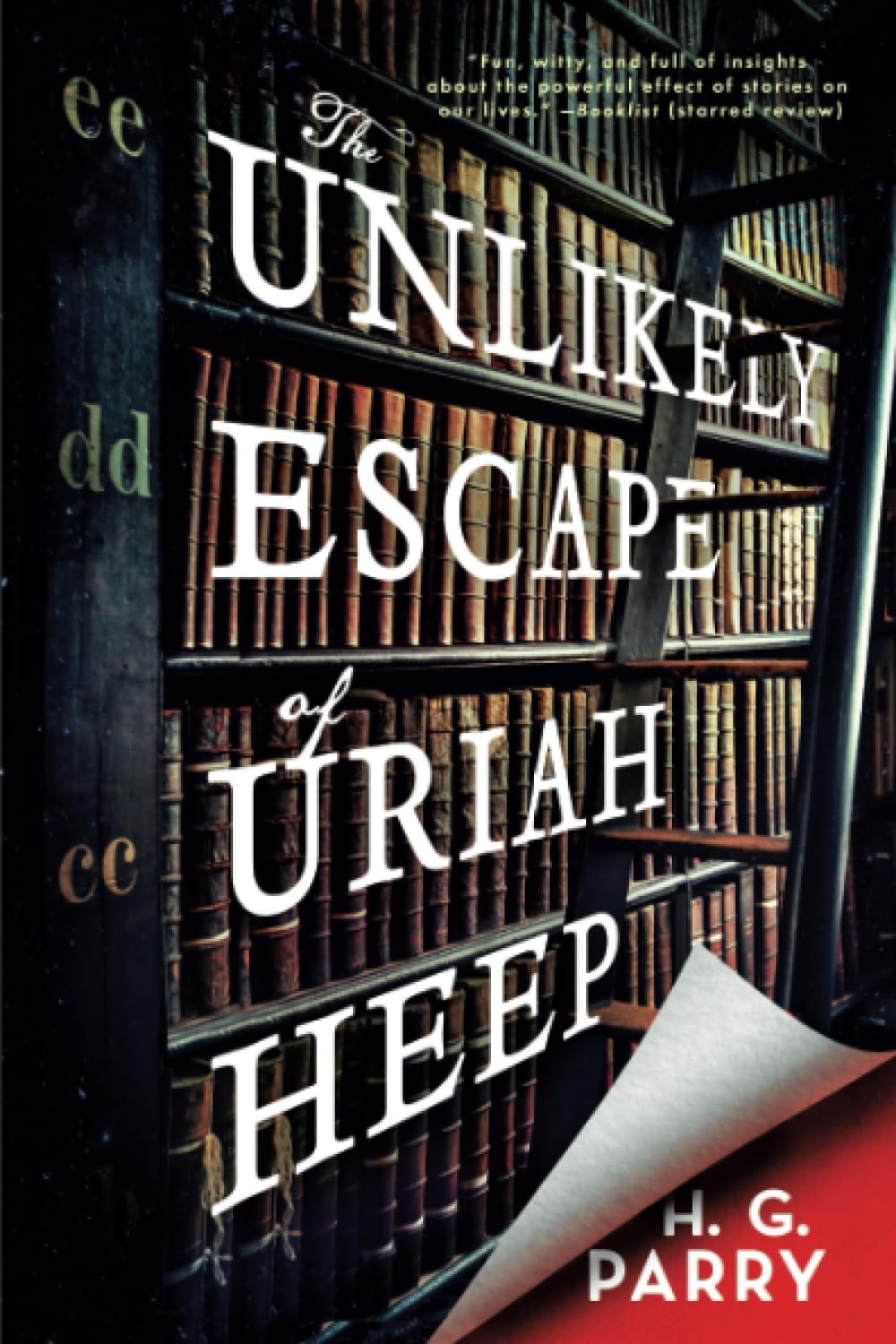
The Unlikely Escape of Uriah Heep by H. G. Parry

A booklover’s dream, this astonishingly great debut novel focuses on family and the power of story in a world of magic, imagination, and serious literary criticism. In Wellington, New Zealand, Rob Sutherland is a hardworking lawyer with a lovely partner, Lydia, and a trying younger brother, Charley, known to his colleagues as Dr. Charles Sutherland. Rob is longsuffering: Charley keeps calling him, often in the middle of the night, to come up to work (Charley teaches at Prince Albert University) and help him catch the characters he’s accidentally released from books so he can put them back. Rob has always had complicated feelings for Charley: he loves his little brother and wants to keep him safe, but he definitely stays annoyed with him much of the time, too. Though four years younger, Charley was a prodigy, who went off to Oxford University the same year that Rob went off to Prince Albert. Rob would have been considered intelligent in most families, but felt overshadowed by a child who read Dickens when he was two years old. One of this novel’s central threads is the challenge of an adult relationship between brothers, with a touch of sibling rivalry, many old wounds, and a persistent bond of love, loyalty, and protectiveness that runs in both directions.

So: Charley is a genius, of the scattered, distant, dreamy type, who keeps accidentally bringing fictional (and nonfictional!) characters out of books. It can get messy. Rob is the exasperated big brother who keeps helping clean up messes – not always in the best of humors. Then the messes get much bigger, beyond anything that Rob or Charley is prepared to deal with – out of their control, and, it eventually becomes clear, outside of Charley’s causing. But Charley, and eventually Rob, do decide that it’s within their responsibility to try to save Wellington, or the world.

This is a story filled with vibrant characters, and that plays with the layers of what ‘character’ can mean. Some are Parry’s (her characters’) interpretations of those written by others, including the title character, Uriah Heep, who comes from David Copperfield and is thus originally Dickens’s, now read by Charley (and Parry). Some are Parry’s originals but, within this book, credited to another (fictional) author. [The indomitable Millie Radcliffe-Dix comes from The Adventures of Millie Radcliffe-Dix, Girl Detective, which unfortunately do not exist in this world I’m out here living in.] And some, like Charley himself, are the inventions of this book. It quickly gets to be a lot, but gosh, in the most fun ways. Again: there was never such a booklover’s book.

The title of The Unlikely Escape of Uriah Heep refers to a character who is not even one of the top five or ten most important in the book – although he is the character at large in the opening scene, when Charley calls Rob in the middle of the night (again). He will reappear periodically. In some ways, Dr. Charles Sutherland is the main character of the book – he has the splashiest powers, and the central conflict rages around him; mysteries wreathe his past; he will have great choices to makes. But it is Rob who narrates the bulk of the book (with a few interludes as exception). In part, I think this is because there is a heavy emphasis, in this world and in this telling, on how one person’s “reading” of another impacts the person being read. Rob’s perspective on Charley matters a great deal. I think Parry’s choice of Rob as narrator is interesting; it shifts the reader’s reading, in similar ways. Whose stories do we matter in? As Dr. Frankenstein tells us: “What you need to understand about protagonists… is that we’re all busy with our own plots. We can’t help it; we’re not used to sharing our stories.” If that’s not a lesson for the real world, I don’t know what is.

I’m still reeling and will enjoy thinking about what this book has shown me as I move through my world and reading. I think it has the potential to be one of those that shifts how I think about it all – which is a big accomplishment. Also, everything Parry writes plunges me deeply and pleasurably into other worlds, which I love. I finished this book and dived directly into another big thick one of hers. Do recommend.


Rating: 9 doors.

Heartless by H. G. Parry

From memory, I’m going to say the Peter Pan story was sweet and heartwarming, with some good healthy ideas in it about always retaining a lovably childlike (not childish!) spirit and the magic of believing. We fly through the stars and have adventures! We help each other. And even when we have to (sigh) grow up, we can access that magic again through the power of imagination.

Then there was the movie Hook, which had Robin Williams and was therefore great, and (again in my possibly faulty memory) more or less followed those themes. We all have to grow up, but it wouldn’t be healthy to lose all the joy of childhood.

This is not that version of Peter Pan.

H.G. Parry, who I fell for hard with The Magician’s Daughter, takes us on a more realistic and darker journey with Heartless. Now the protagonist is neither a Darling nor a Lost Boy nor Peter himself, but an orphaned child in a Dickensian sort of London named James, who gives himself the fanciful last name Hook when he gets a chance at self-invention. James is a born storyteller, a skill which endears him to the only boy at the orphanage James really cares about, a careless but compelling child named Peter. For Peter, James tells stories: ones his mother told him or read him, ones he’s read himself, ones he’s made up. For Peter he makes up the child-king Peter Pan and his sometimes-antagonist the pirate Captain Hook, who inhabit a magical (and made up) island called Neverland. These tales keep Peter at James’s bedside until the night that Peter leaps off the orphanage’s high roof and flies into the stars: “second to the right, and straight on till morning.” James wants to follow his best and only friend, the boy who did not so much as look back. But when James leaps, he falls to the stone courtyard below.

From here we follow James Hook (his new identity) and his friend Gwendolen Darling (who takes the identity of James’s younger brother, George Hook) in their adulthood. James is forever chasing after Peter. He will eventually find what he’s looking for and find also that it’s not what he was looking for at all. This brief book (141 pages) is Peter Pan, yes, but retold with a different protagonist at its sympathetic center and a decidedly sinister twist; fairies are not sweet but uncaring. Captain Hook, of all people, is the one we feel for. And we are centered on the power not only of imagination but of storytelling – and like all of them, this is a power that can be used for good or ill. “[The fairies] didn’t understand that stories weren’t meant to be lived in forever; they were meant to be shared, passed on, questioned, to mingle with a thousand other tales and poems and experiences and be changed by them. They didn’t understand that stories, too, needed to grow. He hadn’t understood himself until recently.”

A retelling of a classic with rather more realism (especially in the London setting) and more darkness, but also still sweet and wholesome, with Parry’s absolutely lovely style; I’m going back for more from her.


Rating: 8 leaves.

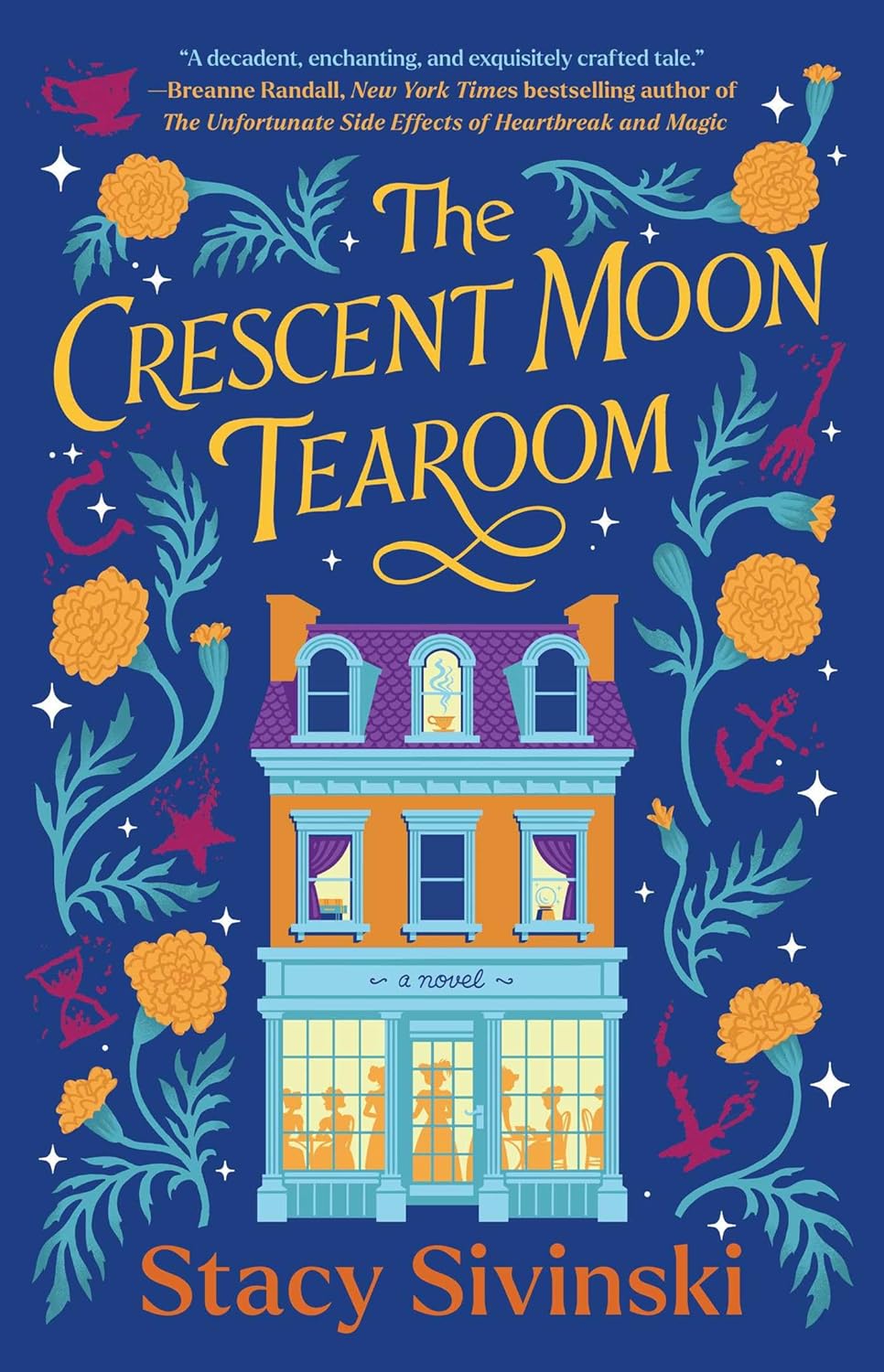
The Crescent Moon Tearoom by Stacy Sivinski

This entrancing debut stars triplet witches who can see the future, but must work together and individually to grasp their own.

Stacy Sivinski’s first novel, The Crescent Moon Tearoom, is a sweet, wise balm of a story about family, change, and coming into oneself.

The Quigley triplets, Anne, Violet, and Beatrix, have always been close. Their beloved mother was a powerful Diviner, able to read the future in various signs. Her daughters put the same skill to use in the Crescent Moon Tearoom, where the three young witches sell magical teas and delectable baked goods and tell fortunes to hordes of Chicago’s women and witches. The tearoom (run out of the family home, itself an endearing character with a will and magic of its own) does a booming business, but all is not well with the Quigley sisters. A challenge comes from the Council of Witches: the younger three must help three older witches discover their Tasks, which is a witch’s very reason for existence and is imperative to complete before a witch passes, or she’s “doomed to linger as a spirit for all eternity.” If they fail, the Council will close their shop. The events entwine with a potential curse on the sisters, threatening to undo everything the sisters love.

Although nearly identical in appearance, the Quigleys are quite different individuals. Their mother used to say, “Violet has her head in the clouds, and Beatrix’s nose is in a book. But [Anne’s] feet are always planted firmly on the ground.” While Violet (the family baker) is volatile and in constant, foot-tapping motion, Beatrix is shy and dreamy. Anne is the caretaker, the brewer of teas, and has secretly been holding back her own magical powers so as not to surpass her sisters. They “had been locked in their web of affection and dependence for so long now. Their bonds had taken shape during childhood and seemed to be coated in bronze.” As they struggle with the ominous Council’s extraordinary demands, their differences are highlighted, even as each sister finds opportunities for new growth.

Sivinski’s droll telling details the lovable Quigleys with all their quirk and charm, each with their own moving emotional arc. Chapters are headed with signs and symbols, as one might find in tea leaves at the bottom of a cup, with brief descriptions of their meaning: a fan suggests flirting with temptation; a bat foreshadows a fruitless endeavor. Each line captivates: “As seers, the Quigleys had long ago accepted that questioning what they saw in the remnants of their customers’ tea was about as useful as trying to wash cherry jelly out of a silk blouse.” With its sweetness, realistic challenges, and satisfying resolution, The Crescent Moon Tearoom is a rare pleasure. Readers will miss the Quigley sisters at this novel’s end.


This review originally ran in the July 26, 2024 issue of Shelf Awareness for the Book Trade. To subscribe, click here.


Rating: 8 petals.

The Jinn Daughter by Rania Hanna

A jinn with the power to help souls into death’s final rest struggles to keep her daughter safe in this lively, vivid debut.

Rania Hanna’s first novel, The Jinn Daughter, is a moving, imaginative tale of magic, myth, life and death, and a mother’s love. Appropriately, the power of storytelling is central.

Nadine is a jinn, and serves as Hakawati to her village and community. Every morning, she gathers the pomegranate seeds that have fallen overnight outside her modest cabin: these are the souls of the recently deceased. She presses these seeds into a juice and drinks it to experience the stories of the dead, sometimes with honey to cut the bitterness, sometimes “settling sweet on my tongue.” It is in the telling of these stories that souls might pass from the Waiting Place “to final–and hopefully, peaceful–death.”

This is important and meaningful work, but Nadine’s life is not easy; almost all of her kind were killed or banished when she was very young, her training incomplete, and she is ostracized by the people whose souls she lives to assist into final death. She is nearly alone but for her beloved and cherished daughter, and the equally cherished ghost of that daughter’s father, Illyas. Layala, at 14 years old, is beginning to test the limits of their austere life. Illyas had been a human, and Nadine desperately wants their child to be without magic–safer that way. But jinn, despite their many powers, don’t have control over their children’s destinies.

Layala seeks a more meaningful existence than the quiet life allowed her as her mother’s daughter. Dangers press in from outside, too: the villagers’ animosity toward jinn, and a cascade of secrets from Nadine and Layala’s past, threaten their tenuous safety. They receive death threats from the human villagers, and then a visit from Death herself. Nadine must make unusual alliances and travel further into the realm of death than she ever has, to make a bid for her daughter’s safety. Her recurring prayer: “Keep her safe. Keep her happy. Let her find good love. Let her know peace. Let her know her heart and mind. Let her be.” But Layala may not want the same peace for herself that her mother wishes.

Hanna’s prose sparkles with color and detail, imbued with a mother’s deathless devotion to her child. The Jinn Daughter, drawing upon pre-Islamic Arabic mythology, engages with concepts of grief, loss, acceptance, self-determination, and the will to live. Hanna emphasizes the potential for stories and storytelling to explain life’s mysteries, to communicate, and to survive. Readers will find Nadine’s quest poignant, and Layala’s growth inspirational, in this journey of love, life, and death.


This review originally ran in the February 6, 2024 issue of Shelf Awareness for the Book Trade. To subscribe, click here.


Rating: 7 clay shards.

Starling House by Alix E. Harrow

I still love Alix Harrow! Starling House has been much anticipated, and I think it fits neatly into her body of work, combining fantasy and whimsy with darkness and grit, as well as romance and a touch of sweet, but not so much that you don’t still feel the hard bite underneath. This protagonist reminds me quite a bit of Chuck Wendig’s Miriam Black; she’s hard-edged and a resolute loner, even though her heart is much softer than she’ll allow. She’s rough and dirty and antisocial, damaged but so strong.

I’m a cheat and a liar, a trickster and a tale-teller, a girl born on the ugly underside of everything. I’m nobody, just like my mother before me.

Her name is Opal. No last name, or whichever one she’s chosen for herself in the moment, like her mother before her. Her mother died when Opal was fifteen, and she’s been parenting her little brother–who was only five–ever since. Jasper is her only priority in life.

I’m a high-school dropout with a part-time job at Tractor Supply, bad teeth, and a brother who deserves better than this dead-end bad-luck bullshit town… People like me have to make two lists: what they need and what they want. You keep the first list short, if you’re smart, and you burn the second one. Mom never got the trick of it–she was always wanting and striving, longing and lusting and craving right up until she wasn’t–but I’m a quick learner. I have one list, with one thing on it, and it keeps me plenty busy.

Jasper is smart and talented, and his debilitating asthma is a bad match for the coal town of Eden, Kentucky. Opal is determined to get him out.

But she is distracted by the magnetic pull of the Starling House, a mysterious old haunted mansion that you can’t see from the road, but this doesn’t stop Opal from dreaming about it. One day she just sort of allows her body to take her there, and she meets its latest enigma of an owner/resident: Arthur Starling, an unkempt, haunted man about her own age. They both know Opal should steer clear of the House, but the House has a consciousness of its own, and once the seal has been cracked–contact made–her life is irrevocably intertwined with Arthur’s, and the House itself, and its weird and inexplicable history. The Starling House, it seems increasingly clear, is all bound up with the town of Eden and the terrible bad luck and sin and crime and hopelessness that Opal wants so badly to free Jasper from.

This is a novel that focuses on place, history, what it means to belong, to stay or to leave, and the meaning of home. Eden’s history includes coal mining, slavery, exploitation, and class divisions. The Starling family has been around for generations, and their role is ever-changing and unclear; the Gravely family has been around just as long, and they are the wealthy coal and power magnates, handing out favors around town or made of pure evil, depending on your perspective. There are a host of other compelling characters, including a loveable motel owner and an even more loveable librarian and a country cop who, again, falls somewhere between doofy and evil. I quite like Jasper, too. Harrow is good with characters, although not all of these are equally well developed.

So, a strong sense of place and a big role for place to play in the narrative. Great characters, with cleverness and snark and grit. And an emphasis on the power of storytelling, and questions about story versus history. “I told myself that writing down somebody else’s story wasn’t as bad as making up my own, the way repeating a lie isn’t as bad as telling one.” “I know that part of the story must be made up, because there’s no such thing as curses or cracks in the world, but maybe that’s all a good ghost story is: a way of handing out consequences to the people who never got them in real life.” “I saw this old map of the Mississippi once. The cartographer drew the river as it actually is, but he also drew all the previous routes and channels the river had taken over the last thousand years. The result was a mess of lines and labels, a tangle of rivers that no longer existed except for the faint scars they left behind. It was difficult to make out the true shape of the river beneath the weight of its own ghosts… That’s how the history of Starling House feels to me now, like a story told so many times the truth is obscured, caught only in slantwise glimpses. Maybe that’s how every history is.”

Finally, at the heart of Starling House is a mystery about power dynamics and the very nature of reality–as well as monsters, imagination, dreams and hopes and hopelessness, family, connections and home, and even romance. It’s a wild ride of a good time. I’m enchanted.


Rating: 8 Ale-8s.

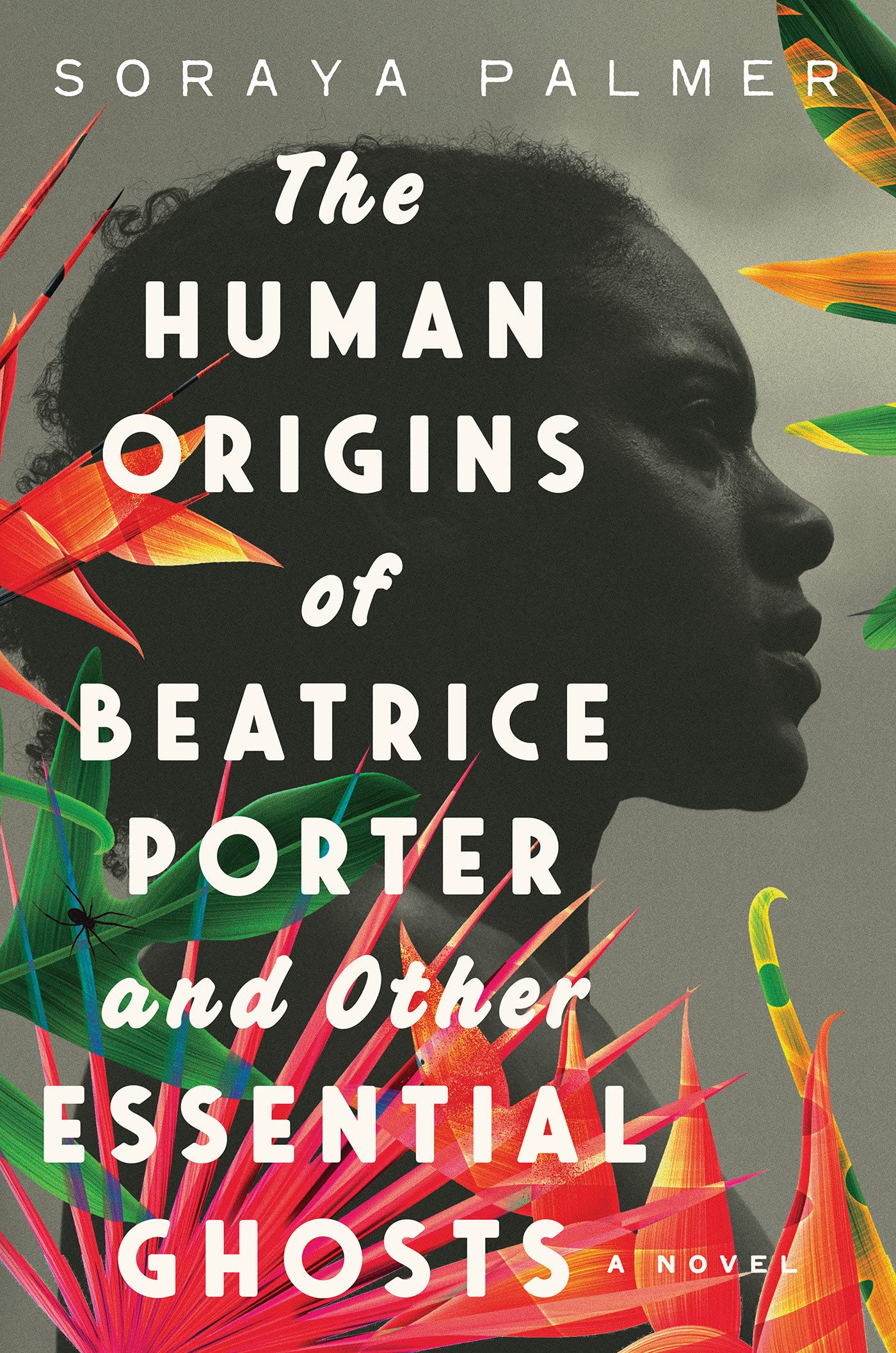
The Human Origins of Beatrice Porter and Other Essential Ghosts by Soraya Palmer

A fracturing family in Brooklyn with roots in Jamaica and Trinidad navigates love and loss in this debut novel influenced by Caribbean folktales and the power of stories.

The Human Origins of Beatrice Porter and Other Essential Ghosts is Soraya Palmer’s first novel, a phantasmagoric interweaving of family and folktale. Readers first meet two sisters, Sasha and Zora, when they are young girls in Brooklyn’s Flatbush, dealing with the household complexities of their father Nigel’s violence and infidelity and their mother Beatrice’s headaches and distance. Soon this timeline meanders to visit Nigel and Beatrice as children in Jamaica and Trinidad, respectively, and then as a young couple. These individual and family histories blend with folktales of Anansi (spider, god, man, woman, trickster storyteller), demons and exorcisms. The Rolling Calf haunts butchers, and Mama Dglo is the protector and mother of the ocean and “all things water,” among other mythical tales. The narrator of these time-jumping tales, with the repeating refrain “Let me tell you a story,” is mysterious, driven by motivations not always clear nor necessarily reliable–but always concerned with the power of storytelling itself: “You see I am what they call Your Faithful Narrator, found in places the West calls fairy tales, what men call gossip, what children call magic.” Small actions can be revolutionary: “They realize there is nothing more dangerous than a story with an owner that no one can touch.”

In the 1990s and 2000s, Sasha discovers chest binding as she navigates gender and sexuality. Zora studies her book of Anansi stories and hones her craft (that of her namesake) in her diary. As much as the sisters love each other, their respective self-explorations push them apart. In different ways, Nigel and Beatrice separate but remain intertwined. Caribbean and West African folktales continue to influence each of these threads until they come together again in Trinidad with a 106-year-old grandmother, several reunions, an ending and a new beginning. None of these characters is entirely innocent or faultless, but they are finely drawn with compassion and compelling, colorful pasts. Love and family contain both beauty and pain in this telling.

Palmer imbues her novel with both snappy pacing and deep feeling in a lovely prose voice with music and poetry behind it. The Human Origins of Beatrice Porter has big things to say about sisterhood and family; race, sexuality and class; life and death; and above all, the power of storytelling. “Why do we remember some stories more than others? And what happens to the ones that we forget? Let me tell you a story.” The result is wide-ranging and thought-provoking–but also an immersive and sumptuous read. Palmer shines.


This review originally ran in the March 3, 2023 issue of Shelf Awareness for the Book Trade. To subscribe, click here.


Rating: 7 Apple J’s.

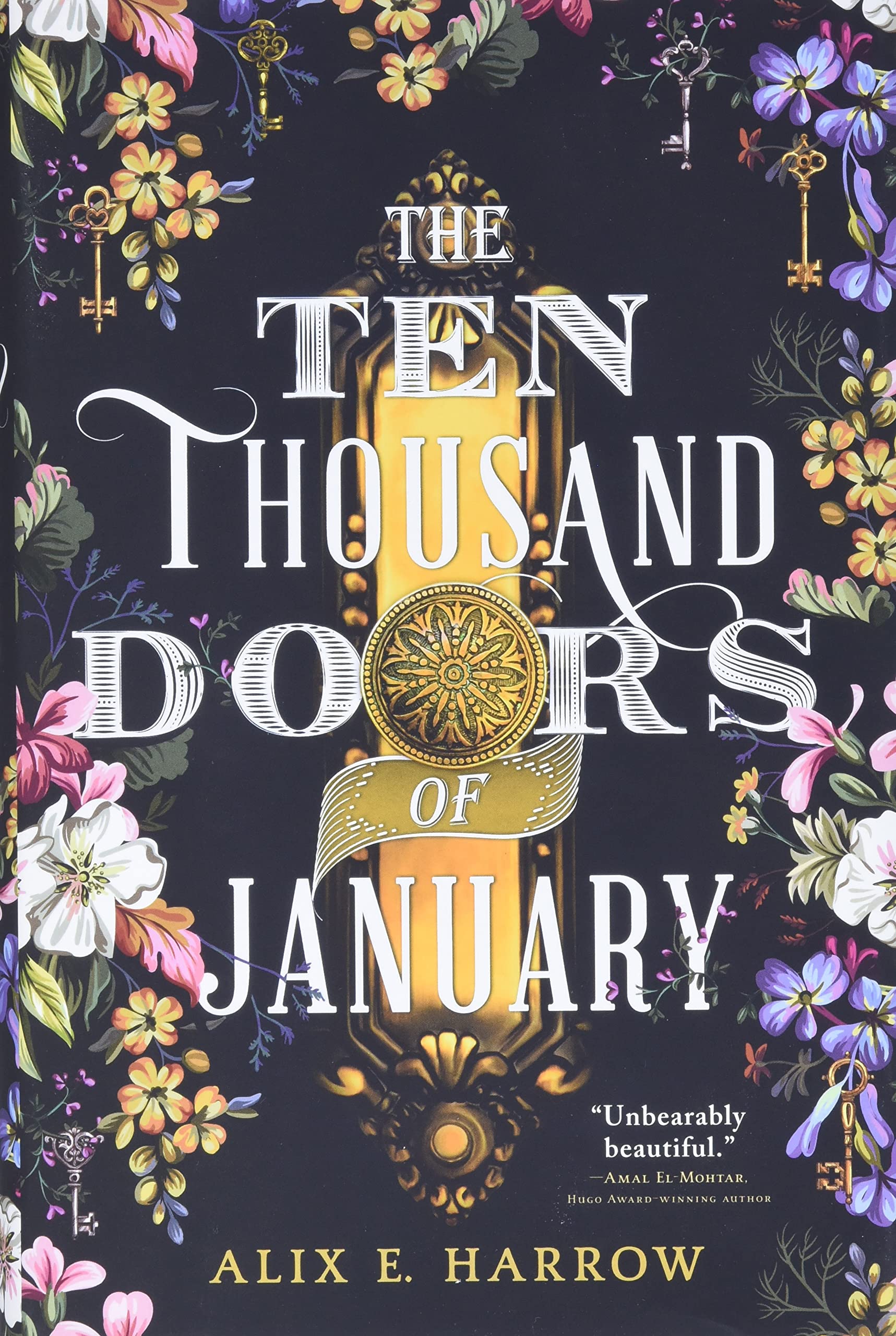
The Ten Thousand Doors of January by Alix E. Harrow

While I’m willing to allow that this might not be a perfect book, it is the perfect book for me.

(I am, however, super irritated by deckled edges, which my paperback does have.)

From the author of those Fractured Fables that I love, this previous (longer) novel is absolutely delightful. I’m reminded of that lovely line from The Princess Bride, about how the story has everything. “Fencing, fighting, torture, revenge, giants, monsters, chases, escapes, true love, miracles…” That’s a thing I love in a story: the containing of everything, and that’s how I feel about this book, which (bonus) centers a love for storytelling and the power of storytelling to very literally change the world; and also tattoos.

When I was seven, I found a door. I suspect I should capitalize that word, so you understand I’m not talking about your garden- or common-variety door that leads reliably to a white-tiled kitchen or a bedroom closet.

When I was seven, I found a Door.

January Scaller is the narrator of her story, and she frequently addresses the reader directly like she does here, which is a narrative device I also like. It’s not the right choice for every story, but here it allows us to feel close to January, who is conscious about her choice to tell her story in her way. Also like The Princess Bride, actually, there is a book within a book. January finds (is gifted? mysteriously?) a book called The Ten Thousand Doors, and as she reads it, so does the reader, so that there are two narrative threads running side-by-side until they, naturally, meet and converge.

January is the ward of the wealthy Mr. Locke in rural Vermont. She is seven in 1901, when he takes her on a business trip where she finds that first Door. Her father, Julian, works for Mr. Locke, but he is almost always traveling; January is devoted to him but rarely gets to spend time with him, and when they are together, he is distracted. Her past is an enigma, but she is aware that she is privileged to have Mr. Locke’s favor, especially because she is “odd-colored,” a sort of coppery-red, with irrepressible hair. She knows fairly young that she lives in a world where it is best to be white, and she is not that, but Mr. Locke says she is “a perfectly unique specimen,” and he is a collector of unique specimens. (If this makes you uncomfortable, good.) “Sometimes I feel like an item in Mr. Locke’s collection labeled January Scaller, 57 inches, bronze; purpose unknown.”

The Door that January finds takes her to another world. And the book she finds later tells her more: that Doors are real and not the imaginings of a lonely seven-year-old. That there are “other worlds than these” (to quote the Dark Tower series, and my references to other stories here should confirm the universality of this story-about-stories). January is eventually inspired, by the book she finds and by events in her own carefully controlled (by others) world, to take the reins of her own narrative. And then things get really wild.

The Ten Thousand Doors of January is sprawling, in the best way: January winds up learning about many worlds, about language and languages, the power of storytelling, her own history, the nature of love and of trust, and so much more. She has the most outstanding, incorrigible, infinitely loyal dog ever. And there is a world in which words are powerful beyond our imaginings, “where curves and spirals of ink adorn sails and skin.”

I do not mean they have power in the sense that they might stir men’s hearts or tell stories or declare truths, for those are the powers words have in every world. I mean that words in that world can sometimes rise from their ink-and-cotton cradles and reshape the nature of reality. Sentences may alter the weather, and poems might tear down walls. Stories may change the world.

Now, not every written word holds such power–what chaos that would be!–but only certain words written by certain people who combine an innate talent with many years of careful study, and even then the results are not the sort of fairy-godmother-ish magic you might be imagining…

I am, personally, additionally charmed by the power of tattooed words in that other world. You get the idea: this lovely, dreamy, heartfelt story not only has everything, but has a few framing elements – storytelling, tattoos – that speak to me in particular. (I will say that books about the power of books might be taking an obvious advantage, since the readers of books tend to be people who like books. But I’m on board with this.)

In the nature of the finest quest narratives, January is surrounded by a motley crew – a grocer’s son, a woman from another world, that mad wonderful bad dog (whose name is Bad) – and together they will accomplish unlikely things.

Harrow is herself a gifted storyteller. This is a book to get lost in and to stay up all night for. I’m genuinely really sad it’s over; I’ve ordered everything Harrow has ever written. Strongly recommend.


Rating: 10 worlds.

The Cambridge Introduction to Narrative by H. Porter Abbott

In stark contrast to the academic tome I recently undertook, this one was an absolute joy. (It was also much shorter.) I’ve been looking for something to help me understand my enjoyment of certain television shows, and went looking for a guide-to-narrative, which oddly (given my MFA) I seem to have skipped along the way. This book caught my eye as it claimed to take on various fictional formats, not only books but theatre, film, and television (among others). It delivered. I was often thrilled with the examples of the concepts it set up. And I’m now excited by narratology, or narrative theory. There may be more of these in my future.

I like Abbott’s broad approach, how he begins with narrative as it exists, ubiquitous, in our lives (as I tell my students that stories are everywhere, that writing is everywhere). He defines narrative broadly; at every stage he samples the literature and signals where he follows standard understandings or argues for his own. This book really does make an excellent introduction to a field of study; it’s only 213 pages (plus notes and supplementals), so it necessarily serves as a survey, but it felt very complete in that function. Chapters cover narrative frames and paratexts; masterplots and types; closure; narration (so much to explore!); interpretation (problems, styles, main types); adaptations across media (this is an area I’m very interested in); “narrative and truth” and the blurry space between fiction and nonfiction; narrative worlds; and competing narratives (as in political campaigns, legal trials, and more). I was constantly excited to recognize ways I think about stories and storytelling and the ways we experience stories, and to have my beliefs, theories, or experiences spelled out for me in new terms. I would never have thought a work of academic theory like this could be so gripping.

I was pleased to learn of Marie-Laure Ryan’s ‘principle of minimal departure,’ for our tendency to assume that a fictional world will mimic our ‘real’ one, until we learn otherwise. I appreciated a few small, apt examples of narrative differences as examples for my Short Fiction class. I loved all the examples of primary texts (narrative works that exemplify the concepts Abbott was teaching) and secondary sources (other studies of narrative on his various topics). I made note of a few books and movies to put on my lists. Abbott’s examples are disproportionately written by men, but by no means to the radical exclusion of non-men that so irritated me about Gardner’s work.

Call this a tantalizing foray for me into a new way to study and think about stories. This is great fun and I can’t wait to learn more.


Rating: 8 adaptations.

Foxfire Story: Oral Tradition in Southern Appalachia ed. by T. J. Smith

Decades of carefully collected oral storytelling and local lore from Southern Appalachian culture offer a singular perspective.

Since 1966, Foxfire has been educating and working to preserve local heritage in Georgia’s Rabun County. The organization has published the Foxfire magazine for over 50 years, and more than 20 books. But Foxfire’s archives are still rich and deep enough to furnish mostly never-before-published material in Foxfire Story: Oral Tradition in Southern Appalachia, a collection of folktales, stories, mountain speech, pranks, jests and much more gathered over the decades.

Editor T.J. Smith–Georgia mountain native, Ph.D, folklorist and Foxfire’s executive director–groups these materials into categories: anecdotes come from personal experience and often contain a punch line; folk beliefs connect us to cultural or religious communities and are sometimes known by the pejorative “superstition.” Proverbs and sayin’s include colloquial comparisons: sharp as a tack, a needle, a briar, a pegging awl. Legends include ghost stories and tales of treasure hunts. In a second, shorter section, Smith organizes additional storytelling by the teller. Here, Ronda Reno recounts the tradition in her family of the “granny witch,” or herbalist/midwife/community healer. Cherokee storyteller Lloyd Arneach describes his art form and how it grew, almost by accident, into a career.

The legends, folktales, songs and stories in this collection are often unsophisticated, portraying ways of life that are dying out or already gone. They shed light on endangered occupations, economies and ecological niches. With Smith’s commentary, these unaffected narratives and usages (git-fiddle: “term for guitar in the context of old-time string music”) offer a glimpse of a world otherwise unavailable to many readers.


This review originally ran in the May 1, 2020 issue of Shelf Awareness for Readers. To subscribe, click here, and you’ll receive two issues per week of book reviews and other bookish news.


Rating: 5 panthers.

The Hero by Lee Child (audio)

Not a Jack Reacher novella, but an essay. Lee Child (as himself, for the first time in my reading experience) explores the concept of “the hero,” as archetype and as cultural tradition, in this hour-and-change. It opens with the history of opium, or rather of humans’ relationship to opium, in its various forms, as revealed by the archaeological record. This brings us to the book’s subject via that coined name for an opium derivative: heroin, as relates to hero. Etymology as guiding principle! I love it! Some of the reviews on Goodreads are laughably harsh, but that’s an issue of people not appreciating etymology or failing to grasp the concept of “essay” (and to be fair, some of these poor souls thought they were getting a Reacher novella. Which actually I did as well, but I transition between Reacher and the essayistic form more easily than some).

From opium and heroin we move through archaeology and the history and development of human societies (comparison of homo sapiens to homo neanderthalensis), including the move from the hunter-gatherer lifestyle to agriculture, always with a focus on the developing importance of storytelling. Storytelling, Child writes, is a survival mechanism, part of evolution. “Encouraging, empowering, emboldening stories… somehow made it more likely the listener would still be alive in the morning.” Stories are instructive, he explains, and developed from the first use of language which was strictly nonfiction. There was no evolutionary advantage to claiming that there was a predator over the next rise, or prey or berries to be had around the next bend of the river, if it wasn’t true. The move to fiction was a big jump, and had to serve other purposes. Encouraging, empowering, emboldening, and instructing. The girl who met a tiger and ran fast and got away; later, the girl who met a tiger but she carried an axe and successfully fought it off.

Which brings me to a feature of this essay that I appreciate: that it centers women. Child tracks his own link to early homo sapiens and homo sapiens sapiens through the female line. As his own mother had no female child, he considers that line to have died out. Women tend to be the storytellers, and the early protagonists, in the histories he tells. It’s refreshing, when history is so often male-centered.

Another central feature is the importance of language, etymologies, and the joys and rigors of linguistics. (Child’s daughter Ruth is a linguist.) Words matter; and they tell stories. Rivals were originally in competition for rivers or for riverfront real estate. Heroin is named for the concept of the hero.

Reacher’s usual confidence in making logical connections and claiming theories is recognizable here as Child’s own. I’m not an academic in the field of human evolution as told through the archaeological record, nor am I a linguist; I have the sense that he sets forth some theories that are perhaps less than orthodox, but he does so with great assurance. It’s a style of writing that works well for me. This is Reacher as an academic. Jeff Harding’s narration feels spot-on.

A contemplation of language, story, and the archetypal (and ever-evolving) hero in human history: if this stuff sounds like your cuppa, and especially if you like Reacher too, do yourself a favor and check out this novella-length essay. It’s engrossing. (Also, there’s a nice, representative sample available here. Or another here.) Or if you just want a laugh, go check out those Goodreads reviews. Not every book for every reader…