A Declaration of the Rights of Magicans by H. G. Parry

A sprawling epic by one of my new favorites, A Declaration of the Rights of Magicians combines history–the 1770s-1790s Age of Enlightenment in England, France and Saint-Domingue–with fantasy. In this alternate history, magical powers are relatively common, but only permitted in Aristocrats. Commoners with a magical Inheritance must be registered and wear a bracelet that will burn them painfully if they use their forbidden powers. The idea of a more equitable world, “one whose Commoners could use their magic freely, not to steal to feed their children but for their own education and enlightenment,” fires the imagination of several reformers the novel will follow in both England and France; chief among these are real historical figures like William Wilberforce, William Pitt the Younger, and Maximilien Robespierre. The abolition of slavery (the recognizable, historical practice of stealing and trading in African people) is a parallel issue for many of the same men. Meanwhile, in modern-day Haiti, an enslaved woman named Fina learns that she holds extraordinary powers of her own, which she will use to advance the cause that is most important to her and her friends: their freedom to move and speak and act, let alone to use magic. In this world, slaves are spellbound by their so-called owners: fed a certain elixir, they are unable to disobey orders, unable even to move or speak of their own volition.

It is an important facet of this story that characters with great and noble values and aims must confront questions about what means are justified by what ends. There is an introduction of dark magic of a kind that has been outlawed – and supposedly eradicated – for generations. There are questions of sticking to one’s principles in the face of certain defeat, versus compromising in profound ways to achieve interim goals. This intersection, again, of fantasy with real history (and very real human struggles) is exceptionally well done.

In over 500 pages, the reader gets to know Pitt and Wilberforce and their friends in London; Robespierre and his in Paris; and Fina and her fellows, before and after Saint-Domingue’s famous slave rebellion. Parry’s setting and characters may be based on history, but she’s absolutely doing in-depth worldbuilding all the same; she has laid out not only the ‘rules’ of this world in terms of its realities (how magic works, who has it) but the laws to be obeyed or broken (who is permitted magic, how the bracelets work, how the court systems function). The relationships – in particular the friendship between Pitt and Wilberforce, which I found the most compelling of the book – are involved and engrossing. The personalities – especially poor, despicable, manipulated Robespierre – are complex. I found Fina to be the least developed of the lead characters, which is an absolute shame; to be clear, she gets the least screen time (cause or effect, chicken or egg?), but still concerning. (I have a vague impression this is somewhat corrected in book two of the duology.) The historical content feels right, and a few quick googles reinforce that impression, but by no means am I sufficiently up on my Enlightenment history to judge. The fantasy is intricate and satisfying. Parry’s greatest strength is in her characters. It only hit me after I finished reading that there is a shortage of women in this story; I am a bit sad about that, too.

I don’t often get excited about an expansive, wide-ranging saga, but if anyone can keep me page-turning for 500 pages, it’s this author. I’ll be reading book two. I’d be even more stoked for more of Uriah Heep or the Daughter, though.


Rating: 7 birds.

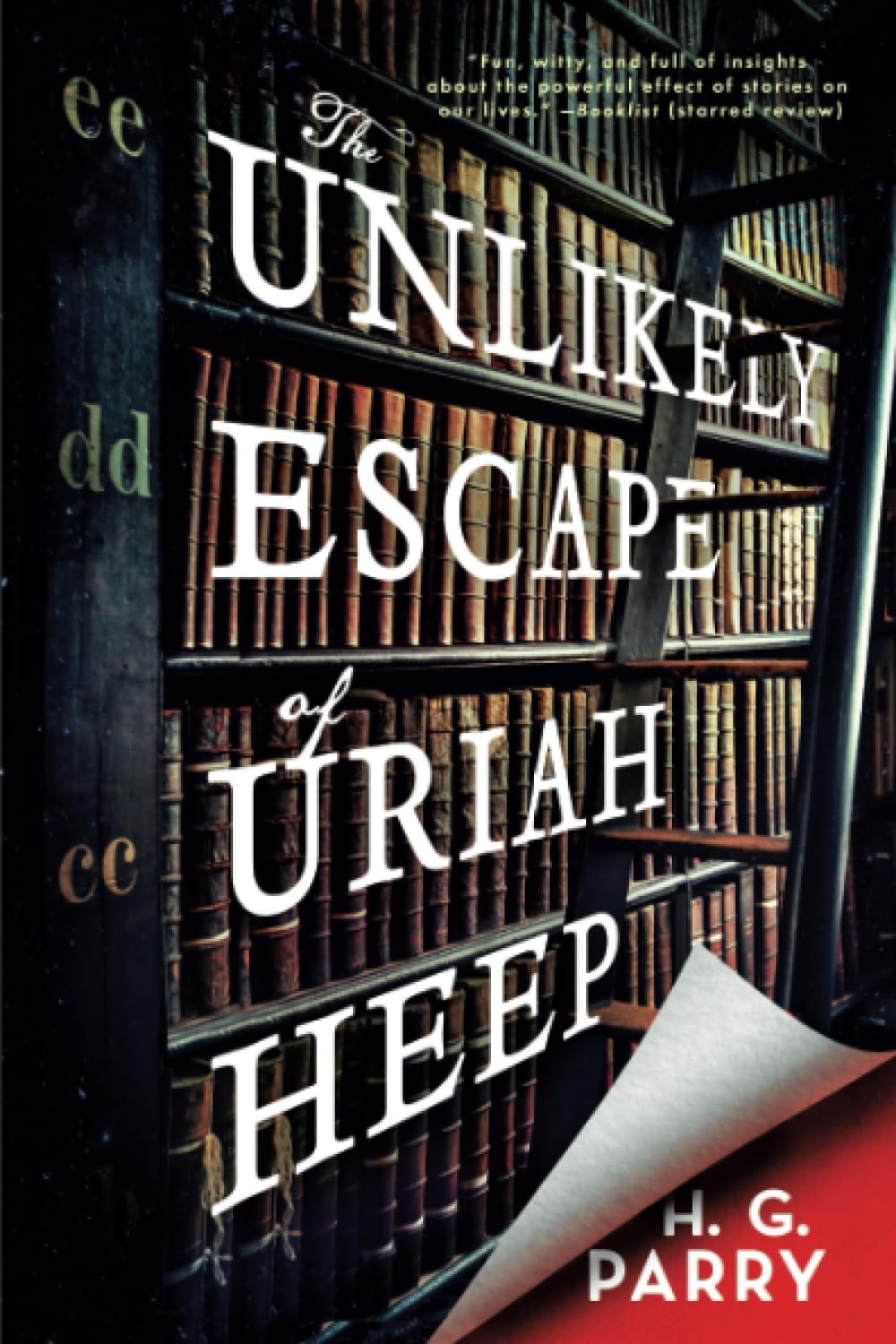
The Unlikely Escape of Uriah Heep by H. G. Parry

A booklover’s dream, this astonishingly great debut novel focuses on family and the power of story in a world of magic, imagination, and serious literary criticism. In Wellington, New Zealand, Rob Sutherland is a hardworking lawyer with a lovely partner, Lydia, and a trying younger brother, Charley, known to his colleagues as Dr. Charles Sutherland. Rob is longsuffering: Charley keeps calling him, often in the middle of the night, to come up to work (Charley teaches at Prince Albert University) and help him catch the characters he’s accidentally released from books so he can put them back. Rob has always had complicated feelings for Charley: he loves his little brother and wants to keep him safe, but he definitely stays annoyed with him much of the time, too. Though four years younger, Charley was a prodigy, who went off to Oxford University the same year that Rob went off to Prince Albert. Rob would have been considered intelligent in most families, but felt overshadowed by a child who read Dickens when he was two years old. One of this novel’s central threads is the challenge of an adult relationship between brothers, with a touch of sibling rivalry, many old wounds, and a persistent bond of love, loyalty, and protectiveness that runs in both directions.

So: Charley is a genius, of the scattered, distant, dreamy type, who keeps accidentally bringing fictional (and nonfictional!) characters out of books. It can get messy. Rob is the exasperated big brother who keeps helping clean up messes – not always in the best of humors. Then the messes get much bigger, beyond anything that Rob or Charley is prepared to deal with – out of their control, and, it eventually becomes clear, outside of Charley’s causing. But Charley, and eventually Rob, do decide that it’s within their responsibility to try to save Wellington, or the world.

This is a story filled with vibrant characters, and that plays with the layers of what ‘character’ can mean. Some are Parry’s (her characters’) interpretations of those written by others, including the title character, Uriah Heep, who comes from David Copperfield and is thus originally Dickens’s, now read by Charley (and Parry). Some are Parry’s originals but, within this book, credited to another (fictional) author. [The indomitable Millie Radcliffe-Dix comes from The Adventures of Millie Radcliffe-Dix, Girl Detective, which unfortunately do not exist in this world I’m out here living in.] And some, like Charley himself, are the inventions of this book. It quickly gets to be a lot, but gosh, in the most fun ways. Again: there was never such a booklover’s book.

The title of The Unlikely Escape of Uriah Heep refers to a character who is not even one of the top five or ten most important in the book – although he is the character at large in the opening scene, when Charley calls Rob in the middle of the night (again). He will reappear periodically. In some ways, Dr. Charles Sutherland is the main character of the book – he has the splashiest powers, and the central conflict rages around him; mysteries wreathe his past; he will have great choices to makes. But it is Rob who narrates the bulk of the book (with a few interludes as exception). In part, I think this is because there is a heavy emphasis, in this world and in this telling, on how one person’s “reading” of another impacts the person being read. Rob’s perspective on Charley matters a great deal. I think Parry’s choice of Rob as narrator is interesting; it shifts the reader’s reading, in similar ways. Whose stories do we matter in? As Dr. Frankenstein tells us: “What you need to understand about protagonists… is that we’re all busy with our own plots. We can’t help it; we’re not used to sharing our stories.” If that’s not a lesson for the real world, I don’t know what is.

I’m still reeling and will enjoy thinking about what this book has shown me as I move through my world and reading. I think it has the potential to be one of those that shifts how I think about it all – which is a big accomplishment. Also, everything Parry writes plunges me deeply and pleasurably into other worlds, which I love. I finished this book and dived directly into another big thick one of hers. Do recommend.


Rating: 9 doors.

Mexican Gothic by Silvia Moreno-Garcia

I really enjoyed Gods of Jade and Shadow, with the caveat for sensitive readers to beware a certain amount of gore and darkness. This one is imaginative, compelling, and surely fulfills its claims to the horror genre; but some of those more horrifying elements started to push my tolerances, which are famously high (though not limitless). I’d thought about putting this in white text, like I do spoilers, but I think it deserves a proper trigger warning: this novel not only deals in sexual contact without consent, but those scenes were heightened – at least in my feelings – by a mind-control element that caused the nonconsenting party to enjoy what was happening, as it was happening (although not before or after). This gave me a unique ‘ick’ I’d perhaps not encountered before. And in considering the book now, I find that part of the experience is overshadowing the rest for me.

It’s a good story, and well executed. I like the setting – beginning in 1950s Mexico City and then moving to a classically disturbing, possibly haunted, gothic mansion in disrepair, high in the misty rural Mexican hills. I like the details, including society’s dos and don’ts and the dresses and accessories of a popular, pretty, privileged young woman, our protagonist, Noémi Taboada. She’s plucky, thinks for herself, is unwilling to settle for a young woman’s few destined roles. These days, she’s thinking she’d like to study anthropology in graduate school. She’s well read, and also loves a party, a nice dress, and a fawning young man (and preferably a new one on a regular schedule). I like her.

Her cousin Catalina is a bit different, more demure, a few years older, enchanted by fairy tales and romance, which is how she ends up married to the enigmatic Virgil Doyle. Married, and spirited away to the yet more enigmatic estate known as High Place, on an abandoned silver mine. Where Noémi is to visit, and perhaps to rescue her.

High Place is bad news, its residents sinister (and dedicated to eugenics, ick again), its history very mysterious. Noémi is up for a lot, but this place may get the best of her. There’s always Francis, a Doyle cousin who might – on and off – be an ally. There’s a creepy old cemetery (of course), and something strange going on with the mushrooms. There are actually some really interesting ideas at play. But, like I said, the special ick I found here challenged me quite a bit.

I’ve left the rating at a 7. It’s a well-done story. But it’s left me feeling not so great. I’m intrigued enough to keep on checking out Moreno-Garcia’s backlist.


Rating: 7 cards.

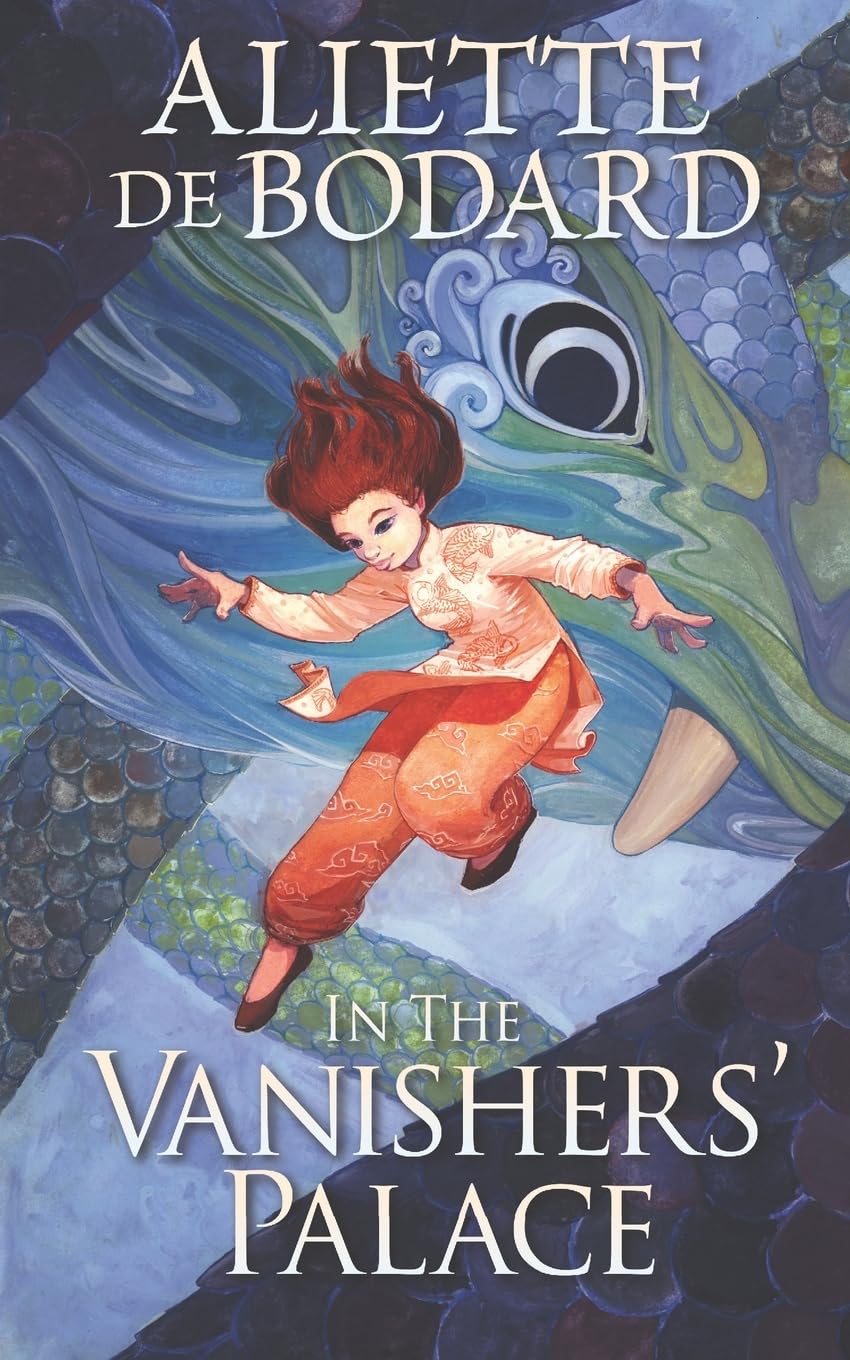
In the Vanishers’ Palace by Aliette de Bodard

This fantasy novel(la) comes billed as a reimagined, queer retelling of Beauty and the Beast. Perhaps I’m just working at a great distance from that original, but it didn’t recall it strongly for me. There is definitely a young girl kept captive in a palace by a being that’s understood to be a monster, and their relationship changes. The palace itself may have some powers. I see the parallels, but would never have thought of Beauty if I hadn’t been told to.

All of which is neither here nor there and has no bearing, for me, on enjoyment of the book. (Novella? At almost 200 pages, it might be pushing novella-length – these things are so tricky to define! – but it felt that contained, to me.)

Yên and her mother live in a somber village in a post-apocalyptic world, in which creatures called the Vanishers have (yes) vanished, but their legacy lingers: mysterious viruses, illnesses, and spirits, dangers lurking everywhere. Yên has failed as a scholar; her mother has value to the village as a healer, but as her mother’s just-mediocre assistant, Yên’s future is not assured. It does not surprise her to be sold away to pay off the village’s debts, to a frightening dragon: everyone expects she will be tortured to death by her new master, Vu Côn, but it turns out that Vu Côn (who can shape-shift between human and dragon forms) has other needs. She is the mother of intelligent, willful twins. And Yên, who had been teacher to her village’s children (apparently this was not judged a value??!), finds herself with new pupils.

Vu Côn and her children live in an abandoned Vanishers’ palace, a place of disconcerting, Escheresque, physically impossible dimensions and movements. The twins, Thông and Liên, possess powerful magic, and being nonhuman, as well as the children of her master, they give Yên different challenges than she’s faced with the village children. But they are children, nonetheless, clever and respectful of their new teacher (if headstrong), and she does care for them. Her feelings for Vu Côn are more complicated, blending desire with fear and resentment, and it appears this conflict is mutual.

The dragon’s eyes were a light grey, the color of storm clouds gathering. She was looking at Yên with an expression that was half-irritation, half-hunger, as if she would gobble Yên whole, given half a chance.

And what scared Yên most? This might, in the end, be just what she longed for.

Yên is dissatisfied living in the frightening Vanishers’ palace. She misses her mother and fears for her mother’s safety in their village; she misses home and knows it is unavailable to her, as the village elders who sold her away would never allow her return. She doesn’t know where to turn. And the readers understand before Yên does that there are deeper, darker secrets in the Vanishers’ palace than she’s yet discovered. But there are opportunities, too.

It’s a curious fantasy world, offering familiar elements (as they do) of our human desires and conflicts, but always with a twist – shape-shifting dragons, sure, but also, for example: Vu Côn has a magnetic sex appeal for our protagonist, but where I’m accustomed to seeing this expressed as heat, Yên experiences Vu Côn’s dragon-body as cold, wet, briny, and very sexy in these elements. That’s a new one for me, and I don’t find it easily accessible: “sea salt and cold, tight air, and a faint aftertaste like algae,” “wet cold creeping up her skin like fingers” – slimy, even! It’s an interesting twist, and one where I have to just trust in Yên’s tastes for Yên. But that’s what fiction asks of us, in different ways, right?

This was a fascinating adventure for me, in the ways that it did and did not fit into my expectations. And in the end, it calls upon some useful universals: big thinking about right and wrong, the way we relate to lover, friend, family, and community, the yearning for self-actualization and belonging. Dragons? Sure. I find Aliette de Bodard a lively imagination and I liked this punchy tale.


Rating: 7 strokes.

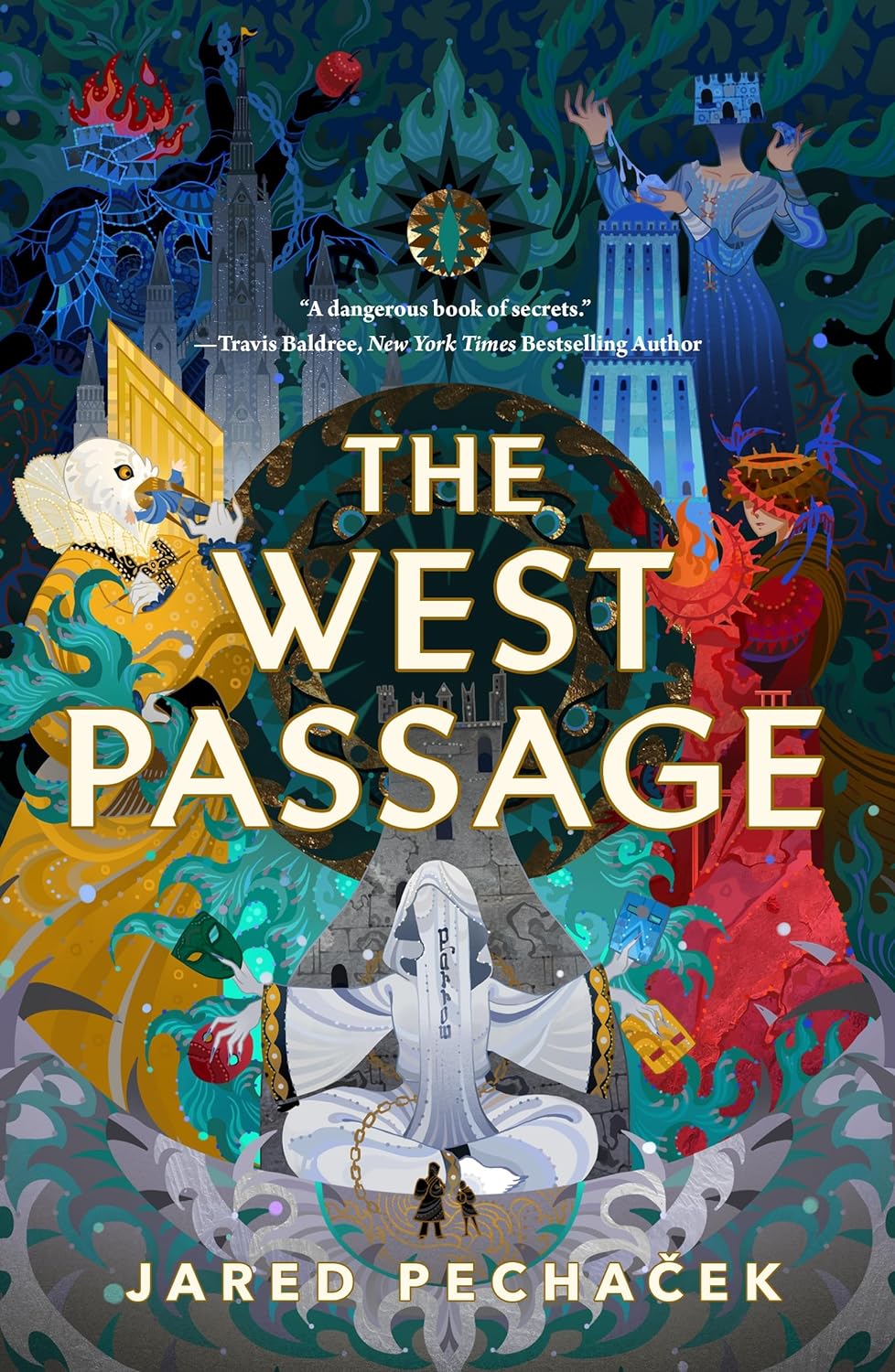
The West Passage by Jared Pechaček

Wildly imaginative world-building, a spellbinding plot, and profoundly weird characters make this fantasy debut a memorable adventure.

The West Passage by Jared Pechaček introduces a marvelously strange cast of characters struggling against outsized forces in a world both reminiscent of medieval Europe and unlike anything readers will recognize.

Pechaček’s teenaged protagonists are Pell, an apprentice to the Mother of Grey, and Kew, apprentice to the Guardian. One has trained in stories, songs, history, and rituals for births and deaths, the other in protection from the Beast. They live in Grey House, one of the five towers in an enormous palace that can take days to cross. Gargantuan, monstrous Ladies rule over the looming, decaying towers. The Ladies and their roles have changed and shifted slowly over many eras, their origins almost beyond all memory. Upon the deaths of the Mother and the Guardian, both Pell and Kew are thrust into positions they aren’t quite prepared for. Before the Beast rises again, for the first time in an era or more, they must each quest beyond Grey to save the world they know.

Kew departs first, striding fearfully with his books and little else down the West Passage. In just the early pages of his adventure, he meets a sort of trout-person and a creature with rabbit ears, battles with jackals, and rides in a lantern that moves to a whistle. Pell encounters apes and a crazed tutor, befriends a Butler Itinerant riding a hollowman, and collects an unlikely stowaway. Genders are changeable, and Ladies as well as wheelbarrows can hatch from eggs. Political machinations dating back to the “time of songs” are still at work in ways difficult for these protagonists to comprehend. “Was there no transfer of power that did not involve destroying the old? It seemed now that everything he knew about the palace’s history was the merest thread in a tapestry bigger than his mind could encompass.”

Pechaček provides detailed descriptions of otherworldly creatures: “Three corresponding shoulders sprouted beneath them, leading to three arms, though one was severed just above the elbow and capped with chased gold. The parts of her that were not talon-like were the same glassy material as her hands.” The effect is often disorienting but always fascinating, and despite extreme variations from the “real” world, questions about power structures and agency remain relevant. Pell and Kew have been brought up to uphold tradition and ritual, but to save the world, they must grapple with the possibility of change, and of choice.

The West Passage is an absorbing tale of political intrigue, touching comings-of-age, and a mind-bending phantasmagoria.


This review originally ran in the May 3, 2024 issue of Shelf Awareness for the Book Trade. To subscribe, click here.


Rating: 7 leaves.

The Dallergut Dream Department Store by Miye Lee, trans. by Sandy Joosun Lee

Sleepers shop for dreams at a very special department store, where dreams may come true not only for customers but for employees as well.

With The Dallergut Dream Department Store, Miye Lee explores the nature and power of dreams, the possibilities created by choosing them, and human nature itself. Whimsical and sweet, this debut novel translated from Korean by Sandy Joosun Lee will leave any reader musing and looking forward to a good night’s rest.

“For centuries, Penny’s hometown has been famous for its sleep products. Now it has evolved into a metropolis…. The locals, including Penny, who grew up here, are used to seeing outsiders roaming around in sleepwear.” Penny is terribly excited to interview at the Dallergut Dream Department Store, the crown jewel in a town devoted to sleepers’ needs. She has studied the mythology and history, but meeting Dallergut himself is intimidating. However, he turns out to be nothing but nice, forgiving her learner’s errors and prioritizing the sale of the right dream to the right customer, even over profits. Penny fangirls over the greatest dreammakers, whom she gets to meet in her new job: Nicholas, who specializes in seasonal dreams; Babynap Rockabye, who creates conception dreams; Maxim, who does surprising work in a dark back-alley studio; and Bancho, who cares for animals.

Penny has so much to learn, from bank deposits to the Eyelid Scale, not to mention the power of precognitive dreams. Purchased dreams are paid for only after they have had an effect on the sleeper, and payments come in the form of emotions experienced, so no one pays in advance or for a dud. Dreammakers can get fabulously rich and famous, but their best reward is helping people (or animals). Nap dreams differ importantly from longer ones. “Bad” dreams may serve a purpose, too. And there is, perhaps unsurprisingly, an important link between dreams, in the sense of aspirations and ambitions, and dreams as in the images and sensations that visit sleepers.

Penny is an innocent, wide-eyed disciple of Dallergut and his good works, as well as the celebrity dreammakers. Through her perspective and her refreshing tone, readers encounter an appealing, absorbing, imaginative world with rules for who designs experiences for whom. In her translator’s note, Sandy Joosun Lee calls The Dallergut Dream Department Store “a story that is both fun and deep… unpretentious yet full of life,” and keeps Penny’s observations disarmingly enthusiastic and earnest. The pleasing tale, while simple on its surface, asks questions about self-determination and the mysterious power of nighttime imaginings to impact one’s daily, “real” life. With a Calm Cookie or a Deep Sleep Candy, or just the right dream, all things are possible in Lee’s captivating world.


This review originally ran in the April 19, 2024 issue of Shelf Awareness for the Book Trade. To subscribe, click here.


Rating: 7 cups of forest-scented tea.

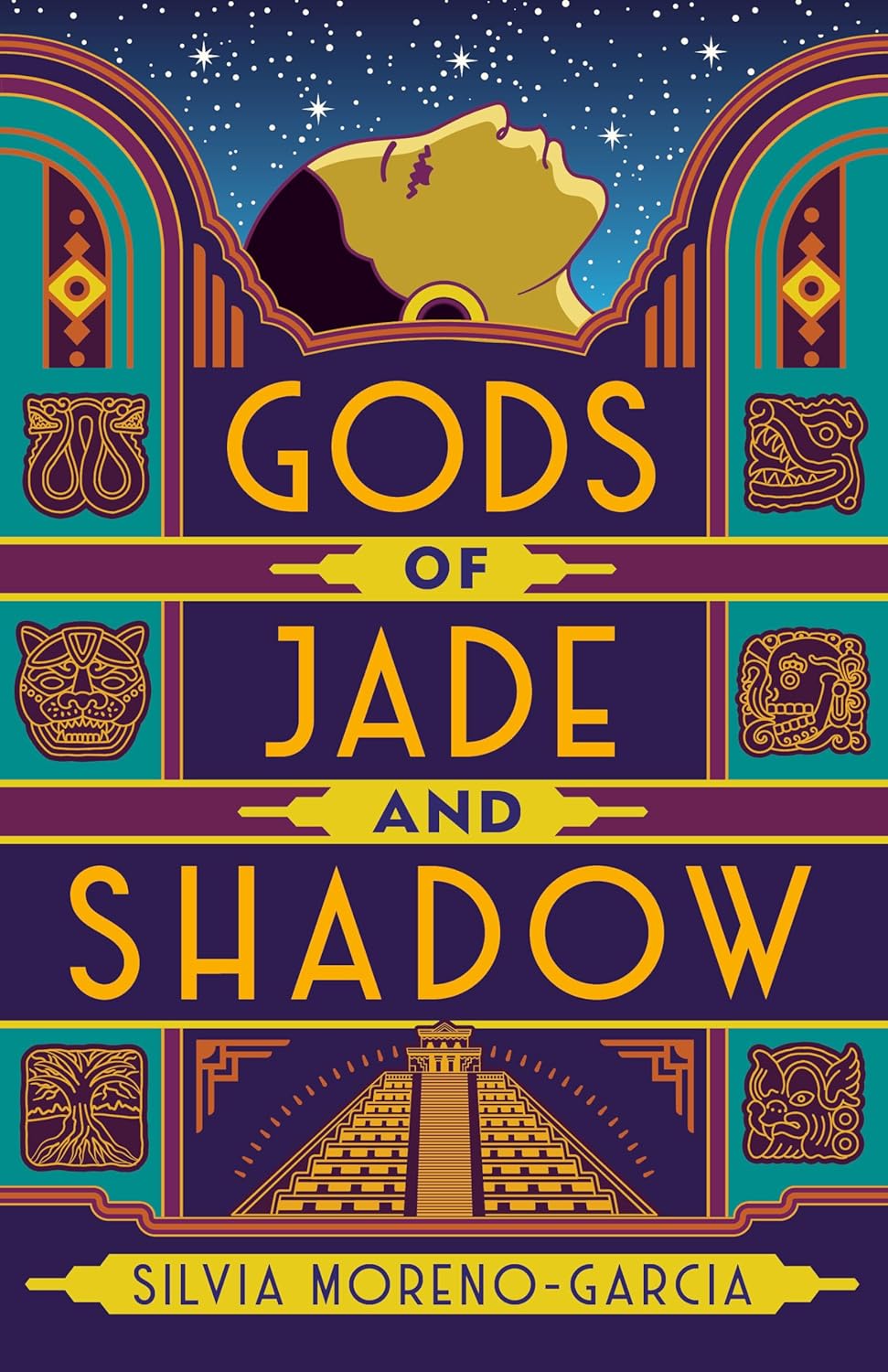
Gods of Jade and Shadow by Silvia Moreno-Garcia

A little bit of a fairy tale retold, relying more on Mayan mythology, recast in 1920s Mexico: culture, myth, and universal coming-of-age. I found it absorbing and will read more by this author (helped along by the teaser chapters at back of book from one of her other novels!).

We meet Casiopea when she is in her teens. She still thinks often of her father, a sensitive poet who taught her about the stars and named her for a constellation. Since his death, she and her mother have returned to her mother’s family home, where they are very much treated as poor relations, Casiopea doing a lot of scrubbing on her knees while harshly spoken to. Her grandfather is harsh, her aunts dismissive, but it is her cousin Martín who is cruelest. She is well aware of the Cinderella story and would prefer not to be framed this way–“she had decided it would be nonsense to configure herself into a tragic heroine”–but the reader sees it too. Instead, she resist self-pity, aims to never let her tormentors see her cry, and dreams secretly of escaping her small-minded small town and returning to her father’s city of Mérida.

She gets there by the most unexpected of paths: she accidentally releases a god of death, Hun-Kamé, who has been long imprisoned in a chest in her grandfather’s bedroom. With a fragment of his bone imbedded in her thumb, they are bound together. Hun-Kamé, dethroned and locked up by his twin brother, is missing a few key components–eye, ear, finger, and necklace–without which he cannot be. In his weakened state, Hun-Kamé needs the connection with Casiopea to move and live and make a bid for redemption, although this bond will make him increasingly mortal over time. And Casiopea will weaken and die if he does not remove the bone. But in the meantime, she gains a traveling companion, a meaningful quest, an adventure.

As a traveling companion, Hun-Kamé can be irksome; he has a tendency to boss her around, like everyone else in her world does, and servitude and submissiveness have never come easily to Casiopea. She is not afraid to work hard, but does not respond well to peremptory orders. She has to remind herself that this is a god–especially when traveling companion begins to feel like friend, something she’s really never had, and then even like something more. For his part, Hun-Kamé makes an effort to treat his traveling partner with respect. They have something, surprisingly, in common: both know the world mostly only at a remove, she from books, he from a distant deity’s omnipotence.

There is a lot to love about this story, several layers. Casiopea is a fun heroine: plucky, exasperated, curious about the world and yearning for fresh new experiences, yet concerned about breaking free of the rather conservative lessons she’s been taking in for a lifetime. The wider world is in flux: especially the cities she visits, like Mérida, Mexico City, and Tijuana, are full of music, fast dancing, and short-haired women in short dresses, all considered scandalous in the dusty village where Casiopea has spent her Cinderella years. In the company of a god who can pick up rocks off the ground and make them appear as coins, she suddenly has access to (for example) good things to eat, and I really enjoyed the repeated scenes where the mortal teenager is hungry and the god sort of sighs and patiently visits one café or restaurant after another even though food is not really his thing.

So we have a good-hearted, mature, responsible teenager–who is still a teenager–on a very important quest, the implications of which she and we learn only gradually, but also learning about the world, which is filled with cars, nice clothes, appealing snacks, flappers and ballrooms, and oh yes, a handsome god who is becoming part-mortal and therefore increasingly relatable. But also, because we’re drawing on Mayan myth, plenty of blood and monsters and decapitation and the highest of stakes. (Casiopea is as horrified as you are). Romance, mythology, violence, humor, dances and dresses, and family drama: in a fitting parallel, Hun-Kamé’s rival twin chooses as his own mortal champion the bumbling, cruel Martín, who is unlikeable but only human in his own struggles, to face off against Casiopea. It gets harder and harder to see how these characters will fight their way out of a pickle that involves fate and gods and a truly horrifying underworld, but read on til the end.

I love every bit of it, and got lost in this unique world. Can’t wait for more.


Rating: 7 waves.

The Order of the Pure Moon Reflected in Water by Zen Cho

“There was a brief lull in the general chatter when the bandit walked into the coffeehouse.” It was not because he was a bandit; this was fairly commonplace. It was because he was extremely attractive. Nevertheless, chatter eventually recommences, until a fight breaks out – waitress, belligerent customer, manager, the beautiful bandit, and then a homelier bandit #2 – smashing the place to bits. It’s an appropriately exciting first chapter, setting up a cast of characters that we will follow well beyond the bounds of the coffeehouse. In fact, the majority of this short, lively book is set in the jungles and on the roads of a kingdom in turmoil.

The waitress is quickly recognized by her shaved head as a nun in the Order of the Pure Moon Reflected in Water. She is clever, resourceful, quick-witted, and highly trained in combat, but also a bit innocent. She follows our bandits (who are lucky no one noticed they appeared on a Wanted poster in the coffeehouse) and part-forces, part-cajoles her way into their gang, otherwise all male; the men are variously intrigued by the idea of a woman cooking for them (she turns out to be a terrible cook) or being available for sex (she sweetly informs them she would have to castrate them afterwards), or annoyed by her presence. Her devotion to the goddess she serves is very strong. As our nun-waitress-bandit and the rest of the gang get to know each other and pursue their banditry, conflicts arise in their approaches to religious fervor, history, and interpersonal relations, but they will find common cause.

At just 158 pages, The Order of the Pure Moon Reflected in Water was easy to devour in an evening. It combines playful humor with very real tragedy, political messiness, the truest of friendships and the beginnings of romance. It’s a swashbuckling series of escapades with ideologies, justice, religion, relationship issues, and more. With some twists on gender and sexuality, this thrilling, silly-yet-earnest adventure tale is definitely a readalike for Upright Women Wanted, although it feels a bit more fully realized in its small package. Absolutely recommended, and I’ll take more from Cho.


Rating: 7 jade prayer beads.

A War of Swallowed Stars by Sangu Mandanna

This review contains spoilers for books that precede it in the series, but is spoiler-free for this book.


This is the third in a trilogy, following A Spark of White Fire and A House of Rage and Sorrow. And it had me pretty rapt, y’all. I was on the edge of my seat throughout, and I cried at the end, but in a good way, which makes me feel glad for the newly-12-year-old I’ve just gifted it to for her birthday. (I teased her that she had to wait because these books are labeled 12 and up!) The world we have come to care about over three books is in great peril, as are the relationships we’ve invested so much in. And it’s not that nobody we love is lost in this book; but it all ends in a way that feels right.

The Celestial Trilogy has featured magical weapons, gods and monsters, murderous family members, and friends where we’d least expect them. Esmae has experienced great and intense trauma, and weathered some very real depression. “I don’t know how to make my way through to the other side of it… I can’t see anything but the dark. I feel like I’ve fallen down a cold, dark hole and I’ll never get out.” Whew. But she has good friends. And she has good on her side. Hang in there, readers.

Mandanna took us through a lot in this series, but the emotional roller coaster has been well-earned, and it pays off in a big way. I can’t wait to hear what my young friend thinks. And you all.


Rating: 8 moments of eye contact.

A House of Rage and Sorrow by Sangu Mandanna

As I’ve decided will be my regular procedure around here, this review contains spoilers for books that precede it in the series, but is spoiler-free for this book.


Following A Spark of White Fire is A House of Rage and Sorrow, book 2 in the Celestial Trilogy by the author of The Very Secret Society of Irregular Witches. I love it.

Esmae is still reeling from the loss of her best friend at the end of book one. Also quite painful is the fact that Rama was killed by her twin brother in a duel, as he thought he was fighting Esmae herself: not only did Rama die, but her brother meant to kill her. Esmae’s anger is beyond description. She wants to burn it all down. She is also carefully avoiding a burgeoning romance, because (I judge) she is as angry with herself as with anyone, and doesn’t think she deserves it.

She is also, however, making friends. Surly Sybilla has cracked open and become as loyal to Esmae as to Max; beloved Rama’s sister Radha has appeared on the scene and begins making her way into the group, not without hiccups. There is a small, new, perhaps fragile, but very real family of friends forming around the girl who has always mourned not having a family.

Then again, the political intrigues and betrayals surrounding her flesh and blood keep multiplying, and the revelations and bad news keep coming. Just how much can one teenaged girl go through? A House of Rage and Sorrow ends on a cliffhanger, not unlike book one; but unlike that finish, this time I had the next installment at hand. Stay tuned for book three in this trilogy.

I love that romance keeps developing (and not just for Esmae!) alongside anguish and intrigue, and a very real and believable coming-of-age arc in which Esmae tries (at least a little) to balance her rage against her better wishes for her loved ones and her wider world. I can’t wait to see where we’ll go next.


Rating: 7 lions.