reread: Pieces of White Shell by Terry Tempest Williams

pieces of white shellThis memory from my childhood was every bit as good this time around. Terry Tempest Williams is a curator at the Utah Museum of Natural History in the early 1980’s, and in encountering Navajo people and their stories, she begins to learn her own natural history, her own and her (Mormon) culture’s connections to the earth, and how to find and tell stories herself. The tone is fanciful, but also grounded in the literal ground of her local environment in the Utah desert. In her first chapter, she shakes a small leather pouch out onto her desk and finds a sprig of sage; rocks, sand, and seeds; turquoise, obsidian, coral; pieces of white shell; yucca; a bouquet of feathers bound by yarn; coyote fur; a bone from Black Mountain; deerskin; wool; a potshard and some corn pollen; and the Storyteller, a clay figurine from Jemez. These objects, collected during her communion with people and place, form the chapters of her book. I’m not sure whether to call these stories or essays; they are both. There is an element of dreaminess: she is sure she heard the drums of the Anasazi, and tells of transforming into Flea to hide out and listen to the stories the animals tell on Black Mountain. These are not literal truths in the scientific world as we understand it. Does that make these stories fiction? Allegory? Spiritual journeys? I’ll leave it to you. I am not a spiritual person by any standard definition, but Terry Tempest Williams holds me in thrall. This book is still the one of hers that touches me most deeply.

I don’t know how many times I read this book as a child, but it clearly made a deep impression on me. Several lines echoed like I just read them yesterday, or like I’d copied them into countless margins and scrawled them in notebooks over the years. “How could I tell him the mind creates those things that exist. I couldn’t, and so I concentrated on birdlife to avoid a confrontation.” “No one culture has dominion over birdsong. We all share the same sky.” “If we all live, and continue to increase as we have done, the earth will soon be too small to hold us, and there will be no room for the cornfields” (says Coyote in one of the Navajo stories). And new lines jumped out at me on this reading. Because I’m working on processing my relationship with place: “Sometimes you have to disclaim your country and inhabit another before you can return to your own.” “Each of us harbors a homeland. The stories that are rooted there push themselves up like native grasses and crack the sidewalks.” Like all the best books, then, I’m continuing to discover it.

The stories Williams tells in each chapter of this book are from her life, living and working at the very four corners of the four corners states. A Utah Mormon, she gets to know the Navajo and their stories, and sees certain similarities between these two cultures which share a place. She explores Navajo stories and the storytelling tradition, the animals and plants and places they interact with, and uses these to map her own life; she explores story as tool for communication, history-building, and wise and respectful relationships with our earth, and its human and nonhuman inhabitants. In reading these stories, as a child, I was enchanted by the stories of animals like Coyote, Bear, and Badger, and characters like Monster Slayer and Child-of-the-Waters, who were twin sons born to Sun and Changing Woman. I learned about the flora and fauna of New Mexico and Utah deserts (quite exotic to me then, and now). In rereading the same stories as an adult, I get more of Williams’s search for answers about the world, about her family, her homeland, its significance, and her spiritual and cross-cultural questions. It is a rich experience.

My mother asks if this is a children’s book. I did first find it as a child and loved it then, in elementary school. Its origins in my family are unknown; I feel like it just appeared on a bookshelf. Someone must have bought it – for me specifically, it seems likely. I am an only child. But we don’t know. Neither of my parents remembers it. As it turns out, Pieces of White Shell is not marketed as a children’s book. But Williams worked with children (as well as adults) when she wrote it, and in the stories she tells. It is certainly accessible to a child, in its tone of wonderment and simple joy and careful observation.

This was published in 1984, and Refuge in 1991, and I can see some of the evolution. In Pieces of White Shell, Williams is still getting to know her world; in the later work, she more confidently moves in it and speaks of it, although she has retained her capacity for wonder (still alive and well in her recent retelling, The Story of My Heart). Refuge is also necessarily much sadder, as it studies personal loss while Pieces of White Shell takes pleasure in discovery.

Terry Tempest Williams was and is a remarkable, completely singular voice. “You always hear wings,” her family tells her in an anecdote in her prologue. I marvel, and I continue to learn from this deceptively simple grouping of stories. She is better known for other works but this is still my gold standard.


Rating: 9 coyotes.

The Early Stories of Truman Capote

These previously unpublished stories written in Truman Capote’s youth are instantly recognizable.

early stories truman capote

The Early Stories of Truman Capote contains 14 stories, most previously unpublished, written in Capote’s teens and 20s, and only recently unearthed among his papers in the New York Public Library archives. Presented with a foreword by Hilton Als of the New Yorker, these are short pieces, studies of subjects Capote would continue to favor in the later works for which he is known: sensitive young children, fractious ladies, the poor and the disenfranchised. They are set in the Deep South, in New York City, in swamps and in small towns.

The talents of the author of In Cold Blood and Breakfast at Tiffany’s are evident in this early work. His descriptions are simple but strongly evocative: “curly, wig-like grey hair” and eyes “bright, like bubbles of blue glass.” His characters tend to be laconic but expressive, with interjections speaking as loudly as words. In “Swamp Terror,” a boy chases a convict into the woods and gets a bigger taste of adulthood than he bargained for. In “Louise,” a schoolgirl lets her petty jealousies do irreparable harm. “Traffic West” presents a remarkable collection of characters and events, in experimental form. In other stories, a young boy finds the dog of his dreams in a park, but the dog belongs to another child; and two wives muse on the hypothetical murder of their husbands.

These easy-reading, alternately amusing and haunting stories offer a fresh, new glimpse of Capote’s genius, and simultaneously feel intimately familiar.


This review originally ran in the November 6, 2015 issue of Shelf Awareness for Readers. To subscribe, click here, and you’ll receive two issues per week of book reviews and other bookish fun!


Rating: 7 deaths.

“The Birds” by Daphne du Maurier

I came to “The Birds” by the following convoluted path: I encountered the movie Psycho in two books at once (Body Toxic and Memento Mori), and made a note that I wanted to see it. I realized I’d not seen any Hitchcock, in fact, and he so famous! (You know I’m underexposed to movies.) I looked up Hitchcock and his long list of films, and noted a few that I’d like to see (and realized I have seen one, Strangers on a Train). The Birds made my list; so I thought I’d read it, first. I got my full-text version here (with only a few typos).

"The Birds" was first published in the 1952 collection The Apple Tree. Wiki image

“The Birds” was first published in the 1952 collection The Apple Tree. Wiki image

It’s been a while since I read Rebecca, but I felt like du Maurier’s tone here was more simply and straightforwardly narrative, like there was less sense of foreboding. Nat works part-time at a farm on the English coast, and receives a pension for a wartime disability. (Which war? I’m going with the First World War.) He and his wife and two small children live just nearby. They live a simple life which is simply described; although, the very first sentence does offer a note of warning.

On December third, the wind changed overnight and it was winter.

It is on that night that the birds first attack and, well, the story grows from there.

Nat’s family is isolated and ill-prepared for an unexpected but extraordinarily powerful enemy (and in this way, actually, parallels the zombie apocalypse story concept that’s so popular just now). Their world immediately shrinks to a very small area that they hope to secure against foes so numerous as to be irresistible, and this I think is what makes it terrifying – that, and the possibility that they are alone in the larger world as well. It is stark, sudden, and total; the situation beyond Nat’s line of sight is unknown to him, and his final fate is unknown to us, which is quite unsettling. I found it effective as a short story, and so austere. Also short: and that is the challenge for the movie, which I can only guess expands generously upon this story. I look forward to it. And acknowledge du Maurier’s skill, as ever.


Rating: 7 wrens.

guest review: “USFS 1919: The Ranger, the Cook, and a Hole in the Sky” by Norman Maclean, from Tassava

Tassava is back: earlier this week we heard from him about “A River Runs Through It.” Today, the final story in Maclean’s earth-shaking collection of three.

More Maclean…

Friday night – after stopping several times to put off the ending as long as possible – I finally finished Norman Maclean’s “USFS 1919: The Ranger, the Cook, and a Hole in the Sky,” the third story in the collection that my friend Julia bestowed on me a couple weeks ago.

Bill Bell Heads Back Out by R. Williams

Bill Bell Heads Back Out, by R. Williams

He says this story is “shorter than but at least as good as” the title piece, “A River Runs Through It,” which sort of blows my mind – tell us more, Tassava!! Maybe I should go back for a reread, because I remember liking the other two stories but feeling that the longer one was superior. Also, I’m curious to hear what didn’t work for you about “Logging and Pimping and ‘Your Pal, Jim,'” which I remember thinking well of – perhaps even over this one! – for its detailed descriptions of the logging lifestyle and the conflict with Jim. I’d like to better understand. And I can’t wait to hear about still more Maclean to come!

musings on “A River Runs Through It” by Norman Maclean, from Tassava

In reading and rereading some pieces by and about Maclean recently, I was struck by the certainty that my buddy Tassava would love him. He told me he’d read none, so I set out to remedy that. Unsurprisingly, A River Runs Through It and Other Stories was a big hit.

Rivers Run through It

At my friend Julia’s recommendation, I read Norman Maclean’s “A River Runs through It” today – a gorgeously warm fall day that seemed perfectly suited to the action of that incredible, indelible, devastating story.

He follows with some photos that reflect his personal connection to Maclean’s writing.

Henry's Fork in Island Park, ID (March 2014), photo by Tassava

Henry’s Fork in Island Park, ID (March 2014), photo by Tassava

Read the rest here.


Thanks, Tassava. I hope you love Young Men and Fire as much as I did, too!

The Old Globe presents In Your Arms

I was so lucky last week to get to accompany my Grammy to this outstanding theatre production, which is a little hard to describe, but of course I’ll try.

photo by Buck Lewis, courtesy of New York Stage and Film & Vassar's Powerhouse Theater

photo by Buck Lewis, courtesy of New York Stage and Film & Vassar’s Powerhouse Theater

In Your Arms is a dance-musical production with very little dialog. It is a series of shorts, mostly unconnected, but with a theme of romantic relationships. These vignettes range through time and geography, sometimes implied and sometimes explicit, as with “The Lover’s Jacket,” in which dates and locations (Spain in 1939 and Argentina in, I’m pretty sure, 1940) are projected against the wall. This is one of the finest and most communicative pieces of nonverbal storytelling throughout the whole, although all of them were impressively clear in their messages and emotions despite being mostly wordless. Details might be blurred, of course, but the feeling and action of each piece was perfectly plain.

The exception was Carrie Fisher’s contribution, “Lowdown Messy Shame,” which is voice-overed by Fisher as she is seated off to one side at a typewriter, composing the action we see played out across the stage. The players act out Fisher’s imaginings but also comment upon them, in a cute innovation. One review found this one overly wordy – and indeed it was almost the only spoken theatre of the evening – but I enjoyed it as much as any other, despite its differences. (“The Dance Contest” also uses some voiceover.)

As I said, these shorts had a shared theme, but remained distinct. I loved the survey over time, space and culture. And then they are tied together by opening and closing pieces featuring a singer expressing nostalgia for loves past. Here I agree with the Union-Tribune (link above) that less song would have been fine; but I think these scenes served well nonetheless to emphasize the loose links between all the pieces. Overall, this nearly-wordless hour-and-forty-five-minutes of music, dance and theatre was profoundly emotional and moving, over a wide range of topics but centered around affairs of the heart. I was deeply impressed; it’s the best thing I’ve seen in a long time.

I was further pleased by stage settings and costume. No set stands out in my memory as being particularly complex or elaborate, but each was distinct and evocative, and the transitions were smooth and easy; I love seeing a change of just one or two elements transform a stage and introduce a new setting with perfect clarity. I think that kind of subtle-but-clear set design is more impressive than elaborately complete stage dressings. A unique element here, too, was the use of shadow and projection throughout; the time-and-place cues in “The Lover’s Jacket” were projected on the screen, and shadows were a major feature in “A Wedding Dance,” while projected home movies were central to “Life Long Love.” The costumes were great fun, too, and well designed for showcasing the dance as well as helping to tell the story. I liked the protagonist’s costume in “Life Long Love” for what it emphasized and revealed, while also looking demure at the appropriate moments.

I do want to say briefly that I wasn’t sure about the racial tones in “A Wedding Dance”, which tells the story of an African couple’s immigration or… kidnapping? I don’t have enough information to be certain whether this was a well-told realistic story, or an ugly appropriation of stereotypes. Likewise “White Snake,” which tells the story of a white businessman who reads comic books and fantasizes about his Asian assistant. It was a great piece of theatre and movement, combining dance and martial arts and a lovely representation of the blurry line between fantasy and reality. But I wasn’t sure how much fun we should be having with certain stereotypes there, as well. I haven’t worked out what’s okay here, in part because of the lack of details in wordless theatre. Just something I wanted to note. On the other hand, the same-sex couple in “Artists and Models, 1929” was represented with sensitivity and realism and I found them delightful. I want to say that this was one of my favorite pieces, but gosh, I want to say that about nearly all of them.

Finally, I must note that this event took me back to San Diego’s Old Globe theatre, where I saw what I’m pretty sure was my first Shakespeare production, in 1992, when I was 10 years old. The theatre and surrounding park still felt familiar, and it was such a treat to be there again with my Grammy, thoroughly aside from the quality of the show.

If you have a chance, definitely make a point to see In Your Arms. It was a rare treat for me. There are rumors it might be Broadway-bound, so maybe a larger audience will get an opportunity at it.

Thanks, Grammy, this was so special.


Rating: 9 memories.

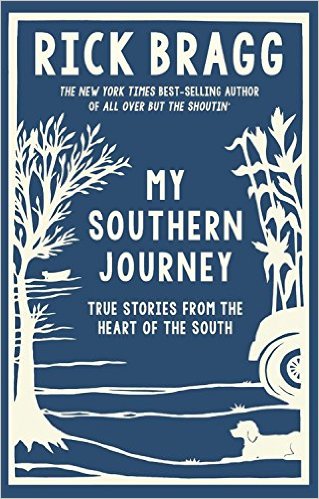
My Southern Journey: True Stories from the Heart of the South by Rick Bragg

Extraordinary, brief, true stories of the Deep South that are funny, haunting and redolent.

my southern journey

My Southern Journey: True Stories from the Heart of the South showcases the singular voice, humor and perspective of Pulitzer Prize-winner Rick Bragg (All Over but the Shoutin’), in short, entertaining stories. As he introduces it, “this book is a collection of Southern stories, but it is not a litany of pig pickins and frat parties and cutthroat beauty contests.” Rather, these are fervent, funny, heartfelt memories of places and cultures that need remembering.

Bragg shares his experience of the Deep South, from his family home in northern Alabama to Florida, Louisiana and the Alabama coast. Readers quickly become acquainted (or reacquainted) with his large and lively family, as Bragg brings immediacy and intimacy to his setting and cast of characters. His mouthwatering descriptions of the food of his homeland–centered on various forms of pork but with a heavy emphasis on Gulf Coast seafood as well–are flavorful and evocative. He occasionally claims that “I can’t write well enough to tell you how good it was,” a risky writerly trick that Bragg easily pulls off. He considers the red dirt of northeastern Alabama as both physical and symbolic. Bragg’s tone is self-effacing and often hilarious, which belies his ability to approach serious issues, like his treatment of overfishing and the Deepwater oil spill.

In exploring family, a sense of place or home, and the distinctive details of Southern food and culture, Bragg exhibits an exquisitely nuanced, clever voice, partly disguised by a down-home accent. Readers will laugh, and cry, and yearn to head South.


This review originally ran in the September 25, 2015 issue of Shelf Awareness for Readers. To subscribe, click here, and you’ll receive two issues per week of book reviews and other bookish fun!


Rating: 9 paper bags of cracklin’s.

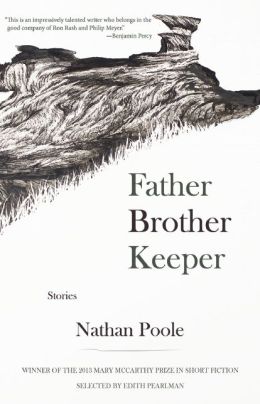
Father Brother Keeper by Nathan Poole

This memorable collection of reflective short stories about commonplace tragedies showcases a gentle, painstakingly accurate writing voice.

father brother keeper

Nathan Poole’s debut collection of short stories, Father Brother Keeper, won the Mary McCarthy Prize in Short Fiction and is an emotionally evocative and varied experience. Its contents are rarely connected, as when two consecutive stories follow one family through generations of gentle conflict. However, even stories that don’t share characters do have in common their settings in rural Georgia and a series of small towns. Each is a miniature masterpiece of perfect, often tragic realism, featuring men, women and children dealing with everyday trials: illness, death, divorce, financial hardship.

An old man fights his dementia–“he was losing traction”–when his estranged daughter leaves her two small children with him and drives away. A young man finds more than a dozen bait dogs (fight dogs past their prime) abandoned on his family’s property and accuses the wrong man of the brutality. Two brothers react in different ways toward their mother after their father leaves. Two young neighbor girls who are friends contract the same illness but with different outcomes; mapping this divergence is a challenge for each family. In the stories labelled “Two from Sparta,” four generations live off their land in slightly different ways, each father learning how to make his way with his son. A young man sets out to find the oldest, biggest tree of each species in the country, to honor a death. “It would be an easy thing to do, and good… a dedication. The year I would learn the joy of calling each thing by its proper name.”

Poole’s achievement in this collection is just that, calling each thing by its proper name. Though perhaps simple in their subject matter, each story is weighty in its emotional impact, and sharply, poignantly real. The stories all feature people living simply, accommodating change if not embracing it, and struggling to move forward through whatever life hands them. Poole’s voice is original, authentic and starkly honest; he is clearly compassionate toward his characters even as he walks them through terrible everyday calamities. Father Brother Keeper is a slim book but one that demands to be read slowly and thoughtfully, so that the hints of redemption can percolate. Meticulous, gorgeous and brooding, these stories will appeal to connoisseurs of the short story as well as fans of traditional Southern ways of life and literary fiction.


This review originally ran as a *starred review* in the February 5, 2015 issue of Shelf Awareness for the Book Trade. To subscribe, click here.


Rating: 7 barrels.

Teaser Tuesdays: Father Brother Keeper by Nathan Poole

Teaser Tuesdays is a weekly bookish meme, hosted by MizB of Should Be Reading.

father brother keeper

Usually I pick out these teaser bits for you especially, but with this lyrically wonderful little book, I opened at random and found these striking lines.

All night long the dealership lights gleam in the madness of the razor wire. Large violent curls, beautiful and intricate, hang in bobs up the tall inverted parabola, and it makes you wonder, seeing all that razor wire, seeing it shine all night long, just who is living in there, and why all that fuss, and what would they do to you if they met you on the street. Would they say warm, strange things to you? Would they tuck you in, hand you the gift of a story, an old knife, kiss your forehead softly like a mother?

I think it’s a fine test of poetry, to open a book and fine something like this. The content is excellent, too.

This quotation comes from an uncorrected advance proof and is subject to change.

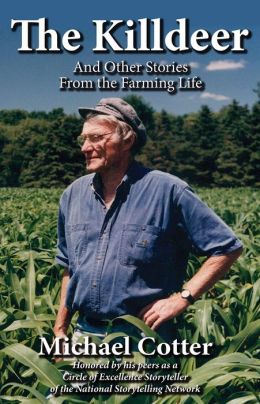
The Killdeer: And Other Stories From the Farming Life by Michael Cotter

There is something for everyone in this very special collection of moving stories about the farming life, and the human experience.

killdeer

Michael Cotter, born in 1931 on Minnesota land his family had farmed since the 1870s, was scolded from an early age: “Cut out those damn stories and get some work done around here!” As a hardworking livestock farmer, his natural inclination toward storytelling had to be suppressed. He was nearly fifty when he attended a workshop that reactivated his artistic side and began his storytelling career. The Killdeer and Other Stories from the Farming Life compiles his stories, full of simple humor and pathos of his life experiences and storytelling prowess.

…Click here to read the full review.


This review was published on November 6, 2014 by ForeWord Reviews.

IMG_4538


My rating: 8 kittens.