When Women Were Birds by Terry Tempest Williams

Terry Tempest Williams’s thoughtful, melodious meditations on the contents of her mother’s journals.
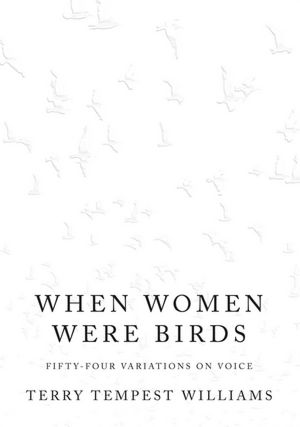

Terry Tempest Williams (Leap, Refuge, etc.) approaches a very personal subject in When Women Were Birds. The opening scene sets the stage: Williams’s mother, on her deathbed, directs Williams to her journals (of which the author was unaware). They turn out to be empty–and the rest of the book is a series of ruminations on this mystery.

Williams contemplates the meaning of a person’s (or more specifically, a woman’s) “voice,” in the sense in which a writer might use the term and in its more literal sense. She contemplates mothers and daughters and the meaning of their relationship, sharing some of the traditions of her own family and of the Mormon faith in which she was brought up. She also shares anecdotes from her marriage, so that the book follows her (in nonlinear fashion) from her foremothers through her childhood and into the present. There are lots of women in this book, as well as lots of birds. Williams touches on serious topics–including abortion, environmental activism and ax murderers–but always with a respectful, quiet, lyrical tone.

Often as much poetry as prose, and full of lists, quotations and letters, When Women Were Birds is truly a tribute to several generations of the strong, inspiring and interesting women of Williams’s tribe. It is a loving creation, showing all the musical, reflective intelligence we expect from Williams, and a lovely example of her own voice.


This review originally ran in the April 20, 2012 issue of Shelf Awareness for Readers. To subscribe, click here, and you’ll receive two issues per week of book reviews and other bookish fun!


Rating: 7 pagesofjulia.

Taco USA by Gustavo Arellano

A deliciously close-up look at Mexican food in the United States.


Gustavo Arellano is the author of the nationally syndicated column ¡Ask a Mexican! (and a 2008 book by the same title). Fans will recognize his voice in Taco USA: wise and knowledgeable, but always conversational and informal, even rambling–and very, very funny. Arellano capably handles the history of Mexican people and their cuisine, but Taco USA is less about Mexican food in Mexico than about its interpretations in the United States.

Several waves of Mexican food that have swept the U.S. (beginning with tamales and chile con carne or “chili”), and Arellano treats these as historical trends, tying them to larger themes in U.S. food history. We are reminded that Mexico is the source for global food staples such as corn, tomatoes and chocolate as well as the chile itself. Arellano refutes an emphasis on “authentic” Mexican cuisine in favor of the various permutations (Cal-Mex, Tex-Mex, southwestern, even Midwestern Mexican) that we know and love today. These are not bastardizations, he argues, but legitimate culinary heritages unto themselves, related to the Mexican tradition but not beholden to any of its rules. He is obviously passionate about his subject, which takes him from Taco Bell to Mission-style burritos to Rick Bayless.

Even the experienced border-dweller or Mexican food aficionado is likely to learn a lot, and giggle while doing so. What more can one ask of nonfiction? Just beware a growing desire to run out and get a burrito.


This review originally ran as a *starred review* in the April 17, 2012 issue of Shelf Awareness for Readers. To subscribe, click here, and you’ll receive two issues per week of book reviews and other bookish fun!


Rating: 8 delicious burritos.

River in Ruin by Ray A. March

One American river’s well-researched journey from trickling stream to environmental disaster.


The Carmel River is barely a stream at its source, less than 40 miles long, and likely known only to the residents of its immediate surroundings. But it has a rich and telling history–from early Spanish explorers to its eventual place on the nonprofit environmental organization American Rivers’ top 10 list of Most Endangered Rivers in 1999. But the Carmel is especially important to journalist Ray March because he grew up nearby; with River in Ruin, he makes an excellent case for its story being an archetype of endangered rivers everywhere.

The paradise that is California’s Monterey Peninsula has attracted settlers since 1602, when Sebastian Vizcaino first discovered the Carmel River. Later, railroad magnates adopted the area as a site for profitable tourism, quickly followed by real estate speculators and the development of several small towns. The original Spanish mission and agriculture, followed by the later hotels, golf courses and townships all relied upon the Carmel for water, requiring the construction of dams and reservoirs and the flooding of idyllic valleys. Ecological implications abound: forest fires were exacerbated by a no-burn policy; the local steelhead population is nearly extinct. March details these and more consequences of local development while showing how the growth of the environmental movement nationwide has paralleled local awareness of the plight of the Carmel River and Monterey Peninsula. March’s treatment of the history, the politics and the personalities involved is heartfelt and personal; several times he consults diaries and includes individual stories (including his own), making the Carmel’s story resonate with his readers.


This review originally ran in the April 6, 2012 issue of Shelf Awareness for Readers. To subscribe, click here, and you’ll receive two issues per week of book reviews and other bookish fun!


Rating: 7 salmon.

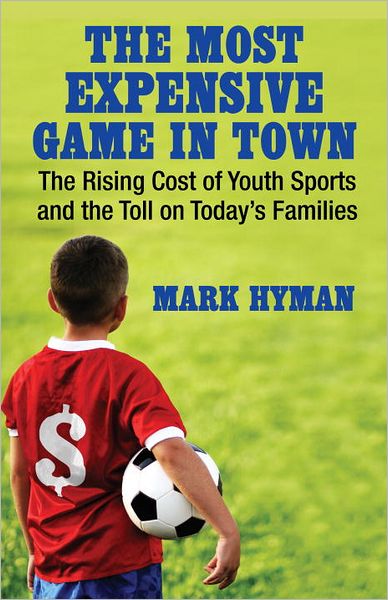
The Most Expensive Game in Town: The Rising Cost of Youth Sports and the Toll on Today’s Families by Mark Hyman

An impassioned argument that the mass commercialization of youth sports is not healthy for kids.


Mark Hyman’s first book, Until It Hurts, dealt with our national obsession with youth sports and its negative consequences for our children. The Most Expensive Game in Town expands on that theme by following the money. His research includes interviews and discussions with parents and grandparents, coaches, corporate sponsors and entrepreneurs–all of them spending and making money from youth sports in the United States. His conclusion: money can have adverse effects on the kids that sports programs are supposed to benefit in the first place, even when many of the parties involved have only the best intentions.

Hyman’s case studies include visits with parents who became unintended entrepreneurs because they saw a way to improve their kids’ experience as well as parents disturbed by the costs of supporting their kids. He looks at the big business of marketing through children–such as youth tournament sponsorships–and the promises made that kids will have a heightened chances of playing college sports or landing an athletic scholarship.

It’s difficult to grasp the size of the ill-defined youth sports industry, but Hyman makes it clear that the amounts involved are shocking. Finally, he examines the plight of kids in inner cities (and others affected by poverty) whose access to the obvious benefits of sport, participation and competition is limited. Hyman’s arguments are well-researched yet very readable, bringing home an issue that is perhaps underexamined but of great importance to parents and concerned citizens.


This review originally ran in the March 27, 2012 issue of Shelf Awareness for Readers. To subscribe, click here, and you’ll receive two issues per week of book reviews and other bookish fun!


Rating: 5 soccer balls.

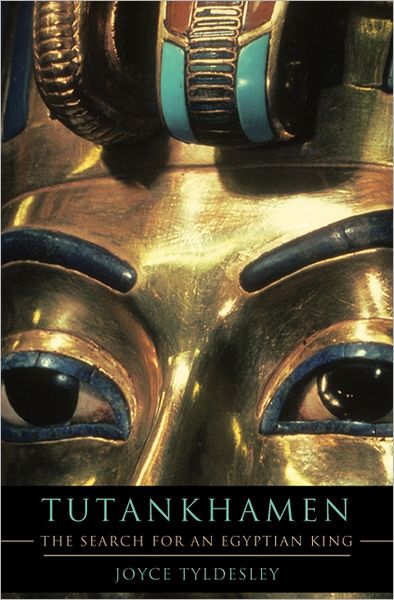
Tutankhamen: The Search for an Egyptian King by Joyce Tyldesley

A new biography of a very old figure still shrouded in mystery.


Joyce Tyldesley (Cleopatra: Last Queen of Egypt) takes on the life of King Tutankhamen, examining the many questions still surrounding his life and the archeology of his tomb, whose discovery in 1922 caused a wave of what Tyldesley calls “Tut-mania” across the Western world. As a king, Tutankhamen came to rule very young, yet managed to effect great change during his short reign–but was then removed from written records by his successors, an act with great consequence in ancient Egyptian theology. His tomb is unusual: relatively undisturbed, and as Tyldesley retraces, surrounded by mystery and myth.

The first, larger part of Tutankhamen is devoted to the archeological record and what it tells us about Tutankhamen and some of his relatives. Tyldesley discusses and critiques various theories (for example, regarding his biological parents) and acknowledges that little is known for certain. Next, she examines Tutankhamen’s legacy in our world–most notably, the rampant myths and legends about the curse on his tomb, which spread as quickly as the news of its discovery. Finally, for those interested in a clear storyline, she outlines her best approximation of Tutankhamen’s life story (while noting that it is only a well-educated theory).

Tutankhamen succeeds in making this ancient monarch accessible to the average reader. Beware of developing an appetite for Egyptology upon reading!


This review originally ran in the March 13, 2012 issue of Shelf Awareness for Readers. To subscribe, click here, and you’ll receive two issues per week of book reviews and other bookish fun!


Rating: 5 mummies.

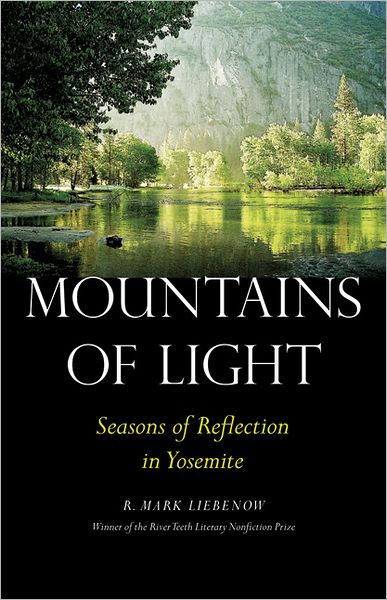
Mountains of Light by R. Mark Liebenow

A quiet, moving memoir of grief and recovery set in the Yosemite Valley.


When his wife of 18 years died, R. Mark Liebenow was overcome with grief. He sought relief by following in John Muir’s footsteps, consulting naturalists, historians, spiritual guides and artists along the way. Mountains of Light covers a year which he spends (in many short trips) in the Yosemite Valley, contemplating the natural world and the significance of death. He is “looking for the mystery of life,” he writes, “even if it can’t be solved but only hiked further into.”

Mountains of Light is lyrical and decidedly literary. Liebenow’s focus drifts: he describes a mountain vista, waxes mystical about the roles that insects and waterfalls and clouds play in the universe, quotes poetry (and Muir), confers with cutting-edge science and remembers his late wife. He includes morsels of history (particularly of Yosemite, from Native Americans through the Mariposa Battalion to the present) and catalogues plant and animal life. He considers various religious and spiritual understandings of nature and death and the mountains, mulling over his options for accepting his tragedy. The background for all this musing is dynamic, as Liebenow takes challenging hikes, explores, gets lost in the wilderness and watches his fellow campers and mountain climbers take still greater risks. The scenery changes drastically in four seasons, which Liebenow interprets metaphorically.

Part travelogue, part natural study and part memoir of grief, Mountains of Light is meditative, lovely, thought-provoking and, yes, sad–but worth it for the appreciation of this natural gem and the redemption it brings.


This review originally ran in the March 9, 2012 issue of Shelf Awareness for Readers. To subscribe, click here, and you’ll receive two issues per week of book reviews and other bookish fun!


Please note that this book makes a fine readalike for Fire Season or Edward Abbey’s Desert Solitaire. And look at that lovely cover, too!


Rating: 6 moments of contemplation.

First Lady of Fleet Street by Eilat Negev and Yehuda Koren

The biography of a pioneering female newspaper editor in early 20th-century London.


Rachel Sassoon was the heiress daughter of a wealthy Jewish businessman who was rooted in Baghdad but proud of the family’s new status after he moved them to London in 1860, while Rachel was still a baby. Only nine years old when her father died, Rachel’s options were increased by his fortune and broadened by his absence until, long past the standard marriageable age, and with considerable life experience behind her, she made what her family viewed as an unforgivable decision: she married Frederick Beer, who was also of Jewish ancestry but had converted to Christianity. (For this, Rachel was ostracized from the family until Frederick’s death, when a brother had her certified as “of unsound mind.”)

She found love with Frederick, but more importantly for posterity, she found a newspaper: Beer’s Observer drew her interest, but it took her own newspaper, the Sunday Times, to unleash Rachel’s creative and industrial spirit. She took on issues of women’s rights and suffrage, workers’ rights, the arts, criminal justice, and international political and social issues; the Sunday Times was for a decade Rachel Beer’s personal soapbox.

Eilat Negev and Yehuda Koren’s matter-of-fact portrayal of Rachel’s life sheds light on the experiences of women and people with Jewish backgrounds in her time, while the stories of the Beer and Sassoon families depict larger issues regarding the era’s immigration and business patterns. The First Lady of Fleet Street is an engaging snapshot of several aspects of early 20th-century life as seen through the lens of one remarkable woman.


This review originally ran in the March 2, 2012 issue of Shelf Awareness for Readers. To subscribe, click here, and you’ll receive two issues per week of book reviews and other bookish fun!


Rating: 5 understudied women.

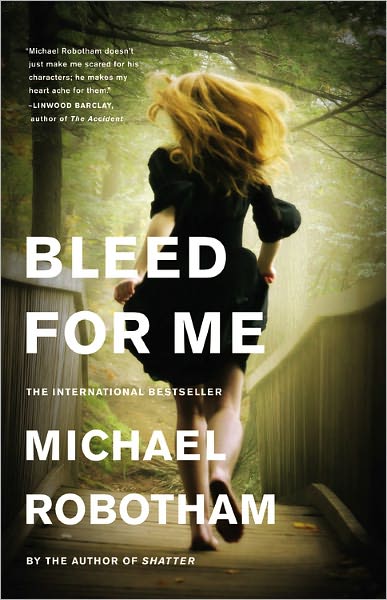
Bleed for Me by Michael Robotham

A darkly entertaining thriller with a surprisingly lovable hero.


Joe O’Loughlin is a semi-retired psychologist struggling to hold his marriage and family together while coping with Parkinson’s disease. After moving from London to a quiet small town to find some peace, Joe is trying to teach part-time at the local university, make up with his wife and be a good father to his teenage daughter, Charlie. But then Charlie’s best friend Sienna shows up one night covered in blood. She can’t remember what happened, but her father, a decorated ex-cop, has been murdered and it’s his blood on her hands. Joe is reluctantly talked into helping out with the investigation.

The mystery begins with the murder of Sienna’s father, but it quickly gets more complicated, until Joe is investigating decades-old crimes, a neo-Nazi gang and a schoolteacher’s past–all while trying to understand Sienna’s wounded psyche. Of course, he’s also still trying to patch things up with his wife and Charlie.

Bleed for Me, Michael Robotham’s fourth novel featuring Joe O’Loughlin, is fast-paced, disturbing, gritty and complex, with a highly charismatic narrator and hero. As the well-meaning and earnest Joe turns rogue investigator, puts his own life at risk and battles Parkinson’s all at the same time, he easily earns the reader’s compassion. His unlikely friends (including a bitter but loving ex-cop) make for surprising moments of humor, and the suspense keeps the reader ducking surprise blows.


This review originally ran in the February 28, 2012 issue of Shelf Awareness for Readers. To subscribe, click here, and you’ll receive two issues per week of book reviews and other bookish fun!


Rating: 4 pagesofjulia.

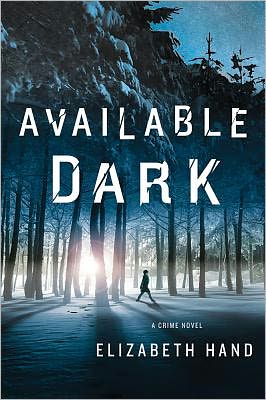
Available Dark by Elizabeth Hand

A dark, cold, bloody thriller set in Iceland’s winter, seen through a photographer’s lens.


Cassandra Neary lives hard. Between the drugs, the booze and her trauma-ridden past, she just barely stays afloat; a recent foray (in 2007’s Generation Loss) back into her former field of photography didn’t earn her much, other than a suspicion of murder that she’s eager to outrun. So when a mystery man contacts her from overseas, offering a chance to put her 30-year-dead photography skills back into action for a tidy sum, she leaves her New York City slum life without too much consideration. Correspondence from her high school boyfriend Quinn–long thought dead–pushes her along, too.

But Cass is greeted in Helsinki not only by gruesome photographs–more or less her specialty–but by gruesome murders as well, and she has to keep moving. So it’s on to Reykjavik in the heart of winter, where Cass makes her way through a world of icy cold, hard drugs, black metal, mental illness and multiple murders. A reunion with Quinn lends adrenaline and excitement, but no greater light.

Not for the weak-stomached or the easily frightened, Available Dark is a masterpiece of lovely writing and ghastly details. Elizabeth Hand, who has a personal background in the early New York punk scene, treats the finer points of Scandinavian black metal with respect. Her writing is sharp-edged and gritty, and fully realized, filled with frightening, contradictory characters and shocking edge-of-the-seat twists. Cass’s artistic perspective, as she photographs ritual killings and crime scenes, adds another layer to what might have been a straightforward thriller. Great fun, if you can hang on for the ride!


This review originally ran in the Feb. 21, 2012 issue of Shelf Awareness for Readers. To subscribe, click here, and you’ll receive two issues per week of book reviews and other bookish fun!


Rating: 5 gory photographs.

Hanging Hill by Mo Hayder

A suspenseful, fast-paced thriller that reunites estranged sisters amidst a series of grisly events.

When a popular, beautiful local girl is found brutally murdered on a towpath in idyllic Bath, the investigation team pursues the recommendation of the forensic psychologist: search for a teenage boy, one of her peers. Naturally, Harley-riding bad-girl police detective Zoe Benedict has something else in mind. She follows a more sinister lead toward amateur porn, strip clubs and unsavory characters–and is astonished to encounter her estranged sister, Sally, the good girl, reduced by divorce to cleaning rich people’s houses to support her daughter, at the center of the case. One of Sally’s clients is a successful (and appropriately sleazy) pornographer; her daughter shares a history with the murdered girl; and her boyfriend has some inside knowledge that makes him especially afraid for Sally’s safety. A dirty secret from Zoe’s own past threatens to reveal itself, while Sally, struggling to defend her loved ones from harm, discovers new strength no one thought she possessed. And the sisters’ relationship gets a second chance.

Mo Hayder’s (Skin; Gone) tightly plotted Hanging Hill keeps the suspense taut, and the characters are realistic and multifaceted as well as (in most cases) sympathetic. Hayder delights in exposing the dark side–of domestic life, of family, of childhood and growing up–and her gritty, gruesome bits are not for the faint of heart. But there are love affairs, too, sweetly relieving the grimness. Hanging Hill is finely put together and entirely satisfying–at least until the terrifying ending, which uproots the safe feeling of resolution into which the reader was lulled.


This review originally ran in the Feb. 14, 2012 issue of Shelf Awareness for Readers. To subscribe, click here, and you’ll receive two issues per week of book reviews and other bookish fun!