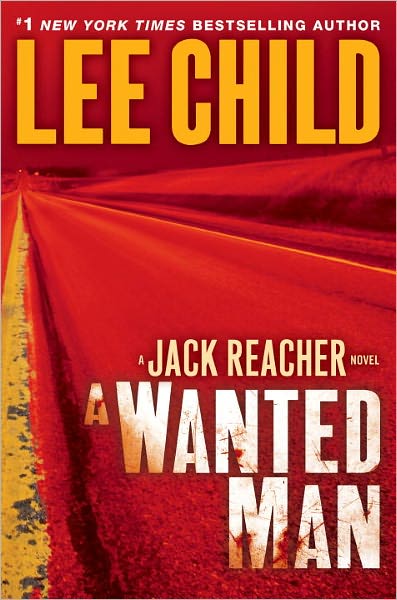
A Wanted Man by Lee Child

Jack Reacher’s extraordinary expertise intersects full-speed with the FBI and an unknown threat in rural Nebraska.

A Wanted Man is Lee Child’s 17th novel starring retired military police officer Jack Reacher, who roams the country with a toothbrush in his pocket, defeating bullies, defending the weak, solving problems and charming women. Following on the action of Worth Dying For, Reacher is trying to hitch his way cross-country to find a woman whose voice attracts him from afar. But the driver and passengers in the car that picks him up are not what they seem. Soon, Reacher is pulled into a rural Nebraska murder investigation that somehow draws the interest of the FBI, the CIA and the State Department.

Beautiful and talented women, paramilitary threats, an unidentified murder victim, kidnappings, carjackings and a child at risk allow Child’s hero to shine: Reacher knows to use his brains and investigative skills as well as his brawn and weapons training to overcome the enemy. His skill at arithmetic–what Reacher called in an earlier novel a “junior idiot savant” gift for numbers–is particularly useful here.

A Wanted Man delivers expertly paced building of tension, thrilling, full-throttle action and kick-butt fight scenes, all wrapped in a tautly structured mystery with military flavor and international implications. Fans love Reacher because he’s smart, physically unbeatable and chivalrous, and here they’ll find everything they’ve come to expect. Newcomers will have no problem joining mid-series; as usual, the hardest part is waiting for the next installment.


This review originally ran in the Sept. 18, 2012 issue of Shelf Awareness for Readers. To subscribe, click here, and you’ll receive two issues per week of book reviews and other bookish fun!


Rating: 6 shots fired.

Meat Eater by Steven Rinella

A loving exploration of hunting–and meat–in human history, and its role in our lives today, from the host of the Travel Channel’s The Wild Within.


Steven Rinella (American Buffalo) grew up hunting, trapping and fishing with his two older brothers. Hunting has played many roles in his life, from a source of income and food to a form of recreation and lifestyle. In a world that increasingly gets its meat from a supermarket, Rinella offers a passionate and reasoned ode to what he calls humankind’s oldest endeavor.

In a series of vignettes, Rinella recounts experiences from childhood through parenthood. He relates the first buck he didn’t get and the experience of trailing mountain lions in Arizona and Dall sheep in Alaska. He describes his first entrepreneurial scheme to trap small mammals and sell their fur, as well as a regretted dalliance with illegal hunting methods. He discusses hunters’ ethics, the rules upon which they do not universally agree, and the idea of “fair chase.” Occasionally, he offers tasting notes on various animals’ flesh, which may be useful to his fellow hunters along with his instructions on preparation–they may also help non-hunters understand the appeal of eating, say, squirrel (not to mention “camp meat”).

“Hunting stories are the oldest and most widespread form of story on earth,” Rinella observes; thus historical anecdotes about Daniel Boone and early hunter-gatherers accompany him in his evolution from hunting for fun and profit to hunting as a way to feed his own family efficiently and mindfully. Meat Eater is a book for the nature lover or the hunter as well as the uninitiated.


This review originally ran in the Sept. 10, 2012 issue of Shelf Awareness for Readers. To subscribe, click here, and you’ll receive two issues per week of book reviews and other bookish fun!


Further thoughts: I just wanted to expand upon the above review, written for Shelf Awareness, and share my personal reaction. I came to this book not entirely ready to ally with the idea of hunting (or even meat eating) as a lifestyle. I eat meat – but I am sympathetic to the vegetarian’s and the vegan’s position, and I was curious about Rinella’s perspective. So what did I find? I found that his arguments and his outlook were both reasonable and well-presented. I was able to sympathize with just about all he had to say. Even my best vegan buddy states that, if he were to eat meat, better that it should be hunted in the wild than captured from one’s grocery store. Still, the facts of our present-day situation – a limited amount of land space and a huge and still-growing population – make a plant-based diet much more efficient. It takes less land to feed a human plants than it takes to feed the animals that will then feed the human. This is more an argument in favor of agriculture than against hunting wild creatures, I know. But still, Rinella’s method works best because he is the tiny minority that he is. We can’t all go hunting in the backcountry for our dinners; the world would not support us all in that way. And just because our ancestors did things a certain way for hundreds or thousands of years, doesn’t mean we should do it that way today. In fact, just the opposite: the world has changed so greatly that it requires different methods of us.

Also, I had to part ways with Rinella when it came to hunting mountain lions. I’m going to stick firmly with Edward Abbey on this issue.

But all that said, this was a good book: well-presented arguments, relatively convincing (even though I’m not ready to sign up for the Rinella Way, he earns my agreement with many of his points), and enjoyable to read, not to mention educational. I had no problem writing the complimentary review, above.


Rating: 7 squirrels.

Almost Somewhere by Suzanne Roberts

A contemplation of women relating to one another in nature, nestled within the tale of a backpacking trip.


In 1993, Suzanne Roberts was a college graduate lacking a firm plan for the future when she agreed to hike the John Muir Trail with two other women. Almost Somewhere is a travelogue of that month-long hike, but it’s also a woman’s foray into the male-dominated worlds of hiking and nature writing and a contemplation of the cattiness and competition that limits women’s attempts to connect with one another. Roberts is not gentle to herself or her companions as she describes their flaws and failures to support one another; she is frank about the bounds of their friendship. But she has a triumphant story to tell, because despite swollen joints, bugs, infighting and the doubts of fellow trail users, these three women hiked the John Muir Trail in its entirety and lived to tell about it.

Roberts writes plainly about gender issues, as the women (“we had gone through puberty a long time ago and, really, we were no longer girls”) consult a guidebook written by a man filled with language of “conquering” or “assaulting” mountains. She seeks not only meaningful relationships with other women, but also a feminine understanding of nature, having read nature writing only by men (Muir, Thoreau, Edward Abbey) up until this point. Her understanding of her experience is clear-headed and self-aware in retrospect, and she is considerate of her companions even in her criticism. Almost Somewhere is a contribution to the growing body of women’s nature writing, and a worthwhile, entertaining and occasionally funny story of the California wilderness.


This review originally ran as a *starred review* in the Sept. 4, 2012 issue of Shelf Awareness for Readers. To subscribe, click here, and you’ll receive two issues per week of book reviews and other bookish fun!


Rating: 6 small but important steps.

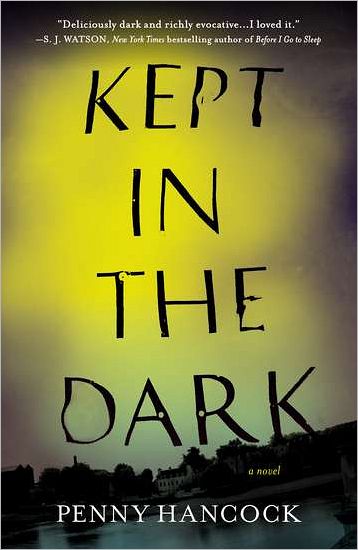
Kept in the Dark by Penny Hancock

An enchantingly disturbing tale about an older woman and a younger man, with shades of Lolita.

Sonia is slowly withdrawing from the world, from her marriage to an older man who travels a great deal, from her relationship with a daughter who has left home, and into the River House, her family estate on the Thames. When 15-year-old Jez knocks on her door, she is charmed by his youth, which reminds her of another time in her own life and another young boy. The pull of the river and her memories prove too strong for her, and Sonia decides to keep Jez in the River House, where she feels he belongs. As the outside world mounts a search for the missing boy, Sonia becomes convinced of the rightness of what she is doing, and her fractured grasp on reality slides further downhill.

In Kept in the Dark, Penny Hancock’s twist on the timeworn male kidnapper and young female victim, Sonia and her delusions are deliciously, convincingly creepy. The fantasy of her relationship with Jez, who is increasingly frightened and ill, gradually reshapes the rest of the world into the enemy of Sonia’s happiness, until her connection with her own past overrules the present. The reader’s willpower is tested as the stakes grow higher, along with the temptation to flip to the final page of the book. Will Sonia let Jez go as promised? Or will the force of the river, the River House and the power of obsession keep him captive? Jez’s fate and the dark secret of Sonia’s childhood are left hovering, teasing, until the closing moments of this delightful debut novel.


This review originally ran in the August 31, 2012 issue of Shelf Awareness for Readers. To subscribe, click here, and you’ll receive two issues per week of book reviews and other bookish fun!


Rating: 7 goosebumps.

Before the Rain by Luisita Lopez Torregrosa

An impassioned memoir of love between two journalists, set amid travel and revolution.


Luisita López Torregrosa (The Noise of Infinite Longing) is a New York newspaper editor when Elizabeth comes aboard as a new reporter in the 1980s. Her quiet, self-contained, slightly mysterious air draws Luisita’s attention. When Elizabeth lands a sought-after position as foreign correspondent, she builds a home for herself in Manila. Luisita joins her there, and the two women throw themselves hesitatingly and then wholeheartedly into a passionate affair against the backdrop of the fall of Ferdinand Marcos.

As a love story, Before the Rain is spellbinding and heartwrenching, but Torregrosa’s highest feat is perhaps one of poetry. Her tone is haunting, lyrical and sensuous. Readers will feel the equatorial heat of the Philippines and the beat of the Manila Blues, smell the mangoes and squatters’ camps, taste the margaritas and then feel the biting cold of New York winters as the story returns to the United States.

Before the Rain is a memoir of revolution as well as love: the beauty, upheaval and political turmoil of the Philippines are handled sensitively and lovingly. Besides Manila, Luisita and Elizabeth live and travel in New York, Tokyo, Los Angeles, Miami, Rio and Washington, D.C.– and each of these places leaves its mark. But their relationship is always the book’s main focus. The two women travel, move, work various jobs (some rewarding, some soul-draining); and throughout, their ardor has a momentum all its own. Even in its painful finale, that love is this book’s most lovely evocation.


This review originally ran in the August 10, 2012 issue of Shelf Awareness for Readers. To subscribe, click here, and you’ll receive two issues per week of book reviews and other bookish fun!


Rating: 8 sheets of newsprint.

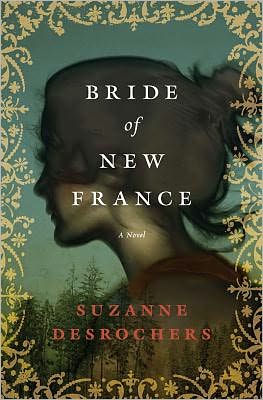
Bride of New France by Suzanne Desrochers

A heartfelt novel about a 17th-century young woman’s journey from Paris to the Canadian wilds.


As a young girl, Laure is torn from her parents’ arms on the streets of 17th-century Paris–destined for the Salpêtrière, a notorious institution housing destitute, insane and criminal women. She grows up with minuscule rations, sickness and tragedy, dreaming of becoming a seamstress and marrying to improve her station. Instead, she finds herself on a ship bound for the colonies of New France in Canada, as a fille du roi (“daughter of the King”)–not an opportunity but the worst of punishments.

Laure’s new life is in some ways worse than she’d imagined. She is to serve as wife to a fur trapper or soldier, doing her part to increase the population of New France, but learning how to make fine lace has left her unprepared to chop wood or defend herself in an uncivilized world of deadly cold winters, wild animals and savages. Her ill-suited husband immediately leaves her alone in a rough-hewn cabin to fend for herself, and she must turn to one of the feared Iroquois for her survival.

Suzanne Desrochers’s well-researched debut novel captures Laure’s challenges and complexities admirably, with a candid account of an era that is often glorified. The settings of squalid Paris and feral New France are well evoked, and Laure’s emotions and frustrations are easily understood. Though flawed, she is a fully human character; the future that she and her counterparts face is bleak, but hopeful as well.


This review originally ran in the August 7, 2012 issue of Shelf Awareness for Readers. To subscribe, click here, and you’ll receive two issues per week of book reviews and other bookish fun!


Rating: 5 furs.

Dream Team: How Magic, Michael, Larry, Charles and the Greatest Team of All Time Conquered the World and Changed the Sport of Basketball Forever by Jack McCallum

A funny, respectful, expert, complete–and literary–examination of 1992’s Olympic Dream Team and its permanent effects on basketball.


The U.S. Olympic basketball team of 1992 was known as the Dream Team because it included the game’s biggest stars, including Magic Johnson, Larry Bird, Charles Barkley and Michael Jordan.

Sports Illustrated‘s Jack McCallum (Seven Seconds or Less, Unfinished Business) brings these colorful personalities to life as he recounts the creation of the Dream Team and its path to Olympic gold. When a meat inspector from Belgrade came up with the idea of rescinding the amateurs-only clause of Olympics competition, it made it possible for the U.S. men’s basketball team, traditionally made up of college players, to become a squad of NBA All-Stars, characterized by outrageous and iconic players and an unusual vision of the game. As McCallum tells it, this team took its ambassadorial role seriously, as the superstars relinquished their playing minutes to the greater goals of victory, teamwork and honor in a manner arguably absent from today’s game.

Dream Team‘s tone is occasionally reverent, but just as McCallum begins to speak in mythic terms, he reminds us that these men were only human, tapping into their personal lives and private sides (when his shared history with them allows). McCallum is nothing if not opinionated, but always fair in his analyses, and the quotations and one-liners that pepper his text are pure gold in terms of entertainment as well as illumination of the fine sport of basketball.


This review originally ran as a *starred review* in the July 17, 2012 issue of Shelf Awareness for Readers. To subscribe, click here, and you’ll receive two issues per week of book reviews and other bookish fun!


Rating: 7 points.

City of Ravens: London, the Tower and Its Famous Birds by Boria Sax

A bird’s-eye view of the Tower of London’s famous raven residents and their role in history and myth.


The Tower of London combines commercial tourism, history and myth in a single site, and its iconic ravens are a part of all three functions. Legend has it that when the ravens leave the Tower, Britain will fall. Boria Sax’s City of Ravens blends a highly readable narrative style with academic research into Britain’s history, the study of birds and Sax’s own interest in animal-human relationships. Sax examines the ravens’ changing significance in London’s imagination, from being harbingers of death and doom as they fed off the bodies of those executed at the Tower to being heralded as guardians of Britain’s Empire–likely due to their role, during the Blitz, of warning of incoming bombs.

Sax’s research largely dispels the popular belief that ravens had been pets at the Tower since medieval times, and he is ambivalent about the accuracy of the historical raven record. After highlighting a few individual ravens’ personal histories, he finishes by considering the ecological questions raised by the captive birds whose wild counterparts have begun to repopulate London, weighing the options for protecting both the ravens and their mythical standing.

These musings, admittedly conjectural at times, draw on diverse resources including newspaper archives, popular literature, early tourist guides to the Tower and other historical sources–as well as fictional accounts. Part history, part deconstruction of myth, part bird study, always lovingly respectful of the birds themselves, City of Ravens is a whimsical, entertaining and informative journey into London legend.


This review originally ran in the July 13, 2012 issue of Shelf Awareness for Readers. To subscribe, click here, and you’ll receive two issues per week of book reviews and other bookish fun!


Rating: 5 wings.

Racing Through the Dark by David Millar

The unexpectedly inspirational story of a pro cyclist’s “clean” return to the sport after doping.


David Millar was an avid bicycle road racer in his teens, and after he turned pro at age 22, he raced in all the big European events, including the Tour de France, where he wore the yellow leader’s jersey. He resisted doping for years, but not forever; he was eventually busted for the illegal use of performance-enhancing drugs. His story was, perhaps, not highly remarkable in a sport already ridden with doping scandals, but it became noteworthy when he spoke out about his experiences, took a strong anti-doping stand and returned to the sport as a high-profile–and still highly accomplished–“clean” racer. Racing Through the Dark is his story.

Millar’s memoir begins in childhood and follows through rocky years on the pro circuit, the painful decision to dope after abstaining for years, the details of his bust and the raging alcoholic haze of his ban before returning to the sport. It includes anecdotes featuring many of pro cycling’s biggest names, including Mark Cavendish, Stuart O’Grady and Lance Armstrong. Millar’s voice is appealingly open and artless. He takes full responsibility for his poor decisions even as he criticizes pro cycling’s traditional code of silence that overlooks or condones widespread use of illegal drugs. While Millar excoriates the culture of doping, he doesn’t use it as an excuse. He comes across in the end as a surprisingly honorable figure, whose continuing professional career offers a final theme of redemption.


This review originally ran in the July 3, 2012 issue of Shelf Awareness for Readers. To subscribe, click here, and you’ll receive two issues per week of book reviews and other bookish fun!


Rating: 5 skinny tires.

The Boy Kings of Texas by Domingo Martinez

A starkly honest memoir of growing up on the Texas-Mexican border in the 1970s and ’80s, with a wry twist.


Domingo Martinez was born in the early 1970s in Brownsville, Texas, on the Mexican border. His youth was marked by violence and family drama; he grew up wanting only to escape, but unsure how to do so. The Boy Kings of Texas introduces readers to Martinez’s embarrassing, philandering father; his terrifying, work-obsessed grandmother; his older sisters (two of whom successfully pose for a short time as rich white girls); his generally forgotten mother; and centrally, his older brother, Dan. (There’s also the passed-down story of his grandfather, who died young–a Mexican criminal celebrity recalled as the Brer Rabbit, the Billy the Kid, the Rhett Butler of his day.) Martinez describes in glaring, painful detail his drug-dealing friends and family–one time, he bought pot from two local thugs who turned out to be his uncles but who didn’t recognize him through their drug-induced haze–and his gradual, excruciating withdrawal from Texas and the life he’d always known.

The Boy Kings of Texas eventually follows Martinez to Seattle and his agonizing attempts at starting fresh there, handicapped by a misguided childhood whose dominant lesson was machismo at the expense of all else. While a final, happier ending is hinted at (“but that is another book”), this memoir is concerned with the deep distress of a bordertown kid unclear on his place in the world. Martinez’s story is heartrending and uncomfortable, but he maintains a surprising sense of humor that keeps his reader cringing and rooting for him.


This review originally ran as a *starred review* in the July 3, 2012 issue of Shelf Awareness for Readers. To subscribe, click here, and you’ll receive two issues per week of book reviews and other bookish fun!


Rating: 5 tortillas.