Rosarito Beach by M.A. Lawson

A sexy renegade DEA agent’s past resurfaces at the worst possible moment in a new series from (a barely disguised) Mike Lawson.

rosarito

Mike Lawson, creator of the Joe DeMarco thrillers (House Odds et al.), uses the pen name M. A. Lawson to launch a new series, Rosarito Beach, with a new protagonist: DEA agent Kay Hamilton. Hamilton brings a take-no-prisoners attitude to her investigations, and though it’s clear she makes a better field agent than supervisor, she’s assigned to lead a team in Southern California investigating Caesar Olivera, the boss of a major Mexican drug cartel. After arresting the kingpin’s little brother, Tito, Hamilton’s main concern becomes keeping him locked up. Even after Tito is transferred to the brig of a vast Marine base, however, Caesar’s army threatens.

Hamilton dislikes authority figures, enjoys a drink or four, picks fights with every other law enforcement agency in town and knows exactly how to use her good looks and hot body to her advantage. She follows her own personal code, pleased to be beholden to no one except herself, involved with her career and personal pursuits–mainly her sex life–until a mystery from her distant past resurfaces. This new addition to her short list of concerns reorders Hamilton’s priorities and drives her to actions, and crimes, she never thought possible. The DEA fights to keep Tito locked up, the cartel arms itself for action and Hamilton rejects protocol in an accelerating race toward the end game, which concludes with all the fireworks and upheaval a thriller fan craves.


This review originally ran as a *starred review* in the January 3, 2014 issue of Shelf Awareness for Readers. To subscribe, click here, and you’ll receive two issues per week of book reviews and other bookish fun!


Rating: 5 stiletto heels.

To expand a bit on my review, above: this thriller was suspenseful, had pace and momentum, and kept me interested and engaged. Its fault (and the reason my rating isn’t higher) relates to the caricatures of the characters. Hollywood-style, they were all beautiful, had smokin’-hot bods, and dressed like magazine spreads. Similarly, the hero’s coldly detached interest in sex without strings struck me as unrealistic and a little stereotyped – career-obsessed woman not interested in relationships but able to seduce her way into the most highly-guarded yadda yadda. There was a cartoon element to it, is what I’m saying. On the other hand, though, I stayed up late reading avidly to see what would happen next. So I may have rolled my eyes, but Lawson gets the win in the end.

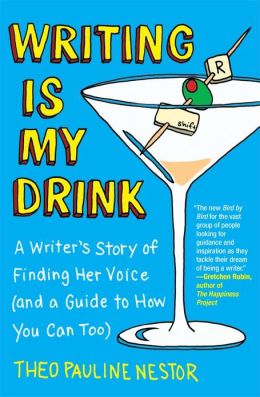
Writing Is My Drink: A Writer’s Story of Finding Her Voice (and a Guide to How You Can Too) by Theo Pauline Nestor

A writer’s journey, written as a guide for aspiring and developing writers.

writingdrink

Theo Pauline Nestor always wanted to be a writer. But she struggled to find confidence and her writing voice for many years, through two kids and several career changes, before publishing How to Sleep Alone in a King-Size Bed, a memoir about her divorce and its aftermath. In Writing Is My Drink, Nestor returns to memoir with tales from her childhood, formative years and journey toward publication, and confessional forays into her parents’ alcoholism and her more embarrassing moments as an aspiring writer. Readers and writers will appreciate nods to Terry Tempest Williams, Natalie Goldberg and Frank McCourt, whom Nestor temporarily confused with her father.

Writing Is My Drink is also part instruction guide. Each chapter finishes with a short “Try This” piece that offers writing exercises, lists to make and concepts to keep in mind. She coaches when to push oneself and when to be forgiving, and shares the sad news that rejection and bad writing are integral parts of publication and good writing. Now an instructor in memoir writing, Nestor is well placed to offer such advice, and despite her convoluted journey–or perhaps because of it–she has a great deal of wisdom to share with her students.

Writing Is My Drink is by turns instructive, funny, poignant and deeply personal. Nestor’s voice is informal and occasionally self-deprecating, but one of the central lessons she has learned and wants to share is that of trusting oneself. Her story will be an inspiration to readers who seek self-expression.


This review originally ran in the December 27, 2013 issue of Shelf Awareness for Readers. To subscribe, click here, and you’ll receive two issues per week of book reviews and other bookish fun!


Rating: 7 stories told sitting on a barstool.

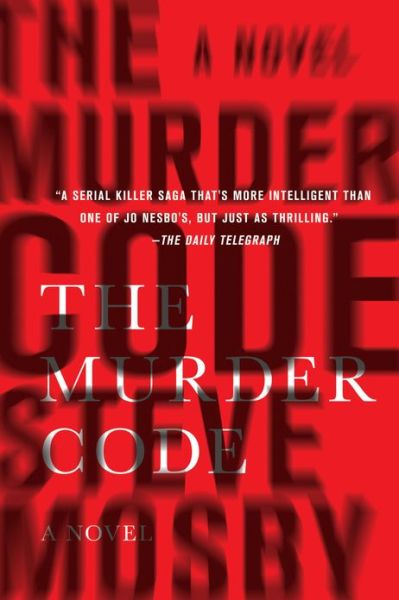
The Murder Code by Steve Mosby

A series of murders force a seasoned detective to reexamine his understanding of evil.

murder code

The Murder Code, British author Steve Mosby’s American debut, opens with the brutal but seemingly straightforward bludgeoning of a young woman on her way home from work. Detective Andrew Hicks immediately looks to her abusive ex, because he knows all murders are committed for reasons–bad reasons maybe, but reasons that make sense at the time to the killer. But when the bodies start piling up–clearly the work of the same hand or, more precisely, the same hammer–Hicks is forced to reconsider his theory. And when he receives a letter from the murderer, Hicks must confront everything he’s understood for years about the reasons people kill each other.

Story lines overlap and tangle tantalizingly in Mosby’s capable hands. The reader glimpses teasing flashes of various characters and their backgrounds before returning to Hicks’s increasingly troubled life. His pregnant wife knows there’s something Hicks isn’t telling her, but doesn’t know what, any more than the reader does. Something disturbing in his past threatens to resurface.

While other sympathetic characters are briefly sketched, Hicks is very much at the heart of this psychological thriller. Mosby expertly spools out and retracts details, keeping the reader breathless with anticipation as the body count rises and Hicks asks himself questions he thought he’d answered long ago. The Murder Code offers not only a surface-level mystery to be solved, but the deeper mystery of how the pieces fit together–and the central question of whether innate evil is real.


This review originally ran in the December 27, 2013 issue of Shelf Awareness for Readers. To subscribe, click here, and you’ll receive two issues per week of book reviews and other bookish fun!


Rating: 7 data points.

Maximum Shelf author interview: Sue Monk Kidd

Following yesterday’s review of The Invention of Wings, then, here’s the gracious Sue Monk Kidd!


Sue Monk Kidd: Inhabiting the Past

Sue Monk Kidd was born and raised in Georgia and now lives in Southwest Florida with her husband, Sandy, and their black lab, Lily. Since her first publication in 1988, she has written fiction, nonfiction and memoir; The Invention of Wings is her first work of historical fiction. Kidd’s bestselling books include The Secret Life of Bees, The Mermaid Chair and, as co-author with her daughter Ann Kidd Taylor, Traveling with Pomegranates. Kidd is very active on Twitter.

photo: Roland Scarpa

photo: Roland Scarpa


How much research did you do on the real Grimké sisters?

Well, I began reading about the Grimké sisters and I could hardly stop. I was inspired to write the novel because I discovered them at Judy Chicago’s Dinner Party exhibit in New York, and I came home very excited and began to read about their lives. And that went on for months. I suppose I did full-time research for about six months before I began writing, and then I wrote for three and a half years, during which I was still doing a lot of research. I would sit in front of the computer, inventing and writing, and suddenly I would have to get up and figure out what kind of mourning dress widows wore in 1819. Or what were the emancipation laws in South Carolina at that time. It was constant, ongoing research. And it wasn’t just reading books; I made trips to the Library of Congress, the Smithsonian, the New York Historical Society–and of course a lot of places in Charleston. That was a primary site for me, and a lot of organizations were helpful.

Did you enjoy that research?

I loved it so much that I had to make myself stop and start writing. I think a writer can get lost in her research if she’s not careful! There’s a point where you just have to put it aside and begin writing. I was very concerned that I get that era right. I wanted it to be as authentic as I could make it, rich with details, and I wanted the reader to be plunged into a real world. So I needed to gather a lot of information, and I really had fun doing it.

How important is historical accuracy in fiction, and how faithfully does this novel stick to the historical record?

That is such a large question for any author of historical fiction. In this case, I was not only writing about a time and place that existed, but I decided to populate the book with real historical figures. As this was my first book of historical fiction, it was a learning curve for me. I started off so enamored with Sarah Grimké’s history, just in reverence for her life and her history and that of her sister, too, that it was very hard to deviate from that historical script. It took me a long time to come to a place where I understood that there was Sarah Grimké, the historical figure, and then there was Sarah Grimké, my character. And I’m not a biographer, and I’m not a historian; I’m a novelist. I had to come home to that again, because I was so caught by her history. I would say that I wrote the truth of Sarah’s life as much as I possibly could, and I think that anyone who reads the novel will find her life rendered there pretty closely. But my goal, I realized, was to serve the story itself, and that meant that I had to deviate some. It meant that I had to invent; it meant that I had to find Sarah in my own imagination as well as in history, and that was really crucial. The moment that I was able to let go and do that, she became alive for me in this book.

How did you make the decision to write this story in two voices?

When I began I was inspired to write the story of Sarah Grimké, and that was as far as I got. I knew I wanted to write her story in first person, because I love the intimacy of that first-person voice. I feel like I can inhabit her and her mind and her heart, and I love seeing the world through her eyes. I love the closeness of that and what it allows me to do, to get into her inner life. But as I began reading about the history, it became very quickly apparent to me that I could not just tell her story without telling the story of an enslaved character. It seemed that in order for this whole time and place to be fully fleshed out, I needed to enter the lives of two characters. So as I was reading about Sarah’s childhood I discovered she had been given what she called a waiting maid, when she was somewhere around 11 years old. This waiting maid was named Hetty, and Sarah taught Hetty to read, and then Hetty died soon after that, as a young person. That’s everything I knew about her life. But the moment I read about her I knew that this was the character, and that I could have this close relationship between them that’s also a complicated, difficult relationship, and I could talk about both worlds. Now, it was daunting to me to do this, to be honest, because writing first person from the standpoint of an enslaved female character is pretty far flung for me. So that was sort of my literary sky dive, I guess! But it was apparent to me that that’s what I needed to do, to tell both stories.

Sarah left plenty of detail to history, including many writings in her own voice, while Hetty barely existed at all on the record. Was it freeing to write Hetty, in comparison?

It was absolutely freeing. Maybe the biggest surprise in writing this novel for me was that Hetty’s voice was more accessible, that it came to me more easily. This I did not expect. I thought it might be the opposite, actually. I think it was because Sarah came with this big historical script, and we knew basically nothing about Hetty. So I had this broad imaginary canvas to fill in. It freed me, I think, just to be able to explore and to just let her talk–and she would talk! I mean she would just talk, talk, talk to me.

Hetty’s mother, Charlotte, is a rich personality who keeps her secrets. Does she have a historical counterpart? Where did you find her?

There was a little seed of something that kind of helped me to create her character. When I was reading the slave narratives I came upon one sort of secondhand story: one woman was speaking about her time in slavery, and referred to someone named Sukie, who was apparently a very defiant, unusual woman. She told a story about how Sukie resisted her master’s advances and pushed him into–I think it was a hot pot of lye soap or something like that–and he was burned, and for that she was sold. And she remained very defiant to the very end. Something about that ignited this idea in me, and I wanted to be sure that Charlotte was someone who could protest and resist and who was concerned about her own self-possession, who had this spirit of insurrection and even subversion. I think it’s important to offer images of enslaved women who are not just victims. We’ve had far too much of that, I think. I wanted to show women who were not just victims, certainly not in their minds. They were in a struggle to be human, self-possessed, to fight back and to show this kind of defiance and resistance. In that regard, the slave narratives were evocative for me of the kind of character that I tried to bring to Charlotte.

Do you have a favorite character? Or one with whom you especially identify?

Oh, it’s always hard for an author to say which character is her favorite! It’s like picking between your children! As a writer, I feel like you have to love all your characters, even the so-called misbehaving ones. But having said that, it’s true, your heart gravitates to your characters in special ways. I remember reading something Alice Walker said that I referenced recently. She spoke about writing about her mother in literature, and she said, my mother was all over my heart, so why shouldn’t she be in literature? And I just loved that line! I thought, that’s how I feel about Handful. She’s just all over my heart. And every day that I wrote, I had this very special feeling about her. I love Handful’s great hope, and the way she used irony and wit to deal with things.

Sarah’s big struggle, at least in my novel, was to find her voice. I literally gave her a speech impediment, which the historical records say she did not have, but I have this idea that writing a novel is really about taking a bad situation and making it worse! Sarah had difficulty speaking in public, but she didn’t have an impediment, so I sort of enhanced it and made it a little worse. That’s one example of how I deviated from the record to serve the story. Her journey was to find her inner voice and to be able to articulate her truth in the world, and I identify with that–I think many people identify with that.

What have you read and loved lately?

Well, I just made this long transatlantic flight, and I hauled books on board instead of my iPad! I don’t know what that says about me. I read three Edith Wharton novels that I had not read before, and I hate to admit that I hadn’t read these; but I guess we all have classics that we’ve not read and we’re ashamed to admit we’ve not read until we finally do! Those were The House of Mirth, The Custom of the Country and The Age of Innocence, and I thought–what took me so long? And then I read Delia Ephron’s Sister Mother Husband Dog: Etc., which I just loved. The other book I read recently was Dear Life by Alice Munro. All wonderful books. There are so many and so little time! That’s what’s so great about a nine-hour flight, you know.


This interview originally ran on December 18, 2013 as a Shelf Awareness special issue. To subscribe, click here, and you’ll receive two issues per week of book reviews and other bookish fun!

Maximum Shelf: The Invention of Wings by Sue Monk Kidd

Maximum Shelf is the weekly Shelf Awareness feature focusing on an upcoming title we love and believe will be a great handselling opportunity for booksellers everywhere. The features are written by our editors and reviewers and the publisher has helped support the issue.

This review was published by Shelf Awareness on December 18, 2013.


invention of wings
The Invention of Wings opens in 1803, on Sarah Grimké’s 11th birthday. To mark the occasion, her mother gives her an unwanted birthday gift: the awkwardly beribboned 10-year-old Hetty Grimké–Sarah’s very own slave. Sarah is repulsed and tries to free Hetty that very night with a document she draws up herself, but it isn’t that easy for the child of one of Charleston, S.C.’s first families. The two girls grow into womanhood bound together but separated by the chasm of their very different circumstances.

Sue Monk Kidd, author of The Secret Life of Bees and co-author of Traveling with Pomegranates, chooses to tell this story in first person and to alternate between the voices of Hetty and Sarah–one of many masterful choices that make The Invention of Wings a remarkable read. The name “Hetty” was given by her owners; Hetty is called Handful by her mother, Charlotte, to whom she is devoted. One of the novel’s richest characters, Charlotte tells her daughter only parts of her own past: stories of Handful’s father, who never saw his daughter’s face, and of Charlotte’s own mother, who was brought to Charleston and slavery from Africa when she was a small girl. Charlotte teaches Handful to sew, to make very fine clothes and quilts. This artistry earns them both a relatively privileged place in the household and, importantly, provides a means of recording stories among slaves, for whom literacy was illegal. Charlotte sews her daughter a story quilt, appliqueing squares that tell of her life’s greatest events. This rich storytelling tradition is described in Handful’s passionate voice, which both contrasts with and matches Sarah’s, also passionate, as she experiences limitations of a different sort. An intelligent child encouraged by a father and brother to read books, she harbors dreams of becoming a barrister, which are inevitably dashed against Charleston’s expectations of a young lady. Her inclination to teach slave children to read is likewise reviled, although she succeeds in secret with Handful. Over the years, the two girls share confidences across a wary divide, but guilt and resentment present obstacles to their friendship.

When the girls are still very young, Charlotte extracts a promise from Sarah: that she will free Handful one day. This promise haunts Sarah, who will eventually journey north to escape her stifling family and the peculiar institution she despises. She meets a Quaker man, whose own peculiar religion at first repels her but comes to fascinate and draw her in; this new alliance shapes Sarah’s more independent adult life, and distances her from Handful, who necessarily remains in Charleston. Along with her indubitable younger sister, Nina, Sarah will finally become a renowned (and infamous) activist for abolition and women’s rights. Overcoming a speech impediment that is a literal portrayal of her difficulty articulating her desires, she will slowly, painfully create the independent existence she has always craved. Handful’s fate will, of course, be rather different.

The Invention of Wings is a novel based on fact: the Grimké sisters were real-life abolitionists, and are joined in the historical record by a number of other characters in this novel, including Denmark Vesey, a free black man executed for planning a slave uprising; Lucretia Mott, a Quaker activist for women’s rights and abolition; and Sarah Mapps Douglass, a free black activist and educator. Hetty Grimké, however, left tantalizingly scarce facts: she was given as a gift to Sarah, but disappears shortly thereafter from the historical record. And Charlotte is entirely Kidd’s creation, an intriguing and complex character who tempts the worst of slavery’s brutalities in her search for something better for herself and her family.

Sue Monk Kidd portrays the parallel lives of her two protagonists in sensitive and touching sketches. Readers of her earlier work will recognize strong, sympathetic characters and deft use of nuance. The heart-wrenching nature of Sarah and Handful’s stories lies in the complexity of their relationship: they tend toward friendship, but Sarah’s guilt and Handful’s natural resentment–as when Sarah claims to know how she feels–may prove too wide a gap to bridge. And slave traditions such as the story quilt add a layer of detail informed by Kidd’s extensive research, as well as an emotional depth for Handful and Charlotte.

The Invention of Wings ambitiously tackles a swath of issues, including feminism, abolition, religion, activism and relationships between races and genders. This subject matter might be heavy under another hand, but the historical record of Sarah Grimké’s remarkable life and Kidd’s strengths in narrative and in rendering relationships make for a story that is both thought-provoking and engrossing. Strong female characters, solid roots in history, and the compelling lives of two women the reader deeply cares about make The Invention of Wings a thoughtful, moving tale that ends on a hopeful note.


Rating: 7 squares.

The Invention of Wings was just chosen as Oprah’s new Book Club 2.0 pick. Kidd commented: “I’m thrilled and honored that Oprah Winfrey chose my novel as her new book club selection. After researching and writing The Invention of Wings for the past four years, I can’t tell you how exciting it is to launch the novel with Oprah’s Book Club 2.0.”

Come back tomorrow for my interview with Sue!

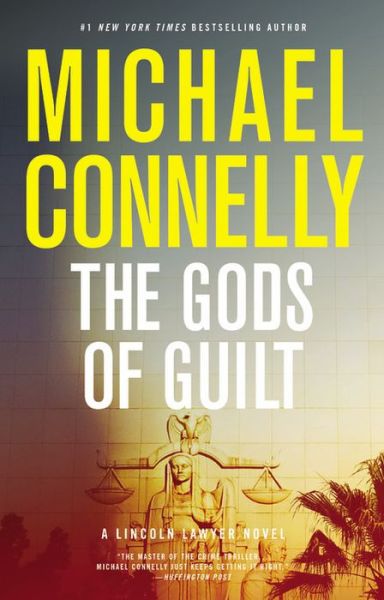
The Gods of Guilt by Michael Connelly

The Lincoln Lawyer returns to the courtroom to solve a friend’s murder from years past.

gods of guilt

Mickey Haller is back at work in The Gods of Guilt, the fifth Lincoln Lawyer novel from Michael Connelly (also author of the Harry Bosch series). When Andre La Cosse requests Haller’s representation on murder charges, Haller approaches it with weary cynicism about his client’s probable guilt. But then he learns who referred La Cosse to him: the victim, a prostitute Haller represented for years, and whom he thought had left the game. It quickly becomes clear this case is bigger than it looks, involving the DEA and organized crime and stretching back nearly a decade, and that La Cosse may be that rare thing: innocent.

At stake for the Lincoln Lawyer: not only his client’s freedom, but also his relationship with his daughter, who has stopped speaking to him because of the results of an earlier case. The murdered prostitute, an old friend, plays an important role as well; Haller thought he’d saved her, only to find that he may have contributed to her death.

The Gods of Guilt is a gripping courtroom drama with strengths that Connelly’s fans will recognize: fully-wrought, likable characters, absorbing action, sympathetic relationships and the exploration of right and wrong and the gray areas in between. The title refers to Haller’s understanding of jury members: that they are gods sitting in judgment of guilt and innocence. These gods of guilt also sit in judgment of Haller’s own choices, and The Gods of Guilt reflects Connelly’s sensitive handling of morality and consequences.


This review originally ran in the December 17, 2013 issue of Shelf Awareness for Readers. To subscribe, click here, and you’ll receive two issues per week of book reviews and other bookish fun!


Rating: 7 men in hats.

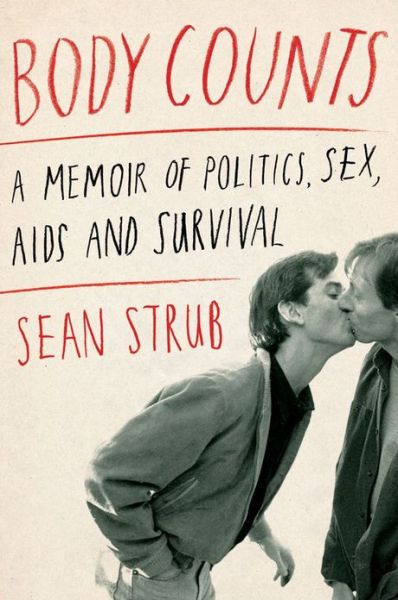
Body Counts: A Memoir of Politics, Sex, AIDS, and Survival by Sean Strub

Sean Strub’s earnest, evocative memoir of political activism, coming out and the AIDS epidemic will appeal to diverse readers.

bodycounts

Seventeen-year-old Sean Strub left Iowa City in 1976 to attend Georgetown University and–more importantly for his future–to become an elevator operator at the Capitol Building. He worked to meet as many powerful figures as possible, with his own political career in mind, yet he was haunted by a secret he feared would make him unelectable: he was attracted to men.

Three years later, the colorful, growing gay community of New York City encouraged the aspiring politico to begin to explore his own sexuality and acknowledge it as a permanent feature in his life. As an increasingly “out” gay man, he shifted his focus away from the idea of running for office and became a committed activist in the pursuit of gay rights. Strub’s second passion and skill was for entrepreneurship, and he eventually started up an impressive number of companies, including direct-mail ventures and publications that supported his causes.

In the early 1980s, “gay cancer,” eventually known as AIDS, was suddenly everywhere. Strub couldn’t attend every funeral and memorial service, he writes, but he always made sickbed visits; sometimes he walked the halls of a hospital without a specific friend in mind, reading names on rooms, sure he’d find people who needed him.

Strub had known he was HIV-positive since 1985, when he was given a prognosis of “maybe” two years, but his partner Michael died with no warning, not even getting sick first. The need for AIDS activism to push for quicker access to new drugs and fight discrimination naturally dominated Strub’s attention in the years following his diagnosis and Michael’s death.

In Body Counts, Strub relates the joys and struggles of learning self-love, political aspirations and disillusions, activism and relationships with countless men and women he loves, with cameo appearances by Tennessee Williams, Bobby Kennedy, Gore Vidal and Bill Clinton (among others). Body Counts is a powerfully moving personal memoir with the added value of a fine and feeling primer on the history of gay culture and AIDS in the United States. Strub’s subject matter could have been morbidly tragic, but he retains a sense of humor and celebration, honoring the dead with love and hope. Now an AIDS survivor for nearly 30 years, Strub notes that he is on his way to matching, in same-sex weddings, the number of funerals he attended in the 1980s and ’90s.


This review originally ran in the December 13, 2013 issue of Shelf Awareness for the Book Trade. To subscribe, click here.


Rating: 8 mailings.

The Book of Jezebel: An Illustrated Encyclopedia of Lady Things by Anna Holmes

A colorful and clever reference guide to life as a woman that readers can enjoy straight through, cover to cover.

jezebel

The Book of Jezebel, edited by the creator of the popular feminist website with contributions from many of its writers, is an illustrated encyclopedia of “lady things.” The Jezebel definition of lady things includes body parts, clothing, historical and contemporary women in pop culture, literature and politics–and women’s issues related to feminism, reproductive rights and relationships. It also contains an “ode to female friendship,” (mostly) humorous attacks on certain public figures and plenty of photographs and illustrations that add to the book’s informational value and its hilarity.

Although often funny, The Book of Jezebel is serious in its underlying intent, aspiring to balance empowerment with femininity. It’s not just for women, but for men who love them as well.


This review originally ran in the November 29, 2013 issue of Shelf Awareness for Readers. To subscribe, click here, and you’ll receive two issues per week of book reviews and other bookish fun!


Rating: 8 steps.

Football Nation: Four Hundred Years of America’s Game

A multifaceted, pictorial perspective on America’s favorite sport.

football nationa

With the aid of awe-inspiring images from the Library of Congress, Susan Reyburn (Baseball Americana) masterfully recounts a detailed history of the gridiron in Football Nation. From colonial times to the commercialism of contemporary professional and college ball, Reyburn offers a look at football’s journey toward becoming the most popular sport in the country.

With previously unreleased images, including cartoons, illustrations and photographs, Reyburn traces the historical relationship between the United States and the game. Fans will gain a deeper understanding and appreciation for the sport, but even casual followers of the game will be enthralled with an unprecedented depth of perspective on this glamorized spectacle in history and in popular culture. Football Nation is an appealing read for anyone remotely interested in what many call the United States’ most popular sport–and how it got that way.


This review originally ran in the November 29, 2013 issue of Shelf Awareness for Readers. To subscribe, click here, and you’ll receive two issues per week of book reviews and other bookish fun!

The Trip to Echo Spring: On Writers and Drinking by Olivia Laing

Laing’s poetic ruminations on the alcoholism of six authors will charm readers of travel writing, biography and literary criticism.

echo spring
Olivia Laing’s The Trip to Echo Spring studies six authors whose lives meet at the juncture of creativity and alcoholism. While Laing (who walked along the river where Virginia Woolf killed herself for her previous book, To the River) acknowledges she had many alcoholic writers to choose from, the half dozen she selected justify and reward her nuanced attentions. Though F. Scott Fitzgerald, Ernest Hemingway and Tennessee Williams have been studied to the point of exhaustion, John Cheever, Raymond Carver and John Berryman have been less comprehensively examined.

Laing’s exploration of these extraordinary men’s lives has many facets. The Trip to Echo Spring, named for the bourbon favored by the maudlin Brick in Williams’ Cat on a Hot Tin Roof, is partly literary criticism–and no lightweight in that department, showing serious attention to her subjects’ works. Meanwhile, the level of biographical detail reveals Laing’s interest in their intersections with one another in life as well as literature. There are hints of travelogue as well, as Laing crisscrosses North America to visit the crucial locations in these writers’ lives, from Hemingway’s Key West to Fitzgerald and Berryman’s St. Paul, Minn., to Port Angeles, Wash., where Raymond Carver finished his life.

The common themes Laing finds in the cities and the bars where these men drank themselves into misery, death, and art include swimming, fluidity and the cleansing properties of sea and stream. She delves into the biology and psychology of of alcoholism, with several forays into Alcoholics Anonymous, and finally touches on her own upbringing as the child of alcoholics. While she focuses on the relationship between writing and drinking, another key part of her journey is personal–but her own history with drunks is only gradually revealed and never takes center stage.

These disparate elements come together elegantly in Laing’s quietly contemplative prose. She is sensitive to the struggles of these tortured men (among them several suicides) and deeply appreciative of their accomplishments, but also clear-headed about their shortcomings and their abusive treatment of others as well as themselves. A lovely piece of writing in its own right, The Trip to Echo Spring is a fine tribute to artists as well as a lament for their addiction.


This review originally ran in the November 20, 2013 issue of Shelf Awareness for the Book Trade. To subscribe, click here.


Rating: 8 bottles.