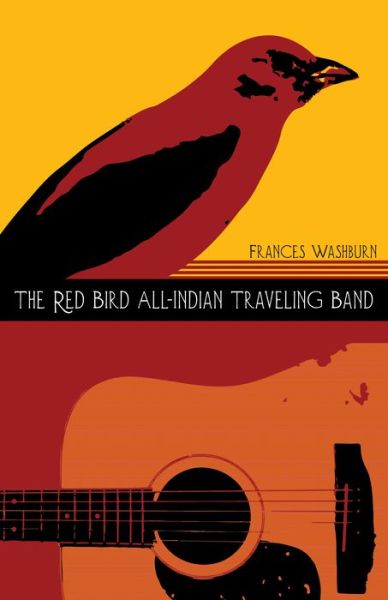
The Red Bird All-Indian Traveling Band by Frances Washburn

A slim, evocative, entertaining tale of strange happenings on an Indian reservation in South Dakota.

red bird

Sissy Roberts is the girl everyone tells their problems to, whether she likes it or not. But, as she tells the reader on the opening page of Frances Washburn’s The Red Bird All-Indian Traveling Band, “no one so far has confessed to me that they killed Buffalo Ames at the Scenic Fourth of July Rodeo.” The novel, despite being framed around Buffalo’s murder and the subsequent FBI investigation (which mostly consists of bothering Sissy for answers), is entirely Sissy’s story.

Though the FBI man sent to her corner of the reservation doesn’t believe in her ignorance, Sissy really doesn’t know who killed Buffalo that night–and she doesn’t know what she’s going to do to get out of this town and off the rez. Her interest in solving the murder is half-hearted; she is more concerned with solving the mystery of her own future and ducking lackluster marriage proposals from the shallow pool of men on the rez. But the two will prove to be interconnected.

The strengths of this slim, quirky novel are Sissy’s strange mix of tenderness and sass, and Washburn’s grasp of the rez and its sense of inertia. For all the frustration that Sissy and the other diverse, well-wrought characters experience, however, the final result is moderately uplifting, like the music Sissy delights in throughout.


This review originally ran in the March 7, 2014 issue of Shelf Awareness for Readers. To subscribe, click here, and you’ll receive two issues per week of book reviews and other bookish fun!


Rating: 8 beers.

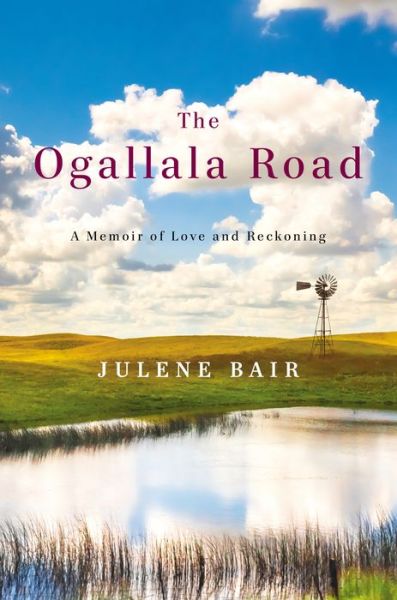
The Ogallala Road by Julene Bair

An environmentalist revisits the family farm with mixed feelings about water shortages, and finds a love story along the way.

ogallala

Julene Bair left the family farm in the high plains of Kansas for the bigger world of San Francisco, then the solitude of a rock house in the Mojave Desert. She returned pregnant, worked with her father on the farm for as long as she could stand it, then found security in a cowboy town in Wyoming, where she raised her son alone. She returned again to tour the ever-diminishing creeks and springs on foot and to study the Ogallala Aquifer, which the United States relies upon for 30% of its irrigated crops. Next to a big cottonwood, she meets a cowboy who admires Cormac McCarthy–and falls in love.

For most of The Ogallala Road, this cowboy, Wade, accompanies Bair as she struggles to reconcile the wilderness-loving, liberal-minded, Subaru-driving writer she’s become with her roots as a farmer’s daughter of Kansas’s conservative rural plains. The memoir clearly began as the story of a shrinking aquifer and a nation’s (or a world’s) self-destructive hubris, and one suspects Bair is as surprised as readers will be that romance takes so much of the spotlight. Wade embodies everything that both nourishes and infuriates her about Kansas, which is a challenge to their love story.

The farm that has sustained generations of her forebears retains a strong hold on Bair’s heart, and her family’s–and her own–role in depleting the aquifer becomes a central source of conflict. The Ogallala Road meanders through the history of the Cheyenne Indians’ longtime residence in the region, seeking insight into a more balanced relationship with earth and water. “Hang on to your land!” Bair’s father exhorted his children, but under the pressures of a changing world, they’ll consider selling. Bair comments on the difference between growth and progress, and a feeling of connection to the land that she suspects her father would have snorted at, while wrestling with her own guilt. In the end, it is the water, not Wade, that causes her the most pain–but the memoir closes with a tentative note of hope.

In its combination of nature writing, environmental concern and love story, The Ogallala Road is unusual. Bair’s contemplative praise of the high plains and the western deserts, her yearning for a father for her son and her lament for a dying way of life will strike chords for diverse readers.


This review originally ran in the March 7, 2014 issue of Shelf Awareness for the Book Trade. To subscribe, click here.


Rating: 8 million gallons.

A Burnable Book by Bruce Holsinger

A medieval scholar takes a fictional turn in 14th-century London, in a story full of murder, literature, politics and intrigue.

burnable book

A young prostitute watches horrified from the bushes as a woman is beaten to death–then looks down at the book in her hands, placed there by the victim moments before. A London “fixer” and minor poet named Gower is asked by his friend Geoffrey Chaucer to track a missing book. The court surrounding the new and untested King Richard II worries over the new games of playing cards and a book rumored to contain a series of verses circulating London regarding the deaths of kings past and present. This one book that troubles bawdyhouse prostitutes, the royal court, bureaucrats, poets and criminals holds potentially great consequences for England’s future. It is treasonous, a “burnable book.”

Bruce Holsinger, a prolific and respected medieval scholar, turns his hand to fiction with A Burnable Book. His academic background makes him well suited to render diverse settings in 14th-century London, from the Southwark stews to the grand halls of Westminster. The young woman murdered outside the city walls is only the first victim, and Gower is not the only one searching for the book in question, for scruples are scarce when the stakes are so high: England’s royal command itself is under threat. Murder mystery, political intrigue and the engaging world of Chaucer’s London are brought to life with a cast of complex, sympathetic characters who are far removed from and yet also familiar to our modern world. Holsinger’s expertise with medieval times is put to good use in a thriller filled with suspense and literary taste.


This review originally ran in the February 25, 2014 issue of Shelf Awareness for Readers. To subscribe, click here, and you’ll receive two issues per week of book reviews and other bookish fun!


Rating: 7 quatrains.

A Garden of Marvels: How We Discovered that Flowers Have Sex, Leaves Eat Air, and Other Secrets of Plants by Ruth Kassinger

A charmingly accessible history of botany, full of the strange and wondrous, for readers intimidated by science.

garden of marvels

Ruth Kassinger (Paradise Under Glass) was frustrated by the kinds of mishaps with which many amateur gardeners are familiar: failures to thrive, unexplained deaths, mysterious midseason droopings. So she did what any reasonable science writer would do: research. How do plants really work? In hunting for a simple, layperson’s guide to botany, however, she came up short. Particularly in seeking “the story of the first discoverers of the basic facts of plant life”–that is, a history of botany–she could find only scholarly texts for which “Botany 101 is definitely a prerequisite.” From these frustrations was born the masterful, engaging A Garden of Marvels.

Kassinger’s greatest strength is unquestionably her quirky, conversational tone. She begins with a murder mystery (spoiler: the victim is a kumquat tree) and from these delightful opening lines, even the most science-averse reader will be hooked. While A Garden of Marvels does contain the odd gardening tip, it is more concerned with Kassinger’s travels: she visits farms, conservatories and laboratories around the nation, encountering diverse and eccentric characters she describes with humor and skill.

Her research into human history is likewise revealing: she points out that religious and societal philosophies caused our ignorance of and lack of interest in botany until very recently, and highlights those few pioneering minds whose experiments, observations and strange machineries caught us up. Darwin gets a chapter, and is accompanied by myriad little-known early scientists, all brought to life by Kassinger’s enthusiasm. A handful of relevant illustrations by Eva Ruhl assist along the way.

Kassinger is properly amazed at the science she discovers in nature, as well as the men (“and they were all men”) in history who broke ground with their scientific studies. For some readers, though, she may be a trifle overenthusiastic about the possibilities of genetic modifications of plant life and dismissive of concerns regarding these technologies–although the genetic possibilities in the simple garden petunia are positively mind-boggling.

Topics like plant sex, the history of scientific exploration and the fundamentals of genomics are all equally accessible in Kassinger’s capable hands. That she makes botany so approachable is a feat; that she makes it downright enthralling is almost as miraculous as an adorable photosynthesizing sea slug.


This review originally ran as a *starred review* in the February 24, 2014 issue of Shelf Awareness for the Book Trade. To subscribe, click here.


Rating: 9 different fruits on one tree.

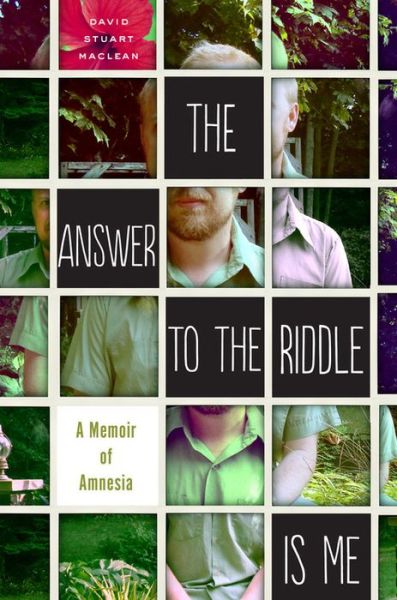
The Answer to the Riddle Is Me: A Memoir of Amnesia by David Stuart MacLean

A memoir from within the mind of an amnesiac, in full terrifying color.

riddle
In the opening scene of The Answer to the Riddle Is Me, David Stuart Maclean “wakes up” in a standing position, in a train station, in a place where English is clearly not the first language. He doesn’t know who he is, where he is or where he was going. A friendly policeman tells him that many tourists there do too many drugs and end up confused; Maclean concludes that he is a drug user and follows as he is told.

This scene is only the beginning of the enormous world of what Maclean can’t remember, and assumptions he’ll be led to make that will often turn out to be false. He was living alone in India on a government grant to aid his work as a novelist when an antimalarial drug he was taking overcame the blood-brain barrier and wreaked havoc. The Answer to the Riddle Is Me is Maclean’s story of amnesia and recovery, with all the false starts, depression, despair and small victories that come with such a trauma. Maclean often wishes himself back in a hospital where he’ll be spoon-fed and his decisions will be made for him, but he slowly, eventually resurfaces.

This heartfelt and painfully candid memoir tracks Maclean in real time, in fractured scenes and then in measured, purposeful steps, and comes with research into the medical issues involved. Readers will be mesmerized by the effort, and perhaps feel as rejuvenated in the end as Maclean does.


This review originally ran in the February 11, 2014 issue of Shelf Awareness for Readers. To subscribe, click here, and you’ll receive two issues per week of book reviews and other bookish fun!


Rating: 7 faces.

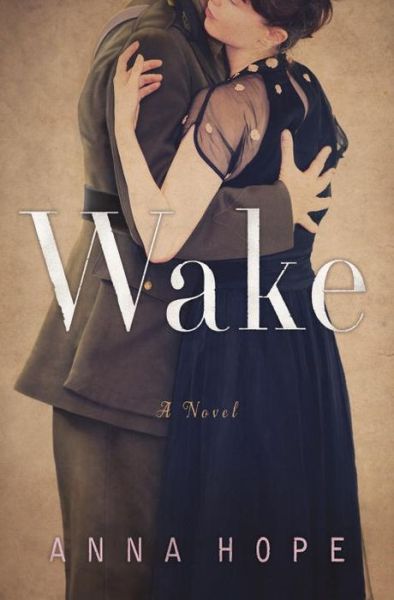
Wake by Anna Hope

With expertly written characters and a convincing melancholy tone, Anna Hope brings the aftermath of World War I to life through the lives of three English women.

wake

Anna Hope’s debut novel, Wake, follows three English women over a span of five days in 1920, building toward the two-year anniversary of Armistice Day and the end of World War I.

Hettie works in London as a dance instructor, paid by the dance to twirl with strangers, many of whom are missing limbs. She struggles to support herself as well as her irritable, aging mother and a brother who has not worked–or hardly spoken–since the war’s end. The festive, exotic dance hall where she works presents an interplay between light and dark, and Hettie’s forays with a more fortunate friend to a breathtaking speakeasy emphasize class differences. There, she meets a handsome, wealthy young man who intrigues her, but the distance from which he regards the world seems unconquerable.

Evelyn handles veterans’ pension complaints, a thankless job that keeps fresh the wound left by her boyfriend’s death in France. Asked every day to consider the fates of damaged young men, her bitterness grows. She used to be close to her brother, an officer, but he has not been the same since he returned.

And Ada is nearly mad, haunted by her son, whose death “of his wounds” has never been properly explained to her. Her loving husband feels that he has lost a wife as well as a son. When a young man appears on her doorstep and speaks her son’s name, Ada is staggered; this event threatens to precipitate her descent into mental illness.

Woven among the three women’s stories are brief views of military exhumation of unidentified bodies, candidates for the unknown soldier who will be reburied and honored on the anniversary of Armistice Day. These scenes establish and emphasize a gray, cold backdrop to the lives of Hettie, Evelyn and Ada.

Hope’s strengths lie in nuance and atmosphere, as she gently and subtly reminds the reader of humanity under the worst of conditions. The pervading mood of the novel is reinforced by poverty, an inability to talk about past trauma and the presence of countless maimed and begging young men. As the lives of her three protagonists come together and the unknown soldier nears his final grave, Wake’s deeply moving, ultimately universal story speaks evocatively across nearly a century.


This review originally ran in the February 7, 2014 issue of Shelf Awareness for the Book Trade. To subscribe, click here.


Rating: 7 dances.

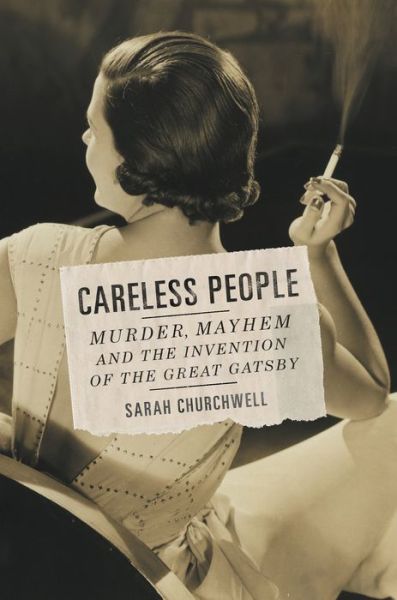
Careless People: Murder, Mayhem and the Invention of The Great Gatsby by Sarah Churchwell

New research and new angles on The Great Gatsby and its place in history.

carelesspeople

Sarah Churchwell (The Many Lives of Marilyn Monroe) takes on F. Scott Fitzgerald’s mythically proportioned masterpiece in Careless People, an expansive study of biography, history, literary criticism and cultural connections. Her inquiries focus on a double-murder involving a socially ambitious lower-class woman and a respected rector, both married but not to each other, found shot to death in each other’s arms. The case captured national attention in 1922, the year Scott and Zelda returned to New York–and the year in which The Great Gatsby is set.

With an appealing, freshly curious manner, original research and newly discovered resources, Churchwell explores the possible connections between Fitzgerald’s experiences in 1922 and what happened at the same time in his most highly regarded novel. She also compares the plot of The Great Gatsby to the real-world action of 1922. In the book, which alternates between the Fitzgeralds’ lives during the period The Great Gatsby came to life with the unfolding of media coverage of the murder case, Churchwell incorporates Fitzgerald’s correspondence, including delightful poems exchanged with Ring Lardner, and lists of slang (including some 70 ways to say “drunk”).

With elements of fun and tragedy–like the lives of its subjects–Churchwell’s study of the Fitzgeralds, The Great Gatsby and the world that birthed it presents new perspectives on a literary icon.


This review originally ran in the January 28, 2014 issue of Shelf Awareness for Readers. To subscribe, click here, and you’ll receive two issues per week of book reviews and other bookish fun!


Rating: 8 unattributed clippings.

Snowblind by Christopher Golden

A full-throttle paranormal thriller starring a variety of complex, likable characters.

snowblind

Coventry, Mass., was expecting a snowstorm, but nothing like the one that blows through the opening pages of Christopher Golden’s Snowblind. The novel begins with small-town residents managing their relationships, jobs and businesses, readying for the possibility of power outages and blocked roads. Just as readers are drawn into the lives of the diverse sympathetic characters, though, they’re ripped away from us–and something more terrifying (and more cognizant) than ice and wind is involved.

Fast forward a dozen years. The survivors of the first storm–men and women still mourning their loved ones–are faced with a disturbingly similar weather pattern headed their way. Coventry is still haunted by the unexplained deaths, and now the lost townspeople are coming back to try to warn the survivors of the returning danger. Families will have to pull together quickly to avoid a second tragedy.

A fast-paced, thoroughly engrossing supernatural thriller, Snowblind employs likable, multifaceted characters linked by their small-town connections and a tragic past. Golden’s writing is suspenseful and action-driven; it’s not ornate, but he still takes time to develop stories about characters’ relationships and backgrounds that will engage readers. The terror evoked is visceral and real and, along with a fairy-tale element and realistic backdrop, grips readers from the very first pages. Snowblind is a tale of trauma, individual responsibility and, ultimately, redemption.


This review originally ran in the January 28, 2014 issue of Shelf Awareness for Readers. To subscribe, click here, and you’ll receive two issues per week of book reviews and other bookish fun!


Rating: 6 snow plows.

Maximum Shelf author interview: Laura McHugh

Following yesterday’s review of The Weight of Blood, here’s Laura McHugh.


Laura McHugh: On Dark and Light.

Laura McHugh grew up in small towns in Iowa and the Ozark mountains of southern Missouri. She now lives in Columbia, Missouri, with her husband, two young daughters and one enormous dog. Her background includes computer science, software development and library science; The Weight of Blood is her first novel.

mchugh

Lucy’s voice is convincingly young adult. Did you find it difficult to write in her voice? What kind of preparation did you do?

That made me laugh, because I sometimes forget how far removed I am from being a young person. Lucy is the youngest of the narrators, but her voice came to me first. I didn’t do any formal preparation, though I think a few things in my everyday life gave me a foundation to work from. I kept a journal throughout my teens, and I still remember how I felt and acted at that age. I tried to channel my 17-year-old self to an extent, though only a few bits and pieces of me ended up in Lucy’s character. Some of my favorite books are adult novels with young adult narrators, and I kept those in mind as I was writing Lucy’s sections. And I’m not sure whether this really helped or not, but as the youngest of eight kids, I spent years observing (spying on) my teenage brothers and sisters.

Did the evil side of this novel get to you at all while you were writing? Give you nightmares?

I didn’t have nightmares, but I did spend an unhealthy amount of time worrying about the dangers that await my daughters out in the world. My oldest is in elementary school, and I won’t let her walk home from the bus stop by herself, because I keep a mental list of children who were kidnapped on the way to or from school. I always imagine the darkest possibilities in any situation, which isn’t good for my anxiety level, but serves me well as a writer.

Is this dark story based on truth?

Part of it, yes. I started the novel knowing that Lucy’s friend Cheri was dead, but I wasn’t sure what had happened to her. Then I came across a news article about a shocking crime involving a young woman in Lebanon, Missouri–the small town where I’d attended high school–and I knew that Cheri would suffer a similar experience.

Living in rural communities, it often seems like everyone knows everyone else’s business, and that it would be impossible to keep secrets, but then you see a horrific case like this one–multiple people involved, over several years, and no one said a word. I don’t want to give too much away, though I can tell you that the real-life victim survived her ordeal, unlike Cheri.

What about the Ozarks drew you to place your characters there?

The forbidding landscape and the remoteness of the Ozarks create a sense of foreboding that helps set the tone of the novel. And I’ve always been fascinated by the culture, which is steeped in folk wisdom, home remedies, and superstition. We were outsiders in our tiny town, yet at the same time, it became my home. Years after moving away, I was still haunted by the place, and the novel allowed me to explore the darker side of those tight-knit rural communities where outsiders aren’t welcome.

How did you decide to use a split narrative?

Lucy doesn’t know what happened to her mother, Lila, but I wanted the reader to know. And I didn’t want Lila’s story to be backstory, I wanted it to be as real and present as Lucy’s. The split narrative allowed me to do that, though I often cursed myself for that decision during revisions–I kept thinking how much easier it would have been to write a novel with one timeline and one narrator! In the end, weaving the two narratives together was the most satisfying part of the writing process.

And the secondary characters get perspectives as well, although not in first person. How did that strategy come to you? Was it especially challenging?

I hadn’t initially planned for more than two narrators, but as I worked on the first draft, the other characters kept telling their own versions of events. Each secondary character has secrets–pieces of the puzzle that are hidden from everyone else–and their perspectives were necessary to make the story whole. I wrote the secondary characters’ sections as they came to me, some in first person and some in third, and eventually changed them all to third for consistency. I wanted Lucy and Lila to stand out as the main characters, so I kept them in first person.

The hardest part was integrating the different perspectives and timelines. I clipped an index card to each chapter, with notes on the narrator, timeline, and key events. Then I spread them all out on the floor and moved them around, trying to get the order right and identify any gaps in the story. I was very methodical and possibly a bit crazed. The process took days, during which I fed my children a lot of chicken nuggets and let them watch too much TV. Everyone, including the dog, was relieved when I finished that part and let them back in the living room.

What do you have in mind next? Is there room for a sequel here?

Spiegel & Grau has purchased my second novel, Arrowood, which I’m working on now. A young woman returns to her childhood home in a decaying Iowa river town, where she witnessed the kidnapping of her sisters years ago. A terrible discovery forces her to question everything about her past, including her own memory.

I would love to write more books set in the Ozarks, though I’m not sure if Lucy will make an appearance. I was pretty hard on her in The Weight of Blood, and I think she deserves to rest for a while.


This interview originally ran on January 15, 2014 as a Shelf Awareness special issue. To subscribe, click here, and you’ll receive two issues per week of book reviews and other bookish fun!

Maximum Shelf: The Weight of Blood by Laura McHugh

Maximum Shelf is the weekly Shelf Awareness feature focusing on an upcoming title we love and believe will be a great handselling opportunity for booksellers everywhere. The features are written by our editors and reviewers and the publisher has helped support the issue.

This review was published by Shelf Awareness on January 15, 2014.


weight of blood

“That Cheri Stoddard was found at all was the thing that set people on edge, even more so than the condition of her body.” So opens Laura McHugh’s delightfully and darkly disturbing debut novel, The Weight of Blood. The town of Henbane is agitated because it is so good at keepings its secrets–and bodies are so easy to hide in the twisted, wooded Ozark Mountains.

The story begins with the first-person perspective of 18-year-old Lucy Dane. Lucy has it pretty good: she has a reliable best friend, a loving relationship with her father, and neighbors who make up an extended family of sorts. And she’s just begun working in her uncle’s store, where she gets to rub elbows with the sexy Daniel. But Lucy is troubled by the disappearance of her sort-of friend Cheri, a developmentally disabled schoolmate whose freshly dead body was only recently discovered–a year after she went missing. She’s also still troubled by the unexplained disappearance of her mother, Lila, who walked out of the house carrying a handgun and nothing else when Lucy was a year old.

The perspective then shifts to that of Lila herself as a young woman, newcomer to the Danes’ hometown of Henbane. Henbane is almost a character unto itself, insular, suspicious and largely unmarked by passing time. For a fee, residents can avoid a “city burial” (embalmment and the involvement of the authorities) in favor of a private grave-digging service. And the local lawyer will advise you not to trust local police until you find out who’s related to whom. It is anything but a friendly destination for a damaged teenager like Lila, who immediately runs up against the Dane brothers: the older Crete, who runs several businesses including a farm and a store, and his little brother, Carl, who becomes her husband before she turns 19. Superstitions have her labeled a witch before she’s unpacked her few belongings.

Through Lila’s eyes, the reader will find out slightly more about her background than Lucy knows, but Lila works hard to remain a mystery to both the reader and Henbane locals, including Carl. The perspectives continue to alternate. While Lucy keeps the reader up to date on current goings-on, it is through Lila that we begin to learn the ugly secrets that Henbane keeps. Other characters, too, get occasional chapters told from their point of view (in omniscient third person; only Lila and Lucy get first-person treatment), and one of the strengths of The Weight of Blood is that its engaging, complex, fully wrought characters extend beyond its protagonists. Lucy’s best friend, Bess, and Bess’s mother, Gabby (who was, in turn, best friend to Lila); Carl and Crete; the love interest, Daniel; a surrogate grandmother; and a local drug dealer all get sensitive handling and character development. But it is the measured building of tension and the careful doling out of hints of evil that star, as Lucy’s coming-of-age experience brings the classic bildungsroman to meet the gritty thriller.

While helping Daniel clean out an old trailer belonging to her uncle, Lucy discovers a clue: a lost item that she knows used to belong to Cheri, because Lucy gave it to her. Next, Bess overhears a reference that she shouldn’t have. With Daniel’s cautious support, Lucy begins to look into Cheri’s death, and the matter of where she spent that unaccounted-for year. But, of course, in a town this small, where everyone recognizes headlights and knows where a particular truck might be heading, investigations are dangerous. Like her mother before her, Lucy is told outright that it would be risky to go to the police for help. And as she probes the question of Cheri’s fate, and finds it apparently linked to her mother’s, Lucy will be disturbed at how close her inquiries lead her to home.

Carl and Crete, the Dane brothers, are heir not only to the off-the-books grave-digging business, the combined local grocery store and restaurant, and various secrets, but also to mental illness and corruption. As its title suggests, The Weight of Blood is concerned with the strength of our bonds to our family, and the tension between biological ties of blood and the families we choose for ourselves. In a remarkably convincing portrayal of young adulthood, Lucy allows McHugh to explore themes of loyalty: where it’s owed, and to what extremes.

The atmosphere McHugh evokes in this masterful debut is wonderfully spooky, exemplifying Southern noir with a backwoods mountain twist and a matter-of-fact willingness to bury its dead out back and walk away. Taut pacing, lively suspense and atmosphere are the strongest points of a novel that also has an engaging plot and beautifully built, sympathetic characters to its credit. For fans of dark, suspenseful, well-structured thrillers, The Weight of Blood is a delicious and nail-biting treat.


Rating: 7 baby possums.

Come back tomorrow for my interview with McHugh!