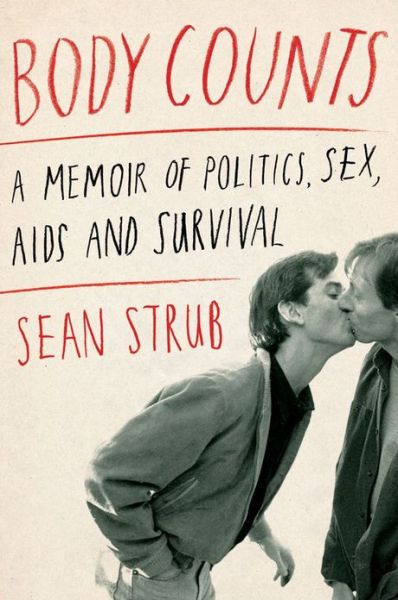
Body Counts: A Memoir of Politics, Sex, AIDS, and Survival by Sean Strub

Sean Strub’s earnest, evocative memoir of political activism, coming out and the AIDS epidemic will appeal to diverse readers.
bodycounts

Seventeen-year-old Sean Strub left Iowa City in 1976 to attend Georgetown University and–more importantly for his future–to become an elevator operator at the Capitol Building. He worked to meet as many powerful figures as possible, with his own political career in mind, yet he was haunted by a secret he feared would make him unelectable: he was attracted to men.

Three years later, the colorful, growing gay community of New York City encouraged the aspiring politico to begin to explore his own sexuality and acknowledge it as a permanent feature in his life. As an increasingly “out” gay man, he shifted his focus away from the idea of running for office and became a committed activist in the pursuit of gay rights. Strub’s second passion and skill was for entrepreneurship, and he eventually started up an impressive number of companies, including direct-mail ventures and publications that supported his causes.

In the early 1980s, “gay cancer,” eventually known as AIDS, was suddenly everywhere. Strub couldn’t attend every funeral and memorial service, he writes, but he always made sickbed visits; sometimes he walked the halls of a hospital without a specific friend in mind, reading names on rooms, sure he’d find people who needed him.

Strub had known he was HIV-positive since 1985, when he was given a prognosis of “maybe” two years, but his partner Michael died with no warning, not even getting sick first. The need for AIDS activism to push for quicker access to new drugs and fight discrimination naturally dominated Strub’s attention in the years following his diagnosis and Michael’s death.

In Body Counts, Strub relates the joys and struggles of learning self-love, political aspirations and disillusions, activism and relationships with countless men and women he loves, with cameo appearances by Tennessee Williams, Bobby Kennedy, Gore Vidal and Bill Clinton (among others). Body Counts is a powerfully moving personal memoir with the added value of a fine and feeling primer on the history of gay culture and AIDS in the United States. Strub’s subject matter could have been morbidly tragic, but he retains a sense of humor and celebration, honoring the dead with love and hope. Now an AIDS survivor for nearly 30 years, Strub notes that he is on his way to matching, in same-sex weddings, the number of funerals he attended in the 1980s and ’90s.


This review originally ran in the December 13, 2013 issue of Shelf Awareness for the Book Trade. To subscribe, click here.


Rating: 8 mailings.

The Book of Jezebel: An Illustrated Encyclopedia of Lady Things by Anna Holmes

A colorful and clever reference guide to life as a woman that readers can enjoy straight through, cover to cover.

jezebel

The Book of Jezebel, edited by the creator of the popular feminist website with contributions from many of its writers, is an illustrated encyclopedia of “lady things.” The Jezebel definition of lady things includes body parts, clothing, historical and contemporary women in pop culture, literature and politics–and women’s issues related to feminism, reproductive rights and relationships. It also contains an “ode to female friendship,” (mostly) humorous attacks on certain public figures and plenty of photographs and illustrations that add to the book’s informational value and its hilarity.

Although often funny, The Book of Jezebel is serious in its underlying intent, aspiring to balance empowerment with femininity. It’s not just for women, but for men who love them as well.


This review originally ran in the November 29, 2013 issue of Shelf Awareness for Readers. To subscribe, click here, and you’ll receive two issues per week of book reviews and other bookish fun!


Rating: 8 steps.

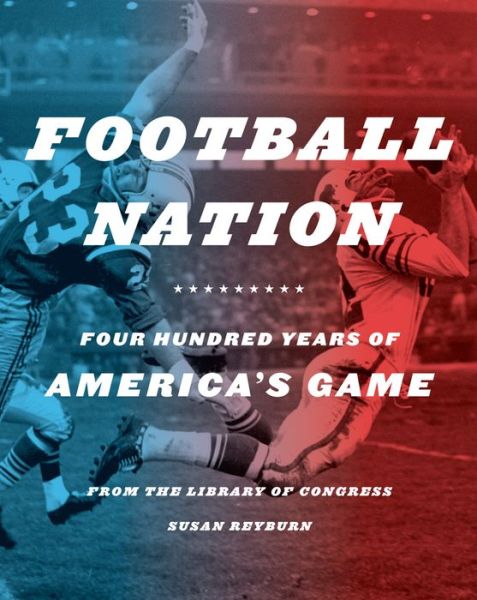
Football Nation: Four Hundred Years of America’s Game

A multifaceted, pictorial perspective on America’s favorite sport.

football nationa

With the aid of awe-inspiring images from the Library of Congress, Susan Reyburn (Baseball Americana) masterfully recounts a detailed history of the gridiron in Football Nation. From colonial times to the commercialism of contemporary professional and college ball, Reyburn offers a look at football’s journey toward becoming the most popular sport in the country.

With previously unreleased images, including cartoons, illustrations and photographs, Reyburn traces the historical relationship between the United States and the game. Fans will gain a deeper understanding and appreciation for the sport, but even casual followers of the game will be enthralled with an unprecedented depth of perspective on this glamorized spectacle in history and in popular culture. Football Nation is an appealing read for anyone remotely interested in what many call the United States’ most popular sport–and how it got that way.


This review originally ran in the November 29, 2013 issue of Shelf Awareness for Readers. To subscribe, click here, and you’ll receive two issues per week of book reviews and other bookish fun!

The Trip to Echo Spring: On Writers and Drinking by Olivia Laing

Laing’s poetic ruminations on the alcoholism of six authors will charm readers of travel writing, biography and literary criticism.

echo spring
Olivia Laing’s The Trip to Echo Spring studies six authors whose lives meet at the juncture of creativity and alcoholism. While Laing (who walked along the river where Virginia Woolf killed herself for her previous book, To the River) acknowledges she had many alcoholic writers to choose from, the half dozen she selected justify and reward her nuanced attentions. Though F. Scott Fitzgerald, Ernest Hemingway and Tennessee Williams have been studied to the point of exhaustion, John Cheever, Raymond Carver and John Berryman have been less comprehensively examined.

Laing’s exploration of these extraordinary men’s lives has many facets. The Trip to Echo Spring, named for the bourbon favored by the maudlin Brick in Williams’ Cat on a Hot Tin Roof, is partly literary criticism–and no lightweight in that department, showing serious attention to her subjects’ works. Meanwhile, the level of biographical detail reveals Laing’s interest in their intersections with one another in life as well as literature. There are hints of travelogue as well, as Laing crisscrosses North America to visit the crucial locations in these writers’ lives, from Hemingway’s Key West to Fitzgerald and Berryman’s St. Paul, Minn., to Port Angeles, Wash., where Raymond Carver finished his life.

The common themes Laing finds in the cities and the bars where these men drank themselves into misery, death, and art include swimming, fluidity and the cleansing properties of sea and stream. She delves into the biology and psychology of of alcoholism, with several forays into Alcoholics Anonymous, and finally touches on her own upbringing as the child of alcoholics. While she focuses on the relationship between writing and drinking, another key part of her journey is personal–but her own history with drunks is only gradually revealed and never takes center stage.

These disparate elements come together elegantly in Laing’s quietly contemplative prose. She is sensitive to the struggles of these tortured men (among them several suicides) and deeply appreciative of their accomplishments, but also clear-headed about their shortcomings and their abusive treatment of others as well as themselves. A lovely piece of writing in its own right, The Trip to Echo Spring is a fine tribute to artists as well as a lament for their addiction.


This review originally ran in the November 20, 2013 issue of Shelf Awareness for the Book Trade. To subscribe, click here.


Rating: 8 bottles.

A Little History of Literature by John Sutherland

An easily grasped primer on our finest wordsmiths, from Homer through the Bröntes, Proust and Kafka.

literature

John Sutherland (Lives of the Novelists) tackles an impressively broad subject in A Little History of Literature. Beginning with Homer and The Epic of Gilgamesh, Chaucer and Shakespeare, he hopes to instruct his reader in literature–what it is, where it’s been and where it might be headed.

Sutherland takes us from a childhood of “reading… under the blanket, with a torch, after lights out,” and the genesis of children’s literature, through the modern developments that brought us Fifty Shades of Grey and genre divisions. Even as he recounts the historical details behind Beowulf or the birth of the King James Bible, he skips forward to reference current trends, markets and buying habits, relating them to centuries-old forces. Major works from many centuries are joined by digressions into the history of printing, of copyright and of books themselves.

Sutherland presupposes a certain background among his readers: “much of what many of us know about science comes from reading science fiction,” for example, or his description of “many” or “most” children growing up reading at home. He also focuses, with few exceptions, on Western literature, although he does make a conscious effort to call attention to the role of women writers within that tradition. These issues aside, this slim book makes for a necessarily cursory review of literature’s greats–and the loving treatment by an expert, presented in easily understood terms, will please both novices and established readers looking to dip back into well-loved works.


This review originally ran in the November 19, 2013 issue of Shelf Awareness for Readers. To subscribe, click here, and you’ll receive two issues per week of book reviews and other bookish fun!


Rating: 6 historical trends.

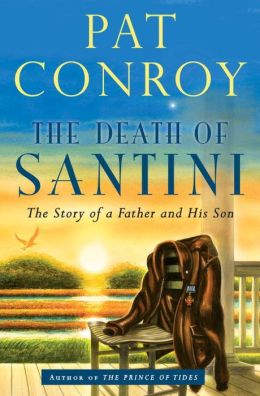
The Death of Santini by Pat Conroy

A remarkable ode to the real-life inspiration behind one of the most hated fathers of American literature and film.

deathsantini

With The Death of Santini, Pat Conroy returns to the autobiographical roots of one of his first successes, the 1976 novel The Great Santini. In this memoir, he recalls his father, a larger-than-life Marine hero who was an abusive monster to his family, from the perspective of decades passed. This is, he promises, the last story he’ll tell of his father–and of his mother, the beautiful false Southern belle.

Conroy’s style and ability to portray time and place are as mesmerizing and evocative as ever; the painful, neurotic (or, as he frequently says, “f-ed up”) family dynamics among the seven Conroy children and their mythically proportioned parents are peppered with humor. After his brother Tom’s suicide, for example, the family is at first shocked to realize that the funeral cards list the information for another brother, Tim, but then they razz him mercilessly. Another sibling notices the animosity their sister has for Conroy and reflects how hard it must be to hated so much. “No, I hate all you guys that much,” Tim says, to which brother Jim replies, “Shut up, Tim. You’re dead.”

As Conroy takes us through his convoluted relationship with a man he hated and feared, but eventually loved and felt close to (more or less), his gift for storytelling makes his story perfectly understandable and sympathetic. Don Conroy never ceased denying that he was falsely accused, but he softened over time and, it seems, in his dying years finally learned how to be a father.


This review originally ran in the November 5, 2013 issue of Shelf Awareness for Readers. To subscribe, click here, and you’ll receive two issues per week of book reviews and other bookish fun!


Rating: 8 poems.

The Hunted Whale by James McGuane

An evocative photographic study of historic whaling tools and techniques.

huntedwhale

“The hunt is one of man’s most ancient endeavors,” begins The Hunted Whale. James McGuane’s photographic exploration into the bygone practice of whaling transports the reader back in time, when whale oil lit the streetlights of the world’s major cities and lubricated the burgeoning textile industry. Whaling was a significant economy unto itself, employing countless young men who were convinced to ship out for years at a time by employment agents known as “land sharks.” It was a trade performed by hand, and McGuane examines its many aspects: hunt, ship, whaleboat, crew, whale, tools and more.

McGuane’s text is accompanied by more than 200 fine, detailed color photographs depicting whaling artifacts, including several examples of scrimshaw–the art of painted, engraved or carved whalebone or teeth. Photographs of twisted and mangled–but intact–harpoons give visceral evidence of the whale’s power to resist human efforts, and McGuane details the methods in practice. Also showcased are innovative technologies, such as toggled harpoons or “irons.”

Selections from Logbook for Grace, a diary kept by naturalist Robert Cushman Murphy aboard the whaleship Daisy in 1912, add a valuable firsthand perspective and bring McGuane’s subject to life. With all its salty flavor, The Hunted Whale is an obvious choice for fans of Moby-Dick, but history or naval buffs and fans of pre-mechanized times will be equally charmed by this detailed pictorial view of the ancient industry of whaling.


This review originally ran in the November 5, 2013 issue of Shelf Awareness for Readers. To subscribe, click here, and you’ll receive two issues per week of book reviews and other bookish fun!


Rating: 5 scrimshanders.

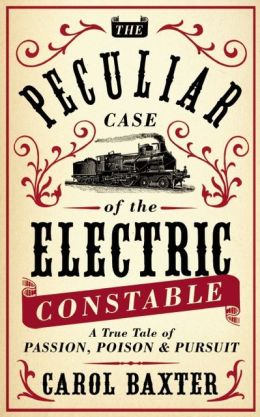
The Peculiar Case of the Electric Constable by Carol Baxter

An exhilarating real-life thriller about the murder that revealed the power of the telegraph.

peculiar electric

Australian historian Carol Baxter melds true crime and science in the gripping The Peculiar Case of the Electric Constable. The electric telegraph (or the “electric constable,” as it was known) was a newfangled, doubtful-looking invention in 1845, when a well-liked young woman was found gasping her final breaths in the small English town of Slough. Fortuitously, Slough was connected by an experimental telegraph line to Paddington Station; when a distinctively dressed gentleman was seen leaving the apparent murder scene and boarding a train, quick-thinking locals sent word along the line. The pursuit by telegraph of a criminal suspect marked a turning point, Baxter argues, and sparked the communications revolution that continues today. That the suspect, John Tawell, was a Quaker made this case still more sensational, and his personal history as a transported convict helped to transfix the public.

This peculiar case involved not only the “electric constable” but also the new fields of toxicology and forensic science. The murder trial riveted the medical and legal professions, setting new precedents; the public, already inspired by poisoning cases, was riveted by the cyanide evidence that “the Quaker murderer” provided. Baxter’s accounts of the telegraph’s technology, the prevailing cultural climate regarding murder and poisonings, contemporary forensic methods and Tawell’s personal history are all worthy of an engrossing thriller. (Her research was meticulous, though, she explains in an author’s note, and all the dialogue attributed and factual.) Expertly told, The Peculiar Case of the Electric Constable is a captivating accomplishment in nonfiction.


This review originally ran in the October 29, 2013 issue of Shelf Awareness for Readers. To subscribe, click here, and you’ll receive two issues per week of book reviews and other bookish fun!


Rating: 7 dark suits.

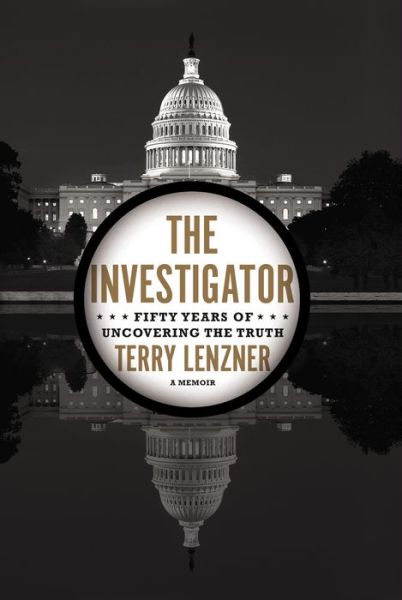
The Investigator: Fifty Years of Uncovering the Truth by Terry Lenzner

An investigator’s caseload over the decades offers a captivating glimpse of the intersection of politics, celebrity and money in the U.S.

investigator

Terry Lenzner’s career began in the Justice Department’s Civil Rights Division in the 1960s, and has ranged from the Senate Watergate Committee through private legal practice to his own company, Investigative Group International. A lawyer by training, he found his passion in research and sleuthing. The Investigator reads like a Forrest-Gump-style catalogue of cases that have caught the public eye–from the murders of three civil rights workers in Mississippi, to the Harrisburg 7’s federal case for antiwar activism, to Watergate, the Unabomber, Monica Lewinsky and the death of Princess Diana.

Lenzner’s clients include governments, politicians, businessmen and celebrities; the resulting wide-ranging subject matter in this memoir accounts in part for its appeal. Even the tedious financial fact-checking of an investigation into the Trans-Alaska Pipeline is brought to life by Lenzner’s passion. He gives character sketches of public figures he’s known, debunks public perceptions of certain events and offers investigative tips along the way. He is concerned with the truth, not satisfying the client at any price, and shares anecdotes in which the two goals were irreconcilable.

Impressively, this seasoned investigator is also a fine writer. His story opens compellingly, giving background while simultaneously jumping right into the action. Although “this isn’t meant to be a history book,” Lenzner writes, The Investigator is an absorbing and intelligent sampling of American history, told in puzzles and–sometimes–solutions.


This review originally ran as a *starred review* in the October 22, 2013 issue of Shelf Awareness for Readers. To subscribe, click here, and you’ll receive two issues per week of book reviews and other bookish fun!


Rating: 7 witnesses.

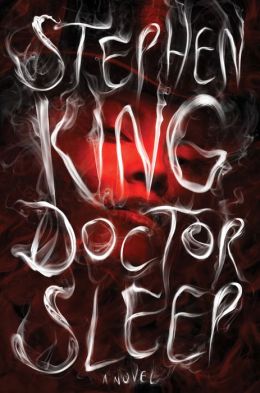
Doctor Sleep by Stephen King

It was over a year ago when I discovered a preview of this book, and I’ve been anxiously looking forward to it ever since. How lucky was I to get a review copy!!


The long-awaited sequel to The Shining lives up to its heritage.

king

As a sequel to 1977’s The Shining, Doctor Sleep has unspeakably large shoes to fill, but Stephen King is more than able to follow up on the thought-provoking and deliciously shivery thrills of that novel.

Several decades after the events of The Shining, Dan Torrance is haunted by the ghosts of his childhood and deep in the ugly throes of his father’s disease, alcoholism. He lands in the small town of Frazier, N.H., where he finds meaningful work, a few good friends and Alcoholics Anonymous. Finally his life seems to be on track–until a little girl named Abra is born, whose “shine” is astronomically brighter than his ever was. A community of not-quite-humans is zeroing in on Abra; to live, they need what she has, and they balk at nothing, including violence toward children, to get it. Thus, Dan is again embroiled with the monsters he couldn’t drink away, but thought he’d learned to store in a lockbox on a dusty shelf in his mind.

King continues to show a mastery that extends beyond genre. Doctor Sleep has The Shining‘s spooky intimate authenticity, 11/22/63‘s grasp of pop cultural references and sense of time and place, and Carrie‘s uncanny understanding of youth. Where The Shining took place in a single claustrophobic setting, Doctor Sleep roams wide both geographically and topically, through paranormal concepts and King’s prodigious imagination. Themes of family and personal struggle persist, but perhaps most enjoyable are the page-turning suspense and terror for which King is so deservedly famous.


This review originally ran in the October 4, 2013 issue of Shelf Awareness for Readers. To subscribe, click here, and you’ll receive two issues per week of book reviews and other bookish fun!


Rating: 8 screams.