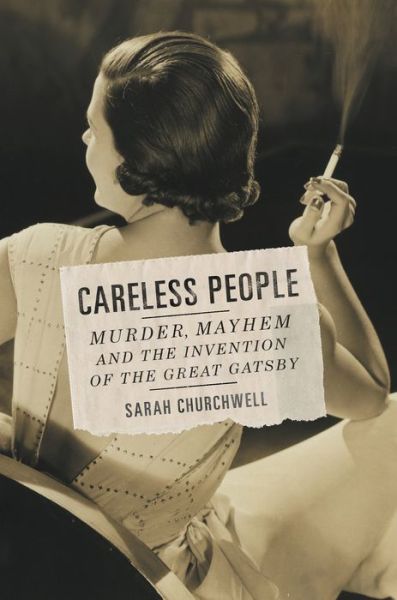
Careless People: Murder, Mayhem and the Invention of The Great Gatsby by Sarah Churchwell

New research and new angles on The Great Gatsby and its place in history.

carelesspeople

Sarah Churchwell (The Many Lives of Marilyn Monroe) takes on F. Scott Fitzgerald’s mythically proportioned masterpiece in Careless People, an expansive study of biography, history, literary criticism and cultural connections. Her inquiries focus on a double-murder involving a socially ambitious lower-class woman and a respected rector, both married but not to each other, found shot to death in each other’s arms. The case captured national attention in 1922, the year Scott and Zelda returned to New York–and the year in which The Great Gatsby is set.

With an appealing, freshly curious manner, original research and newly discovered resources, Churchwell explores the possible connections between Fitzgerald’s experiences in 1922 and what happened at the same time in his most highly regarded novel. She also compares the plot of The Great Gatsby to the real-world action of 1922. In the book, which alternates between the Fitzgeralds’ lives during the period The Great Gatsby came to life with the unfolding of media coverage of the murder case, Churchwell incorporates Fitzgerald’s correspondence, including delightful poems exchanged with Ring Lardner, and lists of slang (including some 70 ways to say “drunk”).

With elements of fun and tragedy–like the lives of its subjects–Churchwell’s study of the Fitzgeralds, The Great Gatsby and the world that birthed it presents new perspectives on a literary icon.


This review originally ran in the January 28, 2014 issue of Shelf Awareness for Readers. To subscribe, click here, and you’ll receive two issues per week of book reviews and other bookish fun!


Rating: 8 unattributed clippings.

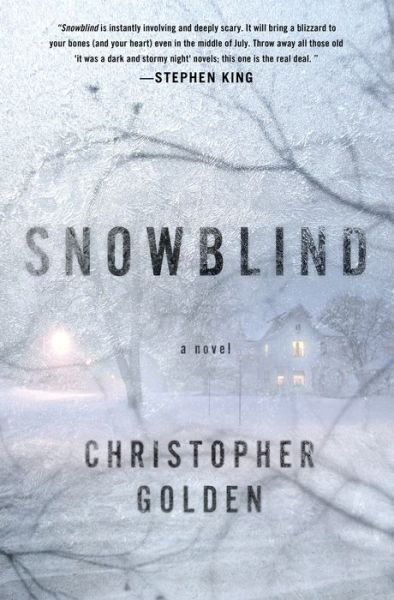
Snowblind by Christopher Golden

A full-throttle paranormal thriller starring a variety of complex, likable characters.

snowblind

Coventry, Mass., was expecting a snowstorm, but nothing like the one that blows through the opening pages of Christopher Golden’s Snowblind. The novel begins with small-town residents managing their relationships, jobs and businesses, readying for the possibility of power outages and blocked roads. Just as readers are drawn into the lives of the diverse sympathetic characters, though, they’re ripped away from us–and something more terrifying (and more cognizant) than ice and wind is involved.

Fast forward a dozen years. The survivors of the first storm–men and women still mourning their loved ones–are faced with a disturbingly similar weather pattern headed their way. Coventry is still haunted by the unexplained deaths, and now the lost townspeople are coming back to try to warn the survivors of the returning danger. Families will have to pull together quickly to avoid a second tragedy.

A fast-paced, thoroughly engrossing supernatural thriller, Snowblind employs likable, multifaceted characters linked by their small-town connections and a tragic past. Golden’s writing is suspenseful and action-driven; it’s not ornate, but he still takes time to develop stories about characters’ relationships and backgrounds that will engage readers. The terror evoked is visceral and real and, along with a fairy-tale element and realistic backdrop, grips readers from the very first pages. Snowblind is a tale of trauma, individual responsibility and, ultimately, redemption.


This review originally ran in the January 28, 2014 issue of Shelf Awareness for Readers. To subscribe, click here, and you’ll receive two issues per week of book reviews and other bookish fun!


Rating: 6 snow plows.

Maximum Shelf author interview: Laura McHugh

Following yesterday’s review of The Weight of Blood, here’s Laura McHugh.


Laura McHugh: On Dark and Light.

Laura McHugh grew up in small towns in Iowa and the Ozark mountains of southern Missouri. She now lives in Columbia, Missouri, with her husband, two young daughters and one enormous dog. Her background includes computer science, software development and library science; The Weight of Blood is her first novel.

mchugh

Lucy’s voice is convincingly young adult. Did you find it difficult to write in her voice? What kind of preparation did you do?

That made me laugh, because I sometimes forget how far removed I am from being a young person. Lucy is the youngest of the narrators, but her voice came to me first. I didn’t do any formal preparation, though I think a few things in my everyday life gave me a foundation to work from. I kept a journal throughout my teens, and I still remember how I felt and acted at that age. I tried to channel my 17-year-old self to an extent, though only a few bits and pieces of me ended up in Lucy’s character. Some of my favorite books are adult novels with young adult narrators, and I kept those in mind as I was writing Lucy’s sections. And I’m not sure whether this really helped or not, but as the youngest of eight kids, I spent years observing (spying on) my teenage brothers and sisters.

Did the evil side of this novel get to you at all while you were writing? Give you nightmares?

I didn’t have nightmares, but I did spend an unhealthy amount of time worrying about the dangers that await my daughters out in the world. My oldest is in elementary school, and I won’t let her walk home from the bus stop by herself, because I keep a mental list of children who were kidnapped on the way to or from school. I always imagine the darkest possibilities in any situation, which isn’t good for my anxiety level, but serves me well as a writer.

Is this dark story based on truth?

Part of it, yes. I started the novel knowing that Lucy’s friend Cheri was dead, but I wasn’t sure what had happened to her. Then I came across a news article about a shocking crime involving a young woman in Lebanon, Missouri–the small town where I’d attended high school–and I knew that Cheri would suffer a similar experience.

Living in rural communities, it often seems like everyone knows everyone else’s business, and that it would be impossible to keep secrets, but then you see a horrific case like this one–multiple people involved, over several years, and no one said a word. I don’t want to give too much away, though I can tell you that the real-life victim survived her ordeal, unlike Cheri.

What about the Ozarks drew you to place your characters there?

The forbidding landscape and the remoteness of the Ozarks create a sense of foreboding that helps set the tone of the novel. And I’ve always been fascinated by the culture, which is steeped in folk wisdom, home remedies, and superstition. We were outsiders in our tiny town, yet at the same time, it became my home. Years after moving away, I was still haunted by the place, and the novel allowed me to explore the darker side of those tight-knit rural communities where outsiders aren’t welcome.

How did you decide to use a split narrative?

Lucy doesn’t know what happened to her mother, Lila, but I wanted the reader to know. And I didn’t want Lila’s story to be backstory, I wanted it to be as real and present as Lucy’s. The split narrative allowed me to do that, though I often cursed myself for that decision during revisions–I kept thinking how much easier it would have been to write a novel with one timeline and one narrator! In the end, weaving the two narratives together was the most satisfying part of the writing process.

And the secondary characters get perspectives as well, although not in first person. How did that strategy come to you? Was it especially challenging?

I hadn’t initially planned for more than two narrators, but as I worked on the first draft, the other characters kept telling their own versions of events. Each secondary character has secrets–pieces of the puzzle that are hidden from everyone else–and their perspectives were necessary to make the story whole. I wrote the secondary characters’ sections as they came to me, some in first person and some in third, and eventually changed them all to third for consistency. I wanted Lucy and Lila to stand out as the main characters, so I kept them in first person.

The hardest part was integrating the different perspectives and timelines. I clipped an index card to each chapter, with notes on the narrator, timeline, and key events. Then I spread them all out on the floor and moved them around, trying to get the order right and identify any gaps in the story. I was very methodical and possibly a bit crazed. The process took days, during which I fed my children a lot of chicken nuggets and let them watch too much TV. Everyone, including the dog, was relieved when I finished that part and let them back in the living room.

What do you have in mind next? Is there room for a sequel here?

Spiegel & Grau has purchased my second novel, Arrowood, which I’m working on now. A young woman returns to her childhood home in a decaying Iowa river town, where she witnessed the kidnapping of her sisters years ago. A terrible discovery forces her to question everything about her past, including her own memory.

I would love to write more books set in the Ozarks, though I’m not sure if Lucy will make an appearance. I was pretty hard on her in The Weight of Blood, and I think she deserves to rest for a while.


This interview originally ran on January 15, 2014 as a Shelf Awareness special issue. To subscribe, click here, and you’ll receive two issues per week of book reviews and other bookish fun!

Maximum Shelf: The Weight of Blood by Laura McHugh

Maximum Shelf is the weekly Shelf Awareness feature focusing on an upcoming title we love and believe will be a great handselling opportunity for booksellers everywhere. The features are written by our editors and reviewers and the publisher has helped support the issue.

This review was published by Shelf Awareness on January 15, 2014.


weight of blood

“That Cheri Stoddard was found at all was the thing that set people on edge, even more so than the condition of her body.” So opens Laura McHugh’s delightfully and darkly disturbing debut novel, The Weight of Blood. The town of Henbane is agitated because it is so good at keepings its secrets–and bodies are so easy to hide in the twisted, wooded Ozark Mountains.

The story begins with the first-person perspective of 18-year-old Lucy Dane. Lucy has it pretty good: she has a reliable best friend, a loving relationship with her father, and neighbors who make up an extended family of sorts. And she’s just begun working in her uncle’s store, where she gets to rub elbows with the sexy Daniel. But Lucy is troubled by the disappearance of her sort-of friend Cheri, a developmentally disabled schoolmate whose freshly dead body was only recently discovered–a year after she went missing. She’s also still troubled by the unexplained disappearance of her mother, Lila, who walked out of the house carrying a handgun and nothing else when Lucy was a year old.

The perspective then shifts to that of Lila herself as a young woman, newcomer to the Danes’ hometown of Henbane. Henbane is almost a character unto itself, insular, suspicious and largely unmarked by passing time. For a fee, residents can avoid a “city burial” (embalmment and the involvement of the authorities) in favor of a private grave-digging service. And the local lawyer will advise you not to trust local police until you find out who’s related to whom. It is anything but a friendly destination for a damaged teenager like Lila, who immediately runs up against the Dane brothers: the older Crete, who runs several businesses including a farm and a store, and his little brother, Carl, who becomes her husband before she turns 19. Superstitions have her labeled a witch before she’s unpacked her few belongings.

Through Lila’s eyes, the reader will find out slightly more about her background than Lucy knows, but Lila works hard to remain a mystery to both the reader and Henbane locals, including Carl. The perspectives continue to alternate. While Lucy keeps the reader up to date on current goings-on, it is through Lila that we begin to learn the ugly secrets that Henbane keeps. Other characters, too, get occasional chapters told from their point of view (in omniscient third person; only Lila and Lucy get first-person treatment), and one of the strengths of The Weight of Blood is that its engaging, complex, fully wrought characters extend beyond its protagonists. Lucy’s best friend, Bess, and Bess’s mother, Gabby (who was, in turn, best friend to Lila); Carl and Crete; the love interest, Daniel; a surrogate grandmother; and a local drug dealer all get sensitive handling and character development. But it is the measured building of tension and the careful doling out of hints of evil that star, as Lucy’s coming-of-age experience brings the classic bildungsroman to meet the gritty thriller.

While helping Daniel clean out an old trailer belonging to her uncle, Lucy discovers a clue: a lost item that she knows used to belong to Cheri, because Lucy gave it to her. Next, Bess overhears a reference that she shouldn’t have. With Daniel’s cautious support, Lucy begins to look into Cheri’s death, and the matter of where she spent that unaccounted-for year. But, of course, in a town this small, where everyone recognizes headlights and knows where a particular truck might be heading, investigations are dangerous. Like her mother before her, Lucy is told outright that it would be risky to go to the police for help. And as she probes the question of Cheri’s fate, and finds it apparently linked to her mother’s, Lucy will be disturbed at how close her inquiries lead her to home.

Carl and Crete, the Dane brothers, are heir not only to the off-the-books grave-digging business, the combined local grocery store and restaurant, and various secrets, but also to mental illness and corruption. As its title suggests, The Weight of Blood is concerned with the strength of our bonds to our family, and the tension between biological ties of blood and the families we choose for ourselves. In a remarkably convincing portrayal of young adulthood, Lucy allows McHugh to explore themes of loyalty: where it’s owed, and to what extremes.

The atmosphere McHugh evokes in this masterful debut is wonderfully spooky, exemplifying Southern noir with a backwoods mountain twist and a matter-of-fact willingness to bury its dead out back and walk away. Taut pacing, lively suspense and atmosphere are the strongest points of a novel that also has an engaging plot and beautifully built, sympathetic characters to its credit. For fans of dark, suspenseful, well-structured thrillers, The Weight of Blood is a delicious and nail-biting treat.


Rating: 7 baby possums.

Come back tomorrow for my interview with McHugh!

Rosarito Beach by M.A. Lawson

A sexy renegade DEA agent’s past resurfaces at the worst possible moment in a new series from (a barely disguised) Mike Lawson.

rosarito

Mike Lawson, creator of the Joe DeMarco thrillers (House Odds et al.), uses the pen name M. A. Lawson to launch a new series, Rosarito Beach, with a new protagonist: DEA agent Kay Hamilton. Hamilton brings a take-no-prisoners attitude to her investigations, and though it’s clear she makes a better field agent than supervisor, she’s assigned to lead a team in Southern California investigating Caesar Olivera, the boss of a major Mexican drug cartel. After arresting the kingpin’s little brother, Tito, Hamilton’s main concern becomes keeping him locked up. Even after Tito is transferred to the brig of a vast Marine base, however, Caesar’s army threatens.

Hamilton dislikes authority figures, enjoys a drink or four, picks fights with every other law enforcement agency in town and knows exactly how to use her good looks and hot body to her advantage. She follows her own personal code, pleased to be beholden to no one except herself, involved with her career and personal pursuits–mainly her sex life–until a mystery from her distant past resurfaces. This new addition to her short list of concerns reorders Hamilton’s priorities and drives her to actions, and crimes, she never thought possible. The DEA fights to keep Tito locked up, the cartel arms itself for action and Hamilton rejects protocol in an accelerating race toward the end game, which concludes with all the fireworks and upheaval a thriller fan craves.


This review originally ran as a *starred review* in the January 3, 2014 issue of Shelf Awareness for Readers. To subscribe, click here, and you’ll receive two issues per week of book reviews and other bookish fun!


Rating: 5 stiletto heels.

To expand a bit on my review, above: this thriller was suspenseful, had pace and momentum, and kept me interested and engaged. Its fault (and the reason my rating isn’t higher) relates to the caricatures of the characters. Hollywood-style, they were all beautiful, had smokin’-hot bods, and dressed like magazine spreads. Similarly, the hero’s coldly detached interest in sex without strings struck me as unrealistic and a little stereotyped – career-obsessed woman not interested in relationships but able to seduce her way into the most highly-guarded yadda yadda. There was a cartoon element to it, is what I’m saying. On the other hand, though, I stayed up late reading avidly to see what would happen next. So I may have rolled my eyes, but Lawson gets the win in the end.

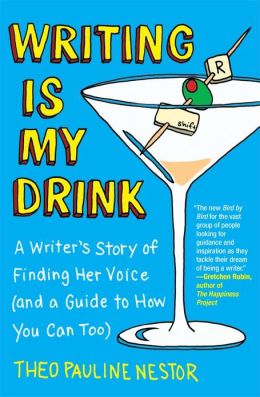
Writing Is My Drink: A Writer’s Story of Finding Her Voice (and a Guide to How You Can Too) by Theo Pauline Nestor

A writer’s journey, written as a guide for aspiring and developing writers.

writingdrink

Theo Pauline Nestor always wanted to be a writer. But she struggled to find confidence and her writing voice for many years, through two kids and several career changes, before publishing How to Sleep Alone in a King-Size Bed, a memoir about her divorce and its aftermath. In Writing Is My Drink, Nestor returns to memoir with tales from her childhood, formative years and journey toward publication, and confessional forays into her parents’ alcoholism and her more embarrassing moments as an aspiring writer. Readers and writers will appreciate nods to Terry Tempest Williams, Natalie Goldberg and Frank McCourt, whom Nestor temporarily confused with her father.

Writing Is My Drink is also part instruction guide. Each chapter finishes with a short “Try This” piece that offers writing exercises, lists to make and concepts to keep in mind. She coaches when to push oneself and when to be forgiving, and shares the sad news that rejection and bad writing are integral parts of publication and good writing. Now an instructor in memoir writing, Nestor is well placed to offer such advice, and despite her convoluted journey–or perhaps because of it–she has a great deal of wisdom to share with her students.

Writing Is My Drink is by turns instructive, funny, poignant and deeply personal. Nestor’s voice is informal and occasionally self-deprecating, but one of the central lessons she has learned and wants to share is that of trusting oneself. Her story will be an inspiration to readers who seek self-expression.


This review originally ran in the December 27, 2013 issue of Shelf Awareness for Readers. To subscribe, click here, and you’ll receive two issues per week of book reviews and other bookish fun!


Rating: 7 stories told sitting on a barstool.

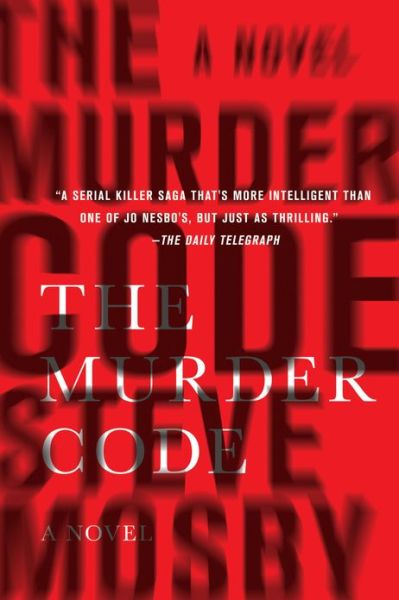
The Murder Code by Steve Mosby

A series of murders force a seasoned detective to reexamine his understanding of evil.

murder code

The Murder Code, British author Steve Mosby’s American debut, opens with the brutal but seemingly straightforward bludgeoning of a young woman on her way home from work. Detective Andrew Hicks immediately looks to her abusive ex, because he knows all murders are committed for reasons–bad reasons maybe, but reasons that make sense at the time to the killer. But when the bodies start piling up–clearly the work of the same hand or, more precisely, the same hammer–Hicks is forced to reconsider his theory. And when he receives a letter from the murderer, Hicks must confront everything he’s understood for years about the reasons people kill each other.

Story lines overlap and tangle tantalizingly in Mosby’s capable hands. The reader glimpses teasing flashes of various characters and their backgrounds before returning to Hicks’s increasingly troubled life. His pregnant wife knows there’s something Hicks isn’t telling her, but doesn’t know what, any more than the reader does. Something disturbing in his past threatens to resurface.

While other sympathetic characters are briefly sketched, Hicks is very much at the heart of this psychological thriller. Mosby expertly spools out and retracts details, keeping the reader breathless with anticipation as the body count rises and Hicks asks himself questions he thought he’d answered long ago. The Murder Code offers not only a surface-level mystery to be solved, but the deeper mystery of how the pieces fit together–and the central question of whether innate evil is real.


This review originally ran in the December 27, 2013 issue of Shelf Awareness for Readers. To subscribe, click here, and you’ll receive two issues per week of book reviews and other bookish fun!


Rating: 7 data points.

Maximum Shelf author interview: Sue Monk Kidd

Following yesterday’s review of The Invention of Wings, then, here’s the gracious Sue Monk Kidd!


Sue Monk Kidd: Inhabiting the Past

Sue Monk Kidd was born and raised in Georgia and now lives in Southwest Florida with her husband, Sandy, and their black lab, Lily. Since her first publication in 1988, she has written fiction, nonfiction and memoir; The Invention of Wings is her first work of historical fiction. Kidd’s bestselling books include The Secret Life of Bees, The Mermaid Chair and, as co-author with her daughter Ann Kidd Taylor, Traveling with Pomegranates. Kidd is very active on Twitter.

photo: Roland Scarpa

photo: Roland Scarpa


How much research did you do on the real Grimké sisters?

Well, I began reading about the Grimké sisters and I could hardly stop. I was inspired to write the novel because I discovered them at Judy Chicago’s Dinner Party exhibit in New York, and I came home very excited and began to read about their lives. And that went on for months. I suppose I did full-time research for about six months before I began writing, and then I wrote for three and a half years, during which I was still doing a lot of research. I would sit in front of the computer, inventing and writing, and suddenly I would have to get up and figure out what kind of mourning dress widows wore in 1819. Or what were the emancipation laws in South Carolina at that time. It was constant, ongoing research. And it wasn’t just reading books; I made trips to the Library of Congress, the Smithsonian, the New York Historical Society–and of course a lot of places in Charleston. That was a primary site for me, and a lot of organizations were helpful.

Did you enjoy that research?

I loved it so much that I had to make myself stop and start writing. I think a writer can get lost in her research if she’s not careful! There’s a point where you just have to put it aside and begin writing. I was very concerned that I get that era right. I wanted it to be as authentic as I could make it, rich with details, and I wanted the reader to be plunged into a real world. So I needed to gather a lot of information, and I really had fun doing it.

How important is historical accuracy in fiction, and how faithfully does this novel stick to the historical record?

That is such a large question for any author of historical fiction. In this case, I was not only writing about a time and place that existed, but I decided to populate the book with real historical figures. As this was my first book of historical fiction, it was a learning curve for me. I started off so enamored with Sarah Grimké’s history, just in reverence for her life and her history and that of her sister, too, that it was very hard to deviate from that historical script. It took me a long time to come to a place where I understood that there was Sarah Grimké, the historical figure, and then there was Sarah Grimké, my character. And I’m not a biographer, and I’m not a historian; I’m a novelist. I had to come home to that again, because I was so caught by her history. I would say that I wrote the truth of Sarah’s life as much as I possibly could, and I think that anyone who reads the novel will find her life rendered there pretty closely. But my goal, I realized, was to serve the story itself, and that meant that I had to deviate some. It meant that I had to invent; it meant that I had to find Sarah in my own imagination as well as in history, and that was really crucial. The moment that I was able to let go and do that, she became alive for me in this book.

How did you make the decision to write this story in two voices?

When I began I was inspired to write the story of Sarah Grimké, and that was as far as I got. I knew I wanted to write her story in first person, because I love the intimacy of that first-person voice. I feel like I can inhabit her and her mind and her heart, and I love seeing the world through her eyes. I love the closeness of that and what it allows me to do, to get into her inner life. But as I began reading about the history, it became very quickly apparent to me that I could not just tell her story without telling the story of an enslaved character. It seemed that in order for this whole time and place to be fully fleshed out, I needed to enter the lives of two characters. So as I was reading about Sarah’s childhood I discovered she had been given what she called a waiting maid, when she was somewhere around 11 years old. This waiting maid was named Hetty, and Sarah taught Hetty to read, and then Hetty died soon after that, as a young person. That’s everything I knew about her life. But the moment I read about her I knew that this was the character, and that I could have this close relationship between them that’s also a complicated, difficult relationship, and I could talk about both worlds. Now, it was daunting to me to do this, to be honest, because writing first person from the standpoint of an enslaved female character is pretty far flung for me. So that was sort of my literary sky dive, I guess! But it was apparent to me that that’s what I needed to do, to tell both stories.

Sarah left plenty of detail to history, including many writings in her own voice, while Hetty barely existed at all on the record. Was it freeing to write Hetty, in comparison?

It was absolutely freeing. Maybe the biggest surprise in writing this novel for me was that Hetty’s voice was more accessible, that it came to me more easily. This I did not expect. I thought it might be the opposite, actually. I think it was because Sarah came with this big historical script, and we knew basically nothing about Hetty. So I had this broad imaginary canvas to fill in. It freed me, I think, just to be able to explore and to just let her talk–and she would talk! I mean she would just talk, talk, talk to me.

Hetty’s mother, Charlotte, is a rich personality who keeps her secrets. Does she have a historical counterpart? Where did you find her?

There was a little seed of something that kind of helped me to create her character. When I was reading the slave narratives I came upon one sort of secondhand story: one woman was speaking about her time in slavery, and referred to someone named Sukie, who was apparently a very defiant, unusual woman. She told a story about how Sukie resisted her master’s advances and pushed him into–I think it was a hot pot of lye soap or something like that–and he was burned, and for that she was sold. And she remained very defiant to the very end. Something about that ignited this idea in me, and I wanted to be sure that Charlotte was someone who could protest and resist and who was concerned about her own self-possession, who had this spirit of insurrection and even subversion. I think it’s important to offer images of enslaved women who are not just victims. We’ve had far too much of that, I think. I wanted to show women who were not just victims, certainly not in their minds. They were in a struggle to be human, self-possessed, to fight back and to show this kind of defiance and resistance. In that regard, the slave narratives were evocative for me of the kind of character that I tried to bring to Charlotte.

Do you have a favorite character? Or one with whom you especially identify?

Oh, it’s always hard for an author to say which character is her favorite! It’s like picking between your children! As a writer, I feel like you have to love all your characters, even the so-called misbehaving ones. But having said that, it’s true, your heart gravitates to your characters in special ways. I remember reading something Alice Walker said that I referenced recently. She spoke about writing about her mother in literature, and she said, my mother was all over my heart, so why shouldn’t she be in literature? And I just loved that line! I thought, that’s how I feel about Handful. She’s just all over my heart. And every day that I wrote, I had this very special feeling about her. I love Handful’s great hope, and the way she used irony and wit to deal with things.

Sarah’s big struggle, at least in my novel, was to find her voice. I literally gave her a speech impediment, which the historical records say she did not have, but I have this idea that writing a novel is really about taking a bad situation and making it worse! Sarah had difficulty speaking in public, but she didn’t have an impediment, so I sort of enhanced it and made it a little worse. That’s one example of how I deviated from the record to serve the story. Her journey was to find her inner voice and to be able to articulate her truth in the world, and I identify with that–I think many people identify with that.

What have you read and loved lately?

Well, I just made this long transatlantic flight, and I hauled books on board instead of my iPad! I don’t know what that says about me. I read three Edith Wharton novels that I had not read before, and I hate to admit that I hadn’t read these; but I guess we all have classics that we’ve not read and we’re ashamed to admit we’ve not read until we finally do! Those were The House of Mirth, The Custom of the Country and The Age of Innocence, and I thought–what took me so long? And then I read Delia Ephron’s Sister Mother Husband Dog: Etc., which I just loved. The other book I read recently was Dear Life by Alice Munro. All wonderful books. There are so many and so little time! That’s what’s so great about a nine-hour flight, you know.


This interview originally ran on December 18, 2013 as a Shelf Awareness special issue. To subscribe, click here, and you’ll receive two issues per week of book reviews and other bookish fun!

Maximum Shelf: The Invention of Wings by Sue Monk Kidd

Maximum Shelf is the weekly Shelf Awareness feature focusing on an upcoming title we love and believe will be a great handselling opportunity for booksellers everywhere. The features are written by our editors and reviewers and the publisher has helped support the issue.

This review was published by Shelf Awareness on December 18, 2013.


invention of wings
The Invention of Wings opens in 1803, on Sarah Grimké’s 11th birthday. To mark the occasion, her mother gives her an unwanted birthday gift: the awkwardly beribboned 10-year-old Hetty Grimké–Sarah’s very own slave. Sarah is repulsed and tries to free Hetty that very night with a document she draws up herself, but it isn’t that easy for the child of one of Charleston, S.C.’s first families. The two girls grow into womanhood bound together but separated by the chasm of their very different circumstances.

Sue Monk Kidd, author of The Secret Life of Bees and co-author of Traveling with Pomegranates, chooses to tell this story in first person and to alternate between the voices of Hetty and Sarah–one of many masterful choices that make The Invention of Wings a remarkable read. The name “Hetty” was given by her owners; Hetty is called Handful by her mother, Charlotte, to whom she is devoted. One of the novel’s richest characters, Charlotte tells her daughter only parts of her own past: stories of Handful’s father, who never saw his daughter’s face, and of Charlotte’s own mother, who was brought to Charleston and slavery from Africa when she was a small girl. Charlotte teaches Handful to sew, to make very fine clothes and quilts. This artistry earns them both a relatively privileged place in the household and, importantly, provides a means of recording stories among slaves, for whom literacy was illegal. Charlotte sews her daughter a story quilt, appliqueing squares that tell of her life’s greatest events. This rich storytelling tradition is described in Handful’s passionate voice, which both contrasts with and matches Sarah’s, also passionate, as she experiences limitations of a different sort. An intelligent child encouraged by a father and brother to read books, she harbors dreams of becoming a barrister, which are inevitably dashed against Charleston’s expectations of a young lady. Her inclination to teach slave children to read is likewise reviled, although she succeeds in secret with Handful. Over the years, the two girls share confidences across a wary divide, but guilt and resentment present obstacles to their friendship.

When the girls are still very young, Charlotte extracts a promise from Sarah: that she will free Handful one day. This promise haunts Sarah, who will eventually journey north to escape her stifling family and the peculiar institution she despises. She meets a Quaker man, whose own peculiar religion at first repels her but comes to fascinate and draw her in; this new alliance shapes Sarah’s more independent adult life, and distances her from Handful, who necessarily remains in Charleston. Along with her indubitable younger sister, Nina, Sarah will finally become a renowned (and infamous) activist for abolition and women’s rights. Overcoming a speech impediment that is a literal portrayal of her difficulty articulating her desires, she will slowly, painfully create the independent existence she has always craved. Handful’s fate will, of course, be rather different.

The Invention of Wings is a novel based on fact: the Grimké sisters were real-life abolitionists, and are joined in the historical record by a number of other characters in this novel, including Denmark Vesey, a free black man executed for planning a slave uprising; Lucretia Mott, a Quaker activist for women’s rights and abolition; and Sarah Mapps Douglass, a free black activist and educator. Hetty Grimké, however, left tantalizingly scarce facts: she was given as a gift to Sarah, but disappears shortly thereafter from the historical record. And Charlotte is entirely Kidd’s creation, an intriguing and complex character who tempts the worst of slavery’s brutalities in her search for something better for herself and her family.

Sue Monk Kidd portrays the parallel lives of her two protagonists in sensitive and touching sketches. Readers of her earlier work will recognize strong, sympathetic characters and deft use of nuance. The heart-wrenching nature of Sarah and Handful’s stories lies in the complexity of their relationship: they tend toward friendship, but Sarah’s guilt and Handful’s natural resentment–as when Sarah claims to know how she feels–may prove too wide a gap to bridge. And slave traditions such as the story quilt add a layer of detail informed by Kidd’s extensive research, as well as an emotional depth for Handful and Charlotte.

The Invention of Wings ambitiously tackles a swath of issues, including feminism, abolition, religion, activism and relationships between races and genders. This subject matter might be heavy under another hand, but the historical record of Sarah Grimké’s remarkable life and Kidd’s strengths in narrative and in rendering relationships make for a story that is both thought-provoking and engrossing. Strong female characters, solid roots in history, and the compelling lives of two women the reader deeply cares about make The Invention of Wings a thoughtful, moving tale that ends on a hopeful note.


Rating: 7 squares.

The Invention of Wings was just chosen as Oprah’s new Book Club 2.0 pick. Kidd commented: “I’m thrilled and honored that Oprah Winfrey chose my novel as her new book club selection. After researching and writing The Invention of Wings for the past four years, I can’t tell you how exciting it is to launch the novel with Oprah’s Book Club 2.0.”

Come back tomorrow for my interview with Sue!

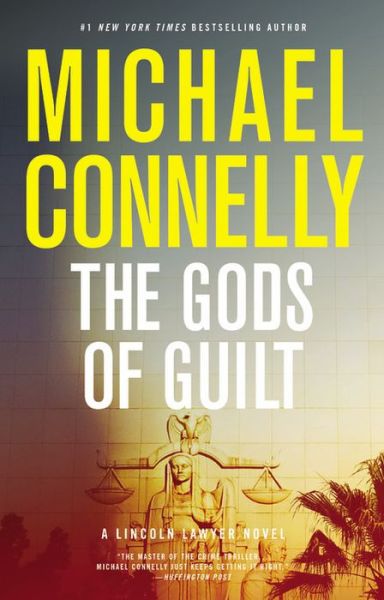
The Gods of Guilt by Michael Connelly

The Lincoln Lawyer returns to the courtroom to solve a friend’s murder from years past.

gods of guilt

Mickey Haller is back at work in The Gods of Guilt, the fifth Lincoln Lawyer novel from Michael Connelly (also author of the Harry Bosch series). When Andre La Cosse requests Haller’s representation on murder charges, Haller approaches it with weary cynicism about his client’s probable guilt. But then he learns who referred La Cosse to him: the victim, a prostitute Haller represented for years, and whom he thought had left the game. It quickly becomes clear this case is bigger than it looks, involving the DEA and organized crime and stretching back nearly a decade, and that La Cosse may be that rare thing: innocent.

At stake for the Lincoln Lawyer: not only his client’s freedom, but also his relationship with his daughter, who has stopped speaking to him because of the results of an earlier case. The murdered prostitute, an old friend, plays an important role as well; Haller thought he’d saved her, only to find that he may have contributed to her death.

The Gods of Guilt is a gripping courtroom drama with strengths that Connelly’s fans will recognize: fully-wrought, likable characters, absorbing action, sympathetic relationships and the exploration of right and wrong and the gray areas in between. The title refers to Haller’s understanding of jury members: that they are gods sitting in judgment of guilt and innocence. These gods of guilt also sit in judgment of Haller’s own choices, and The Gods of Guilt reflects Connelly’s sensitive handling of morality and consequences.


This review originally ran in the December 17, 2013 issue of Shelf Awareness for Readers. To subscribe, click here, and you’ll receive two issues per week of book reviews and other bookish fun!


Rating: 7 men in hats.