The Lodger by Louisa Treger

In a lively debut novel, H.G. Wells takes a back seat to his lover, the rebellious Dorothy Richardson, a literary figure deserving of the spotlight.

lodger
Louisa Treger’s debut novel, The Lodger, opens in 1906. Family tragedy has landed Dorothy Richardson in a boarding house in a less-than-savory part of London, working at a dentist’s office for a pittance and living hand-to-mouth. She is relieved when Jane, an old friend, extends an invitation to visit her country estate for a weekend of relaxation. Jane has recently married an up-and-coming writer, H.G. Wells. Bertie, as he is called, turns out to be a strong personality: “He was like a volcano, continually bubbling over with urgent thoughts and incandescent ideas.” Dorothy is not sure at first whether she is attracted or repelled; his lively eyes and magnetic intensity are marred by zealous and sometimes off-putting opinions. The comfort of an intellectual who listens seriously to her ideas, however, proves irresistible, and between arguing about science and admiring Bertie’s writing, Dorothy finds herself helplessly falling for the husband of her best and oldest friend.

Bertie assures Dorothy that he and Jane have an agreement that allows for extramarital relationships, although this arrangement is as emotionally complex and problematic as it sounds. Having fallen headlong into an affair, Dorothy is then torn between her hard-won independence, which she feels is worth even the high price of poverty, and her love for a man who needs more of her than she can give. When a strikingly beautiful suffragette named Veronica Leslie-Jones moves into Dorothy’s boarding house in London and becomes a singular new friend, Dorothy’s energies and loyalties are still more divided. Writing becomes the outlet for her pain; Bertie has long encouraged her to make such an effort but, fittingly, Dorothy discovers this outlet, and her talent, on her own terms and schedule.

The Lodger is based on the real life of Dorothy Richardson, a groundbreaking but little-known author of the early 20th century. Treger’s taut evocation of Dorothy’s life and emotional struggles is gripping from the very first page, and readers are thrust into Bertie’s overwhelming presence just as helplessly and thoroughly as Dorothy is. While an unflattering light is shed on her famous lover–H.G. Wells comes off as obnoxiously self-centered–Dorothy herself is undoubtedly the star. She is a sensitive, passionate woman wrestling with the conventions of her time, and even while she experiences several traumas, Dorothy is a source of inspiration–for Treger, for those around her and for the contemporary reader as well.


This review originally ran in the October 2, 2014 issue of Shelf Awareness for the Book Trade. To subscribe, click here, and you’ll receive two issues per week of book reviews and other bookish fun!


Rating: 7 hot London attics.

We Make Beer: Inside the Spirit and Artistry of America’s Craft Brewers by Sean Lewis

Anecdotes and observations of American craft brewing that will make readers thirsty.

beer

Sean Lewis was working as a sportswriter in 2010 when he got his first writing assignment from Beer Advocate–a profile of the infant Blue Hills Brewery in Canton, Mass. He worked there as an unpaid intern, learning the brewing ropes, and admired what he calls “the Tao of the brewmaster.” Many brewery tours and interviews later, in We Make Beer, he relates the “spirit and artistry” of craft brewers from coast to coast, from garages and barns to the largest brewhouses in the nation.

Lewis visits with major players (Boston Beer Company, Sierra Nevada, Stone), younger, smaller efforts (Nebraska, Jackalope), brewpubs and production breweries, and explores various approaches to the concept of growth. For example, Sheepscot Valley Brewing Company has chosen to stay local to Whitefield, Maine, and the community has repaid that effort, while West Coasters Sierra Nevada and Lagunitas have recently opened East Coast locations to serve their expanding markets. In language that will make readers thirst for a well-crafted pint, and with graceful transitions between topics, Lewis undertakes what is clearly a labor of love–much like the businesses he writes about. His celebration of the women and men of craft brewing is both accessible to the novice (see his one-page appendix on the brewing process, and explanation of the pronunciation of “wort”) and thoroughly rewarding for the beer aficionado. A comment about a collaboration between three breweries is equally applicable to the larger concept of Lewis’s book: “It just seemed like a fun thing to do.”


This review originally ran in the September 26, 2014 issue of Shelf Awareness for Readers. To subscribe, click here, and you’ll receive two issues per week of book reviews and other bookish fun!


Rating: 8 pints, naturally.

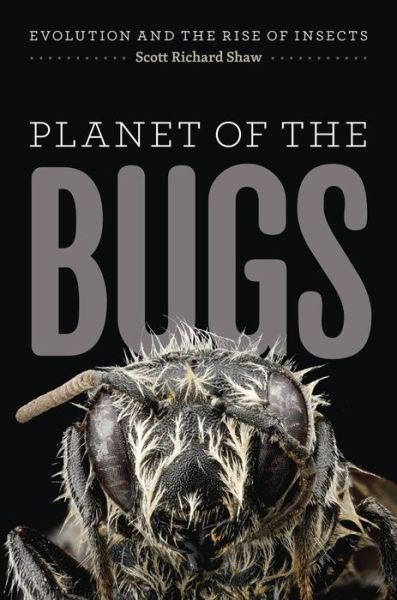
Planet of the Bugs: Evolution and the Rise of Insects by Scott Richard Shaw

An impassioned view of insect evolution and the awesome implications of bugs for all life on earth.

bugs

Scott Richard Shaw has been collecting bugs since he was four. Now a professor of entomology at the University of Wyoming, he shares his passion for these creatures and their cosmological significance in Planet of the Bugs.

The scope of this work is immense. Shaw begins with the Cambrian period, more than half a billion years ago, by examining the sea-dwelling arthropods that first developed body armor and mobility, and then follows them through prehistory and into the modern day. He argues for the predominance of insects, as they are Earth’s most diverse and adaptive animals and thus the best survivors over time. The dinosaurs were impressive, and we like to emphasize the importance of our own human species in earth’s history–he criticizes this human-centrism throughout–but Shaw makes an excellent case that insects “literally rule the planet.”

Planet of the Bugs is packed with intriguing trivia. Parasitic flies feed in turn on the blood of vampire bats; caddisflies are “nature’s most adept architect,” building portable, protective cases for themselves using the natural materials around them; the griffinflies of the Carboniferous period (which looked something like huge versions of the modern dragonfly) had wingspans of two to three feet; female sawflies and wasps choose the sex of their offspring.

Shaw boggles the reader with his enthusiasm and expertise, and reveals a playful side. Among his many encyclopedic turns, he waxes philosophical and indulges in metaphor and even humor, resulting in a surprisingly accessible and entertaining read. A love of bugs is not required.


This review originally ran in the September 23, 2014 issue of Shelf Awareness for Readers. To subscribe, click here, and you’ll receive two issues per week of book reviews and other bookish fun!


Rating: 7 old wings.

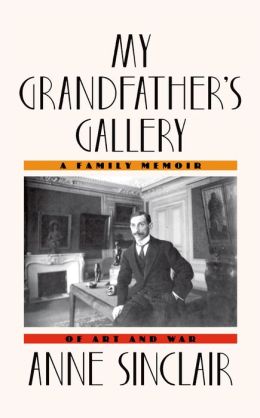
My Grandfather’s Gallery by Anne Sinclair

Investigations by an art dealer’s granddaughter into paintings stolen in World War II France.

grandfather

Paul Rosenberg was a successful art dealer in Paris in the 1930s, a friend to and advocate for Pablo Picasso, Georges Braque and Henri Matisse. A Jewish man, he fled his home in Vichy France in 1940, fearing for his family, his livelihood and his collection of modern masterpieces. From his new home and gallery in New York City, he campaigned for the rest of his life to recover the many valuable paintings and sculptures he lost during the war, looted by Nazis and French collaborators.

Journalist Anne Sinclair didn’t pay much attention to her maternal grandfather’s life and work as an art dealer until he was long dead. In examining old papers, however, she discovered a story that moved her and that represents the experience of many French artists and art professionals, whose collections were stolen and never returned. In My Grandfather’s Gallery, Sinclair writes that she “wanted to create an homage to my grandfather, a series of impressionist strokes to evoke a man who was a stranger to me yesterday, yet who today seems quite familiar.”

Many unidentified paintings continue to lie in museum basements throughout France even now, “awaiting the return of those who will not come back.” Sinclair, like her grandfather, acknowledges that lost lives trump lost art; but the spoliation of priceless paintings constitutes an important piece of her family history, as recorded in this deeply felt memoir. Despite an occasionally awkward translation to English, My Grandfather’s Gallery is a powerful history made personal.


This review originally ran in the September 19, 2014 issue of Shelf Awareness for Readers. To subscribe, click here, and you’ll receive two issues per week of book reviews and other bookish fun!


Rating: 5 letters.

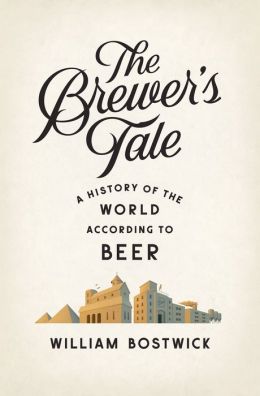
Teaser Tuesdays: The Brewer’s Tale by William Bostwick

Teaser Tuesdays is a weekly bookish meme, hosted by MizB of Should Be Reading.

brewers tale

“A history of the world according to beer”! Who’s surprised that I needed to read this?

There is no great shortage of written words regarding beer’s important place in history: that it is part of what brought European settlers to New England; that it helped us preserve grain & feed ourselves, and take in liquid when water was unsafe to drink; that it drove us to establish settled civilizations (& agriculture). But just as I learn something new from every brewery tour I take, even into the dozens, I haven’t yet reached the point of satiation on beer-in-history. Here’s something I hadn’t quite considered in these terms before:

…if beer’s essence can be distilled to one idea, it’s this: beer is made. Our first recorded recipes were for beer because beer was the first thing we made that required a recipe, our first engineered food. Wine, for example, just happens – a grape’s sugars will ferment on their own, without a human touch; even elephants and butterflies seek out rotting fruit. But grain needs a modern hand to coax out its sugars and ferment them into alcohol.

And these lines come from the introduction! (Libraries show up on page 2.) You have my attention…

This quotation comes from an uncorrected advance proof and is subject to change.

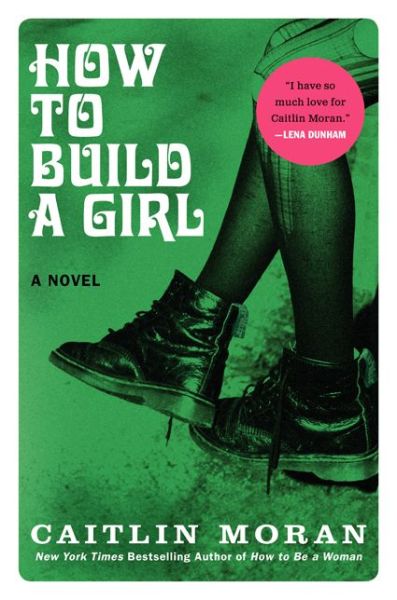
How to Build a Girl by Caitlin Moran

The self-made girl of Caitlin Moran’s debut novel is irreverent, painfully self-conscious, triumphant and very funny.

moran
The wise and hilarious Caitlin Moran (How to Be a Woman; Moranthology) makes her first foray into fiction with How to Build a Girl, and this novel is everything her fans will expect it to be.

It is the early 1990s. Johanna Morrigan is 14 years old and lives in Wolverhampton, England, with her parents and four siblings: an older brother, a younger brother and two babies without names (known long-term as the Unexpected Twins). They are all on government assistance, or benefits. Her mother is depressed and her father is still distributing the demo tapes of his youth, sure that one day he’ll be a rock star. Johanna is desperate to leave behind Wolverhampton, benefits and her virginity.

Her big chance comes when she scores a television appearance during which she will read aloud her prize-winning poem on the theme of “Friendship.” However, she fails to make her family proud, instead surprising even herself with a shameful impromptu Scooby-Doo impression. Deciding that being Johanna Morrigan is a losing proposition, she sets about methodically building the girl she wants to be: she christens herself Dolly Wilde (after Oscar’s niece), and decides to become a music critic. With no money to acquire the latest albums, however, she is resigned to ordering them through the local library.

Dolly Wilde is constructed on the music of Hole, Bikini Kill, David Bowie and Kate Bush; the writing of Dorothy Parker, Orwell and Kerouac; and a blind ambition to reach London. She sends in one album review per day for 27 days until, amazingly, she is hired to review albums and performances for Disc and Music Echo. From Dolly’s very first encounter with live music, this gig ushers in an era of drink, sex and eventually drugs; she happily pursues the lifestyle of the rock stars she admires, but is challenged to reconcile this new life with her household of seven back at home in Wolverhampton.

In order to fall in love with the clumsily charming and often heartbreaking Johanna, readers will want to check their inhibitions regarding four-letter words and copious masturbation. Puzzles as stale as the difference between love and a casual hookup become fresh in this young woman’s vigorous, enthusiastic and ever-misguided perspective. Moran is cheeky, intelligent, thought-provoking and laugh-out-loud funny, and reminds us that we are always learning and rebuilding, no matter our origins.


This review originally ran in the September 9, 2014 issue of Shelf Awareness for the Book Trade. To subscribe, click here.


Rating: 9 cigarettes.

So We Read On: How The Great Gatsby Came to Be and Why It Endures by Maureen Corrigan

An impassioned guide to The Great Gatsby by a highly qualified and devoted fan.

so we read on

NPR’s Fresh Air book critic Maureen Corrigan (Leave Me Alone, I’m Reading) didn’t like The Great Gatsby the first time she read it for school when she was a teenager. But after teaching and lecturing about it for decades, her enthusiasm and ardent passion for F. Scott Fitzgerald’s classic novel infuse So We Read On (a title that spins off the novel’s famous closing line).

Corrigan argues that “if there is such an animal [as the Great American Novel], then The Great Gatsby is it.” She feels that many readers who encounter Gatsby for the first time in high school or even middle school are too young and inexperienced to appreciate it fully; many will unfortunately and unnecessarily form a dislike for a book that they might learn to love later in life. She also debunks a widespread interpretation of the novel as a grand, decadent celebration of materialistic American culture; it is, rather, an enormously subtle criticism of a class system that Fitzgerald felt had snubbed him.

In exploring these and other ideas, Corrigan undertakes a close reading of the text, examining language and punctuation and considering the context of the Roaring ’20s, the Lost Generation, Fitzgerald’s literary colleagues (including his “frenemy” Ernest Hemingway) and family (the famous or infamous Zelda). Despite her scholarly method, Corrigan’s work remains resolutely accessible to the everyday reader. Indeed, those who haven’t encountered Gatsby since high school are her intended audience. With humor and even the occasional pun, Corrigan offers the love of a classic novel to any and all.


This review originally ran in the September 9, 2014 issue of Shelf Awareness for Readers. To subscribe, click here, and you’ll receive two issues per week of book reviews and other bookish fun!


Rating: 9 dives.

De Potter’s Grand Tour by Joanna Scott

A fantastical mystery of historical fiction, peopled by amiable eccentrics.

de potter

Joanna Scott (The Manikin) spins a mysterious, slightly fanciful historical yarn in De Potter’s Grand Tour. The titular character is variously called Armand de Potter, Pierre Louis Armand de Potter d’Elseghem or (to the immigration authorities) Pierce L.A. Depotter Elsegern; his personal history is as amorphous and changeable as his name. De Potter lives a legend of his own design, beginning with his immigration to New York from Belgium in the early 1870s, determined to become a person of note. He joins a local society in dredging up oddities from the harbor, which sparks his interest in antiquities. With a few astute investments, he soon becomes an accomplished collector specializing in Egyptian artifacts. He simultaneously works as a teacher (educating aristocratic young ladies in multiple languages), and eventually channels all his skills and interests into a travel and touring company, which has great success. Years later, his wife, Aimée (a former student, born Amy), is devastated when he is lost at sea.

The grieving Aimée finds herself unexpectedly debt-ridden and receives a disturbing final letter from her late husband, which prompts her to examine his past more closely. It now appears that Armand looked to The Count of Monte Cristo as a model for the building of his myth. As Aimée ages, she yearns for her husband, and wonders what really happened on that ship that sailed from Constantinople.

Scott’s tone is whimsical, and her characters are idiosyncratic and appealing. De Potter’s charming tale, told in split chronology both before and after Armand’s disappearance, will please readers seeking a playful trip back in time.


This review originally ran in the September 2, 2014 issue of Shelf Awareness for Readers. To subscribe, click here, and you’ll receive two issues per week of book reviews and other bookish fun!


Rating: 7 gold watch charms.

Worn Stories by Emily Spivack

A meditative collection of short, accessible memoirs documenting the meaning of clothing.

worn stories

Emily Spivack’s fascination with the past lives of clothing led her to create a website, wornstories.com, on which she collects “sartorial memoirs” from friends, family, acquaintances, celebrities and everyday strangers. Now her book, Worn Stories, assembles those accounts. They are short, and generally recorded as told to Spivack but are occasionally written by the contributor. Each brief narrative is accompanied by a photograph of the item, against a white background, adorned at most by a clothes hanger. The text describes how the speaker came to own the article, or what took place in and around it that made it worth keeping–sometimes for decades. A dress, a pair of shoes, a hat or accessory conveys an emotion or an experience: love, loss, accomplishment. They may symbolize a place or a time in a life, or remind us of what we don’t want to forget.

These vignettes are at turns hilarious (humorist John Hodgman’s long-sought Ayn Rand dress or trucking manager Pamela Jones’s party dress), silly (reporter Jenna Wortham’s sequined top) and poignant (creative ambassador Simon Doonan’s Lycra shorts or writer/bartender Kelly Jones’s tie-dyed wrap skirt). Some have historical significance: Holocaust survivor Dorothy Finger had an ill-fitting suit made from a piece of wool fabric that was the only thing she saved from her life in Poland.

Spivack speaks directly to her reader only in a brief introduction. The collection of contributors’ reports forms a whole that is entertaining, thoughtful and loving of the universal tales we have to tell about the garments we carry through our lives.


This review originally ran in the August 29, 2014 issue of Shelf Awareness for Readers. To subscribe, click here, and you’ll receive two issues per week of book reviews and other bookish fun!


Rating: 8 stains.

Smoke Gets In Your Eyes (& Other Lessons from the Crematory) by Caitlin Doughty

A young woman’s mortuary career and enthusiasm for death inform an entertaining and thought-provoking memoir.

smoke

At 23, Caitlin Doughty had an undergraduate degree in medieval history and a lifelong fascination with death. Interested in turning her preoccupation into a profession after a move to the Bay Area, she found it surprisingly difficult to get a job in the mortuary business without relevant experience, but eventually secured a position as crematory operator at Westwind Cremation & Burial in Oakland, Calif. In just a few months of working with her deadpan boss Mike, socially awkward body-transport driver Chris and jovial embalmer Bruce, Caitlin learned a great deal, as she relates in her debut, Smoke Gets in Your Eyes.

She learned how to cremate bodies (do the larger people early in the day, babies at the end), what exactly happens after the oven (bones have to be ground down in a special blender to create the uniform ashes the family expects) and how to pick up a recently deceased body from a family at home (mostly, keep your mouth shut). She learned that dead people aren’t really scary, once you get used to them, and came to believe that wired jaws and copious makeup are less attractive and less respectful than simply letting the dead look–and be–well, dead.

In her memoir of “lessons from the crematory,” Doughty shares tidbits of research into the death rituals and mythologies of other cultures throughout history: Tibetan sky burial, the dutiful cannibalism of the Wari’ people in the jungles of Brazil, ancient Egyptian embalming techniques. She points out a central difference between contemporary Western practices and theirs: the Wari’ and others conform to a system of beliefs, where our so-called modern death-disposal techniques arise from a fear of mortality and a need to hide dead things away. In her experience at Westwind, and later in mortuary school, Doughty developed her own value system, emphasizing an honest relationship with our mortality and a frank acceptance of and love for our dead.

Doughty’s research, musings and anecdotes about the crematory are charmingly conveyed in an earnest yet playful voice, brimming with surprising humor as well as insight. Her coming-of-age tale encompasses love and life (and death), and her appeal for a new cultural approach to the end of life is refreshingly frank and simple at the same time that it is profound. Despite addressing a subject that will strike some as morbid or unpleasant, Doughty is an engaging and likable narrator,and Smoke Gets in Your Eyes is thoughtful and approachable.


This review originally ran as a *starred review* in the August 21, 2014 issue of Shelf Awareness for the Book Trade. To subscribe, click here.


Rating: 8 dresses.