The Unraveling of Mercy Louis by Keija Parssinen

A lovely, thoughtful, disquieting story of the effects of small-town pressures on a remarkable young woman.

unraveling

Keija Parssinen’s (The Ruins of Us) The Unraveling of Mercy Louis depicts a young woman’s coming-of-age in small town peopled by complex, conflicted, ultimately sympathetic characters.

Port Sabine is a refinery town on the Texas Gulf Coast, depressed and parochial, built around oil, secrets and religion. Mercy Louis lives with her grandmother Maw Maw, a radical evangelical who prophesies the end of the world will come in Mercy’s senior year. A basketball prodigy, Mercy needs this senior year to show the scouts that she’s worth the investment, so she can go to college if Maw Maw is wrong. A discovery in a dumpster throws the town into upheaval and witch-hunting, even as Mercy begins to explore the secrets of her own past as well as the possibilities of her future.

The cast of characters includes Mercy’s best friend, Annie, riotously rebellious and rich; Mercy’s mother, absent until a mysterious letter arrives; and Illa, the manager of the basketball team and a hopeful sports photographer with troubles of her own, fixated upon Mercy in her camera’s lens. A new boy in Mercy’s life–the first–threatens to upturn her delicate balance: obedience to Maw Maw and the church, and the poetry she makes on the basketball court.

Although this is clearly Mercy’s story, many of these characters captivate and capture the imagination; Parssinen’s gift is in rendering the essences of both people and place. The Unraveling is suspenseful and disturbing, compassionate and tender, a thought-provoking experience for anyone who’s ever been young and wondered about the past, and the future.


This review originally ran in the March 20, 2015 issue of Shelf Awareness for Readers. To subscribe, click here, and you’ll receive two issues per week of book reviews and other bookish fun!


Rating: 8 points.

Strong Inside: Perry Wallace and the Collision of Race and Sports in the South by Andrew Maraniss

A perceptive, sensitive history of both basketball and desegregation in the late 1960s.

strong inside

Perry Wallace, Jr., was a quiet, respectful student from Nashville, Tenn., who excelled at school (especially in math and science), at playing the trumpet and on the basketball court. Though not a natural leader or revolutionary, when recruited by schools across the nation, he reluctantly “made the decision to attend Vanderbilt University not because of the fact that he would be a trailblazer, but in spite of it.” When he enrolled in 1966, Wallace became the first African American to play in the Southeastern Conference, thus desegregating Deep South athletics. At Vanderbilt, he played in the same gym where Stokely Carmichael and Martin Luther King, Jr., participated in a speakers’ symposium during Wallace’s freshman year.

In his four years at “the Harvard of the South,” Wallace was harassed, spat upon, called names and assaulted on the court in a series of “fouls” that went uncalled. (His coach told him to “learn to duck.”) The away games in Mississippi were the worst, but even at Vanderbilt his classmates publicly ignored him, yet still cheered him on the court and furtively asked for his help with their homework.

Andrew Maraniss’s Strong Inside: Perry Wallace and the Collision of Race and Sports in the South deftly reveals the nuances of Wallace’s childhood, early education, groundbreaking career of torments and triumphs at Vanderbilt and the exceptional, well-rounded life that followed. A Vanderbilt alumnus, Maraniss shows great compassion and insight with a detailed narrative that is both broad and deep, covering the civil rights movement and college basketball with equal authority. Wallace’s story is powerfully moving and deservedly, beautifully told.


This review originally ran in the March 17, 2015 issue of Shelf Awareness for Readers. To subscribe, click here, and you’ll receive two issues per week of book reviews and other bookish fun!


Rating: 8 fouls not called.

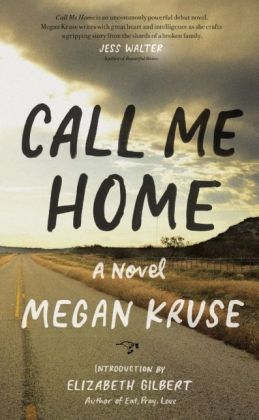
Call Me Home by Megan Kruse

A family story, in multiple voices, of pain and love and the journey to safety.

call me home

In her debut novel Call Me Home, Megan Kruse undertakes sprawling topics including guilt, sex, domestic violence and the complicated love of siblings, parents, children and lovers, in settings across the United States. These ambitious themes and clearly wrought characters are gorgeously rendered in feeling prose.

Amy moved from small-town Texas to small-town Washington state as an 18-year-old newlywed, before he began to beat her. The action of Call Me Home begins years later, alternatingly told in the third-person perspectives of Amy and her son Jackson, and first person by Jackson’s little sister Lydia. Amy tries to leave with her children, repeatedly, but to permanently escape her abusive husband she has to choose just one child to save. Eighteen-year-old Jackson finds himself on the streets of Portland, Oregon before taking work on a construction crew in Idaho. Amy and Lydia hide out at a shelter in New Mexico, then find their way to Amy’s hometown, where 13-year-old Lydia meets her grandmother for the first time. Flashbacks throughout the narrative also portray Amy’s marriage and abuse and the children’s early lives.

Call Me Home offers lovely descriptions of natural settings in Washington, Idaho and Texas, but central are the powerful themes and ugly realities of domestic violence, Jackson’s challenges as a gay teen navigating unfamiliar streets and country, and the shared and unique traumas of Amy, Lydia and Jackson. Kruse’s evocative, often lyrical language serves her subjects well, so that what results is not unleavened pain but painful beauty, even hope.


This review originally ran in the March 10, 2015 issue of Shelf Awareness for Readers. To subscribe, click here, and you’ll receive two issues per week of book reviews and other bookish fun!


Rating: 8 garbage bags.

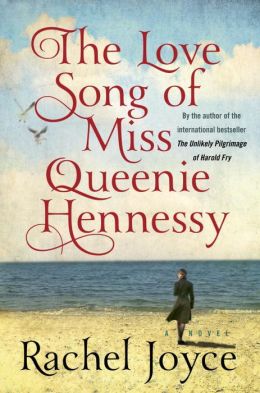
The Love Song of Miss Queenie Hennessy by Rachel Joyce

A companion to The Unlikely Pilgrimage of Harold Fry, and every bit as affecting, sweet and sad.

love song

Rachel Joyce’s The Unlikely Pilgrimage of Harold Fry won many fans with its bumbling but likable protagonist and his improbable journey across England and through his own troubled life. Harold appears off-screen in The Love Song of Miss Queenie Hennessey, in which Queenie replies to the postcards he sent her in Pilgrimage. Readers will be delighted to rediscover the action of the first book, from a very different perspective and with considerable added detail on Queenie’s side. Those considering Pilgrimage should definitely start there, as Love Song comprises one big spoiler. However, it’s not necessary to have read the first to enjoy this second novel.

Love Song begins when Queenie receives Harold’s first postcard. She has written to him from hospice care, sharing the news of her impending death. Harold sets out to visit, asking her to await his arrival. Queenie is startled and alarmed. She has kept an old secret from Harold that she had intended to take with her; she now decides she needs to come clean.

Joyce alternates among three timelines: in real time, as Queenie waits for Harold while composing a long letter of explanation; their separation 20 years ago, when she fled life’s complications; and their original meeting and developing friendship. While the present-day setting is inarguably dour, the action in all three stories is fresh, compelling and deeply emotional, and Queenie’s fellow residents create a charming little world of their own. Just as in Pilgrimage, a major revelation at the end amplifies the impact of an already powerful book.


This review originally ran in the March 10, 2015 issue of Shelf Awareness for Readers. To subscribe, click here, and you’ll receive two issues per week of book reviews and other bookish fun!


Rating: 8 painted nails.

Maximum Shelf author interview: Kate Bolick

Following yesterday’s review of Spinster, here’s Kate Bolick: The Single Woman as a Cultural Archetype.


Kate Bolick is a contributing editor to the Atlantic, and a freelance writer for Elle, the New York Times and the Wall Street Journal, among other publications. She’s also host of “Touchstones at The Mount,” an annual literary interview series at Edith Wharton’s country estate in Lenox, Mass. Previously, she was executive editor of Domino, and a columnist for the Boston Globe Ideas section. She lives in Brooklyn, N.Y. Her memoir is Spinster: Making a Life of One’s Own.

photo credit: Willy Somma

photo credit: Willy Somma

Clearly this book was a lifetime in the making. But how long did you purposefully work on it? Did the idea of it change during that time?

Spinster began as a bolt of excitement in 2000, when I first came across 19th-century journalist and novelist Neith Boyce’s 1898 Vogue column, “The Bachelor Girl,” about her decision to never marry. Until then, I was completely unaware that the public conversation around singledom had such a long history, and after that I couldn’t stop thinking about the single woman as a cultural archetype, and collecting examples.

After a few years, I sat down and tried to write a book about how Neith and two of her more-or-less contemporaries had influenced my thinking about marriage vs. not-marriage. It was a total and complete failure. I had no idea how to turn my fascination with their unconventional lives into a compelling narrative, and I was too young to have any insight into or personal perspective on the topic, or even know how to ask the right questions. I put the project aside, but never stopped thinking about it.

Then, in 2011, the Atlantic asked me to write a cover story about the changing face of contemporary marriage, and as I did my reporting and research I could almost physically feel the ghosts of those women from the past perched on my shoulder, taking in everything I learned. After the article came out, I thought maybe I was old enough now to give that failed book another go. In early 2012 I signed a deal with Crown.

From the start, I knew that I’d use my own coming-of-age as an adult as the narrative arc, and feature the lives of my “awakeners” as “love stories”–women I’d found, fallen for, then moved on from. In this way I’d be able to lead the reader through a series of historical and intellectual ideas that might feel dry on their own. Actually plotting that out, though, was maddeningly difficult, and more than a few times I thought I had to abandon that approach and try another.

What started as a fascination with certain lives deepened with research into a more comprehensive understanding of the single woman’s place in the social order, and how it’s changed across time. The specific economic, political and cultural conditions of each era determine who the single woman can be, and how she’ll be perceived.

How was this writing process different from the different kinds of writing you’d done before?

The process of writing this book was so different from anything I’ve ever done that for months and months I was near-paralyzed with doubt about whether I could do it. Length alone was a challenge–I had to unlearn journalistic tics like concision and speed, and give myself over to the space a book calls for and demands. The primary challenge was learning how to create a narrative; what compels a reader to keep wanting to turn the page? Weaving my own story in with the lives of others in a way that didn’t feel thunderingly obvious and clunky was likewise vexing. I also struggled with tone. I’ve written plenty of literary criticism, personal essays, interviews and biographical articles–how could I find a voice that would be capacious enough to let all these disparate forms coexist under the same roof?

What do you most want people to know about you that’s not in Spinster?

The book is officially a memoir, but I had to leave out acres of thoughts and experiences in order to keep the emphasis on what matters: the lives of the women I write about; the history of single women in general. Which is to say, the book is only one slice of me. Dear reader, I contain multitudes!

Could there be a sixth awakener for you, who you just haven’t found yet?

Absolutely. In fact, by the time I started writing the book I’d accumulated quite a few awakeners, which I decided to cut down to a more manageable six–the ones who’d influenced me most directly. After I finished the first draft, I realized six was one too many, and cut another. I expect that for the rest of my life I’ll keep finding new awakeners. At least, I hope I do.

Are you prepared to be an awakener yourself?

Hah! Well, given that finding an awakener is such a private, intimate process, and one that the awakener her/himself has no idea is taking place, I suppose I could handle it. In this way, I’m much better suited to being an awakener than to being a heroine, who needs to be dashing and daring. I’m not very dashing or daring.

What are you working on next?

Wait, you mean there’s life beyond Spinster?! Heh. I love the material too much to even want to think about anything else just yet. After two years holed away writing, I’m excited to finally be back in the world, talking about what I learned.


This interview originally ran on March 4, 2015 as a Shelf Awareness special issue. To subscribe, click here, and you’ll receive two issues per week of book reviews and other bookish fun!

Maximum Shelf: Spinster: Making a Life of One’s Own by Kate Bolick

Maximum Shelf is the weekly Shelf Awareness feature focusing on an upcoming title we love and believe will be a great handselling opportunity for booksellers everywhere. The features are written by our editors and reviewers and the publisher has helped support the issue.

This review was published by Shelf Awareness on March 4, 2015.


spinster

“Whom to marry, and when will it happen–these two questions define every woman’s existence, regardless of where she was raised or what religion she does or doesn’t practice… even if the answers are nobody and never.” Kate Bolick explores her own answer to the classic questions, arduously and over the years of her own life; she examines their place in society, and the way other women she admires have answered them, mining the lives of female writers who have affected her. The resulting book, Spinster: Making a Life of One’s Own, is less a polemic than one might expect, and more a thoughtful, generous consideration of our world, and a woman’s best options to honor herself.

Bolick begins with her family background, her loving parents and brother, and her home in Newburyport, Mass. In a personal and family tradition of talking, reading, discussing and writing, Bolick naturally gravitates toward literary models for the life she hopes to build. After her mother’s death, she seeks to re-create the conversations they used to share, “not with other, real, live women… but real, dead women, whom I could sidle up to shyly and get to know slowly, through the works they left behind and those written about them.” In the opening pages, she introduces her five “awakeners,” women of the written word who have offered her lessons about how to live as a woman, married or not. These awakeners are an essayist, a columnist, a poet, a novelist and a social visionary (although each, of course, crosses over and between those categories).

Maeve Brennan (1917-1993), essayist at the New Yorker, offers a loving picture of single city life and an admirable sense of style. She will also come to provide a frightening negative version of the stereotypical single woman’s final days. Neith Boyce (1872-1951), columnist at Vogue and representative of the Bachelor Girl, supplies a glimpse into the life of working women, a novel possibility in her time; although as Bolick points out, the chance of sex or sexiness in the workplace presents a “negotiation [that] continues today.” Edna St. Vincent Millay (1892-1950), poet and legendary lover, brings revelations. “Her legacy wasn’t recklessness, but a fierce individualism that even now evades our grasp.”

Edith Wharton (1862-1937), novelist and grand dame (“society’s favorite version of the single woman”), built herself a house, the Mount, with two rooms of her own, a public “boudoir” for entertaining and a spare bedroom in which to do her writing. She represents a model for the prioritization of one’s work, and also for the work Bolick reluctantly takes on in editing a luxury decorating magazine: rather than mere frivolity, this focus offers another opportunity to get to know herself. Charlotte Perkins Gilman (1860-1935), social visionary and prolific writer (of The Yellow Wallpaper, for example), inspires self-improvement and a different way to go about making a home.

Bolick tells her own story chronologically. As she discovers each of her five awakeners (a term borrowed from Wharton) and the lessons she finds with them, she changes jobs, moves from Newburyport to Boston to New York City, and dates and cohabitates with different men (referred to only by the first letter of their first names). She started using the word “spinster” in her journals in her early 20s, and always considered it a positive appellation, one posing possibility. Her evolving interest in spinsterhood is tracked by all of these layered journeys, the lives and writings of the awakeners interspersed with her own. Along the way, she also makes brief calls on Virginia Woolf, Mary McCarthy, Anne Sexton, Annie Dillard and others. Bolick acknowledges that the subjects of her investigations are all like her: straight white women of New England; diversity is not her focus.

Spinster‘s tone is charming, by turns confessional, collegial and academic. Bolick’s erudition is leavened by a playful, casual tone, even as she references Shakespeare and the Lernaean hydra in a single page. Not only a memoir, Spinster employs research into the lives of the five profiled writers, as well as into history and sexual politics. As the narrator of this voyage, Bolick is amiable, credible and fun to know.

Interestingly, all five of the awakeners eventually married, in some cases more than once. While it thoughtfully contemplates the possibilities for and arguments in favor of women remaining unmarried, Spinster is not a mandate. Bolick does not insist upon spinsterhood for her readers. Rather, she offers assistance in “holding on to that in you which is independent and self-sufficient,” whether single, happily or unhappily coupled. The word “spinster,” and all it entails–and Bolick makes great strides toward the proud and pleased application of this embattled historical term–is thus a tool for our individual contentedness.

Entertaining, wise and compassionate, Spinster is the result of Bolick’s lifetime of meditations, ruminations, angst and joy; of research, reading and appreciation of five intriguing lives; of dating, moving in with someone and time spent alone. While allowing that the coupled lifestyle is fine for some, Bolick’s message for readers is a celebration of the delights, challenges, and opportunities of remaining single.


Rating: 8 women.

Come back tomorrow for my interview with Bolick.

Untangling the Knot: Queer Voices on Marriage, Relationships & Identity, edited by Carter Sickels

An incisive and enlightening examination of same-sex marriage within the wider context of LGBTQ needs.

untangling

Untangling the Knot: Queer Voices on Marriage, Relationships and Identity assembles pieces from diverse contributors, college professors and blue-collar workers, some established writers and some never before published. Edited by Carter Sickels (The Evening Hour), these extremely sharp essays offer a startling array of perspectives on the fight for same-sex marriage in the United States, rendering a deceptively simple concept–that the needs of the LGBTQ community range far beyond marriage–fully and feelingly. Published as the Supreme Court agrees to hear arguments about same-sex marriage on a nationwide level, Untangling the Knot is profoundly eye opening, even for readers well informed on the subject.

Essays cover the reasons why marriage is important to some members of LGBTQ communities, addressing questions of medical decision-making, finances and insurance, child rearing, equality. Others protest what Ben Anderson-Nathe calls a “rhetoric of sameness”: the argument for marriage rights based on the idea that queer families are just like straight ones. Jeanne Cordova illustrates why choosing a single issue is damning for a movement. Joseph Nicholas DeFilippis writes that the continuing assumption that marriage is the highest form of family does a disservice bigger than the queer community, affecting straight people as well. Several contributors argue against legal rights, benefits and protections being tied to marriage at all. Some suggest better uses for organizational resources: homelessness, health care, anti-discrimination, and aid to trans people, the poor and queer people of color.

With Sickels’s synthesizing introduction, these sympathetic, well-informed essays show that the fight for same-sex marriage is deeply complex and only one issue in the fight for inclusiveness and equality.


This review originally ran in the March 3, 2015 issue of Shelf Awareness for Readers. To subscribe, click here, and you’ll receive two issues per week of book reviews and other bookish fun!


Rating: 8 nontraditional arrangements.

Travels in Vermeer by Michael White

A poet’s quiet, beautifully composed, powerful story of self-healing by viewing the paintings of Vermeer will be a balm to troubled minds as well as satisfying to lovers of art and memoir.

travels

Poet Michael White’s unusual and riveting memoir, Travels in Vermeer, opens in the midst of a nasty divorce and custody battle. White lost his first wife to cancer, but counts this second marital tragedy as a “total loss,” of faith as well as of his partner. Reeling, he flies to Amsterdam (“all I’d wanted was an ocean behind me”), and heads to the Rijksmuseum to see Rembrandts. But what he sees instead is The Milkmaid, a tiny painting by Johannes Vermeer. The maid evokes a “tingling at the back of [his] scalp,” and this knee-buckling discovery inspires a plan, hatched on the museum grounds, to devote his breaks from teaching university-level creative writing to traveling the world viewing all the Vermeers he can. For the next 14 months, he chases the life-changing insights and soothing, healing effect provided by the Dutch master’s small-scale, intuitive paintings, in which he sees expressions of love.

White studies biographies and art criticism about Vermeer, while visiting museums in The Hague, Washington, D.C., New York City and London. The reader shares in this lucid examination of Vermeer’s remarkable lighting techniques, occasional trompe l’oeil and the solitary women who feature in his work (alongside a few group scenes and landscapes). White sheds light as well on his difficult childhood, including a scene when his mother dumps him unannounced at his father’s apartment, following their divorce: unlike White’s own daughter, he was an apparently unwanted son. While Vermeer occupies the bulk of this brief, eloquent book, a few scenes from White’s battle with alcoholism and his tentative success with Alcoholics Anonymous round out a self-portrait sketched with great feeling in few words. Only a poet could communicate so economically, in language deserving of contemplatively paced reading.

White’s descriptions competently guide even the most unfamiliar or untrained reader through an appreciation of the mechanics and mysticism of Vermeer’s art. Readers will regret the lack of reproductions of the paintings under consideration; but as he observes upon meeting Girl with a Pearl Earring, “reproductions are useless.”

Travels in Vermeer is a thoroughly user-friendly piece of art education, but it is even better as a thoughtful, spare memoir of pain and recovery, unusually formatted and exquisitely moving. For a companion piece, consider White’s previously published book of poetry inspired by the same journey, entitled Vermeer in Hell.


This review originally ran in the February 27, 2015 issue of Shelf Awareness for the Book Trade. To subscribe, click here.


Rating: 9 daubs.

Luigi’s Freedom Ride by Alan Murray

A novel of love and bicycles, both funny and poignant, beginning in Mussolini’s Italy and traveling around the world.

luigi

Alan Murray (The Wealth of Choices; Showdown at Gucci Gulch) tries his hand at fiction with Luigi’s Freedom Ride, and achieves a rare blend of humor, solemnity and grace in this sweeping tale. Luigi Ferraro was born in 1921, in a small Tuscan village where he learned metalworking and a love of bicycles from his Uncle Cesare. Under Mussolini, Luigi is conscripted into the Italian army with his two best friends and trains in the cycling corps; he escapes and joins a group of partisans resisting fascism, and experiences both love and loss. The heartbroken young man then sets out on an international tour via bicycle and train, visiting Jerusalem and Sri Lanka and circumnavigating Australia, that “furthest place” he’d been seeking. Finally, Luigi dismounts in Sydney, where unexpected good fortune awaits him. With friends, family, love and pain spread around the globe, will he ever make it back to Tuscany?

Murray’s quirky tone is absolutely charming, managing to express both the brutality and ugliness of war as well as the sweetly naive foibles of a young man learning about the wider world. Luigi is deeply endearing: he is well-intentioned but inexperienced, confounded by the English dialects of the Scots, Australians and Americans he meets, loyal and quick to love. Employing the bicycle as a symbol of freedom, fun, adventure and forward movement, Luigi’s Freedom Ride is a novel about hope, self-determination and fresh starts, both heartfelt and surprisingly optimistic.


This review originally ran in the February 24, 2015 issue of Shelf Awareness for Readers. To subscribe, click here, and you’ll receive two issues per week of book reviews and other bookish fun!


Rating: 8 clicks.

Of Things Gone Astray by Janina Matthewson

A quirky, memorable debut novel about things we miss, large and small.

astray

Janina Matthewson’s first novel, Of Things Gone Astray, is startlingly beautiful, both ridiculous and poignant. A handful of people in London wake up one morning to find that they have lost things that matter very much to them. Delia can no longer find her way around the neighborhood she has always lived in; Mrs. Featherby’s house suddenly has no front wall; Marcus’s piano is missing its keys; Robert’s place of work is not where it belongs, though no one else seems to be missing it (a whole building!), and his colleagues’ numbers have vanished from his phone. These bizarre, surreal absences make no sense, but must be accepted as fact because they are blatant, physical. Meanwhile, a little boy named Jake finds himself attracted to lost things: he collects the contents of the Lost and Found room at school, labels and organizes objects that will likely never see their owners again.

On its face, this is a fantasy, an otherworld fortunately accessible only through prose. But Matthewson’s sensitive prose helps us to consider what matters, and the means by which we hang on to those things. Through no overt metaphor, this mystical, whimsical, dreamy world of the lost and the retrieved suggests a fresh and heartfelt new way of thinking, as Jake, in his concern for lost things, may lose track of something far more important and intangible.

Of Things Gone Astray is a stunning, heartbreaking, thought-provoking song of love and memory and family and life, with something to offer any reader, bereft or not.


This review originally ran in the February 13, 2015 issue of Shelf Awareness for Readers. To subscribe, click here, and you’ll receive two issues per week of book reviews and other bookish fun!


Rating: 9 cakes.