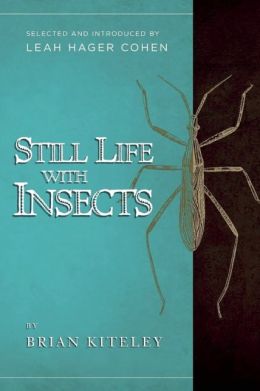
Still Life With Insects by Brian Kiteley

The subtle, sublime life of an amateur entomologist, in tiny glimpses.

insects

Leah Hager Cohen (No Book but the World) selected Brian Kiteley’s first novel, Still Life with Insects (originally published in 1989), for reprinting by Pharos Editions. In her introduction, Cohen gracefully outlines the strengths of this slim, quietly powerful book.

Elwyn Farmer is an amateur entomologist, forever wandering off to peer under dry leaves or dig in riverbanks. Still Life with Insects consists of his journal entries, spanning 40 years: from 1945, when his 43rd birthday has just been celebrated, to 1985, when his vision begins to fade. The entries record his quiet rejoicing in the ephemeral glory of the natural world, the beetles he collects and, through and around them, the details of his fragile life. Following several nervous breakdowns, he tells stories in which grandchildren and tragic death figure at an equal level with the Burying Beetle (Nicrophorus marginatus), or the Asian Stink Bug his family encounters in a Hungarian resort.

Although a bug collector’s field notes may not sound like an imaginative or exhilarating backdrop, Brian Kiteley’s distinctive style plays well to such a challenge. His greatest accomplishment is understatement. In a mere 103 pages, a sensitive, complex man becomes a brittle old man, fully experiencing the passing of time and life. The stories that fill these journal entries, sparse and widely spaced over decades, are necessarily mere vignettes, bare sketches. Still Life with Insects is a deceptively simple story, characterized by restraint, but with many layers of allegory available to the close reader.


This review originally ran as a *starred review* in the May 19, 2015 issue of Shelf Awareness for Readers. To subscribe, click here, and you’ll receive two issues per week of book reviews and other bookish fun!


Rating: 8 boxes.

The Mountain Can Wait by Sarah Leipciger

A hit-and-run fatality overshadows the life of a family and a community in the bush of British Columbia.

mountain

Sarah Leipciger’s debut novel, The Mountain Can Wait, centers on a family’s shared and separate struggles in the wilds of British Columbia. Tom’s wife left him when the kids were small. He hopes he can put in one last good year at work, sell his forest restoration company and provide for his children in his retirement. His son, Curtis, lives a few towns over, a young man on his own. Daughter Erin has begun to pull into herself, in typical teenage fashion. Around this nucleus are colorful characters like Tom’s mother-in-law, angry and estranged, living off the land in a tiny island village; Tom’s new girlfriend, a poet with an independent streak; and the tree planters and other employees of his company. Between hunting and foraging, idle drug use and countless cigarettes, this motley crew sharply evokes their environment in Leipciger’s spare but feeling prose.

The biggest crisis of all is out of sight for much of the story, but bookends everything else that transpires: a hit-and-run that kills a teenaged girl and haunts the driver, who is slow to seek redemption. “She was an instant, the sulfuric flare of a match…. And there was a dull slap.” This overarching tragedy shadows the rest of the action, as characters go on making their plans, unaware of how it will affect their lives.

In language that highlights natural beauty and the challenges of living in the bush, Leipciger explores what a sense of responsibility really entails, the finer points of family dynamics and the strong hold a place can have on a person, from Whistler to the tiny isles around Vancouver Island. Curtis struggles with the family tradition of hunting for their meat; he has trouble killing, even collecting tadpoles. But he will wreak havoc in just trying to survive, let alone impress his father. Tom is still troubled by the sordid details of his wife’s demise, some years after she left. He loves his children, but despairs at knowing them at all.

The Mountain Can Wait concentrates on the difficulties of properly caring for loved ones, and the meaning of community. Set within British Columbia’s stunning and intimidating back country, a mountain goat killed in one shot and a bear only wounded come to the forefront, too. As the title reflects, even the calamities Tom and his clan experience fade against such a backdrop.


This review originally ran in the May 14, 2015 issue of Shelf Awareness for the Book Trade. To subscribe, click here.


Rating: 7 cherries.

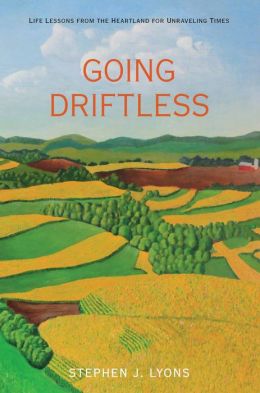
Going Driftless: Life Lessons from the Heartland for Unraveling Times by Stephen J. Lyons

An admiring profile of the successful, low-impact communities in a little-known region of the Midwest.

driftless

Stephen J. Lyons (A View from the Inland Northwest) muses on a remarkable region of the U.S. in Going Driftless: Life Lessons from the Heartland for Unraveling Times. “The Driftless” spans a small area of southwest Wisconsin, northwest Illinois, northeast Iowa and southeast Minnesota. A distinctly unglaciated history defines certain geographic parts, and a network of streams provides variant topography. In these pages, Lyons explores that landscape and the cultural experimentation born there.

The remote hills and valleys of the Driftless are uncharacteristic of the Midwest, and these steeper slopes have sheltered alternative lifestyles for decades, from the back-to-the-landers who arrived in the 1970s to naturalists, traditional and organic farmers, artists, musicians and other singular souls living there today. Over several years, Lyons visits various Driftless communities, chatting with their leaders as well as others encountered by chance. He surveys farming and dairy cooperatives, families living off the grid, small business owners, food co-ops, a Zen monastery and successful planned communities. For example, Lyons outlines the history of Seed Savers Exchange, located near Decorah, Iowa, which curates a collection of more than 20,000 seed varietals from around the world in the public domain. The region attracts those interested in getting back to basics, hoping to build communities.

Going Driftless comprises a series of sketches of people, places and organizations, and steers clear of judgment or conclusion in favor of quiet contemplation. Lyons gently suggests near the book’s end that these unobtrusive lifestyles have something to offer in unstable times.


This review originally ran in the May 12, 2015 issue of Shelf Awareness for Readers. To subscribe, click here, and you’ll receive two issues per week of book reviews and other bookish fun!


Rating: 7 apples.

Mislaid by Nell Zink

A Southern comedy of errors starring a broken family stretched across social classes.

mislaid

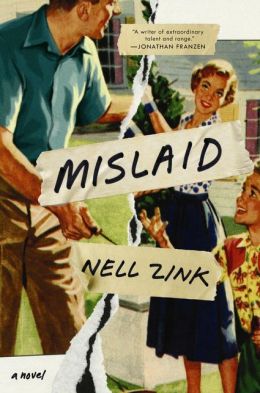
At the start of Nell Zink’s delightfully odd first novel, Mislaid, Peggy is a lesbian teenager in 1960s Virginia heading off to Stillwater College, a remote women’s school, where she plans to sow her oats with all those other young ladies and become a famous playwright. Instead, she begins a strangely lusty affair with one of the few male faculty members, Lee Fleming, a famous poet hidden away at Stillwater by his wealthy and proper Virginia family because he is gay. Their misguided, mismatched affair quickly results in a pregnancy and marriage. After 10 years, Peggy finds herself miserable, acting as servant to Lee’s obnoxiously pretentious literary house guests while he engages in infidelities and general disrespect. She runs away, taking their three-year-old daughter and leaving their nine-year-old son, Byrdie.

Because Lee has also threatened to have her committed, Peggy goes into hiding. She conveniently acquires a birth certificate from a recently deceased African American child to rechristen her white-blonde daughter as Karen Brown, herself as Meg. They squat in a condemned house in abject poverty, making a new life, but the oddest part is that “Karen and Meg Brown” on their paperwork are black. “Maybe you have to be from the South to get your head around blond black people,” writes Zink, but Meg and Karen, white as they are, do pass.

A decade later, when Karen enters the University of Virginia on a minority scholarship as a freshman, Byrdie is a senior there and the two finally meet. The ensuing drama of confused identities drips of both tragedy and hilarity, as family dynamics and literary ambitions propel a broad cast of quirky, complex, lovable characters into odd scenarios. Meg has mixed herself up in some illegal dealings in her years as a single mom and met some interesting folks. Karen’s boyfriend and his family are equally zany and winning. Zink pulls no punches in portraying Virginia’s mores and peculiarities. Mislaid‘s pathos is charmingly funny, and a sentimental streak softens the sarcasm.

With its distinctively Southern setting and bizarre range of sincere men and women making their way in a weird world, Zink’s novel captivates from the very first page. Readers may be tempted to blaze through this slim book in a single sitting. Comic, sympathetic, heartbreaking and outrageous, Mislaid is a wonderful, raucous book with everything of life in it.


This review originally ran in the May 12, 2015 issue of Shelf Awareness for the Book Trade. To subscribe, click here.


Rating: 9 BLT’s.

Paris Red by Maureen Gibbon

The model for a famous Manet nude is exquisitely fictionalized as a young woman voracious for experience.

paris red

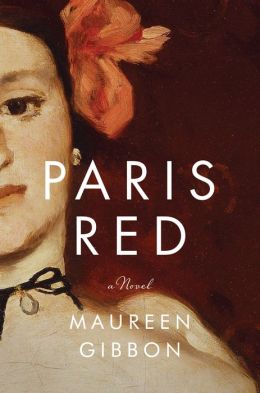
“That day I am seventeen and I am wearing the boots of a whore.” So begins Maureen Gibbon’s Paris Red, a novel of art, love, sex and survival in 1860s Paris. Victorine, the red-haired narrator, is not a whore herself; the boots were a gift. She works instead as a brunisseuse–silver burnisher–along with her best friend and roommate, Nise. The two sometimes pick up men, though, and this new one, Eugène, is different from the others: he wants them both. Unlike Nise, Victorine pursues experience headlong, wanting to feel it all, and it is she who wins Eugène’s devotion. In the process she puts ambition above friendship, losing Nise, choosing instead a position as Eugène’s model and muse. She purchases oils and pastels for him, poses for sketches and paintings, and luxuriates in the role of his lover.

Paris Red is a sensual, luscious novel, filled with tastes, smells and sounds, as well as colors. Eugène is actually Édouard Manet, strolling the streets under a false name, but Gibbon’s focus here is Victorine, the real historical model for Manet’s Olympia. She finds a home for her passion for color in his studio, and plays model-actor in Eugène’s world, while also learning about–and never losing–herself.

In powerful, vivid prose, Gibbon (Thief) pulls her reader into a sensory Paris that cuts across class lines, painting a strikingly intense and intelligent young woman in Victorine. The overall effect is erotic, but also clever and perceptive, a remarkable glimpse into a moment of art and time. Readers will never view Olympia the same way again.


This review originally ran in the May 8, 2015 issue of Shelf Awareness for Readers. To subscribe, click here, and you’ll receive two issues per week of book reviews and other bookish fun!


Rating: 8 apple fritters.

A Buzz in the Meadow: The Natural History of a French Farm by Dave Goulson

A celebration of biology and the joy of discovery–and a reminder to tread lightly.

buzz
Dave Goulson follows A Sting in the Tale, about his years studying bumblebees, with A Buzz in the Meadow: The Natural History of a French Farm. In 2003, Goulson purchased a 33-acre property with a decaying farmhouse and barn, and turned it into a private nature reserve; here he describes the multitude of wildlife he shares those acres with. His goal is to celebrate the wonder of the natural world–especially insects, which make up roughly two-thirds of known life on Earth.

Goulson charmingly depicts the mating practices of dance flies and the many butterfly species he sees on his daily run, and elucidates the habits of the famously cannibalistic female mantis with added knowledge gained through his own studies. A Buzz in the Meadow is both a descriptive work and a call to arms, a reminder that all species are precious and necessary, even the tiny ones. Goulson repeatedly states that conservationists should look beyond large and charismatic creatures like whales and tigers; he perhaps overstates that “the extinction of the giant panda… would not have any knock-on consequences. There would perhaps be a tiny bit more bamboo in a forest in China,” but his point is well taken–that insects make up the majority of life and play an outsized role in the interconnectivity of biological systems worldwide. Goulson’s tone is personal, even humorously self-effacing, but clearly expert. A Buzz in the Meadow accessibly presents natural science and gracefully offers an earnest wake-up call to conservation.


This review originally ran in the April 28, 2015 issue of Shelf Awareness for Readers. To subscribe, click here, and you’ll receive two issues per week of book reviews and other bookish fun!


Rating: 6 dormice.

Course Correction: A Story of Rowing and Resilience in the Wake of Title IX by Ginny Gilder

The exertions of rowing crew under Title IX, as a means to overcoming one woman’s demons.

course

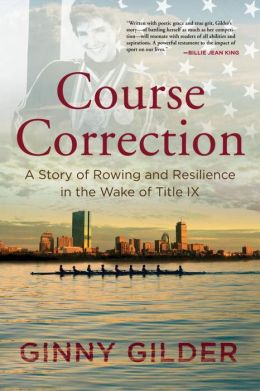
Ginny Gilder made her way from a privileged Upper East Side life in New York City to Yale University in 1975, in the early years of Title IX, which legislated equal educational opportunities for both men and women in all areas, including athletics. Ginny had never been an athlete; her family instead emphasized business success and keeping up appearances. But she was drawn to the grace, beauty and seeming effortlessness of rowing, and against the coach’s instincts, joined the Yale crew. The story she tells in Course Correction of collegiate competition, gender discrimination, the long road to the Olympics and personal growth, also yields Ginny’s eventual healing from the emotional traumas of a well-concealed family history.

In four sections titled Catch, Drive, Release and Recovery–the four parts of a well-executed rowing stroke–Gilder details the corresponding segments of her life. Rowing captures her passion; she drives herself through injuries and health problems to an eventual Olympic medal; she learns to let go; she forms a successful family of her own, despite a damaged past.

Gilder’s prose is earnest, heartfelt, expressive and clearly strongly felt. Her narrative will appeal to sports fans and readers dedicated to memoirs of pain and redemption. Course Correction touches on the injustices that Title IX was designed to correct (including a memorable scene involving a nude protest), and portrays a painful, affecting and impressive athletic career. But it is centrally a story of one woman’s lengthy and hard-won coming-of-age and coming home.


This review originally ran in the April 24, 2015 issue of Shelf Awareness for Readers. To subscribe, click here, and you’ll receive two issues per week of book reviews and other bookish fun!


Rating: 7 ankle bracelets.

The Light of the World by Elizabeth Alexander

Moving, charming, delicately lovely, this memoir of a husband’s death offers solace and even joy.

light world

Poet Elizabeth Alexander (Crave Radiance; the 2009 Inaugural Poem) was enjoying a loving, creative, exultant and full life with her husband, Ficre Ghebreyesus, and their two sons, when Ficre died suddenly. The Light of the World is her record of that man–a husband and father, an artist, activist and chef–and of Alexander’s grief and gratitude for the years she shared with him and the love and family they made.

This astonishing and naturally poetic memoir of love and loss is vivid and abundant with sensory detail and bright color. Alexander includes recipes–Ficre’s, and those that comforted her after his death; gives evocative descriptions of his paintings and the food and music they both loved; counts his scars; and recounts her dreams of him. But The Light of the World is not a dream itself: Alexander is lucid and absolutely present. Perhaps to ward off the end it threatens, the story she sets out to tell starts, and starts again, and starts again: at their respective mothers’ pregnancies; at Ficre’s 50th birthday, the week of his death; when they met at a coffee shop in 1996. Alexander then resolutely travels through the tragic center of her story and into the life that follows, when her family of four becomes “a three-legged table,” as she phrased it in her first poem afterwards. In this tender, perceptive portrayal, Ficre comes alive again: an Eritrean native, a peace-lover born into war, a painter also accomplished in photography, collage and sculpture, an eager reader fluent in seven languages and who “could say hello and thank you in literally dozens of other[s],” an activist and member of African, African-American and global communities. “Your life is just like a foreign film!” a friend rightly exclaims, and Alexander’s is just the voice to portray his broadly informed, musical, painterly existence.

Short chapters and language of unrivalled beauty ease a sad story, and Alexander and her sons do make a joyful noise in the end. She feels that she carries “a Santa’s sack of gifts” of Ficre’s thoughts and impressions that belong to her alone; she celebrates the time they had. Their shared dreams, scars, meals, songs, dances, history and family are fittingly and exquisitely honored here.


This review originally ran as a *starred review* in the April 23, 2015 issue of Shelf Awareness for the Book Trade. To subscribe, click here.


Rating: 9 red lentils.

God Help the Child by Toni Morrison

Toni Morrison brings a keen perception and lyrical voice to the veiled but lasting effects of childhood trauma.

god help

Toni Morrison (Home), winner of a Pulitzer and a Nobel Prize in Literature, satisfies her fans with a searing, lyrical story about the power of childhood trauma.

God Help the Child centers on a woman who has left behind the “dumb countryfied name” Lula Ann to become Bride, “with nothing anybody needs to say before or after that one memorable syllable,” a successful California career woman with her own cosmetics line but who wears no makeup. Her mother was a light-skinned, “high yellow” woman dismayed by and unable to love her blue-black daughter, but Bride grows up to repossess her skin tone and every other aspect of her beauty.

From a childhood marked by rejection and terrible crimes, Bride remakes herself as an object of attraction and a financial success, but as the novel opens, she faces dual blows: her mysterious live-in boyfriend, Booker, leaves, and a prisoner is paroled with whom she shares an old bond. God Help the Child reveals these complicated paths in alternating perspectives, most frequently Bride’s first-person voice but also that of her friend Brooklyn; her mother (who taught Lula Ann to call her Sweetness, rather than Mama or anything else that would tie them too closely together); the new parolee; and a child Bride meets along the way. Eventually, after several oblique glances, Booker himself comes fully into sight, but his perspective is told only in the third person, as Bride goes looking for answers and Lula Ann threatens to reemerge.

Even Morrison’s minor characters are complex, intriguing people deserving of closer inspection, and as Bride’s journey acquires a momentum of its own, the magnetism of her troubles pulls the reader along. She suffers the coldness of both her parents, a harrowing court case, an assault, a car accident and a fire; but it is the traumas of her childhood that most torment Bride, and, as becomes apparent, the same is true for Booker. In the end, healing comes in a surprising form.

Beautifully composed in a variety of distinct voices and covering a range of family concerns, God Help the Child employs a hint of magical realism and explores issues of race and women’s lives familiar to fans of Morrison’s fiction. The story of Bride’s life and trials is sensual, both delicate and strong, poetic and heavy with sex, love and pain, exemplifying a revered author’s unfailing talent.


This review originally ran as a *starred review* in the April 20, 2015 issue of Shelf Awareness for the Book Trade. To subscribe, click here.


Rating: 7 earrings.

Maximum Shelf author interview: Erika Swyler

Following Monday’s review of The Book of Speculation, here’s Erika Swyler: Writing, Binding and the Bath.


Erika Swyler is a graduate of New York University. Her short fiction has appeared in WomenArts Quarterly Journal, Litro, Anderbo.com and elsewhere. Her writing is featured in the anthology Colonial Comics, and her work as a playwright has received note from the Jane Chambers Award. Born and raised on Long Island’s North Shore, Swyler learned to swim before she could walk, and happily spent all her money at traveling carnivals. She blogs and has a baking Tumblr, ieatbutter, with a following of 60,000. Swyler recently moved from Brooklyn back to her hometown, which inspired the setting of The Book of Speculation, her debut novel.
swylerYou presented your manuscript in a highly unusual way. How did that work, and what possessed you?

The plot hinges on the idea that a particular old book is such a fascinating object that it could consume someone’s life. It felt very important to create that experience for a person reading my manuscript. It was a simple thought: if they connected with the manuscript as an object, it would pave the way for connecting with the story. I had next to zero experience in bookmaking when I decided to bind and age the manuscripts. I might have balked if I’d known from the start how much of my life the project would devour.

Possessed is the right word. While revising, I spent months experimenting, testing stains and hunting down the right material for the cover. I tried other binding methods, but they were either too time intensive, or spectacular failures. Japanese stab stitching was fast, and a great way to make a binding stand out. Production took about a month and a half, with binding being the fastest part. Aging books takes time–drying time. It took two days for a book to cure after being rasped and stained, and another day for gilding. For the better part of a summer my dining room was a mess of drying paper, dust from abused tarot cards, rasps and gold ink. My friends thought I’d lost my mind. I probably had, to a degree, but I’d already sunk a good part of my life into writing the book and I felt it deserved every possible advantage I could give it. If nothing else came of it, I’d at least have an art object. I made 16 manuscripts in all. I held on to two copies.

What were the most and least fun parts of writing this book, or bookmaking?

The worst bookmaking moment was when my favorite drill bit snapped and took a piece of my thumb with it. That was an angry day in the dining room bookbindery. The most fun part? I got to make books! Waxing linen thread is really satisfying. It smells delicious and there’s a meditative quality to it. I also got to learn a new skill. I’m happiest when I’m learning.

Trying to evenly balance a dual narrative was the hardest part of writing. The easiest thing a reader can say about a dual narrative is that they prefer one part over the other. It was my mission to make sure that both narratives were treated equally. The whole story had to have a chance. I’d read the narratives together, then separately, then together, and then pull them apart once more. For every one read of a draft a writer might typically do, I’d read anywhere from two to four. The most fun part of writing it? Any scene involving terrible weather. There’s some truly awful weather in this book and it was always a joy to write. Bad weather allows you room for scenery chewing.

How much of this story is rooted in history?

I did a good amount of research, particularly for the 1790s portion. I really wanted to know how circus came to America, and what it looked like before P.T. Barnum cast his shadow. I found this little window of time shortly after the Revolutionary War where circus was just beginning to pop up. It was the perfect space to let Peabody and his menagerie breathe. I also think when you’re playing with the fantastic, it’s helpful to have grounding elements. The Wallendas, Philip Astley, the Joneses, John Bill Ricketts and Mr. Spinacuta are actual figures in circus history. That said, Peabody and his menagerie are entirely imaginary.

Librarians are awesome, aren’t they?

Yes! Librarians are flat-out wonderful. Nothing’s better than a person who doesn’t bat an eye when peppered with questions about curse tablets, circus accidents, tide tables, and if there’s any way around a paywall on an article. I may have done that to several librarians. Yes, I know, search engines. Search engines are like opening a fire hydrant. Librarians are far better at helping you find what you’re after, even when you don’t quite know what that is.

You’re from Long Island. What of your childhood is in Simon’s?

Napawset is a shameless amalgam of small towns where grew up. It’s an interesting place that makes you desperate to leave it, while simultaneously wondering why anyone would ever want to go. As for Simon’s childhood, I spent a good deal of mine on the beach with my sister. Thankfully, our relationship is better than Simon and Enola’s. We played on the rocks, cooked out on the beach and made ourselves nuisances to the adults around us–like kids. Also, when you grow up on a shore, there’s always this odd need to check on the water, to see what it’s up to. I think my gift to Simon was that the water was always up to something.

Where does an idea like this come from? Was it born to you whole, or were you working to flesh it out all the way through?

The idea is rooted in that moment we’ve all had when we stare at our families and think, “Where did you people come from?” That’s Simon’s narrative, this very practical question. His story also came from wondering about the houses that actually are sliding into the Long Island Sound, who lives in them, and how they got to that point. It was something I had to work out because it began with questions more than characters. The 1790s portion came to me almost fully formed, in about thirty seconds, while taking a bath. I saw Peabody, Amos, Evangeline, the entire menagerie, and how it connected to Simon all at once. It was a seriously great bath.


This interview originally ran on April 15, 2015 as a Shelf Awareness special issue. To subscribe, click here, and you’ll receive two issues per week of book reviews and other bookish fun!