The Light of the World by Elizabeth Alexander

Moving, charming, delicately lovely, this memoir of a husband’s death offers solace and even joy.

light world

Poet Elizabeth Alexander (Crave Radiance; the 2009 Inaugural Poem) was enjoying a loving, creative, exultant and full life with her husband, Ficre Ghebreyesus, and their two sons, when Ficre died suddenly. The Light of the World is her record of that man–a husband and father, an artist, activist and chef–and of Alexander’s grief and gratitude for the years she shared with him and the love and family they made.

This astonishing and naturally poetic memoir of love and loss is vivid and abundant with sensory detail and bright color. Alexander includes recipes–Ficre’s, and those that comforted her after his death; gives evocative descriptions of his paintings and the food and music they both loved; counts his scars; and recounts her dreams of him. But The Light of the World is not a dream itself: Alexander is lucid and absolutely present. Perhaps to ward off the end it threatens, the story she sets out to tell starts, and starts again, and starts again: at their respective mothers’ pregnancies; at Ficre’s 50th birthday, the week of his death; when they met at a coffee shop in 1996. Alexander then resolutely travels through the tragic center of her story and into the life that follows, when her family of four becomes “a three-legged table,” as she phrased it in her first poem afterwards. In this tender, perceptive portrayal, Ficre comes alive again: an Eritrean native, a peace-lover born into war, a painter also accomplished in photography, collage and sculpture, an eager reader fluent in seven languages and who “could say hello and thank you in literally dozens of other[s],” an activist and member of African, African-American and global communities. “Your life is just like a foreign film!” a friend rightly exclaims, and Alexander’s is just the voice to portray his broadly informed, musical, painterly existence.

Short chapters and language of unrivalled beauty ease a sad story, and Alexander and her sons do make a joyful noise in the end. She feels that she carries “a Santa’s sack of gifts” of Ficre’s thoughts and impressions that belong to her alone; she celebrates the time they had. Their shared dreams, scars, meals, songs, dances, history and family are fittingly and exquisitely honored here.


This review originally ran as a *starred review* in the April 23, 2015 issue of Shelf Awareness for the Book Trade. To subscribe, click here.


Rating: 9 red lentils.

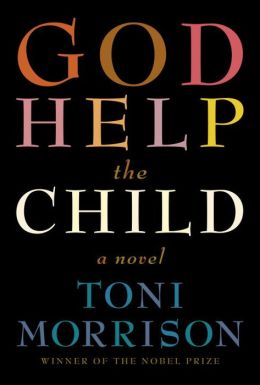
God Help the Child by Toni Morrison

Toni Morrison brings a keen perception and lyrical voice to the veiled but lasting effects of childhood trauma.

god help

Toni Morrison (Home), winner of a Pulitzer and a Nobel Prize in Literature, satisfies her fans with a searing, lyrical story about the power of childhood trauma.

God Help the Child centers on a woman who has left behind the “dumb countryfied name” Lula Ann to become Bride, “with nothing anybody needs to say before or after that one memorable syllable,” a successful California career woman with her own cosmetics line but who wears no makeup. Her mother was a light-skinned, “high yellow” woman dismayed by and unable to love her blue-black daughter, but Bride grows up to repossess her skin tone and every other aspect of her beauty.

From a childhood marked by rejection and terrible crimes, Bride remakes herself as an object of attraction and a financial success, but as the novel opens, she faces dual blows: her mysterious live-in boyfriend, Booker, leaves, and a prisoner is paroled with whom she shares an old bond. God Help the Child reveals these complicated paths in alternating perspectives, most frequently Bride’s first-person voice but also that of her friend Brooklyn; her mother (who taught Lula Ann to call her Sweetness, rather than Mama or anything else that would tie them too closely together); the new parolee; and a child Bride meets along the way. Eventually, after several oblique glances, Booker himself comes fully into sight, but his perspective is told only in the third person, as Bride goes looking for answers and Lula Ann threatens to reemerge.

Even Morrison’s minor characters are complex, intriguing people deserving of closer inspection, and as Bride’s journey acquires a momentum of its own, the magnetism of her troubles pulls the reader along. She suffers the coldness of both her parents, a harrowing court case, an assault, a car accident and a fire; but it is the traumas of her childhood that most torment Bride, and, as becomes apparent, the same is true for Booker. In the end, healing comes in a surprising form.

Beautifully composed in a variety of distinct voices and covering a range of family concerns, God Help the Child employs a hint of magical realism and explores issues of race and women’s lives familiar to fans of Morrison’s fiction. The story of Bride’s life and trials is sensual, both delicate and strong, poetic and heavy with sex, love and pain, exemplifying a revered author’s unfailing talent.


This review originally ran as a *starred review* in the April 20, 2015 issue of Shelf Awareness for the Book Trade. To subscribe, click here.


Rating: 7 earrings.

Maximum Shelf author interview: Erika Swyler

Following Monday’s review of The Book of Speculation, here’s Erika Swyler: Writing, Binding and the Bath.


Erika Swyler is a graduate of New York University. Her short fiction has appeared in WomenArts Quarterly Journal, Litro, Anderbo.com and elsewhere. Her writing is featured in the anthology Colonial Comics, and her work as a playwright has received note from the Jane Chambers Award. Born and raised on Long Island’s North Shore, Swyler learned to swim before she could walk, and happily spent all her money at traveling carnivals. She blogs and has a baking Tumblr, ieatbutter, with a following of 60,000. Swyler recently moved from Brooklyn back to her hometown, which inspired the setting of The Book of Speculation, her debut novel.
swylerYou presented your manuscript in a highly unusual way. How did that work, and what possessed you?

The plot hinges on the idea that a particular old book is such a fascinating object that it could consume someone’s life. It felt very important to create that experience for a person reading my manuscript. It was a simple thought: if they connected with the manuscript as an object, it would pave the way for connecting with the story. I had next to zero experience in bookmaking when I decided to bind and age the manuscripts. I might have balked if I’d known from the start how much of my life the project would devour.

Possessed is the right word. While revising, I spent months experimenting, testing stains and hunting down the right material for the cover. I tried other binding methods, but they were either too time intensive, or spectacular failures. Japanese stab stitching was fast, and a great way to make a binding stand out. Production took about a month and a half, with binding being the fastest part. Aging books takes time–drying time. It took two days for a book to cure after being rasped and stained, and another day for gilding. For the better part of a summer my dining room was a mess of drying paper, dust from abused tarot cards, rasps and gold ink. My friends thought I’d lost my mind. I probably had, to a degree, but I’d already sunk a good part of my life into writing the book and I felt it deserved every possible advantage I could give it. If nothing else came of it, I’d at least have an art object. I made 16 manuscripts in all. I held on to two copies.

What were the most and least fun parts of writing this book, or bookmaking?

The worst bookmaking moment was when my favorite drill bit snapped and took a piece of my thumb with it. That was an angry day in the dining room bookbindery. The most fun part? I got to make books! Waxing linen thread is really satisfying. It smells delicious and there’s a meditative quality to it. I also got to learn a new skill. I’m happiest when I’m learning.

Trying to evenly balance a dual narrative was the hardest part of writing. The easiest thing a reader can say about a dual narrative is that they prefer one part over the other. It was my mission to make sure that both narratives were treated equally. The whole story had to have a chance. I’d read the narratives together, then separately, then together, and then pull them apart once more. For every one read of a draft a writer might typically do, I’d read anywhere from two to four. The most fun part of writing it? Any scene involving terrible weather. There’s some truly awful weather in this book and it was always a joy to write. Bad weather allows you room for scenery chewing.

How much of this story is rooted in history?

I did a good amount of research, particularly for the 1790s portion. I really wanted to know how circus came to America, and what it looked like before P.T. Barnum cast his shadow. I found this little window of time shortly after the Revolutionary War where circus was just beginning to pop up. It was the perfect space to let Peabody and his menagerie breathe. I also think when you’re playing with the fantastic, it’s helpful to have grounding elements. The Wallendas, Philip Astley, the Joneses, John Bill Ricketts and Mr. Spinacuta are actual figures in circus history. That said, Peabody and his menagerie are entirely imaginary.

Librarians are awesome, aren’t they?

Yes! Librarians are flat-out wonderful. Nothing’s better than a person who doesn’t bat an eye when peppered with questions about curse tablets, circus accidents, tide tables, and if there’s any way around a paywall on an article. I may have done that to several librarians. Yes, I know, search engines. Search engines are like opening a fire hydrant. Librarians are far better at helping you find what you’re after, even when you don’t quite know what that is.

You’re from Long Island. What of your childhood is in Simon’s?

Napawset is a shameless amalgam of small towns where grew up. It’s an interesting place that makes you desperate to leave it, while simultaneously wondering why anyone would ever want to go. As for Simon’s childhood, I spent a good deal of mine on the beach with my sister. Thankfully, our relationship is better than Simon and Enola’s. We played on the rocks, cooked out on the beach and made ourselves nuisances to the adults around us–like kids. Also, when you grow up on a shore, there’s always this odd need to check on the water, to see what it’s up to. I think my gift to Simon was that the water was always up to something.

Where does an idea like this come from? Was it born to you whole, or were you working to flesh it out all the way through?

The idea is rooted in that moment we’ve all had when we stare at our families and think, “Where did you people come from?” That’s Simon’s narrative, this very practical question. His story also came from wondering about the houses that actually are sliding into the Long Island Sound, who lives in them, and how they got to that point. It was something I had to work out because it began with questions more than characters. The 1790s portion came to me almost fully formed, in about thirty seconds, while taking a bath. I saw Peabody, Amos, Evangeline, the entire menagerie, and how it connected to Simon all at once. It was a seriously great bath.


This interview originally ran on April 15, 2015 as a Shelf Awareness special issue. To subscribe, click here, and you’ll receive two issues per week of book reviews and other bookish fun!

Maximum Shelf: The Book of Speculation by Erika Swyler

Maximum Shelf is the weekly Shelf Awareness feature focusing on an upcoming title we love and believe will be a great handselling opportunity for booksellers everywhere. The features are written by our editors and reviewers and the publisher has helped support the issue.

This review was published by Shelf Awareness on April 15, 2015.


book of speculation

Erika Swyler’s debut novel, The Book of Speculation, opens on a precipice: Simon Watson’s house teeters, ready to tumble into the sea. “The Long Island Sound is peppered with the remains of homes and lifetimes, all ground to sand in its greedy maw. It is a hunger.”

Simon is precariously employed as a librarian, and thus lacks the funds to shore up his family home, from which his family is gone: his mother drowned, his father dead from grief, and his sister, Enola, departed, making her life with a traveling carnival. These days, Simon’s community is composed largely of the next-door neighbor, Frank, a longtime friend of Simon’s parents; and Frank’s daughter, Alice, a library colleague and a reliable constant in Simon’s life.

Enola rarely visits, but happens to be on her way home just when Simon receives a strangely apt package in the mail: an antiquarian book dealer, a stranger, has sent him a very old book which he believes has ties to Simon’s family history. The bookseller, Martin Churchwarry, bought it as part of a lot at auction, purely on speculation. It is the log book of Peabody’s Portable Magic and Miracles, a traveling circus in the 1790s, and contains the name of Simon’s grandmother. A librarian with archival experience, Simon is ready to treasure this unexpected gift on several levels, but puzzled by the family connection. Still, it draws him in, and by the time Enola arrives, he is thoroughly absorbed. She is unimpressed with his studies, while her obsession with her own tarot cards seems to be growing.

Simon reads and researches the names he encounters in Peabody’s book, calling into service his librarian friends and Martin Churchwarry himself, with whom a strangely easy friendship is established. These efforts yield a disturbing pattern. Simon already knew his mother was a “mermaid”: she could hold her breath for many minutes at a time, a trick she taught to her children. This skill notwithstanding, she drowned herself on a 24th of July. Simon did not know, however, that she came from a line of circus-performing mermaids, all drawn to the water, and that they all died by drowning on the 24th of July. In mid-July, as Enola, acting strangely, returns to their home by the sea, Simon fears that time is running out if he hopes to solve this puzzle and save his sister.

Meanwhile, the events of the past simultaneously engage the reader, as chapters alternate between Simon’s time and that of Peabody’s menagerie. A mystical Russian tarot card reader, an avuncular business-minded circus boss and other colorful characters populate the parallel thread of The Book of Speculation. But in Peabody’s world, it is Amos, a mute bastard who plays the “Wild Boy,” who will most capture the reader’s imagination and compassion.

The strengths of Swyler’s novel are many. The atmosphere of storm-tossed Long Island, with a house that threatens to dive into the sea, is at once fully, realistically wrought and fanciful: Is there a curse? Simon pursues the secrets of his family as his life literally falls apart around him, floor, ceiling, foundation and memories crumbling. Likewise, Peabody’s peripatetic enterprise evokes the promised “magic and miracles,” as well as more prosaic hazards. Each chapter is in itself a small departure into a fantastic, engrossing world. Imagery of woods and animals, small towns and family dynamics are finely drawn; everywhere is the water that frames both stories, from the Long Island Sound that menaces Simon’s home and those he loves to the rivers and streams alongside which Peabody travels. Indeed, if this story has a soundtrack, it is the gurgling waters that promise both succor and ruin to the mermaids’ line.

The Book of Speculation is driven both by character and by plot, as the reader aches for the vulnerable Wild Boy in Peabody’s circus and roots for the crooked romances of Simon’s time, and wonders, as the story develops, whom to trust. To round out an eccentric cast, Enola brings home a boyfriend from the circus who is covered in tattoos and possesses an electrifying special talent, and Simon explores new ground with Alice, the girl next door. Each of the men and women from both timelines proves multi-faceted and compelling. The overall effect is captivating, as Swyler’s delightful, mesmerizing prose keeps the story tripping playfully along through both light and dark moments. As Simon pursues the loose ends and they tie oddly together, Swyler keeps the pressure and the pacing on, as her characters struggle to make connections.

The meandering plot offers many charms: likable, quirky librarians; circus menageries and freak shows; love stories; tarot cards and trickery; mysticism; family secrets; and prickly sibling love–all accompanied by the author’s illustrations. [Swyler also painstakingly hand-bound, gilded and aged her manuscript submissions, in imitation of the old book in her story.] In short, The Book of Speculation, like the book at its center, promises to grasp the reader with a supernatural force and not let go.


Rating: 8 horseshoe crabs.

Come back Wednesday for my interview with Swyler.

Inside the O’Briens by Lisa Genova

Family dynamics after a diagnosis of Huntington’s disease, exquisitely portrayed with poignancy and tenderness.

inside

In her fourth novel, Inside the O’Briens, Lisa Genova (Still Alice) introduces a traditional Irish Catholic family who have to cope with a neurological disease.

Over several years, Joe O’Brien, a proud, hardworking Boston cop, has been increasingly irritable and quick to anger, and has trouble concentrating on his paperwork. He starts stumbling and dropping things; there are murmurs of drink or drugs. When they finally see a doctor, the O’Briens learn about Huntington’s disease, an inherited neurodegenerative disease that over the course of 10 to 20 years will rob Joe of his ability to move, speak and eat on his own. It’s been causing his short temper and confusion. And there’s a 50-50 chance that each of his children has it.

Each of these young adults has a decision to make: they can be tested for the gene marker that predicts Huntington’s or they can live with uncertainty. The eldest has been trying to conceive; a baby would be at risk, too.

Sympathetic, absorbing, multifaceted characters compel the reader’s compassion. While Genova’s background in neuroscience allows her to portray medical issues accurately, the heart of the O’Briens’ story is human: how each member of the family copes with the news of Joe’s pending mortality; whether each child chooses to be tested; how knowing or not knowing guides how they live their lives. Their insular Irish Catholic community is likewise evoked with sensitivity and precision.

Poignant and painful, warm and redemptive, Inside the O’Briens displays Genova’s established strengths in bringing neuroscience to the lay reader, and portraying the power of love.


This review originally ran in the April 14, 2015 issue of Shelf Awareness for Readers. To subscribe, click here, and you’ll receive two issues per week of book reviews and other bookish fun!


Rating: 8 sippy cups.

Martin Marten by Brian Doyle

A lyrical ode to all the inhabitants of the world, fun-loving and deathly serious as nature.

marten

Fourteen-year-old Dave is one of the protagonists of Brian Doyle’s Martin Marten. He lives with his delightful, precocious six-year-old sister Maria and his wise, funny parents in a cabin on an Oregon mountain. Dave prefers to call the mountain Wy’east, which is the name given it by the people who lived there for thousands of years, rather than Hood, “which is what some guy from another country called it.”

Also in his adolescence on Wy’east in the same season that Dave enters high school and tries out for the cross-country team is Martin, who likewise is exploring his world, venturing farther from home and contemplating separation from his mother, and who will discover the females of his species around the same time that Dave does. A marten is a small, brownish mustelid with a diverse diet and a large territory, and Martin is as individual an example of his species as Dave is of his.

Doyle (Mink River) follows the coming-of-age of these two young males, and to varying degrees examines the lives and struggles of other inhabitants of Wy’east. These include the woman who runs the general store, Dave’s family and his best friend Moon, a schoolteacher and the dog who adopts him, a massive elk, an elderly bear and a retired horse, and each of their stories is deep and rich with humor and wisdom. The result is a lushly textured, loving, sensitive and whimsical symposium of trees, insects, birds and beasts.


This review originally ran in the April 14, 2015 issue of Shelf Awareness for Readers. To subscribe, click here, and you’ll receive two issues per week of book reviews and other bookish fun!


Rating: 10 tomatoes.

Maximum Shelf author interview: Leslie Parry

Following Monday’s review of Church of Marvels, here’s Leslie Parry: Trusting the Characters.


Leslie Parry is a graduate of the Iowa Writers’ Workshop. Her stories have appeared in the Virginia Quarterly Review, Missouri Review, Cincinnati Review, and the PEN/O. Henry Prize Stories, among other publications. She was recently a resident at Yaddo and the Kerouac House. Her writing has also received a National Magazine Award nomination and an honorable mention in The Best American Short Stories. She lives in Chicago.

photo: Adam Farabee

photo: Adam Farabee


Church of Marvels inhabits a very compelling and specific setting that combines fantasy and history. How did you choose this time and place?

I didn’t consciously set out to write a book about New York, but the sensory experience of living there (the space, the light, the sounds and smells) remains very vivid in my mind, years after I moved away. Like many Americans, the city was a portal for my family. My great-grandfather, who was born in 1888, grew up in an immigrant family in Greenwich Village. His own father was a dreamy, dissolute, would-be poet who operated an elevator; his mother and sister worked as dressmakers. He fell in love with my great-grandmother, an actress, when he saw her on the stage. It’s a story that’s always fascinated me, but because he died so young, it’s all that I really know of him. So at the root of this book, perhaps, is the desire to re-create the world that he lived in, to imagine a history of the Parrys in America. But the story, of course, became something else entirely. And once I started following these specific characters through the streets of Manhattan, the book took on a life of its own.

How much research did you have to do into this historical setting, and what did that process look like?

Before I even knew this was going to be a novel, I was reading certain books just out of curiosity–New York history, medical history, labor history; various histories of vaudeville, dime museums, prizefighting, theater. I even read a book on the history of garbage. So I’m sure all of those various threads were humming along in my mind, crossing and sparking, when I sat down to write. Then, when I was deep into the drafting process, I went back and did some more focused reading: on hair weaving, river transportation, the opium trade, etc. I loved doing research: it answered questions I didn’t even know I had, and helped me understand the hurdles these characters would have been up against. But at the same time–since this is a work of fiction–I didn’t feel beholden to a strict factual representation. I let the research inform the story, but not determine it.

You tell a number of different stories that eventually converge into one. Was it hard to keep track?

Yes! And more so at first, when the story was still taking shape. I knew the direction I was traveling–I knew, in a loose way, how I wanted the plot to evolve–but I didn’t always have a clear path. I took a lot of wrong turns and hit a few dead ends. But I was guided by the overall sensibility of the story; I had to trust the characters. And I was fortunate enough to have a terrific editor help me across the finish line.

Did you always intend to write them as distinct stories?

Yes. In fact, the very first pages of this novel were not novelistic at all. I began writing vignettes about people who populated different areas of the city–just character sketches, really. It was almost like an actorly exercise, trying to situate myself in another body, in another world. This came about after spending some time in New York, where a few chance encounters happened to dovetail serendipitously. I caught a sideshow act at Coney Island; I read Nellie Bly’s Ten Days in a Mad-House; I spent days traversing downtown Manhattan with my sister (usually on the hunt for gelato, mussels, pickles, dumplings). I stumbled across the word night-soiler, I think during a visit to the Tenement Museum. But I got frustrated with these vignettes after a while, unsure where they were headed. I put the pages away for a few years, but I kept thinking back on them. One day I read everything through again and saw the whole project differently–it was a novel, and soon the threads began to braid together.

What do you think makes for good or memorable characters?

That’s a good question. I’m drawn to characters who make mistakes. (This is different from having an endearing flaw–being beautiful but clumsy, say, or handsome but moody.) Mistakes–whether they’re decisions made impulsively, or are calculated; whether they happen in spite of a character’s better judgment, or begin as acts of good faith, naiveté–they reveal some of the most complicated aspects of human behavior. Confusion and doubt, shame or regret, thwarted desire, yearning, fury, vulnerability, perhaps a barbed pathway to amends–it’s a universal experience, and yet has infinite variations.

Do you have a favorite character?

Whichever character I was writing about at the moment became my favorite (even when they tried me and exasperated me!). But there is a special place in my heart for Alphie.


This interview originally ran on April 2, 2015 as a Shelf Awareness special issue. To subscribe, click here, and you’ll receive two issues per week of book reviews and other bookish fun!

Maximum Shelf: Church of Marvels by Leslie Parry

Maximum Shelf is the weekly Shelf Awareness feature focusing on an upcoming title we love and believe will be a great handselling opportunity for booksellers everywhere. The features are written by our editors and reviewers and the publisher has helped support the issue.

This review was published by Shelf Awareness on April 2, 2015.


church

Leslie Parry’s debut novel, Church of Marvels, is set in 1895, in phantasmagorical New York City, and stars a weird, lovable cast. Four protagonists share the spotlight in alternating chapters: recently estranged twin sisters Belle and Odile, orphaned loner Sylvan Threadgill, and the mysterious Alphie.

Belle and Odile’s mother was the indomitable and fabled Friendship Willingbird Church, a runaway who at age 14 dressed as a boy to fight for the Union army, and later established her own circus theater on Coney Island, called the Church of Marvels. After the Church caught fire and Friendship died in its embers, Belle (ever the adventurer) left for the city with a secret that readers must wait for and wonder about. Odile stayed behind, wondering herself at her sister’s abandonment. Belle writes home: “You, dear sister, have always been the brave one, the good one, the strongest of all.” But Odile is not the brave one, and her sister’s letter illuminates nothing about Belle’s new life.

Sylvan Threadgill earns his wages as a night-soiler, cleaning out tenement privies on the Lower East Side. He moonlights by competing in fights that take place and are bet upon in back rooms and on the docks. In the novel’s opening pages, Sylvan, at work one night, finds an unusual treasure in the filth: a baby girl, pale and green-eyed, “with a small nose and a dimpled chin like a pat of butter someone had stuck their thumb in.”

Alphie is an undertaker’s wife with a scandalous past who awakes one morning, disoriented, to find herself imprisoned in the asylum on Blackwell’s Island. She is desperate for rescue, sure that her husband will come, sure that her plight is another evil trick of her mother-in-law’s.

These four characters occupy separate stories for much of the book, and are joined by a colorful supporting cast. There are actors from the sideshow: a boy who is half girl, a girl with four legs, the man who throws knives at Odile as she rotates slowly on a wheel. There is the woman Sylvan turns to for help with the baby, and the very different woman Belle turns to for a very different sort of help. A strange parade of children who dwell underground put on a show for Odile when she reaches Manhattan, with implications she takes personally; Alphie’s fellows, from her past life, shed a harsh light. This array is completed by the baby Sylvan liberates. An orphan himself, he is unable to turn away from her stark need. But a part-time pugilist who was never parented himself makes an inapt caretaker for a newborn.

However fantastical they may be, these eccentrics do not populate a fantasy, but a realistic, heartbreaking and sympathetic story of resilience and connections lost and found. Appropriately, the action of the novel begins with Odile’s breaking character. She had found familiar if uncomfortable circus work with another theater company following her mother’s death, but now leaves to pursue Belle, a journey that leads her into underground opium dens, a hothouse flower nursery curated by an enigmatic woman, and the back alleys of the tenement district. She finds an unlikely ally in her hunt for her sister, just as Belle finds her own, “in this city [where] the lights burn ever brighter, but they cast the darkest shadows.” In chapters alternating among third-person perspectives, we track the movements of the four protagonists as they close in, geographically and philosophically, on the end of their individual and shared stories.

Parry’s central players are each mysterious and multi-layered, and readers will receive shocking new intelligence in the final pages of this masterful novel. In gradually, teasingly unveiling myriad deceptions, Parry shows perhaps her greatest strength.

The atmosphere she evokes is both whimsical and grotesque. The gruesome, appalling asylum, roiling with violence and refuse, and the babies abandoned in privies paint a brutally harsh picture. But the free-wheeling circus performers and the Church family history contribute a note of fancy. Alphie’s life story in particular provides a showcase for this dualism, where horror meets magic–she once worked on the street as a “penny Rembrandt,” painting men’s faces with great skill to cover up the bruises and sallowness of their dissipated nights, so that they could go home to their respectable lives. Church of Marvels demonstrates fascinating characterization and atmosphere as well as a riveting plot.

The bizarre and fanciful world contained in New York City at the turn of the last century is a playground for Parry’s magnificent, alluring prose. These enchantments make Church of Marvels memorable. But it is the compelling characters, both larger-than-life and poignantly real, that exhibit beauty, wonder and distress, and will most beguile readers in the end.


Rating: 7 swords swallowed.

Come back Wednesday to read my interview with Leslie Parry.

The Wilderness of Ruin: A Tale of Madness, Fire, and the Hunt for America’s Youngest Serial Killer by Roseanne Montillo

A dramatically told history of murder, madness and urban growing pains.

ruin

In The Wilderness of Ruin: A Tale of Madness, Fire and the Hunt for America’s Youngest Serial Killer, Roseanne Montillo (The Lady and Her Monsters) concentrates on a gripping era of Boston’s history. In the late 1800s, a series of seemingly unrelated events are her focus: the Great Fire of 1872, which broke out despite the efforts of a fire chief who saw dangers parallel to Chicago’s Great Fire the previous year; the literary work of Herman Melville, who was increasingly fascinated by the concept of insanity; and, at the heart of this book, the crimes and incarceration of a boy named Jesse Harding Pomeroy.

Montillo follows Pomeroy’s childhood, his early crimes of torture against younger boys and the murders of two small children for which he would be convicted, in a burned-out city struggling with modernization and increasing class divisions. Throughout the investigation and trial, Pomeroy exhibits characteristics that would later have termed him a psychopath, and his lawyers’ attempt to plead insanity is part of the early establishment of precedent in such cases. Meanwhile, Melville experiments in his literature with the labels of monomania and moral insanity, and Dr. Oliver Wendell Holmes applies his medical expertise to the possible role of sensational dime novels in Pomeroy’s crimes, and weighs in on the question of executing the boy, who was 14 years old at the time of his conviction. Using detailed research, Montillo braids together these cross-disciplinary subjects–urban development and class, fire and murder, the definition of insanity and the standards of judicial punishment–into a story that has the momentum of a thriller.


This review originally ran in the March 31, 2015 issue of Shelf Awareness for Readers. To subscribe, click here, and you’ll receive two issues per week of book reviews and other bookish fun!


Rating: 6 piles of ashes.

Hammer Head: The Making of a Carpenter by Nina MacLaughlin

The pile of boxes dwindled at the bottom of the stairs and grew at the top. Ten boxes left, then four, then one, and I realized I should not have left the two bags of cement for last. I climbed eight hundred and ten stairs that day, hauled up nine hundred ninety-five pounds, nearly half a ton. The feeling that resulted from the effort, the satisfaction, was so different from the one I knew putting a final period on a book review or a profile on deadline.

The journey of a journalist-turned-carpenter, a woman in a man’s world, both thoughtful and spirited.

hammer head

Nina MacLaughlin studied English and Classics in college, and went on to work for a Boston newspaper. She spent her 20’s there, increasingly frustrated by pointing and clicking and sinking into her desk chair, so she walked away, unsure of what was next, until she spotted an ad for a carpenter’s assistant: “Women strongly encouraged to apply.” MacLaughlin relates the journey offered by that opportunity in Hammer Head: The Making of a Carpenter.

MacLaughlin’s new boss, Mary, describes herself as a “journeyman-level carpenter and a slightly better tiler.” MacLaughlin doesn’t know what these words mean, but brings her strength, work ethic and quickness to learn, and finds an unexpectedly rewarding new life working with her hands: “The feeling that resulted from the effort, the satisfaction, was so different from the one I knew putting a final period on a book review or a profile on deadline.” She documents years spent learning and working in a male-dominated field, occasionally seasoned with observations referencing poets and ancients, but mostly living and reveling in the tangible: calluses, sinews, wood and sweat. That interplay of the physical and the intellectual centers this book, which is itself both intelligent and well-muscled, hardy and poetical.

Organized by tools that represent qualities of character, Hammer Head is unsurprisingly beautifully written, and well supported in both its structural and its cerebral elements. MacLaughlin’s voice is wise and playful, wondering and astute, and Mary is a marvelous character, levelheaded and non-demonstrative. The result is a charming, thought-provoking, utterly lovely ode to work and life and learning.


This review originally ran in the March 24, 2015 issue of Shelf Awareness for Readers. To subscribe, click here, and you’ll receive two issues per week of book reviews and other bookish fun!


Rating: measure 9 times.