Old Heart by Peter Ferry

A sweet, tender story of a decades-old, dreamed-of romance and the less elegant realities of aging.
old heart

Peter Ferry (Travel Writing) crafts a wise and delicate novel of aging, love and autonomy in Old Heart.

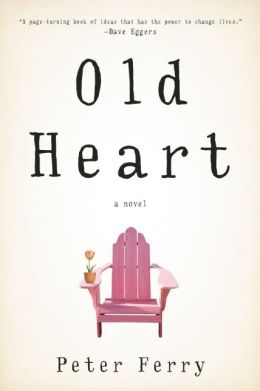
Tom Johnson is an old man. He has been widowed, and thereby freed from a troubled marriage, for a number of years. His adult children have begun pressuring him to sell the house in Illinois and move into a home. The motives of his son the gambling addict are suspicious; his daughter’s are likely pure. His eldest child, who had Down syndrome, was Tom’s best friend, but his death has given Tom the opportunity to pursue an old mystery. And so Tom plots to run away, leaving no clues behind save a note for his family: “I am not coming back.” He then travels to the Netherlands to track down a Dutch woman he knew during World War II, with whom he had “invented love.” He knows the chances of finding Sarah alive are poor, but he is driven nonetheless. “This is my life, whatever is left of it,” he writes in the note to his children.

The half-hidden narrator of Old Heart is Tom’s granddaughter Nora, a graduate student who had just begun recording the story of Tom’s return from the war and the beginning of his long-lived but unhappy marriage. When Tom makes his escape, Nora is the only one he takes into his confidence, and she relates parts of his story from her perspective. In other chapters, he chronicles his personal history–the parts where he meets and loves Sarah–in long letters to Nora. Throughout, the question of Tom’s mental competence looms over his narrative.

Of course, upon his arrival in the town where he knew Sarah, Tom does not find what he hoped he would; what he finds instead is far more complicated. In the winding path he travels–from Illinois to Eindhoven, and from dream to reality–Tom instead learns a lot about what he wants, what he has the right to expect from his life and where he’s come from. And despite his age, he continues to grow, and finds a chance to love.

Old Heart is earnest and, yes, occasionally sentimental, but also pensive and eventually enlightened. It is at once a romance, a meditation on the complications of end-of-life independence and the responsibilities of family, and a lovely personal history. In a slim, unassuming read, Ferry opens intriguing questions and introduces his reader to complex and deeply likable characters. The result is delightfully warm and universally appealing.


This review originally ran in the June 4, 2015 issue of Shelf Awareness for the Book Trade. To subscribe, click here.


Rating: 8 decisions.

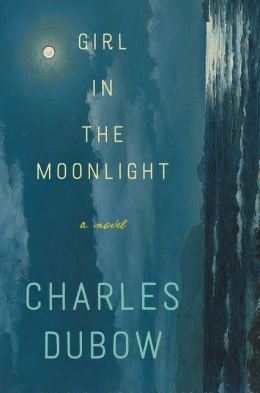
Girl in the Moonlight by Charles Dubow

A lifetime of love and lust, with a backdrop of fine art, vast wealth and high society.

moonlight

In Girl in the Moonlight by Charles Dubow (Indiscretion), Wylie Rose has known the Bonet siblings since he was 10, when he fell out of a tree and broke his arm at a party on their massive estate. He studies painting with the elder son, who becomes a dear friend; he admires the younger twins and the rest of the family, who are all brilliant, luminous, talented, beautiful and tremendously rich. But it is Cesca, two years older than Wylie, who hypnotizes him, and ruins him for any other woman or any other life than self-destructive devotion to her.

From a distance of decades, adult Wylie reflects on that life–always coming when Cesca called, from their first sexual encounter when he was a teen through her unpredictable comings and goings over the years, and the apparently mature and healthy relationships he throws aside for her in Manhattan, Paris and Barcelona. She seemingly can’t help her flirtations, manipulations and self-destructive behaviors. Wylie feels for her like “an exile misses his homeland or an old man misses his youth.”

Dubow’s writing is a bit uneven, but often inspired in its phrasing, evoking a mystical atmosphere around Cesca’s mesmerizing power and the rarefied world she travels in: extraordinary wealth, titles and estates around the world, artistic success and broken hearts. Wylie and Cesca see tempestuous years pass in struggling to define the magnetism they feel for one another, and readers will be spellbound by the process.


This review originally ran in the May 26, 2015 issue of Shelf Awareness for Readers. To subscribe, click here, and you’ll receive two issues per week of book reviews and other bookish fun!


Rating: 5 martinis.

Hyacinth Girls by Lauren Frankel

A tricky, smart riddle in novel form about bullying and family secrets.

hyacinth girls

Lauren Frankel’s debut novel, Hyacinth Girls, opens when Rebecca puts Callie’s face, along with a provocative question, on a billboard near the high school. A lengthy flashback explains why, in a gradual uncovering of the past. Callie is not Rebecca’s daughter but the daughter of her late best friend, Joyce. The happenings and drama of Callie’s middle and high school years are more troubling than the average teen experience, and have led to some terrible events that call for a billboard. But what exactly happened, and who is the perpetrator and who the victim, and why? These are questions that take the whole book to unravel, with roles reversing throughout. Rebecca’s voice alternates with Callie’s, but not until late in the book, when the reader’s impressions are already formed. The mixing up of clues and the struggle to sort out loyalties results in an unreliable narrator or two.

The story of Callie and her social circle eventually becomes entangled with that of Joyce and Rebecca, when they were childhood best friends. New and old traumas slowly, coyly come out: bullying, suicide, simple mistakes and basic meanness. Betrayals and lies populate the experiences of both generations. In revealing a complex web of family and community secrets, schoolyard bullies and the nature of trust, Frankel nudges her reader to ask questions like the one Rebecca puts on the billboard: Do you know your children?

Hyacinth Girls is a compelling and powerfully evocative novel of friendship and love, deceit and duplicity, and the rough terrain of being a teenage girl.


This review originally ran in the May 26, 2015 issue of Shelf Awareness for Readers. To subscribe, click here, and you’ll receive two issues per week of book reviews and other bookish fun!


Rating: 6 tattoos.

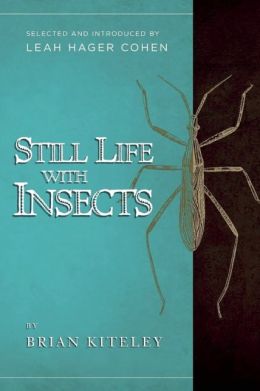
Still Life With Insects by Brian Kiteley

The subtle, sublime life of an amateur entomologist, in tiny glimpses.

insects

Leah Hager Cohen (No Book but the World) selected Brian Kiteley’s first novel, Still Life with Insects (originally published in 1989), for reprinting by Pharos Editions. In her introduction, Cohen gracefully outlines the strengths of this slim, quietly powerful book.

Elwyn Farmer is an amateur entomologist, forever wandering off to peer under dry leaves or dig in riverbanks. Still Life with Insects consists of his journal entries, spanning 40 years: from 1945, when his 43rd birthday has just been celebrated, to 1985, when his vision begins to fade. The entries record his quiet rejoicing in the ephemeral glory of the natural world, the beetles he collects and, through and around them, the details of his fragile life. Following several nervous breakdowns, he tells stories in which grandchildren and tragic death figure at an equal level with the Burying Beetle (Nicrophorus marginatus), or the Asian Stink Bug his family encounters in a Hungarian resort.

Although a bug collector’s field notes may not sound like an imaginative or exhilarating backdrop, Brian Kiteley’s distinctive style plays well to such a challenge. His greatest accomplishment is understatement. In a mere 103 pages, a sensitive, complex man becomes a brittle old man, fully experiencing the passing of time and life. The stories that fill these journal entries, sparse and widely spaced over decades, are necessarily mere vignettes, bare sketches. Still Life with Insects is a deceptively simple story, characterized by restraint, but with many layers of allegory available to the close reader.


This review originally ran as a *starred review* in the May 19, 2015 issue of Shelf Awareness for Readers. To subscribe, click here, and you’ll receive two issues per week of book reviews and other bookish fun!


Rating: 8 boxes.

The Mountain Can Wait by Sarah Leipciger

A hit-and-run fatality overshadows the life of a family and a community in the bush of British Columbia.

mountain

Sarah Leipciger’s debut novel, The Mountain Can Wait, centers on a family’s shared and separate struggles in the wilds of British Columbia. Tom’s wife left him when the kids were small. He hopes he can put in one last good year at work, sell his forest restoration company and provide for his children in his retirement. His son, Curtis, lives a few towns over, a young man on his own. Daughter Erin has begun to pull into herself, in typical teenage fashion. Around this nucleus are colorful characters like Tom’s mother-in-law, angry and estranged, living off the land in a tiny island village; Tom’s new girlfriend, a poet with an independent streak; and the tree planters and other employees of his company. Between hunting and foraging, idle drug use and countless cigarettes, this motley crew sharply evokes their environment in Leipciger’s spare but feeling prose.

The biggest crisis of all is out of sight for much of the story, but bookends everything else that transpires: a hit-and-run that kills a teenaged girl and haunts the driver, who is slow to seek redemption. “She was an instant, the sulfuric flare of a match…. And there was a dull slap.” This overarching tragedy shadows the rest of the action, as characters go on making their plans, unaware of how it will affect their lives.

In language that highlights natural beauty and the challenges of living in the bush, Leipciger explores what a sense of responsibility really entails, the finer points of family dynamics and the strong hold a place can have on a person, from Whistler to the tiny isles around Vancouver Island. Curtis struggles with the family tradition of hunting for their meat; he has trouble killing, even collecting tadpoles. But he will wreak havoc in just trying to survive, let alone impress his father. Tom is still troubled by the sordid details of his wife’s demise, some years after she left. He loves his children, but despairs at knowing them at all.

The Mountain Can Wait concentrates on the difficulties of properly caring for loved ones, and the meaning of community. Set within British Columbia’s stunning and intimidating back country, a mountain goat killed in one shot and a bear only wounded come to the forefront, too. As the title reflects, even the calamities Tom and his clan experience fade against such a backdrop.


This review originally ran in the May 14, 2015 issue of Shelf Awareness for the Book Trade. To subscribe, click here.


Rating: 7 cherries.

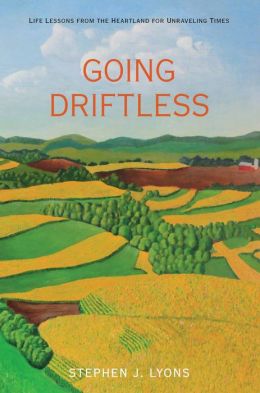
Going Driftless: Life Lessons from the Heartland for Unraveling Times by Stephen J. Lyons

An admiring profile of the successful, low-impact communities in a little-known region of the Midwest.

driftless

Stephen J. Lyons (A View from the Inland Northwest) muses on a remarkable region of the U.S. in Going Driftless: Life Lessons from the Heartland for Unraveling Times. “The Driftless” spans a small area of southwest Wisconsin, northwest Illinois, northeast Iowa and southeast Minnesota. A distinctly unglaciated history defines certain geographic parts, and a network of streams provides variant topography. In these pages, Lyons explores that landscape and the cultural experimentation born there.

The remote hills and valleys of the Driftless are uncharacteristic of the Midwest, and these steeper slopes have sheltered alternative lifestyles for decades, from the back-to-the-landers who arrived in the 1970s to naturalists, traditional and organic farmers, artists, musicians and other singular souls living there today. Over several years, Lyons visits various Driftless communities, chatting with their leaders as well as others encountered by chance. He surveys farming and dairy cooperatives, families living off the grid, small business owners, food co-ops, a Zen monastery and successful planned communities. For example, Lyons outlines the history of Seed Savers Exchange, located near Decorah, Iowa, which curates a collection of more than 20,000 seed varietals from around the world in the public domain. The region attracts those interested in getting back to basics, hoping to build communities.

Going Driftless comprises a series of sketches of people, places and organizations, and steers clear of judgment or conclusion in favor of quiet contemplation. Lyons gently suggests near the book’s end that these unobtrusive lifestyles have something to offer in unstable times.


This review originally ran in the May 12, 2015 issue of Shelf Awareness for Readers. To subscribe, click here, and you’ll receive two issues per week of book reviews and other bookish fun!


Rating: 7 apples.

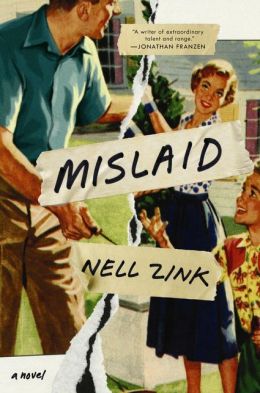
Mislaid by Nell Zink

A Southern comedy of errors starring a broken family stretched across social classes.

mislaid

At the start of Nell Zink’s delightfully odd first novel, Mislaid, Peggy is a lesbian teenager in 1960s Virginia heading off to Stillwater College, a remote women’s school, where she plans to sow her oats with all those other young ladies and become a famous playwright. Instead, she begins a strangely lusty affair with one of the few male faculty members, Lee Fleming, a famous poet hidden away at Stillwater by his wealthy and proper Virginia family because he is gay. Their misguided, mismatched affair quickly results in a pregnancy and marriage. After 10 years, Peggy finds herself miserable, acting as servant to Lee’s obnoxiously pretentious literary house guests while he engages in infidelities and general disrespect. She runs away, taking their three-year-old daughter and leaving their nine-year-old son, Byrdie.

Because Lee has also threatened to have her committed, Peggy goes into hiding. She conveniently acquires a birth certificate from a recently deceased African American child to rechristen her white-blonde daughter as Karen Brown, herself as Meg. They squat in a condemned house in abject poverty, making a new life, but the oddest part is that “Karen and Meg Brown” on their paperwork are black. “Maybe you have to be from the South to get your head around blond black people,” writes Zink, but Meg and Karen, white as they are, do pass.

A decade later, when Karen enters the University of Virginia on a minority scholarship as a freshman, Byrdie is a senior there and the two finally meet. The ensuing drama of confused identities drips of both tragedy and hilarity, as family dynamics and literary ambitions propel a broad cast of quirky, complex, lovable characters into odd scenarios. Meg has mixed herself up in some illegal dealings in her years as a single mom and met some interesting folks. Karen’s boyfriend and his family are equally zany and winning. Zink pulls no punches in portraying Virginia’s mores and peculiarities. Mislaid‘s pathos is charmingly funny, and a sentimental streak softens the sarcasm.

With its distinctively Southern setting and bizarre range of sincere men and women making their way in a weird world, Zink’s novel captivates from the very first page. Readers may be tempted to blaze through this slim book in a single sitting. Comic, sympathetic, heartbreaking and outrageous, Mislaid is a wonderful, raucous book with everything of life in it.


This review originally ran in the May 12, 2015 issue of Shelf Awareness for the Book Trade. To subscribe, click here.


Rating: 9 BLT’s.

Paris Red by Maureen Gibbon

The model for a famous Manet nude is exquisitely fictionalized as a young woman voracious for experience.

paris red

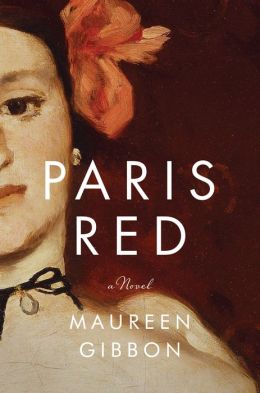
“That day I am seventeen and I am wearing the boots of a whore.” So begins Maureen Gibbon’s Paris Red, a novel of art, love, sex and survival in 1860s Paris. Victorine, the red-haired narrator, is not a whore herself; the boots were a gift. She works instead as a brunisseuse–silver burnisher–along with her best friend and roommate, Nise. The two sometimes pick up men, though, and this new one, Eugène, is different from the others: he wants them both. Unlike Nise, Victorine pursues experience headlong, wanting to feel it all, and it is she who wins Eugène’s devotion. In the process she puts ambition above friendship, losing Nise, choosing instead a position as Eugène’s model and muse. She purchases oils and pastels for him, poses for sketches and paintings, and luxuriates in the role of his lover.

Paris Red is a sensual, luscious novel, filled with tastes, smells and sounds, as well as colors. Eugène is actually Édouard Manet, strolling the streets under a false name, but Gibbon’s focus here is Victorine, the real historical model for Manet’s Olympia. She finds a home for her passion for color in his studio, and plays model-actor in Eugène’s world, while also learning about–and never losing–herself.

In powerful, vivid prose, Gibbon (Thief) pulls her reader into a sensory Paris that cuts across class lines, painting a strikingly intense and intelligent young woman in Victorine. The overall effect is erotic, but also clever and perceptive, a remarkable glimpse into a moment of art and time. Readers will never view Olympia the same way again.


This review originally ran in the May 8, 2015 issue of Shelf Awareness for Readers. To subscribe, click here, and you’ll receive two issues per week of book reviews and other bookish fun!


Rating: 8 apple fritters.

A Buzz in the Meadow: The Natural History of a French Farm by Dave Goulson

A celebration of biology and the joy of discovery–and a reminder to tread lightly.

buzz
Dave Goulson follows A Sting in the Tale, about his years studying bumblebees, with A Buzz in the Meadow: The Natural History of a French Farm. In 2003, Goulson purchased a 33-acre property with a decaying farmhouse and barn, and turned it into a private nature reserve; here he describes the multitude of wildlife he shares those acres with. His goal is to celebrate the wonder of the natural world–especially insects, which make up roughly two-thirds of known life on Earth.

Goulson charmingly depicts the mating practices of dance flies and the many butterfly species he sees on his daily run, and elucidates the habits of the famously cannibalistic female mantis with added knowledge gained through his own studies. A Buzz in the Meadow is both a descriptive work and a call to arms, a reminder that all species are precious and necessary, even the tiny ones. Goulson repeatedly states that conservationists should look beyond large and charismatic creatures like whales and tigers; he perhaps overstates that “the extinction of the giant panda… would not have any knock-on consequences. There would perhaps be a tiny bit more bamboo in a forest in China,” but his point is well taken–that insects make up the majority of life and play an outsized role in the interconnectivity of biological systems worldwide. Goulson’s tone is personal, even humorously self-effacing, but clearly expert. A Buzz in the Meadow accessibly presents natural science and gracefully offers an earnest wake-up call to conservation.


This review originally ran in the April 28, 2015 issue of Shelf Awareness for Readers. To subscribe, click here, and you’ll receive two issues per week of book reviews and other bookish fun!


Rating: 6 dormice.

Course Correction: A Story of Rowing and Resilience in the Wake of Title IX by Ginny Gilder

The exertions of rowing crew under Title IX, as a means to overcoming one woman’s demons.

course

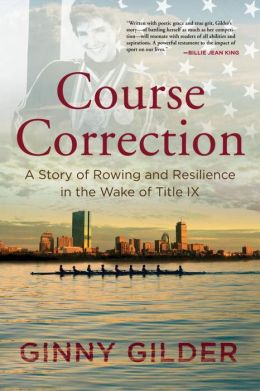
Ginny Gilder made her way from a privileged Upper East Side life in New York City to Yale University in 1975, in the early years of Title IX, which legislated equal educational opportunities for both men and women in all areas, including athletics. Ginny had never been an athlete; her family instead emphasized business success and keeping up appearances. But she was drawn to the grace, beauty and seeming effortlessness of rowing, and against the coach’s instincts, joined the Yale crew. The story she tells in Course Correction of collegiate competition, gender discrimination, the long road to the Olympics and personal growth, also yields Ginny’s eventual healing from the emotional traumas of a well-concealed family history.

In four sections titled Catch, Drive, Release and Recovery–the four parts of a well-executed rowing stroke–Gilder details the corresponding segments of her life. Rowing captures her passion; she drives herself through injuries and health problems to an eventual Olympic medal; she learns to let go; she forms a successful family of her own, despite a damaged past.

Gilder’s prose is earnest, heartfelt, expressive and clearly strongly felt. Her narrative will appeal to sports fans and readers dedicated to memoirs of pain and redemption. Course Correction touches on the injustices that Title IX was designed to correct (including a memorable scene involving a nude protest), and portrays a painful, affecting and impressive athletic career. But it is centrally a story of one woman’s lengthy and hard-won coming-of-age and coming home.


This review originally ran in the April 24, 2015 issue of Shelf Awareness for Readers. To subscribe, click here, and you’ll receive two issues per week of book reviews and other bookish fun!


Rating: 7 ankle bracelets.