Maximum Shelf: Lily and the Octopus by Steven Rowley

Maximum Shelf is the weekly Shelf Awareness feature focusing on an upcoming title we love and believe will be a great handselling opportunity for booksellers everywhere. The features are written by our editors and reviewers and the publisher has helped support the issue.

This review was published by Shelf Awareness on May 9, 2016.


Steven Rowley’s first novel, Lily and the Octopus, is a startling, scintillating experience, both funny and emotionally wrenching: a story that shatters all expectations.

lily and the octopus

In the opening lines, narrator Ted Flask introduces his contented home life with his domestic partner, an aging dachshund named Lily. They live in Los Angeles, where Ted works from home, and they are comfortable in their routines: pizza on Sundays, Monopoly on Fridays, talking about cute boys on Thursdays. They have inside jokes, holiday traditions, and an idyllic story of love at first sight. Lily holds up her end of conversations, although as a dog she is of course distractible, and her memory can be short. Her voice is just as we expect a dog to sound. As a puppy (in flashbacks, as in the scene of their first meeting), her breathless enthusiasm comes out in all caps and exclamation points: “IT’S! A! GREAT! TIME! TO! BE! ALIVE!”

As the novel unfolds and Ted fills out as a character, though, it becomes clear that his life is not necessarily well-rounded. He has a therapist he dislikes; he finds her dim-witted, and in his head runs all her advice past his ideal, imaginary therapist. He has panic attacks. His career has stalled. A long-term relationship, ended 18 months ago, continues to haunt him; recent attempts at dating have gone poorly. Until Lily, he worried that he was unable to open up, unable to love. In Ted’s favor, he has a superlative human best friend named Trent, who always comes when called and brings Valium. And, crucially, Ted has Lily. She is the best thing in his disordered and inwardly-turned life.

Those first sentences introducing Lily also introduce the octopus. A new addition to their household, he has a death grip on Lily’s head, and he’s not going anywhere. Like Lily, the octopus talks. Ted wants him to leave, but the octopus will not let Lily go. She begins to have seizures. She weakens.

Ted dreams of an octopusectomy. The vet offers chemotherapy, radiation and surgery, but is not optimistic about Lily’s chances. Ted tries to involve her in the decision-making, but Lily is a dog: her attention span is limited (oh look, red ball!) and, anyway, at 12-and-a-half human years, she has been feeling a little run-down. She rarely speaks in caps anymore. Ted was warned by a vet that, as Lily aged, she would begin to exhibit what he called Enclosed World Syndrome; that is, her perceived world and realm of interest would shrink. It is true, her walks have gotten shorter. Of course, Ted himself has the same malady. As the octopus’s tentacles tighten around Lily’s precious small head, Ted realizes he has a battle on his hands.

It is easy to fear that the market for books about beloved dogs may be flooded, but this one does something new. Lily and the Octopus is its own beast, and the reader is not the same person at the end as at the beginning. In many ways this is the story of Steven Rowley’s life in all its emotional truth, if not in specific, literal details. Ted and Lily’s Los Angeles is a thoroughly realistic setting, but a few elements–most obviously the talking octopus–offer boggling departures. By relying on metaphor, Rowley creates a fantasy world with touches of magical realism, somehow both more affecting and more comforting than reality.

Lily and the Octopus comes with the trappings of humor, canine antics, strong characters and profound emotions. Rowley, who is also a screenwriter, peppers the story with Cate Blanchett, Ryans Gosling and Reynolds, Bradleys Cooper and Milton. Equally prominent are the literary references: Kipling’s jungle, Auden’s “Funeral Blues,” and a reading list to prepare for an octopus hunt: Hemingway, Melville, Patrick O’Brian. The book opens in the spirit of a fun read, but the tone quickly deepens to a sadder and a more intense experience. Ted and Lily’s story centers around relationships: love and life partnership, the nature of commitment and of loss, and what it looks like to fight for one’s friends. As Ted battles the octopus and tries to shore up his darling, he ends up examining every aspect of his own life, his own shortcomings and the strengths he discovers in himself, almost by surprise. His journey, then, is not only about a man and his dog but about breaking out of life’s stalemates. This introspection and interior aspect to the novel is only one of the depths that make it both more than another story about a beloved dog, and more than a whimsical work of fantasy–although it is a superb example of both.

Lily and the Octopus is literary and raw, and relentlessly heartfelt. Questions of who and how we love are at its center and, vitally, the question of how we part. Imaginative, ever-astonishing, suspenseful and wise, Rowley’s surprising novel is thoroughly gut-wrenching, but well worth the pain. With a winning dog at its robust heart, no reader could ask for more.


Rating: 9 moments with the red ball.

Come back tomorrow for my interview with Rowley.

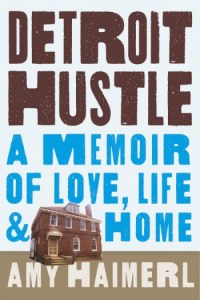
Detroit Hustle: A Memoir of Life, Love, and Home by Amy Haimerl

This memoir of home renovation in Detroit delves into much more, including the importance of place, the meaning of urban revival and the building of lives and loves.

detroit hustle

Journalist Amy Haimerl and her husband, Karl, loved their Red Hook neighborhood in Brooklyn, N.Y., but were facing rising costs and considering relocating. Friends and family were surprised by their choice of famously struggling Detroit, Mich., but they fell in love with a 1914 Georgian Revival (lacking heat, electricity, plumbing, windows and much more), and took the plunge. The house they named Matilda cost them $35,000 to purchase–and exponentially more in renovations.

Detroit Hustle is Haimerl’s memoir of rebuilding Matilda and building her marriage to Karl in parallel. But it is also a musing on what it means for a girl from a working-class family in rural Colorado to move through Mississippi and New York to arrive in the gritty and disparaged city of Detroit. Five weeks after they buy, Detroit declares bankruptcy. Amy covers the court proceedings for Crain’s Detroit Business while researching her new city and its history. Her study of the city yields complexities and contradictions, a portrait of proud residents and the difficulties of gentrification.

Haimerl is thoughtful and reflective about her relationship to place and to the intricacies of Detroit’s past and future; quirky, funny and loving about her marriage; and by turns vexed and inspired by the process of home renovation. Her vivid personality pairs well with the rich, colorful, troubled city she loves. Detroit Hustle is a remarkable memoir spanning home repair, political and culture geographies, and the choices we make for the people, places and things we love.


This review originally ran in the May 6, 2016 issue of Shelf Awareness for Readers. To subscribe, click here, and you’ll receive two issues per week of book reviews and other bookish news.


Rating: 8 dentils.

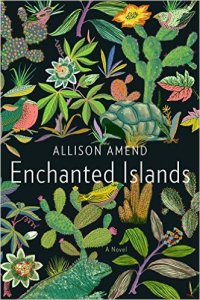
Enchanted Islands by Allison Amend

A woman with a modest past turns unlikely spy in the Galápagos in this evocative fictionalized history.

enchanted islands

Allison Amend’s Enchanted Islands is based on the life of a woman named Frances Conway, who lived with her husband, Ainslie, on the Galápagos Islands for several stretches in the 1930s and ’40s. Aside from her memoirs, which reveal only the day-to-day mechanics of her life, little is known about her. In Amend’s imaginative, richly detailed novel, Frances comes from a large, poor family of Polish Jewish immigrants in Duluth, Minn., where her lifelong friendship with a girl named Rosalie begins. The girls are in many ways opposites: Rosalie is from a relatively well-off family of better-established German immigrants; she is coddled, sexually precocious and selfish. As teenagers, the two run away together to Chicago, where a serious betrayal causes them to part ways.

When they reunite in middle age, Rosalie is married to a wealthy man and has a mansion filled with sweet children. Frances has recently married the tall, handsome, charismatic Ainslie Conway, but it is an arrangement orchestrated by Naval Intelligence, their shared employer. Ainslie is being sent to the Galápagos to keep an eye on suspected German spies, and Franny is part of his cover. The falsehood of their relationship pains Franny, and Ainslie has more secrets than just the nature of his profession. Still, the years on Floreana Island–one of the Islas Encantadas, as the Galápagos were once called–are the happiest of her life.

“You’re not allowed to read this–I’m not even really allowed to write it,” begins Enchanted Islands, Franny’s fictional third memoir. In her own words, she tells her life story with emotional resonance: confusion at Rosalie’s behavior as a teenager, bitterness and jealousy at her cruelties, a quiet if resentful acceptance of an unexciting life, and then exhilaration as she discovers Ainslie and stimulating new work, and rediscovers her old friend Rosalie. The narrative is colorful and sensually bursting, from the wet laundry that dominated her childhood home to the creatures and climate of Floreana, a changeable, isolated place both tropical and desert. These details are engrossing and lush, while the realities of World War II are recalled in dreamier terms; Franny is either far away on the island for much of it, or back at home in San Francisco feeling detached and lost without Ainslie. Her no-nonsense voice–by turns aggrieved, resigned, distraught, clever and wise–is the perfect foil to the fantastical nature of her life.

Amend offers strong, nuanced characters and a potent backdrop. Her prose is lovely without being overbearing, and her dialogue is impeccable, effortlessly evoking the characters’ lovable eccentricities and less lovable faults. With a wide-ranging, adventuresome plot and a humbly engaging protagonist, Enchanted Islands is a gorgeous piece of historical fiction.


This review originally ran in the May 3, 2016 issue of Shelf Awareness for the Book Trade. To subscribe, click here.


Rating: 7 camotes.

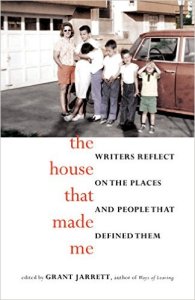
The House That Made Me: Writers Reflect on the Places and People that Defined Them edited by Grant Jarrett

Carefully curated essays take on the concept of home from varied points of view.

house made me

The House That Made Me collects essays by 19 writers reflecting on their childhood homes (or whichever home each writer has found most influential). Editor Grant Jarrett developed the idea for this anthology while contemplating his own first address via Google Earth, and he directs the contributors to that software. While the majority of essays hew close to Jarrett’s initial notion, some also riff on the concept: Roy Kesey considers those who view our homes from above, including birds, spies, angels, gods, astronauts and children climbing on roofs, as he once did.

The resulting assembly of voices offers a range of approaches and backgrounds: Kris Radish’s nostalgia for an idyllic rural community; Patricia Jabbeh Wesley’s attempts at home-building in Liberia just before civil war erupted; and the juxtaposition of Pamela Erens’s privileged upbringing on the lake in Chicago and Jeffery Renard Allen’s difficult one in that same city’s Southside. Justine Musk writes of the possibility that “a person has two homes: the place where you were born (literally, not metaphorically), and the place that fits your soul.” As she works to leave her small Canadian hometown for Los Angeles: “It’s that sense of not-belonging that can become, slowly and over time, its own kind of belonging.” While each essay is a worthy and thought-provoking piece of craft, the true achievement is in the sum of these parts, a chorus of diverse experiences that work together to define “home” in all of its possibilities.


This review originally ran in the April 22, 2016 issue of Shelf Awareness for Readers. To subscribe, click here, and you’ll receive two issues per week of book reviews and other bookish news.


Rating: 8 parachutes, for its matching my personal obsessions, these days.

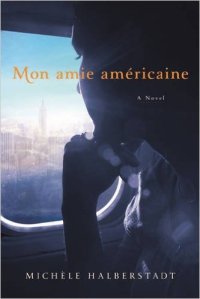
Mon amie américaine by Michèle Halberstadt, trans. by Bruce Benderson

In a long letter to a friend in a coma, a Parisian woman meditates on friendship.

mon amie

Parisian Michèle and New Yorker Molly have been friends for many years. As colleagues in the film industry, they travel together, and talk on the phone nearly daily–until, at 40, Molly collapses in her office and becomes comatose. Michèle Halberstadt’s (The Pianist in the Dark) novel Mon Amie Américaine takes the form of a long letter Michèle writes to Molly, in lieu of speaking, because “The words I can’t share with you are choking me.” As Molly remains unresponsive, uncomfortable truths are revealed behind a presumably lifelong friendship.

Michèle’s letter acts as a diary, an account of her experience of Molly’s near death: getting the news; tracking her friend’s progress (or lack thereof); being forbidden to visit; and finally, after Molly awakens several months later, discovering a different person from the one she’s missed. The new Molly is hesitant, frightened and languid where the old one was a high-powered businesswoman, vibrant and fun. Meanwhile, Michèle suffers injuries in her own life, with no Molly to turn to.

Bruce Benderson’s translation from the French is melodic and evokes fluent but accented English, exactly as the reader expects Michèle to sound. Her tone ranges from elegiac to loving to frustrated (“How many times in the last ten years have I repeated you ought to see a specialist”) to self-pitying and to resigned. This love letter to friendship ends by considering what we are willing to do for those we love, and what obstacles even friendship may be unable to overcome.


This review originally ran in the April 22, 2016 issue of Shelf Awareness for Readers. To subscribe, click here, and you’ll receive two issues per week of book reviews and other bookish news.


Rating: 7 phone messages.

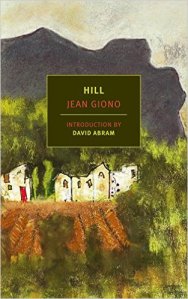
Hill by Jean Giono, trans. by Paul Eprile

This slim French novel in a new translation pits humankind against the natural world in moody, lyrical prose.

hill

Hill, Jean Giono’s first novel, won the Prix Brentano in 1929 and has been newly translated into English by Paul Eprile. Focused on the conflict between humans and nature in a tiny French village, the story’s imagery and atmosphere offer a thrilling, disturbing, visceral experience in an unassuming package.

A small Provençal hamlet known as the Bastides Blanches (the White Houses), or simply the Bastides, has been for some time slouching back toward a state of nature. In these crumbling houses now live four families comprising a dozen residents–plus one, a mute vagabond they call Gagou, “who throws off the reckoning.” The eldest resident, an old man named Janet, falls ill, takes to his bed, and here the troubles begin: an ill omen is noted, the town’s water supply runs dry, and the surrounding landscape takes on a sinister cast. Janet begins to speak in tongues, and “in the old man’s talk there are chasms where untold powers rumble.” The men of the village meet to strategize as the natural world encircling the Bastides advances.

Hill runs just over 100 pages, but its impact is powerful. Giono sketches his characters sparingly. The character of Gagou presents ominous questions that are left unanswered: Are his differences malevolent, or merely another force of nature? The individualities of human characters are not the point; instead, this story is about the shape of the world, the breadth and agency of nature independent of humankind. Eprile’s translation emphasizes language and a brooding tone. The result is a curious, intriguing novel of wind, earth, water and fire, both threatening and luminous.


This review originally ran in the April 12, 2016 issue of Shelf Awareness for Readers. To subscribe, click here, and you’ll receive two issues per week of book reviews and other bookish news.


Rating: 6 purple foams.

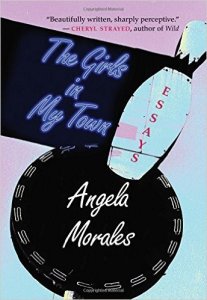
The Girls in My Town by Angela Morales

This collection of essays about a Los Angeles childhood is strongly rooted in place and universal in its themes.

girls in my town

Angela Morales’s The Girls in My Town is a collection of striking, lovely essays about her upbringing in Los Angeles. Vignettes paint a number of vivid scenes: her parents’ appliance store, and the bowling alley where she went to escape it; an elementary school where the girls demanded to be allowed to wash dishes like the boys; a room where a grandmother lay dying, as generations of children ran laps in the yard outside; the community college where Morales teaches remedial English to an ex-con with a pitiable past. These portraits, and the characterization of a larger Los Angeles, form a sense of place that enlivens and colors the collection.

Themes include family, and the changes seen over generations, as in Morales’s journey from daughter to mother, and in telling her grandparents’ stories. Recurring patterns of teen pregnancy, violence against women and girls and the fear it inspires add a tone of somber musing. A series of animal characters–the pet dogs of the author’s childhood, her own children’s pet rats, a mountain lion in the hills–bring layers to a setting both urban and wild, becoming dreamlike on her pre-dawn bike rides. Morales has a strong, lyrical voice, and her essays and anecdotes can be humorous and loving and darkly meditative as they address family, beauty and violence, loss and love. In short, this collection is as varied, charming, stark and inspiring as life itself, in Los Angeles or anywhere.


This review originally ran in the April 8, 2016 issue of Shelf Awareness for Readers. To subscribe, click here, and you’ll receive two issues per week of book reviews and other bookish news.


Rating: 8 bike rides.

The Fire Line: The Story of the Granite Mountain Hotshots and One of the Deadliest Days in American Firefighting by Fernanda Santos

A journalist’s in-depth accounting of the tragic loss of 19 firefighters in an Arizona fire in 2013 gives equal due to detail and emotion.

fire line

On June 30, 2013, 19 firefighters died while fighting an Arizona blaze named the Yarnell Hill Fire. Fernanda Santos, Phoenix bureau chief for the New York Times, explores those 19 lives and the period surrounding their deaths in The Fire Line: The Story of the Granite Mountain Hotshots and One of the Deadliest Days in American Firefighting. She relates this affecting story with respect, momentum and surprising suspense, considering the outcome is known from the beginning.

Santos’s style is traditionally reportorial and, after a brief prologue, chronological. Unlike the expansive, philosophical approach Norman Maclean takes in his acclaimed Young Men and Fire, about a 1949 firefighting disaster in Montana, The Fire Line is straightforwardly written. Despite her apparent closeness to the surviving families and her immersion in her research–among other exercises, she undergoes some wilderness firefighter training–Santos sticks to a journalistic narrative and does not place herself in the story. She describes the Granite Mountain Hotshots and their work: physically hard, underpaid, dirty, but also hard-won, honorable, exciting and close to nature. She introduces the young men succinctly but with touching fine points: one grew up learning about firefighting at his grandfather’s knee, one got teased for his “big calculator wristwatch,” another carried a copy of Goodnight Moon to read to his daughters over the phone when he was away fighting fires. Seven of the Hotshots were new hires, and three of them had babies on the way. Among the team of 20 Granite Mountain Hotshots, they were raising 13 children. Intimate identification with these men is central to the emotional impact of the book, and Santos builds that closeness naturally as she characterizes them.

As the Hotshots’ 2013 fire season unfolds, Santos continues to acquaint her reader with these men, communities and fires. Along the way, she neatly braids in various areas of research: the science of weather and forecasting, fire management history, the techniques of wilderness firefighting, the precise work of incident meteorologists, who assess local weather conditions. According to her author’s note, Santos adheres strictly to fact: feelings, thoughts and memories attributed to her characters come directly from her prodigious research. The Yarnell Hill Fire itself was underestimated in its strength and complexity; The Fire Line takes its time charting movements and decisions, not overtly concerned with assigning blame, but raising certain questions.

Santos brings immediacy and familiarity to a larger-than-life disaster with quiet admiration and loyalty to truth. By the time the Granite Mountain Hotshots, men now familiar to the reader, go missing, the tragedy of these losses is deeply felt.


This review originally ran in the April 8, 2016 issue of Shelf Awareness for the Book Trade. To subscribe, click here.


Rating: 7 texts.

A Distant Heartbeat: A War, a Disappearance, and a Family’s Secrets by Eunice Lipton

An inquisitive memoir investigates the author’s uncle, who was killed in the Abraham Lincoln Brigade in the Spanish Civil War.

distant heartbeat

Eunice Lipton grew up with an awareness of her uncle Dave that was specific and conflicted in emotional tone, and vague in points of fact. She knew he’d been in the Abraham Lincoln Brigade in the Spanish Civil War, and killed in action when he was 22. His brother Phil says, “Dave died for something. He was somebody.” His brother Louis, the author’s father, says he died for nothing. The author’s mother says he was the nicest man she ever knew. A Distant Heartbeat asks: Who was Dave Lipton? Why did this respectful son lie, tell his parents he would be working at a hotel in the Catskills, and then go to Spain? What does his story have to offer history?

Dave Lipton (formerly Lifshitz) was a Latvian Jewish immigrant, immersed in leftist youth politics in 1930s New York City. Surrounded by peers whose convictions mirrored his, Dave was one of very few to join that foreign war. His niece, born after his death, grew up with only scraps of his life and death: the repeated refrains of family members–died for nothing, died for something–and a few photos discovered in her childhood. She speaks to surviving veterans and friends of Dave, travels to an International Brigades reunion in Spain, studies letters and archival photographs. She finds more questions: What is the nature and cause of familial betrayal? Who was Dave’s mystery companion? In the end, Lipton’s research and musings offer only fleeting conclusions about family and principles, in a precise, elegiac journey through history, family tensions and human drama.


This review originally ran in the April 8, 2016 issue of Shelf Awareness for Readers. To subscribe, click here, and you’ll receive two issues per week of book reviews and other bookish news.


Rating: 7 photographs.

Distant Light by Antonio Moresco, trans. by Richard Dixon

A man on a remote mountain puzzles over a mysterious distant light in this gently disquieting novel.

distant light

Antonio Moresco offers an otherworldly story of isolation with Distant Light, translated from the Italian by Richard Dixon. The unnamed narrator opens with the statement that “I have come here to disappear.” He is the sole resident of an abandoned village in the mountains, and spends his day wandering the ruins of houses, sheds and a cemetery that are fast returning to nature. He contemplates the forces around him, described in sinister terms: evil, savage plants strangling and fighting one another in “this slaughter, this blind and relentless torsion they call life.” While bothered by these thoughts, and the noises of the wild animals, he is most tormented by the mystery of the light across the gorge. Deep in a thick forest, the light comes on each evening at the same time. What could it be–human, bioluminescence, alien?

Distant Light combines poetry and philosophy, and employs a setting both threatening and teeming with life. In a plot where not much happens, with few characters and no names, Moresco nevertheless evokes profound concepts and deep emotions. His quietly anguished protagonist claims to seek seclusion but cannot put down the question of the “maelstrom of little lights.” When the man finally crosses the gorge and meets the small boy living alone in an ancient house, he finds only another puzzle. Lonesome, dreamy, desolate, this is a novel of reflection on humanity’s place in the universe and the fluid relationship between life and death. Patient readers of philosophy will appreciate this brief but deliberately paced meditation.


This review originally ran in the March 29, 2016 issue of Shelf Awareness for Readers. To subscribe, click here, and you’ll receive two issues per week of book reviews and other bookish news.


Rating: 7 potholes.