Convenience Store Woman by Sayaka Murata, trans. by Ginny Tapley Takemori

A quirky novel about a convenience-store clerk who seems to be the ideal employee.

In the opening pages of Convenience Store Woman, Keiko Furukura is in her element, at work in the Hiiromachi Station Smile Mart. She knows what the displays need, how properly to promote the day’s featured item, when the cold drinks need replenishing; she reads her customers expertly: “Instantly I deduce that he will use electronic money.” She is a valued employee and good at her job. The mingled beeps, dings, rustles and clacks of the convenience store form a “sound that ceaselessly caresses [her] eardrums.”

Few situations in Keiko’s life have been so easy. In primary school, she often responded to the world in ways others thought wrong: offering to cook and eat a dead bird on the playground, applying a shovel to the skull of a classmate in order to break up a fight. She wasn’t a violent child; these just seemed like practical strategies. She couldn’t understand why the teachers at school got upset. Life presented a series of puzzles she could not decipher, until the day she went to work at the Smile Mart. The convenience store offers Keiko a uniform, a series of set lines to be spoken to customers and a manual for staff behavior. She copies her coworkers’ choices in clothing and cosmetics, mimics their speech patterns and facial movements, and learns to play the part. She’s never felt so successful: no one notices that she’s different anymore. “Here in the convenience store we’re not men and women. We’re all store workers.” And so she has been a store worker for 18 years.

Convenience Store Woman, Sayaka Murata’s English-language debut, is a compelling novel about conformity in society, and the baffling rules applied in work and life. Murata’s protagonist is likable, if a bit baffling herself. Ginny Tapley Takemori’s translation feels just right for the slightly off-kilter reality of this thought-provoking story: Keiko’s first-person narrative is earnest, if continually challenged, in attempting to decode the world around her.

Keiko is attuned to the ways people act, speak and move; she suspects they are all imitating each other, just as she is imitating them. She studies these behaviors to lower her own profile, but remains honestly unclear why careers, marriage and children are desirable goals. When a new employee comes along who also has trouble fitting in–but who hasn’t mastered the act as much as Keiko has–she is intrigued. Tired of everyone questioning her lack of a husband or a “real job,” Keiko takes a risk. But it may cost her the carefully constructed mask she’s learned to wear.

This brief, brisk novel is an engrossing adventure into an unusual mind. Is it a subversive, satiric criticism of societal norms? Is it a surrealist take on extreme workplace culture? Or simply the perspective of a woman wired a little bit differently? Murata holds the reader rapt, wondering what Keiko will do next. Convenience Store Woman is for all kinds of readers, for anyone who’s ever questioned the status quo.


This review originally ran in the May 21, 2018 issue of Shelf Awareness for the Book Trade. To subscribe, click here.


Rating: 7 rice balls.

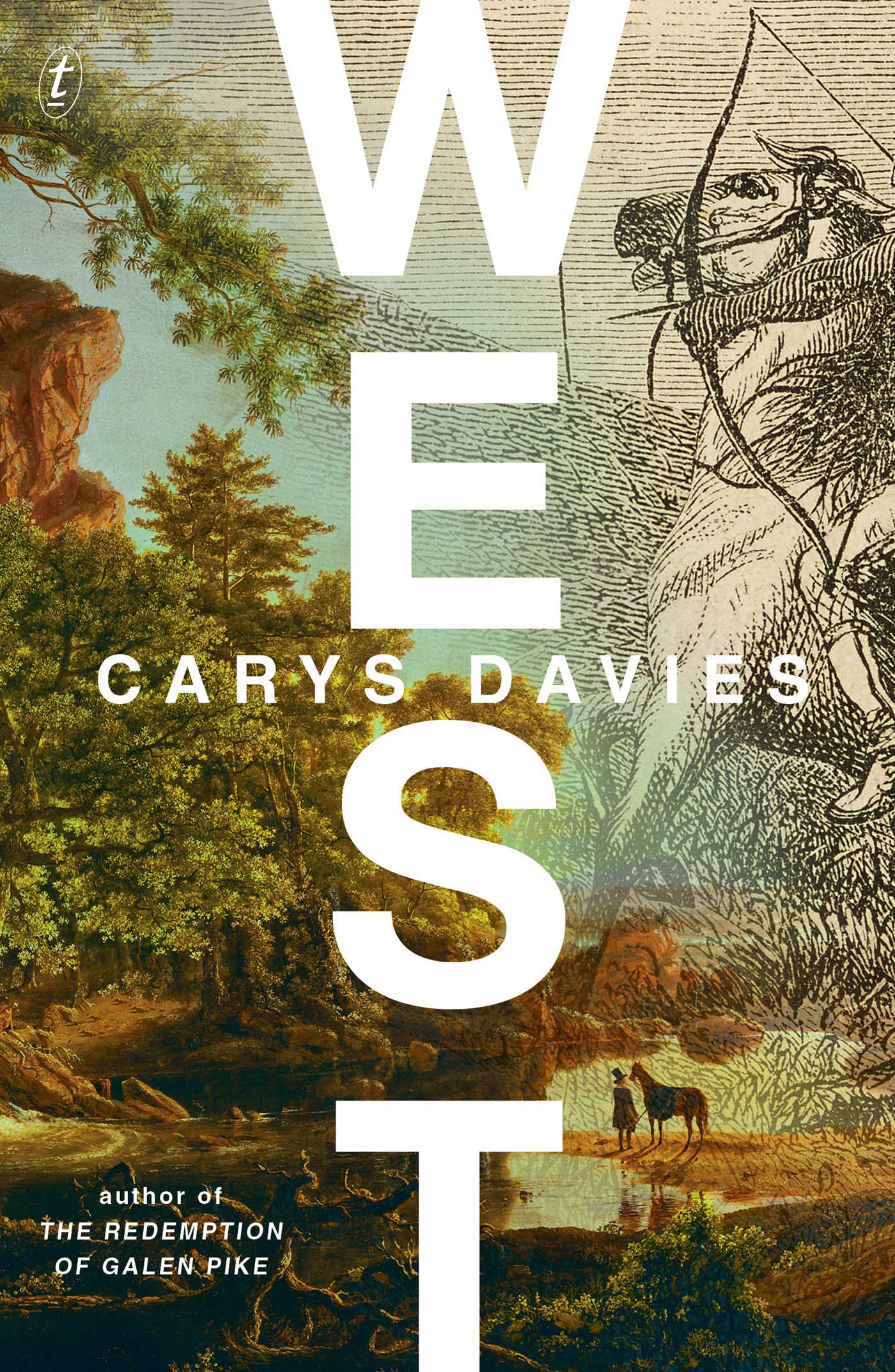
West by Carys Davies

A mule breeder heads west to search out a mythic beast while his daughter struggles quietly at home in this tale of fantasy, hope and risk.

In the newspaper, Cy Bellman reads of bones pulled from the Kentucky mud–enormous, ancient bones, belonging to some mythic creature taller than the tallest trees. Grieving his lost wife, he is now transported: he all but stops eating and sleeping, too disturbed to give his full attention to his work as a breeder of mules, or to his 10-year-old daughter, Bess. He can’t help but go in search of the beasts that have so captured his imagination, and leaves Bess and their small farm in rural Pennsylvania in the care of his hard-edged sister, Julie, with the occasional help of an odd neighbor, Elmer. With some weapons, trinkets for trade and a new stovepipe hat, Bellman travels west, toward the wild frontier.

West is Carys Davies’s first novel (though she’s published two short story collections, The Redemption of Galen Pike and Some New Ambush), and it is an epic tale of early 19th-century adventure in a small package. With fewer than 200 pages, its scale is nonetheless mighty, conjuring both history and fable. Davies’s simple, conversational prose stays out of the way of her gripping plot.

Julie and the town’s citizens think Bellman a fool at best. Bess, however, adores her father, and is heartbroken to be left alone with no books or pleasures, only a motley bunch of mules; her dead mother’s gold ring is hidden away by her unloving aunt. In her father’s absence, she makes up charms for his good luck: “if she made it from the pump to the house without slopping a drop of water over the lip of the bucket, it meant he was in good health.” She takes long walks with her favorite mule, until Elmer’s awkward attentions to the deserted household become too alarming, and she shuts herself up inside.

Meanwhile, Bellman wanders the wild countryside, farther and farther south and west, first alone and then with an unlucky Shawnee boy named Old Woman from a Distance for his guide. Bellman’s dreams of the enormous creatures grow vivid, and then less so, as his distance and time away from home increase. He promised Bess he would be gone two years at the most, but as her 12th birthday approaches, his grip on both his promise and his quest look doubtful.

West is a novel about family commitments, small-town agitations and the irresistible, fanatic pull of the unknown. Bellman is either enchanted or suffering a good old-fashioned midlife crisis. Davies writes of small fates: hopeful young Bess, bitter Julie, the enigma of slovenly Elmer, and Old Woman from a Distance, with a troubled past of his own.

This quick, compelling read will please lovers of historical fiction, legendary quests and stories of humble familial devotion. It may prove as hard for Bellman to find happiness at home as to find the monstrous “animal incognitum” he seeks. Readers, however, are the richer for his efforts.


This review originally ran in the April 3, 2018 issue of Shelf Awareness for the Book Trade. To subscribe, click here.


Rating: 7 incognita.

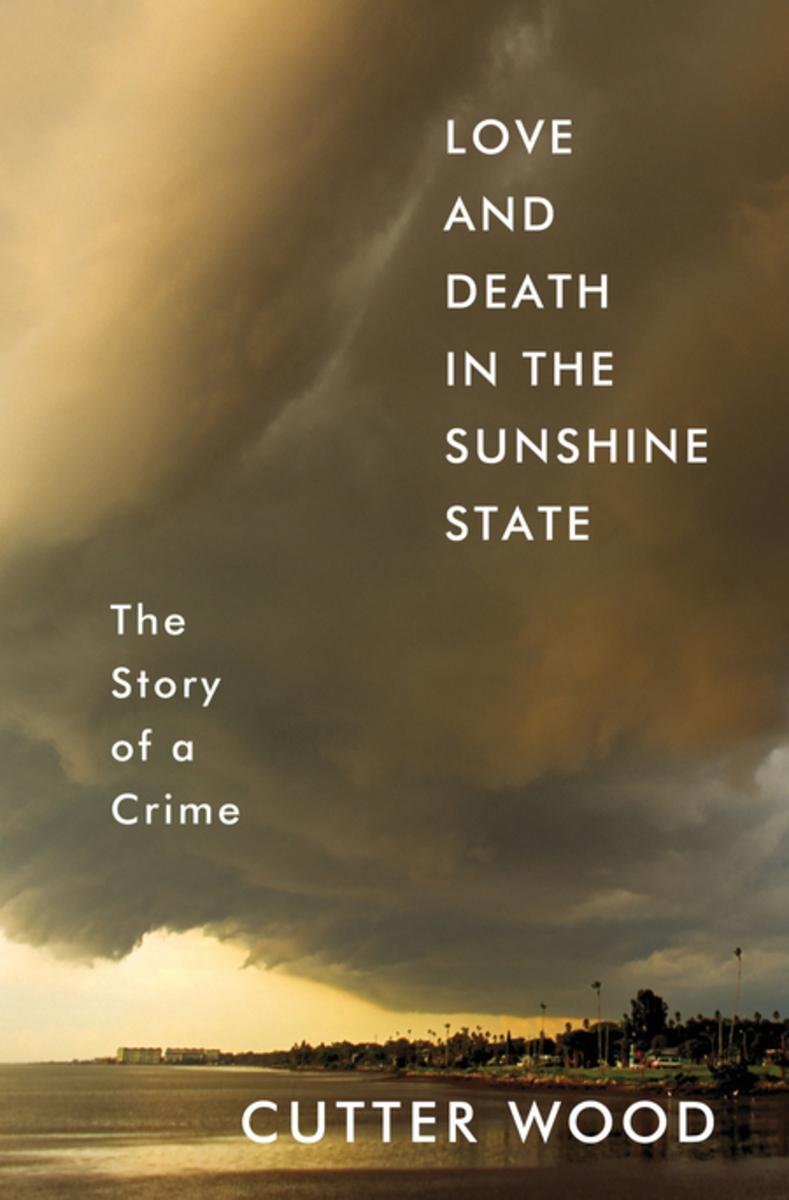
Love and Death in the Sunshine State by Cutter Wood

In Florida, a stolen car, a missing woman and a conflagration draw a writer from out of town to ruminate on the darker side of human relationships in this thoughtful melding of true crime, memoir and speculation.

As Love and Death in the Sunshine State opens, Cutter Wood has just graduated from college and is on a family vacation to the island of Anna Maria, near Tampa Bay, Fla. Afterward, he returns home to wait tables, expecting never to think of the place again–until he finds out about a fire at his Anna Maria motel.

A woman named Sabine Musil-Buehler, co-owner of the motel, has been missing for several weeks. Her car is recovered, with blood on its seats and a stranger behind the wheel. Police name three persons of interest: Sabine’s husband, her boyfriend and the man who stole the car.

Wood is fascinated. He is drawn back to Anna Maria. As he enters graduate school and begins a romantic relationship, which stales and sours, he pulls apart the relationship that might have killed Sabine. Love and Death in the Sunshine State, Wood’s debut, is a memoir of post-college ennui; an investigation into a likely murder; an exploration of the light and dark sides of human connection; and an imaginative account of what might have happened to Sabine. Wood blurs genre boundaries, eventually offering a hybrid form that best suits his mind’s wanderings.

He visits with the principal characters and neighbors, and the man most people think killed Sabine. Her boyfriend Bill is in prison on a parole violation; he corresponds with Wood, as he once courted Sabine through the mail and on weekly furloughs. About that courtship, Wood writes, “There is something holy in a friendship born like this in letters.” His own correspondence is less satisfying. “I knew that Bill had lied to me, but I knew, too, that even if he’d told me everything he remembered, it would hardly answer all the questions I had.” This approaches the heart of the book: the question of truth versus fact, of what is unknowable.

Along the way, Wood profiles a handful of characters. Sabine is a German immigrant seeking sunny days and a hospitality career. Bill is an ex-con seeking support and comfort. These protagonists are joined by Sabine’s husband, her coworkers at the hotel, Wood’s girlfriend and others. And the narrator: a young man seeking art and love, frustrated by the “vanishingly small increments” through which love can turn to “if not cruelty, some precursor of that emotion.”

Wood deserves credit for a narrative voice that prizes honesty over flattery, or self-flattery. His book is essentially an examination, not only of Sabine and of her murderer’s emotions and motivations, but of the narrator himself, of universal human flaws. It is an often lovely evocation of place and culture: the gritty, small-town life of Anna Maria, its beautiful backdrop and trivial treacheries. His writing style starts out a little overblown, but soon settles into a meditative tone appropriate to his subject. In the end, Love and Death is a memorable, thought-provoking work of true crime and imagination.


This review originally ran in the March 27, 2018 issue of Shelf Awareness for the Book Trade. To subscribe, click here.


Rating: 7 shoes.

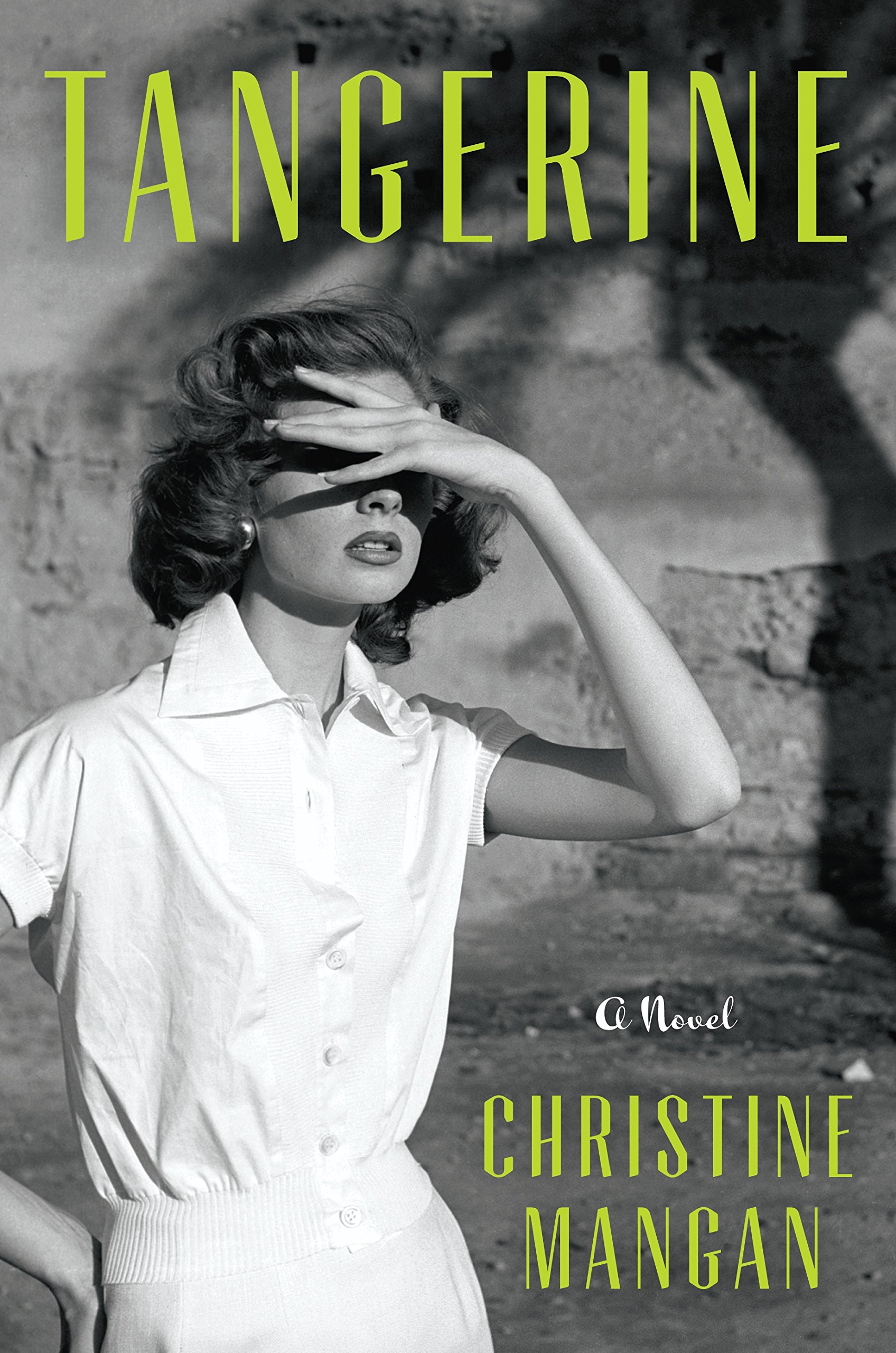
Tangerine by Christine Mangan

Former college roommates reunite in Morocco, with enigmatic tensions and references to a troubled past.

Christine Mangan’s first novel, Tangerine, offers suspense and lingering questions in a drama centered on the post-college relationship between two young women recently relocated to Morocco.

Lucy Mason and Alice Shipley were roommates at Bennington College in Vermont. They came from quite different circumstances: Alice was a well-off British orphan, whose guardian Aunt Maude is serious but somewhat unfeeling in her role. Lucy was a scholarship student, also an orphan, and this similarity is part of what led the pair to bond. They were terribly close in college–until the accident.

In Tangerine‘s opening pages, Alice has moved to Tangier with her new husband, John. He loves the city, its cacophony of sights and smells, its colorful crowds, jazz clubs and ubiquitous hot mint tea. Alice is not so sure. She hasn’t left their apartment in weeks, maybe months, when Lucy turns up on the stoop. By contrast, a local tells Lucy almost immediately upon her arrival: “You are a Tangierine now,” pronounced like the fruit, and highlighting the rich, fragrant foreignness of the backdrop to this drama.

In alternating chapters, the reader encounters past and present through Lucy’s and Alice’s respective perspectives. An epilogue and prologue, with unnamed narrators, offer more mystery. John is a shifting but mostly unsympathetic character. The two women’s accounts of past events differ only slightly, at first. But as the novel unfolds, it becomes complicated. Lucy’s devotion is perhaps a bit too intense. Alice’s agoraphobia is variously attributed to her parents’ death, or to a more sinister cause. Eventually, their memories of their shared past diverge enough that the question can no longer be ignored. Is this gaslighting? Mental illness? Surreality? Are these the simple mistakes of memory or is there a more ominous force at work?

In an atmosphere of shimmering heat, multiple languages and layers of history and mythology, two young women are bound together–although the reader must wait to find out if it is by a trick of fate or someone’s purposeful actions. While there is money at issue–Alice’s trust fund–the real risks are more significant. As this expertly paced novel rushes toward its finale, the question of whose reality is to be trusted becomes a question of sanity, or even of life and death.

Tangerine is a novel of intrigue and shifting perspectives, starring two ultimately unreliable narrators. Its appeal lies in the lush, sensual setting; the metered release of information about the shadowy past; and especially in untangling the twisted mystery of the present. Suspense fans will be well satisfied.


This review originally ran in the March 8, 2018 issue of Shelf Awareness for the Book Trade. To subscribe, click here.


Rating: 7 scalding hot glasses of mint tea.

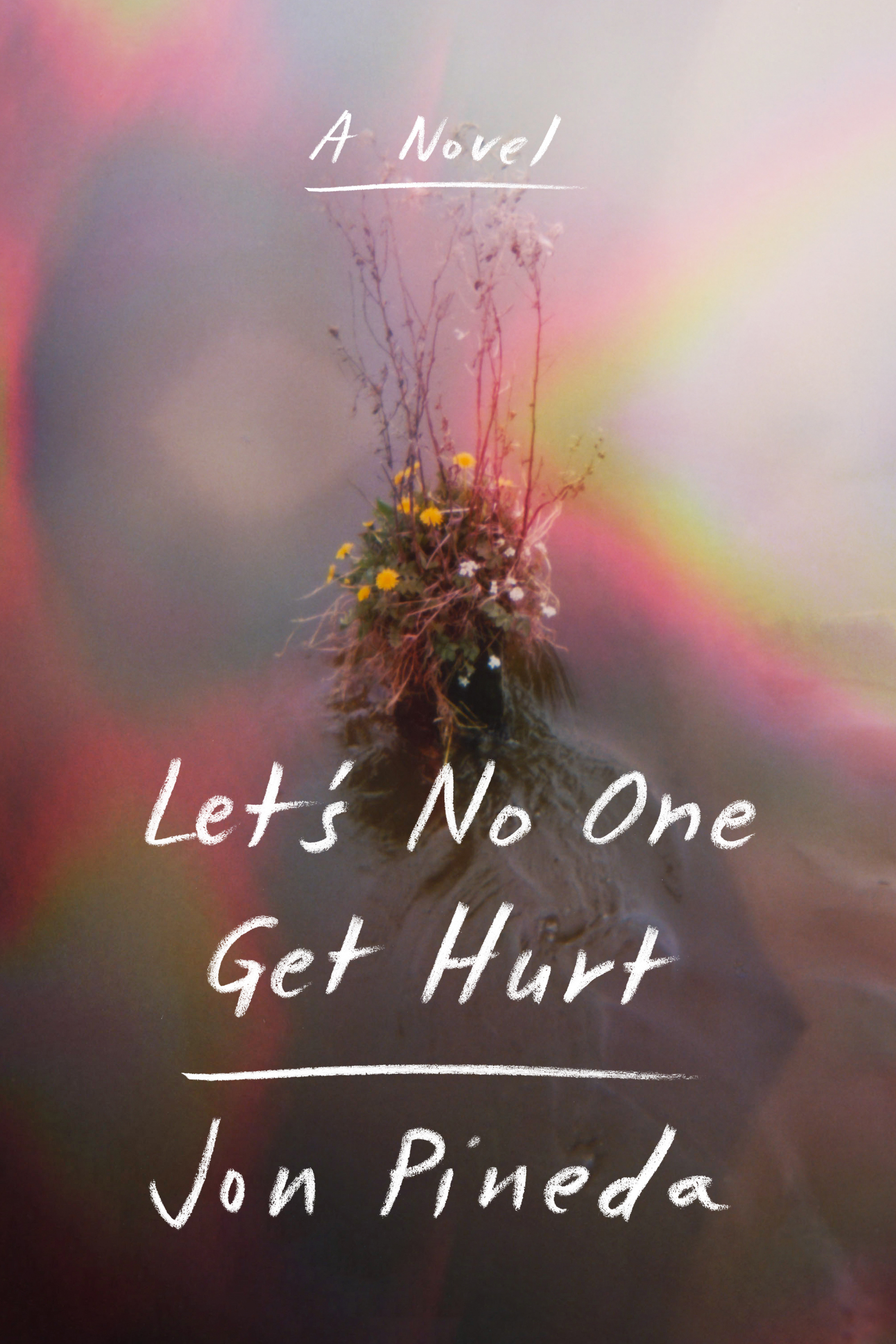
Let’s No One Get Hurt by Jon Pineda

A teenaged squatter with a poet’s heart and a stolen fly-fishing rod struggles to map her own way.

“I know I’m not a woman yet. But I’m also not a girl. I’m a poem no one will ever translate.” With Let’s No One Get Hurt, Jon Pineda (Apology) offers a wild, yearning, strong-willed protagonist and a novel with both tenderness and violence at its core.

“In a few months, I’ll be sixteen, but my body doesn’t know it.” Pearl’s father says she’s 15 going on 50. She lives in an abandoned boathouse with her father and two other adult men. Dox and Fritter are father and son, and Dox remembers Pearl’s mother, from before. Now, they form a family of sorts, subsisting on catfish and crayfish from the river, mushrooms and wild rice from the woods and building scraps from the wealthy subdivision nearby.

Pearl has made new acquaintances: the upper-class boys who live in the development surrounding the golf course near her makeshift home. They drive tricked-out golf carts and shoot their daddies’ fancy shotguns for fun, filming it all for the Internet where they hope to go viral. One of them takes a special interest in her, playing his father’s wealth against her household’s tenuous living. Pearl’s coming-of-age and her troubled liaison with these boys define the novel’s timeline. As she grows up, her old dog, Marianne Moore, prepares to die. (If her father had his way, Pearl would do the right thing and shoot her already.) A former poetry professor who named the dog after one of his favorite subjects, her father also suffers from increasingly poor health. Fritter paints a never-ending mural of pitch black and Dox noodles on his cigar-box guitar.

Pearl’s mother was a scholar who said that “poems were never finished, that they were only abandoned.” Pearl likes to think that maybe all abandoned things are poems. She lives in an abandoned place; maybe she lives inside a poem. As a narrative voice, she fights the urge to see poetry in images and to describe her world lyrically: “I hate that I even see them as wings. They’re just napkins.”

Let’s No One Get Hurt is about race (most pointedly when Pearl unintentionally crashes a Civil War reenactment with Fritter, a dreadlocked, 300-pound black man) as well as class. It is about families and how they hurt and help one another, the mysteries of Pearl’s mother and of the rich boys’ everyday cruelties. “The river waits for me, and that’s all that matters.” As a river-based adventure of difficult adolescence, Let’s No One Get Hurt inevitably recalls Adventures of Huckleberry Finn, as well as Bonnie Jo Campbell’s female-centered Once Upon a River. Pineda’s writing is thick with the lush warmth of the American South and the harshness of a life scavenged out-of-doors, and his teenaged girl’s perspective is spot-on. This novel of exploration, exploitation and the poetry in it all will stun readers of all kinds, especially those who appreciate strong characters and tough choices.


This review originally ran in the March 1, 2018 issue of Shelf Awareness for the Book Trade. To subscribe, click here.


Rating: 8 blue cats.

The Juniper Tree by Barbara Comyns

A Brothers Grimm fairy tale recast in 1980s London features a single mother fighting against long odds for her place in the world.

p>
The Brothers Grimm fairy tale “The Juniper Tree” features a wicked stepmother. A pious wife desperately wants a child; her wish is granted, but she dies just after giving birth to a son. Her husband buries her under a juniper tree and remarries, but his new wife, favoring her own daughter, cooks her stepson into a stew and feeds it to his father. Her daughter buries the boy’s bones under the juniper tree with his mother. He is reincarnated as a bird, who sings to the townspeople about his murder.

Barbara Comyns’s The Juniper Tree, originally published in 1985, bears an epigraph from the fairy tale: “My mother she killed me, my father he ate me,” but from there diverges sharply from the original. In 1980s London, Bella Winter has had a run of bad luck. Her pretty face has been badly scarred in an automobile accident. She has only recently escaped a manipulative relationship with a selfish man and withdrawn from her unloving mother. She has a young daughter of mixed race she calls Marline, born out of wedlock and fathered by a man whose name she didn’t catch. In the opening pages, she is jobless and homeless, but she is resourceful and unsentimental, and soon finds a home and vocation in a small antiques shop. The friendship of an upper-class couple, Bernard and Gertrude, completes her happiness, and she spends long, sweet afternoons with Gertrude sitting under the juniper tree in the couple’s garden. She even sees a fragile reunion with her mother. This contentment is shattered, however, when Gertrude’s longed-for pregnancy ends in both birth and death. Bella plays an increasingly large role in helping Bernard run his household with the baby, Johnny, and Marline becomes like a sister to the boy. When Bernard convinces Bella to marry him, however, her life takes a turn toward the Brothers Grimm.

Bella is a remarkable narrator and protagonist. Practical, independent, resilient, she builds a neat life for herself and her daughter, meeting all their needs and bothering no one. The friendship of the wealthier couple, which brings her such joy, turns out to be a curse, and Bella the tragic hero. Comyns turns the fairy tale on its head and complicates it with class and racial tensions, mental illness and the timeless struggle of a young woman to chart her own course. This is a richer, more relevant, modern rendering of the classic, heartbreaking in its fine attention to detail and its realistic, hardy heroine. While no knowledge of “The Juniper Tree” is necessary to appreciate this version, those familiar with the original will appreciate many subtle references. This edition includes a brief, helpful introduction by critic Sadie Stein, offering context within Comyns’s body of work. The Juniper Tree is a poignant, quietly disturbing novel for fans of strong female protagonists and dark fairy tales, and anyone who roots for the underdog.


This review originally ran in the December 21, 2017 issue of Shelf Awareness for the Book Trade. To subscribe, click here.


Rating: 7 magpies.

The Stampographer by Vincent Sardon

This iconoclastic French artist’s work with rubber stamps is for fans of fart jokes, the f-bomb and political satire.

The Stampographer is a different kind of coffee-table book. Vincent Sardon makes rubber stamps because “the stamp is never neutral”; it generally appears as a tool of bureaucracy, but here subverts authority to play with taboo. The book’s endpapers are filled with repeating middle fingers, its pages with insults, erotic and violent images, the profane and the vulgar. In an interview (the volume’s only text), Sardon denies any such political motive: “My work simply reflects the world, which seems to have been created by an absolute moron.”

These are evocative images and complex references to art and history, showcasing Sardon’s dark, satiric, antagonistic sense of humor. He considers his stamps “both tools and works of art,” and sells them only to amateurs, not artists, from a private gallery in Paris. Readers not local to Paris are lucky to get a glimpse of his work in this unrivaled art book.


This review originally ran in the November 21, 2017 issue of Shelf Awareness for Readers. To subscribe, click here, and you’ll receive two issues per week of book reviews and other bookish fun!


Rating: 7 turd blossoms.

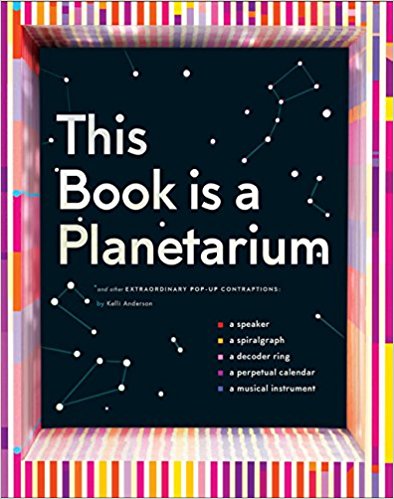
This Book Is a Planetarium: And Other Extraordinary Pop-Up Contraptions by Kelli Anderson

This is a work of art, teaching tool, pop-up toy and book that will delight playful lifetime learners.

This Book Is a Planetarium–as well as a musical instrument, a decoder ring, a spiralgraph and more. With a smartphone or small LED light, the galaxy comes to your living room. Graphic designer Kelli Anderson exults in the science and the art in the everyday, here playing with the powers of paper. This short but engrossing large-format book is at once an art object and a collection of teaching tools. Each page pops up and moves, dynamically demonstrating lessons from physics, geometry and astronomy. Brief explanations in small print further expand the didactic element. While the text is written for adults, not children, a little grown-up assistance (and supervision of removable parts) could make this an educational toy for all ages. Sensory play involving touch and sound as well as sight is too often left to the kids, but This Book Is a Planetarium is a physical object and absorbing interactive experience for all curious and young-at-heart readers.


This review originally ran in the November 21, 2017 issue of Shelf Awareness for Readers. To subscribe, click here, and you’ll receive two issues per week of book reviews and other bookish fun!


Rating: 7 strings.

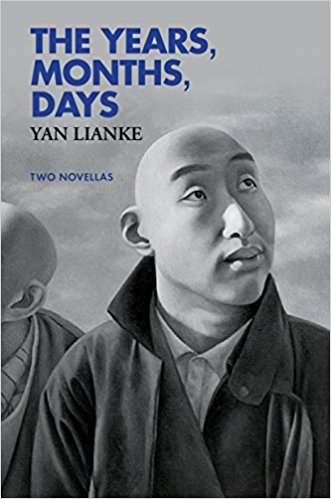
The Years, Months, Days by Yan Lianke, trans. by Carlos Rojas

Two novellas translated from the Chinese offer plucky characters in terrible situations, simply but poetically portrayed.

The Years, Months, Days contains two novellas by Yan Lianke, translated from the Chinese by Carlos Rojas. The title story, featuring just two characters, opens: “In the year of the great drought, time was baked to ash; and if you tried to grab the sun, it would stick to your palm like charcoal.” All the other residents of a tiny mountain village have fled, but an old man known only as the Elder does not think he’d survive the trip. He stays behind, with a blind dog for companion, to tend a single stalk of corn, in the hopes that when the villagers return, the kernels he nurtures will restart their community. In this stark tale, he speaks to the corn and the dog and his departed neighbors, alternately cursing and hopeful, and does battle with rats, wolves and the sun itself. As the food and water available to man and dog dwindle, every day becomes a fight for life.

The second novella, “Marrow,” is also about a grim struggle for existence. The father of four disabled children, out of guilt for his heredity, kills himself, leaving his wife to raise them alone. His ghost remains to accompany his wife and converse with her, in a twist that could be magical or merely her fantasy. When their children grow up, she works to find them marriages and homes of their own, despite their problems and the ill will of the villagers. Finally she discovers that there is a cure for their poor health and bad luck–but it involves the bones of direct relatives. When only her youngest is left at home, she devises a way to reinterpret his disturbing appetites for the better.

The common themes of these bleak stories are clear: hunger, solitude, the searing strain of existence. In a brief, insightful translator’s note, Rojas observes that Lianke’s work often transforms such abstract needs into literal ones. Indeed, the author’s descriptions are synesthetic: smells “roll noisily”; gazes produce a “crackling sound”; and a wolf’s roar is purplish-red. In a spare but artful style, Lianke presents the sun’s rays as physical realities, which have measurable mass and can be cut or shattered. His characters inhabit a bleak, harsh world. In bitterly hard circumstances, they show courage and ingenuity, defiance and grace. His renderings of real-world desolations are imaginative and wondrous; these austere fables are minimal, but beautifully composed. The Years, Months, Days is for readers who appreciate grim lessons, magical realism and lovely, lyric prose.


This review originally ran in the November 17, 2017 issue of Shelf Awareness for the Book Trade. To subscribe, click here.


Rating: 7 yelps like blades of green grass.

Mean by Myriam Gurba

This memoir is remarkable for its unflinching candor, for its humor in the face of tragedy and absurdity, and for its adventurous style.

Myriam Gurba’s Mean is a memoir of growing up queer, mixed-race, Chicana and female in Santa Maria, Calif., in the 1980s and ’90s. It is also a crime report, and a fantasy featuring ghosts, saints and martyrs. Race, class, sex, sexuality and sexual assault intersect in Gurba’s own life and in the news, especially when the man who attacked her goes on to kill a woman in her community. Surprisingly, though, this is also a book capable of making readers laugh out loud.

The first chapter, “Wisdom,” introduces a murder. Then Gurba flashes back to a childhood that confuses English with Spanish, because “I assumed we all had the same words.” She takes readers from that childhood, with her growing grasp of the messy concepts of white and Mexican (her parents are one of each), as she matures into a young woman dealing with questions of body and sexuality common to Western teens plus some exclusive to this particular slice of culture. The reader follows Gurba to college in Berkeley and beyond, as she continues to navigate family and other relationships.

Gurba approaches her grave subjects with acerbic humor and compassion, in a style all her own. She plays with form: “I hate found poems,” she writes, before presenting her own carefully shaped, visual found poem. Court transcripts and college course records offer various frames for considering a history that is both personal and broad, cultural and political. Formal play is not the point, however; Gurba makes the form follow her unusual story. Unsurprisingly, because she is an artist and a writer, she is concerned with words, appearances and how we make meaning. She is interested in race and class as they show up in food and pop culture; where modern sexual exploration meets Anne Frank; immigration and the visual arts, and more.

The title is important. “Being mean isn’t for everybody. It’s best practiced by those who understand it as an art form. These virtuosos live closer to the divine. They’re queers.” Meanness is a weapon, a defense mechanism and a reaction; it is also part of Gurba’s art. And yet her story and her storytelling voice are also loving and generous. The complexity of this voice contributes to the appeal of her memoir, which is compelling, suspenseful, both knowable as the girl next door and mysterious. Mean is a multifaceted book for many kinds of readers.


This review originally ran in the October 30, 2017 issue of Shelf Awareness for the Book Trade. To subscribe, click here.


Rating: 8 Jell-O parfaits.