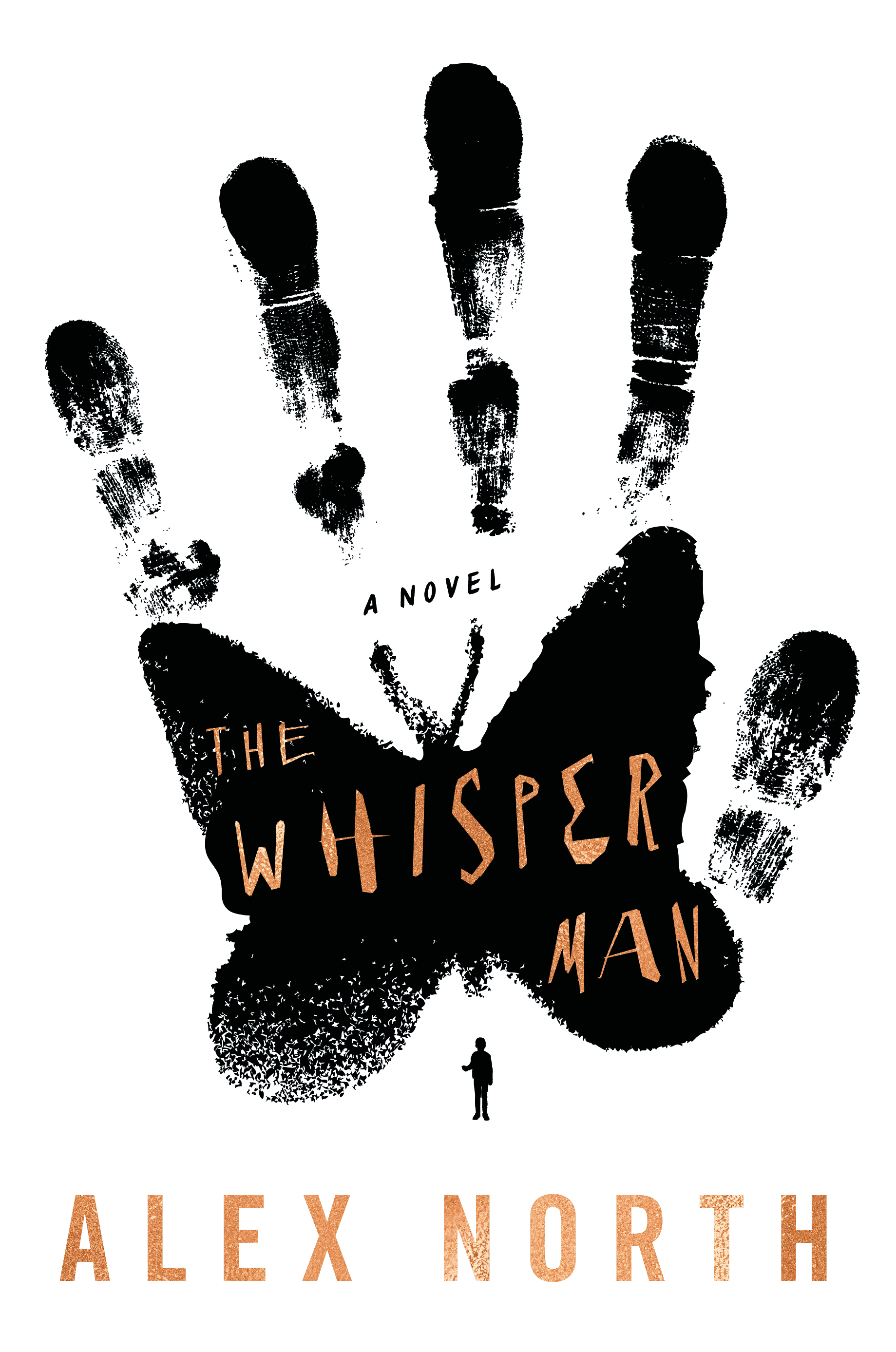
Maximum Shelf author interview: Alex North

Following Wednesday’s review of The Whisper Man, here’s Alex North: The Heart of the Book Starts Beating.


Alex North was born in Leeds, where he now lives with his wife and son. He studied Philosophy at Leeds University, and prior to becoming a writer he worked there in their sociology department.

Chapter by chapter, your characters take turns holding center stage. Was it complicated to manage so many points of view? Is there a strategy for writing this way?

I think the structure is just what this story demanded. Although the characters do come together as the book progresses, they start off in different places, and they each have their own storyline to follow until they do. Tom is clearly the main character, and we follow the majority of the book from inside his head, but there is a surrounding cast whose stories gradually begin to dovetail with his, until all of them are inextricably linked by the end.

I don’t think it’s necessarily any more complicated to write than a more straightforward single narrative. You do have to keep track of things very carefully, though, and you certainly don’t want one strand of the story to overshadow another. In an ideal world, a reader will finish a chapter that focuses on one specific character completely desperate to find out what happens to them next–but equally eager to pick up on things from another character’s perspective in the meantime and see what happens there.

It’s a balancing act, but I do like stories that use this technique. For one thing, if it’s done well, it can drive you through the book. For another, it can sometimes become quite claustrophobic for me if I’m trapped in a single character’s head for the entire story. But most of all, I think it’s interesting when these characters eventually collide and interact with each other. Writing from different perspectives allows you to see things from different angles, because the characters will understand and interpret the same event in their own unique ways. We all do that in real life. And I think it helps to bring nuance and ambiguity to the story, with the truth being revealed through a combination of viewpoints.

Fathers’ impact on their sons forms a central theme of the book. Was that intended, or did it arise as the story unfolded?

It was intended to an extent. To begin with, all I knew was that I wanted to write about a father left alone to care for his son, and finding it difficult. But there was a moment, shortly after moving into our new house, when my own son briefly mentioned that he was playing with “the boy in the floor”–which obviously gave me a bit of a chill! Thankfully, that didn’t last, but at that point I knew the little boy in my story would have imaginary friends, and that some of them might turn out to be quite sinister and disturbing. The book unfolded from there.

But the background theme of fathers and sons definitely expanded the more I wrote. It was on my mind the whole time, and so I found different connections emerging as I went. It felt a lot like things appearing through the mist: the more you write, the more the events in the book begin to link to each other, suggesting other connections, and so on. I was writing about fathers and sons from the beginning, but it took a first draft of the book before I discovered all the different ways that theme fed into the story.

What are your favorite parts of writing a novel like this?

Writing a novel is a marathon rather than a sprint, and I think you have to accept that there will be good and bad days–and far more of the latter–but I’ve learned that you have to go through all those bad days to get to the good ones. As is so often the case, half the battle is showing up.

But while I’ve enjoyed the handful of days when the writing has flowed, there’s also immense pleasure to be had in the ones when you had to drag yourself to the keyboard… and something just clicks. It’s enough to keep you trying the next day and then the next. Which of course is what you have to do.

For The Whisper Man, the moments I most enjoyed were towards the end, when all the connections began to make sense to me and the book finally came together. It’s easy to say what my favorite scene to write was, but also a bit of a spoiler. Speaking carefully, it involves a conversation between a little boy and a little girl. While there was still a whole load of writing and rewriting to do afterwards, that was the moment where I felt like I’d found the heart of the book and felt it start beating.

Can you give us any hints about your next novel?

I’m really superstitious when it comes to talking about work in progress. For one thing, I think it robs you of the impetus to write the book itself but, more importantly, my books tend to change all the way up to the wire. I have to try to write the story to figure out what I should have written all along, which means my final draft can be very different from my first. I write slowly to begin with, and then frenetically in the last month or so. But one thing I can say is that the next one is another very dark psychological thriller with creepy undertones. If The Whisper Man made it difficult to fall asleep, my hope is that the next one will make you very scared indeed of what might happen when you do.


This interview originally ran on April 17, 2019 as a Shelf Awareness special issue. To subscribe, click here, and you’ll receive two issues per week of book reviews and other bookish fun!

Maximum Shelf: The Whisper Man by Alex North

Maximum Shelf is the weekly Shelf Awareness feature focusing on an upcoming title we love and believe will be a great handselling opportunity for booksellers everywhere. The features are written by our editors and reviewers and the publisher has helped support the issue.

This review was published by Shelf Awareness on April 17, 2019.


Alex North’s The Whisper Man is an exemplary thriller, offering plenty of suspense, things that go bump in the night and complex psychological maneuverings that may–or may not–explain the good and the bad that is shared by fathers and sons.

As the novel opens, off-duty Detective Inspector Pete Willis wearily heads out to help search for a missing six-year-old boy. He doesn’t want to think about the similarities between this case and an old one that he still can’t forget. At the same time, Tom Kennedy, a successful novelist and deeply bereaved widower, is struggling to connect with his young son, Jake. A gifted but troubled child, Jake knows more about the world around him than seems natural. He tries to be good, quietly drawing by himself, but his pictures profoundly disturb Tom.

Detective Inspector Amanda Beck–a generation younger than Pete–wrestles with the case of the missing child, which does indeed turn out to be linked to the case that haunts the older detective. The serial killer, dubbed by the press “the Whisper Man,” appears to have returned, although he’s been in prison some 20 years; Pete was never able to pin down for certain whether there had been an accomplice. And now, there’s another child-snatcher whispering to his victims before he takes them. Kids repeat the rhyme on school playgrounds: “If you leave a door half open, soon you’ll hear the whispers spoken. If you play outside alone, soon you won’t be going home….”

Tom and Jake have just relocated to a new village to start over, after the loss of Jake’s mother. But it seems they’ve moved into a maelstrom of evil, like something out of one of Jake’s drawings. The tension and the action ratchet up as the distant past becomes very present again.

The Whisper Man is told from a number of different perspectives, chapter by chapter–Tom, Jake, Pete and the Whisper Man himself. They are occasionally joined by others, including up-and-coming DI Amanda Beck, who looks to Pete as a mentor; but the story centers on Jake, his father and their connection to the bad guy. Tom’s perspective is the only one written in first person, giving him a compelling narrator’s authority– appropriate, as he is the novelist of the bunch. These differing voices exhibit North’s adeptness with character, including the precocious child’s view of the world in Jake’s chapters. They also give the reader a chance to sleuth alongside the professionals. But North gives nothing away: even the most mystery-savvy reader will be gasping and page-turning to the very end.

North’s characters are multi-layered, deeply relatable while keenly entertaining as they reveal themselves. Pete struggles with alcoholism in a day-to-day battle that is both fraught and poignantly banal. A young man whose father didn’t love him focuses on the meaning of a meal prepared with or without care. One of Tom’s daily challenges involves taking Jake to school, where he waits for his son to look back over his shoulder or not, and where he worries about fitting in with the other parents (one of whom will become a significant side character). Each chapter in its turn, and each featured character, is so absorbing that the reader wishes to follow this lead and then that one–but the momentum of the plot is relentless. Characters that the reader has invested in are in danger, and the pages fly by. At nearly 400 pages, The Whisper Man is nonetheless a quick-reading, fast-paced novel.

The psychology is complex. There’s more than one bad guy, blurring into one another in the eyes of frustrated investigators Willis and Beck. And if The Whisper Man has a hero, or heroes, they are imperfect, each occasionally thinking themself the villain. Whether it surfaces as evil or good intentions, there is a strong theme throughout of the connections between fathers and sons: what is passed down, and what role free will has to play.

In the end, The Whisper Man has all the hallmarks of a great murder-mystery thriller: suspense, the battle between good and evil, surprise twists and turns, fresh takes on classic detective characters and sympathetic civilians. But more than that, North offers nuance and questions about human agency. For all the darkness in this novel about serial killers and trauma, there is a sweet strain of filial love and creativity, and even a note of redemption.


Rating: 8 circles.

Come back Friday for my interview with North.

Galley Love of the Week: Right After the Weather by Carol Anshaw

Be among the first to read Right After the Weather by Carol Anshaw, a Shelf Awareness Galley Love of the Week. Presented on Mondays, GLOW selects books that have not yet been discovered by booksellers and librarians, identifying the ones that will be important hand-selling titles in a future season.

Carol Anshaw’s Right After the Weather is, as her editor, Trish Todd, writes, “a real literary event”: taut pacing, delightful and delightfully weird characters, and a mighty shock inflicted upon its readers midway through. Protagonist Cate barely makes ends meet as a set designer waiting to make it big; surrounded by eccentric friends and lovers, she will capture your heart, and just maybe, keep it all together. Todd says, “Anshaw is a master of characterization, and I love meeting her flawed but recognizable and lovable characters. Her books are short, but they are like snapshots of an entire zeitgeist.” Hilarity, pathos, loads of quirks and a wry, behind-the-scenes look at the theater combine for an unforgettable experience.

Galley Love of the Week, or GLOW, is a feature from Shelf Awareness. This edition ran here.

Soon the Light Will Be Perfect by Dave Patterson

This sensitive debut novel about everything that can go wrong as one grows up will touch any reader who remembers being 12 and beset by the world.

Dave Patterson’s first novel, Soon the Light Will Be Perfect, is a rough-edged coming-of-age story. Set in a poverty-stricken Vermont community at the beginning of “the desert war,” it spotlights a family in crisis within a town in despair.

The narrator is a 12-year-old boy. Along with his older brother, father and mother, he remains nameless, although more peripheral characters have proper names. As the story opens, the family has recently moved out of the trailer park–an important social step up–and they have given away their old kitchen table in an act of charity. The father is supposed to be building a new one, but this project serves as a metaphor for larger troubles. Getting the new kitchen table finished and perfect will prove daunting. In the first chapters, the family’s troubles ratchet rapidly from an overpopulation of pet cats to the mother’s cancer diagnosis.

The 15-year-old brother gets a girlfriend and distances himself from the narrator, although the boys still smoke weed together in the garage, where the kitchen-table project progresses slowly. This is a devout Catholic family, and guilt plagues the young narrator, whose burgeoning sexual interests, for example, give him trouble. Struggles with faith are central to the book. The father’s work in a weapons factory seems secured by the advent of war, a fact that the narrator has trouble reconciling with Christian teachings. His mother’s suffering at the hands of cancer, chemotherapy and radiation seems senseless. He remains committed to religion, despite these conflicts and his obsession with women’s underwear. A new girl his own age from the trailer park provides further conflicts between what he feels and what he thinks he ought to feel.

While Patterson’s gift for description brings beauty to this novel, the tone is bleak. The father labors helplessly: “In the garage the saw screams in the ceremony of my father’s self-destruction.” The sick mother delivers food to those needier than herself but also covers up a small crime, as her younger son sneaks cigarettes and self-flagellates. Amid the narrator’s crisis of faith, even the priest turns away from church. Certain plot turns and characterizations may tend toward cliché, but Patterson’s striking writing and attention to detail rescue his book from that realm. To put it another way, clichés are formed from the broadest truths of life, and Patterson aims to approach those overarching truths–perhaps why his protagonists go unnamed.

Soon the Light Will Be Perfect is an ambitious work about what it is to be young and facing problems that challenge the most capable adult. At its end, much remains unresolved, just as in life, but readers will recognize just how true that ending rings.


This review originally ran in the March 22, 2019 issue of Shelf Awareness for the Book Trade. To subscribe, click here.


Rating: 6 junked cars.

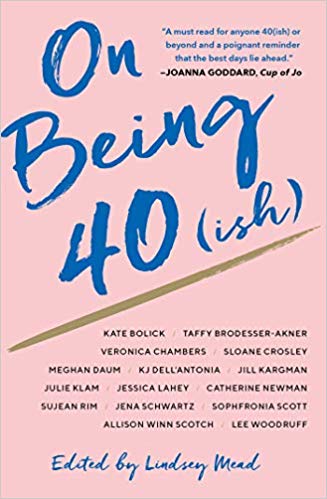
On Being 40(ish) ed. by Lindsey Mead

These collected essays about the milestone 4-0 remind readers to laugh, cry and hope.

In On Being 40(ish), 15 women muse on what being 40 years old–give or take–means in their lives. This anthology, edited by freelance writer Lindsey Mead, offers diverse viewpoints and concerns but as a whole aims to inspire. As Mead writes in her introduction, “These are not reflections on the dying of the light, but rather a full-throated celebration of what it means to be an adult woman at this moment in history.”

The contents are varied, including celebrations, uncertainties and elegies. Some writers mourn losses, some rejoice at new beginnings; some are concerned with the existential, some more lightheartedly concerned with changing appearances. Lee Woodruff writes about her mother’s 40th birthday, her own and what she hopes to pass down to her own daughters. Taffy Brodesser-Akner writes about time, which “happens no matter what you’re doing with it.” The quickness with which years pass is a theme across these essays, as is the victory involved in aging: “by forty, we know who we are,” Jill Kargman writes. “When we are young, we are diluted versions of ourselves. We become balsamic reductions as we age–our very best parts distilled and clarified.”

Allison Winn Scotch writes about accepting the unexpected when a devastating injury interrupts plans for a trip to Mexico. She closes: “I worried that my injury would upend everything. It turns out that it did.” And that’s a happy ending.

On Being 40(ish) is mostly about happy endings; or the ongoingness of life–its not ending at all, not yet. This is an anthology for women of all ages and all perspectives.


This review originally ran in the March 19, 2019 issue of Shelf Awareness for Readers. To subscribe, click here, and you’ll receive two issues per week of book reviews and other bookish news.


Rating: 6 rainbow suspenders.

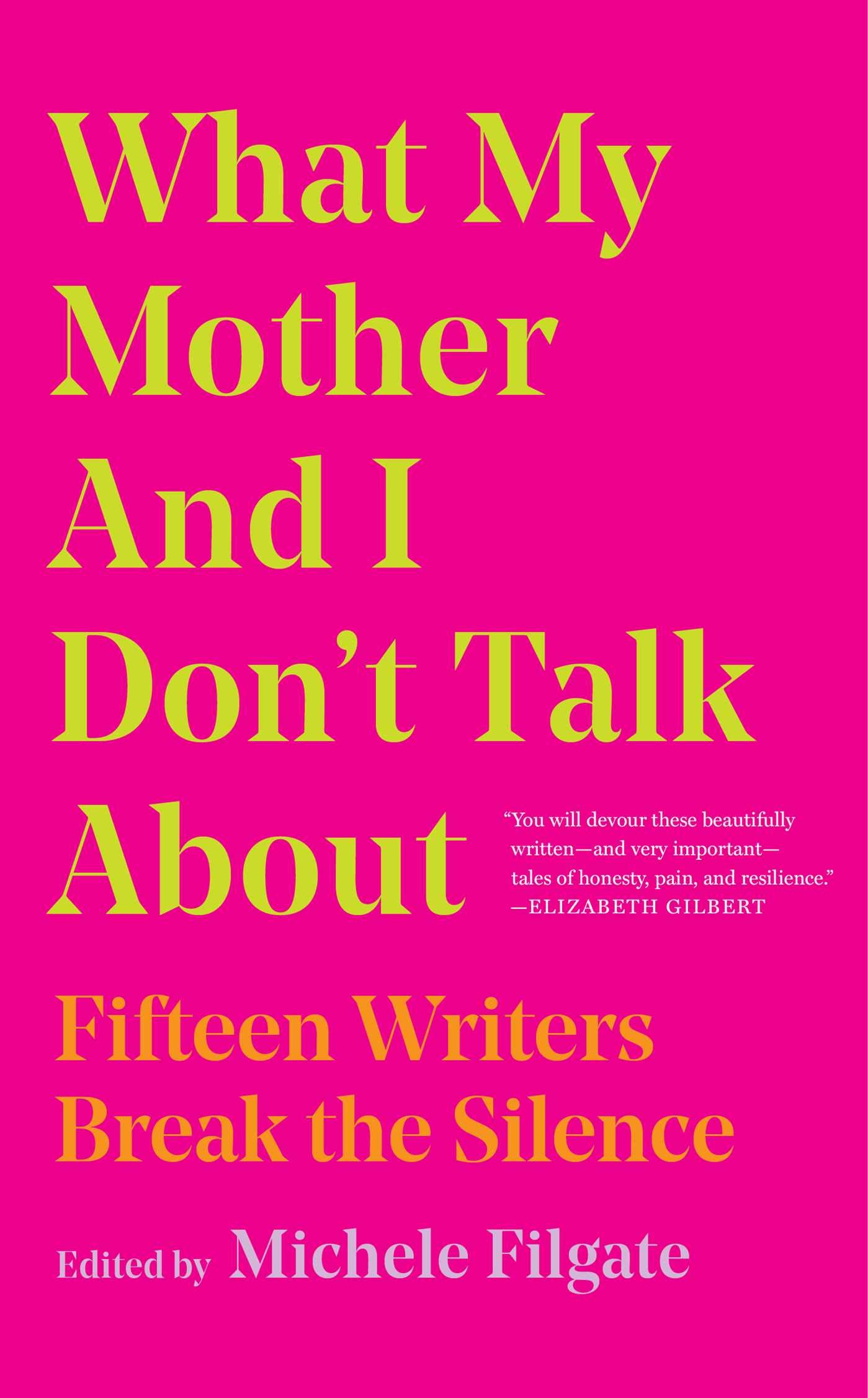
What My Mother and I Don’t Talk About: Fifteen Writers Break the Silence ed. by Michele Filgate

Diverse writers answer the title’s prompt with essays that are cutting, furious, delicate, generous and everything in between.

Literary Hub contributing editor Michele Filgate thought she was writing an essay about her stepfather’s abuse, but it turned out she was really writing about the relationship with her mother that allowed such abuse to continue. After years of work, her essay was eventually published by Longreads under the title “What My Mother and I Don’t Talk About.” Readers and writers responded strongly, and Filgate’s piece now leads this astonishing anthology.

What My Mother and I Don’t Talk About: Fifteen Writers Break the Silence follows that essay with a breathtaking range of responses. Filgate writes, “Mothers are idealized as protectors: a person who is caring and giving and who builds a person up rather than knocking them down. But very few of us can say that our mothers check all of these boxes. In many ways, a mother is set up to fail.” And while many of the essayists featured here reproach mothers who have hurt them, there are also apologies, confessions and unsolved mysteries. These essays bring many perspectives and deal in self-awareness, too.

In “Thesmophoria,” Melissa Febos considers her close relationship with her psychotherapist mother by recalling myths, chiefly that of Persephone and Demeter. “We often love the things that abduct us.” Brandon Taylor wrestles with the pain his mother has caused: “It’s strange, really, that to grasp that which has hurt you, you must trust it not to hurt you when you let it inhabit you”–or when you write about it.

Alexander Chee hides the abuse he’s suffered from his mother because of the tragedy they’ve endured together: “This is how we got each other through.” Dylan Landis seeks to understand her mother better through an old apartment building, and a possible former lover. Amid the layered traumas of race, nation and gender, Kiese Laymon asks his mother: “Can we please get better at loving each other in America?” Carmen Maria Machado finds her own conflicted feelings about parenthood linked to her mother’s harsh treatment. And André Aciman considers his deaf mother’s language, separate from words, and what it taught him.

Leslie Jamison closes the anthology with an essay exploring her mother through the eyes of an outsider to the family unit: her mother’s first husband’s unpublished novel about their marriage. It is a fitting conclusion, with that surprise perspective and a careful, loving attention to the woman who came before the mother.

These collected essays are variously rich, tender, angry, despairing and clinical. The result, greater than the sum of parts, is part paean and part denunciation, intelligent, heartfelt and wise. What My Mother and I Don’t Talk About is a shrewd, glinting collection of beauty and pain: a gift for mothers and their children.


This review originally ran in the March 19, 2019 issue of Shelf Awareness for the Book Trade. To subscribe, click here.


Rating: 8 myths.

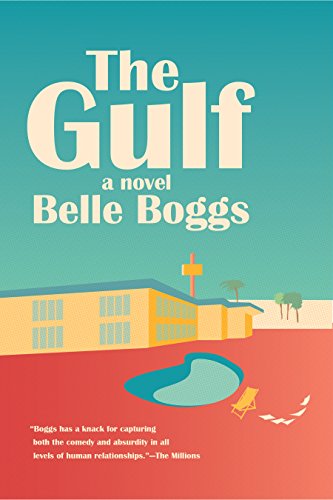
The Gulf by Belle Boggs

Where a failing writer, ill-conceived for-profit education and the American political divide come together, the result is both funny and feeling.

The Gulf by Belle Boggs (The Art of Waiting) is a hilarious, pitiable, thoughtful first novel not to be missed. A rare combination of silliness and poignancy, with momentum and compassion, this is a story for every reader, but especially for struggling writers.

Marianne is desperately underemployed and about to lose her apartment in Brooklyn, N.Y., and her poetry manuscript has been long stalled. Eric, her best friend and ex-fiancé, has an annoyingly good job teaching overseas, as he works to complete the second novel in his two-book contract. When he calls from the United Arab Emirates with a business offer, Marianne wants to say no, but she has no other option.

Eric has inherited an aging motel on Florida’s Gulf Coast, and wants to realize an old college joke of Marianne’s: a low-residency writing school for Christian writers. Marianne, a liberal atheist, soon finds herself in business with Eric, his venture capitalist brother, Mark, and their silent partner, great-aunt Frances. Ensconced in the crumbling motel with occasional hurricanes passing through, Marianne doesn’t precisely want to fleece the applicants sending in embarrassing manuscripts, but she certainly could use the money.

What follows is part hilarity: Marianne and Eric flub their Bible references and flirt with hooking back up; the earnest students have no idea how a writing workshop is supposed to work; and the down-and-out instructors (all the Genesis Inspirational Writing Ranch can attract, or afford) prove eccentrically dysfunctional in various ways. It’s part pathos: as real as Marianne’s struggle to complete her own manuscript is the troubled calling of Janine, poet, home economics teacher, mother of two, who writes about Terri Schiavo. Mark lands a big investor that specializes in for-profit education for the Christian market, but their intervention quickly upsets everyone involved. Marianne finds herself, against all odds, rooting for her students–those right-wing nuts she once laughed at. As the biggest storm of the year approaches the ramshackle Ranch, she’ll have to make a stand.

Boggs’s gifts are many. The Gulf‘s plot is inspired, even accounting for the arguable overabundance of novels about MFA program shenanigans. Perhaps the greatest genius is in her characters: Marianne, Eric, the writing instructor who can’t remember anyone’s name, the hotelier next door, Janine and the former R&B superstar now banking on an autobiographical novel to make his comeback. Each of these is perfectly developed and flawed just enough to be lovable, if hapless. The book hums along with fitting momentum, so that when the storm hits, the reader is entirely invested in this well-meaning but ill-fated crew. Redemption is a risky ambition, especially with inspirational writing, but Boggs pulls it off with The Gulf‘s denouement. This is a novel of keen comedy, insight and empathy.


This review originally ran in the March 8, 2019 issue of Shelf Awareness for the Book Trade. To subscribe, click here.


Rating: 8 applications.

The Way Home: Tales from a Life Without Technology by Mark Boyle

This memoir about living off the grid and tech-free in County Galway will inspire, connect and slow down the most impatient of readers, and that is a very good thing.

Mark Boyle was The Moneyless Man in his memoir of that title, about the first of three years he spent living without money. The Way Home: Tales from a Life Without Technology covers another first year: Boyle has now made the shift to a life without modern technology in County Galway, Ireland. What is modern technology? Obviously, definitions are complicated, but for Boyle his new way of living means hauling his own water; fishing, foraging and gardening for his food; making his own beer and wine; and traveling by bicycle, by hitchhiking and on foot. (He beats himself up about monofilament fishing line but, within the book’s timeline, has not yet found an alternative.)

Organized as the diary of a year in its four seasons, The Way Home is a thoughtful study, often wise but always questioning and seeking. With frequent references to Edward Abbey, John Muir, Aldo Leopold, Robert Macfarlane, Wendell Berry, Henry David Thoreau and others, Boyle places himself in a grand tradition of intellectual naturalists and thinkers. He also makes repeated forays (both literally and in imagination and research) to Great Blasket Island, an unusually literary place where a technology-free lifestyle only recently ended. He aims to query every decision, investigate its outcomes: while writing this book using a pencil, he stops to consider the making of that tool–its wood and graphite and paint, the extraction of these materials and the transportation of the workers who made it. Boyle, stymied by the ecological impact of such a simple technology as a pencil, is a former vegan who now eats fish and venison. He is a man willing to rethink his outlook.

Boyle has a sense of humor as well as a deep sensitivity to the needs of people as well as the planet and its ecosystems. “Rome,” he reflects, “wasn’t demolished in a day,” as he gardens with the (plastic) tools available and plans for the future. His writing style is pensive and unhurried. His lifestyle is in many ways “slow,” as in slow food and slow transportation, and he observes that writing by hand after a longtime addiction to computers has slowed his thought processes, for the better. “Just as carpenters always recommend measuring twice and cutting once, I’ve begun thinking twice and writing once.”

The result is a deeply appealing examination of nearly all aspects of modern human life, by a thorough, careful, concerned narrator. Readers already considering various forms of disconnection from modern technologies–in favor of a reconnection with local plants, animals, soil and people–will be goaded and inspired. Those less attracted to composting their own feces will nonetheless be entranced by Boyle’s unusual lifestyle, and perhaps moved a little closer to the earth.


This review originally ran in the March 5, 2019 issue of Shelf Awareness for the Book Trade. To subscribe, click here.


Rating: 7 scythe blades.

Galley Love of the Week: The Whisper Man by Alex North

Be among the first to read The Whisper Man by Alex North, a Shelf Awareness Galley Love of the Week. Presented on Mondays, GLOW selects books that have not yet been discovered by booksellers and librarians, identifying the ones that will be important hand-selling titles in a future season.

Alex North’s The Whisper Man will leave readers every bit as sleepless and spooked as is young Jake Kennedy, a boy who knows too much about the world around him, a world where a killer who’s been locked up for 20 years now has a copycat. In the alternating perspectives of precocious Jake, his novelist father, a grizzled police detective, an ambitious younger detective and others, this thriller conveys both simple terror and complex psychological twists. Ryan Doherty, executive editor at Celadon, notes, “What makes this one special is the incredible father-son relationship at its core–a relationship that transcends the genre and gives the novel a true beating heart.”

Galley Love of the Week, or GLOW, is a feature from Shelf Awareness. This edition ran here.

The Absent Hand: Reimagining Our American Landscape by Suzannah Lessard

This broad social-historical consideration of American landscapes will satisfy and challenge the most serious reader.

Suzannah Lessard (The Architect of Desire) offers a broad cultural examination of place in The Absent Hand: Reimagining Our American Landscape. The result is a work of great scope that’s grounded by an interest in landscapes, the forces that shape them and how they in turn reshape us. Lessard chases big mysteries. “Always behind my readings of landscapes are the questions, Where are we…? and What is our relationship to our surroundings now?”

Lessard begins with a close description of “the village” where she lives near Albany, N.Y. She then travels outward, to visit a nearby friend and consider suburbophobia, and therefore the history of the suburbs–as foil to the city, as military defense concept, as commercial center, as “edge city.” Having considered terms like sprawl, metropolitan area, edgeless or stealth city and more, Lessard uses “atopia” to refer to landscapes “where contemporary development, directly expressing contemporary times, was unrestrained.” She is also quite interested in “online” as a place, from its origins in Cold War strategy through the option it provides as escape from real places.

Lessard is at her best when handling the ways place and people interact (Disney’s attempt to build a history theme park just south of Washington, D.C.), and on shakier ground when handling larger issues (market forces versus governmental powers). One of her finest chapters considers a mall in King of Prussia, Pa., and the tensions and challenges facing shopping malls across the country.

As Lessard shows, Cold War policy, the Depression, the legacy of slavery, racist housing policies, nuclear armament and more have all played roles in the development of the suburb and the contemporary landscape. Mixed in with these references, Lessard often cites works of art–Van Gogh, Shakespeare, Han vases–as means to understand place.

Lessard can speak from a place of economic comfort that may grate some readers, but the value of her decades of research is undeniable. The Absent Hand is often dense, as Lessard draws upon centuries of human history to make her arguments. In this ambitious work, place is examined, deconstructed and incrementally illuminated, even as our landscape changes anew.


This review originally ran in the February 19, 2019 issue of Shelf Awareness for the Book Trade. To subscribe, click here.


Rating: 5 paintings.