The Memory Collectors by Kim Neville

A poignant exploration of relationships offers a deep dive into the strong bonds that can form between people and everyday objects.

Kim Neville’s first novel The Memory Collectors is a feat of character and plot, as well as an intriguing consideration of the enormous significance objects and places can hold for different people.

In an opening prologue, the reader meets Evelyn, a child who loves working with her father in his antiques and restorations shop; it is a glimpse of idyllic family life. The novel then flashes forward to its central timeline: Ev is a young adult in Vancouver, socially isolated, making a living by picking through recycle bins and alley discards for items to sell at the Chinatown Night Market. Her relationship with her little sister Noemi is fractured. Their family experienced a tragedy that for much of the book remains unclear.

And then there is Harriet, an older woman with a hoarding problem and a mysterious connection to Ev. They share an ability to read an object’s emotional associations by touch or proximity, but they have very different feelings about this gift, or curse. Ev hides from things she thinks of as “stained,” living in new and undecorated spaces, and moving often as her own feelings settle in. Harriet collects the things she thinks of as “bright,” filling the spaces around her with borrowed emotions until she makes her neighbors ill with “the soft, scrambled buzz of thousands of stains.” Harriet hopes to use her collection to heal, with Ev’s help. But Ev may know better just how dangerous a brooch or a balsawood glider can be.

Ev is a heart-rending protagonist, paralyzed by her oversensitivity to the accrued memories and emotions of others. Because of her ability and her shadowed past, she keeps to herself, but still yearns for connection. Harriet’s isolation is different but parallel, as “the grubby, greedy, Gollum part of her” threatens to take over. A perceptive artist named Owen has something to offer each of them; he doesn’t feel objects as they do, but he might be better with people than either one. Ev’s sister is a troubled and troubling youth with secrets of her own. These characters form the rich heart of this tender, electric novel, which is also expertly plotted, with rising tension and danger, and carefully dispensed details from Ev’s murky family history.

The Memory Collectors is a remarkable piece of magical realism, imaginative and vivid in its specificity. Seemingly trivial items offer enormous symbolic opportunities. Thoughtful and thought-provoking, this story and its vibrant characters will stay with the reader long after the pages have closed.


This review originally ran in an abbreviated form as a *starred review* in the March 19, 2021 issue of Shelf Awareness for Readers. To subscribe, click here, and you’ll receive two issues per week of book reviews and other bookish fun.


Rating: 8 jade elephants.

White Shadow by Roy Jacobsen, trans. by Don Bartlett and Don Shaw

This second in a gripping trilogy of home, place and relationships sees a woman struggle alone, and then less alone, in World War II Norway.

Roy Jacobsen’s White Shadow is the second in his Barrøy trilogy, following The Unseen, which introduced readers to the Barrøy family and the small Norwegian island that shares their name. White Shadow opens: “The fish came first. Man is merely a persistent guest.” It is not a man but a woman, however, who occupies the center of the novel. Now in her mid-30s, Ingrid Barrøy works on the mainland, splitting and salting cod and herring. She “longed to be gone, to be back on Barrøy, but no one can be alone on an island and this autumn neither man nor beast was there, Barrøy lay deserted and abandoned, it hadn’t even been visible since the end of October, but she couldn’t be here on the main island either.”

After paddling back to Barrøy, Ingrid is indeed alone amid the ruins of her family home, until the British bomb a German steamer carrying troops and prisoners of war in nearby waters. In her family’s hayloft she finds a man alive. They do not share a language, but they share much. Hiding her guest from the Nazis and their Norwegian collaborators will send Ingrid away from home again, and it will be another arduous feat to return, but it is always Barrøy for this stalwart protagonist. She stands “suddenly wonderstruck at all the things that had kept her on the island, which in truth were nothing at all.”

Translated from the Norwegian by Don Bartlett and Don Shaw, Jacobsen’s prose is as stark and unadorned as the landscape he portrays. His characters are hardworking, worn and stoic against a ruthless natural world, but there is beauty in their strength, and in the harsh simplicity of island life. “It is as it has always been, Barrøy has everything yet lacks something of real importance.” The central setting is limited in its scope, but in Ingrid’s travels she meets a variety of characters, including profiteers and refugees, eventually repopulating her home and tentatively, perhaps, building something new.

While there is a thread of romance here, White Shadow is more a profile of an individual and a culture (“people who never sat down”). It is also a sensory experience of rough conditions and cold, work ethic and strong ties. Ingrid’s community is hard-won and all the sweeter for it. No familiarity with The Unseen is necessary for this second installment, which stands alone comfortably, although the final lines do gesture at questions about the future of Barrøy.


This review originally ran in the March 18, 2021 issue of Shelf Awareness for the Book Trade. To subscribe, click here.


Rating: 7 herring.

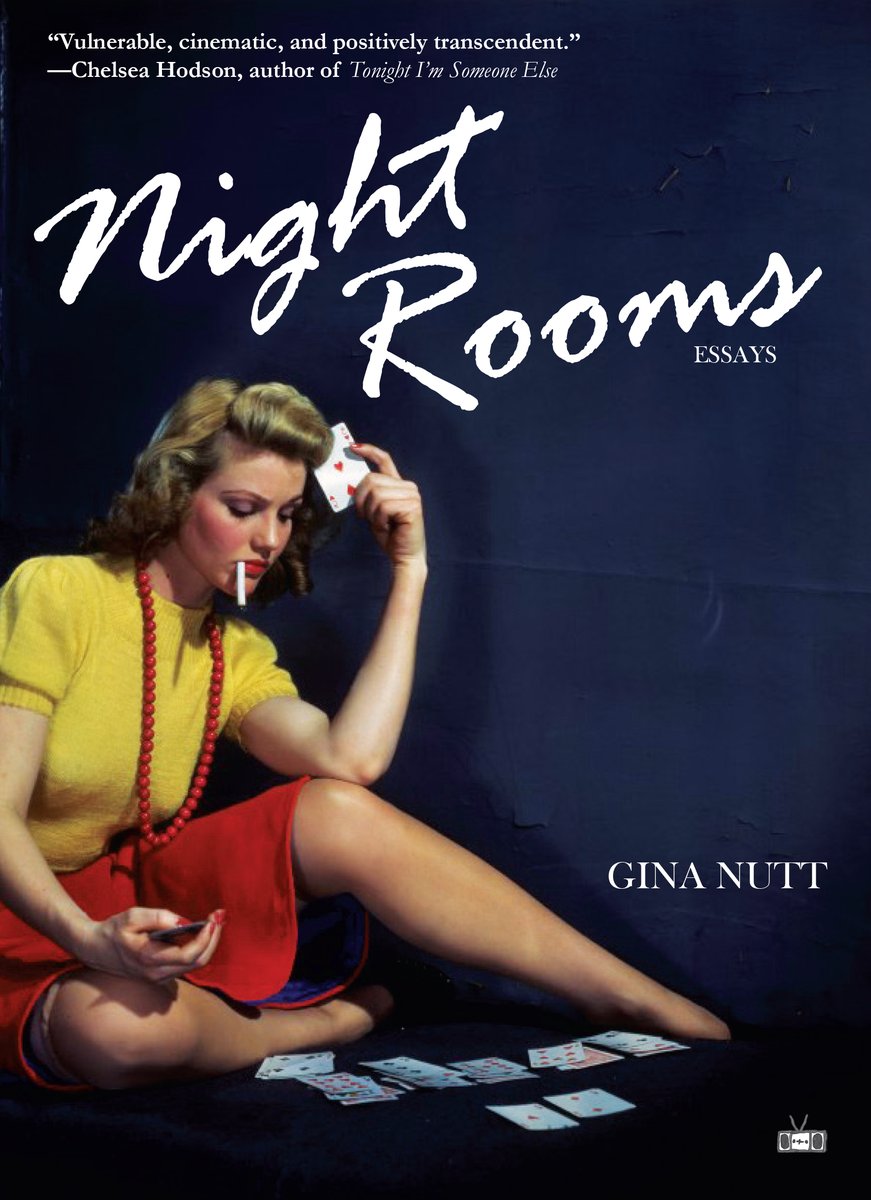
Night Rooms: Essays by Gina Nutt

These 18 essays about gender, horror, grief and much more are thought-provoking, discomfiting and lovely.

Gina Nutt’s Night Rooms is a startling collection of 18 essays ruminating on life experiences, cultural tropes and horror films, examining questions of gender, fear and grief. Fragmented in form, but firmly interconnected, these essays refuse to look away. Nutt’s prose is lyrical, provocative, intimate and intelligent.

“I used to imagine wanting someone alive would revive them, if caught right after dying.” This opening line establishes one of Nutt’s main subjects: the deaths of loved ones and how people do (or don’t) handle them. She wants to find “a balance between mourning and moving on. How does it look to not be so enamored with the image of the final girl–the one who survives–that we forget, or disavow, our dead (selves).” That final girl of horror movies is objectified: a symbol, a survivor, part of a lineage.

Nutt (Wilderness Champion) is also a poet, and has a way with a simple line in brief scenes and observations: in grief or depression, “time pulls thick, opaque as taffy.” “I am making this [darkness] a buoy.” Her voice is vulnerable and frank. Repeatedly she describes a cultural artifact rather than naming it, so it is recognizable to most readers, but made unfamiliar: “the cartoon mouse dressed in a red sorcerer’s cloak and a pointy violet hat with white stars on it.” Quoted sources are named in footnotes, but those only paraphrased are not, so that different readers will find themselves involved to different degrees–as is true with the cultural artifacts themselves.

Haunted houses, horror flicks with sharks in them, ghost stories and slasher films meet beauty pageants, ballet lessons, sexual explorations and home décor to question what it is about the macabre that fascinates. Although subtitled as “essays,” Night Rooms feels more like it contains chapters, which make reference to one another as much as within themselves. The deaths that occupy the narrator in the book’s beginning are relevant again at its close. Indeed, while these essays are fragmented, cinematic in flashes of image, sound and feeling, they are equally fragments of the whole. Together, these pieces form an experience that is sensory, intellectual and emotional, illuminating difficult and even uncomfortable truths.

Part personal reflection and part cultural study, this unusual collection will haunt readers, in the best ways.


This review originally ran in the March 15, 2021 issue of Shelf Awareness for the Book Trade. To subscribe, click here.


Rating: 7 insects framed in flight.

Who Is Maud Dixon? by Alexandra Andrews

This delightfully disquieting novel explores identity, deceit and extreme measures through two women’s shape-shifting lives.

Is it really possible to shed one’s history “as easily as a coat slips off the back of a chair” and walk away? And if so–what might one walk into? That’s the puzzle posed by the cunningly plotted Who Is Maud Dixon? by Alexandra Andrews.

Florence Darrow thinks of her past in Florida “as a gangrenous limb that needed to be severed for the greater good.” Now that she’s landed an editorial assistant position in New York City, she can begin remaking herself. However, she can’t quite make out the shape of the new version of herself she’s trying to form. “How did one go about building up someone new? She tried on moods and personalities like outfits.” Then the opportunity of a lifetime comes along: she is hired as personal assistant to Maud Dixon, pseudonym for the electrifying and mysterious author of the biggest bestseller in recent history. Florence becomes one of just two people to know Maud’s true identity. And she finally has a model to guide her own transformation into the bestselling author and confident self-made woman she knows she can be.

Florence sinks with pleasure into her new life: living in the carriage house behind Maud’s lovely old stone house in the country, enjoying Maud’s cooking and fine wines and opera. This, she thinks repeatedly, is where she belongs, this is the life she’d choose for herself. On Maud’s advice, Florence stops returning her mother’s increasingly petulant phone calls.

But who, really, is Maud Dixon? Florence knows her name, and the name of the Mississippi town she comes from. But much of her hero’s persona remains enigmatic: Maud is unpredictable, thorny, wise and (to the Florida ingenue) perfectly captivating. Florence can’t figure out the road map to get from here to there. (Maud says that “here and there are overrated.”) Florence is thrilled to travel with her to Morocco on a research trip for Maud’s long-awaited second novel, but in the new setting, what Florence doesn’t know about her boss quickly turns sinister. Florence may not be the only one with a past she’d like to shed.

Who Is Maud Dixon? is a wickedly fun study in deception, secrets, striving and longing. Andrews’s stylish, intricate debut novel showcases deft prose and expert use of tone and atmosphere: the cooing of pigeons “had the aggressively soothing tones of a nursery rhyme in a horror movie.” What means might one justify to grasp the life she really wants and (she’s tempted to believe) deserves? These memorable pages hold one possible answer.


This review originally ran in the February 26, 2021 issue of Shelf Awareness for the Book Trade. To subscribe, click here.


Rating: 8 clean white towels.

Forget Me Not by Alexandra Oliva

A woman with a strange past struggles with a near-future reality in this riveting, moving masterpiece of both character and plot.

In Forget Me Not, Alexandra Oliva (The Last One) introduces a strong, damaged protagonist in a near-future world very similar to our own. Captivating characters carry this absorbing cautionary tale.

It’s been six years since the pandemic. Everyone wears a Sheath around their forearm that links them into social networks, maps, business reviews and details about the people they pass on the street. But Linda didn’t grow up in this world: she was 12 years old when she climbed over the walls that circumscribed the only world she’d ever known. Twelve years old when she was thrust into a never-ending spotlight, because of where she’s come from and who she is.

Now, as an adult, she lives alone in an apartment in Seattle, terrified to step outside, to make eye contact, to interact. “People bemoan the inhumanity of her childhood, but the outside world is so much worse.” That childhood remains an enigma for much of the book, but Linda remembers running barefoot and relying on herself, a life that seems more natural and straightforward than the one she knows now. “She was limber and determined and not once in her life had someone ever asked her, Are you okay? She knew no other way but to keep going.”

Then an unusual woman moves in down the hall. Anvi seems open, forthright; Linda knows better than to trust anyone, but Anvi captivates her. She’s persistent. And she introduces Linda to a virtual reality gaming world where she feels, perhaps paradoxically, a bit more real. Reality itself begins to look less certain: “Could her whole existence simply be someone else’s side quest? She can feel the urgency with which she wants some version of this to be true. To wipe herself of responsibility–to claim it wasn’t fear but an algorithm that made her run….” When Linda’s past resurfaces, Anvi accompanies her back to the place where she grew up, to search for answers she may regret finding. Linda’s shaky understanding of her very existence is thrown into question.

Forget Me Not explores humans’ relationships with the natural world, with technology and with each other. It is far from polemic, however, with affecting characters, a real sense of urgency for their various plights and a thriller’s racing plot. Linda is deeply troubled and deeply sympathetic; Anvi is a dear, quirky young woman with insecurities of her own. This is a poignant novel of isolation, terror, misperceptions and, ultimately, empathy.


This review originally ran in the February 19, 2021 issue of Shelf Awareness for the Book Trade. To subscribe, click here.


Rating: 8 buzzes of the Sheath.

Maximum Shelf author interview: Shawna Kay Rodenberg

Following Friday’s review of Kin, here’s Shawna Kay Rodenberg: The Timing of Revelations.


Shawna Kay Rodenberg is originally from Seco, a tiny former coal camp near the headwaters of the Kentucky River in Letcher County, Kentucky. She is a mother, grandmother, community college English instructor and a registered nurse. Her poetry, essays and reviews have appeared in Consequence, Salon, the Village Voice, the Bennington Review, the Crab Creek Review, Kudz and Pine Mountain Sand & Gravel; she won a 2017 Rona Jaffe Writers’ Award in creative nonfiction. Rodenberg is also a vocalist; she and her husband, David, are collaborating on an album, a mix of original Americana, vintage country and traditional mountain songs. Her memoir, Kin, will be published by Bloomsbury on June 8.

Your story moves freely backward and forward in time. Why this format?

Shawna Kay Rodenberg

(photo: Joshua Lucca)

Kin was born, at least in part, from an obsession with the past, which is not to say I romanticize it, at least not anymore, but I definitely used to. My little niece, Norah, once walked into my house, looked around, and exclaimed, “I just love the way your house is full of past things!”–the best compliment I can imagine. I think maybe my love for past things has something to do with an early realization that they extend infinitely just as the future does, just in a less explored, and often darker, direction. I love uncovering family members who have died as much as I enjoy imagining future generations. No matter how much I research my family’s history, I can never get to the bottom of all the mysteries that inevitably crop up, begging to be solved, and I love a good mystery. I think I grew up, thanks to the elderly folks in my life, knowing there was a treasure trove of information to be found there, and that it was disappearing, or at least access to it was becoming more limited with each passing year. Families change, or at least the stories they tell about themselves do. Places change, too. Schoolhouses and family homes crumble and return to the earth, especially in places where money for maintenance is scarce.

As a very little girl, I began “saving” things–relics, photos, family recipes, perfume bottles, letters–and I never stopped. Ultimately, in writing Kin I came to understand that my story began long before I was born, and that telling it well would be an effort of preservation, of saving. What’s more, it seems to me that often when people write about Appalachia, they usually begin in the middle of our collective story–they analyze our responses to difficult experiences, without addressing the historical moments that led us to the places, both physical and spiritual, that we inhabit. Chimamanda Ngozi Adichie warns against this in her TED Talk, “The Single Story,” and references the Palestinian poet Mourid Barghouti, who said that “if you want to dispossess a people, the simplest way to do it is to tell their story and to start with, ‘secondly.’ Start the story with the arrows of the Native Americans, and not with the arrival of the British, and you have an entirely different story. Start the story with the failure of the African state, and not with the colonial creation of the African state, and you have an entirely different story.” So often when people write about Appalachia, they begin with opiate addiction, for example, rather than the marked efforts of pharmaceutical companies to ship more narcotics into the region than can safely be used by the population that lives there. Or they talk about poverty without discussing the decimation of the region by underregulated mining practices and extractive American theologies. Or they talk about violence without talking about our history of conflict, conscription and PTSD. More than anything, Kin was an attempt to get as close to the beginning of my story as I could.

You’ve closed the story of your life before it quite catches up with the present. How do you choose the memoir’s scope?

I wrote the first 20 years for a couple reasons. First, because it seemed like a natural stopping point, since I was 20 when I married and left the mountains. But, more than that, I admit I often wish women would write longer, lavish, indulgent memoirs like their male counterparts, like Knausgaard, for example, do. I’ve been told that women tend to write shorter books and poems. Maybe this is solely pragmatic, because we are often busy, but I also think we tend to be more self-conscious about taking up space and wasting a reader’s time. I tried to give myself permission to slow down and tell an indulgent, sprawling story. The next book, which I am already thinking toward, will likely follow the next 20 or so years.

How do you navigate the emotional challenges of writing about difficult memories?

I think I struggled most with this aspect of writing Kin, and I relied heavily on many creature comforts and rituals (British mysteries, too many dessert coffees, miles-long walks in the woods) to carry me through the five-plus years it took to plumb the first years of my story. Even harder to manage than my own discomfort was my worry about the overlapping of my story with the stories of many beloved family members I knew might not appreciate me running my mouth. Privacy is important anywhere but particularly in small communities where there is no anonymity, nowhere to hide. In Evansville, Indiana, where I now live, I can go to the grocery without seeing a single person I know, but this isn’t true in the mountains. Even now, a couple decades since I’ve lived there, when I walk into the IGA in Fleming-Neon, people recognize me and call me by name, sometimes even by nicknames, and their conversations with me often include my parents and extended family members. I have worried myself to death about the responsibility of this, of telling the truth without becoming just another extractive, exploitative entity, especially since I no longer live there. Still, my story is my story, and I believe the entire world would benefit from more women, especially underrepresented rural women, telling the truth about our lives. It feels like navigating uncharted territory, though, and requires more courage than I thought I had.

You are also a poet. What does poetry bring to memoir, or vice versa?

I think it makes sound, the rhythm of a line, the timbre of language, paramount. I read this entire manuscript aloud many times, and not just for purposes of proofreading. I come from people who spin elaborate yarns whenever they get together, and it’s such an art, the telling, the timing of revelations, the tone of voice. Poetry is also by its very nature, because of the brevity of the form, about what isn’t being said, about the words that have been cut away, which tell their own story in tandem with the one that is actually being told. I think readers are smart enough to recognize this even if it’s happening on a subconscious level, that the story they’re being told is a fragment floating over unfathomable depths, and that those depths are part of the story as well.

Your acknowledgements express hope for more memoirs from rural-born women, with their “gorgeous, complicated voices.” What would you say to women in Appalachia and beyond about telling their stories?

That it’s the most important thing we can do, and that it’s worth every moment of doubt. When you’re a writer, the world becomes your family, and it desperately needs your voice.


This interview originally ran on February 17, 2021 as a Shelf Awareness special issue. To subscribe, click here, and you’ll receive two issues per week of book reviews and other bookish fun.

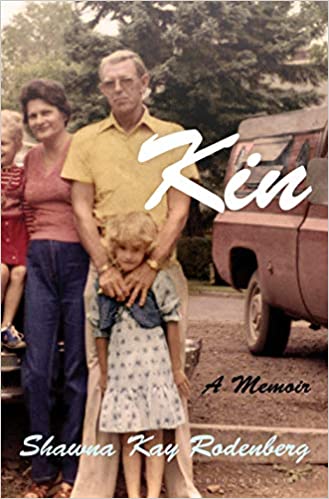
Maximum Shelf: Kin by Shawna Kay Rodenberg

Maximum Shelf is the weekly Shelf Awareness feature focusing on an upcoming title we love and believe will be a great handselling opportunity for booksellers everywhere. The features are written by our editors and reviewers and the publisher has helped support the issue.

This review was published by Shelf Awareness on February 17, 2021.


Shawna Kay Rodenberg’s harrowing memoir Kin leads the reader backward and forward in time and across an American landscape of trauma and healing. With a persistent focus on family and home, Rodenberg documents a process of learning and personal growth that is both unique and universal.

Kin opens in 2017, as the author guides CBS reporters though her native eastern Kentucky. They seek to crack open what they see as Trump country, and Rodenberg hopes to complicate that story. The backdrop is “my family’s mountain, the mountain where my grandfather mined coal, where my father was reared with great love and brutality, where I picked my grandmother’s strawberries and my grandfather’s roses… the mountain on which my family sought refuge after leaving The Body, an end-times wilderness community, cloistered in the woods of northern Minnesota, that my father joined when he was red-eyed and mad with fear, following his tour of duty in Vietnam.” The narrative then moves back in time to Rodenberg’s childhood in Grand Marais, Minn., and the purposeful deprivations of The Body.

Rodenberg’s upbringing in this strict religious sect gives her a cultural background that will make it hard for her to fit in later, and she suffers more than one form of abuse within The Body, including her father’s recurrent rages. “Instead of following in alcoholic, workaholic footsteps, he made religion his primary vice, religion that was unconventional, ecstatic, even perhaps rebellious–and virtually militaristic, which must have felt familiar.” The family eventually moves back to the secular world, to Ohio, to Kentucky and finally to the mountain of family origin. The austere, often angry influences of The Body will follow them.

This memoir recounts family stories, some from Rodenberg’s memories, some passed down. She writes of each of her parents’ childhoods, and of her aunts, uncles, cousins, grandparents and neighbors. She recounts the history of her hometown, Seco, Ky., a former coal-mining camp. Kin begins well before the traumatic story of Shawna’s birth, “bruised-ass-backward into a world of chaos.” The chronology is disjointed, jumping back and forth, shifting timelines as well as locations, which can be disorienting for the reader, but that effect feels true to the narrator’s experience: Kentucky exerts a strong pull even in Minnesota, and pains felt by generations past are ever present.

At each stage, Rodenberg struggles with the meaning and shape of love and caring, and the confusing truth that those who love us most can hurt us most. Religion will continue to play a large role in her life, complicated by her father’s movements to and away from a strict adherence to The Body’s teachings. She will continue to wrestle with sex and the aftermath of childhood sexual abuse, through her troubled first attempt at college and beyond. Kin closes with Rodenberg on the cusp of pregnancy and marriage, but hints at what is to come: “I wish I could tell [that earlier version of myself] she had come to the beginning, not the end.”

Rodenberg’s prose is graceful and effortless, vulnerable and raw, beautifully descriptive without drawing attention to itself. She emphasizes character of place, from coal country where women “kept the food covered and draped cribs with quilts to keep the dust off their babies” to “town-sized time capsules, stoppered and sealed…. Barns sank beneath fields of kudzu and the roofs of old houses bowed in the middle like the backs of the ancient, singular mares that waited outside to be fed and put away.”

While Kin is first and centrally a memoir of family, it is also about Appalachia, about histories more complicated than the opening scene’s reporters care to see. It is ultimately about forgiveness, understanding and love. Rodenberg seeks an emotional reconciliation with her parents, especially the father she has butted heads with all her life. Of that battle, “even now, writing about it fills me with worry that I might be inadvertently reengaging, and that is why talking about it, why telling was and still is the hardest thing…. This is what it means to come from people who have been broken and exploited, they see the world in sides, theirs and the other, and disloyalty is the gravest offense, the blasphemy of the mountains.” In a world of just two sides, it might be an act of rebellion to both love someone and hold them responsible.

As narrator, Rodenberg is intelligent and insightful. As character, she is resourceful, scrappy, defiant, brave and exposed. Her memoir is heart-rending and hard-won. “I didn’t know when I started writing this book that it would become my own book of Revelations, rife with warning and promise, an account of my own and other apocalypses that created me, end times that predated me but shaped me as surely as if I’d lived through them myself.” That sense of regional and filial legacy defines Kin, a work of nuance that complicates received narratives in all the best ways.


Rating: 7 skirts.

Come back Monday for my interview with Rodenberg.

How to Order the Universe by María José Ferrada, trans. by Elizabeth Bryer

Through a child’s clever but innocent point of view, this inventive debut novel considers family, hope and the harsher realities of 1980s Chile.

María José Ferrada’s How to Order the Universe offers an imaginative view of Pinochet-era Chile through a child’s eyes, as she assists her father in his work as a traveling salesman of Kramp brand hardware items. The world appears complex, fascinating and a little magical to M, the narrator. Elizabeth Bryer’s whimsical translation from the Spanish feels appropriate to M’s exceptional perspective.

Ferrada’s playful, poignant novel opens with the story of a young man named D, whose “first sales attempt happened the same day a man took a step on the moon.” He meets a beautiful woman. They marry and have a child, M, and so the narrator enters her own story. She begins accompanying D on his sales calls when she is seven. M’s school attendance is sporadic; her work as D’s assistant is important to both of them, and M’s mother is a bit detached. Father and daughter are close, in their dreamy interactions with each other and with a small community of salesmen and shopkeepers. She is treated as a small adult: “in recognition, I think, of the fact that I had grasped the complexities of human beings at such a young age, D showed me how to blow smoke rings. Small rings that crossed the city, expanding and dissolving in the distance.”

M’s narrative voice is solemn, serious. She is a little obsessed with categories and classification. D’s understanding of the world, and therefore M’s as well, involves hammer, nails, the moon and stars. “Every person tries to explain the inner workings of things with whatever is at hand. I, at seven years of age, had reached out my hand, and had grasped a Kramp catalogue.” She studies the organization of items for sale in shops: “I thought that discovering the sequence would bring me a little closer to comprehending the classifications used by the Great Carpenter to order the universe.” M is a precocious philosopher, but also a child, for whom certain realities eventually come as a surprise. When the family circumstances unexpectedly change, “There were two possibilities: A. Precariousness had always been with us, and I’d never noticed. B. Something had changed. Whichever it was, my childhood memories fractured: crack.”

How to Order the Universe is fanciful, sweet and moving, as M gradually registers and questions the changing world she inhabits, wrestling with violence, absence, the ability to make one’s own luck “with well-shined shoes and the right outfit.” Much of this evolution is filtered through her irrevocably changed relationship with D. “We had been deeply united by a catalogue of hardware store products: nails, hammers, door viewers, screws. But that catalogue no longer existed.” This is a beautifully translated, thought-provoking novel of profound themes and childlike wonder.


This review originally ran in the February 8, 2021 issue of Shelf Awareness for the Book Trade. To subscribe, click here.


Rating: 7 door viewers.

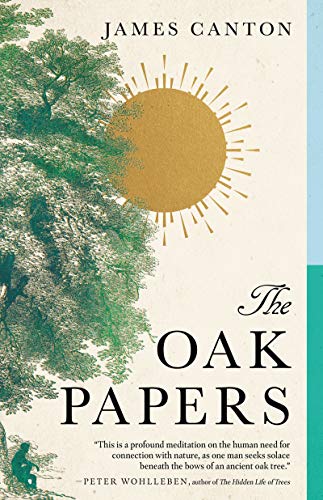
The Oak Papers by James Canton

These tender ruminations on oak trees, connections and possibilities will appeal to nature lovers, philosophers and seekers.

James Canton (Ancient Wonderings; Out of Essex) spends hours, days, months and years with one particular oak tree. Moved by its power and continually fascinated by its individuality, Canton undertook a study of the connection between oaks and people. After consulting history, mythology, spirituality, science, a number of individual woodmen and -women, and more time spent in the company of oaks, he offers The Oak Papers, part personal reflection and part research project.

The Honywood Oak, at the Marks Hall Estate near London, draws Canton in. During a period of personal turmoil, he finds himself sitting under this massive 800-year-old tree, “a mere sapling when the Magna Carta was signed.” He watches birds and insects and hares, and the changing seasons; he finds himself returning just to spend time with the Honywood Oak: “I sit on the bench and wonder a duality of desires: to care for the oak and to be cared for by the oak.” He feels a healing effect. Canton’s more purposeful studies begin in the company of the estate’s “curator of trees,” and in his readings: Dante, T.S. Eliot, Pliny, Shakespeare, Woolf, Thomas Hardy, Gary Snyder and the legends of Druids and Green Men (and Green Women and Children). He gets to know the Honywood Oak in its fine details, and then individuals he calls the Field Oak and the Stag-Headed Oak. He meets with Stephen Taylor to discuss his Oak, a collection of dozens of paintings of the same tree.

“A few more leaves have turned to paler autumn shades like the grey hairs on a father not seen for months.” The Oak Papers is meticulous and dense with detailed observations not only of oaks–the seasonal variations in their leaves, buds and acorns–but of the lives they support: heron, treecreeper, wren, goldcrest, buzzard, stiletto fly, wood butterfly, mosses, lichen, hare, gall wasp. The bulk of these papers sees Canton sitting and watching, although he also recounts visits with people who know oaks well: artists and craftspeople who work with wood, spiritual thinkers, a psychologist who specializes in nature therapies. He lovingly concludes that “there are many paths to seeking the truths about oaks,” that “we all become better beings when we step back into the woods.”

Canton meditates on oaks while sitting in oaks, seeking greater understanding or to become the oak. He does not reach a conclusion by the end of these pages, but he gets closer.


This review originally ran in the February 5, 2021 issue of Shelf Awareness for the Book Trade. To subscribe, click here.


Rating: 6 details.

A Shape in the Dark: Living and Dying with Brown Bears by Bjorn Dihle

A lifelong Alaskan inspires awe with his beautifully written, expert portrait of the grizzly bear.

Bjorn Dihle was born and raised in the outdoors of Alaska, where he has worked for years as a brown (or grizzly) bear viewing guide. A Shape in the Dark: Living and Dying with Brown Bears is his lovely, thoughtful study on the relationship between humans and this evocative, storied species.

“There have been times I almost hated bears,” he writes. “Like most feelings of hostility, mine were rooted in fear. Yet, there is no place I love more than grizzly country, and no animal has intrigued and challenged me more than the bear.” Moving around in time, Dihle tells his own stories of encounters, from the first brown bear he ever saw–a carcass in a salmon stream when the author was four or five years old–through early trailside meetings and learning how to relate to bears, into his career seeking them out, especially on Alaska’s Admiralty Island. “There’s no way to make bears safe,” Dihle acknowledges, which is surely part of their appeal. But there are measures, such as Larry Aumiller’s “concept of habituation, which he defined as taking away the fight-or-flight response in a bear, that’s key for developing trust between our two species.”

A Shape in the Dark is an appealing, accessible memoir and a history of the interplay of bears and humans in the American West. Dihle intersperses his own and his friends’ bear encounters with those of Grizzly Adams and Teddy Roosevelt, outlining the evolution of attitudes and policy toward grizzlies. In considering the writings of John Muir and Aldo Leopold, he reviews the history of wilderness thinking beyond bears, with a ruminative style and personal perspective. He writes of famous and less famous maulings, the complexities of bear hunting, the role of grizzly bears in native cultures and the impact of climate change on Alaska and its greatest predator.

Dihle’s title hints at something elemental about our fears and the way he handles them: “After a while, much like our ancestors who’d built fires to keep away the monsters, I opened my laptop and stared at the lit-up screen, hoping the words would come.” As his subtitle suggests, Dihle deals with life and death in balanced proportions, portraying the deaths of bears and humans with similar reverence.

Quiet, meditative, wise, well informed, A Shape in the Dark is memoir, history and philosophy in one: “everything leaves a trail, whether it’s imprinted in the land, in the narratives we tell, or even in our blood.” Dihle’s love for his subject is contagious and beautifully conveyed.


This review originally ran in the February 4, 2021 issue of Shelf Awareness for the Book Trade. To subscribe, click here.


Rating: 8 wigeons.