Houston Beer: A Heady History of Brewing in the Bayou City by Ronnie Crocker

If you know anything about me, you should realize that Houston + beer = I will read your book. I am so enthused about my hometown, and about beer, and about my hometown beer (that is experiencing a huge boom as we speak – more on that to come, obviously), that all you would have to do to gain my undivided attention is write a book about Houston + beer. Even poorly written and sloppy. Luckily, I can say that this book goes a step further and does it properly.

Ronnie Crocker writes for the Houston Chronicle, and blogs for same under the name Beer, TX. His book is slim – under 150 pages – but not lightweight; he did his research, and uncovers new details about the history of beer in Houston. This is a surprisingly undersung (and under-researched) topic, apparently.

Beginning with the beginnings of the city (see my earlier teaser), Crocker studies us as a drinking city, and those who have served our thirst. Like many cities in this country, we had something of a boom going before Prohibition, and struggled to make a comeback after that failed experiment. We were a Bud town for a while, and Anheuser-Busch (in its new InBev-conglomerate form) still brews in Houston today, to the tune of …so many millions of barrels that it boggles the mind, and I can’t hold numbers that big in my head. [For more on the AB-InBev merger, check out my review of the excellent Dethroning the King.] Fast forward still more, and we’re seeing a veritable, and delightful, renaissance: the long-standing Saint Arnold Brewing Company (hey, seriously, 18 years is a long time in this business in these parts) joined by a promising handful of new brewers. My favorite is Karbach, of course, but I give a head-nod to Southern Star, No Label, and Buffalo Bayou, too. And I’m still anxiously awaiting the announcement that Yard Sale is in business!

Crocker’s book is admittedly reluctant to criticize; it leans towards the positive, even approaching boosterism. And it ends strangely, with an exhortation to support (i.e. buy from) your locals. But I’m with him! I, too, am excited about Houston beer. So, perhaps Houston Beer isn’t impartial journalism – but it’s an invaluable, unique history. I found it enjoyable, just what I wanted and no, never poorly written or relying on my devotion to the subject to keep me engaged. And it was great fun to see a number of people I know pictured, as a bonus!


Rating: 5 pints.

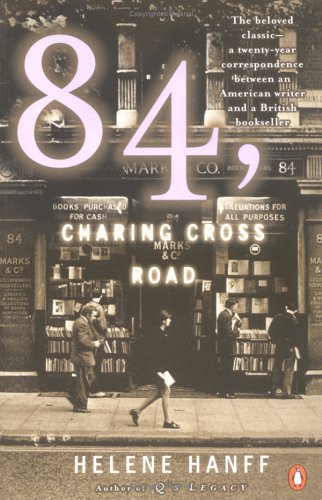
84, Charing Cross Road by Helene Hanff

This is a truly delightful collection of correspondence. At the time these letters were written, Helene Hanff was living in New York City and scraping together a living writing freelance. She opens with a letter to a bookshop at the titular address in London, naming herself a struggling writer with a taste for difficult-to-find, often out-of-print books, and asking for inexpensive copies of several. This begins a 20-year conversation with several bookshop employees and various others (family, friends) that is rich in many aspects. For one thing, Hanff is often hilarious. She pokes and needles her main correspondent, Frank Doel, “trying to puncture that proper British reserve.” She rails about inferior translations and offensive abridgements. The friendships that develop are heartfelt and helpful: during the years following World War II, when the British rationed meat, eggs, and nylons, Hanff sends her new friends care packages regularly. They reciprocate with lovely, thoughtful gifts, including (of course) books. The bookish angle is, obviously, not the least of this volume’s charms – we are all book nuts, no? My reading actually does not intersect Helene’s (I am switching to her first name, as do Frank et al, as I feel we are now friends) very often, but I appreciate the sentiment, and her reading certainly gives me a feeling for her personality. Yet another angle of interest is the cultural divide: Helene requests that her bills be “translated” into dollars as “I don’t add too well in plain American, I haven’t a prayer of ever mastering bilingual arithmetic.” Currencies form only one of the challenges, of course. Later, Frank’s wife will instruct Helene in making a Yorkshire pudding. (For which I thank her, as I know understand a little better what that is supposed to be.)

A very easy read, these 90-ish pages took me just over an hour. (Remember they’re letters, mostly short ones, so very few of those pages are filled with text.) I found this to be a book of great sentiment. It is sweet, heartfelt, funny, and made me nostalgic for what was in some ways a simpler time.


If you’re interested in a little further reading, there is a website here dedicated to research of the bookstore and its employees, the characters in the drama that is 84, Charing Cross Road.


To whatever book blogger it was that made me go out and buy this book, thank you. It was worth it.


Rating: 6 pagesofjulia.

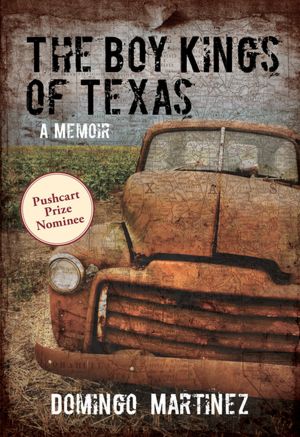
The Boy Kings of Texas by Domingo Martinez

A starkly honest memoir of growing up on the Texas-Mexican border in the 1970s and ’80s, with a wry twist.


Domingo Martinez was born in the early 1970s in Brownsville, Texas, on the Mexican border. His youth was marked by violence and family drama; he grew up wanting only to escape, but unsure how to do so. The Boy Kings of Texas introduces readers to Martinez’s embarrassing, philandering father; his terrifying, work-obsessed grandmother; his older sisters (two of whom successfully pose for a short time as rich white girls); his generally forgotten mother; and centrally, his older brother, Dan. (There’s also the passed-down story of his grandfather, who died young–a Mexican criminal celebrity recalled as the Brer Rabbit, the Billy the Kid, the Rhett Butler of his day.) Martinez describes in glaring, painful detail his drug-dealing friends and family–one time, he bought pot from two local thugs who turned out to be his uncles but who didn’t recognize him through their drug-induced haze–and his gradual, excruciating withdrawal from Texas and the life he’d always known.

The Boy Kings of Texas eventually follows Martinez to Seattle and his agonizing attempts at starting fresh there, handicapped by a misguided childhood whose dominant lesson was machismo at the expense of all else. While a final, happier ending is hinted at (“but that is another book”), this memoir is concerned with the deep distress of a bordertown kid unclear on his place in the world. Martinez’s story is heartrending and uncomfortable, but he maintains a surprising sense of humor that keeps his reader cringing and rooting for him.


This review originally ran as a *starred review* in the July 3, 2012 issue of Shelf Awareness for Readers. To subscribe, click here, and you’ll receive two issues per week of book reviews and other bookish fun!


Rating: 5 tortillas.

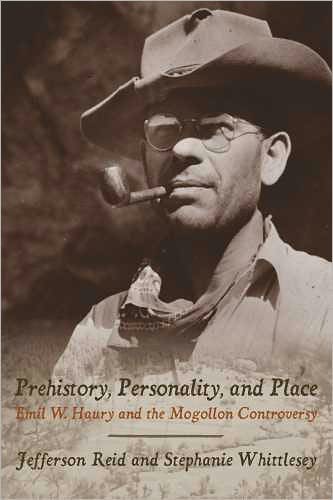
Prehistory, Personality, and Place by Jefferson Reid and Stephanie Whittlesey

I picked this book up on a recent trip to the Gila National Forest in New Mexico. We stopped by the visitor’s center for the Gila Cliff Dwellings, and it just caught my eye; what can I say? I think it was the subtitle, Emil W. Haury and the Mogollon Controversy. I casually find archaeology as intriguing as the next person does, although it’s never been a serious interest; but the idea (as expressed on the back cover) of a controversy over whether a people deserve to be recognized as unto themselves, with their own accomplishments and culture, definitely appealed to me.

First of all, I appreciated the Preface, wherein the authors explain their personal connection to Haury (a teacher and mentor), their interest in the Mongollon question, and what they intend with this book. This is not to be a biography of Haury, but his story coincides heavily with the one they will be telling. I like to hear from authors (of nonfiction, anyway) what they’re up to like this.

Reid & Whittlesey do a fine job of completing their stated task. After reading this short (~150 pages) but dense book, I feel fairly well-versed (you know, for an amateur) in the Mogollon controversy and the players involved. In a nutshell, Emil Haury was a young and gifted archeologist who, in the 1930’s, discovered artifacts in the southwest United States (Arizona and New Mexico) that did not fit into the contemporary understanding of the two cultures then known to have inhabited those parts: Anasazi and Hohokam. He postulated that he had discovered evidence of a distinct culture which he named after the mountains where he was working: Mogollon. The archeological community was immediately up in arms over a few key issues, namely, whether the Mogollon were indeed a distinct and different group, and whether they were as ancient as Haury believed. There was also some question of their eventual fate: were they assimilated into the Anasazi culture, or did they continue to exist as a morphed but still individual culture, past 1000 AD?

Haury would spend the rest of his life and career working to validate the existence, antiquity, and distinctiveness of the Mogollon, while also investigating other cultures (there is tangential reference to the apparently significant-in-its-own-right Hohokam controversy), establishing field schools, and teaching. He seems to have been a remarkable man. By the mid-1960’s, the controversy was all but entirely resolved, more or less in favor of Haury’s initial theories. There were other important players as well, of course, and we meet many of them on both sides of the controversy; but Reid & Whittlesey make an excellent argument for the strength of Haury’s personality and his academic authority playing a key role in the decades-long discussion. Which brings me back to the title of the book. This book is about the Mogollon controversy, yes, but it is also about the relationship between personality, place, and the study of archeology (or prehistory, or anthropology, or – I venture to extend the concept – the study of most social disciplines). Reid & Whittlesey demonstrate how Haury’s personality was a key player, and also how the places that formed and influenced him – his birthplace in the wide-open Kansas plains to the striking vistas of the southwest – played their own roles in the drama.

I found their arguments about personality and place convincing and appealing. The archeology, and the questions (and relatively few answers) about prehistoric peoples, were mildly interesting to me; but I was definitely more engrossed by the drama of academic minds in debate. That was the more accessible human-interest story, if you follow. I continue to have questions about that debate, in particular its partisan nature. it seemed to me that there were really two “schools” of thought, and they follow the lines of literal schools of study so remarkably that I felt sure this was not a coincidence. In other words, it struck me not as a difference of intellectual interpretations of data, but of two groups of people pitted against each other. The archeologists who had helped establish our understanding of the Anasazi were invested in keeping that culture supreme in prehistory; they resisted the idea that there may have been other players in the same (or earlier) time, like they were rooting for their own dog in the fight. It’s a shame to think that these men (they were mostly men) were inserting personal feelings and alliances into the study of science. But that’s humanity for you, I suppose. For the record, this understanding, of the personal rather than scientific nature of the controversy, is mine, and not the authors’.

I thought this was a well-executed and informative book, and I recommend it, but be aware: it’s a little dense and academic for the general audience. I understand that it was intended for the general public, and I do think it works (I had no prior expertise, certainly) but it took a little extra effort, so bear that in mind.

I’m glad I picked up a total unknown, and I enjoyed it.


For another general-audience book on antiquity & archeology, you might be interested in my review of Tutankhamen: The Search for an Egyptian King by Joyce Tyldesley.


Rating: 5 academic papers.

Houston: It’s Worth It

I came across a book the other day that I found charming. The whole concept of “Houston: It’s Worth It” began as a discussion amongst friends and then become a website, here, that gained in popularity; then there was an exhibition of photography; and eventually, this book. It is mostly photographs, interspersed with brief quotations in extra-large text – perfect for coffee table browsing – communicating that tagline theme. Houston: it really is worth it.

The concept is to say that this city has a lot going for it despite what they call “the twenty afflictions” (they list, for example, the heat, the humidity, the hurricanes, the flying cockroaches, the mosquitos, the traffic, the construction, the sprawl…). You can get a pretty good idea of what they’re trying to do with the website, the book, the whole HIWI franchise, at their about page. As alluded to in my review of The Great Psychedelic Armadillo Picnic, I am rather a Houstonlover myself; and this is just my brand of cheerleading: a little self-deprecating (hey, it IS humid here), a little tongue-in-cheek, but at heart, appreciative of the awesome facets to my hometown.

The photographs are outstanding, and all citizen-contributed. They show nature, architecture, landmarks, food, drink, weather, and people. I think they show a great deal of diversity – of people (ethnic, religious, cultural) as well as lifestyle and cuisine – and diversity is always at the top of my list of what’s great about Houston.

In short, this is a great little coffee table book that shows why Houston is SO worth it in pictorial as well as text form; it’s attractive, well put together, and not too serious for its own good. I’m glad it happened across my desk.


Rating: 6 taco stands.

Touch by Alexi Zentner (audio)

I didn’t know what this was about when I started it. I know I got this recommendation from somewhere – possibly another book blog – but the source is lost to me now. (Thank you, whoever you are.) So I went in absolutely cold, which is sometimes a really fun way to do things.

It turned out to be a great book, and a great audio version. Our narrator, Stephen, begins the story reminiscing about his childhood in Sawgamet, a fictional British Columbia town, growing up with his mother, father, and sister, and quickly leading into the tragic accident that claims half their family. Then we go back even further, to visit his paternal grandfather, Jeannot, who founded the town. It gradually becomes clear that Stephen has returned to Sawgamet after several decades’ absence, bringing along his own wife and children, to sit at his mother’s deathbed. I’m not sure if we ever learned who his intended audience is in this reminiscence, whether he’s working on a memoir or leaving a story behind for anyone in particular, but he does directly address the reader from time to time. He muses quietly, lovingly, contemplatively, on the experiences of three generations of his family scraping their livings from the bitterly cold winters and dark woods surrounding the town.

Jeannot founded Sawgamet with a gold rush, finding first one and then a second large chunk of gold, with panners and miners following on his heels; but his gold-luck ran out and he quickly turned to logging, which industry outlasted the gold by many years. The young Jeannot takes a wife and their child will become Stephen’s father, Pierre, but Pierre is but a babe when the first tragedies hit their family. No spoilers here, but my, it is a brutal place, where people are sometimes snowbound for months on end, and the woods offer not only gold, and lumber, but also a supernatural element of danger, fear, insecurity. By the time Stephen is born, gold is a distant memory and the town is employed by logging, which has its own obvious expiration date.

The story, switching between the lives of Jeannot, Pierre, and Stephen, is beautifully told, and the narrator of this audiobook, Norman Dietz, performs wonderfully. There is a wondering quality – appropriate, since much is recalled through the eyes of a very young Stephen – that makes the lyrical language feel lovely and dreamlike. The setting was quite exotic and fantastic for me, a Texas native with limited experience with snow; the cold that is described here is literally beyond my imagination. Make no mistake, there are scary, disturbing, dark moments. But there is also love, romantic as well as a loyal familial love. There is death, but also redemption and reunion. I didn’t know what I was getting myself into, but I’m so glad I did. I highly recommend this book. It is evocative, beautiful, loving, quietly disturbing and engrossing; and I recommend this audio version, as well.


Rating: 8 trees felled.

The Great Psychedelic Armadillo Picnic by Kinky Friedman (audio)

This is an odd book, that somewhat defies definition. If you don’t know Kinky Friedman, I should definitely start there. He’s a country music singer/songwriter, mystery author, politician (he ran for Governor of Texas a few years ago, didn’t win), Jewish cowboy, and general personality. Last I heard, my mother was a fan of his. He has a reputation for being politically incorrect. This was my introduction to his work. The Great Psychedelic Armadillo Picnic is a whimsical musing on Austin, Texas, Friedman’s adopted hometown. It is part travel guide, part history lesson, and large part tongue-in-cheek, self-aggrandizing, stereotyped Texas-style humor.

My reaction was mixed. I should share that we down here in Texas have something of a Houston-Austin… not rivalry, necessarily… maybe it is a rivalry. The cities are quite different and trade blows, each claiming superiority. I live in Houston; it’s my hometown; and while I think Austin has many charms, I have a somewhat typical Houstonian response to Austin’s shameless self-promotion: I get a little defensive. Austin’s pretty cool, but Houston has its advantages, too – in fact I prefer my hometown to the so-hip Central Texas college town – and I get quickly tired of the typical Austinian eye-rolling and patronization, so. I have a dog in this fight, is what I’m saying. Full disclosure.

So, when Kinky brags on Austin, I have to suppress an knee-jerk impulse to say “but!” – which is a good thing to suppress, because there is some funny stuff in this book, and some history lessons that I truly appreciated, not being as familiar with my iconic state’s history as I should be. Snippets of history and Texas trivia I can appreciate. There is a fair amount of Kinky’s own personal musings on the state of our culture today, which are a mixed bag, in my opinion, varying in value. I think maybe he thinks of this book as more strictly travel guidebook than I found it. I double-checked and yes, my edition is unabridged, so. There are travel-guide-like sections on restaurants, famous residents (and their grave sites), and places of interest. Perhaps it was just the audio format; who listens to travel guides on audio?? (No one, I’m fairly sure.) But this is not strictly a travel guide. It’s a glimpse into Kinky’s personality and oddities – and let me tell you, eccentricity is part of the Kinky brand, and a part he’s playing up. So, will you like this book? Answer: as much as you like Kinky Friedman himself. Me, I’m on the fence. I think Austin does all right without his “everything is bigger here,” chauvinistic (he thinks it’s funny), bombastic help.


Rating: 3 bars on 6th St.

Walking It Off by Doug Peacock

My path to this book feels so very obvious: I have become a big fan of Edward Abbey, and of The Monkey Wrench Gang, and it seems a very natural step to pick up Walking It Off. Peacock was one of Abbey’s closest friends, viewed him as a father figure of sorts, and this memoir focuses in part on their relationship, which was made pricklier by publication of The Monkey Wrench Gang: Peacock was the model for the hero-character George Hayduke, making Peacock a cult figure unto himself. Therefore nothing could be more natural, as I read up on Abbey and his ilk, than to read Peacock. I wonder how many people come to Walking It Off on other paths? There are other paths, of course. First of all, I must give Peacock credit for being a gifted writer himself; it’s not just that he has a powerful story to tell. Nor is Abbey the only object of consideration here; another subject is Peacock’s experience as a Green Beret in Vietnam (which he shares with Hayduke, of course) and the PTSD he suffers ever after. And finally, it is a lovely piece of nature writing, and a contemplation of death – not for the first time am I reminded of Hemingway, who like Abbey spent much time and ink meditating on the meaning of death, preparation for a “good” death, and considering suicide.

The subtitle of this book is “A Veteran’s Chronicle of War and Wilderness,” and that it is. Abbey is a thread that Peacock picks up and puts down, but more constantly, we follow him through wilderness walks and his process of trying to live with what he experienced in Vietnam. I would not have thought that there would be such a connection between war and wilderness, but it makes sense now that I’ve read this book.

After my war, home was the Rocky Mountains. I wasn’t looking for grizzlies but found them anyway. What was invaluable was the way the bears dominated the psychic landscape. After Vietnam, nothing less would anchor the attention. The grizzly instilled enforced humility; you were living with a creature of great beauty married to mystery who could chew your ass off anytime it chose.

Over the course of this memoir, Peacock walks and camps in various wild spaces; we jump around in time, revisiting a mountain-climbing trip in Nepal that nearly killed him. We revisit Abbey, too; early on, Peacock describes Abbey’s death in a fair amount of detail, and the burial, and the conflict of not wanting to let go of a dearly beloved friend who was more ready for his own death than Peacock was ready to lose him. Later, he remembers Abbey, reads some of his journal passages for the first time, and finally, many years after its publication, he struggles to read Hayduke Lives!, the sequel to The Monkey Wrench Gang. But it turns out that Abbey plays a smaller role than I had perhaps expected, and that is more than okay, because this book has so much to offer. I’m doing my own considering of wilderness, its value to us urbanized humanfolk, and the appropriate treatment of our natural spaces, and Peacock gave me still more to think about. From Aldo Leopold’s A Sand County Almanac:

All conservation of wildness is self-defeating, for to cherish we must see and fondle, and when enough have seen and fondled, there is no wilderness left to cherish.

Which is a very fair point about limiting our use. From Peacock:

You don’t visit the Grizzly Hilton for the salve of gentle nature, a relief from your real life at the office. Here, you live within the land with all its creatures; you engage with it. You have no choice in this realm but to enter the ancient flow of life. This is not the sort of place to compose a wilderness journal of self-reflection.

The Grizzly Hilton is Peacock’s name for a tiny haven of perfect grizzly habitat that he likes to visit; his first book was the result of many years studying the bears, called Grizzly Years and recommended by Phil Connors. Virtually all the action in this book takes place in wilderness areas, on wilderness walks, most of them solo; it’s only inside Peacock’s head, in his contemplation, that we see war, Abbey, other options. We see his first marriage end, and we see him struggle to be the best father he can be. Peacock is a difficult character, a difficult man. How much of this we attribute to the PTSD is I suppose a cause for debate; I would imagine a lot, but perhaps it’s a moot point.

The aging warrior was weary of his own predictable behaviors and emotional tightness fueled by senseless rage. I detested this legacy of anger and, aware that its deeper roots lay in war, knew it wouldn’t be easy to shake. I wanted to stalk this elusive center, using my primitive tools of self-examination – walking, solitude, wildness – to reach back in and touch the source of my wound. Of course I was a poor candidate for a meditative life. My life was a catalogue of psychotic twitches and addictions: official government-sanctioned post-traumatic stress disorder, a combat disability, borderline attention deficit disorder, marginal Tourette’s syndrome, occasional depression, a borderline schizoid paranoiac, a history of alcohol abuse. Guys like that don’t become Zen masters.

But it’s funny, because in a way he does offer Zen. Peacock’s musings on wilderness are thoughtful, beautifully composed, and rooted in history, considerate of ancient cultures and of differences. This is an intelligent book, a lovely consideration of war and its ugliness and also nature and its beauty – and, as a necessary corollary, the ugliness again of humans’ and industry’s effects on nature. Walking It Off is Peacock’s continuing quest for redemption and peace. It is much better than I expected, and I recommend it.


Rating: 9 grizzly bears.

The Lacuna by Barbara Kingsolver (audio)

Another long review – sorry – but one of the best books I’ve read this year, so consider sticking it out with me. Or, go to the very bottom for my two-sentence review. 🙂 Many thanks.


Reviewing The Lacuna daunts me. How to capture the enormous world that is this book in a brief (readable) blog post? I have only read three other of her books (liked The Bean Trees and Animal Dreams; not so much The Poisonwood Bible; all pre-blog, unfortunately) but from what I know, this is by far her best. (Her own website calls it her “most accomplished novel”). It is a Big Thing.

I shall take this one step at a time. Plot summary. A young boy named Harrison William Shepherd is born in 1916 to an American father, a bean-counter for the government in Washington, D.C., and a Mexican mother, Salomé. He spends his childhood mostly in Mexico, with a brief interlude at a military school in the US, and ends up working in his teens for Diego Rivera and Frida Kahlo, first as Diego’s plaster mixer, then as a cook and secretary and Frida’s companion. When Lev Trotsky arrives as a political exile from Soviet Russia, he acts as secretary and cook to him, too, following Trotsky when he splits from the Riveras; he is at Trotsky’s side when he is assassinated. Shepherd (who goes by various names depending on who’s talking) never considers himself exactly an ideological follower of the communist cause, but his sympathies are naturally aligned with those of his famous employers, for whom he has great respect.

Following the assassination, he begins a new life in Asheville, North Carolina, becoming a famous author of novels set in ancient Mexico; but the trauma of Lev Trotsky’s bloody demise, Shepherd’s sexual orientation, and his extremely shy and self-effacing demeanor keep him isolated from an American world that feels foreign. He closely follows international politics through the second World War, the United States’ sudden reversal of regard for Stalin, and the Dies Committee (which contacted Trotsky when Shepherd was with him) becoming the House Unamerican Activities Committee – which eventually begins to investigate Shepherd himself. This turn of events shocks our protagonist, who sees himself as an insignificant and apolitical player, but whose new Jewish-New-Yorker lawyer is alarmed at the skeletons he hides in his closet: to the point, an association with the late Trotsky and the still-active Kahlo and Rivera. The Asheville era in Shepherd’s life yields new and likeable characters in the lawyer, Artie Gold, and Shepherd’s secretary-companion, Appalachian native Violet Brown. (I think Kingsolver had fun with these *colorful* names, ha.) The FBI’s investigation of Shepherd threatens to tear down the precariously balanced, agorophobic life that he has so carefully constructed in Asheville; and here I’ll stop. I liked the ending, despite its considerable sadness.

Violet Brown is an important part of the story in terms of format. The story is told almost entirely in Shepherd’s own voice. As presented, he wrote the first chapter of his memoir and then quit; this chapter opens the book, and then we get Mrs. Brown as “archivist” explaining the reversion to Shepherd’s journals starting at age 14. The rest of the book is pulled from these (fictional) journals, with interjections from our archivist here and there, as well as a number of newspaper and magazine articles (Kingsolver notes which are real articles at the beginning of the book for your reference; my impression without checking each one is that most are real) and assorted samples of Shepherd’s correspondence. It is a very interesting format, raising all kinds of questions about voice and the progression of voice. I wondered, upon that first shift from an already-published 30-year-old author’s writing to a 14-year-old’s journal, whether Kingsolver didn’t trust her audience to start off that way? But I ended up feeling that this shifting voice felt very real; I enjoyed it. Violet’s role in Shepherd’s life was ambiguous quite far into the story, which kept me wondering, in a good way.

Another aspect of format I must mention is the audio version I listened to – narrated by Kingsolver herself, and to great effect. I loved her work here; every character had a voice, an accent, a lilt, a manner of speaking, and these were important in a story peopled by Mexicans with various backgrounds, a cross-bordered Mexican-American confused about where he might belong, an Appalachian-hills woman who worked hard for her education, and a New York Jew. Shepherd’s speech cadence as performed by his creator was remarkable and memorable; it increased my enjoyment of this story. The only drawback to the audio format is that I am always driving, or washing dishes, or in the gym, etc., when I’m listening, and therefore failed to mark down for you any number of remarkable lines I would have liked to share.

I was completely drawn into Shepherd and his world. I found Frida Kahlo compelling, which I think is faithful to her real life. The Mexico Kingsolver paints is so real, so filled with sensory stimulation, and in some ways familiar – the foods I eat, the places I’ve visited – which I think always gets a positive reader reaction. And the linguistic nuance of a boy (and man) who speaks both his languages with an accent, who brings Spanish structures into English, was so authentic, I just ate it up. (Like Hemingway’s For Whom the Bell Tolls, one of my most favorite books ever.) And then the politics – the evocation of such a complex, rapidly changing, schizophrenic period in our history, through the Bolshevik Revolution, the Roaring Twenties, the Great Depression, Hoovervilles, WWII, Roosevelt’s death, HUAC… it was so very dense. I was reminded of Stephen King’s 11/22/63 (which is the more recent work), another novel set in real historical events that successfully evoked a vivid time and place; but The Lacuna built a bigger world, was more literary and flowery, and in my opinion was better (sorry, Stephen).

Part of this book’s fascination for me lay in its explanation of the hatred and fear of communism, Communism, and its various permutations and misunderstandings during an era before my birth. Kingsolver’s characters helped me work through some of my questions about this time and this perplexing, unreasonable fear; Shepherd shares my confusion, and the lawyer Artie Gold does a fair job of helping him think it through (as does Violet Brown, for that matter). Coming near on the heels of A Difficult Woman which I loved so much, and which raised so many questions for me, The Lacuna‘s further exploration of the anticommunist era and my reading of it was very timely.

I’m sorry I’ve gone on so long; it’s only out of my enthusiasm for this dense and complex story that brought me so many emotions and questions. In a few words, The Lacuna is beautifully constructed and beautifully written, a story about artists and the power of art, about Frida Kahlo and Lev Trotsky and American anticommunism. I highly recommend it.


Rating: a rare 10 Mexican murals.

A Sand County Almanac: With Essays on Conservation by Aldo Leopold

First, let me say a word about this edition. I requested A Sand County Almanac from my local public library, and took what they gave me. It was only by luck (or, more to the point, the wise purchasing decisions of said library) that I got this lovely anniversary edition, with introduction by Charles W. Schwartz and photographs by Michael Sewell. The introduction explains that Schwartz & Sewell spent time on Leopold’s ranch, the place where Leopold wrote, and that he wrote about; all the photographs were taken either on the ranch or in the surrounding environs (where Leopold wandered as well). If you can get a hold of this edition, by all means DO: the photos are to die for, and really add something to the text itself, and I found Schwartz’s introduction to be helpful in placing, and appreciating, Leopold’s work. I’m not completely clear on what’s included in every edition of the title ‘A Sand County Almanac‘, so please ‘scuse my ignorance, but this edition did include two essays following the twelve-month formatted almanac: “Marshland Elegy” and “The Land Ethic.” I’m not sure they’re included in every edition.

I was drawn to this book by its place in the genre of literary nature writings that I am recently enamored of; starting with Fire Season of course, which then led me through Edward Abbey and miscellaneous others. It was also recommended on the Gila National Forest’s recommended reading page (scroll to bottom), which I’ve been referencing in preparation for a trip there this summer.

Aldo Leopold was an pioneer in the conservation and restoration movement, early in the definition and creation of ecology or environmentalism. His Almanac belongs in line with the works of Muir, Thoreau, Rachel Carson, and Edward Abbey. This is a beautiful book. Leopold is among the best of his genre: he writes lyrically, passionately, bringing to life and recognition the smallest and most seemingly insignificant pieces of his world. There is humor, celebration, and thoughtful consideration and development of a philosophy for the burgeoning movement; Leopold is one of its fathers, without question (see Schwartz’s discussion in the introduction of how far his influence extends today). This book is filled with calls to action, as well as quiet, reverent praise and celebration of the minutest members of the natural world.

Leopold writes from his ranch in the “sand counties” of Wisconsin, where he dedicated himself on weekends to restoring the land and its inhabitants to their previous state of nature, before agriculture, cattle ranching, and industry encroached. Schwartz’s introduction emphasizes that Leopold’s great work on conservation and restoration is now perhaps best applicable to restoration, as “almost all the wilderness that can be saved has been saved. For the duration of our time on the planet – for whatever piece of eternity we have left here – restoration will be the great task” (Schwartz). Leopold was quite successful on the 120 acres under his care. “On the road to extinction, traffic travels both ways,” writes Schwartz, noting the repopulation of sandhill cranes in the state of Wisconsin since Leopold’s day.

The loving and thoughtful process Leopold undertook on this ranch is contemplated in this book, first in twelve month-chapters, January – December, in which he describes what he sees and discusses the significance of the passing seasons, the migrations of the sandhill cranes, the felling of “the good oak.” Thus the reader is let inside the process, not only of Leopold’s growing and maturing love for his world, but of the development of ecological philosophy. As Schwartz points out, the philosophy has continued to develop beyond Leopold’s understanding: for example, he overplanted pines on his land at the expense of other trees; he was an avid hunter, which habit would at least come under discussion today. But his legacy is palpable. Following the twelve-month almanac, in two essays, he further develops eco-philosophies, for example, the concept of the pyramid of life, in which he takes our well-known concept of food chains and ties these innumerable chains together into an infinitely complex pyramid.

I found much to appreciate in this book. Leopold is thoughtful, writes beautifully, poignantly, evocatively, makes me want to see and touch and smell the world he describes. Sewell’s accompanying photographs complete the experience; the only thing better would be to be there, myself. It is an important work; despite being more than 50 years old now, the philosophies Leopold develops are, heart-breakingly, more relevant than ever.

I’ll leave you with one of my favorite lines:

Books on nature seldom mention wind; they are written behind stoves.

Leopold has gotten out into the draft to bring back to us the sensation of movement. Read him!


Rating: 9 lovely drifting leaves.