Flight Behavior by Barbara Kingsolver (audio)

flightAnother beautiful, thought-provoking book from Kingsolver; and another outstanding narration by the author herself. Like The Lacuna, which I called one of the best books I read in 2012, this will be a standout. I fear this will be one of those longer reviews, as I have so much to say…

We open with a young mother of two in a less-than-thrilling marriage, named Dellarobia Turnbow, hiking up a mountain to meet a man for adulterous purposes. On her way there, she’s distracted by an amazing sight. The hills appear to be aflame, but there is no sound and no heat. She is amazed, and disturbed, and stands up her would-be lover and goes back home; it’s something like a religious experience, although she’s not particularly religious. She does, however, attend church – one of many compromises for the sake of her mother-in-law, who terrifies her.

Dellarobia lives on her in-laws’ sheep farm in Tennessee and rarely gets to leave the property. Her husband is kind but dull. She is frustrated. The strange thing happening up on the mountain, however, will expand her world: it has implications for climate change, and is variously interpreted as an event of an environmental as well as a religious nature.

The cool orange flame on the mountaintop is a mass migration of Monarch butterflies, pushed out of their normal overwintering site in Mexico by a mudslide that killed a village, caused in turn by clearcutting and climate change. Dellarobia doesn’t have the context to begin to comprehend such happenings, so she has to learn slowly; aiding her in this process is the amazing Dr. Ovid Byron, an entomologist who has written the book (many of them) on Monarchs who shows up to park his camper on the Turnbow farm and study their special mountain. Ovid is a striking figure – physically, as a black man, he is of such a minority in the rural mountains of Tennessee as to be exotic to Dellarobia; audibly, his accent (similar to Jamaican) is mellifluous and musical; and intellectually, he boggles Dellarobia’s mind and pushes her to new ways of thinking. This is a young woman who would have gone to college if she hadn’t gotten pregnant, and her thwarted ambitions are sparked by Ovid’s presence.

Meanwhile, the local religious community becomes convinced that Dellarobia prophesied the Monarchs’ arrival, that she had a vision; she is tentatively treated as a hero or religious figure, which doesn’t sit well with her feared mother-in-law, Hester. The media – local, and then national – blows things out of proportion, highlights the sensational, and alternately threatens to turn her into a sex symbol or accuses her of suicidal tendencies. Her marriage – which we learned in the opening scene was not strong or happy – is predictably strained by all the activity and attention. And perhaps most poignantly, her small son Preston is told by Ovid that he is a scientist, and begins a new way of thinking, himself.

As a family story or the story of one woman, alone, this would be an extraordinary masterpiece. Dellarobia is a remarkable woman, and I think she is probably representative of many young women who have greater abilities than they end up exploring, trapped (in Dellarobia’s case) in rural and familial circumstances that limit her. Just as in The Lacuna, one of Flight Behavior‘s greatest strengths is Dellarobia’s realness: her quirks, her frustrations, her fantansies, her day-to-day life and thoughts. We get to experience this story inside her head, and the inside of Dellarobia’s head, all by itself, would be a glorious gift for Kingsolver to bestow upon us. The other characters too, all of them, are fully realized, more real than the people I know in the real world; they’re complex, and even the initially unlikeable ones (I’m looking at you, Hester) are multi-faceted and deserving of our sympathy in the end.

But! That’s not all! There’s more to this story than Dellarobia and her family of wonderfully real, odd people. The Monarch butterflies, climate change, the complexities of farming in a changing world, the environmental movement, 350.org, and academia are all explored and examined in a wonderfully nuanced way. Idealistic young – and old – environmentalists show up on the scene as well, and there’s a lovely scene in which one of them quizzes Dellarobia on her commitment to leave a smaller carbon footprint. As it turns out, being rural and poor puts her in a pretty good place footprint-wise already, a fact which humbles (not to say embarrasses) her interlocutor.

Dellarobia turns out to be the perfect vehicle for teaching us all the science of Monarchs, of migration, of weather patterns and geography, of climate change, and of relationships among people and cultures. She’s ignorant, but not unintelligent, and once she learns how to open her mind, she is an inquisitive student; and Ovid Byron is a wonderful teacher, and let me add, his dreamy accent, so well performed in this audio edition, is to die for. [I do recommend listening rather than reading, upon which more in a moment.] However, this is never a polemic, and Dellarobia is far, far more than a vehicle; you remember I was terribly bothered by that issue in Sophie’s World, and a little bothered by it in Ishmael, but there is no trace of it here. As I wrote above, Dellarobia is very, very real. Instead, this is a moving, complex story, starring sympathetic, believable characters, that also handles some large, important questions: like, what are we doing with our world?

I have a quick note to make on the ending, mostly for my father. Pops has noted that where Derrick Jensen is brutally honest about our future, Bill McKibben tends to draw intelligent conclusions and then inexplicably end on what feels like an unrealistically optimistic note. Well, in the same vein, Kingsolver may end things a trifle more hopefully than is realistic – it feels good, you understand, but it’s a McKibben ending rather than a Jensen one, if you follow. And then she thanks McKibben in her Author’s Note, so that’s fitting.

The Author’s Note also includes a brief discussion of what in this story is true to life (and how she found it out), and what is fiction. This is a well-researched book, and I appreciate her delineating the boundary between fact and fiction, as I always do.

The audio narration by Kingsolver herself could not be improved upon. Dellarobia has an Appalachian twang and darling figures of speech. Her BFF Dovey is even cuter and mouthier; she collects jokey church billboard sayings, some of which Dellarobia is sure she makes up (“Moses was a basket case”). Dellarobia’s in-laws have their own audible personalities; her husband Cub is nothing in life if not sloooow in all respects including speech. And Ovid Byron! Oh, the accent. Swoon. Kingsolver does all these beautifully. If you have to read this book rather than listen to the author read it, then fine, but I pity you. Get the audiobook!! Do it!


Rating: without question a perfect 10 newborn lambs.

This book is so wonderful – particularly in Kingsolver’s masterful narration – that I wonder if I should go back and try some of her earlier work again. I remember being decidedly nonplussed by The Poisonwood Bible, and I know I’ve read The Bean Trees but have no impression of it (which is not a good sign); I can’t decide if I’ve read The Prodigal Summer or Animal Dreams or not (also not a good sign). But The Lacuna and this one are both so grand, I feel I should delve more deeply. Also, while I’m pondering past readings, I wonder why I keep getting Kingsolver crossed with Margaret Atwood in my mind? I wanted to attribute The Robber Bride (which I enjoyed) to Kingsolver. Maybe it’s that I’ve found them both a little hit-or-miss; I was less impressed with The Year of the Flood and ambivalent about Oryx and Crake and The Blind Assassin; have no impression from Surfacing; but loved The Penelopiad, and found The Edible Woman mindblowing.

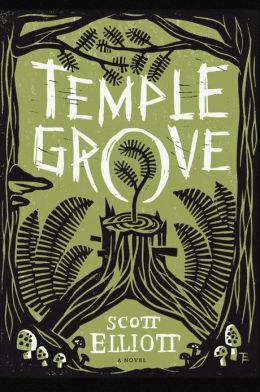
Temple Grove by Scott Elliot

A subtle, brooding novel of environmentalism and human complexities set in the Pacific Northwest.

templegrove

In Temple Grove, Scott Elliot (Coiled in the Heart) considers the Olympic Peninsula and its human and nonhuman inhabitants with nuance. A young Native American woman, ambivalent toward her two-month-old son, hikes along a lovely river. Eighteen years later, that son, Paul, hikes back into the woods to engage in what will be called eco-terrorism: spiking trees to discourage their being logged. Simultaneously, a man named Bill returns from a lengthy exile in Alaska, grateful to find work logging in the woods of his homeland. Parallel to these two men–who, like magnets, attract and repel one another–Paul’s mother, Trace, ruminates on her disconnection from her husband and her son.

Paul roams the Olympic forests with his mentor, an aging environmental activist, not entirely aware of why his connection to this place is so strong. Upon his homecoming, Bill remembers (and is disturbed by) past mistakes. The only flaw in this profound and sensitive novel is a potentially upsetting and controversial resolution to one of the plot’s surprises.

Human concerns are embedded within the rhythms of nature, and the traditions of Trace’s Makah tribe resonate within her and her son as in Elliot’s writing. Contemplative, secretive, a novel of the earth, its people and filial relationships, Temple Grove presents a surprisingly broad cast of ordinary men and women representing all walks of life, all sharing the fact of inner conflict.


This review originally ran in the July 9, 2013 issue of Shelf Awareness for Readers. To subscribe, click here, and you’ll receive two issues per week of book reviews and other bookish fun!


Rating: 7 ambivalences.

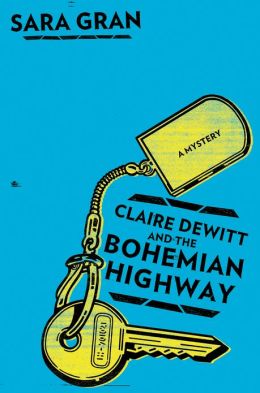
Claire DeWitt and the Bohemian Highway by Sara Gran

A singularly weird and drug-fueled private eye, not for the faint-hearted.

gran

Sara Gran’s Claire DeWitt and the Bohemian Highway gives us a refreshingly bizarre twist on the classic private investigator. Readers of Claire DeWitt and the City of the Dead will recognize Claire’s copious and indiscriminate drug use (she never fails to check a medicine cabinet and pocket the contents; she seeks dealers like she seeks clues) and her generally hard-bitten lifestyle. Similarly unconventional is her somewhat metaphysical style of detection, guided in part by a controversial dead French detective who speaks to Claire through his book.

When Claire’s ex-boyfriend Paul is murdered, and several of his valuable guitars go missing, his wife, Lydia, hires Claire to look into things. A simultaneous case involves a diminishing herd of miniature horses up in Marin County: Claire suspects they may be committing suicide. The action shifts from contemporary San Francisco, where Claire hunts Paul’s guitars and his killer, to the Brooklyn of Claire’s adolescence, where she and two friends once investigated a missing girl. One of those friends will later go missing herself; and the whispers of the missing Tracy, the dead Paul and the possibly suicidal miniature horses haunt Claire as she tries to keep it together and solve a murder through the haze of various uppers and downers.

Strange, distinctive characters are one of Gran’s greatest strengths, coupled with a strong sense of place and a gritty atmosphere of depravity and mysticism. Dark, classic PI adventures with an unprecedented zaniness mixed in make Claire DeWitt a rare reading experience.


This review originally ran in the June 25, 2013 issue of Shelf Awareness for Readers. To subscribe, click here, and you’ll receive two issues per week of book reviews and other bookish fun!


Rating: 8 bumps.

A River Runs Through It, and other stories by Norman Maclean

riverNorman Maclean is a poet and a genius. Annie Proulx’s foreword, and Macleans’ own acknowledgements, had me spellbound from the first moments; even before I began the first of three stories, I had to put the book down and meditate on what I’d read. Consider the final lines of the acknowledgements:

This, then, in summary, is a collection of Western stories with trees in them for children, experts, scholars, wives of scholars, and scholars who are poets. I hope there are others also who don’t mind trees.

This is Maclean’s first book, published when he was already an old man. It includes three pieces I have a little trouble categorizing. Short stories? Well, they’re not particularly short, not consistently: the first one is over 100 pages and therefore more properly a novella; the second is 20 pages; the third, 90. They are also nonfiction, which makes calling them short stories or novellas also problematic. Take that as you will. They are very fine, whatever they are.

I am going to write this review much like I did yesterday’s, heavy on the quotations because this writer is such a Writer.

“A River Runs Through It,” the title story and the one best critically received, begins:

In our family, there was no clear line between religion and fly fishing. We lived at the junction of great trout rivers in western Montana, and our father was a Presbyterian minister and a fly fisherman who tied his own flies and taught others. He told us about Christ’s disciples being fishermen, and we were left to assume, as my brother and I did, that all first-class fishermen on the Sea of Galilee were fly fishermen and that John, the favorite, was a dry-fly fisherman.

We meet a young Norman and his brother Paul, briefly as boys to establish their personalities and their relationship with fishing (every bit as reverent as those opening lines suggest), and then we delve into their lives in their early thirties. They fish together. Paul is a gifted fly fisherman. They have a noncommunicative (stereotypically male) relationship, but they worship together at the river, hone their craft, share special moments; their world is intruded upon by the unpleasantness of Norman’s brother-in-law, who is (gasp) a bait fisherman. Paul also likes to fight, and he comes to a young and violent end. All these years later, the Maclean who writes this story might be seen as exorcising a youthful trauma; lucky for us it is as thoughtful, wise, delicate, and beautiful as it is.

…I could never be talked into believing that all a fish knows is hunger and fear. I have tried to feel nothing but hunger and fear and don’t see how a fish could ever grow to six inches if that were all he ever felt. In fact, I go so far sometimes as to imagine that a fish thinks pretty thoughts.

Again I see Derrick Jensen here: fish are people, too.

What a beautiful world it was once. At least a river of it was. And it was almost mine and my family’s, and just a few others’ who wouldn’t steal beer. You could leave beer to cool in the river, and it would be so cold when you got back it wouldn’t foam much. It would be a beer made in the next town if the town were ten thousand or over. So it was either Kessler Beer made in Helena or Highlander Beer made in Missoula that was left to cool in the Blackfoot River. What a wonderful world it was once when all the beer was not made in Milwaukee, Minneapolis, or St. Louis.

If you don’t see Hemingway’s legacy there, I don’t know what I can say to help you. Maclean was born just three years after Papa, but Hemingway had been dead over a decade when this, Maclean’s first book, was published, so at least in literary terms they are a generation apart. No one can write prayerfully about fishing and the beauty of a trout stream without channeling that man.

I sat there and forgot and forgot, until what remained was the river that went by and I who watched. On the river the heat mirages danced with each other and then they danced through each other and then they joined hands and danced around each other. Eventually the watcher joined the river, and there was only one of us. I believe it was the river.

Again, talk about prayerful – a word he uses several times, actually, and appropriately. I won’t quote the famous final line of this story for you. Go find it out for yourself. I cannot argue with the accepted notion that “A River Runs Through It” is Maclean’s masterpiece.

Next is “Logging and Pimping and ‘Your Pal, Jim'”, a story of Maclean’s work as a young man on a logging camp, during the summers while he’s not in school becoming an academic. The man who signs his letters as in the story’s title is a mystery, and the fact that Maclean leaves him unexplained felt a little strange but, of course, very real. It’s an entertaining and rather disturbing little tale, worth the time, but nothing compared to River.

And then there is “USFS 1919: The Ranger, the Cook, and a Hole in the Sky,” almost as long as the first story and less well received critically, but in my opinion very striking. It focuses on just a few weeks during the time Maclean spent working for the Forest Service, yes, in 1919, when the world was a little different place:

We were fairly representative of early Forest Service crews as I came to know them – maybe not even that good, because the war had ended less than a year before and many of the best men had not yet returned to the woods, and the earth was still pretty much in the care of the old with corrugated skin and tiny steps and young punks looking for a fight and gassed Canadians and anonymous lookouts who had to be there but can’t be remembered. Not one had ever seen the inside or the outside of a school of forestry. But, as Bill said, we were a pretty good crew and we did what we had to do and loved the woods without thinking we owned them, and each of us liked to do at least one thing especially well – liked to swing a jackhammer and feel the earth overpowered by dynamite, liked to fight, liked to heal the injuries of horses, liked to handle groceries and tools and tie knots. And nearly all of us liked to work. When you think about it, that’s a lot to say about a bunch of men.

The first line introduces our narrator:

I was young and I thought I was tough and I knew it was beautiful and I was a little bit crazy but hadn’t noticed it yet.

And there is wisdom about nature:

…the mountains of Idaho, poems of geology stretching beyond any boundaries and seemingly even beyond the world.

And work:

The unpacking was just as beautiful – one wet satin back after another without saddle or saddle sore, and not a spot of white wet flesh where hair and hide had rubbed off. Perhaps one has to know something about keeping packs balanced on the backs of animals to think this beautiful, or to notice it at all, but to all those who work come moments of beauty unseen by the rest of the world.

And as a historical moment in time, I found it only a hair’s breadth less impressive than River. I like to read about the Forest Service, and I can’t wait to get into Maclean’s Young Men and Fire, about the Mann Gulch forest fire of 1949, in Montana, where a bunch of young smokejumpers were killed. (My fascination with forest, and fire, holds over from Fire Season, obviously.)

I am reeling from this book. Especially having read A River Runs Through It back-to-back with The Solace of Open Spaces, and with the two set side-by-side (or, top to bottom) in Wyoming and Montana, I feel swept away. Sometimes our reading happens this way, that a set of books come together to effect more than the sum of the parts. So, like Ehrlich’s lesser-known work, I will say that Maclean’s is… wise, compassionate, lyrical, and so important and beautiful in its honoring of a dying version of our world. Highly recommended.


Rating: 9 beads of sweat.

The Solace of Open Spaces by Gretel Ehrlich

Edit: see Pops’s review here.


solaceThe observation that sticks with me most from this slim, beautiful book is: it’s interesting how poetic nature writing never grows old for me, even though in some ways Ehrlich’s work here is not particularly new. She is unique, like every one of us snowflakes – I don’t mean to call her derivative; read on – but she definitely follows in a tradition; and what I’m trying to say is, I am always ready for another literary descendant of Thoreau, Leopold and Abbey. Especially when she’s a woman and offers a little different take in that respect.

Gretel Ehrlich is decidedly special, for all that I’ve compared her to the greats that she has followed. For one thing, her writing is exquisite, like perfect drops of water with points of light shining on them. Her story is her own, too. She was a filmmaker in New York City who traveled to Wyoming in 1976 to shoot a film, and also to escape the way in which her life was falling apart: the man she loves, her business partner, had just been given only a few months to live. She hangs around sheep ranches until she becomes one of them, a sheepherder, a ranch hand, a rancher. She visits with the dying man, keeps in touch, in pain, and then he dies far away while she’s preparing to fly home to see him. So her time in Wyoming, in the wild, on the frontier, with animals and laconic men, is a time of mourning and healing, as in Mountains of Light, or somewhat as in Fire Season.

Ehrlich’s wild is not Ed Abbey’s, or Phil Connors’, or Derrick Jensen’s, or Aldo Leopold’s wild; hers is populated by humans, nonnative stock animals and plant species, and irrigation. But it is far wilder than New York City, and far wilder than most of our country then and certainly most if not all of it now. It retained a wildness, including a human wildness. I love her descriptions of the human and animal personalities she comes to know. I also love her discussion of what it is to be a cowboy (or cowgirl, of which there are also several stunning examples).

But the best part has got to be her writing. And as I’m inclined to do in such cases, I’m trying to write less myself and share more of her lovely thoughts and phrases.

Disfigurement is synonymous with the whole idea of a frontier. As soon as we lay our hands on it, the freedom we thought it represented is quickly gone.

The old conundrum. We love it; we want to save and preserve and conserve it so we can enjoy it; but every act of enjoying is a failure of preservation. If we all lived in the wild it would be gone. (Which we’re headed towards, anyway.)

True solace is finding none, which is to say, it is everywhere.

As the title indicates, Erhlich is seeking solace – in the mourning of her lost partner, but also in the need for change more generally, I think.

Because she is the granddaughter of Ralph Waldo Emerson, I imagined she possessed unusual reserves of hardiness. But she protested. “I don’t do a very good job of it,” she said modestly. “I get in these hoarding moods and get mad at myself for all the stupid things I do. Then I pick up this old kaleidoscope and give it a whirl. See, it’s impossible to keep just one thing in view. It gives way to other things and they’re all beautiful.”

Isn’t that lovely? It’s always changing, and always beautiful. (Can’t say I’m not partial to an Emerson allusion, either.)

Winter scarified me. Under each cheekbone I thought I could feel claw marks and scar tissue.

Great imagery here, about the harshness of the world out there, in a Wyoming winter.

The seasons are a Jacob’s ladder climbed by migrating elk and deer. Our ranch is one of their resting places. If I was leery about being an owner, a possessor of land, now I have to understand the ways in which the place possesses me. Mowing hayfields feels like mowing myself. I wake up mornings expecting to find my hair shorn. The pastures bend into me; the water I ushered over hard ground becomes one drink of grass. Later in the year, feeding the bales of hay we’ve put up is a regurgitative act: thrown down from a high stack on chill days they break open in front of the horses like loaves of hot bread.

Derrick Jensen would like that. Ever since I read him (and before; but especially since), I’ve been thinking about the concept of land ownership, so this struck a chord.

And finally –

Leaves are verbs that conjugate the seasons.

Could a person ask for more than this? Leaves as verbs. Gretel Ehrlich, you have won me over.


Rating: 9 cowboys.

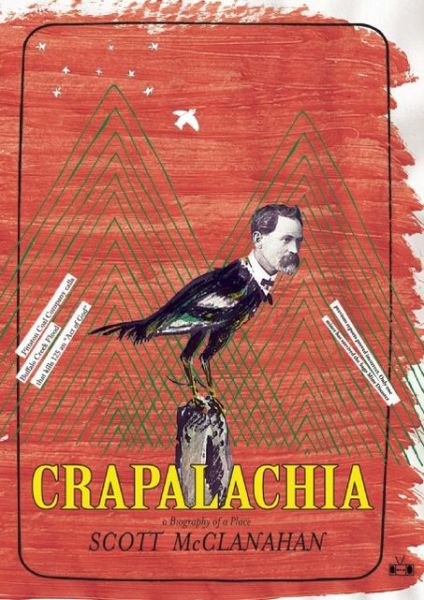
Crapalachia: A Biography of a Place by Scott McClanahan

The author of Stories and its followups, Stories II and Stories V!, shares a memoir of Appalachian boyhood filled with the requisite hardships but ultimately redemptive.

crapalachia

Scott McClanahan centers Crapalachia on two characters of his West Virginia youth who rule over much of the narrative–his Grandma Ruby, an ornery, fantastical mother of 13 (or so) children who also photographed dead people, and his uncle Nathan, who had cerebral palsy and enjoyed listening to the radio preacher and having six-packs of beer poured down his feeding tube. We also meet his schoolboy friends, like Little Bill, an eventual roommate with obsessive-compulsive disorder and a destructive crush on a girl down the street.

Crapalachia is an unusual story told in an unusual fashion, peppered with second-person references, advice to the reader on how to live, how to remember and forget. The attentive reader will also appreciate McClanahan’s “Appendix and Notes” for its revelation of where he’s twisted the truth (as he remembers it) to suit the story he wanted to tell. Like many memoirists, McClanahan is concerned with the nature of memory, its credibility and value. He sometimes gets mired in the unpleasant, cringeworthy details of life, then pans out for grand, loving, hopeful statements. This is a gritty look at life–in Appalachia, yes, but also in a universal sense. Historical detail turns what looked to be a memoir of childhood into the subtitle’s promised “biography of a place.” In the end, despite various tragedies, this poetic, rambling series of remembrances is surprisingly optimistic.


This review originally ran in the March 26, 2013 issue of Shelf Awareness for Readers. To subscribe, click here, and you’ll receive two issues per week of book reviews and other bookish fun!


Rating: 6 gallstones.

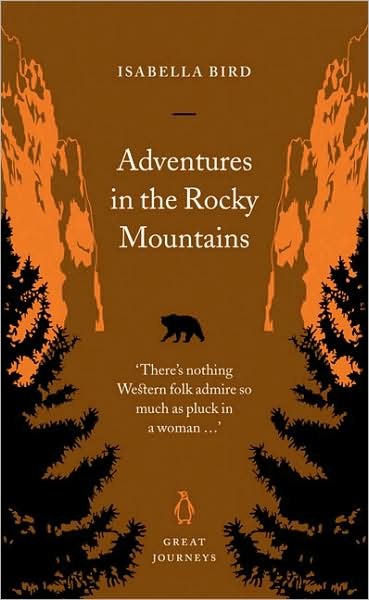
Adventures in the Rocky Mountains by Isabella Bird

adventuresI have a friend named Fil who won’t stop bringing me books. I’ve told him how badly my reading is backlogged, but still we can’t have dinner or a drink without bringing me a book, or several. There are worse problems to have. He certainly does a fine job of selecting them, there’s no question about that; I just worry about finding time for them all. This one, however, fit perfectly into a hole in my reading at the time it arrived: I was a little behind and needed a quick read to review for you all here when he brought me this small, slim paperback of 119 pages. Perhaps it’s wrong to choose one’s reading based on length! but sometimes it does go that way. So, enter Isabella Bird.

From a brief bio in the opening pages, I learned that she was born in 1831 in England, and was sickly and in poor health for the first 40 years of her life, until she traveled to Hawaii and climbed a volcano. From there, she realized that outdoor activity was much more her style than were British sickrooms, and she embarked on a different lifestyle. Adventures in the Rocky Mountains is a collection of letters (and excerpts from letters) she sent to a sister back home while tramping around the Rockies, then not yet a part of the United States but a frontier dominated by hard drinking, hard living, and men.

Bird’s writing is remarkable for its lovely, evocative descriptions of natural scenery, as well as its equally evocative, but less praising, descriptions of frontier life. She retains some disdain for the uncivilized dress and manners of some of her neighbors, but before we call her prudish we will note that she was “bagging 14ers” in a time and place when women were scarce, and were hardworking frontier wives rather than adventurers. In other words, despite preferring a well-dressed conversationalist as companion to a ragged and “coarse” one, she was a tough cookie. A quotation from one of her letters graces the front cover: “There’s nothing Western folk admire so much as pluck in a woman…”

Aside from the descriptions of natural beauty and frontier life, I found a third reason to recommend this book: the character of Mr Nugent or ‘Jim’ (never referred to without the ‘single quotation marks’!), and his dog ‘Ring’ (also always so designated). ‘Mountain Jim’ is a well-known ruffian and desperado with no end of violence and criminality in his past – he confides in Bird at one point such atrocities that she can’t bring herself to relate them. But he is also a perfect gentleman, apparently, in the right mood. He is a “countryman” of Bird’s, a wonderful conversationalist, and quite chivalrous as well as respectful of her abilities to be one of the guys. He is described as charmingly as are the Rocky Mountains. For that matter, the less prominent Evans (another very likeable but also alcoholic and problematic frontiersman) gets a similarly colorful character sketch; and the UNlikeable Lyman as well; so really I should add characterization of people generally to Bird’s list of literary talents.

I am going to stop telling you and show you, through a few choice passages, below.

on a sunset:

The sun was setting fast, and against his golden light green promontories, wooded with stately pines, stood out one beyond another in a medium of dark rich blue, while grey bleached summits, peaked, turreted, and snow-slashed, were piled above them, gleaming with amber light. Darker grew the blue gloom, the dew fell heavily, aromatic odours floated on the air, and still the lofty peaks glowed with living light, till in one second it died off from them, leaving them with the ashy paleness of a dead face. It was dark and cold under the mountain shadows, the frosty chill of the high altitude wrapped me round, the solitude was overwhelming, and I reluctantly turned my horse’s head towards Truckee, often looking back to the ashy summits in their unearthly fascination.

on ‘Jim’:

Heavily loaded as all our horses were, ‘Jim’ started over the half-mile of level grass at a hand-gallop, and then throwing his mare on her haunches, pulled up alongside of me, and with a grace of manner which soon made me forget his appearance, entered into a conversation which lasted for more than three hours, in spite of the manifold checks of fording streams, single file, abrupt ascents and descents, and other incidents of mountain travel.

on a sunrise, and the lightening of the world:

There were dark pines against a lemon sky, grey peaks reddening and etherealising, gorges of deep and infinite blue, floods of golden glory pouring through canyons of enormous depth, an atmosphere of absolute purity, an occasional foreground of cottonwood and aspen flaunting in red and gold to intensify the blue gloom of the pines, the trickle and murmur of streams fringed with icicles, the strange sough of gusts moving among the pine tops – sights and sounds not of the lower earth, but of the solitary, beast-haunted, frozen upper altitudes.

on a high mountain lake:

I thought how their clear cold waters, growing turbid in the affluent flats, would heat under the tropic sun, and eventually form part of that great ocean river which renders our far-off islands habitable by impinging on their shores.

on society, even where people are scarce:

…in truth, this blue hollow, lying solitary at the foot of Long’s Peak, is a miniature world of great interest, in which love, jealousy, hatred, envy, pride, unselfishness, greed, selfishness, and self-sacrifice can be studied hourly, and there is always the unpleasantly exciting risk of an open quarrel with the neighbouring desperado, whose “I’ll shoot you!” has more than once been heard in the cabin.

Isabella Bird’s story of travel through Colorado Territory in the 1870’s, told in letters to her sister, spans almost precisely three months in time; but it is a lifetime of beautiful, incisive, gorgeously told observations, and we are lucky to have them today.


Rating: 7 breaths of rarefied air.

As usual, thanks Fil!

In the Garden of Beasts: Love, Terror, and an American Family in Hitler’s Berlin by Erik Larson (audio)

gardenAs the title indicates, this is a creepy work of nonfiction. Erik Larson, popular author of (among other things) The Devil in the White City, here tackles the subject of one American family living in Berlin in the years leading up to World War II. William E. Dodd was an unassuming professor of history in Chicago in the early 1930’s, wishing for a little more free time to finish his life’s work, a 4-volume history of “the Old South.” He lobbied Roosevelt, through his modest political connections, for a quiet diplomat’s post to somewhere like Belgium or the Netherlands. There he hoped to settle down to finish his books and not have to do too much real diplomatic work, to which he readily confessed he was not well suited. Instead, owing to a strange combination of forces – mostly, no one else being willing to take the post – he was appointed to be the United States’ diplomat to Berlin in 1933. He traveled to Hitler’s Germany with his wife and grown son, Bill Jr., both of whom play almost no role in the story, and with his grown daughter, Martha, who stars next to the elder Dodd himself.

William E. Dodd is a conscientious man, rather to the point of annoyance. His sense of humor is wry and not well appreciated in diplomatic circles. He comes from a modest background and lives on a professor’s salary, and now a diplomat’s, which is quite moderate; in Berlin he plans to live within the bounds of that salary, which is the first time he offends protocol, but not the last. As Larson explains, diplomats are traditionally wealthy men of great style – valets, fancy chauffeured cars, fine wines, grand balls and the like – and make up what Larson quotes one diplomat as calling a “pretty good club.” Dodd will fail to fit into this club, and will, to the aggravation of all, criticize it throughout his tenure.

Martha is a sultry young woman very comfortable with her charms and her ability to wield her sexuality as a weapon against the men in her world; she enjoys men, and sex, and is in the process of ending a secret marriage even when she sets sail for Germany. When she gets there, she is charmed by the Nazis, handsome and blonde and polite and uniformed, and is not unhappy to be characterized as a “little Nazi” herself. Among the lovers we assume she took in Germany (Larson points out what we don’t know for sure, but makes a strong case) are a Gestapo leader, a French diplomat, a close assistant to Hitler, and eventually a Russian diplomatic assistant who turns out to be a Soviet spy. She is even at one point asked to be “Hitler’s woman,” and introduced to him, but nothing comes of it (not for lack of her attraction to the man of power, however). By the end of the Dodds’ years in Berlin, however, she has noted the evils of the Third Reich and flirts with becoming a spy for Stalin, herself.

Larson’s fine work here is in bringing a time and a place to life, and it raises goosebumps. Hitler’s Berlin is chilling, in large part because we, the modern readers, have the benefit of hindsight, and it is deeply disturbing to watch humanly flawed men and women walk around that time and place without realizing just how bad things are going to get. There is willful ignorance, naturally, as well as antisemitism in varying degrees: the Dodds share this prejudice with many of their contemporaries, and it helps them to excuse Hitler’s regime longer than they should… but again, this is all with the 20/20 vision we possess today. It’s difficult to imagine the tolerance shown by the United States, and Dodd, and the world, for Hitler; but this is history.

The decision to showcase Martha alongside Dodd was a fine one. They are two very different characters, both tending to minimize Germany’s faults at the start of the story but both (very differently) eventually coming to understand and fear the changes to come. When the Dodds left Berlin in 1937, the United States were yet years from a war with Germany, but Dodd had begun to prophecy some of the terrors to come.

Larson’s In the Garden of Beasts (poetically named for the literal translation of Tiergarten, a garden & neighborhood in Berlin where the Dodds lived) is to my tastes a great way to read history. The story electrifies, brings the past to life, and promises to faithfully follow the sources available. An enjoyable and worthwhile, if unnerving, read (or listen).


Rating: 7 breaches of protocol.

Inés of My Soul by Isabel Allende (audio)

inesIsabel Allende is mostly a well-respected name to me; I had only read her Daughter of Fortune before this one, and found it interesting and enjoyable, but it doesn’t seem to stand out in my memory. (It’s been years.) I picked up Inés of My Soul as I pick up at least half my audiobooks: opportunistically. Because audio is not as plentiful as hardcopy, I take what I can find, in the library or from friends & family. This one came from my mother, and I’m glad I happened upon it, because I found it fascinating and entertaining.

Inés of My Soul is the story of the founding of Chile, told first-person by Inés de Suárez, a real historical figure; or perhaps more accurately it is the life story of Inés, inextricably tied with the founding of Chile, which she (at least in the novel) considers her life’s work. This is a work of historical fiction; Inés really lived but we don’t know everything about her, so Allende necessarily fills in the gaps.

Inés was born in Extremadura, in Spain, in 1507. She married Juan de Mélaga for love (or for lust), but their marriage was troubled; their fiery sexual passion also led to fierce fights, and they failed to conceive the child Inés wanted, and Juan eventually sailed for the New World in search of gold and fortune. She follows, not out of love for her husband – that was mostly dead – but because, as a “widow of the New World,” her horizons in Extremadura were extremely limited, and she sought adventure just as Juan did. Inés travels around Peru, making her living as she did in Spain: sewing clothes and cooking her famous empanadas, which she is careful to provide to the hungry as well as her paying customers. After learning that Juan is dead, she is plagued by men who desire her, and who intend to have her by any means, with or without her consent; and she picks up a housekeeper who will become a lifelong friend & helpmate, Catalina, an Indian woman skilled in healing and with the power to see the future. Catalina foretells an important man to come into Inés’s life and recognizes him when he does: Pedro de Valdivia, a fellow native of Extremadura and a soldier from a long line of soldiers. Their relationship is full of fire and chemistry, as was her initial time with Juan de Mélaga, but will mature into a deeply loving and cooperative partnership. They will never marry, because Pedro has a wife, Marina, back in Spain, and all three are Catholic.

Pedro and Inés travel together to Chile, an area still unconquered by Europeans and especially intimidating because of an earlier failed attempt. They have a small but mostly loyal cadre of soldiers with them and intend to be the founders of a new country there. As partners they fight the Indians and establish the city of Santiago and several more small towns; they live through good times and bad. There is a fascinating subplot involving a young Indian boy who joins their settlement, which I will leave mostly untouched for the sake of spoilers. After ten years of loving cohabitation, during which Inés contributes substantially to the successful founding of Santiago, even in combat against the Indians, Pedro throws her aside. He has grown from the strong & cooperative man she loved into an aging, arrogant, cruel, unhealthy ruler, but his rejection still hurts. Inés then takes a second husband: Rodrigo de Quiroga, a captain in Pedro’s army and a good man with whom she finds another beautifully healthy and loving relationship, also raising his daughter Isabel, to whom this story is narrated.

Inés of My Soul is the diary of an elderly Inés who wants to record her fascinating and important life for the sake of posterity. She is sad that she never conceived a child, but loves her stepdaughter very much and chides her lovingly throughout this narration. She writes more than half of it herself, but by the end is dictating to Isabel, as her age catches up with her; she says she sees death coming very soon, and is not sad, as she looks forward to joining Rodrigo, her final love of 30 years, recently dead.

Again, this is a story of the conquest and founding of Chile, complete with scenes of battle, heroism, victory, glory, and gold. There is plenty of statement on the evils of colonialism: Inés praises the natives of Chile, respects their choice to fight to the death rather than be enslaved, and notes their strengths. She also laments the unnecessary cruelties of the conquerors, including her Pedro. But it is also very much a love story. Inés has three loves in her life, and I think she is lucky (and considers herself so) to have shared passions with three very different men. While not terribly explicit, there is sex, told in an appropriately heated, sensual tone, with some acknowledgment of Isabel’s presumed discomfort where her father is concerned. (Inés also offers to give Isabel advice, in case the latter’s husband proves overly eager or otherwise fails to give pleasure.)

There are obvious links to Like Water for Chocolate, in the fiery, sensual telling of lust, passion, and fine food in the voice of a strong Latina woman, and in Inés’s implicit feminism when she declares her own place in history and her substantial contributions to the new country of Chile. This is an engrossing tale of a woman’s life, and a country’s birth, intertwined. I loved both Inés – a passionate and strong woman – and the history of Chile. Having grown up in mid-south Texas, I have long had an appreciation of Spanish-speaking cultures; I am most familiar with Mexico but have always been interested in traveling further south too. Chile was on my list – it’s so far away and therefore feels exotic and remote – but now it’s an even higher priority. And reading this fictionalized history of the founding of conquered Chile makes me more interested in its history, too. I did do a little Wikipedia reading on Inés de Suárez, the historical figure, enough to know that she was indeed lover to Pedro de Valdivia and involved in the conquest.

Finally, I cannot stress enough the pleasurable experience of listening to this narrator, Blair Brown, tell this story in a musical, lyrical, emotive, accented voice; there is no other way to enjoy it. Allende renders nuanced, very real characters in a lovely tone (aside from the lovely reading Brown gives); she makes a bloody history of conquest appropriately ambiguous; and the remarkable achievement of blending love and passion with war and subjugation is riveting. I highly recommend this story, and I highly recommend Brown’s reading of it.


Rating: 9 empanadas.

The Greater Journey: Americans in Paris by David McCullough (audio)

greaterjourneyThis is my first experience with the very well-respected David McCullough. “Americans in Paris” is a huge topic; but if anyone can do it justice, we’re told, McCullough might be that one. This feels like a quite comprehensive study of Americans in Paris in the 1800’s, complete with name-dropping and historical context. (I say “feels like” because I don’t have the historical knowledge myself to confirm or question McCullough’s comprehensiveness!)

McCullough follows Americans in Paris more or less chronologically, starting with the 1830’s and following through the end of the century. His subjects range over various disciplines and the story he tells seems to ramble, from art & literature, to medicine, to culture, war, and back to art. In the 1830’s we meet those who were among the first to make the journey, including Ralph Waldo Emerson, James Fenimore Cooper, Samuel Morse, and Oliver Wendell Holmes. A number of chapters are devoted to visual artists and writers, and the artistic superiority of France and the Continent which was only beginning to be challenged by Americans. Samuel Morse not only painted his masterpiece in Paris, but began work on what would become the telegraph; Harriet Beecher Stowe sought escape from the publicity following Uncle Tom’s Cabin; the first American female medical students studied there; and Charles Sumner’s observation of black students in Paris would lead him to a new understanding of black Americans’ abilities, and help him become one of our first abolitionist Congressmen. Rather fewer chapters* are devoted to the medicals, but I enjoyed very much McCullough’s descriptions of the École de Médecine and the American students who studied there. At the time, France was the place to study medicine, and the personalities who taught it loomed large; their role in this section of the book was very entertaining to me. (Also, I thought of The Lady and Her Monsters as McCullough discussed the dissection of cadavers, and their sources.)

Moving forward a few decades, later waves of American visitors to Paris would more commonly bring their families with them to live a fuller life than that of the student or artist; and there would be many more of them. One of the strongest sections of The Greater Journey describes the Franco-Prussian War (1870-71), and the role of American ambassador Elihu Washburne. He was the only ambassador who stayed, and he saved innumerable Americans as well as Germans, helping them evacuate and generally organizing and supporting – literally, in many cases, as he fed & boarded a number of the displaced. He was well regarded for this work, above and beyond the call of duty. The Franco-Prussian War (which felt vaguely familiar to me from my recent readings of de Maupassant), is well told; and McCullough’s description the Paris Commune is evocative and powerful.

Another figure that receives personal attention is sculptor Augustus Saint-Gaudens, an Irish-American kid from a family of decidedly modest means who travels to Paris and becomes a world-renowned artist. You may know him for his bronze Robert Gould Shaw Memorial on Boston Common and his statue of William Tecumseh Sherman at a corner in New York’s Central Park. Saint-Gaudens’ life is examined from his youth through his old age and death; I found this study of an artist to be a very interesting sub-story within The Greater Journey. Likewise the life of Mary Cassatt, an American painter famous for Impressionism who was significantly shaped by Paris.

In other words, while McCullough seems almost to ramble amongst various people, disciplines, and issues, each of his individual subjects is well-treated and fascinating; and any seeming lack of structure is happily tolerated because all the stories are so enjoyable. It’s not really that the book lacks structure, only that following Parisian Americans chronologically takes us through all these twists and turns. The whole is highly readable and a good primer in French/American history in the 1800’s. For example, one consistent thread throughout is the close relationship shared by our two countries during this century, beginning with General Lafayette’s support of the American Revolution in 1776.

The Greater Journey is an interesting and enjoyable read, a good central place to learn a number of individual facts and anecdotes about Americans traveling and living in Paris in 1830-1900. I have the impression that McCullough’s research is good; I am charmed.

*I am not entirely clear on the proportions of the book devoted to each subject, because I listened to the audio and thus could not grab chunks of pages for visual comparison. It is a shortcoming of the audio format. You get only my impressions.


Rating: 7 croissants.