In the Lives of Puppets by TJ Klune

In the Lives of Puppets is TJ Klune’s third adult standalone novel, in a similar vein to The House in the Cerulean Sea and Under the Whispering Door. These are the only three of his I’ve read, although there are more, and I may still get to those.

I said about Whispering Door that Klune excels at “the juncture of sweetness, fantasy, profundity, inclusivity, wisdom and pure silliness.” Puppets continues in that style. Rather than magical orphans or a magical afterlife, here we have a decidedly sadder challenge. The story begins with a lovely forest. A man (“who wasn’t actually a man at all”) approaches an old, falling-down house in the forest. He builds a life there, a crazy network of add-on treehouses and laboratories a la Swiss Family Robinson. He has a son, Victor. Flash-forward: we meet adult Victor with his two companions, a nurse-robot named Nurse Ratchet (that’s an acronym for Nurse Registered Automaton To Care, Heal, Educate, and Drill, and yes, think One Flew Over the Cuckoo’s Nest) and a vacuum-robot named Rambo. Victor’s father Giovanni is still around, and much-beloved; they have a happy family, although Victor is the only human member of it. Like Giovanni, he is an inventor, builder, creator. He spends many of his days combing through the Scrap Yards, where the Old Ones deposit their detritus, some of which turns out to be useful to Victor’s little forest-dwelling family. It’s where he found Nurse Ratchet and Rambo, both of whom he’s patched up to become the wacky friends they are today. (Nurse Ratchet is forever hoping to murder someone or something, slowly, and document their agony. Rambo is crippled by anxiety, restlessness, and his ceaseless need to clean. He loves the old movie Top Hat.) One day, at the Scrap Yards, Victor finds a new potential friend, one who will change everything.

This book assailed me with literary allusions, some of them less obvious than the two I’ve named already. Epigraphs refer to Pinocchio; Victor’s first name and some other plot elements remind of me Frankenstein; the goofy-sidekick robots make me think of R2D2 and C3PO from Star Wars as well as The Wizard of Oz. Which is to say, Klune is not working with brand-new material here (nor does he think he is). The world of robots gets a decided Klune twist, though: sweet, silly, romantic, hopeful. There are a few big reveals I won’t name here. As I already mentioned, this world feels a bit less hopeful to me than the worlds of Whispering Door and Cerulean Sea. The romance felt a full step less believable to me, somehow, although I can’t quite say why – it’s not like the pairings-off in those first two novels made perfect sense in any real world, but this is fantasy. Something about this one just didn’t go off the same, for reasons I can’t articulate. Possibly (is this too obvious?) it is that difficult to write robots (or androids) as relatable humanish characters. Maybe it’s as simple as where we were left with this love affair.

I really enjoyed this read: I was absorbed, engaged, tickled, and concerned for the characters I’d come to love. It is a good book. I just think it’s less awesomely good than the two previous ones by this author that I’ve read. I will certainly buy the next standalone novel he publishes in this same vein.


Rating: 7 butterflies.

The Last Graduate by Naomi Novik

Book two of the Scholomance series was every bit as thrilling and engaging as book one. I love our grumpy, standoffish teddy bear of a protagonist.

El had good character development in A Deadly Education; now she’s continuing to develop as a person, both because she’s a teenager (coming of age) and because she’s made friends for the first time in her life. She’s reluctant to believe in this, because she’s endured a lifetime of trauma at the hands of almost everyone she’s ever known. Her new friends and allies do have something to gain from working with her at graduation, now that her power as a wizard is becoming more widely known, so she’s not entirely wrong to consider that this may motivate their friendship; but the reader can see better than she can that their friendship is real, too. It’s poignant to see such a sweet but enormously curmudgeonly, damaged, dear kid struggle to accept that people might actually care about her.

The privileges of class and nationality at work here, the power structures that are most invisible to those in power, and the injustice of it all, are more overtly at the center of this book. I think there are some good magical parallels to our real world here that can be instructive but also entertaining and fit neatly into the fantastical wizard-y world of Novik’s imagination, which is prodigious, by the way; this is expert-level worldbuilding. Late in the book the focus begins to move beyond the Scholomance to consider the whole world, which is clearly where book three will take us; this one ends on another final-line cliffhanger (!), so I’ll be getting there fairly quickly.

Perhaps because they were both Liz recommendations, I am reminded of the Murderbot series here, which also featured an outsider first-person narrator who is actually a loveable marshmallow on the inside but puts forward a hard, aggressively antisocial exterior. Despite being mostly rejected by their respective societies, both are driven to right the big wrongs. I do love this set-up, and I love El for being a hard-nosed, sarcastic badass.

In this installment, I actually questioned the YA label. The series does star teenagers, and deal with coming-of-age problems (therefore YA). On the other hand, it also deals with some very dark themes, heavy enough that some readers move it out of the YA category; but after some consideration, I don’t think that’s necessarily a disqualifier. It’s definitely for older kids, not least because there’s some (non-graphic) sex in this one. Maybe the line between YA and adult is blurred; certainly it depends on the reader. There’s no question that these are books for adults (hi), but I think they’re also books for young adults who are up for serious thinking on dark subjects, and some really good writing. This is a step adultward from Hunger Games, which are however very fine books in their own right. Who’s to say what kids should read, anyway? My parents didn’t seem to me to monitor my reading much, and I definitely read some stuff beyond my comprehension at a young age, and all that seems to have done is whet my fire. As ever, your mileage may vary.


Rating: 8 glaciers.

A Deadly Education by Naomi Novik

Another perfect recommendation from Liz, A Deadly Education is narrated by El, short for Galadriel, a wizard-in-training at the Scholomance. Her world looks much like ours, but you and I would qualify as ‘mundanes’ – people who don’t see or believe in magic. El is in school to learn spells and tricks and control, and as an independent wizard kid, possibly to earn an invitation to join an enclave. Wizards banded together in enclaves are much safer than indies like El, whose mother raised her in a yurt on a (mundane) commune in the Welsh countryside. But her mother Gwen is much beloved, a talented healer and source of all things good, while El’s affinity or tendency is toward large-scale destruction, as in mass murder. She is not a bad person: in fact she has spent her nearly three years in school working hard to keep her affinity in check, hiding the true extent of her powers, and making no friends with her eternally sour attitude. The tension within El between her natural affinity (murderous) and her value system (protective and good) is one of the central conflicts of this story.

Now the school itself: the Scholomance is full of terrors, like mals (short for maleficaria), monsters of all sorts; they live in the in-between spaces so that it’s dangerous to go anywhere alone, even to the bathroom, which is hard on a loner like El. Each year the massive, circular, magical space rotates and ratchets around so that the freshman dorms move down to become sophomore dorms, etc., and everyone gets closer to graduation, which is a euphemism for the seniors being dumped into a space filled with mals where they’ll have to fight their way out to real-world survival. Many of them won’t make it. Thus are your four years at the Scholomance taken up with working to form alliances to help you through graduation, unless you were lucky to come in an enclave kid from the start, with privileges and protections built in.

This accounts for several other intriguing conflicts within the novel: class and classism are up for debate within the enclave system. School in general is filled with petty jealousies and social politics, in ways recognizable to those of us who attended mundane high schools, and with the essential addition of life-or-death machinations re: mals and magic. There are plenty of larger questions about right and wrong and personal agency and what ends justify what means, but none of this is overtly or pedantically the point of the story: this is a page-turning, deliciously readable story of one awkward, socially ill-adjusted, fundamentally sweet but somehow also deadly teenager. El wants to secure her safe place in the world, but she really doesn’t want to hurt anybody. (Well, sometimes. She has a bit of a temper, and she does take a lot of abuse.) She also really wants friends, although she wouldn’t be quick to admit it.

It’s a great story, with some great secondary characters, including those cautiously interested in working with El, and the enigmatic oaf who wants to protect her. By the final chapters (which include some great action/battle sequences to boot) I was hooked and cheering. The last six words of the novel (!) contain a bombshell, and I cannot wait to start book two of this trilogy. Strongly recommend this one for awesome female lead characters, intrigue and world-building, fun magic, and poignant human drama.


Rating: 8 argonet teeth.

The World We Make by N.K. Jemisin

It’s been nearly three years since I read The City We Became, and I wish I’d spent a few minutes reviewing that one first. I still felt close to the avatars of New York’s boroughs, but New York himself (he goes by Neek, as in NYC if you pronounce the Y like ‘ee’) felt less familiar, and I’d lost track of some of the rules of Jemisin’s carefully constructed world. For slightly better results, you might want to keep book 1 a little handier than I did here, but it was still a hell of a ride.

Highlights include the personalities themselves, their relationships, and the final action scene(s). I remembered loving Manny (Manhattan), Brooklyn and Bronco (the Bronx); I feel like we get to know Padmini (Queens) better here, and I really enjoyed that. I applaud Jemisin’s work with Aislyn, the bigoted Karen-in-training avatar for Staten Island; she is unlikeable but complicated enough that the reader grudgingly sympathizes, which is a feat (and an exercise in patience and empathy that some might have excused the author for not engaging in). These avatars have had time since the last book’s action to settle in to relationships among themselves in ways that are pleasing; the characters were strong to begin with but they perform best when they play off each other (true of all characters, probably). Then there are the avatars of other cities around the world: I imagine it must have been so fun to build characters for places like London, Tokyo, Istanbul, Paris, Budapest, Kinshasa, and Amsterdam… because this novel ends up in a massive showdown. In its course, we (and our avatars) learn more about the rules of the world of living cities and their great Enemy. The threat, as threats do, grows larger and then imminent, and a major brawl ensues. This series was originally billed as a trilogy, and actually I still thought it so at book’s end; it was only in Jemisin’s acknowledgments that I learned we’re done here. I do think the ending allows room for more if she finds her energies refilled, but I understand the effects of the pandemic and Trump’s evil on her intended storytelling, and (not that she needed my permission) I can grant her this ending, too.

Three years ago, when I read The City We Became, Jemisin was new to me. Now I return to this series having since read every novel Jemisin has ever written.* With this perspective, the Great Cities duology feels both familiar and very different from her other work. This one is set in the most recognizable of her fictional worlds, closest to our own real one. The characters are modern, urban, fresh and real-world-adjacent, while the characters in her other outstanding works are realistic but recognizably otherworldly. I don’t think I have a preference, but it’s a different effect. I guess for readers more reluctant to venture into proper sci fi/fantasy, this urban version might feel friendlier.


*I have not yet read How Long ’til Black Future Month?, her short story collection, which I erroneously thought comprised works by other authors that she’d collected and edited. I would have gotten around to that eventually. But it is in fact all her own work, which means I need to get there soon.


I love the action and attitude of these living cities, and Jemisin is an important figure in my lifetime of reading. Can’t wait for more – whatever she does.


Rating: 8 sticky toffee puddings.

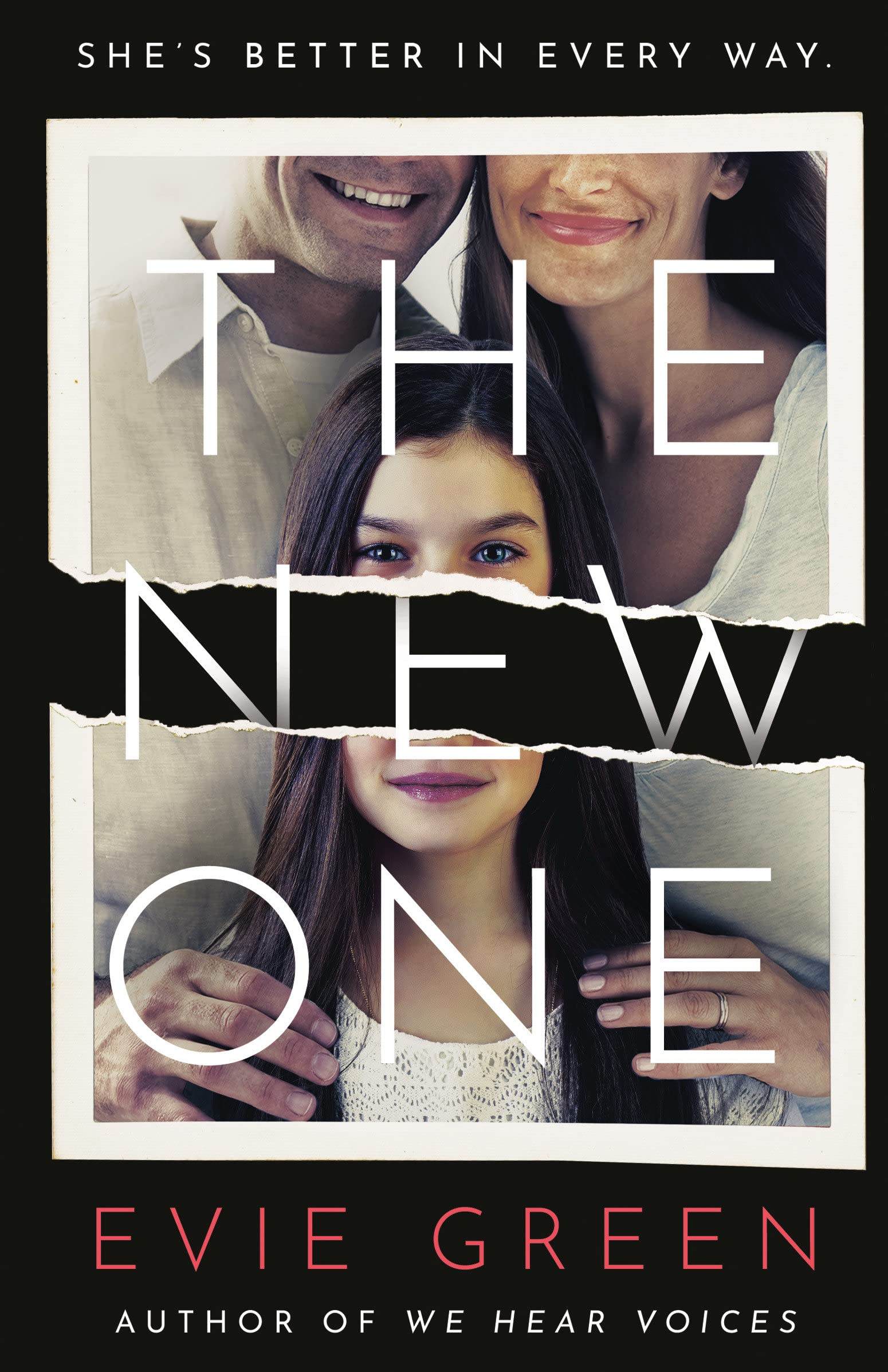
The New One by Evie Green

Artificial intelligence, family troubles, love and aspiration combine for a delightfully suspenseful novel of secrets and betrayal.

In The New One, Evie Green (We Hear Voices) takes readers on a propulsive journey through grief, loss and secrets kept by those we love. This compelling novel will have readers up all night, following the tribulations of a struggling family offered a great gift–or possibly a curse.

Scarlett, the Trelawneys’ daughter, was a perfect angel–brilliant, beautiful, sweet, gifted–until she turned 13. She then becomes a terror: lying, staying out late at night, neglecting her schoolwork. “They had become a shouty family,” Green writes. “They all yelled at one another every day, and [Tamsyn] had no idea how to stop.” In near-future Cornwall, Scarlett’s parents, Tamsyn and Ed, are barely surviving in their humble camper: Ed works nights, and Tamsyn is up early mornings, “a peasant working in fields.” They subsist on stolen cauliflowers and rarely speak to each other (without shouting). Then tragedy strikes: Scarlett is left lying in a hospital bed in a coma, and Tamsyn fears she’ll never see her daughter conscious again. Just as their insurance runs out, they receive an offer that seems a mix of magic, miracle and horror: while a company called VitaNova rebuilds their daughter, the comatose Scarlett will receive the finest medical care, and her parents will be granted a fully funded fresh start in Geneva, Switzerland. Scarlett, now named Sophie (her middle name), is part human clone and part AI. She shares Scarlett’s memories and gifts, although with the traumatic past year erased, and has been augmented with a better knowledge of French and physics–and a perfect, innocent love for her parents.

Most of the story is told from Tamsyn’s point of view, with brief ventures into the perspectives of the other members of her family. Tamsyn is unsure of her manufactured daughter: this new one is so like her darling Scarlett that she’s impossible not to love. But Tamsyn grasps what Ed seems not to: their real, true, original daughter still lies unconscious, and every bond with Sophie represents a small betrayal.

The New One‘s creepy Stepford atmosphere is not to be underestimated. Readers can see what even Tamsyn cannot: Sophie understands more than she seems to, and her best interests and Scarlett’s may not align. Ed is keeping secrets. Geneva is a bit too perfect. Green’s (aka British author Emily Barr) prose is compulsively readable, her characters disarming and capable of great mystery. The New One is deliciously disturbing, engrossing and surprising at its every turn. This not-to-be-missed novel of family dynamics and what it really means to be human and to love is both pleasurably escapist and thought-provoking.


This review originally ran in the February 23, 2023 issue of Shelf Awareness for the Book Trade. To subscribe, click here.


Rating: 8 DVDs.

The Spare Man by Mary Robinette Kowal

Well, this is the most fun thing I’ve read in a while (and that’s saying something). Liz let me know that Martha Wells (of Murderbot) gave this book 5 stars on Goodreads. So I bought it.

Tesla Crane is traveling incognito on a space cruise to Mars with her new spouse, Shal. Tesla is an uberfamous and uber-rich inventor-engineer and heiress, and she just wants to enjoy her honeymoon in privacy, but then a woman is murdered on the way back to their luxury cabins after karaoke, and ship security makes the bad mistake of arresting Shal (himself a recently retired detective), so Tesla is on the case. She is also physically limited by some extreme injuries and a touch of PTSD following a lab explosion, for which she uses the assistance of a Deep Brain Pain Suppressor (DBPS, usually turned up a bit higher than is actually safe), occasionally a cane, and most charmingly, a service Westie dog named Gimlet. With Shal locked down, Tesla is a bit hobbled but also highly motivated (not to say pissed). She navigates the ship, high society, and her investigations with cleverness and aplomb and a sometimes imperfect awareness of her privilege, as Shal gently reminds her; she will make a few friends along the way, but everyone’s a suspect, especially as the body count climbs. Tesla herself is very likeable, but Gimlet steals the show (for readers and most of the ship’s passengers and staff).

I love the elements that combine in this story. There is a strong core of sci-fi, which other reviewers assure us is accurate and well-researched (this reviewer is happy to assume this is the case and move along). There are some fun, thought-provoking cultural elements, especially around gender: in the year 2075 we don’t have much patience for gendered language, using Mx. in place of Ms. or Mr. and spouse in place of the gendered versions, and it is extremely rude and outdated to introduce anyone without noting their pronouns. (Tesla’s spouse Shal is a very masculine type and very handsome but also very engaged with textile arts, particularly embroidery.) The protagonist couple takes their cocktails and coffee very seriously, and each chapter opens with a cocktail recipe (some of which are zero-proof); bar culture and bartenders also form a significant framing element. Gimlet the service dog gets full appreciation both for her skills and training and for her dogness (she’s a dog, not a robot). It all forms a really neat combination, although let me also say the plot needed no bolstering: the mystery itself is fully-formed and legit. What’s not to love?

I was completely absorbed and stayed up late into the night finishing this one. Firmly recommend. Thanks for the tip, Liz & Martha.


Rating: 8 ounces.

Imago by Octavia Butler

Following Dawn and Adulthood Rites is Imago, the final book in this trilogy, which I am sorry to see the end of. We’ve shifted narrators again: Lilith brought us through book one, then Akin for book two, and now we meet Jodahs, another first of its kind. Like Akin, Jodahs is a child of Lilith’s family, and her own (human-born). When Jodahs reaches metamorphosis, when Oankali and constructs (Oankali/human offspring) reach sexual maturity, a surprise: instead of becoming male as was expected, Jodahs begins to become ooloi, the Oankali third gender that is neither male nor female. Ooloi have extensive abilities to heal and changes themselves and others, and it had been thought still too risky to introduce human-born ooloi at this stage of the two species’ trade. Jodahs is a mistake, and a potentially dangerous one. But it quickly becomes clear that in its uniqueness it may have some special abilities to offer as well.

Imago is told from Jodahs’ point of view, as it struggles with its own needs and the challenges of coming of age. One early solution that is offered to the problem of Jodahs’ very existence is that it be exiled to a ship away from Earth; but Jodahs is a native of Earth, and quite reasonably pushes back against this idea. It’s the first of its kind, not wanted where it is from, and threatened with being sent “back” to a place it is not from. (The parallels to slavery are unmistakable.) It has overwhelmingly strong urges, toward sexual and other connections, but its people don’t want to allow it to pursue these urges, which are natural but also unprecedented (because Jodahs is unprecedented). I am still marveling at Butler’s worldbuilding here, that I’m so absorbed and bought into the rules of her invented peoples. It’s lovely.

There is commentary on human nature: the old human contradiction, as Oankali see it, of intelligence with hierarchical behaviors. Humans among themselves struggle with racism, xenophobia, sexism and sexual assault, and homophobia. When faced with Oankali – that is, something different, non-human – humans frequently react with fear and hostility. Even when they feel drawn to an ooloi, for example (and the ooloi have this power, to make themselves irresistible), they can feel revulsion mixed in. The trilogy has much to say about xenophobia and race, colonialism, agency and freedom of choice, and also gender. I love that the ooloi have to repeat that they are not male and female, not both, but a whole other thing. They still get misgendered and mis-pronouned. Jodah is asked if it wants to be male: “Had I ever wanted to be male? I had just assumed I was male, and would have no choice in the matter.” It’s also about community-building in ways that I love. Building communities, families and societies is just as hard in Butler’s fictional world as it is in any other dystopia I’ve encountered, real or fictional (because people). This is all good commentary on human tendencies, while at the same time being very fine, escapist fiction.

For more, especially some excellent thoughts on the book’s title, check out Erika Nelson’s “Playing Human” essay at Tor.com.

I love this series and think everyone should read it.


Rating: 8 tubers.

Adulthood Rites by Octavia Butler

Book two in the Lilith’s Brood series (following Dawn) is Adulthood Rites. We get a new protagonist and first-person narrator, although Lilith is still an important figure. The worldbuilding remains thorough and engrossing, and I’m still all in for book three to come.

In this novel, we are back on Earth, which the Oankali have worked to make safe for human occupation. Humans live there in two kinds of communities: either side-by-side with the Oankali or without; the latter group are known as resisters. The Oankali have engineered it so that Humans (I capitalize as Butler does) cannot reproduce without their intervention, so the resister communities are childless (although very longlived, also through Oankali intervention; this allows the narrative to work for decades, with Humans who remember life “before” but remain childless). Their inability to reproduce defines and obsesses the Human resister communities. The hybrid communities have children, known as ‘constructs,’ blends of Human and Oankali, born to both Human and Oankali mothers. The narrator is Akin, the first male construct born to a Human mother: Lilith. This first male-construct-born-to-Human is an important and risky step. The Oankali are nervous that he will carry too much of the Human Contradiction: intelligence and hierarchical thinking.

The baby-obsessed resisters are inclined to steal construct children. They are also inclined to hate them, because they don’t look Human enough. (This feels like plenty of metaphor to start with, but it goes on.) Akin is kidnapped very young by Human resisters who both crave him (baby!) and revile him (for his Oankali characteristics). This book is primarily the story of his own conflicted relationships with the two parts of himself. And, of course, we get to see Human survivors of an apocalypse do what we more or less expect them to do. They weaponize, rape, kidnap, and kill each other. It’s sobering (although I don’t find it the least bit surprising). Akin will wind up with a unique perspective on humanity, both as the first of his kind and because of his lived experience, and in the end he may hold some power over the future of humanity.

Post-apocalyptic narratives like this have become commonplace since this series (Adulthood Rites was originally published in 1988), but even in a now-crowded field, Butler stands out. The different traits of the Oankali, and their earnest failure to understand humanity’s protests against them, offer plenty to think about. To have a child who is a mix of both types is (again) ripe metaphor, and a fascinating opportunity to think about blended identities. Lilith tells Akin,

Human beings fear difference… Oankali crave difference. Humans persecute their different ones, yet they need to give them to give themselves definition and status. Oankali seek different and collect it. They need it to keep themselves from stagnation and overspecialization. If you don’t understand this, you will. You’ll probably find both tendencies surfacing in your own behavior… When you feel a conflict, try to go the Oankali way. Embrace difference.

Which of course is commentary on xenophobia, but also on that sense of having opposing types in one person (which I think we can all empathize with, one way or another).

There is also plenty to consider about family and social structures. Construct children have five parents (at least until something happens to them): male and female Human and Oankali parents, respectively, and an ooloi, the genderless Oankali who makes fertility possible, who ‘mixes’ the baby. “All interconnected, all united–a network of family into which each child should fall.” And Lilith’s Brood is centrally concerned with ideas of agency, consent, free will, and personal choice. It’s an enormous amount of philosophy to take on, for a book billed as science fiction… or perhaps (as next week’s author interview will point out!) it’s a falsehood and a shame that we expect less from sci fi.

Killer reading. Butler’s a master.


Rating: 8 guns.

Dawn by Octavia Butler

I thought Kindred was good, but Dawn has blown me away. The former was an excellent and thought-provoking book but (at least at this distance of memory) not something I quite got lost in; this one offered a new level of world-building that took me away from my own life in a way I love. It’s still an outstanding work of craft, and offers plenty of serious issues (see the discussion questions at the back of my paperback edition), but it also captured my imagination and took me out of myself. Very special.

Lilith wakes up in a plain room devoid of color and objects, accompanied occasionally by disembodied voices, fed a bland stew or cereal in edible bowls, driven a little mad by isolation; and this happens over and over again. Eventually she passes enough tests to meet her captors, who turn out to be nonhuman alien “people” who inform her that she is not on Earth – Earth as we know it was destroyed in a nuclear war, which she remembers – but on a ship. And, long story short-ish, she is among the few human survivors who will eventually be sent to Earth to repopulate it. But there is a price: the alien people, the Oankali, want something in exchange for shepherding humans out of near-extinction.

Lilith is a special human. She’s been identified as having the right combination of qualities to lead and teach humans how to move forward. This role will come with its own frustrations and burdens. It is the Oankali’s belief that humans have “a mismatched pair of genetic characteristics,” which alone would have been advantages but together may doom humanity. These are intelligence and hierarchical thinking. Lilith’s troop of humans have these characteristics, of course. They are also traumatized by war, and the challenges of survivalism include some tendencies to violence, for one thing.

This is a story about the way humans behave, and about relationships, between humans and also across species with the Oankali. In some basic ways, it reduces to a story about people, which I appreciate. It also considers some more unusual questions, especially because the Oankali have some very novel qualities, skills and abilities, and ways of relating to each other. Sex and gender appear in new ways here, which is thought-provoking. Lilith is a Black woman, which has some implications for her place in a human society, because even post-nuclear-war we haven’t lost our societal issues and prejudices. Dawn deals with questions about agency and self-determination; love, sex and gender; and the persistence of old hangups. I was intrigued and engaged by the Issues, but I was most pleasurably lost in the story and the novel world and people.

Very much sold on this series – I’ve ordered books 2 and 3, and can’t wait.


Rating: 9 breadnuts.

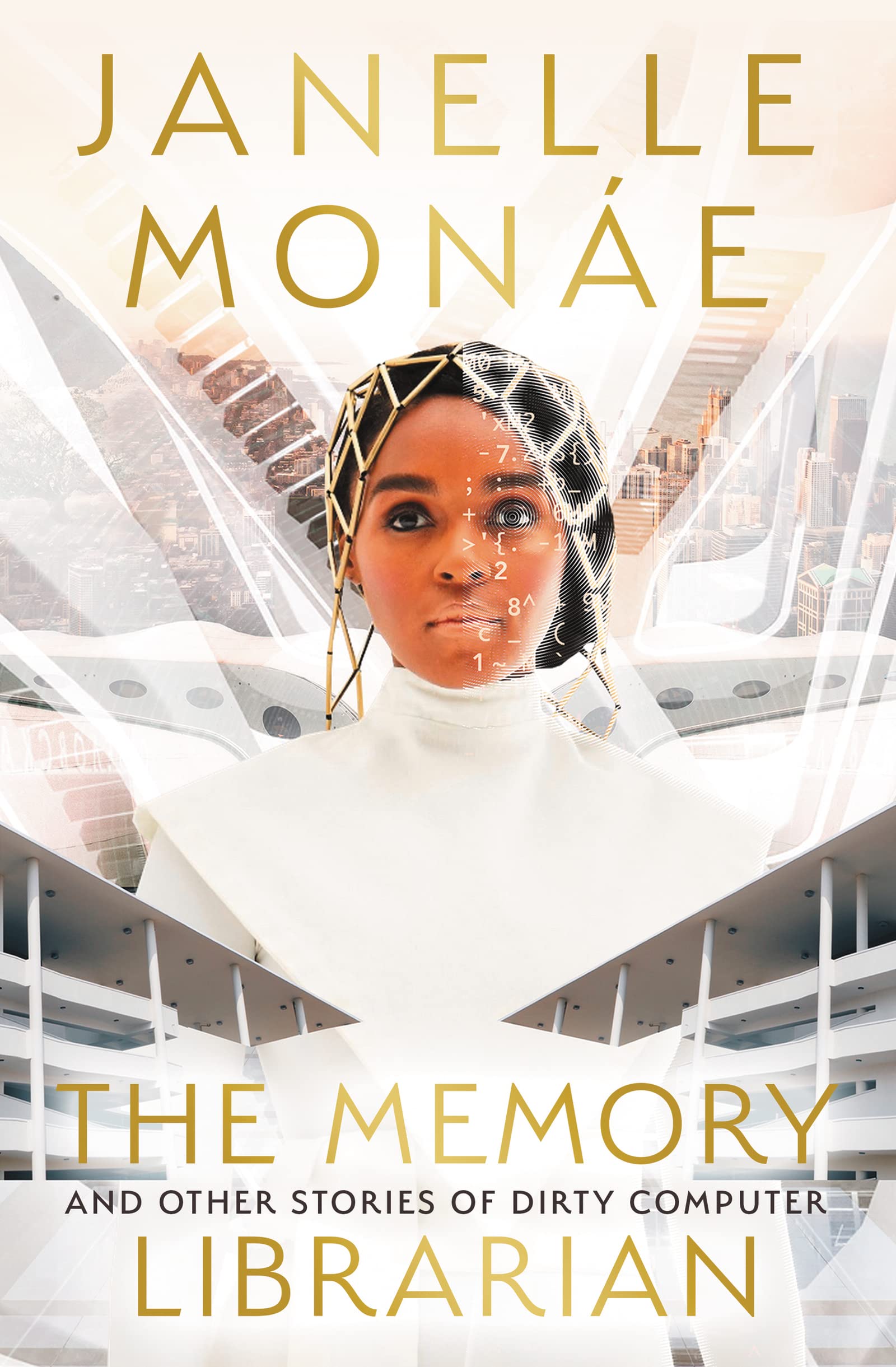
The Memory Librarian: And Other Stories of Dirty Computer by Janelle Monáe

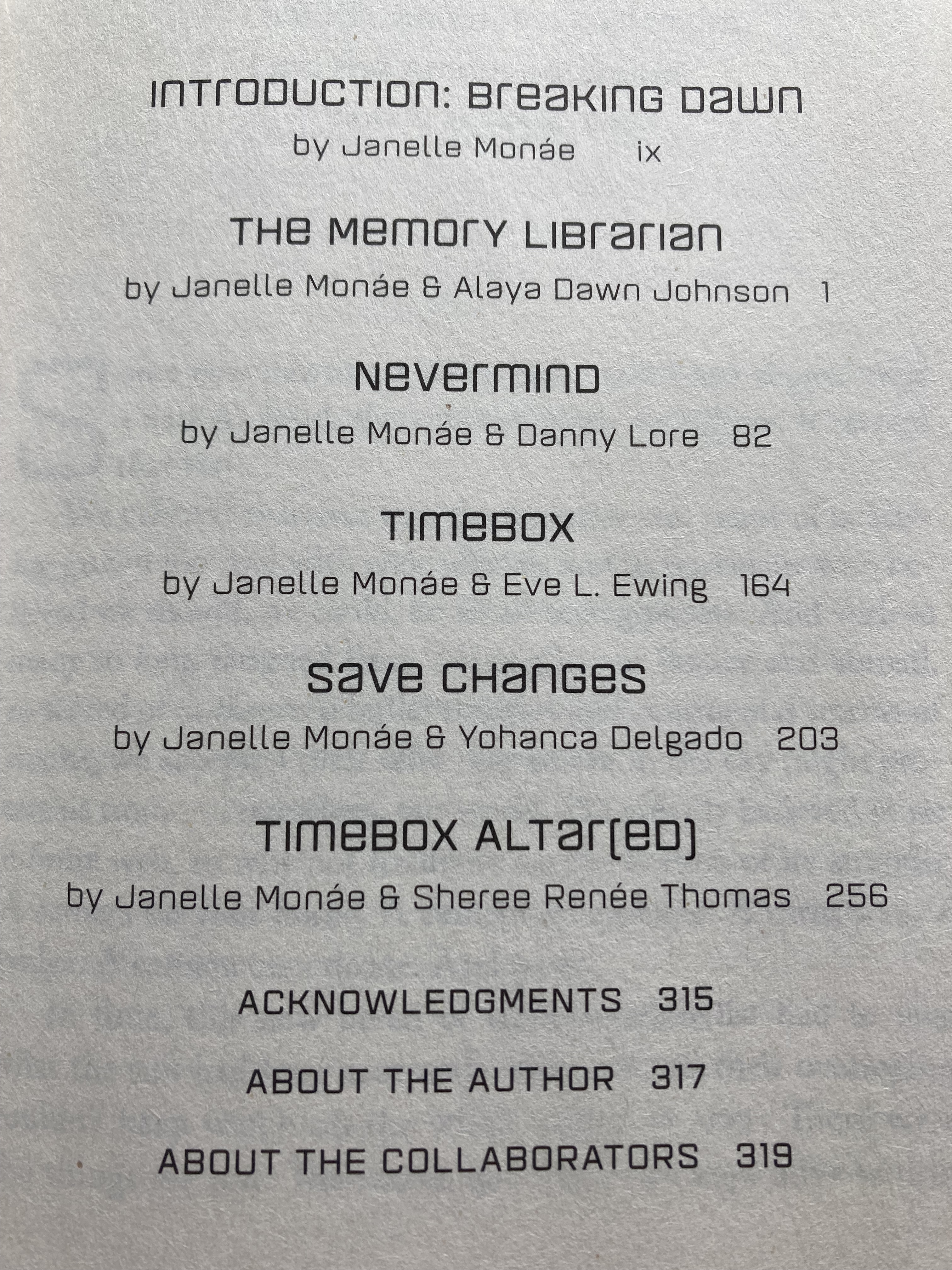
Janelle Monáe’s book is a collection of linked stories – quite long ones – with a handful of coauthors listed, by story (see image below). As the subtitle indicates, the book is a companion, or an expansion, of Monáe’s album Dirty Computer. I know concept albums, and I know accompanying movies (The Wall being a big one for me), but this is the first time I can remember seeing a book version. The Memory Librarian expands on the album’s worldview, and does some mighty worldbuilding; I am pleased.

The opening Introduction, “Breaking Dawn,” was a bit weird and abstract for me; I felt like I was missing something, so it took me a few pages to engage. But the first story, “The Memory Librarian,” took right off. I had to learn about the world we’re in, which was consistent throughout the book – the stories didn’t really have recurring characters (except in the most glancing references), but it was definitely the same world. New Dawn is the authoritarian power, policing its cities and towns with cameras on drones and fearsome Rangers patrolling the streets. People are referred to as computers and must be “clean,” or free from difference, weirdness, subversion, creativity; if they are found to be dirty, they will be cleansed. Notably, queerness is considered “dirty,” and racism is alive and well in New Dawn too. A state-approved drug called Nevermind helps to erase memories; outlaw substances or “remixes” free the mind, in ways that New Dawn absolutely does not approve.

“The Memory Librarian” focuses on a young, ambitious woman named Seshet, with a promising career as (yes) a memory librarian under New Dawn, although as a Black, queer woman she must watch her back hard too. She collects people’s memories (which they can exchange for currency) and helps keep them “clean.” Her own past is mostly lost to her. But then she meets a compelling woman and has to question her relationship to New Dawn, to authority, to her own history, her loyalties and the value of memories and dreams. This story had me fully invested; I was rooting for Seshet and Alethia, and feeling the pressures of their world. Then “Nevermind” introduced the Hotel Pynk, and the gender politics at play even among an apparently progressive feminist enclave. “Timebox” featured a toxic relationship that quite upset but also intrigued me; I think this will be one of the more memorable stories for me. “Save Changes” handles family (and the inheritance of resistance), and “Timebox Altar[ed]” stars children, and brings in more hope than I felt in any previous stories; it has a dreamy, colorful mood that felt good as a way to end the book.

I enjoyed both the stories in their creative concepts and the ways in which they were executed (written). I appreciated the emphasis on the value of diversity (in so many ways) and the importance of art, free thinking, and the freedom to be weird. I liked that these stories trended longer – from 50 to 80-some pages, long enough to get well involved (plus their interconnectedness). I continue to be a Monáe fan, and I’m very impressed with her entry into this different medium. I assume the coauthors brought something useful to that process; and I think it’s worth noting that even though Monáe was joined by a different one for each story, they fit together seamlessly. Someone was on top of the editing. Solid effort; do recommend.


Rating: 7 masks.