Giovanni’s Room by James Baldwin

Extra long review today.
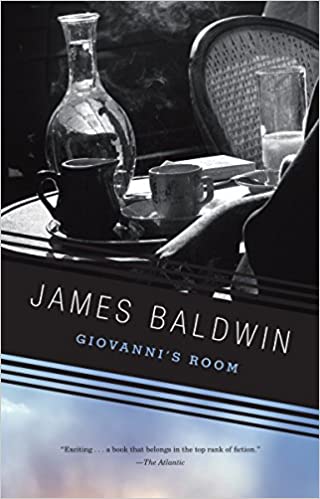
I have owned this book for years and years. I have no idea why it’s taken me this long to read it. I have many times referenced a quotation on page 92: “perhaps home is not a place but simply an irrevocable condition.” (My copy of the book falls open naturally to page 92 and the line is highlighted. It’s pretty weird to have this relationship with a book I’d never read before.)

The novel’s narrator is a young man named David, an American who has been living in Paris. The book opens: “I stand at the window of this great house in the south of France as night falls, the night which is leading me to the most terrible morning of my life.” He takes much of the book, however, to reveal what is so terrible about the morning to come. One of Baldwin’s interesting artistic choices here is a disjointed chronology; the story is told from this night-before-the-terrible-morning, in flashbacks, which sometimes jump backward and forward in time, and then we return to the night and the terrible morning. David had been in Paris with a woman named Hella. When he proposed, she left to go travel in Spain; she needed time and space to think things through. She’s an independent woman. In her absence, David accompanies a sort of frenemy, Jacques, to a gay bar, where he strikes up a conversation with the bartender. (Jacques had intended to hit on him, but got distracted.) This is Giovanni, a young Italian man, with whom David finds interesting conversation, mutual attraction, and a very complicated set of feelings: push/pull, desire/revulsion, love/hate. They go back to Giovanni’s room, and they live together there until Hella’s return some months later, when David leaves (saying nothing to Giovanni) to return to her. She has decided she wants to be married, and David is too bound up and self-loathing to stay with the man he loves. Giovanni is distraught. I will not spoil the plot item that is the “most terrible morning of [David’s] life.”

The story is told in David’s first-person perspective, and it is full of angst and disquiet. I don’t think he’s supposed to be remotely likeable. He’s disappointed in his relationship with his father, in his relations with women (including but not especially Hella), in his feelings for men (before Giovanni, there was a boy in his boyhood as well, though he has repressed this memory), in his view of his own masculinity. He struggles with the ideas of home and belonging, both in terms of geography and identity. He is a miserable partner to Giovanni, and we are left with the impression at the book’s end that David will walk away from these events angsty as ever but materially fine, while Giovanni most certainly does not.

Giovanni’s Room has a handful of themes and angles for interpretation, but there are a few that especially interest me.

For one thing, I think the novel is very much about power structures. Jacques, the friend who takes David to the bar, is older and richer; David doesn’t actually like or respect him but wants to borrow (or “borrow”) money. Giovanni’s (also older) boss at the bar holds an analogous power over his employee: as an immigrant, Giovanni’s work prospects are few, and Guillaume is an egregious sexual harasser. David and Giovanni have a twisted codependency, and the power dynamics within their relationship are complicated. Giovanni works while David keeps house (some basic cleaning duties, but he is clearly anxious about the housewifeliness of it all). David comes from a far more secure background, economically, although he’s effectively broke on the ground in Paris because his father won’t send him any money. By contrast, Giovanni is in real danger of homelessness and starvation if anything goes wrong in his life. David withholds emotional intimacy; Giovanni is always chasing after something he can’t get from his partner. As discussed with my friend Vince, though, I think there’s an argument that each is obsessed with the other, in different ways. Then there is Hella, the strong woman who fled a marriage proposal to travel alone: she returns changed, suddenly dedicated to a life in which she explicitly wishes to be beholden to a man. She’s decided it is women’s only option, only way to truly live. (Vomit: but this is the 1950s.) I think in the end, David’s anxieties about manhood and masculinity, and his distress at his homosexuality (bisexuality?), are in some ways about power structures, too.

On a related subject: the elephant in the room here is that Baldwin’s protagonist is a blonde-haired white man. I felt surprise when I discovered this (as do many readers), which bears examination. Who do we expect to write about whom? Clearly I expected Baldwin, a Black man, to write Black characters. (To be fair, he has done so in all the other works of his I’ve read, but that’s not the root of my assumptions.) Baldwin was also a gay man, and an American who lived in Paris: he gave his protagonist these characteristics of his own, but not race. What does it mean, for one thing. And, this is too big a subject to be properly handled within this review, but it’s also part of the ongoing question about representation in fiction: what identities are represented, by what authors (of what identities), who gets to be the “default,” and on from there. Elsewhere Baldwin has written his frustration that, as a Black man, he’s expected to write about “the Negro problem,” and never allowed out from under that bell jar. Here he just turned his back on the topic entirely (or did he?), and if I felt surprise, or even if I felt a bit cheated, this is a good time to be reminded that he doesn’t owe his readers any content in particular. He is quoted in The New Yorker: “I certainly could not possibly have—not at that point in my life—handled the other great weight, the ‘Negro problem.’ The sexual-moral light was a hard thing to deal with. I could not handle both propositions in the same book. There was no room for it.”

There is an argument that racial tension does appear in Giovanni’s Room. Giovanni is Italian in France, and there is no question that this is a) racial and b) a disadvantage for Giovanni. Baldwin does not go Heart of Darkness with darkness imagery, not in terms of skin tone: when we meet Giovanni, he is “insolent and dark and leonine,” but that is the only mention I found. There is however a lot of darkness imagery in the story: mainly related to spaces being dark, which can be related to their boding ill, to privacy, to queerness, to the shame David feels about this and other liaisons. Based on the above quotation from Baldwin, it sounds like he either did not intend commentary on race, or he didn’t want to acknowledge it; it’s entirely possible that any such commentary was subconscious, but that doesn’t mean it isn’t there. I think there’s an undeniable power imbalance between the blonde David and the Italian Giovanni, which is most explicitly about class, rather than race – but since when have class and race ever been extricable? And let’s keep in mind that Italian immigrants to the United States (where both Baldwin and David grew up) were historically considered very much not white, although that would change shortly after this book was published.

Physical spaces, and a sense of home and the belonging that it entails, make up another theme that fascinates me here. (Recall that line marked in my copy.) As I keep reminding my students: pay attention to titles; they are trying to tell us something. This novel is not titled for the story of David, or of Giovanni, or for love, or death; it is titled for the room. Giovanni’s room is the place where he and David live and love together, a life and love which David feels are dirty, and sinful. It is rather obsessively described and recalled, always in negative terms. Small, claustrophobic, dirty, untidy, in a state of change (“Giovanni had had great plans for remodeling the room and there was a time, when he had actually begun to do this, when we lived with plaster all over everything and bricks piled on the floor”), cluttered, garbage-filled, dark. It is like living underwater. Other spaces where David does sinful things are also dark and dirty, as are corridors, alleys, and the spaces under bridges where men tryst, and the bars where they meet. David leaves Giovanni’s room to go to Hella’s. He never has a space of his own. The book opens and closes in the “great house” in the south of France which he must clean before he leaves it. He is embarrassed for the landlady to see the state he’s kept these rooms in. All of this accrues to anxiety about place and about spaces, and the connection between spaces and the activities they contain. None of which even begins to address the American-expat-in-Paris problem, which is a whole genre of novels unto itself (see also Stein, Hemingway, Henry James). Whew.

[I was reminded of Hemingway often. The American expat in Paris; certain aspects of character, like detachment and resistance to intimacy (others have cited Jake from The Sun Also Rises); a writing style that lends itself both to brevity as well as syntactic complexity; an insecure obsession with masculinity. I wonder if I project my own reading history. But no, Baldwin has named Hem as an influence. It shows.]

In addition to home as irrevocable condition, consider this Schrodinger’s cat between Giovanni and David.

‘…you will go home and then you will find that home is not home anymore. Then you will really be in trouble. As long as you stay here, you can always think: One day I will go home.’…

‘Beautiful logic,’ I said. ‘You mean I have a home to go to as long as I don’t go there?’

He laughed. ‘Well, isn’t it true? You don’t have a home until you leave it and then, when you have left it, you never can go back.’

‘I seem,’ I said, ‘to have heard this song before.’

I’ve heard it before, too: the version I like comes via Maya Angelou in a 1987 interview. “You can never go home again,” is the famously quoted version. The completion of her fuller line is instructive. “You can never go home again, but the truth is you can never leave home, so it’s all right.” Okay, I’m revealing my own obsessions now, but I think it’s safe to say that Baldwin shares them (and David, too).

This review has gotten awfully long, and yet I’ve barely scratched the surface of what there is to interpret and interrogate about this novel, brief at under 200 pages and yet deep and rich. What can I say about Baldwin? Go read him yourself.


Rating: 8 glasses.

Such a Fun Age by Kiley Reid

I picked this book up blind, not knowing what was inside, and it was a roller coaster. Often painful and uncomfortable, but often delightful and hilarious. I love the protagonist and her fierce best friend; I struggled with the difficult subject matter. I think it’s a very fine work of fiction, with the added appeal of social issues we need to be thinking about. I encourage you to stop reading now and go buy this book. If you need more convincing, keep reading.

Emira is a 25-year-old Black woman in Philadelphia. She’s part of a foursome of friends who take care of each other, and this is where the book opens, at Shaunie’s birthday party. Emira is also getting a little nervous about that big question of what she’s going to do with herself; with her life; for money. Soon she’ll get dropped by her parents’ health insurance, and she has a college degree but nothing that really calls to her in a professional career sort of way. (I am deeply empathetic. This was me at 25, and in some ways it’s me now.) She works part-time as a transcriptionist and part-time as a babysitter for a wealthy white family. She is completely crazy about the three-year-old daughter she cares for there, and she’s really good at her job.

The opening ‘inciting incident’ is this: Emira is pulled away from Shaunie’s birthday party when her employer, Mrs. Chamberlain, calls and asks her for help. It’s not exactly a babysitting time of night, but the cops are about to show up to the Chamberlains’ house (just a little disturbance), and they’d like the three-year-old, Briar, not to be there. Emira takes the child to a nearby grocery store to browse. She’s getting paid double, and Mrs. Chamberlain doesn’t mind at all that Emira’s not dressed for childcare. Well, can you guess? The store security questions why this young Black woman has a little white girl with her. They harass and eventually hold her until Mr. Chamberlain arrives. It’s a scene. Somebody films it, although Emira begs him not to share the video.

The evening ends with Emira walking away, ostensibly unharmed. “This was a video about racism that you could watch without seeing any blood or ruining the rest of your day.” But of course it has lasting repercussions for Emira, and for a few people in her circle.

I’ve only given away the first few pages of the novel. The rest of it shifts between the POVs of Emira and Mrs. Chamberlain, and Emira continues as Briar’s babysitter. Her distress over her place in the world – financially, professionally – grows. She gets a boyfriend, a situation that is both pleasing and a source of further angst (as boyfriends are). Her friends are awesome, but as they get promotions and better apartments, there’s a certain distance. Emira is still crazy about Briar, who is a frantic talker, a little nervous, not particularly girly or ladylike, and who adores Mira in turn. Mrs. Chamberlain is… a lot. It’s unflattering to describe her: hung up on appearances, insecure, adrift in a new place (recently moved to Philly from NYC, and she clearly feels that Philadelphia is NOT cool). She has a business and a brand, but she’s losing her grip on it. She’s not a likeable person; but she is a realistic one. I can’t like her, but I can sympathize, here and there. And then there’s a character from Mrs. Chamberlain’s past who complicates things considerably.

This is a story, on one level, about race. Emira’s just trying to live her life, and leave the night at the grocery store behind, but the world throws a lot of barriers at a young Black woman. A handful of ‘white saviors’ get in her way with their ostensibly well-meaning but thoroughly obnoxious interferences. It’s also about ‘the anxiety of affluence,’ and the intersections of race with class, and societal expectations. (A certain Black character plays a passable version of white savior, herself.) This is why I say the story is often painful and uncomfortable: these forces in our world are uncomfortable, and that’s why this book is important. But as a novel, make no mistake: this is not an earnest, humorless political take. It tackles serious subjects, but it also knows how to have a good time. I smiled as often as I squirmed.

Kiley Reid is a hell of a writer; the writing, as I sometimes say, disappears; I was right there with Mrs. Chamberlain and Emira in turn. Dialog is snappy. The nastiness and self-deception is too real. Mrs. Chamberlain (Alix) commits various microaggressions (as well as some regular macroaggressions), but to encounter them told through her own POV is extra creepy.

[Mrs. Chamberlain] knew Emira had gone to college. She knew Emira had majored in English. But sometimes… Alix was filled with feelings that went from confused and highly impressed to low and guilty in response to the first reaction. There was no reason for Emira to be unfamiliar with this word. And there was no reason for Alix to be impressed. Alix completely knew these things, but only when she reminded herself to stop thinking them in the first place.

A powerful, realistic story, and one we should be paying attention to, also crafted as a masterful work of fiction: this book is highly recommended and Kiley Reid is one to watch. I agree with the back-of-book blurb that calls Such a Fun Age “written so confidently it’s hard to believe it’s a first novel.”


Rating: 9 bags of groceries.

World of Wonders: In Praise of Fireflies, Whale Sharks, and Other Astonishments by Aimee Nezhukumatathil, illustrated by Fumi Nakamura

World of Wonders is a lovely, thoughtful series of meditations, charmingly illustrated, with love and awe on every page but never shying away from the prickliness of life.

Poet Aimee Nezhukumatathil (Oceanic) stuns with her nonfiction debut, World of Wonders: In Praise of Fireflies, Whale Sharks, and Other Astonishments, delightfully illustrated by Fumi Nakamura. These essays explore the natural world and the human experience, finding parallels, meaning and beauty in the intersections.

“A catalpa can give two brown girls in western Kansas a green umbrella from the sun,” Nezhukumatathil begins. This is an apt and representative line: place-specific, beautifully phrased, with reference to some of the identities these essays will explore. They are mostly titled for the plants and creatures they center–peacock, comb jelly, narwhal, dancing frog–with a few exceptions, such as the expressively named “Questions While Searching for Birds with My Half-White Sons, Aged Six and Nine, National Audubon Bird Count Day in Oxford, MS.” The red-spotted newt and dragon fruit that title their respective essays receive Nezhukumatathil’s attentive study and yes, wonder, but the author’s own experience is always a second thread. She brings a poet’s ear for language and an eye for commonality and metaphor, both reverent of the natural world and specific in her personal story.

Fireflies, touch-me-nots and flamingoes offer her a way to talk about being a brown girl in a white man’s world, growing up in the era of Stranger Danger and feeling disjointed between continents. A young Aimee is asked to draw an animal for a class assignment in Phoenix, Ariz. She responds with a resplendent peacock, India’s national bird, but is chastised and asked for an American bird. Her bald eagle wins a prize but causes her shame. Fumi Nakamura’s accompanying illustrations are whimsical and warm–who doesn’t love an axolotl’s smile?–and sweetly complement Nezhukumatathil’s prose.

World of Wonders offers a series of brief naturalist lessons, but is perhaps at its best in drawing connections, as between the axolotl’s smile and what to do “if a white girl tries to tell you what your brown skin can and cannot wear for makeup.” When it goes boom, “the cassowary is still trying to tell us something.” “And just like the potoo, who is rewarded for her stillness by having her lunch practically fly right to her mouth–perhaps you could try a little tranquility, find a little tenderness in your quiet. Who knows what feathered gifts await?” Wisdom, wonder and beauty make this slim collection one to treasure.


This review originally ran in the August 11, 2020 issue of Shelf Awareness for the Book Trade. To subscribe, click here.


Rating: 9 pale berries growing in spite of the dark.

Winter Counts by David Heska Wanbli Weiden

On South Dakota’s Rosebud Indian Reservation, local enforcer Virgil Wounded Horse is faced with a challenging and personal case.


David Heska Wanbli Weiden’s first novel, Winter Counts, is a gripping story of crime investigation set on the Lakota Rosebud Reservation in South Dakota. Virgil Wounded Horse is cynical. He can’t imagine not living on the rez, but he’s more than skeptical of Indian spirituality and ritual, and doesn’t feel very connected to his people; his memories of being bullied in school are too fresh. Now that both his parents and his sister are dead, he doesn’t have much family to feel loyal to–but he is devoted to his orphaned nephew, Nathan, now a teenager who shares his home.

Virgil makes his living as a private enforcer. Tribal police have very limited powers, and the feds don’t bother with much on the reservation short of murder, so the Lakota often resort to hiring someone like Virgil to deliver vigilante justice. Now he gets to beat up his former bullies, and earn a few bucks doing so. It’s not necessarily work to take pride in, though, especially in the eyes of his ex-girlfriend’s politically powerful family. So Virgil is surprised when her father, a tribal council member, asks for his help. And he’s even more surprised when the case brings Marie back into his life.

It seems a local small-time pot dealer might be moving up into dealing heroin on the reservation. And when Nathan accidentally overdoses, it all becomes very real, with high stakes. Virgil will end up traveling all over the rez and down to Denver to try to track this latest crime wave. The scope of the case quickly grows beyond this private enforcer’s comfort zone, and he has a renewed romance to manage, while trying to keep Nathan safe at the same time. Out-of-town gangs, heavy hitters and hard drugs challenge Virgil’s skills. To keep all these threads together, he may need to reconnect with his Native roots, after all.

While Weiden’s prose is serviceable, his sympathetic characters and gripping plot keep readers engaged. Action and suspense are special strengths, and Weiden, himself a member of the Lakota nation, brings valuable perspective to the lives and experiences of his characters. The setting of Winter Counts offers an important and overlooked glimpse at the particular challenges faced by Native Americans, especially concerning crime and justice. But make no mistake: at the heart of this crime novel is a fight for the future of Rosebud Reservation and the lives of Virgil, Nathan, Marie and many more for whom this place is home. Tightly paced, compelling, realistic and deeply felt, Winter Counts offers a fresh take on the crime thriller.


This review originally ran in the July 30, 2020 issue of Shelf Awareness for the Book Trade. To subscribe, click here.


Rating: 6 glasses of Shasta.

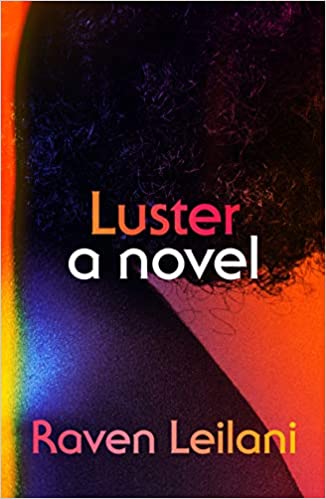
Luster by Raven Leilani

Race, sex, shifting social rules, art, inspiration and digestive troubles plague the compelling protagonist of this debut novel.

Raven Leilani’s first novel, Luster, is a rocket-paced, sensual fever dream of sex, trauma, relationships and conflicting perceptions.

Edie is in her 20s and struggling, with her crappy shared Bushwick apartment, her low-level position in children’s publishing, her uninspired sexual choices and her irritable bowel syndrome. Her parents are dead, but the psychic wounds they inflicted are not. Her painting is not going well, and she is a Black woman in New York City. “Racism is often so mundane it leaves your head spinning, the hand of the ordinary in your slow, psychic death so sly and absurd you begin to distrust your own eyes.” Early on, her affair with Eric seems different, refreshing, in spite of, or because of, the 23-year age gap. Then Edie gets fired and evicted, and she spirals, landing, weirdly, in the middle of someone else’s marriage. She knew from the start that Eric was in an open marriage–his wife set a lot of rules for his relationship with Edie. But suddenly she finds herself taken in, literally, by Rebecca, living in their guest room in New Jersey, asked to mentor this white couple’s adopted Black daughter, Akila. Surreality seems to be Edie’s default, but now the funhouse mirror tilts again.

Edie’s first-person narration is nearly stream-of-consciousness, long sentences overflowing with imaginative visual impressions and self-deprecation: “as the car is pulling away he is standing there on the porch in a floral silk robe that is clearly his wife’s, looking like he has not so much had an orgasm as experienced an arduous exorcism, and a cat is sitting at his feet, utterly bemused by the white clapboard and verdant lawn, which makes me hate this cat as the city rises around me in a bouquet of dust, industrial soot, and overripe squash, insisting upon its own enormity like some big-dick postmodernist fiction and still beautiful despite its knowledge of itself, even as the last merciless days of July leave large swaths of the city wilted and blank.” Edie’s particular blend of despair, panic and self-destruction is spellbinding. As she hesitatingly helps Akila with her hair and accompanies Rebecca to work (conducting autopsies at the VA) and to a midnight mosh pit, Edie begins to paint again. She is inspired by the minutiae of this family home: lightbulb, dinner plate, Rebecca’s body.

Luster is intoxicating and surprising, never letting readers settle into recognizable patterns. Leilani has crafted an unforgettable novel about a young woman making her own way.


This review originally ran in the July 20, 2020 issue of Shelf Awareness for the Book Trade. To subscribe, click here.


Rating: 7 Captain Planet mugs.

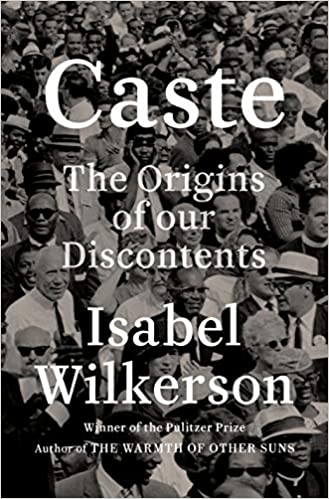
Caste: The Origins of Our Discontents by Isabel Wilkerson

In this meticulously researched and beautifully crafted book, Pulitzer Prize-winning journalist Isabel Wilkerson argues that the U.S. has a race-based caste system.

Pulitzer Prize-winning journalist Isabel Wilkerson (The Warmth of Other Suns) offers a singular and vital perspective on American society with Caste: The Origins of Our Discontents. This examination of caste and its consequences on every aspect of culture is unusual, eye-opening and of life-or-death importance. As in her previous work, which she continues and deepens here, Wilkerson lives up to the scope and significance of her subject matter, delivering a book that is deeply researched, clearly structured, well-written and moving.

The root of so many social ills in the United States, Wilkerson argues, is not precisely racism but casteism, which is closely linked to the concepts of race invented and reinforced since before the country’s founding. “Caste and race are neither synonymous nor mutually exclusive,” she writes, and then explicates and defines her terms precisely, with the support of exhaustive research. “Caste is insidious and therefore powerful because it is not hatred, it is not necessarily personal. It is the worn grooves of comforting routines and unthinking expectations, patterns of a social order that have been in place for so long that it looks like the natural order of things.”

Wilkerson interrogates and defines caste systems by comparing and contrasting three: those of Nazi Germany, India and the United States. The job of analyzing more than 400 years of American history, social structures on three continents and the complexities of sociology, psychology, history, anthropology, philosophy and more is an enormous one, but Wilkerson is more than capable. She lays out eight pillars of caste, including divine will, heritability, occupational hierarchy, and terror as enforcement. She puts to work a number of convincing metaphors to illustrate her points: infectious disease, the challenges of owning an old house, actors (mis)cast for a theater production, rungs on a ladder, the biblical concept of the scapegoat. She uses a new vocabulary to recast old problems, usually referring not to terms of race or class but of caste, and discusses recent electoral politics with descriptions rather than names, defamiliarizing the familiar and thereby offering her reader a fresh perspective.

Wilkerson’s understanding of caste proposes a nuanced take on the Trump election: many working-class white voters did not in fact vote against their interests, but rather prioritized one interest–upholding the caste system–over others, including access to health care, financial stability and clean air and water. She effectively argues that while “caste does not explain everything in American life… no aspect of American life can be fully understood without considering caste and embedded hierarchy,” and shows how it causes psychological and physical health damage to everyone living within this system.

Caste is a thorough, brilliant, incisive investigation of the often invisible workings of American society. Original, authoritative and exquisitely written, its significance cannot be overstated.


This review originally ran in the July 6, 2020 issue of Shelf Awareness for the Book Trade. To subscribe, click here.


Rating: 9 owners of old houses.

Pachinko by Min Jin Lee

Recommended by Liz to help break my reading slump. I picked up Pachinko as an e-book from my local library, and saw the descriptors ‘multigenerational epic,’ among others, go by as I opened it. Now, normally ‘multigenerational’ and ‘epic’ are both turnoffs for me, but I trust Liz entirely. And it’s a great book – maybe I should consider more multigenerational epics.

The cultural backdrop was fascinating to me, and almost entirely new. Pachinko is set in Korea and Japan, following a family of Koreans who become Korean Japanese, across most of the twentieth century. The cultural implications – the perceptions of Koreans in Japan – were a big part of the appeal, and the point, of this novel. I learned a lot. And as far as that (potential) ‘multigenerational epic’ problem, any hesitations I might have felt were well taken care of by Min Jin Lee’s excellent handling of a large cast of characters over time. I didn’t have any trouble keeping track of them, because each was well-developed and clearly delineated. I lived so thoroughly with these people that I still feel myself a little bit with them, even now it’s been a few days since I finished reading.

The first line of the book reads: “History has failed us, but no matter.” In 1910, in a little Korean fishing village, an old fisherman and his wife have a single son, Hoonie. Given his cleft palate and club foot, he considers himself lucky to marry at all. With his wife Yangjin he has a single surviving daughter, Sunja. She becomes pregnant as a young woman by an older, wealthy, married man. Therefore she also considers herself lucky to marry Izak, a young minister who considers it a charitable act to give her child legitimacy. Izak and Sunja go to live in Osaka, in Japan, with Izak’s brother and sister-in-law. Sunja’s first son is Noa; her second, with Izak, is Mozasu.

Sunja is surprised to find how poorly Koreans are treated in Japan. Back home her family was poor; here they are poor and abused. Circumstances are harder still during World War II, until Sunja’s first lover Hansu – Noa’s biological father – resurfaces to help the family. It turns out he’s been helping behind the scenes all along, which is not equally appreciated by all. When Noa learns the truth, he cuts all ties, and establishes a new life for himself in another city, where he represents himself as full Japanese. Both brothers wind up working in pachinko parlors, in different parts of the country and in different contexts.

Sunja and her dearly loved sister-in-law support the household, now including elderly Yangjin as well. Mozasu’s wife dies young. They have one son, Solomo, who attends college in New York, then returns to Japan with his Korean-American girlfriend. But even in 1989, Korean Japanese occupy a special sort of cultural no-man’s-land, unable to return to a national home that no longer exists (Korea in its pre-war form), and not accepted in Japan despite having been there, in many cases, for four and five generations.

The book’s central themes include cultural dislocation and (the myth of) racial difference; home, identity, and belonging; gender (there is a refrain that “a woman’s lot is to suffer”), class, and the stereotypes about pachinko (a totally legal, highly profitable and enormously powerful industry, but with continuing perceptions of criminality). It is a gorgeously rendered novel, rich with details and with food (which I love), and with wonderfully wrought characters: complex, complete, sympathetic but flawed. I loved the, yes, epic sense of time and scope, everything that Hoonie’s generation and Solomon’s do and do not have in common. I noted that when Sunja got pregnant out of wedlock, her mother did not shame her; she seemed sorry that her daughter would have a hard road to walk, but she never called her any names. Yoseb and Kyunghee take her in and ignore the elephant in the room. It is only when Hansu returns to their lives that there is a sense of shame. “A woman’s lot is to suffer”: if she has a baby out of wedlock, certainly; if her brother-in-law won’t let her work for a living; if her son finds out she’d been pregnant out of wedlock; because she must work long and hard from childhood until old age ends her life; because she must bow to the wishes of the men in her life. But also, a Korean’s lot in Japan is to suffer; and they will remain “Korean” even when it’s been several generations since anyone in the family saw Korean soil. That sense of cultural homelessness touched me deeply.

My ebook came with an interview with the author. Lee indicates that it was indeed the cultural situation of Korean Japanese that she wanted to explore with this novel. “Although the history of kings and rulers is unequivocally fascinating, I think that we are also hungry for the narrative history of ordinary people, who lack connections and material resources,” Lee says, and I couldn’t agree more: the narrative history of ordinary people is endlessly appealing to me, and beautifully accomplished here.

This is an absorbing novel of a world quite far from the one I know, but with people I easily recognized and related to. I could spend more time lost in Lee’s remarkable writing and characters. Definitely recommended.


Rating: 8 cups of kimchi.

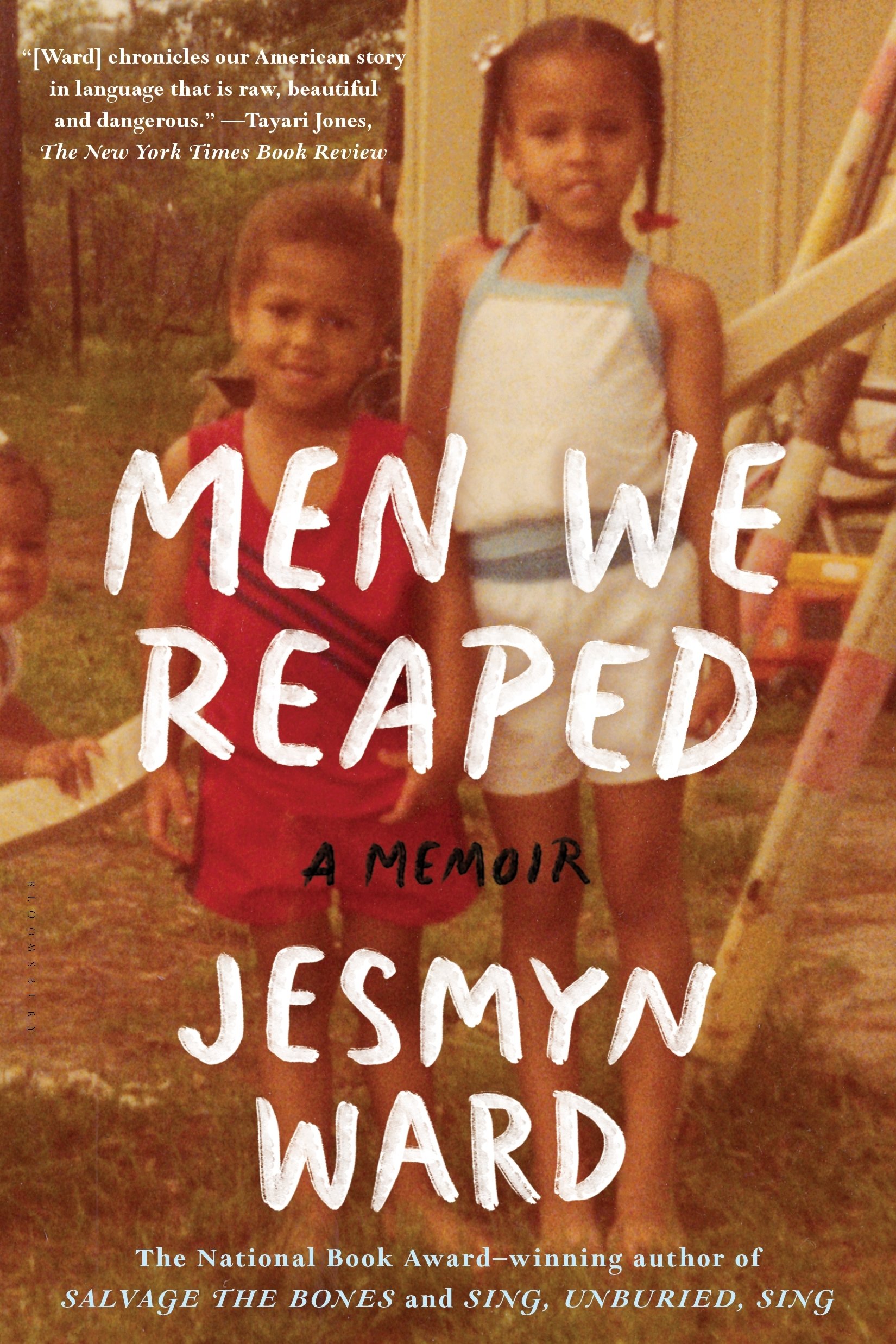
Men We Reaped by Jesmyn Ward (audio)

Jesmyn Ward’s Men We Reaped is lovely, painful, and important. It opens with three epigraphs, and the first, by Harriet Tubman, provides Ward’s title.

We saw the lightning and that was the guns; and then we heard the thunder and that was the big guns; and then we heard the rain falling and that was the blood falling; and when we came to get in the crops, it was dead men that we reaped.

This memoir focuses on the deaths of five young men, close friends and relatives of the author, including her brother. One suicide, one murder, two car wrecks, and one death by drugs. Roger, Demond, C.J., Ronald, Joshua. Ward profiles each, tracks a life and a death and the consequences for those who loved him. In shining her light on these five individuals, she also examines race and racism, gender, poverty, and the historical patterns that contribute to deaths like these. Most centrally, racism. (See footnote re: caste.)

Ward introduces her topic and the five young men, briefly, then handles them one by one in reverse death order, from Ronald back to her brother Joshua. In between, sections titled “We Are Born,” “We Are Wounded, “We Are Watching,” etc., track the experiences of Ward and her family, growing up the eldest of her mother’s four children, in chronological order. In this way, two threads of her story meet when the backwards-moving and forwards-moving chronologies intersect with Joshua’s death, hit by a drunk driver in a hit-and-run for which the driver – a white man – would receive a sentence of just five years.

Men We Reaped is a personal memoir of Ward’s own life, as well as a profile of five individuals and their social and family circles. It is also an examination and social critique of race, gender, and class, within the United States and within the historic Deep South. Ward was raised in and around DeLisle, Mississippi, near Gulfport-Biloxi. It’s a particular place, of the old Confederacy, divided by race even as its inhabitants recognize that this is a false division; poverty-stricken, it provides few opportunities for its young people, especially young black men. Ward offers her reader the history of this place as well as of her own family, hearkening to the town’s former name: “I want to impart something of its wild roots, its early savagery. Calling it Wolf Town hints at the wildness at the heart of it.” That this range of subjects is so neatly woven into Ward’s intriguing narrative structure – those forward- and backward-moving chronologies that meet in the middle – results in an extraordinary piece of literary work. Ward’s points about social structures and prejudice are intelligently made, her personal stories are deeply moving, and her craft is admirable. Her writing is lovely and expressive. I am deeply impressed.

This audio narration by Cherise Boothe felt right to me; I appreciated the pacing and weight and pronunciations of place names. (There are so many ways to say “New Orleans.”) As I’ve struggled to write this review – often more difficult the more I appreciate a book – I’ve missed having access to a text copy for reference, but the experience of the audiobook was excellent, so that format is recommended but having the print copy alongside would be ideal.

Everyone should read this book.


Rating: 8 holes in the ground.

I listened to this book while reading Isabel Wilkerson’s forthcoming Caste: The Origins of Our Discontent, also a stellar and deeply important book. As Wilkerson illustrates, these forces are the work of caste and casteism. I chose to stay with the term of racism for this review, as it’s the one Ward uses and I think it’s an accurate term, but please see also Wilkerson’s arguments.

reread: The Stand by Stephen King

My copy of The Stand runs 1,153 pages, and I have a lot to stay. Sorry for the long review.


I loved this book before, and all over again, although not without qualifications. It took me nearly two weeks to read these ~1,200 pages, but only because I was reading other books at the same time (and teaching three classes) – it was really a handful of nights reading 300+ pages at a go. I loved this book all over again.

The very obvious impetus was the current pandemic, and my curiosity about how well The Stand tells a story that we are now (in some ways) living. The answer is, pretty well, actually. In the real world we don’t have a supernatural evil force in the form of a shapeshifting man with a cadre of more and less intelligent evil-minded followers; but there is plenty of metaphorical material there for those so inclined. I’ll leave that work to each of you. The superflu aka Captain Trip’s infection itself is different from Covid most importantly in the speed and rate of transmission, the death rate, and the speed with which it does its deadly work. It is infectious massively more of the time, and nearly always deadly. Covid is wildly infectious and pretty deadly by real-world standards; Captain Trip’s takes this to a logical extreme, which is often what fiction does, but the parallel is striking and instructive. That it is also wildly fast-acting is an interesting point. In some ways, the slowness with which Covid makes itself known (meaning, we can be infected for days or weeks before we get sick – and we can be infected and not get sick, therefore acting as invisible vectors)… has helped its spread, because we humans have a hard time taking seriously something that we can’t immediately see happening. Captain Trip’s, on the other hand, looks more like this: guy coughs near you; 20 minutes later, you are coughing. You might both be dead in a day or two. This is much easier for people to grasp as a concept; they feel fear and wish to take precautions much more, and much sooner, than we have with Covid. The flip side is that it’s much harder to fight against (especially because if you cough, you die). At least to this lay reader, this difference between reality and fiction feels like a simple difference between two types of virus. To my (again, layperson’s) knowledge, a virus could act as quickly at this one does; we just didn’t happen to get one of those. There would be pros and cons.

Captain Trip’s was also manufactured in a lab as a form of biological warfare which then accidentally escaped. This is not the case with Covid.

Because of the massive death rate of Captain Trip’s, the post-pandemic world looks very different than the one we will be living in the real world. Roughly, let’s flip the numbers of living and dead: the United States in The Stand is populated by some tens of thousands of people. That means their challenges in rebuilding, and in thinking about designing a new world, are very different from the ones we’ll face. Well, I’m trying to write a book review and not entirely a social commentary; but let me say briefly, I think the Covid crisis is highlighting the inequities and injustices we’ve always lived under, and we have a rather special opportunity to do something to fix our systems, with this new (to many of us) vision we’ve been granted. The survivors in this novel, on the other hand, have been left with the “toys” (Glen Bateman’s term) of a previous world, but limited knowledge of how to use them, and the power (etc.) has been turned off. Ideally, they’ll choose what to pick back up (book learnin’, heat in the winter, animal husbandry) and what to leave lying (nuclear weapons). But Glen Bateman is not terribly optimistic. (I must confess, neither am I.)

On to the book review proper. This remains a thoroughly compelling, expertly paced, engrossing story. Characters are delightfully wrought, various and complicated. The sympathy drawn out of us for the Harold Lauders of the world is disturbing as hell; he’s a villain but he’s very human. (The Walkin’ Dude is just evil, and not human.) While there are “types” in Glen Bateman, Larry Underwood, and Stu Redman, they’re convincing human beings at the same time that they’re types. Let’s face it, there are types in the real world, too; that’s where they come from. The momentum with which this plot moves could perhaps not be better executed; Stephen King is a master, and as I said above, I can easily take in 300+ pages in a single sitting (and stay up until 3am, I’m sorry to say), because it’s just all so juicy and absorbing.

That said, I did have a few concerns on this reread that I didn’t have just three years ago. Partly I suspect this is because in reading a print copy, I was able to pay closer attention to certain details. The audio experience I had in 2017 was entertaining, and I certainly followed the story and many of its finer points, but I do feel like I can watch a story more closely when I read it. I can speed up and slow down at my own pace, reread a line if necessary. And I think seeing a word printed imprints it on my mind more thoroughly than a word heard. I don’t know if that’s because I have a certain kind of brain or if it’s relatively universal.

On the other hand, I also think I’ve become more attuned to certain issues and injustices in the world in the last few years. So, on this go-round I noticed a problem in particular with race and ethnicity. King’s characters are almost all white, which doesn’t seem statistically plausible in this country, although I’ll allow that in 1978 (when this novel was originally published) the country probably looked a lot whiter than it looks now – it probably was a little whiter, but it also would have looked a lot whiter, in terms of where society (and therefore Stephen King) directed its gaze. And the few characters of color? Well, we have the “magical Negro” trope, which Stephen King gravitates toward in many of his works. (There’s a decent write-up of the concept in King’s work available here thanks to the Internet Archive’s Wayback Machine.) “Although from a certain perspective the character may seem to be showing blacks in a positive light, the character is still ultimately subordinate to whites. He or she is also regarded as an exception” (source). Mother Abigail is delightful, and she does get her own backstory, but her function in terms of plot seems to fit squarely into “magical Negro” territory. It could be said she also serves as a token. Headline: Black woman character as hero! There are very few other non-white characters, and they’re all problematic: the abominable Rat Man, the heroin addict in the “second epidemic” section, the “black junta” early in the pandemic (they wear loincloths. This is disgusting, SK). But the ending really got me, and take note, writers of all stripes: the end of your book is the taste that is left in your reader’s mouth. At the end of The Stand we get the evil force sometimes known as Randall Flagg reawakening in an unknown place where he is surrounded by brown-skinned men with spears who don’t speak English but worship him. Not cool.

King’s women are sort of up-and-down with me; I rather love Frannie Goldsmith, the pregnant college student who is part scatter-brained and part moral compass, but I’m also getting weary of the pert young thing who lusts after the middle-aged man. And Tom Cullen, the mentally challenged man with occasional rare wisdom who is able to tune into a higher frequency than his peers-of-normal-intelligence – well, he feels a little like the mentally challenged version of the “magical Negro.”

These concerns dismayed me on my second reading, and while I want to be clear that I really enjoyed rereading this book and still find it to be a masterpiece, it is a flawed masterpiece. And I wonder what King would see fit to correct, if he were to edit this novel for a reprint in 2020. He’s still problematic now, as we know, but I think we should ask of our heroes (literary and otherwise) not that they be perfect, but that they be always learning, progressing, and always willing to learn. I’m certainly still learning: for example, it took a second reading for me to track some of the concerning elements of this book.

I still recommend The Stand. In some aspects it nears perfection. In others, cause for concern and fodder for discussion.

I am letting my original rating stand (ha), because I have new observations in both the positive and the negative columns.


Rating: 8 chocolate Payday bars.

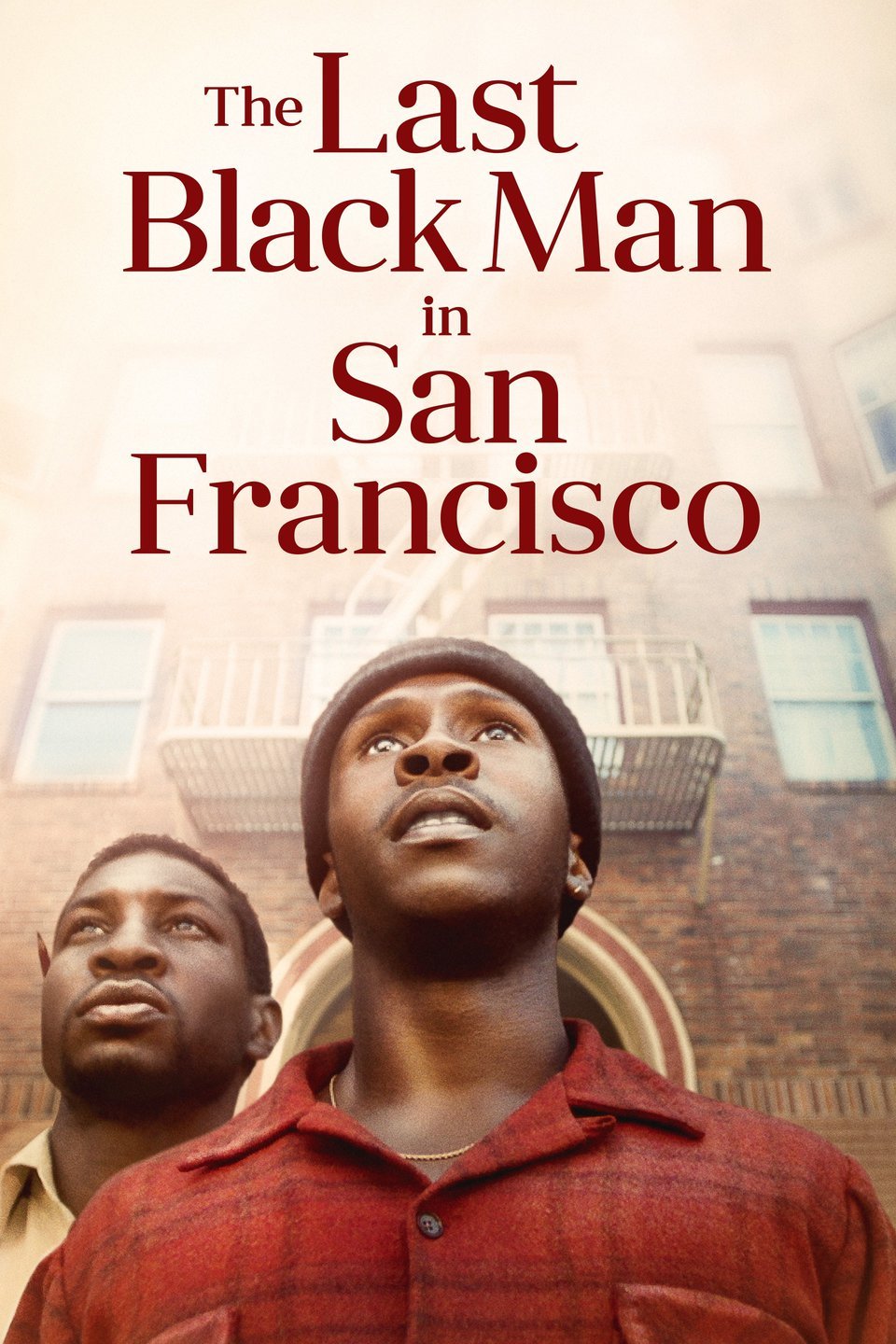
movie: The Last Black Man in San Francisco (2019)

Again thanks to my mother’s urging, I watched this introspective film online the other night. It was odd, slow-moving in that way that art films often are, but visually beautiful, thoughtful and poignant.

Jimmie Fails is a little bit obsessed with the family home – that is, the house that his family lost some years ago. He and his buddy Mont hang around and work on the house when they can get away with it – the white lady who lives in it now is apt to throw croissants when she catches Jimmie touching up the paint on the trim. Jimmie lives with Mont and his blind grandfather as sort of a charity case, in an outlying part of the city. A group of young men hang out on the sidewalk outside Mont’s house, talking shit as the pair comes and goes. There’s less action to this movie than there are scenes, even montages. Mont works at a fishmonger’s; we see him killing and wrapping catfish. Jimmie works at an old folks’ home. They wait on the bus. Jimmie rides a skateboard. The men on the sidewalk talk their shit. And Jimmie worries over the house.

Jimmie’s grandfather built this house – “the stairs, these windows, the columns, the archways, the witch hat, the balustrades, the fish scales, this balcony… all of it by Jimmie Fails the First with his own two hands.”

the house in question (click to enlarge)

And Jimmie’s determined to have it back. Accompanied by the eccentric (but who isn’t?), loyal Mont, he’ll get back there.

The Last Black Man in San Francisco showcases footage of the city and one completely extraordinary house (with a built-in organ in the front hallway, a hidden room behind a bookshelf, and all the flourishes), and takes time and attention with faces and personalities. Again, just visually, it’s a striking series of studies. See the white men in full haz-mat suits cleaning up sidewalks where Black children play among street preachers and those sidewalk loiterers, who form a Greek chorus of sorts… Jimmie and Mont spend as much time standing, sitting, riding, and musing as they spend in action, but their actions are momentous. Jimmie is driven, single-minded. Mont is an artist, a writer, and an unusual soul. When Jimmie asks why he’s lovingly drawing the sidewalk guys, who are basically bullies: “I shouldn’t get to appreciate them… ’cause they’re mean to me?”

Obviously, this movie is a commentary on race relations and on gentrification, the plague on San Francisco in particular but on many or all of the cities in this country. It’s about class and exploitation and how we value history, and family relationships. It’s also about friendship: the friendship between Jimmie and Mont is something really special.

I was fascinated to learn the backstory on this movie. Jimmie is played by the real Jimmie Fails, whose life story closely matches his character’s. (The house is not his family’s house, though.) Director Joe Talbot is his longtime best friend; together the two decided to tell this true story in fictionalized film form, and it’s genius. It also means that actor/character Jimmie has bared his soul in a pretty big way. Mont is played by Yale-trained Jonathan Majors, and I’ve seen indication in two different places that he both is and is not based on a real-life friend of Jimmie’s. Whatever the case, he’s an indispensable part of this story, as Jimmie’s foil, and partner both in musings and in action. His artistic inclinations move the plot along and allow for important commentary.

I’d say the only criticism to be made here is pacing, and that’s a qualified criticism; it’s just got that art-film thing where there’s plenty of space and time for ideas to expand, which is not for every viewer. But this movie is beautiful, thought-provoking, important, wise, and funny. I do recommend. Bonus points for SF lovers, of course; and for those of us with strong commitments to place, check out Jimmie’s line: “you don’t get to hate [the city] unless you love it.” Indeed.


Rating: 8 brush strokes.