Forty Acres Deep by Michael Perry

A loan from a dear friend, from one of his favorite authors, and I can see why. This novella-length story was absolutely grim, but often funny, too, and deals with some serious messages. I don’t do this often, but let me give a big **content warning** for suicide.

It begins:

Harold had come to consider the accumulating weight of snow on the farmhouse roof as his life’s unfinished business. Daily the load grew… on his heart, his head, the creaking eaves.

A few paragraphs later:

She died a month ago, and he hadn’t plowed the driveway since.

That sets the stage pretty well for us, and all on page 1 (no spoilers). Harold has lived on the same farm all his life, inherited from his father, in a vague midwestern setting where they get a lot of snow. They were dairy farmers, but the economics of that lifestyle got increasingly hard, and then the barn burned – with the cattle in it – a trauma as well as a financial blow. He turned to beef cattle, although one hard winter, with he and the wife both down with the flu, he had to send them to market at the worst time of year, and thus got out of that business. He tried cash crops, but the prices dropped out of beans and corn, too. He leased the land to a farmer who never showed up in person; instead he sent “hired-hand agronomists with wands and laptops and satellite-guided monster machines.” There is a definite note of ‘things these days’ and ‘good old days,’ phrases against which Harold – to his own derision a part-time follower of philosopher and poetry – consciously rebels. He is an old, straight, white man, and he notes his own prejudices and old-fashioned attitudes, and actively interrogates them.

“She” was his wife, and when she dies, Harold wraps her in blankets and puts her out on the porch. He can’t bring himself to face the world. Instead he shovels the walk to the chicken coop, cares for the hens and eats their eggs with canned beans, almost his only remaining provision. He runs the kerosene-powered torpedo heaters, pointed up at the pole barns’ roofs, hoping to keep them from collapsing under the weight of the snow. He ruminates, contemplates, checks remembered quotations in his old philosophy texts. We see him visit town just a few times, where he has a minor but meaningful interaction with a barista whose context could hardly be more different from Harold’s. (It doesn’t take much interaction to hold significance for Harold, who mostly speaks only to his chickens, or himself.)

Harold is an interesting character. When he discovered Montaigne as a teenager: “instead of what he expected a French philosopher might write about, he found references to sex and farts. This was silly and appealed mostly to his dumb teen prurience, but it also implied that philosophy might be accessible and relevant even for a horny rube in barn boots.” He is both country farmer and philosophy student, both privileged old white guy and actively interested in the pronouns, the rainbow flag, and the new ways of thinking. He knows he’s not accomplishing anything big here, but I think you’ll join me in respecting his small curiosities.

Perry is a masterful writer. Harold’s story is almost unrelentingly, deeply depressing – that’s hardly a strong enough word. Nothing goes right, everyone he’s ever cared for is dead, there is nothing left to hope for. His story is also extremely funny: Harold possesses a remarkable sense of humor, and Perry renders it in prose that often surprises while commenting (cynically, of course) on the American condition. “Another yoga-panted woman was griping down at him from her Denali over how much he undercharged for digging her prairie restoration patch.” “After sundown the horizon to the west glowed with encroaching fitness center, brewpubs, and mitotic apartment complexes.” Even as the snow-buried landscape obscures, buries, kills, it is beautiful, and so is this book: both story and line-by-line writing. Harold has a hell of a vocabulary, too. He makes fun of himself for knowing how the meaning and spelling of ‘jejune’ but not how to pronounce it (me neither, Harold). Echolalia, misophonia, cotyledon, vermiculite, hyperacusis, exudation, popple whip.

One of Harold’s last backhoe jobs was for a wealthy architect who hired him to rearrange a set of decorative boulders amidst the shrubbery surrounding a cavernous riding stable. Afterward, when they were settling up, Harold said, “Nice pole barn.” He truly intended the compliment. The architect stared at him blankly for a beat, then, as if dictating from behind a lectern, declared, “It is a custom barndominium-slash-hippodrome.” Harold waited for the slow grin that would concede the absurdity of the extravagant jargon, but after an uncomfortable straight-faced silence, the man slipped an iPhone from his velveteen corduroys and said, “Do you accept Apple Pay?” Omnipresent, Harold thought, were the signs that contemporary culture was leaving him the dust. “Nope,” said Harold, and handed the man an invoice scribbled out on a carbon paper slip.

Lest you think this is overly crabby: Harold (and therefore, obviously, Perry) is aware of his own part in this caricature. At an entirely separate set of reflections, “You are being petulant, he thought. And grandiose.” He excels at the unwieldy, surprising, barking-laugh-out-loud list: “the world’s privileged hordes were content to skate along on… the secondhand grease of star-spangled draft-dodgers peddling hot water heaters, bald eagle throw rugs, and resentment.” Etc.

It’s not all this wordy. “At first light every tree branch, every blackberry cane, every stick and stem was a hoarfrost wand. The sky was clear, the air was still, and sunlight splintered every which way.” It can be as clean and smooth as snow-covered fields, where every tool or piece of garbage is softened over into something vague and beautiful.

This is a masterful piece of art. Extremely grim and dour, but beautiful.


Rating: 9 pictures.

Even Though I Knew the End by C. L. Polk

I’m a big fan of C. L. Polk.

Even Though I Knew the End is romance amid magic and determinism wrapped in a PI novella. (It’s actually a bit of a much-less-dark cousin to last week’s Harmattan Season.) When we meet Helen Brandt, she’s in a Chicago alley attempting an augury, for which she’ll be paid a whopping $50, which she can add to the nest egg she’ll leave her beloved, Edith, on this their last weekend together. The murder she’s meant to investigate turns out much uglier than originally understood, and besides, her augury is interrupted by two members of the Brotherhood of the Compass, a sort of magical professional society from which she’s been barred. Oh and one of them is her long-lost brother (literal). Same-sex love in 1941 Chicago is a challenge unto itself (Helen has friends who have disappeared into insane asylums, for example), as is being a woman in that same setting. Add to that mix angels, demons, souls sold and stolen and earned back.

I loved the historical setting (but plus magic), and the queer speakeasy and community; I loved the femme fatale / gorgeous-but-dangerous-dame sort of character, and found Edith’s religious devotion an unexpected twist. Again (and in such a short time span for this reader) I met some classic or traditional elements of a noir tale, mixed up with new ones. I heard echoes of Chuck Wendig’s Miriam Black. But where Harmattan Season was grim, Polk offers hope – however bittersweet and limited – for a happier ending. As smoke-shadowed as this world is, Even Though I Knew the End is also deeply sweet in its romantic element.

I felt that those Polk shorts I read recently offered varied degrees of success with the shorter format – meaning, some felt a bit more complete or fully realized than others. Many writers, I’d venture, get trained in the novel-length form, and/or have the most reading experience in that length; masters of the short story seem fewer than masters at the novel. (Am I reaching? Do you agree?) I don’t know if that shorter form is harder, or just a place where we tend to get less experience. At any rate. If Polk was experimenting with highly enjoyable but imperfect success in those shorts, here I feel they have achieved something pretty perfect, fully realized, in these 133 pages. Which is not to say I don’t want more of Helen (and Edith) – I very much do. But Helen’s days were always numbered; maybe this is all we get.

Plenty gritty but still sweet, masterfully complete in a small package, with period detail and imaginative flair–I love this story and will follow Polk wherever they may lead next.


Rating: 9 perfect cups of coffee.

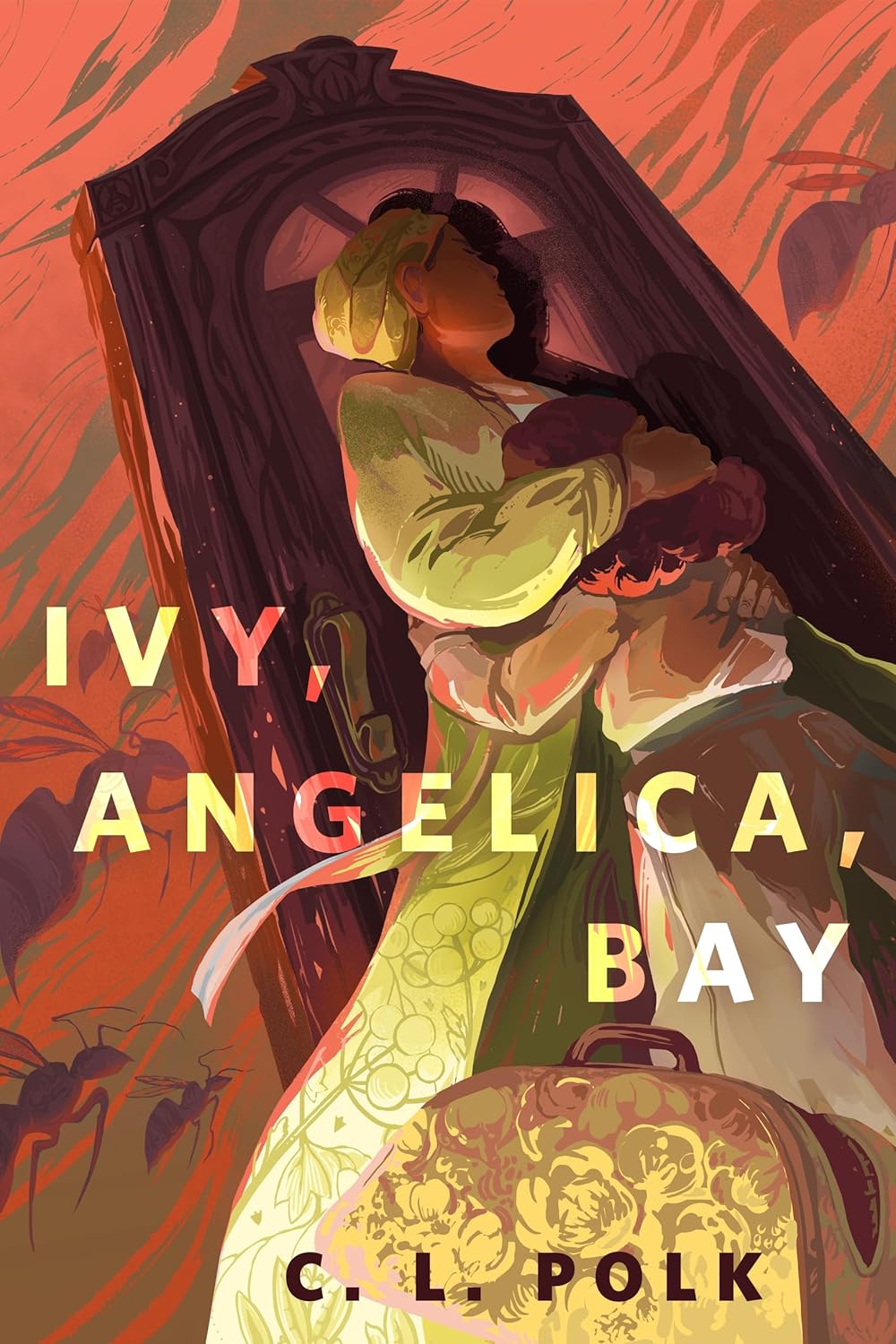
shorts by C. L. Polk: “St. Valentine, St. Abigail, St. Brigid”; Ivy, Angelica, Bay; The Music of the Siphorophenes

I have been missing Polk’s Kingston Cycle (starting with Witchmark), and was pleased to find a few shorts (for free!) on their website. Here are one short story and two novelettes. (The last is offered with two spellings! Apologies if I’ve used the ‘wrong’ one here.)

“St. Valentine, St. Abigail, St. Brigid” is a short story with some sweetness in its protagonist’s devotion, and in the honey produced by her mother’s bees, but also darkness, in the prices we pay and the love that is not returned. Theresa’s mother is a powerful magician, a mistress of the bees. Theresa was the price she exacted from a client. She is protected and privileged, but not loved. She will make her own deals for the sake of her own affections. As I recognize from other Polk works, this story combines a dreamy, weighted atmosphere and deep feeling in a delicious blend, with a mythic tone and a character I care deeply about in just a short span of time.

I was even better pleased to find Theresa again, grown up, in Ivy, Angelica, Bay. The heartbreak hits a bit harder here, perhaps because we are growing up. But she’s coming into her powers, as well. The ending offers a twist I love, with opportunities; I wonder if we might hope for more fiction, perhaps at novel-length, in this world: Theresa and the other mistresses of the bees who come before and after, and the world of good people but also darkness in which they move.

The Music of the Siphorophones or Siphorophenes (no cover image I could find) comes from a slightly differently imagined world. Where the bees wield their power in a world that looks a lot like ours, this novelette reminds me a bit of The Expanse: space pilots in a future universe in which ‘spacers’ (who live on ships and stations and planets far from human origins) have developed very differently from ‘grounders’ (mostly-Earthbound people), and there are galaxies’ worth of threats to consider in interspace travel, from pirates to intrigue in politics and entertainment, and good old-fashioned human trauma. But also the Sirens, who offer (reputedly) something like a religious experience to those lucky enough to encounter them. There will be big moral questions on offer for our small cast of characters here, and again, opportunity for this world to grow into more writings for Polk, if they desire it. I hope they do.

This continues to be a talent I’d like to hear more from.


Rating: 7 bulbs of water.

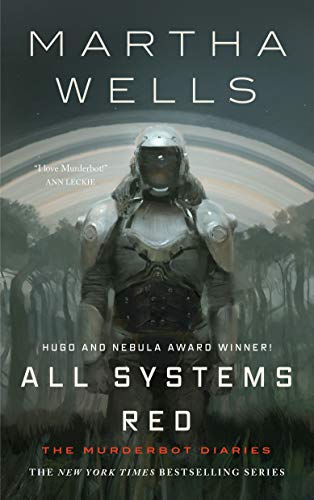
reread: All Systems Red by Martha Wells

I cannot believe I rated this a mere 7 on first go-round. That’s madness. It’s a brilliant book! I guess this is evidence of how slow I was to enter Murderbot’s world. Now that I’ve read seven Murderbot books, this one was far more accessible for me, and the rating has increased considerably. Liz listens to the audiobook version of this on repeat, and I get that now absolutely (although I’ve still never listened to the audio version).

This time I was all in from minute one, with a background understanding of the rules of Murderbot’s world, the constraints of being a construct, the confusions about what exactly it is, its lovably grumpy attitude toward humans and its preference for entertainment media. I think it’s a fairly unusual portrait of… this kind of life form… that an individual could be sort of lackadaisical, may I say even lazy, toward its *work* and genuinely want to be left alone to watch what you and I would call TV shows. In this first book, Murderbot is for the first time living and working with a group of humans who are open to its (if you will) humanity, and Murderbot does not know what to do with that. Some of the humans more than once call it “shy,” but that’s not entirely it; Murderbot is uncomfortable with being treated like a person that deserves respect and autonomy, because that’s a new experience. And this is compounded by its need to pretend its not such a person, because for its own safety it needs for no one to realize that it’s hacked its governor module and is operating according to its own wishes. So. “Yes, talk to Murderbot about its feelings. The idea was so painful I dropped to 97 percent efficiency. I’d rather climb back into Hostile One’s mouth.” (That voice is hysterically funny.)

I can’t get enough and am now in danger of ripping through the whole series all over again. I’m sure some readers (Liz?) accessed this much more easily on the first read, but boy, is this second one an improvement for this reader.


Rating: 9 little hoppers.

Heartless by H. G. Parry

From memory, I’m going to say the Peter Pan story was sweet and heartwarming, with some good healthy ideas in it about always retaining a lovably childlike (not childish!) spirit and the magic of believing. We fly through the stars and have adventures! We help each other. And even when we have to (sigh) grow up, we can access that magic again through the power of imagination.

Then there was the movie Hook, which had Robin Williams and was therefore great, and (again in my possibly faulty memory) more or less followed those themes. We all have to grow up, but it wouldn’t be healthy to lose all the joy of childhood.

This is not that version of Peter Pan.

H.G. Parry, who I fell for hard with The Magician’s Daughter, takes us on a more realistic and darker journey with Heartless. Now the protagonist is neither a Darling nor a Lost Boy nor Peter himself, but an orphaned child in a Dickensian sort of London named James, who gives himself the fanciful last name Hook when he gets a chance at self-invention. James is a born storyteller, a skill which endears him to the only boy at the orphanage James really cares about, a careless but compelling child named Peter. For Peter, James tells stories: ones his mother told him or read him, ones he’s read himself, ones he’s made up. For Peter he makes up the child-king Peter Pan and his sometimes-antagonist the pirate Captain Hook, who inhabit a magical (and made up) island called Neverland. These tales keep Peter at James’s bedside until the night that Peter leaps off the orphanage’s high roof and flies into the stars: “second to the right, and straight on till morning.” James wants to follow his best and only friend, the boy who did not so much as look back. But when James leaps, he falls to the stone courtyard below.

From here we follow James Hook (his new identity) and his friend Gwendolen Darling (who takes the identity of James’s younger brother, George Hook) in their adulthood. James is forever chasing after Peter. He will eventually find what he’s looking for and find also that it’s not what he was looking for at all. This brief book (141 pages) is Peter Pan, yes, but retold with a different protagonist at its sympathetic center and a decidedly sinister twist; fairies are not sweet but uncaring. Captain Hook, of all people, is the one we feel for. And we are centered on the power not only of imagination but of storytelling – and like all of them, this is a power that can be used for good or ill. “[The fairies] didn’t understand that stories weren’t meant to be lived in forever; they were meant to be shared, passed on, questioned, to mingle with a thousand other tales and poems and experiences and be changed by them. They didn’t understand that stories, too, needed to grow. He hadn’t understood himself until recently.”

A retelling of a classic with rather more realism (especially in the London setting) and more darkness, but also still sweet and wholesome, with Parry’s absolutely lovely style; I’m going back for more from her.


Rating: 8 leaves.

System Collapse by Martha Wells

Book 7 is, again, the most recent Murderbot book to date, but there are more on the way, we’re told, and thank goodness. This tip from Liz has been (yet again) a big winner. I took a big break between books 6 and 7 – pretty precisely three years, whew! but it wasn’t too bad to jump back in. I won’t say I recalled all the fine points of where we were and who the humans were, but I was close enough to follow along; I think I’m already a little liable, with sci fi in particular, to let some of the details of tech and even plot wash over me as I go with the general atmosphere, themes, and cleverness. The Murderbot Diaries are absolutely character-driven, with style (that is, chiefly, Murderbot’s unique, sarcastic voice and secretly-a-teddy-bear personality) carrying a good portion of the load as well. I’m way more here for Murderbot itself – its inner dialog, its anxieties and values and reluctant but absolute loyalties, its decision making and love for entertainment media – than anything that happens to it. Those events are only here to let Murderbot react and act and be its loveable self.

Murderbot is full of dryly funny observations about how inexplicable humans are. “Humans are great at imagining stuff. That’s why their media is so good.” “Not even humans know why humans do things.” It coins ‘argucussion’ for the argument/discussions its humans have. Upon conflict, one human says to Murderbot, “We should talk about this later,” and its internal narrative responds, “We probably should but we absolutely are not going to, not if I can help it.” Because Murderbot is as avoidant of its own emotions and trauma as any repressed, long-ignored, forced-to-be-self-reliant human. It is a very human SecUnit.

This edition, it is fair, may start a bit more mid-scene than usual even for Martha Wells (and this is a thing she does), and it’s been a while since I last knew where we were. Murderbot and its growing crew of beloved humans (it is reluctant to admit to this, of course, but we know it is true) and ART the sentient spaceship are in a tricky negotiation situation involving mistreated and rightfully suspicious colonists, evil corporation lackeys, and dangerous ancient aliens. There is action and fighting, and mysteriousness. Murderbot spends a fair amount of time pretending to be human, which is at least better than pretending to be a SecUnit that has not hacked its governor module (there’s a little bit of that as well). It has the opportunity to free other SecUnits, too, and that possibility and the other SecUnits’ reactions are promising for future books. I smell a sequel and I can’t wait.


Rating: 8 fictionalized documentaries!

The Order of the Pure Moon Reflected in Water by Zen Cho

“There was a brief lull in the general chatter when the bandit walked into the coffeehouse.” It was not because he was a bandit; this was fairly commonplace. It was because he was extremely attractive. Nevertheless, chatter eventually recommences, until a fight breaks out – waitress, belligerent customer, manager, the beautiful bandit, and then a homelier bandit #2 – smashing the place to bits. It’s an appropriately exciting first chapter, setting up a cast of characters that we will follow well beyond the bounds of the coffeehouse. In fact, the majority of this short, lively book is set in the jungles and on the roads of a kingdom in turmoil.

The waitress is quickly recognized by her shaved head as a nun in the Order of the Pure Moon Reflected in Water. She is clever, resourceful, quick-witted, and highly trained in combat, but also a bit innocent. She follows our bandits (who are lucky no one noticed they appeared on a Wanted poster in the coffeehouse) and part-forces, part-cajoles her way into their gang, otherwise all male; the men are variously intrigued by the idea of a woman cooking for them (she turns out to be a terrible cook) or being available for sex (she sweetly informs them she would have to castrate them afterwards), or annoyed by her presence. Her devotion to the goddess she serves is very strong. As our nun-waitress-bandit and the rest of the gang get to know each other and pursue their banditry, conflicts arise in their approaches to religious fervor, history, and interpersonal relations, but they will find common cause.

At just 158 pages, The Order of the Pure Moon Reflected in Water was easy to devour in an evening. It combines playful humor with very real tragedy, political messiness, the truest of friendships and the beginnings of romance. It’s a swashbuckling series of escapades with ideologies, justice, religion, relationship issues, and more. With some twists on gender and sexuality, this thrilling, silly-yet-earnest adventure tale is definitely a readalike for Upright Women Wanted, although it feels a bit more fully realized in its small package. Absolutely recommended, and I’ll take more from Cho.


Rating: 7 jade prayer beads.

The Awakened Kingdom by N.K. Jemisin

The Awakened Kingdom is another Kindle-only novella, following the Inheritance trilogy (of which The Kingdom of Gods was the third book). Thanks Pops for clueing me in!

As is more or less usual, this review contains spoilers for previous books (all three novels in the trilogy) but none for The Awakened Kingdom itself.

This was great fun and went by quickly, and I am quite entranced by the narrator’s voice (I seem to like each better than the last). It takes a little while to figure out who is speaking to us, because they leap right in with great enthusiasm, shouting in all-caps and with exclamation marks: this is a brand-new, infant godling, who is still learning about the world and their own powers and (not least) how to tell a story.

I am born! Hello!

Many things happen.

The end!

(Then our child-god gets some lessons in storytelling from Papa Tempa, or Itempas, who you may remember is the god among other things of order. Later the narrator will also indulge in some Mama Yeine-style storytelling, with the disjointed chronology that characterized the first book in this series. It’s quite cute like that.) We eventually learn that the speaker is more or less female (using ‘she’ pronouns), and 40 days old when we meet her; she does not have a name until she gives herself one, which I’ll use here in the interest of clarity and because it gives nothing huge away. Our narrator is Shill. She was conceived as a replacement for Sieh, the Eldest godling and Trickster; she is frustrated early in her life, though, because she’s terrible at being Sieh. So begins the familiar challenge of becoming, instead, herself.

Shill finds herself attracted to the mortal realm, and travels to one continent in particular where she’ll meet her sibling-god Ia, a captivating young mortal man named Eino, his powerful grandmother Fahno, and the two women who both hope to marry him. In Eino’s society, women hold all the power. They fight and protect, support their families and rule politically. It is men’s job to have beautiful hair and clothing and smell nice – to be decorative, to raise children, and to serve their wives. “Women risk their lives enough to bear children and provide for them by tool or by blade; the least men can do is handle things after that.” This reversal is quite a revelation for me: it’s refreshing in some ways, shocking in others (the patriarchy is so ingrained that it’s hard to grasp), and makes its point so well that it’s almost nauseating – that is, it’s easy to see how unjust men’s degradation is in this fictional world, so what the hell is wrong with this real one, y’all? All of this is fascinating, and it takes Shill – naïve though she is – about a millisecond to see the problem. What she’ll do about it – and what Eino will do, because despite being just a boy he is quite impressive – will change everything.

Shill’s narrative voice does mature some as she does – the exclamation marks fall away and the feelings get a little less toddler-temper-tantrum. But she retains a disarming, downright charming, innocent regard for things being right and just. “ALL EXISTENCE WAS WRONG AND TERRIBLE AND IT SHOULD BE BETTER!” Tell them, Shill! The two high points for this novella, for me, are that voice, and the eye-opening problem of misandry. The Awakened Kingdom is a delight: entertaining, fast-paced, deeply charming, and also thought-provoking. I wish I could read it again for the first time, immediately.

And so, good news: there is more Inheritance! I’ve just loaded up Shades in Shadow, a triptych of short stories from the same world. Hooray and keep writing, Jemisin.


Rating: 9 serry-flowers.

Once More Upon a Time by Roshani Chokshi

Once upon a time, there lived twelve reasonably attractive princesses who, when lined up together, caused such a sight that the world agreed to call them beautiful. And so they were.

Prince Ambrose and Princess Imelda fall in love at her sister’s wedding; her father, being thrifty, asks them to wed the very next day to save on expenses. He gives them a kingdom called Love’s Keep, which will thrive and prosper only as long as its rulers remain in love. Naturally, then, Imelda falls ill; a convenient witch offers to save her life if Ambrose agrees that they will give up their love for each other, thereby damning both Love’s Keep and their marriage. This story begins when Ambrose and Imelda must leave Love’s Keep, that barren land. Before they part ways forever (unclear on why they every wound up together in the first place), a different witch (at least I think it was a different witch?) appears and offers them a quest. The point of the quest is not for them to fall in love again, but stranger things have happened on quests. The estranged king and queen, then, set off through strange lands, to have adventures and meet wild beasts, cannibals, and a horse cloak that thinks it’s a horse. What will they find, and lose?

I am much intrigued by this deceptive little tale, which seems simple on its surface but (as so often!) contains depths. Both prince and princess have some hangups, some baggage, some triggers. Both have put up defensive mechanisms that limit their access to joy and love, and this is not the usual material of prince-and-princess fairy-tale romances, but it is the material of real life. I love that this princess has a trigger about the objects that have been used in her past as a means to exert control, to tie her to the earth. And in a classic miscommunication, her prince’s attempt to use that very mechanism to free her will be misinterpreted – as can happen when we establish less-than-rational associations. There is a question built in throughout as to where love comes from, and whether it can be regained once lost. What is really the obstacle to the success of the relationship and of Love’s Keep? Imelda fears that even in her joy,

This feeling will trap you. There is no freedom in this.

Is love a trap? Can one be safe in love?

Ambrose knew there was no trust in love.

Love made no promise to stay, to put down roots.

Later,

Ambrose knew there was no trust in love.

But there was no love in trusting that truth either.

As ever (and echoing that recent read, Everything, Everything), these things only work if you take a risk that they won’t.

You think it’s lust, but it’s not. It’s bravery. To close distances. To take the raw, beating part of you and hold it up to the light.

A romance, yes, but a far more pragmatic one than fairy tales tend to be. At only 133 pages, it’s an easy and absolutely joyful read. Also, please note that Imelda goes around saving Ambrose’s tail more than vice versa. I’d never heard of Roshani Chokshi but will have to find more.


Rating: 8 apples, naturally.

The Turn of the Screw by Henry James

It’s that time again: due to life in general and reading-related issues, I’m taking us back to two posts a week for the foreseeable. They will appear on Mondays and Fridays. Sorry & thanks for your continued interest!


Not sure what prompted me to take in this classic – it might have been The Cambridge Introduction to Narrative.

randomly chosen atmospheric cover (I read a free ebook from Project Gutenberg)

I didn’t have a terribly successful read, but now I know. I’m going to say that this one didn’t age as well as some writers of James’s era. Two central concerns are sentences and what we fear. First, James’s habit of complex syntax and copious strung-together clauses drove me nuts. I found it quite distracting and frequently had to reread to follow the logic of comma-packed sentences. Check out this completely typical (not extreme) example:

At the hour I now speak of she had joined me, under pressure, on the terrace, where, with the lapse of the season, the afternoon sun was now agreeable; and we sat there together while, before us, at a distance, but within call if we wished, the children strolled to and fro in one of their most manageable moods.

There’s a style there that just doesn’t work for me, and I’ll wager works for few modern readers.

Perhaps more importantly, though, even after I’d puzzled through the sentences: The Turn of the Screw is a horror story, but it no longer horrifies. Reading this book was like waiting for the jump scare that never comes. [Spoilers follow, although I’ll not share the ending.] A governess takes charge of two charming children at an impressive country estate: the little girl who is supposed to be her pupil, and the slightly older boy sort of by accident, when he is expelled from boarding school. Our protagonist can’t understand why, because he (like his sister) is perfect, angelic, cherubic, just the sweetest and smartest etc., etc. But then she has a few sinister sightings of two individuals, man and woman, who turn out to be the ghosts, respectively, of a former servant and the last governess. These two committed the incredible sin of having a romantic and sexual relationship even though they were not only unmarried but (gasp) of different social backgrounds. The idea of who is a “gentleman” (and how we can tell by looking at him) is of great importance. Perhaps you can imagine that this just doesn’t impress me; I couldn’t muster any outrage.

The ghosts have some sort of influence over our dear angelic children, who thereby become sinister by association, although they don’t actually do anything bad beyond wandering around unsupervised. This is no Orphan. In general, ho hum.

(There is also an interesting bit of story-within-the-story here: we open with a bunch of Victorians at a country home for a long weekend, where the governess’s story itself is introduced and then read aloud. I’m always intrigued by this narrative device. We never return to the country weekend, so it doesn’t perhaps do the work it might have done for this book.)

My friend Vince teaches a class on horror films and literature, and he could speak to all of this more effectively than I can, but I recall him saying something about how different eras in horror reflect what we feared at a societal level at each point in time. Here, James is clearly concerned with the innocence of children (and the terrifying lack thereof), and class distinctions. That’s my fairly surface-level read, and frankly, it’s as deep as I feel motivated to go. My friend Liz points out that Stephen King has “ruined” (depending on your position) all the horror that came before, by figuring how how to really terrify us. She’s probably right, too. She cites Frankenstein: the modern reader approaches that classic novel looking for a fright that just never surfaces. I’d say that’s a finer novel than this one, though.

Somewhat in James’s defense, I did finish this novella, after faltering in the middle, because I wanted to see what happened. That’s good for something. The ending held a note of some profundity. Still can’t recommend it, except as an act of completionism, if you want to get a good historical grasp of this genre. Next challenge: what horror story of a similar era is still scary?


Rating: 6 commas, which (on theme) might be one too many, but credit for James’s long influence.