guest review: The Living Mountain: A Celebration of the Cairngorm Mountains of Scotland by Nan Shepherd (introduction by Robert Macfarlane), from Pops

Months ago, back in August, my father came to visit me in my new home in West Virginia. One of our evenings was spent with my friends Doug and Melissa, down at the little brewery in their town, sharing stories and pints and a pizza. Among many other things, various author names were thrown about. Robert Macfarlane forms a meeting point for Pops and Doug. We finished up at their home, with a little casual live music from our host, and a book recommendation. My father returned home to Washington state and acted quickly. I received this email from him just a week or two later.

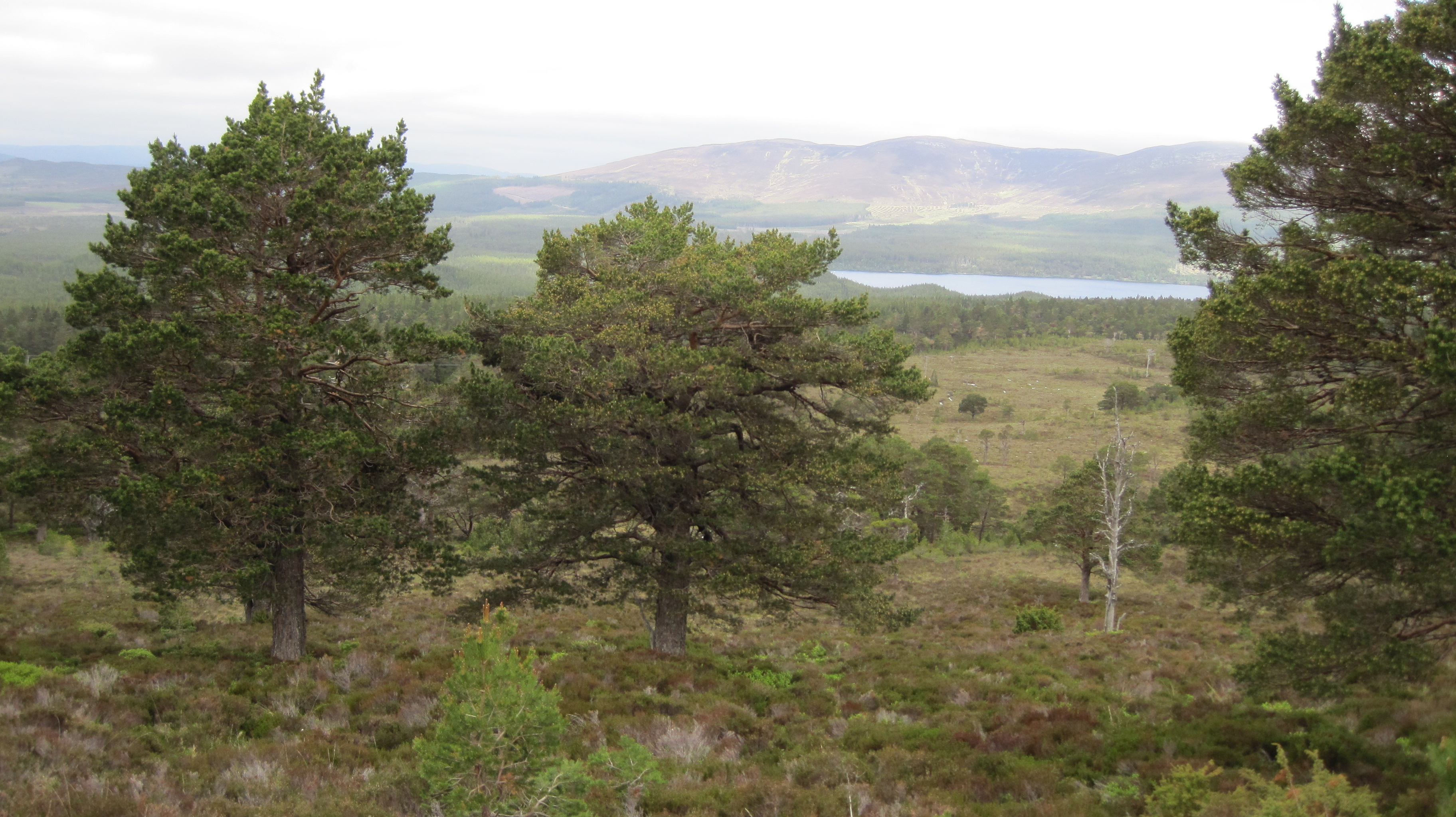
On Doug’s recommendation, I received this WWII-era book, lost and only first published in 1977: The Living Mountain, by a UK publisher, from Pacific Northwest provider ThriftBooks. This used copy is the 2011 edition with a 26-page introduction by Robert Macfarlane. Shepherd’s subject-homeland is the Cairngorm Mountains in Scotland, one of my favorite places from our visit, where we stayed a few days so I could take several mountain hikes, view Scots Pine recovery efforts and drink Cairngorm Brewery’s Black Gold Ale at the local pub with a view.

In 1977, The Guardian called it “the finest book ever written on nature and landscape in Britain.” Their 2011 review says “This is sublime, in the 18th-century sense, when landscapes like these were terrifying. And she achieves it in language that is almost incantatory, like a spell…” I can’t wait.

Scots pines. photo credit: Pops.

Black Gold. photo credit: Pops.
Some three months later, I received this review.

The introduction here is by Robert Macfarlane, who nearly singlehandedly has led a revival of her works of poetry, fiction and this book. And today the Scottish 5-pound note displays her image, with a quotation.

As Macfarlane says, this is “a formidably difficult book to describe.” Shepherd’s subject here is the Cairngorms: a massif, a group of peaks, a plateau – all those things, which she habitually refers to as the Mountain: an organism, an ecosystem, full of life, all its pieces intricately and inextricably linked. This place comprised her true life-long home, even as she traveled widely. She was obviously a committed and ambitious walker, in all weather; hers were no casual visits to the Mountain, and she often stayed overnight.

The Scottish author quietly lectured in English for Aberdeen College for most of her career. Eight years after writing four books in a burst, she wrote (and shelved) this one in 1945 at age 52. It was only published in 1977, inexplicably (although: Macfarlane notes the same year saw four other similar classics; again, a mystery). She died four years later.

Her language is simple, florid, passionate, and so unending it leaves one nearly breathless even if reading in silence, creating a sense of stream-of-consciousness in spite of typical narrative form. I was immediately deterred from any highlighting or marginalia; the prose is simply too dense with compelling description and notions. It is no surprise to learn she was a close reader of Buddhism; her sense of being one with the Mountain is complete: spiritually, physically, emotionally. Her ability to convey a deep and personal devotion to place challenges many others who embrace the same sense, and work hard at molding language to the task of saying so: Berry, Doyle, Sanders, Kingsnorth come to mind. Yet, reportedly, she never felt that task complete.

I was reassured all along knowing we have Macfarlane’s introduction to rely on; it’s an artful and meaningful essay in itself, and does justice to her work. He reports reading the book “perhaps a dozen times,” and his always capable language is informed by his own early-life passion for the same place, which I briefly visited as well. I only wish I had carried her slim, small volume with me when I was there, as both guide and inspiration.

What a lovely review, and strong endorsement! Thanks, Pops.

And for a postscript: Macfarlane’s 2013 Guardian article (with slideshow) about his recent visit to the Mountain, Shepherd always in mind, provides ample evidence of the magic.

The Magical Language of Others by E. J. Koh

Letters from mother to daughter shed glimmering light on reunions, reconciliation, immigration, heritage and familial love.

Poet and translator E.J. Koh grew up in California’s Bay Area, the daughter of Korean immigrants. Her parents moved back to Korea when she was 15, leaving her to live with her angry, taciturn 19-year-old brother. By the time her parents returned to the United States, Koh was off to graduate school in New York City. During those years of separation, a flurry of letters from mother to daughter sketched a yearning over distance.

The Magical Language of Others revolves around these letters, translated from occasionally English-spattered Korean. Koh read them as arrived, but it wasn’t until much later, in their rediscovery, that she came to understand what they offered. In a small box she has kept for years, Koh finds exactly 49 letters: “In Buddhist tradition, forty-nine is the number of days a soul wanders the earth for answers before the afterlife.”

As Koh studies Korean and Japanese, and eventually adds a graduate degree in Korean translation to her graduate poetry studies, she works as well to translate the love, longing and abandonment of generations of women. Her paternal grandmother’s memories of Jeju Island are first idyllic and then filled with trauma from the massacre in 1948. Koh’s privileged but heartbroken maternal grandmother, after several suicide attempts, left her cheating husband in Daejeon and took an apartment in Seoul. She loved it there, but eventually relented and moved back home to a family that begged for her return. “Coming to one home, she had abandoned another.”

Meanwhile, in Koh’s own lifetime, she deals with young adulthood with her antagonistic brother. She makes frequent trips to see their parents in Korea, where she shops and visits the bathhouse with her mother, formally studies languages and informally studies people. “He waved not a hand but a blank page, and I knew it was gestures like this one that meant nothing.” Such luminous prose is evidence of an unusual mind.

This slim book is a memoir–of the years Koh spent quasi-orphaned in California; her visits to Korea; finally sharing a continent and eventually a home with her parents again in adulthood. It is also a study of generations of women before her. Koh considers how people make poetry out of imperfect lives, and how they interpret and generate love. In startling, lyrical, imaginative prose, Koh wrestles with the meanings of devotion and duty, and with the challenges of language and translation. Her final lines are as heartbreakingly beautiful as the entire book deserves. The Magical Language of Others is a masterpiece, a love letter to mothers and daughters everywhere.


This review originally ran in the November 25, 2019 issue of Shelf Awareness for the Book Trade. To subscribe, click here.


Rating: 7 parentheses.

Between the World and Me by Ta-Nehisi Coates

between the worldFinal review of the year, and the book is a great one. Pops reviewed it first, and I knew it was one I needed, but it just took me a while to get to it. The reason I finally prioritized it now is because I suspected a student needed it – actually, that was Pops’s suggestion, too – and so I needed to read it first, to know, and to be able to recommend it to her. So I have that student to thank for my own education, which is often how it works.

Coates speaks painful truths about our society and the legacy of slavery and ongoing racism in this country. He speaks with specificity and detail of his upbringing in a Baltimore that was worlds away from what he saw on TV growing up, the world where “there were little white boys with complete collections of football cards, and their only want was a popular girlfriend and their only worry was poison oak.” I think of his narrative as accomplishing three things: a review of the evils of racism in this country since its founding and continuing today; a memoir of the experiences of one man, his coming-of-age and coming to realize the above, and of growing up in Baltimore; and a review of the writings and philosophies of Black American thinking and activism. Coates has an inquisitive mind from a young age. In this book, he actively investigates the nature of education, and who gets to define the value of a civilization. I loved the part where we learn that his mother used to have him, as a child, write essays about his own mistakes. This taught him to question, and that the question itself, not any purportive answer, is the point. This lesson has got to be the most important lesson anyone can offer a young person. This is the concept behind the classic liberal arts education, right: critical thinking?

Coates assigns his son the same essays in response to his own transgressions.

I gave [these assignments] to you not because I thought they would curb your havior–they certainly did not curb mine–but because these were the earliest acts of iterrogation, of drawing myself into consciousness. Your grandmother was not teaching me how to behave in class. She was teaching me how to ruthlessly interrogate the subject that elicited the most sympathy and rationalizing–myself.

Oh, that I could teach one or two of my own students the same.

I have tried to write more about this book and what it accomplishes, both artistically/stylistically and in its content, but I keep observing that my dad did it better. (I especially like his work with what he calls metaphorical coding, and the Richard Wright poem that gives this book its title and a refrain.) His book review says everything I’d like to say about this book, and says it beautifully, so let me again try to send you back to it. Thanks, Pops.


Rating: 9 open, easy smiles.

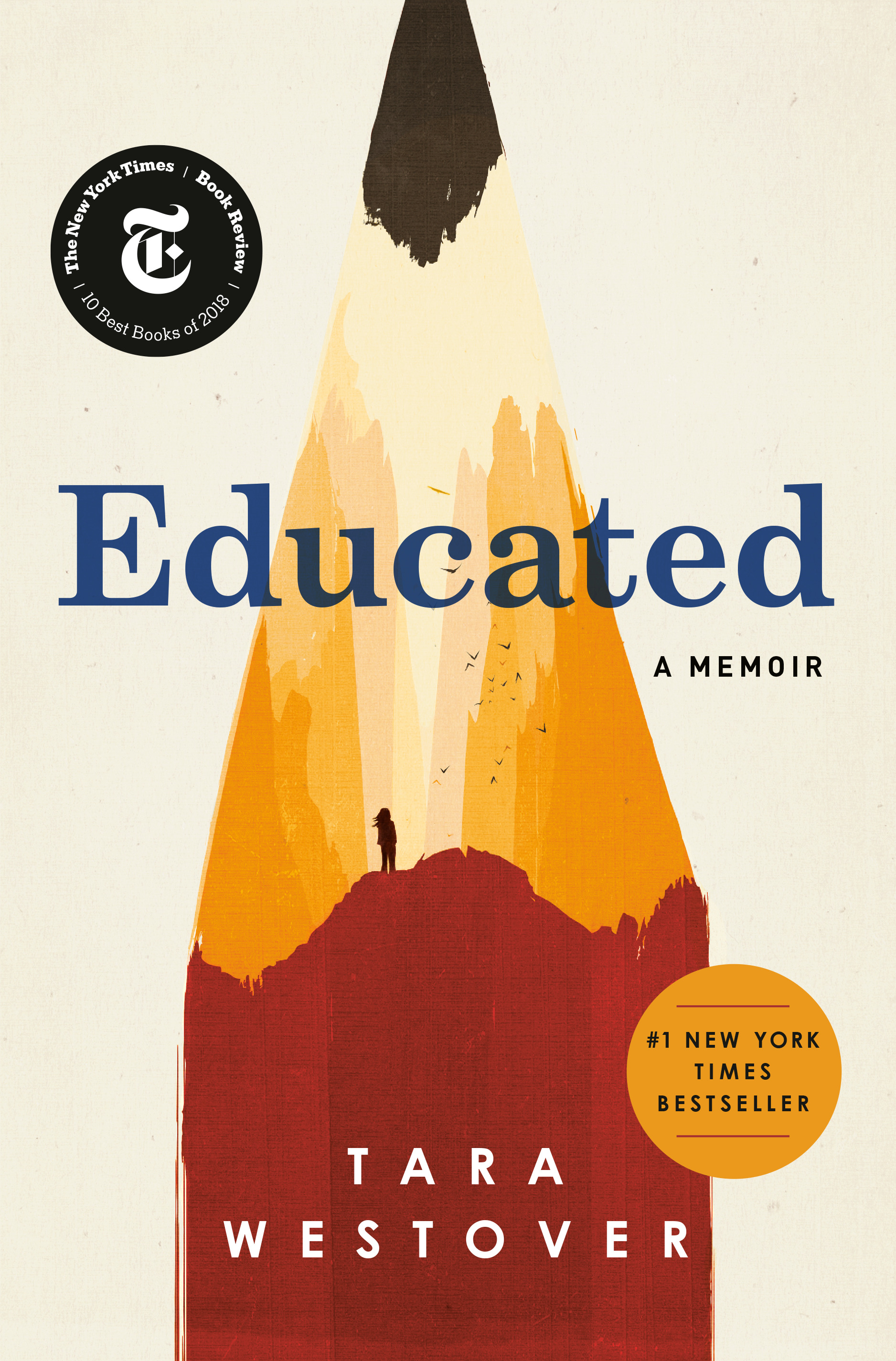
Educated by Tara Westover

We are all more complicated than the roles we are assigned in stories.

Last Friday, I briefly reviewed Tara Westover’s talk at West Virginia University. Now here’s her book.

It’s a hell of a book. I’ve written about this before: every book has the two layers, the content itself – the story it tells – and the telling of it. Sometimes one or the other clearly dominates. I read a lot of books in which the telling, the lovely lyric or literary or weirdly styled telling of it, trumps the story itself (man comes of age, meets woman, ho hum). And I read some that are very much about the story, where the telling is just serviceable. I sometimes remark when they both align to a remarkable level. This one is noteworthy because the story is so outrageous: truly, it would stand alone as a sensational tale (which is not altogether a good or a bad thing, although rather maligned in memoir). But it doesn’t rely on the shock value of its story to carry it; the telling is also elegant, and Westover makes some wise observations along the way.

As I wrote the other day, Westover was raised by some pretty extreme isolationist Mormons. She was not allowed to go to school or to a doctor. Her father seems a little nuts; he is a religious zealot, insists upon total control in the household, is prone to wild mood swings, and late in the story, becomes something of a cult leader. He makes his living by scrapping metal from his junkyard(s) and doing odd building jobs. His seven children are expected to work as part of the family business – with him, or with their mother, a midwife and homeopathic healer. This latter was not her idea, but his, so that the family would not need doctors, and as a way to serve God. She is a reluctant student but eventually finds her stride and gets serious about faith healing (which involves something she calls muscle testing, clicking her fingers and whatnot). It’s all pretty far out for me. Because Dad is crazed about the junkyard/scrapping work, and because he lives in a bit of a fantasy where nothing bad happens to the righteous, he is opposed to safety measures, actively forbidding gloves and protective eyewear (etc.) and using ludicrously dangerous equipment. So the family suffers quite a few serious injuries. They do enter the hospital a time or two, but also treat third degree burns over a large percentage of the body, and head wounds involving exposed brains, at home. So, the first sensationalist point of this story is the extreme isolation, zealotry, and risk-taking the Westover family lives.

The second is abuse. Young Tara is absolutely placed in mortal danger by her family, repeatedly and constantly, and this is a form of abuse. But the greater issue is with one of her older brothers, who beats and tortures her as a matter of daily life when she is a teenager. He inflicts sprains and I think one broken bone. “I found myself cleaning the toilet every morning, knowing my head might be inside it before lunch.” He laughs at her, taunts her, calls her whore until she knows deep within herself that it is so, and he gaslights her into feeling that she’s imagined all of the above. I can’t do the trauma justice here. Talk about shock value.

The abuse extends from here. She and a sister try to confront the family about the brother’s abuse (which apparently extends to several of his siblings), but this results in a range of lies and false fronts, and no change. Eventually, it results in each whistleblower being invited to recant and be received back into the fold, or be disowned, which is Tara’s fate. At the time of the book’s writing, she is not in touch with her parents or most of her siblings.

But again, her book does not rely on these events for its impact – or at least, not entirely. It’s hard to think about her life without concentrating on these stories (as I have here in this review). But meanwhile, Tara gets an undergraduate degree from Salt Lake City’s Brigham Young University; travels to Cambridge on a Gates scholarship; receives an MPhil from Trinity at Cambridge; studies at Harvard; and gets her PhD back at Cambridge. This would be a remarkable academic journey for the most privileged among us, but especially so for someone who never set foot in a classroom until Brigham Young, who had no support at home for her education, and who battled mental illness and extraordinary obstacles and gaslighting from her family at every step along the way. For dog’s sake, she takes school breaks at home where she is gaslit and physical abused, then returns to the school grind. It’s quite bizarre and almost unbelievable.

So, let’s mention the whiff of controversy. The Westover family is divided: some of Tara’s siblings back up her story, while others (and of course her parents) deny what she has written. I’m not especially concerned. If they are the people we’ve read about in these pages, we expect them to react in these ways. It’s hard to confirm such a story, but she does seem careful to consult the memories of others (those siblings she’s in touch with), and why would they support her if indeed this were fiction? I tend to believe her at this point.

I don’t think Tara’s done growing and learning – she’s just in her early 30s now, and I appreciated her comments at WVU last month, that she doesn’t know what’s next for her. (Nothing more arrogant than thinking we know what’s coming next! Or maybe that’s just the van-dweller in me.) I don’t think she’s done integrating the lessons of her spectacularly weird upbringing; we probably all still have a lot to learn, from her and from ourselves. But I think her telling of this story is careful, thoughtful, and compelling. She throws no one under the bus; even the abusive brother, even her enabling, turncoat mother, even her possibly mad father, get compassion, second-guessing, the ambivalence of a narrator who knows she doesn’t know everything. I found her someone I’d be glad to be friends with. She has a curious mind, and is still investigating what’s happened to her (although she’s come a long way in protecting herself).

There are other elements here to appreciate as well. For example, Tara’s attachment to her family is also inextricable from her attachment to place, the mountain where she’s grown up exerting a hold on her (and you know I like a sense of place). She meditates on the value of education, and its different definitions – the value of open-mindedness, and of knowing there is a larger world out there than your own particular mountain.

I am left quite impressed – by what Tara has lived through and overcome, by her journey and her accomplishments, and by her thoughtful, precise, contemplative, considered, literary telling of it. And I am curious about what she’ll take on next. I’m very glad I read this book. (And very sorry to miss the second book club meeting on it, but that’s another story.)


Rating: 7 tinctures.

Appalachia North by Matthew Ferrence, in Still: The Journal

Following my earlier review, I am so deeply pleased to shared with you today this review in the Fall 2019 issue of Still: The Journal.

Matthew Ferrence’s Appalachia North is both memoir and outward-looking examination of place: what it means to be from somewhere, how our relationship to home can change, and the complicated and too-often negative role Appalachia plays in the national imagination, and in its own.

Ferrence was forty when he received a life-changing diagnosis…

Please click over to read the full review. Look for my interview with Matt on Friday. And many thanks again to the Editors at Still for considering and accepting my work.

guest review: A Song for the River by Philip Connors, from Pops

Just a few lines, but good ones I think, from Pops about Philip Connors’s latest, which I originally reviewed here.

This week I finished reading this one. All the things you said, and probably more, as you also said. Really difficult reading sometimes (no, I have not read All the Wrong Places).

For me, it was very much an offering of lessons in seeking to fully embrace, process and find peace with loss – of so many different kinds. It’s a careful balance, between complete denial (mainstream versions of distraction) and over-thinking things into dark chasms of the soul. We both know people at the extremes and the wide expanse in between. Connors is indeed courageous to seek this balance ‘publicly’ – and well-equipped to give voice to the messy, insecure & fraught process. I am in awe.

Me, too, and always. I’m glad to hear you found the same. Phil, keep writing.

in a surprising departure: television

This post is long overdue, I guess, but it occurred to me rather late in the game to tell you about television series. During the van trip, strangely, I got into watching TV series that I could get through Amazon Prime.

This blog began, back in 2011, as a way for me to keep track of my reading for my own sake. I’m deeply grateful that other people read it and appreciate it, too. But on some level it remains a record I keep for myself, and so here we are. I wanted to remember what shows I’ve watched, and which ones I’ve especially liked.

Bones

The one that got me completely hooked is Bones, a mystery-per-episode (or often several) crime-solving drama series based in the fictional Jeffersonian Institute and starring a world-famous forensic anthropologist. It’s fairly silly, and relies too heavily on the sexual tension of a certain couple that we wait way too many seasons to see actually hook up. But I was thoroughly, entirely taken in; I watched all 246 episodes with relish and and someday, if laid up for months with nothing to do, I may watch them again. It’s goofy but I love it. (Based on the Temperance Brennan series of novels by Kathy Reichs, which I have not read, so there’s another project.)

Mystery series based on book series: you will note a theme. Also, lots of Brits.

I was quite impressed by Bosch, based on Michael Connelly‘s novels starring LAPD Detective Hieronymus “Harry” Bosch, which I have loved since I was a teenager. They’ve done a good job of capturing the title character, and the soundtrack (based on Harry’s love of jazz) is quite good. I’ll be on the lookout for future seasons; well done, Amazon.

Jackson Brodie of Case Histories

Case Histories is based on the novels of Kate Atkinson which star Jackson Brodie. Set and filmed in Edinburgh, this series features an excellent soundtrack of female country singer-songwriters (seriously, I would follow this show just for the music); Edinburgh itself is compelling and beautiful, but it’s also easy to fall for Jackson himself, who is a runner as well as a detective whose life is filled with ill-conceived sexual liaisons, a delightfully salty assistant, and the cutest, most precocious, wittiest young daughter imaginable, as well as interesting cases. Give me more Case Histories! And these are books I’ll need to read, obviously. (It’s always nice to get a two-for-one like that.)

Unforgotten is a modern London-set series which I appreciate for its two lead detectives, DCI Cassie Stuart and DI Sunny Khan. They are a likeable pair whose lives feel realistically imperfect, something not always true of our stars. Not everyone on this show is supermodel-beautiful, which again, is nice for reality’s sake. The narrative structure of each episode is interesting and a bit unusual: we switch around between the lives of various characters, including Cassie and Sunny but also including a number of others who at first have no apparent connection to the case at hand – although, of course, they will. I’ll keep watching this one.

Seattle PD’s Sarah Linden and Stephen Holder of The Killing

The Killing is based on a Danish series; this one is set in Seattle. It may seem formulaic at this point that there our two lead detectives are a man and a woman with perhaps a hint of sexual tension? but it still feels original here; I like these two and would continue with them, given the chance.

DCI Banks is another British mystery series, set in the more-or-less present, and one that kept me occupied for a time, but my rating would be only so-so. I found the characters I was meant to identify with only mildly appealing; I was often frustrated with them, and (slight spoiler) killing off one of them only served to engage me less. Meh. (Maybe it was just the one guy’s voice as he plaintively cries “Annie!” over and over that got to me.)

The ABC Murders is based on Agatha Christie’s novel of the same name, and stars John Malkovich as Hercule Poirot. I’m sure he did a fine job, but I was raised on David Suchet’s Poirot and it is too late for me to convert to a new version. While I suspect I would still enjoy reading Christie (a theory I should test!), this onscreen version dragged on. It felt dated by unusually slow pacing, but was made in 2018. Another series that was okay but not one I’m wild about.

DC Endeavor Morse and DCI Fred Thursday of Endeavor

Set in 1960s Oxford, Endeavor has my heart. I’m just in the middle of this one now, and I’m devoted to the title character, DC Morse (first name Endeavor. Which is weird, but not as weird as Hieronymus Bosch). This serves as a prequel to the long-running 1980s-90s series Inspector Morse; I have not seen that one. DC Morse is a prodigy within the department, but his odd methods, failure to bow to authority, and general nerdiness don’t play well with his superintendent. He does have a good relationship with DI Fred Thursday, and that relationship’s development seems to be part of the arc of the series overall. I’m having a good time with this one.

A few outliers are not mysteries.

Catastrophe is a comedy about a several-night stand between a visiting American businessman and an Irish primary school teacher living in London which results in a pregnancy and, surprisingly, marriage. A second child follows the first as the couple turns out to quite like each other, but (yes) catastrophes follow one upon another. Silly but good fun.

My Mother and Other Strangers caught me with its name, and this Masterpiece Theatre production has a charming, evocative, specific setting in a small Irish village during World War II. American soldiers are stationed in a village that does not appreciate their presence. The series is narrated (minimally) by an old man, years after the fact; he is the small son of the mother in question, and this is the story of his family (mom, dad, two kids) firstly, and of the village. I love the details of time and place, the sense of a small specific setting and its place in much larger historic events. The backward-looking perspective has elements of elegy and of nostalgia, and that mystery of the mother–she is present, but enigmatic–is compelling.

The Durrells in Corfu

And then The Durrells in Corfu, an absolutely addictive series based on three memoirs by Gerald Durrell: My Family and Other Animals, Birds, Beasts, and Relatives, and The Garden of the Gods. (More books to read! If they’re half as loveable as this series, I’m in.) British widow Louisa Durrell decides all of a sudden to move her four children from Bournemouth to the Greek island of Corfu, where the financially strained family will have a better chance of scraping by. Antics ensue. Corfu has no electricity, there are animals everywhere, and the Greeks vary in their willingness to accept strangers. But delightful characters abound. The four Durrell kids (ranging from teens to early twenties) are a hoot; the youngest (Gerald himself) adopts every creature he can put his hands on. I would follow this series anywhere.

Old news, but in the interest of completeness: I am up to date on The Walking Dead which I have long loved, although yes, they frustrate me more every season. I think I’m in to the end, but the producers seem determined to test the bounds of my love. And I’ve seen all of Breaking Bad, but had mixed feelings. I found Walter White a little less ambiguous than I think he was intended to be – I didn’t like him enough (even within the bounds of ambivalence, and I do love ambivalence) to be entirely patient with the extended length of his torture of the more-loveable Jesse.

What excellent series am I missing that would fit into this list?

Life Undercover: Coming of Age in the CIA by Amaryllis Fox

This memoir of a talented young woman’s CIA career is that rare combination: enthralling and gorgeously written.

Amaryllis Fox served in the Central Intelligence Agency for eight years when she was in her 20s, and that experience is the impetus for her memoir, Life Undercover: Coming of Age in the CIA. But its contents are both broader and deeper, beginning with uncertainties encountered in childhood: when a grade school friend is killed by a terrorist’s bomb, Fox’s father offers her an education in current events, to understand what took her friend away. An insightful, curious child, the young Fox makes early observations about her parents’ hidden or inner lives.

These trends persist from high school to college: before starting at Oxford, Fox poses as an acquaintance’s wife, slipping into Burma to record and sneak out a historic interview with an imprisoned democratic leader. Early in her Georgetown master’s program in conflict and terrorism, this high-achieving, daring young woman with international interests attracts the interest of the CIA (not the first intelligence agency to approach her, but the first to appeal). Fox continues to impress in her training within the agency, often winning coveted, extra-dangerous spots ahead of standard career trajectories. She recounts the challenges, from her analyst work through her field work in 16 countries, with absorbing anecdotes.

Although she’s always had an interest in people, motivations and relationships–it’s what makes her so good, a “velvet hammer,” as one senior case officer calls her–Fox shows an increasing concern for the acts she puts on, the roles she must play. A CIA agent pretending to be an arms dealer pretending to be an art dealer, she wonders “which part of me is she and which part of me is me. Would I be able to make the same impact if I lived life in my true skin?” It is in part this worry about identity that finally leads her out of the agency–that, and the birth of her daughter, in her second marriage since entering her dangerous line of work.

One expects a CIA memoir to be thrilling; this one is positively riveting. But in addition, Fox’s writing is surprisingly lovely, lines often ringing like poetry. “It’s a strange place to find a man who aspires to deal in death, what with the music drifting from the park as the day goes to gloaming and the laughter issuing from pretty, wine-stained mouths along the riverbank.” “My waking self passes me one more note that night…. One of those memories so deeply packed away that I have to unfold its sepia edges gently, in case they turn to dust in my hands.”

Life Undercover is an astonishing book. Readers interested in the high adventure of tradecraft will certainly be satisfied, but Fox offers as well nuanced and sensitive perspectives on international politics, and humanizing views of nuclear arms dealers and terrorists. Her subtle, lyric prose elevates this memoir beyond its action-packed subject matter, highlighting instead its true focus: the breadth and beauty of humanity.


This review originally ran in the September 6, 2019 issue of Shelf Awareness for the Book Trade. To subscribe, click here.


Rating: 8 carbombs.

From the Shelf: “Memoir: Commonalities in Differences”

This column ran on October 22, 2019 in Shelf Awareness for Readers.

I love reading: stories, novels, poetry, magazine articles, listicles, all sorts of things. But the genre that strikes closest to my heart is memoir. I love finding commonalities among differences, noting the ways we’re all tied together.

In The Wild Boy (Atria, $16.99), Paolo Cognetti recounts the year, at age 30, in which he returned to the Italian Alps with a sense of yearning for something earlier, simpler, purer. In these circumstances and in its literary cast, Cognetti’s memoir recalls Phillip Connors’s transcendent Fire Season (Ecco, $14.99), about a summer spent working as fire lookout in New Mexico’s Gila National Forest. Connors’s slim, moving book considers the history of fire management, family ties, solitude and so much more. That season became a career for Connors, and readers can follow his lovely, lyric writing, tender storytelling and heartbreak for the natural world in his sequel, A Song for the River (Cinco Puntos, $16.95).

Following numerous essays and novels (Confessions of a Recovering Environmentalist, The Wake, Beast [all Graywolf, $16]), Paul Kingsnorth offers a vulnerable core of himself in Savage Gods (Two Dollar Radio, $14.99), a memoir in part of writer’s block and in part of the more general frustration, stagnation and despair brought about by years of fighting for the Earth and her nonhuman inhabitants. Only Kingsnorth could express anguish so beautifully–in the midst of a claimed inability to write.

Jennifer Croft’s Homesick (Unnamed Press, $28) is a stunning, layered memoir, with photos, that reveals a passionate fascination with language as well as the story of two sisters, their devotion and devastation. It is a stylistic masterpiece, a narrative puzzle and an intelligent book to get lost in. In its elegiac consideration of family, it is cousin to fine work like Kelly Grey Carlisle’s We Are All Shipwrecks (Sourcebooks, $15.99) and Jeannie Vanasco’s The Glass Eye (Tin House, $15.95).

Angry Queer Somali Boy: A Complicated Memoir by Mohamed Abdulkarim Ali

An angry queer Somali boy navigates race, family and sexual discovery in a series of countries before writing this startling, incisive memoir of pain and resilience.

Mohamed Abdulkarim Ali was born in Mogadishu, Somalia, in the mid-1980s; he was stolen away from his home at age four by his father, a stranger to the young boy. With his stepmother and several new siblings, the young Ali lived for a time in the United Arab Emirates and in various cities in the Netherlands. When he was in high school, the disjointed family relocated again to Toronto, where Ali still lives, writing Angry Queer Somali Boy: A Complicated Memoir from a homeless shelter.

The traumas start early, with the national distresses of Somalia represented by Ali’s socialist grandparents and his mostly absent businessman father. “I saw him as a philistine, but he was in tune with the flow of history, unlike his parents.” Ali’s stepmother and stepsisters are violently abusive toward him and toward each other: the genital mutilation the girls endure happens off-screen but nevertheless forms a visceral, horrific scene in a chapter titled “Torn Desert Flowers.”

Ali suffers in the increasingly white countries he is moved to, as an immigrant, foreigner, African–“since the words for African and slave are interchangeable in Arabic, my schoolmates thought hurting me was their holy right.” Bullied at school, he must also deal with discovering his sexuality in an immigrant Muslim family disinclined to accept a gay son. Eventually, his coping mechanisms for these and other difficulties will include addictions to Valium and alcohol. Later, en route to an arranged marriage in Somalia that he will manage to avoid, Ali spends time in London, a place he finds “more alive” than Toronto and where museums are free.

His book is filled with suffering, but Ali avoids self-pity with his matter-of-fact reportorial style and the odd, acerbic interjection. His focus is global as well as personal, as he considers Somali history, colorism within nonwhite communities, the way one marginalized group can abuse another and observed trends in racism, homophobia and xenophobia. Among the pain are poetic, searing images, like the white teacher who hands out sugar cane to accompany a story about Barbados, “to taste the sweetness that had claimed so many black lives…. Armed with the taste of sugar cane, I made my way to the library.”

This is a memoir of raw agony and uncomfortable histories, told in a style alternately lyric and stark. Ali’s life experience has ranged widely, geographically and otherwise, and the stories he shares here are both particular and universal truths. Angry Queer Somali Boy is painful but recommended reading for anyone hoping to look directly at this world.


This review originally ran in the August 30, 2019 issue of Shelf Awareness for the Book Trade. To subscribe, click here.


Rating: 7 sticks.