Maximum Shelf: All the Sinners Bleed by S. A. Cosby

Maximum Shelf is the weekly Shelf Awareness feature focusing on an upcoming title we love and believe will be a great handselling opportunity for booksellers everywhere. The features are written by our editors and reviewers and the publisher has helped support the issue.

This review was published by Shelf Awareness on February 13, 2023.


From S.A. Cosby, author of Blacktop Wasteland and Razorblade Tears, All the Sinners Bleed is a lushly dark mystery set in fictional Charon County in Southeastern Virginia and starring a Black sheriff in a town that’s not at all sure it’s ready for one. Recently elected Sheriff Titus Crown is out to right some wrongs from the inside: police corruption, racism and profiling, law enforcers living above the law. He’s also dodging a few traumas of his own. Having come home to Charon County means he gets to live with and help his aging father, but it also means he’s reminded of his beloved late mother. His brother lives in town but rarely comes around. Titus has a local girlfriend who’s very sweet and good for him, but sort of unremarkable; he has a sense he should love her more. He’s haunted by the events that ended his FBI career in Indiana. Running a small staff of deputies in a small Southern town has its own challenges, mostly manageable ones; he hopes to redeem himself in this way from wrongs only hinted at.

But then there’s a call about an active gunman at the high school in town. In minutes, Titus is looking at a popular teacher of decades shot to death in his classroom, and a young Black man killed by deputies while the school–and via their cell phone videos, the entire Internet–watched. Before Latrell Macdonald died, “with a wolf’s snout in his left hand and cradling a .30-30 like a newborn in the crook of his right arm,” he spoke of crimes that make Titus’s blood run cold. The ensuing investigation will crack Charon County wide open, and challenge to the core Titus’s plans to clean up his hometown and make amends for things that happened in Indiana.

Titus is no investigative slouch. “His instructors at the Academy had their own version of String Theory. The way they explained it, there were invisible strings that vibrated unseen in the liminal spaces between sunrise and secrets, between rumor, shadows, and lies. Strings that pulled all this together. All you had to do was find the seam and unravel it. Or rip it apart.” His years with the Bureau and training under his friend and mentor there give him an edge on profiling and pursuing an enemy who seems determined to toy with him. He finds the remains of badly tortured and murdered Black boys and girls; as he investigates, the body count only rises. An old girlfriend from his FBI years appears, asking to interview him for her crime podcast; his father pleads with him to come back to church. The Sons of the Confederacy are planning a march at the upcoming Fall Fest, and a strange story surfaces about a reclusive fire-and-brimstone snake-handling preacher. Increasingly distressed at his inability to keep his county safe, Titus is plagued by memories and the present evil attacking his home. On less and less sleep, he doggedly puts in work. “He went over a few other emails, reviewed the gas expense reports, checked the arrest log from last night, updated the Sheriff department’s social media page…. It felt strange to attend to the mundane and the profane at the same time but that was a defining aspect of the job.”

All the Sinners Bleed is noir with a particular American Southern twist. Place figures heavily. “The soil of Charon County, like most towns and counties in the South, was sown with generations of tears…. Blood and tears. Violence and mayhem. Love and hate. These were the rocks upon which the South was built.” Cosby deals in timely themes: returning home and reckoning with old wounds and crimes; the unsavory histories of the places we love; the legacies of Confederate statues, of slavery and racism; the darkness within all of us, even those playing the good guys; the role of police and policing. His prose is gruff, poetic but stark: “The clouds gathered like young men on a corner getting ready for a fight.” Titus has a code like that of Michael Connelly’s Detective Harry Bosch: “Either we all matter or no one matters. Everyone deserves to have someone speak for them.” He believes that something hard and mean dwells in every heart–and in a few, true evil. What has beset Charon County is not supernatural. It is merely the wages of sin (as his churchgoing neighbors might say), or the county’s bloody past coming back around. There is something of the lone gunslinger–damaged but virtuous–in Titus Crown, who stands against the worst elements of human nature. Like Cosby’s previous novels, All the Sinners Bleed is often grim, but it lands on a surprisingly hopeful, even joyful ending.

For fans of gritty, dark mysteries with an interest in the very real and contemporary demons of United States culture and history, Cosby’s work offers a sinister but satisfying voyage into the best and worst of returning home and starting fresh.


Rating: 7 sheep.

Come back Monday for my interview with Cosby.

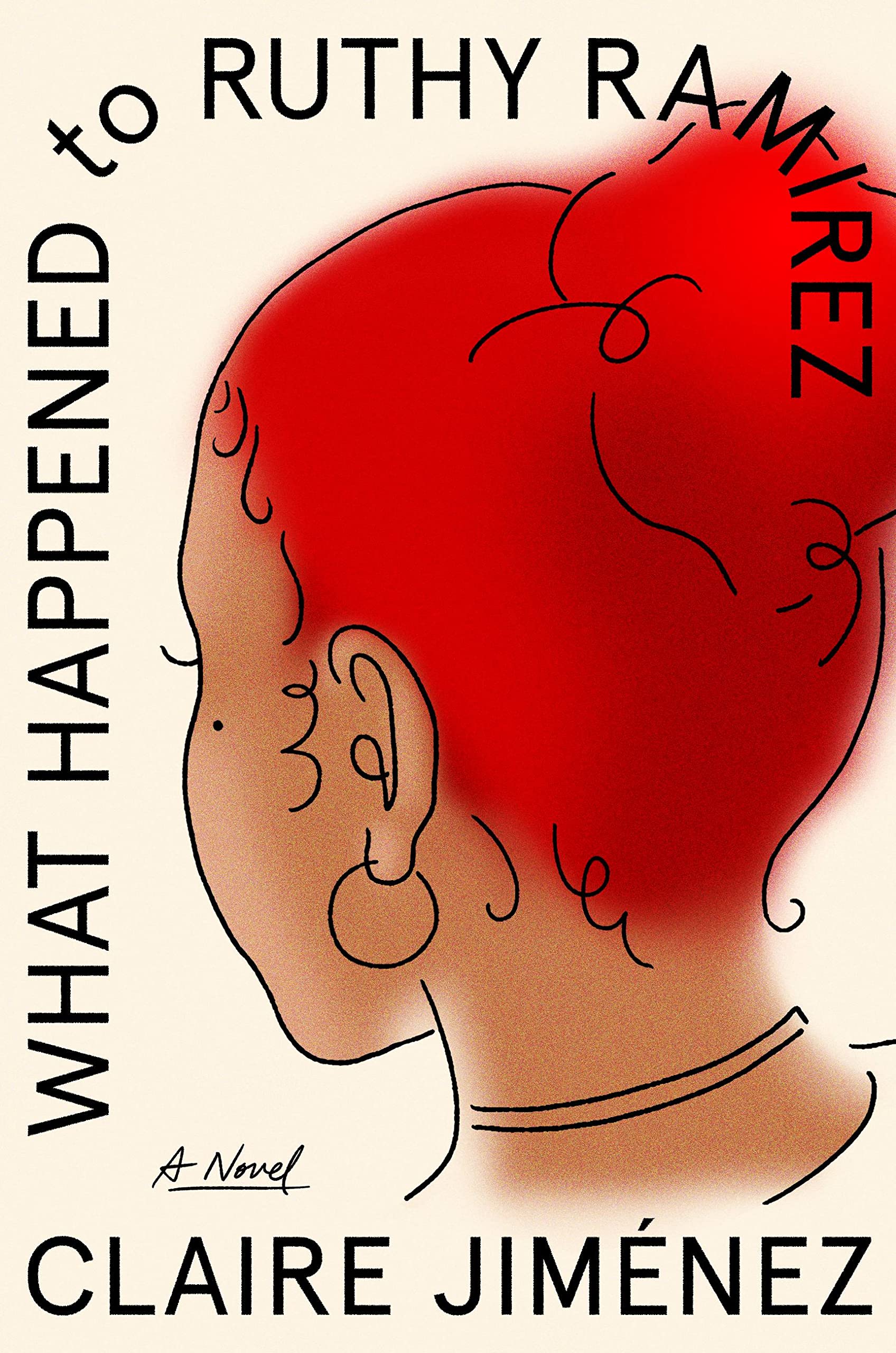
What Happened to Ruthy Ramirez by Claire Jimenez

This debut novel about a family still searching for a long-missing daughter and sister brims with voice, attitude and yearning.

Claire Jimenez’s first novel, What Happened to Ruthy Ramirez, brings to life a close but troubled Puerto Rican family in Staten Island, N.Y., carrying on but rocked by loss. “The five of us seem normal for a while, up until Ruthy turns thirteen and disappears…. Draw my mother sixty-two pounds later. Give her diabetes. Kill my dad. Cut a hole in the middle of the timeline. Eliminate the canvas. Destroy any type of logic. There is no such thing now as a map.” No one ever figured out what happened on the day Ruthy didn’t come home from track practice on the S48 bus as expected.

More than a decade later, Nina, the baby, is “blessed with the brilliant luck of graduating [from college] into the 2008 recession,” the first in her family to attend college but now returned home to live with her mother and work at the mall selling lingerie. Jessica, the eldest, lives with her boyfriend and their baby; she works as a patient care technician at the hospital, harried and tired but proud of her work. Their mother, Dolores, depends on her relationship with God and the church. What Happened to Ruthy Ramirez unfolds in alternating chapters, through the first-person perspectives of these four central characters: Nina, Jessica and Dolores in the late 2000s and the stormy, troubled 13-year-old Ruthy in 1996 when she disappeared. The latter is all attitude: You really want to know what happened to Ruthy Ramirez, she asks? Most people “think they got it all figured out, about who I am and what happened. Whatever, who cares? Not me, I promise you.” She describes the day it happened, the schoolgirl dramas and fights, whose pain appears superficial only from the outside. Years later, her sisters and mother struggle with everyday life and with moving on–until the day Jessica believes she sees Ruthy’s face on a sordid reality TV show: the woman shares the missing girl’s beauty mark, her laugh, the toss of her head, a couple of key phrases. And the remaining Ramirez family is off on a mission to recover their lost member.

One of Jimenez’s greatest achievements lies in the individual voices of her narrators, crackling with life, wit, humor, pain and personality. Jessica and Nina wrestle with the complicated love they feel for their family; Dolores rants in a well-meaning but frustrated one-sided conversation with her God; Ruthy oozes teenaged bravado and angst. Readers will be tugged by hope and despair alongside these true-to-life characters. In the end, What Happened to Ruthy Ramirez offers observations about race, class, family and the fate of missing girls beyond its title character.


This review originally ran in the February 7, 2023 issue of Shelf Awareness for the Book Trade. To subscribe, click here.


Rating: 7 grilled cheese sandwiches from the school cafeteria.

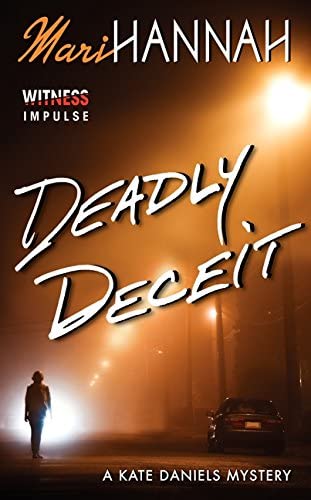
Deadly Deceit by Mari Hannah

Micro-review today because it’s what I can spare for this title at this time, friends. Thanks for your patience.

On the one hand: I’m glad to be getting a bit deeper into DCI Kate Daniels’s personal (read: love) life. I find her a bit frustrating! but what else is new with our hardboiled detective types. She’s got baggage and lack of closure with an ex (who is also a coworker, remember), and a possible new beginning with a newer acquaintance who we met in an earlier book (who was, briefly, a person of interest in a case). I’m glad for this new sideplot, because that’s part of what I enjoy about mystery series in general: personalities and personal lives.

On the other hand, I found some frustrations this go-round with writing, specifically the overuse of ‘stuff’ and ‘things’ when more interesting nouns would have been appreciated. (This is something I get onto my students about. Maybe it’s just that I’m in-semester now.) I’m giving some grace because I think it was in part intended to be about voice – this was most noticeable in chapters in the close-third-person belonging to one or two characters in particular. Still bothered me a bit. If I’m paying attention to the writing, you’ve lost me for the story, however briefly.

I’m still committed to the series; I care about the people, and am looking forward to book four. But this one was not an unqualified success.


Rating: 7 wigs.

Settled Blood by Mari Hannah

As I said about book one, The Murder Wall, this is a solid mystery series. I like DCI Kate Daniels. The series seems inclined to paint her as your classic self-sabotaging detective: a loner, typically a hard drinker, soft-hearted but with a stony exterior and a tendency to violence. She’s rather sweeter than this, though. Despite points made about always putting the job first and not taking very good care of herself (eating & sleeping, for example), she has strong connections to the other members of her squad, and she’s not much of a drinker. The job itself can certainly be a killer, no pun intended (murder detectives do not have it easy), but as far as self-sabotage goes, she’s a pretty light version, I’d say. I like her habit of jumping on the motorcycle for stress relief, and I like even more her friendships: especially here with her second-in-command Hank Gormley, who has a pretty good feel for what she needs (to be questioned, to be left alone) and where she’s likely to be at a given moment. That is downright tender. Her relationship with her former (now promoted) boss, the prickly Phillip Bright, is a little less healthy, and he is not nearly such a sweetheart, but as character development and narrative complication I like it very much. There are other work relationships, too, that advance the characters and story in pleasing ways. As I said in the previous book, Daniels’s partner (now ex) is still a little under-developed, which I still regret. Will she continue to step forward into the light, or is she just a device? I will let you know, because I’ve already ordered books three and four in this series.

The whodunit itself was stimulating and kept me going through some late nights when I should have turned off the light. A murdered girl; a missing girl who is a lookalike to the murdered one but not in fact the same girl; and then more. Daniels is coming off a bit of a trauma herself – and in fact many members of her team are dealing with difficulties or losses, and I appreciate the way in which this mixes things up in a real-world way. Lots of questions about how much compassion and assistance is owed to people who are on the one hand jerks and on the other hand have suffered greatly. This ethical puzzle is one of my life’s fascinations, so I enjoy the angle.

Still true that Daniels’s identity as lesbian is a bit subtle as a framing element here. I appreciate the way in which that has a normalizing effect, but don’t come here looking for a big-deal LGBTQ headline; it’s more background. (Although Daniels is out to very few colleagues, which I find interesting. Her team seems practically warm-and-fuzzy in how well they support each other – unusually for the hard-boiled murder squad. On the other hand, her erstwhile partner being a distant member of the same work environment is a complication of its own, regardless of gender, and could justify secrecy.)

I am intrigued and interested to keep getting to know this group.


Rating: 7 headlamps.

Gone Missing in Harlem by Karla FC Holloway

This one’s a bit genre-defying. I really enjoyed it. Gone Missing in Harlem looked like a mystery at its outset, but it turned out to be broader than that. Historical fiction, clearly: it’s set in Harlem during the Great Depression, with flashbacks to Carolina (North or South, I’m not sure we ever know), highlighting the Great Migration of Black Americans from the rural South to northern cities. It handles mental health issues in several threads, and the challenges of parenting through traumas and breaking cycles. It ranges widely.

We see the title event in the very first chapter. A young mother, Selma, parks her pram just outside a grocery for a very short time while she pays for some apples; when she comes out, it is discovered that her baby is gone. An uproar immediately ensues. Harlem’s residents are horrified, excited, titillated, and incensed at the lackluster response from the police department: the city is still reeling from the disappearance and death of the Lindbergh baby, and Harlem can easily see the difference in how a poor baby from their community is treated. We do have the city’s first Black policeman on the job (and with a fresh Black cadet in tow), and he is both clever and committed. But weeks and months pass, and Selma’s baby Chloe is not recovered.

One of the things I loved best about this book was the constant shifting of perspective. While I’m fairly certain we never get a first-person point of view, chapters switch focuses in close third person perspectives between a large number of characters: Selma; the police officer; Selma’s brother Percy (aka June Bug); their mother (a central figure), DeLilah, aka Lilah, Mama Lil, or Mrs. Mosby; several members of the wealthy white family Lilah works for; the social-climbing Black woman she works for later; a neighbor down the hall; and others. (The policeman and his apprentice form a delightful Holmes-and-Watson pair – indeed with reference to their famous counterparts – and appreciate libraries, librarians and book research most pleasingly.) This multiplicity of perspectives enriches the narrative like nothing else might have, and help take this story from the (deceptively simple) mystery it might have been to a whole complex tapestry of questions, in the best way. Class is arguably as important as race, and race is complicated by colorism. Several generations address the difficulties of parenting; the complexities of love, fear, and aspiration; and the importance of making a plan. As for that deceptively simple mystery, there is a big surprise near the novel’s end that had me entirely, literally slack-jawed. I did stumble upon a handful of grammatical errors that I wish had been caught in editing, but that’s a small issue (and likely only for a few readers). I’m very impressed at the absorbing story, the wealth of those multiple POVs, and the tender handling of a broad range of issues.


Rating: 7 needles.

The Spare Man by Mary Robinette Kowal

Well, this is the most fun thing I’ve read in a while (and that’s saying something). Liz let me know that Martha Wells (of Murderbot) gave this book 5 stars on Goodreads. So I bought it.

Tesla Crane is traveling incognito on a space cruise to Mars with her new spouse, Shal. Tesla is an uberfamous and uber-rich inventor-engineer and heiress, and she just wants to enjoy her honeymoon in privacy, but then a woman is murdered on the way back to their luxury cabins after karaoke, and ship security makes the bad mistake of arresting Shal (himself a recently retired detective), so Tesla is on the case. She is also physically limited by some extreme injuries and a touch of PTSD following a lab explosion, for which she uses the assistance of a Deep Brain Pain Suppressor (DBPS, usually turned up a bit higher than is actually safe), occasionally a cane, and most charmingly, a service Westie dog named Gimlet. With Shal locked down, Tesla is a bit hobbled but also highly motivated (not to say pissed). She navigates the ship, high society, and her investigations with cleverness and aplomb and a sometimes imperfect awareness of her privilege, as Shal gently reminds her; she will make a few friends along the way, but everyone’s a suspect, especially as the body count climbs. Tesla herself is very likeable, but Gimlet steals the show (for readers and most of the ship’s passengers and staff).

I love the elements that combine in this story. There is a strong core of sci-fi, which other reviewers assure us is accurate and well-researched (this reviewer is happy to assume this is the case and move along). There are some fun, thought-provoking cultural elements, especially around gender: in the year 2075 we don’t have much patience for gendered language, using Mx. in place of Ms. or Mr. and spouse in place of the gendered versions, and it is extremely rude and outdated to introduce anyone without noting their pronouns. (Tesla’s spouse Shal is a very masculine type and very handsome but also very engaged with textile arts, particularly embroidery.) The protagonist couple takes their cocktails and coffee very seriously, and each chapter opens with a cocktail recipe (some of which are zero-proof); bar culture and bartenders also form a significant framing element. Gimlet the service dog gets full appreciation both for her skills and training and for her dogness (she’s a dog, not a robot). It all forms a really neat combination, although let me also say the plot needed no bolstering: the mystery itself is fully-formed and legit. What’s not to love?

I was completely absorbed and stayed up late into the night finishing this one. Firmly recommend. Thanks for the tip, Liz & Martha.


Rating: 8 ounces.

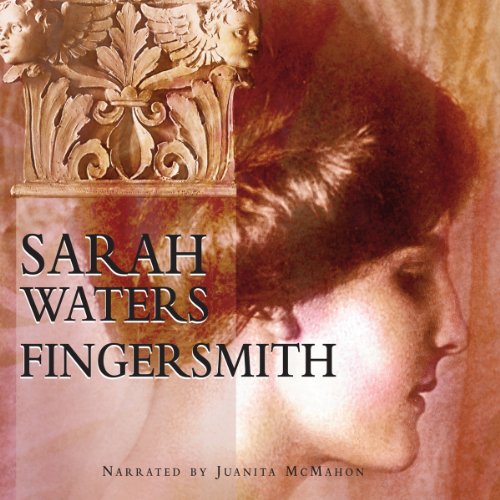
Fingersmith by Sarah Waters (audio)

I got this title off some list of bests somewhere, and queued it up behind In the Woods on the return trip from Texas. It was a delightful, weird, engrossing adventure. I am going to be careful and vague with this one, as it hinges on big reveals that I don’t wish to spoil.

Set in Victorian London, Fingersmith begins with the first-person narration of Sue Trinder, an orphan who has been raised by a household of ‘honest thieves’ and a mother figure, Mrs. Sucksby. Sue and her comrades are fingersmiths, or pickpockets (and they partake in other crimes and cons, mostly of the property reassignment category). One day Sue is invited into a masterful heist: she will pose as lady’s maid to an innocent, sheltered woman of just her own age, the also-orphaned Maud Lilly, to aid in a fellow crook’s seduction of the lady. He will then marry her, steal her fortune, and have her locked away in a madhouse (which is sinfully easy to do to women, in those times and into quite recent history). Sue has never been a lady’s maid before, so she has much to learn about the job, but off she goes. The plot proceeds, but Sue’s loyalties become split, as it turns out she rather likes her mistress.

This is just the very beginning of the complications. But then! Part two! The first-person perspective shifts, which I did not see coming. And everything the reader thought she knew about this story gets turned on its head. I will stop writing about plot now, but it continued to surprise me, repeatedly, and Waters gets full marks for this feat. Also, I was not expecting erotica, which popped up a few times to (again) surprise me and was remarkably well done. Fingersmith is absolutely a plot to get thoroughly lost in; really great road trip fodder. I did feel in the middle that it dragged on a bit longer than it needed to – especially when the victim of this or that plot must wallow in her misfortune. I could take much less of the wallowing. But eventually we stepped out of that puddle, and the story continued to twist and turn; I was riveted right until the end, and was sorry to be done. Masterfully plotted; do recommend.


Rating: 8 ink stains.

In the Woods by Tana French (audio)

Loading up on audiobooks for the big drive to Texas and back, I made an unusual call: I chose to reread a book, or rather to listen to one I’d read years before. Life is mostly too short for rereads, but: 1, I love Tana French and have read everything of hers already. 2, I found this one on a best-of list of some sort, I think specifically referring to the audiobook (or else it’s just that I discovered late that she is especially good on audio, because of the Irish accents). 3, I am that lucky mystery fan who forgets plots and can therefore enjoy them again and anyway 4, I read this one of hers first and (mostly importantly) before I had this blog. So, off on the big drive with this excellent book…

…which it turns out I had forgotten wholly, because the plot scarcely felt familiar at all past the introductory scenes. First, a prologue flashback: in 1984, in a Dublin suburb, three 12-year-old best friends don’t come home when called for tea. Two of them, a boy and a girl, will never be seen again. The third, Adam, is found with his broken fingernails dug into a tree’s bark, with blood in his shoes but unharmed. He is catatonic and unable to help the police with their investigations. He goes away to boarding school; his family moves away; and then the reader discovers that he is the novel’s narrator, now a grown murder detective who goes by the name Rob Ryan (having taken his middle name to avoid his rocky past). Hilariously, Rob believes that his career choice has nothing to do with his lost childhood best friends.

In the present, some twenty years later, the body of a murdered child turns up in the very same suburb, in the same woods (now much abbreviated by development, and under controversy as a freeway expansion runs up against an archeological dig). Ryan and his partner and best friend, Cassie Maddox, pull the case, despite being rather the young misfits of the department. Unbelievably, the murder squad does not know that Rob Ryan was once Adam Ryan, the very famous found boy of that old–and possibly connected–crime. Cassie is the only one, beside Rob’s parents (whom he feels he barely knows), who knows his identity.

In the Woods is an atmospheric, contemplatively-paced mystery novel in two timelines. As Ryan works on the present-day murder, he also probes at his own lost memories of that childhood trauma. It is also the story of relationships: Rob and Cassie share a very special bond, a very special friendship, which both resists and succumbs to stereotypes. I think it’s worth remarking that I do not actually like Rob Ryan, our narrator, protagonist, and therefore one might expect our hero. He isn’t that. Cassie is a compelling and likeable character, but since she is only seen through Ryan’s eyes (we get the story from him), I fear she never quite becomes fully known–not only in the way that none of us ever really knows anyone, but also because for all his adoration and attempts to understand her, she is finally a cipher for Ryan’s own issues. Perhaps what disappoints me most about him is that even after all his complexities and soul-searching, Ryan winds up predictable after all. I do not like him in the end.

The plot is however not predictable, even to this rereader. In fact, as I think about other Tana French books, it’s not actually the whodunit solution that I remember, but the atmosphere, the experience of being in the story as it unfolds. There were times when the pacing felt a bit off, when I felt we spent too much time wallowing, and that feels perhaps familiar from other T. French novels as well, but that’s a fairly minor quibble when I think about how real these characters felt. Also, the accents are completely wonderful on audio, which I think is the best way to do Tana French.

As I write this review, I’ve let too much time pass (because vacation), and already the denouement’s details are fading for me, but the relationships – between Ryan and Maddox, and other ones – still feel very near to me, the personalities and the conflicts. And I’ll always be back for more French.


Rating: 8 home-cooked meals.

Last Call at the Nightingale by Katharine Schellman

With lively and appealing historical detail, this mystery turns a poor factory worker into a sleuth when a murder disrupts the party at her favorite jazz speakeasy.

In Last Call at the Nightingale, Katharine Schellman (The Body in the Garden) serves up Prohibition-era murder and intrigue with style, atmosphere and a side of bootlegged bubbles and gin. The first in a Jazz Age mystery series, this novel will appeal to readers on several levels.

In 1920s New York City, Vivian Kelly is alone in the world but for her stick-in-the-mud older sister, Florence. Vivian works for a pittance and receives less respect in a dressmaker’s factory, but at night she has a space where she can forget her poor pricked fingers and dance ’til last call: the Nightingale, a speakeasy jazz club. “She needed to feel like she belonged somewhere, to feel there was something in her life that actually belonged to her,” and the Nightingale and its staff and patrons give her just that. Vivian is “poor orphan Irish trash”; her best friend Bea is Black; bartender Danny is Chinese; and the bar’s owner, Ms. Honor Huxley (don’t call her Miss), prefers other women as her dance partners. The Nightingale is a place where anything goes, more or less–until one night that includes murder.

When Vivian discovers a body just outside the club’s back door, she finds herself thrown into circumstances beyond her usual daytime drudgery and nighttime frolics. “I grew up in an orphanage. I live in a tenement. People die faster there than on Park Avenue,” she blusters, but she’s in over her head. Arrested in a raid, she owes her bail bond to the intimidating but sexy and intriguing Ms. Huxley. Then a mysterious stranger arrives from Chicago and begins pursuing Vivian. Threatening bruisers are hot on her tail, and Florence is increasingly displeased by the younger sister’s nightlife. Vivian at first feels pressure from others to solve the murder; eventually she may need to do so to save her own life. A poor dressmaker’s apprentice, she creeps into the parlors of the powerful to poke into their secrets, and finds herself pinned between the criminal underworld and the careless menace of the very rich. Time is running out, but this protagonist is as plucky as they come.

Readers will love Last Call at the Nightingale for its twisting plot, its flair for historical detail and its inclusive cast of appealing characters. Schellman’s author’s note on historical accuracy broadens the appeal of this engrossing jaunt into murder and dangerously good times. Don’t look away, as the surprises keep coming until the final page.


This review originally ran in the March 18, 2022 issue of Shelf Awareness for the Book Trade. To subscribe, click here.


Rating: 7 stitches.

Shady Hollow by Juneau Black

This whimsical cozy mystery set in a town of animal characters will tickle and amuse alongside its whodunit plot.

Previously published in 2015 by Hammer & Birch, Shady Hollow is the first in a series of cozy mysteries starring sweet, lovable animal characters. Juneau Black (pen name of a two-author team) will please lovers of both woodland creatures and whodunits with this gentle, plot-twisting exploration of small-town life.

The community of Shady Hollow is home to a typical cast of amiable eccentrics, including a gossip-hungry hummingbird; a good-natured, coffee-slinging moose; a timid mouse accountant; and a family of upper-crusty beavers. When a cantankerous toad turns up dead in the mill pond, however, the town’s policebears turn out to be underprepared to investigate, and it falls to local reporter Vera Vixen to uncover the murderer. Vera the fox is “an old-school journalist, despite her youth,” and though new to town, her friendship with Lenore Lee (a wise raven well-read in murder and, naturally, owner of Nevermore Books) provides a solid base for her inquiries. The more she learns about the inhabitants of Shady Hollow, however, the more complicated the case becomes, and Vera herself may be in danger.

With its charming and affable characters, Shady Hollow nonetheless serves up plenty of intrigue and danger, ending with teasing hints of what’s to come in the next installment (Cold Clay is slated for March 2022). The nonhuman cast offers an extra note of humor: accused of cynicism, Lenore responds, “I’m a raven…. If you want sunshine and melodies, go find a swallow.” This captivating tale offers sunshine and murder in perfect proportion to keep readers entertained and engrossed in deceptively placid Shady Hollow.


This review originally ran in the January 28, 2022 issue of Shelf Awareness for Readers. To subscribe, click here, and you’ll receive five issues per week of book reviews and other bookish news.


Rating: 7 cups of coffee.

Come back Friday for my interview with Juneau Black!